



Speech Delay Guide for Parents in Malaysia (2026)

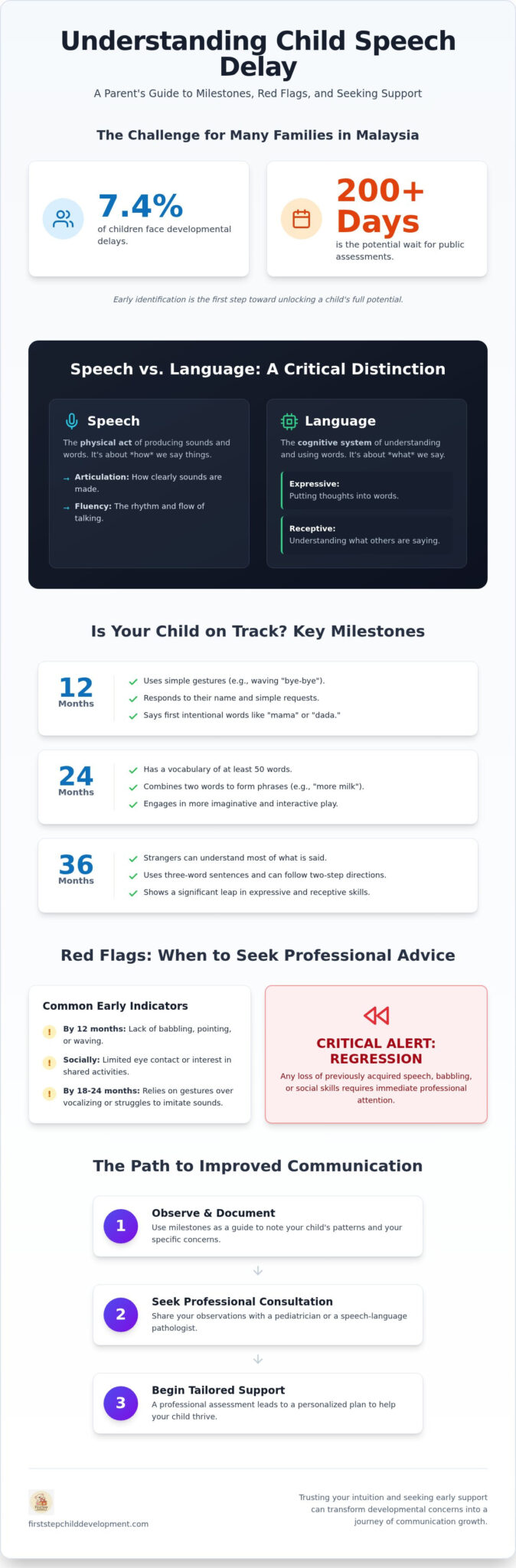
Did you know that 7.4% of children in Malaysia are identified with developmental delays, yet many families face waiting times of over 200 days for public health assessments? It’s natural to feel a sense of quiet anxiety when you notice your little one isn’t hitting the same communication milestones as their peers at the playground. You might worry about how they’ll fare in school or feel overwhelmed by the conflicting advice found in various parenting groups. We understand that this journey feels heavy, but recognizing a speech delay isn’t a setback; it’s the first step toward unlocking your child’s potential through specialized support and understanding.
In this guide, we’ll provide the clarity and professional guidance you need to navigate these concerns with confidence and calm. You’ll learn how to distinguish between speech and language delays, identify specific red flags through a developmental checklist, and discover the path toward meaningful growth. We’ll also outline a clear roadmap for seeking a professional assessment, ensuring you have the tools to advocate for your child’s communication journey and long-term success in a supportive environment.
Key Takeaways
- Differentiate between expressive and receptive language challenges to better interpret your child’s unique communication needs.
- Use our age-appropriate checklist to recognize subtle social and physical red flags that may warrant a professional consultation.
- Understand the diverse root causes behind a speech delay, ranging from oral-motor difficulties to hearing reception issues.
- Gain a clear roadmap for the intervention process, including how standardized screenings lead to tailored support strategies.
- Learn how a holistic, multidisciplinary team can transform developmental concerns into a supportive journey of communication growth.
What is Speech Delay? Understanding the Foundations of Communication

Watching your child reach their first milestones is one of the most rewarding parts of parenthood. When those first words seem slow to arrive, it’s natural to feel a sense of concern. A speech delay occurs when a child isn’t meeting the typical communicative milestones for their age. While every child develops at their own pace, understanding What is Speech Delay? involves looking beyond just “late talking.” It requires a deeper look at how a child processes, understands, and produces sounds to connect with the world around them.
The first three years of life represent a critical window for brain development. During this period, the brain’s neuroplasticity is at its peak, making it the most effective time for learning language. When communication is hindered, it doesn’t just affect vocabulary. It impacts a child’s emotional regulation and social growth. A child who can’t express their needs often feels intense frustration, which can lead to behavioral challenges or social withdrawal. Early identification isn’t about labeling a child; it’s about providing the right support during these formative years to ensure they can build meaningful relationships.
Speech vs. Language: A Critical Distinction
Many parents use these terms interchangeably, but they refer to very different processes. Speech is the physical act of producing sounds and words. It involves the coordination of the lips, tongue, and vocal tract. If a child has a speech delay, they might struggle with articulation or the rhythm of talking. Language, however, is a cognitive system of symbols used to communicate ideas. This includes expressive language, which is the ability to put thoughts into words, and receptive language, which is the ability to understand what others are saying. A child might have excellent speech but struggle to follow instructions, or they might understand everything perfectly but be unable to form a single spoken word.
Developmental Milestones: 12 to 36 Months
While milestones are ranges rather than strict deadlines, they serve as a helpful guide for parents to monitor progress. Consistency is key. If you notice your child is consistently behind these markers, it may be time to seek a professional perspective.
- 12 Months: Most children begin using simple gestures like waving “bye-bye” or pointing. They should respond to their name and understand simple requests like “no” or “come here.” You’ll often hear their first intentional words, such as “mama” or “dada.”
- 24 Months: By this age, a child typically has a minimum vocabulary of 50 words. They start combining two words to form basic phrases, such as “more milk” or “doggy bark.” Their play becomes more imaginative and interactive.
- 36 Months: A major shift occurs here. Strangers should be able to understand most of what the child says. They begin using three-word sentences and can follow two-step directions, showing a significant leap in both expressive and receptive abilities.
Recognizing the Signs: Speech Delay Red Flags by Age
Trusting your intuition is often the most powerful tool you possess as a parent. While friends or family might suggest a “wait and see” approach, clinical evidence consistently favors early, proactive observation. If you suspect a speech delay, identifying specific red flags early can make a profound difference in your child’s communication journey. It isn’t about jumping to conclusions; it’s about being a dedicated observer of your child’s unique way of connecting with the world.
Early signs often manifest in three distinct areas: physical, social, and verbal. By 12 months, a child should be babbling and using basic gestures like pointing or waving. A lack of these behaviors can be an early indicator. Socially, keep an eye on eye contact and their interest in shared activities. Perhaps most critically, any regression, where a child suddenly stops using words they once knew, is a sign that requires immediate professional attention. While these signs are visible indicators, Exploring the Root Causes through clinical frameworks helps professionals determine if the delay is isolated or part of a broader developmental pattern.
Red Flags in Toddlers (18-24 Months)
Between 18 and 24 months, communication becomes more intentional. You might notice a toddler who relies almost exclusively on gestures to get what they want, rather than attempting to vocalize. They might struggle to imitate sounds you make or find it difficult to follow a simple one-step command like “pick up the ball.” Another subtle sign is a limited range of consonant sounds; if their babbling sounds very repetitive and lacks variety, it warrants a closer look by a specialist. Parents looking for practical strategies during this stage can explore our guide on how to encourage toddler to talk in Malaysia, which offers culturally relevant home exercises alongside clinical guidance.
Signs to Watch for in Preschoolers (3-4 Years)
As children enter the preschool years, their speech should become increasingly clear to those outside the immediate family. If you find that strangers or even extended relatives consistently struggle to understand your child, this is a significant marker. At this stage, children should be stringing together short phrases and asking basic “what” or “where” questions. When a child cannot express these complex thoughts, they often experience intense frustration. This can manifest as frequent behavioral outbursts or meltdowns, which are often just a plea for a better way to communicate.
These challenges don’t have to be a source of constant anxiety. If these red flags feel familiar, seeking a professional clinical assessment can provide the clarity and peace of mind you need to move forward.
Exploring the Root Causes: Why Communication May Be Delayed
Understanding the “why” behind a speech delay is often the first step toward finding peace of mind. Communication is a complex process that involves the brain, the ears, and the muscles of the mouth working in perfect harmony. When one of these systems faces a challenge, a child’s ability to express themselves can be affected. Rather than viewing this as a singular problem, we look at it as a puzzle where different pieces of a child’s development come together. Identifying the root cause isn’t about placing blame; it’s about uncovering the specific map your child needs to navigate their world.
Environmental factors also play a significant role in early development. While digital devices are common in modern homes, high levels of passive screen time can sometimes limit the rich, back-and-forth interactions children need to build language. Interactive play is the natural classroom for communication. It’s where children learn to read facial expressions, take turns, and associate sounds with meaning. By observing Recognizing the Signs: Speech Delay Red Flags by Age, parents can determine if a child’s environment needs more communicative stimulation or if there is an underlying clinical cause that requires specialized intervention.
The Link Between Speech and Neurodevelopment
Sometimes, a delay in talking is a window into how a child’s brain processes information more broadly. It can be an early indicator of neurodevelopmental conditions such as Autism Spectrum Disorder (ASD) or ADHD. In these instances, the struggle isn’t just with making sounds, but with the social nuances of communication, such as understanding gestures or responding to social cues. Seeking a neurodevelopmental assessment Malaysia provides a comprehensive look at your child’s unique cognitive profile. At our center, we emphasize a multidisciplinary approach. A clinical psychologist and a speech therapist see different aspects of a child’s potential, and this collaboration ensures that any diagnosis is accurate and the resulting support plan is holistic.
Physical and Sensory Considerations
Physical factors can also impede a child’s progress. Oral-motor issues, such as tongue-tie (ankyloglossia), can physically limit the tongue’s range of motion, making certain articulation sounds difficult to produce. Problems with the folds of the throat or the palate can also affect sound quality. Sensory challenges are equally important. Chronic ear infections, especially during the first two years of life, can lead to temporary hearing loss during critical learning periods. If a child can’t hear sounds clearly, they can’t reproduce them accurately. Auditory processing also plays a role; some children hear perfectly but struggle to make sense of the sounds they receive. Consulting a pediatrician alongside a speech therapist ensures that any physical or sensory barriers are addressed early, clearing the path for successful therapy. For children whose primary challenge lies in producing sounds correctly, articulation therapy for kids in Malaysia offers a targeted, evidence-based approach to address these specific difficulties.
Effective Intervention: The Path to Improved Communication
Once you’ve identified the signs, the focus shifts from worry to action. Effective intervention for a speech delay isn’t a one-size-fits-all solution; it’s a methodical process designed to meet your child exactly where they are. The journey typically begins with clinical observation and standardized developmental screening. This allows specialists to map out your child’s current strengths and areas for growth. From there, a personalized Early Intervention Program (EIP) is developed. This program acts as a roadmap, coordinating various therapies to ensure your child receives holistic support.
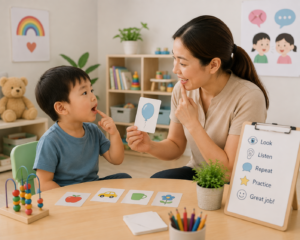
Play-based therapy for children is the heart of this process. Children learn best when they’re engaged and having fun, so sessions often look like play but are deeply intentional. Therapists use these interactions to build a bridge between your child’s inner thoughts and their outward expression. By reinforcing clinical progress with home-based strategies, you become an active partner in your child’s success. This collaborative approach ensures that the skills learned in the clinic are translated into everyday life.
What Happens During a Speech Therapy Session?
In a professional setting, a speech therapist uses a variety of toys, games, and sensory activities to encourage natural sound production. Instead of asking a child to “say this word” repeatedly, the therapist might engage in a game where saying a specific sound or word makes something exciting happen. This creates a positive association with talking and keeps the child motivated. We focus on three main pillars during these sessions:
- Modeling: The therapist repeats the correct pronunciation or sentence structure back to the child without direct correction. This builds confidence and reduces the fear of making mistakes.
- Engagement: Using preferred toys to ensure the child remains an active participant in the communication exchange.
- Goal Setting: Establishing measurable targets for vocabulary growth and social interaction that are reviewed regularly with parents.
Supporting Your Child at Home
Your home is the most significant environment for language development. One effective technique is “narrating your day.” Simply talk about what you’re doing as you do it: “I’m pouring the milk” or “Now we’re putting on your blue shoes.” This provides a constant stream of clear, contextual language for your child to absorb without the pressure of a formal lesson.
Shared reading and interactive storytelling are also incredibly powerful. Focus on the pictures and ask open-ended questions rather than just reading the text. Try to reduce the pressure for your child to “perform” words on command for relatives or friends. When the environment is low-stress, children feel safer to experiment with new sounds. If you’re ready to move from observation to a structured plan, our team is here to guide you. You can learn more about our professional Speech Therapy services and how we support families across Malaysia.
The Firststep Approach: Professional Care for Your Child’s Potential
Choosing a partner for your child’s developmental journey is a significant decision that requires both trust and clinical clarity. At Firststep Psychology & Child Development Centre, we believe that a speech delay is best addressed through a lens of holistic understanding rather than isolated symptoms. Our multidisciplinary team combines the expertise of clinical psychologists, speech therapists, and occupational therapists to create a comprehensive support system. We don’t just look at how a child speaks; we look at how they think, feel, and interact with their environment. This integrated perspective ensures that every intervention is purposeful and aligned with your child’s unique cognitive profile.
The foundation of our care starts with a specialized child psychology consultation Malaysia. This initial step is vital for ruling out or identifying underlying neurodevelopmental factors that may be influencing communication progress. We prioritize play-based assessments because we know that children reveal their true potential when they feel comfortable and engaged. Following these evaluations, we provide parents with clear, actionable reports and feedback, stripping away confusing jargon to offer a transparent view of the path forward. By 2026, professional standards in Malaysia have become more robust, and our therapists are registered with the Malaysian Allied Health Professions Council (MAHPC), ensuring your family receives care that meets the highest legal and clinical requirements.
A Safe Haven for Developmental Growth
Our center is designed to be a gentle environment where the pressure to perform is replaced by the invitation to explore. We understand that for a child struggling with communication, the world can sometimes feel overwhelming. By creating a safe haven, we lower their anxiety, which is often the first barrier to successful therapy. Our team moves beyond a simple diagnosis to provide a structured roadmap for progress, collaborating closely with pediatricians and nutritionists to ensure every aspect of your child’s health is considered. This total care approach means we’re looking at everything from auditory processing to nutritional foundations that support brain health. For families who want to understand the full scope of their child’s developmental needs, an occupational therapy assessment for child Malaysia specialists provide can offer a vital additional layer of insight into sensory, motor, and daily functioning skills.
Empowering the Family Unit
We believe that parents are the most important advocates in a child’s life. Our mission is to empower you with the tools and strategies needed to support communication growth at home. With the 2025 assessment year increasing tax relief for early intervention to RM6,000, more families in Malaysia can now access the consistent professional support their children deserve. We conduct regular progress reviews to adjust therapy goals as your child grows, ensuring our methods evolve alongside their developing skills. Every child has a unique voice and a deep well of potential; our commitment is to help them find that voice and reach their fullest potential in a nurturing, expert-led environment.
Empowering Your Child’s Communication Journey
Navigating the complexities of a speech delay can feel like a daunting task, but you don’t have to walk this path alone. By understanding the critical distinction between speech and language, and identifying age-specific red flags, you’ve already taken a vital step toward supporting your child’s growth. Every small milestone is a victory. With a structured roadmap and early intervention, those victories become the foundation for lifelong communication and social confidence.
Our multidisciplinary team of clinical experts is here to provide the clarity you need through a gentle, play-based assessment environment. We prioritize your child’s comfort while delivering comprehensive diagnostic reports that empower you to be their best advocate. Don’t let uncertainty delay the support your little one deserves. Book a Professional Consultation for Your Child Today to begin a collaborative journey toward unlocking their full potential. Your child’s voice is their future; let’s help them find it together with patience and professional care.
Frequently Asked Questions
Is speech delay a sign of autism in toddlers?
A speech delay can sometimes be an early indicator of Autism Spectrum Disorder (ASD), but it is not a definitive sign on its own. Many children experience delays in communication without having the social or sensory challenges associated with autism. A multidisciplinary clinical assessment is the most reliable way to understand your child’s unique profile and determine if the delay is isolated or part of a broader developmental pattern.
How many words should a 2-year-old be saying?
By the age of two, most toddlers should have a vocabulary of at least 50 words and start combining them into simple two-word phrases like “more milk” or “mama go.” While children reach milestones at different rates, a significant gap in these areas may suggest a speech delay. Early identification allows us to provide the right stimulation to help your child catch up with their peers effectively.
Can a child outgrow a speech delay without therapy?
While some children are simply “late talkers” who eventually catch up, waiting for a child to outgrow a delay without support can be risky. The first three years are a critical window for language acquisition. Professional therapy provides a structured environment that builds communication skills and prevents future social or academic frustration. Seeking an expert opinion early ensures your child has every opportunity to reach their full potential during these formative years.
What is the difference between late talking and a speech disorder?
Late talking typically refers to a delay in expressive language milestones, where a child understands well but speaks very little. A speech disorder involves more complex issues with sound production, fluency, or the physical coordination required for talking. Distinguishing between the two requires a professional evaluation. This clarity helps us create a targeted plan that addresses whether your child needs help with word building or the physical mechanics of speech. If sound production is the primary concern, learning more about articulation therapy for kids in Malaysia can help you understand the specialized support available for these challenges.
How much does a speech therapy session cost in Malaysia?
The cost of speech therapy in Malaysia varies based on the level of specialized care and whether you choose public or private facilities. While government hospitals provide highly affordable services, they are often characterized by significant waiting times. Private centers offer more immediate, tailored sessions for your child’s specific needs. Many parents utilize the Malaysian government’s early intervention tax relief to support their child’s developmental journey through professional private consultations.
Can excessive screen time cause speech delay in children?
Excessive screen time doesn’t directly cause a delay, but it often replaces the rich, interactive play necessary for language growth. Children learn to communicate through back-and-forth social exchanges with caregivers, which passive viewing cannot provide. Reducing digital exposure in favor of face-to-face interaction creates more opportunities for your child to practice sounds and engage with the world, supporting their natural communicative development in a healthy, balanced way.
What should I do if my child understands everything but doesn’t talk?
If your child understands instructions but doesn’t talk, they likely have a gap between their receptive and expressive language skills. This often causes significant frustration for the child as they struggle to share their thoughts. Therapy focuses on providing them with the tools and confidence to begin vocalizing their needs. We use play-based therapy for children to encourage speech in a low-pressure environment, helping them bridge that gap and find their voice.
Is it too late to start speech therapy if my child is already 5?
It’s never too late to begin therapy, even if your child is already five years old and preparing for primary school. While early intervention is ideal, older children still benefit immensely from specialized support to improve their articulation and social communication. Starting now can help your child build the confidence they need for the classroom and ensure they have the communicative tools to succeed both academically and socially with their peers.
Article by
Firststep Child Development Team
Firststep Child Development Team provides evidence-informed educational resources to help parents better understand child development, behaviour and learning. Our multidisciplinary services include clinical psychology, occupational therapy, speech and language therapy, developmental assessments and other child development support in Kuala Lumpur and Selangor.
Disclaimer
This article is for general educational and informational purposes only and is not a substitute for professional medical, psychological or therapeutic advice, diagnosis or treatment. Every child develops differently. If you have concerns about your child’s development, behaviour, learning or wellbeing, please consult an appropriately qualified healthcare or allied health professional.