



Autism Assessment
- Clinical Psychologist Assessment
- Autism Assessment
Autism Assessment for Children
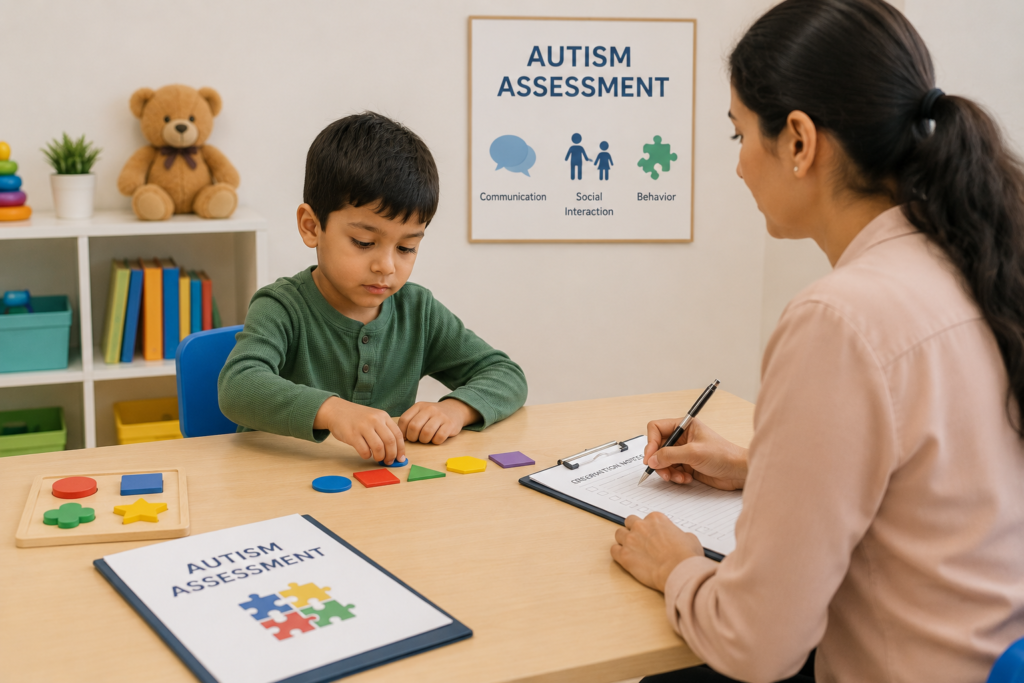
Helping parents better understand their child’s social communication, behaviour, emotional regulation, and developmental needs through comprehensive psychological assessment.
Some children may experience difficulties with social interaction, communication, emotional regulation, behavioural flexibility, or sensory-related behaviours.
An Autism Assessment helps identify developmental strengths, challenges, and support needs to guide appropriate intervention and support planning.
- Evidence-based autism assessment approach
- Conducted by a Clinical Psychologist
- Comprehensive developmental evaluation
- Detailed assessment report
- Individualised recommendations for home and school support
What is Autism Spectrum Disorder (ASD)
Autism Spectrum Disorder (ASD) is a neurodevelopmental condition that affects how a person communicates, interacts socially, processes information, and responds to their environment.
Children with autism may experience differences in:
- Social communication and interaction
- Emotional expression and understanding
- Behavioural flexibility and routines
- Sensory processing
- Play, learning, and daily functioning
Every child with autism is unique. Some children may require more support in communication and daily functioning, while others may experience milder social or behavioural difficulties.
An Autism Assessment helps identify a child’s strengths, developmental profile, and areas requiring support, allowing families and professionals to better understand their needs and provide appropriate intervention.
What Can An Autism Assessment Help Identify
An Autism Assessment helps evaluate developmental, behavioural, social, and adaptive functioning concerns associated with Autism Spectrum Disorder.
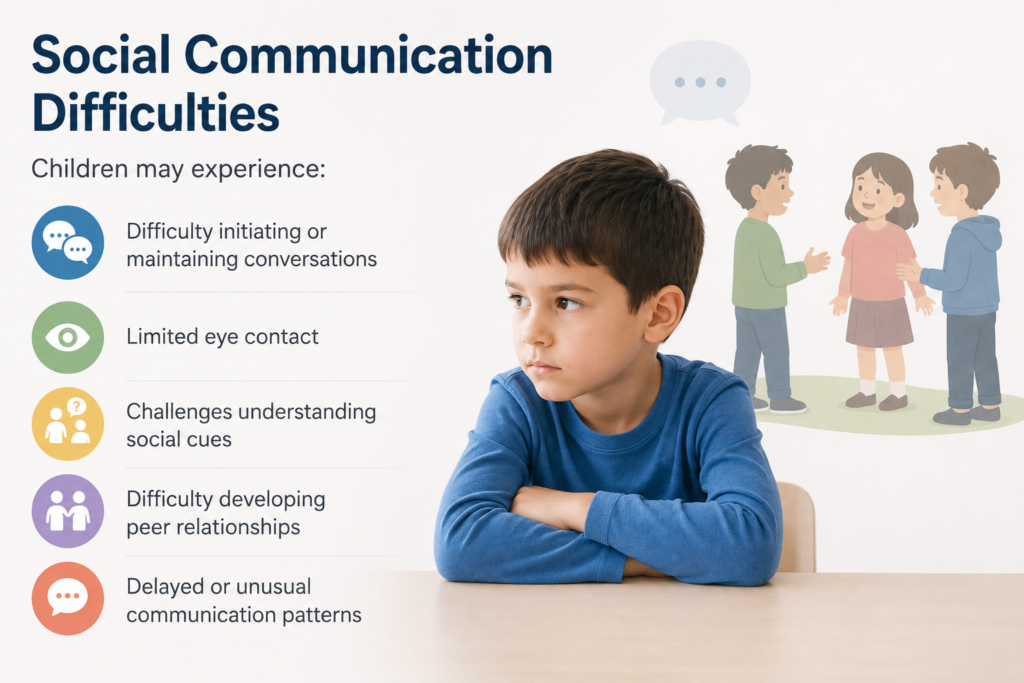
💬Social Communication Difficulties
Some children may experience difficulties with:
- Initiating or maintaining conversations
- Understanding social cues and non-verbal communication
- Making or maintaining peer relationships
- Eye contact and social engagement
- Expressing thoughts, emotions, or needs appropriately
- Delayed, limited, or unusual communication patterns
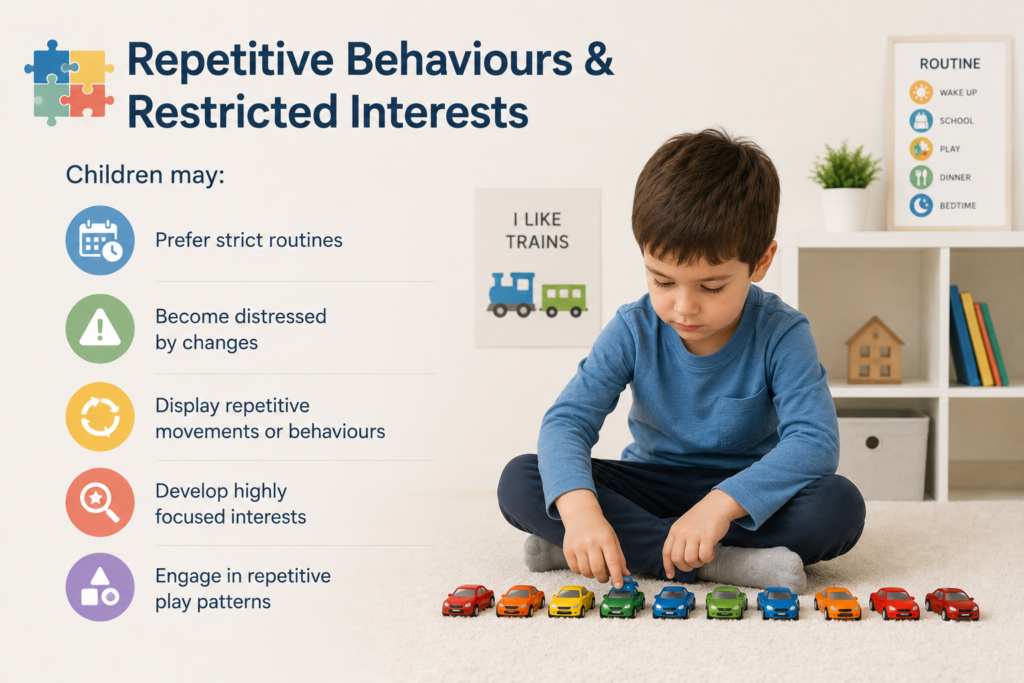
🔄Repetitive Behaviours & Restricted Interests
Some children may:
- Prefer strict routines or predictability
- Become distressed by changes in routine or environment
- Display repetitive movements or behaviours
- Engage in repetitive play patterns
- Develop intense or highly focused interests
- Show difficulty adapting to transitions or unfamiliar situations
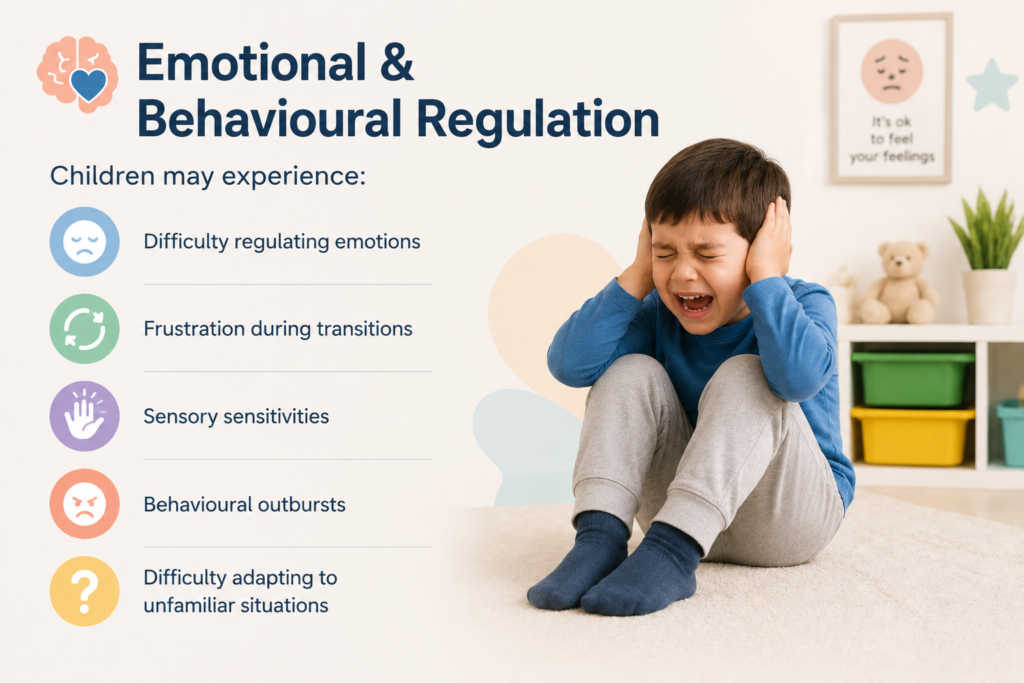
🧠Emotional & Behavioural Regulation
Some children may experience:
- Difficulty regulating emotions
- Emotional outbursts or frustration
- Sensitivity to sounds, textures, lights, or environments
- Difficulty coping with transitions or changes
- Challenges managing behaviour in social or daily settings
- Feeling overwhelmed in stimulating environments
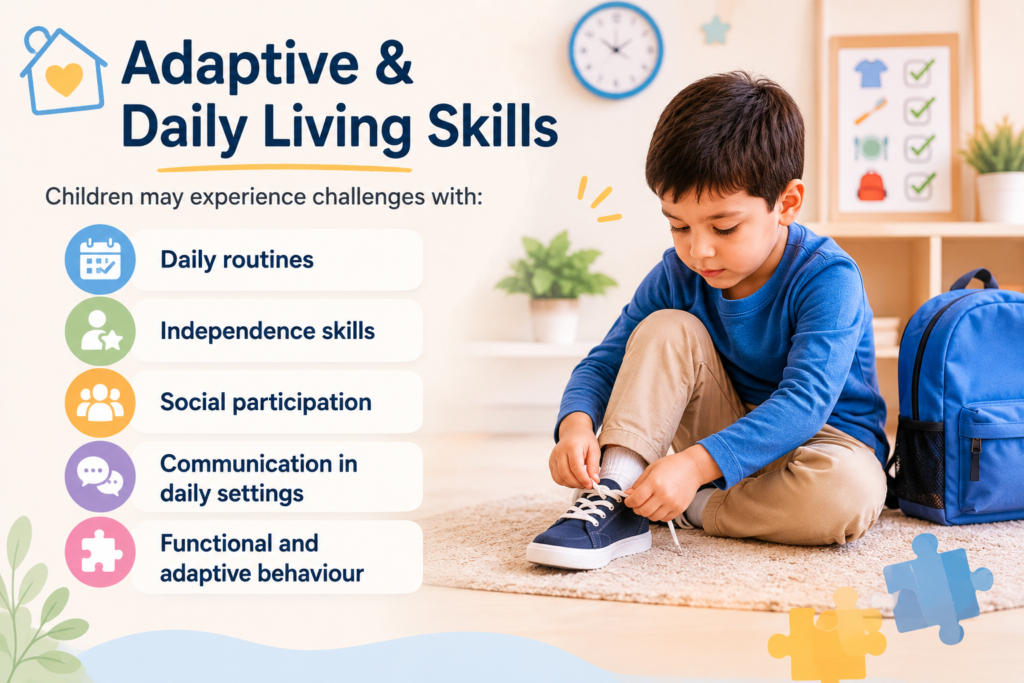
🧩Adaptive & Daily Living Skills
Some children may experience challenges with:
- Daily routines and independence skills
- Communication in everyday situations
- Social participation and interaction
- Self-care and functional skills
- Following routines and expectations
- Adapting to different environments or settings
A comprehensive assessment helps determine whether a child’s developmental profile may be associated with Autism Spectrum Disorder or other developmental concerns.
Signs Your Child May Benefit From An Autism
You may consider an assessment if your child frequently experiences difficulties such as:
💬Social Interaction & Communication
- Prefer playing alone rather than with peers
- Have difficulty starting or maintaining conversations
- Show limited eye contact during interaction
- Have difficulty understanding social cues or emotions
- Struggle to express needs, feelings, or thoughts clearly
- Experience delayed speech or communication development
🔄Behaviour, Routines & Interests
- Become upset when routines change unexpectedly
- Prefer repetitive activities or play patterns
- Display repetitive movements such as hand flapping, rocking, or pacing
- Develop intense interests in specific topics or objects
- Have difficulty adapting to unfamiliar situations or transitions
🧠Emotional Regulation & Sensory Sensitivities
- Become overwhelmed in noisy or crowded environments
- Be highly sensitive to sounds, textures, lights, or smells
- Experience emotional outbursts or meltdowns
- Have difficulty calming down when distressed
- Struggle with transitions between activities or environments
🎓Daily Functioning & Development
- Experience delays in developmental milestones
- Have difficulty following daily routines independently
- Require additional support with communication or behaviour
- Experience challenges functioning in school or social settings
- Struggle with adaptive or daily living skills compared to peers
✨Important Note✨
Some children may show only a few signs, while others may experience difficulties across multiple areas of development.
A comprehensive Autism Assessment helps provide a better understanding of your child’s developmental profile, strengths, and support needs.
Our Autism Assessment Process
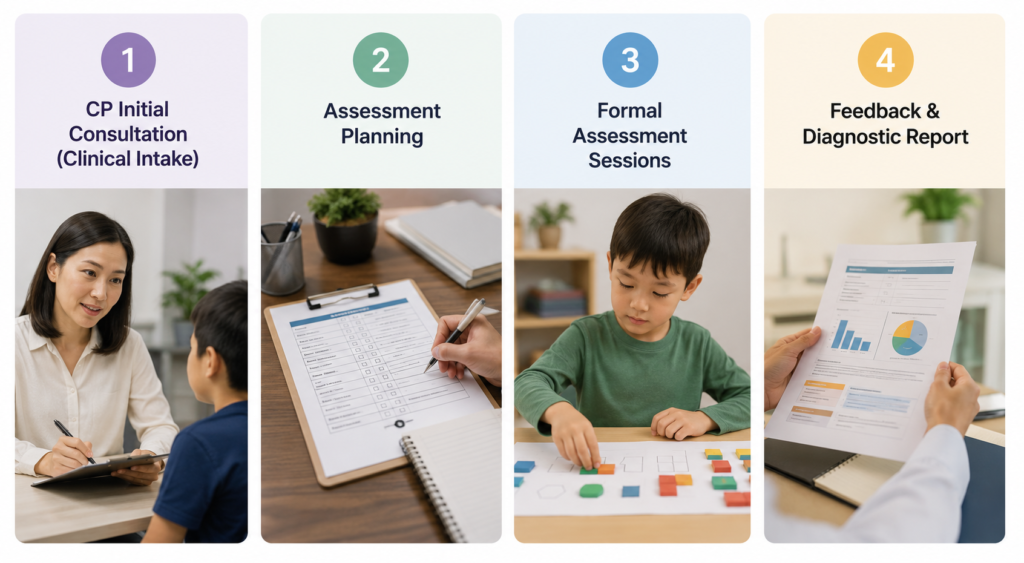
- Step 1: Initial Consultation (Clinical Intake)
The assessment process begins with an initial consultation session with our Clinical Psychologist.
The purpose of this session is to gain a better understanding of your child’s developmental, behavioural, emotional, social, and communication profile, as well as the concerns experienced at home or school.
During this session, the psychologist will:
This session also helps determine:
- Whether a formal Autism Assessment is recommended
- Whether intervention or support services may be beneficial
- Which assessment tools and assessment pathway would be most appropriate for your child’s needs
Our goal is to ensure that each child receives an individualised and clinically appropriate assessment approach.
- Review your child’s developmental and family history
- Explore social, behavioural, emotional, and communication concerns
- Discuss current functioning at home, school, and in social settings
- Understand your child’s strengths, challenges, and daily routines
- Review observations from parents, caregivers, or teachers
- Identify possible developmental concerns or contributing factors
- Step 2: Assessment Planning
Based on the information gathered during the intake session, our Clinical Psychologist will carefully select suitable assessment tools according to your child’s:
- Age and developmental level
- Presenting concerns
- Communication abilities
- Behavioural and social profile
- Functional and adaptive needs
Assessment planning may include:
This helps ensure that the assessment process is comprehensive, personalised, and developmentally appropriate.
- Parent interviews
- Behavioural questionnaires
- Clinical observations
- Social communication measures
- Adaptive functioning assessments
- Step 3: Formal Assessment Sessions
Your child may attend structured assessment sessions conducted in a supportive and child-friendly environment.
Assessment sessions may evaluate:
Parents and teachers may also be asked to complete questionnaires or provide additional information to help us better understand your child’s functioning across different environments.
- Social communication and interaction
- Behavioural and emotional regulation
- Repetitive behaviours and restricted interests
- Sensory and behavioural patterns
- Adaptive and daily living skills
- Developmental and functional abilities
- Step 4: Feedback Session & Comprehensive Report
Following the assessment, a feedback session will be arranged to discuss the findings, observations, and recommendations in detail.
Parents will receive:
A detailed psychological report will also be provided to support ongoing intervention planning, educational support, and developmental understanding.
- A comprehensive explanation of assessment findings
- Identification of developmental strengths and areas requiring support
- Diagnostic clarification where applicable
- Individualised recommendations for intervention and support
- Guidance for home, school, and daily functioning support
- Recommendations for further services or referrals if needed
Assessment Tools We May Use
Our Clinical Psychologist may use a combination of standardised assessments, behavioural observations, and parent-report measures to gain a comprehensive understanding of your child’s developmental functioning and support needs.
- Childhood Autism Rating Scale (CARS)
The Childhood Autism Rating Scale (CARS) is used to evaluate behaviours and developmental characteristics commonly associated with Autism Spectrum Disorder (ASD).
The assessment may evaluate:
This assessment helps identify behaviours associated with autism and supports clinical understanding of a child’s developmental profile.
- Social interaction
- Communication abilities
- Emotional responses
- Behavioural patterns
- Sensory responses
- Adaptation to change and routines
- Gilliam Autism Rating Scale (GARS)
The Gilliam Autism Rating Scale (GARS) is a standardised assessment tool used to identify behavioural characteristics commonly associated with Autism Spectrum Disorder (ASD).
The assessment may evaluate:
This tool helps provide additional information regarding autism-related behaviours across different environments and daily functioning.
- Social interaction difficulties
- Communication-related concerns
- Repetitive or restricted behaviours
- Emotional and behavioural functioning
- Developmental characteristics associated with autism
- Social Responsiveness Scale – Second Edition (SRS-2)
The Social Responsiveness Scale (SRS-2) is used to evaluate social communication and interpersonal functioning.
The assessment may evaluate:
This assessment helps identify social communication difficulties and behaviours commonly associated with Autism Spectrum Disorder.
- Social awareness
- Social communication
- Social interaction skills
- Behavioural and interpersonal functioning
- Difficulties understanding or responding to social situations
- Vineland Adaptive Behavior Scales – Third Edition (VABS-3)
The Vineland Adaptive Behavior Scales (VABS-3) is used to assess adaptive functioning and everyday life skills.
The assessment may evaluate:
This assessment helps provide a better understanding of how a child functions across home, school, and daily living environments.
- Communication skills
- Socialisation and interpersonal functioning
- Daily living skills
- Independence and functional abilities
- Adaptive behaviour in everyday environments
Frequently Asked Questions
What age can a child receive an Autism Assessment?
Assessment suitability depends on the child’s developmental presentation and concerns. This will be discussed during the initial consultation.
Will parents be involved in the assessment process?
Yes. Parent input is an important part of understanding a child’s developmental history, behaviour, and daily functioning.
Does the assessment include school feedback?
Where appropriate, school observations or teacher questionnaires may be included to provide additional information about the child’s functioning across environments.
Will my child receive a report?
Yes. A comprehensive psychological report outlining findings, strengths, challenges, and recommendations will be provided.
Can autism occur together with ADHD or learning difficulties?
Yes. Some children may experience overlapping developmental, behavioural, or learning-related difficulties. A comprehensive assessment helps clarify these concerns.
What happens after the assessment?
Our Clinical Psychologist will discuss the findings with you and provide recommendations regarding intervention, support strategies, and developmental planning.
Check out these websites for more information about Autism:
Book Your First Session
We welcome your feedback and inquiries. If you have any questions, comments, or suggestions, please don’t hesitate to contact us. Our team is here to assist you and provide the information you need.
Clinical Psychologist Consultation

Ms. Chan Chia Wei
Clinical Psychologist (MAHPC (CP) 00513 | CP1-0556)
Download Brochure
Working Hours
Open Everyday
Monday to Sunday – 8.30am to 6pm
Contact Us
Discover Our Team!
📞+60102502833
firststepdevelopmentcentre@gmail.com
B1-7, Plaza Damas 3, Jalan Sri Hartamas 1, 50480 Kuala Lumpur.
Copyright 2026. Firststep Child Development Sdn Bhd. All rights reserved.