


Occupational Therapy Assessment: Malaysia 2026 Parent Guide
Table of Contents
Understanding Pediatric Occupational Therapy Assessments
Occupational therapy assessment for children in Malaysia is a vital first step in identifying and addressing developmental challenges. These assessments are designed to evaluate how children interact with their environments and how their developmental skills impact daily activities like play, self-care, and school participation. Understanding these elements can be crucial for long-term success in both academic and social settings.
The Core Pillars of Occupational Therapy
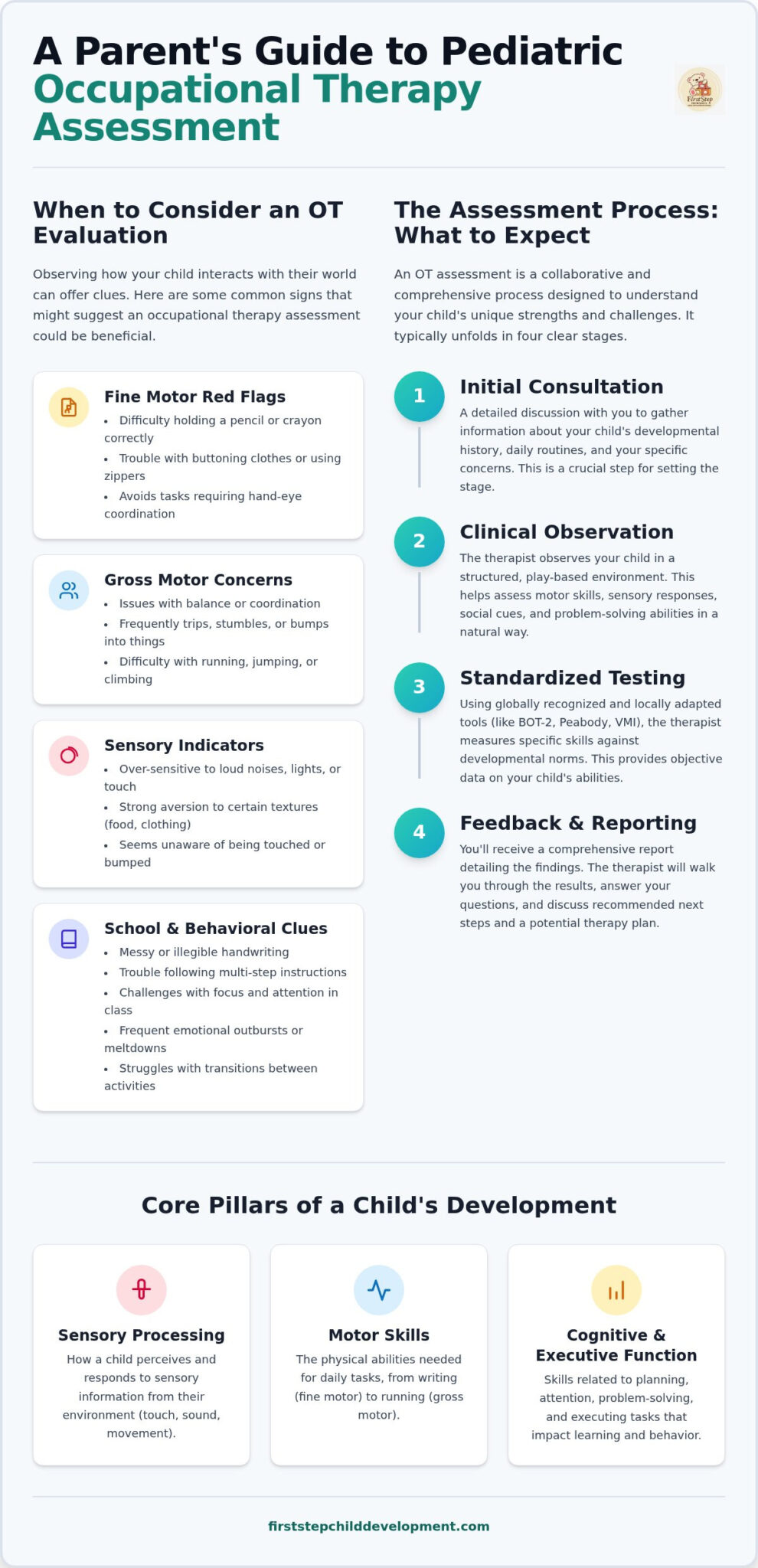
- Sensory Processing: This involves how a child perceives sensory information from their surroundings, which can affect their responses to touch, sound, and movement.
- Motor Skills: These are the physical abilities required for independence, including fine motor skills like writing and gross motor skills like running.
- Cognitive and Executive Functioning: These skills are essential for planning, attention, and executing tasks, impacting both learning and behavior.
OT vs. Other Therapies: Finding the Right Path
- Speech Therapy: Occupational therapy (OT) complements speech therapy by enhancing overall developmental progress.
- Clinical Psychology: Collaborations with clinical psychologists provide comprehensive care, addressing both physical and emotional development.
- Prioritizing OT: An OT assessment can sometimes be prioritized over physical therapy, depending on the child’s specific needs.
The Occupational Therapy Assessment Process: What to Expect

Parents often wonder what happens during an occupational therapy assessment. Here’s what you can typically expect:
- Initial Consultation: This involves a detailed discussion with parents to understand the child’s developmental history and current concerns.
- Clinical Observation: Therapists observe the child in a natural play setting to assess interaction with their environment.
- Standardized Testing: These tests, like the BOT-2 or Peabody, are adapted for Malaysian standards to assess motor skills and sensory processing.
- Feedback Session: Parents receive a comprehensive report and guidance on the next steps.
Standardized Tools Used in Malaysia
- Motor Skill Assessments: Tools such as the BOT-2 or Peabody are used to evaluate the child’s motor abilities.
- Sensory Profiles: These help identify challenges in sensory processing.
- Visual-Motor Integration (VMI): Testing for school readiness and the ability to coordinate visual and motor skills.
Clinical Observation Through Play
- Play-Based Assessment: This method reveals a child’s true capabilities in a relaxed setting.
- Social Cues and Emotional Regulation: Observing these elements in play can provide insights into a child’s behavioral development.
- Activities of Daily Living (ADLs): These are assessed to understand how a child manages everyday tasks.
Recognizing the Signs: When Does Your Child Need an OT Evaluation?
Knowing when to seek an occupational therapy assessment can be challenging. Here are some common signs:
- Fine Motor Red Flags: Difficulty with tasks like buttoning clothes or holding a pencil properly.
- Gross Motor Concerns: Issues with balance, frequent tripping, or maintaining a stable posture.
- Sensory Indicators: Over-sensitivity to loud noises or a strong aversion to touch.
- Behavioral Clues: Struggles with transitions between activities or frequent emotional outbursts.
School-Age Red Flags in the Classroom
- Handwriting Difficulties: Messy work habits or struggling to write legibly.
- Following Instructions: Difficulty understanding and responding to multi-step directions.
- Focus and Attention: Challenges with maintaining concentration during lessons.
The “Wait and See” Myth vs. Proactive Assessment
- Misconceptions: The idea that children will naturally grow out of sensory issues is often misleading.
- Early Intervention Benefits: Starting therapy in preschool years can prevent secondary frustrations and emotional challenges.
- Preventing Emotional Frustrations: Early OT assessment helps avert additional emotional frustrations by addressing issues promptly.
Preparing Your Child for Their First Assessment
Preparing your child for their first occupational therapy assessment can help ease anxiety:
- Explaining the Visit: Use age-appropriate language to describe the assessment as a fun play session.
- Managing Parental Anxiety: Staying calm will help your child feel secure and comfortable.
- What to Bring: Include medical histories, school reports, and a favorite comfort item to help your child relax.
- Parent’s Role: Your presence during the assessment can provide reassurance and support.
Creating a Reassuring Narrative
- Framing the Assessment: Describe it as a fun, interactive session with someone new.
- Avoid Trigger Words: Words like “test” or “doctor” can be intimidating for some children.
- Explaining Equipment: Familiarize your child with the swings, balls, and puzzles they might encounter.
Interpreting the Results: Your Roadmap Forward
- Chronological vs. Developmental Age: Understanding these differences can clarify your child’s progress.
- Reading the Report: Learn to interpret the clinical OT report without feeling overwhelmed.
- Setting SMART Goals: Establish clear, achievable objectives for your child’s development journey.
Why a Multidisciplinary Approach Matters for Your Child

At Firststep, a multidisciplinary approach ensures comprehensive care for your child:
- Neurodevelopmental Assessments: Occupational therapy integrates with neurodevelopmental assessments to form a complete picture of your child’s needs.
- Integration with Speech Therapy: Collaboration with speech therapy supports holistic development.
- Medical Oversight: Pediatricians ensure that physical health is always considered in the therapeutic process.
- Child Psychology Consultation: Addressing behavioral roots through child psychology consultations enhances emotional and mental well-being.
The Firststep Advantage: Integrated Care
- Personalized Intervention Plans: These plans evolve as your child progresses, ensuring continuous support.
- Collaborative Team Meetings: Regular discussions keep all therapists aligned and informed.
- Empowering Parents: As active partners, parents play a vital role in the multidisciplinary process.
Next Steps After the Assessment
- Early Intervention Programme (EIP): Transitioning into an EIP can provide structured support.
- Regular Progress Reviews: These reviews help adjust goals as your child develops.
- Professional Consultation: Contact Firststep for further guidance and support.
Understanding the intricacies of an occupational therapy assessment for your child in Malaysia can be transformative. By engaging in this process, you are taking a proactive step toward unlocking your child’s potential and supporting their developmental journey. To learn more about how Firststep can assist you, please visit our homepage.
Article by
Firststep Child Development Team
Firststep Child Development Team provides evidence-informed educational resources to help parents better understand child development, behaviour and learning. Our multidisciplinary services include clinical psychology, occupational therapy, speech and language therapy, developmental assessments and other child development support in Kuala Lumpur and Selangor.
Disclaimer
This article is for general educational and informational purposes only and is not a substitute for professional medical, psychological or therapeutic advice, diagnosis or treatment. Every child develops differently. If you have concerns about your child’s development, behaviour, learning or wellbeing, please consult an appropriately qualified healthcare or allied health professional.