



What if the “label” you’re afraid of isn’t a limitation, but the very key that unlocks your child’s hidden potential? Seeking a neurodevelopmental assessment Malaysia can feel overwhelming when you’re caught between worrying about your child’s progress and fearing a cold, clinical diagnosis. You want the best for your little one, but the maze of specialists, from Occupational Therapists to Clinical Psychologists, often leaves you with more questions than answers. It’s natural to feel anxious about how an evaluation might affect their future or whether the clinical environment will be too intimidating for your child.
We understand these concerns deeply. This guide provides the clarity you need to move forward with confidence, replacing uncertainty with a professional roadmap designed specifically for Malaysian families in 2026. You’ll learn how a multidisciplinary team uses gentle, play-based observations and fixed-price diagnostic packages to provide peace of mind. We’ll outline exactly what to expect during the process and how to use actionable feedback to empower your child’s journey at home and in school.
Key Takeaways
- Understand why moving beyond a “wait and see” approach is essential for your child’s brain development and skill acquisition.
- Discover how a comprehensive neurodevelopmental assessment Malaysia combines standardized testing with gentle clinical observation to create a clear developmental roadmap.
- Learn the distinct focus of ADHD, Autism, and Learning Difficulty evaluations and how fixed-price diagnostic packages offer financial transparency.
- Navigate the step-by-step journey from initial consultation to receiving actionable feedback reports designed to support your child’s school environment.
- Explore how a multidisciplinary team of clinical psychologists, speech therapists, and nutritionists works together to provide a holistic path forward.
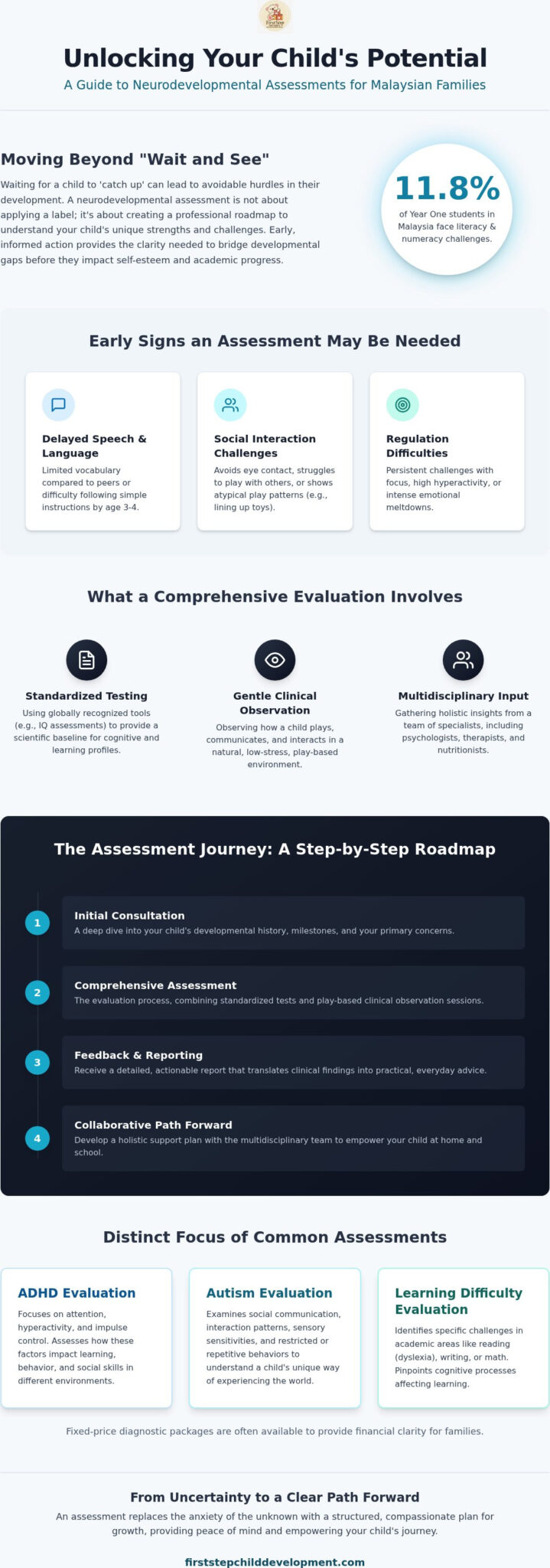
What is a Neurodevelopmental Assessment in Malaysia?
A neurodevelopmental assessment Malaysia is far more than a simple checklist; it’s a deep, scientific look at how your child’s brain processes information, manages emotions, and interacts with the world. Think of it as a professional roadmap. It evaluates cognitive function, motor skills, behavior, and social communication to understand why a child might be struggling in certain areas while excelling in others. This process doesn’t just look for “problems.” Instead, it identifies a child’s unique profile of strengths and challenges, allowing parents to move from a place of worry to a position of informed action.
Many parents in Malaysia are told to take a “wait and see” approach when they notice their child isn’t meeting certain milestones. While every child’s journey is unique, waiting too long can lead to avoidable hurdles. Recent data from the Ministry of Education indicates that roughly 11.8% of Year One students face significant challenges with basic literacy and numeracy. These gaps often relate to underlying developmental needs that, when caught early, can be managed with the right support. Choosing the right neurodevelopmental assessment Malaysia can provide the clarity needed to bridge these gaps before they impact a child’s self-esteem or academic progress.
Early Signs That an Assessment is Needed
- Delayed speech or language milestones: This might include a limited vocabulary compared to peers or difficulty following simple instructions by age three or four. Parents who are concerned about whether their child’s communication is on track can find detailed red flags and a developmental checklist in our speech delay guide for parents in Malaysia.
- Social interaction challenges: You might notice your child avoids eye contact, struggles to play with others, or shows atypical play patterns, such as lining up toys rather than using them for imaginative play.
- Regulation difficulties: Persistent challenges with focus, high levels of hyperactivity, or intense emotional meltdowns that seem disproportionate to the situation can be indicators of a need for specialized support.
The Importance of Early Intervention in Malaysia
Early intervention is the most effective way to improve long-term academic and social outcomes. When we identify a child’s needs before they enter Standard One, we can implement strategies that make the transition to primary school much smoother. This readiness is crucial in the Malaysian school system, where the curriculum moves quickly. An assessment ensures that teachers and parents are on the same page, providing a consistent environment where the child can thrive.
Our Clinical Psychologists play a vital role in this journey. They don’t just provide a diagnosis; they offer peace of mind. By translating complex clinical observations into practical, everyday advice, they help families understand their child’s potential. This professional clarity replaces the anxiety of the unknown with a structured, compassionate plan for growth.
Key Components of a Comprehensive Child Evaluation
A thorough evaluation is a mosaic of different insights. It’s not just one test or one hour in a room. To get a complete picture, a neurodevelopmental assessment Malaysia must look at a child through several lenses. This includes comparing their skills to global benchmarks, observing their natural personality, and understanding their unique history. We believe that a child is more than a score on a page; they are a complex individual with specific needs and untapped potential.
The process typically begins with a deep dive into your child’s developmental history. We look at milestones from birth, such as when they first crawled, spoke, or started feeding themselves. These early markers provide the context we need to understand their current progress. However, the true strength of a comprehensive evaluation lies in combining this history with objective data and real-world observation. A well-rounded assessment includes:
- Standardized Testing: Using globally recognized tools adapted for our local culture.
- Clinical Observation: Watching how a child interacts in a natural, low-stress environment.
- Multidisciplinary Input: Gathering insights from psychologists, OTs, and speech therapists.
The Role of Standardized Assessment Tools
Standardized tests are essential for providing a scientific baseline. These include IQ assessments and cognitive profiling that help us understand how a child learns best. For children struggling with reading or math, we use specific tools to identify learning difficulties like dyslexia. These tests are globally recognized but carefully applied to ensure they’re relevant for children growing up in Malaysia. Having this objective data is incredibly helpful when applying for school support or specialized educational programs, as it provides a clear, documented case for your child’s needs.
Why Play-Based Observation Matters
While tests provide data, play-based observation provides the heart of the assessment. Many parents worry that a clinical environment will be scary or intimidating for their child. We prioritize a gentle, play-based approach to reduce this anxiety. By watching a child interact with toys or engage in activities in a low-stress setting, we capture authentic behaviors that a formal test might miss. It’s about seeing how they problem-solve, how they handle frustration, and how they communicate when they feel safe. For children who need ongoing emotional support beyond the assessment itself, play-based therapy for children offers a proven, structured way to help them process emotions and build confidence in a safe environment.
This “trusted advisor” approach ensures the child feels understood rather than examined. It’s why our team includes diverse experts. A single perspective is rarely enough. By integrating input from clinical psychologists, OTs, and speech therapists, we create a 360-degree view of your child’s world. If you’re ready to start this journey, you can explore our fixed-price diagnostic assessment packages designed to provide clarity without the stress of hidden costs. This multidisciplinary approach ensures that no aspect of your child’s development is overlooked.
Comparing ADHD, Autism, and Learning Difficulty Assessments
Choosing the right path for your child begins with understanding that different behaviors often stem from very different neurological roots. While a child might struggle to finish their homework or make friends, the underlying reason could range from an attention deficit to a sensory processing challenge. A comprehensive neurodevelopmental assessment Malaysia helps differentiate between conditions that might look similar on the surface, ensuring that the support provided is as unique as the child receiving it.
Families often worry about escalating costs or “hidden” fees during the diagnostic journey. We address this by offering fixed-price diagnostic assessment packages for ADHD, Autism, and Learning Difficulties. This transparency allows parents to focus entirely on their child’s progress rather than the financial logistics. Each assessment type focuses on specific functional areas:
- ADHD Assessments: These focus heavily on executive function, impulse control, and sustained attention spans to see how a child manages tasks and emotional regulation. Parents seeking to understand this process in depth can find a detailed walkthrough in our guide to ADHD diagnosis for children in Malaysia.
- Autism Spectrum Disorder (ASD) Evaluations: Our team analyzes social communication patterns, both verbal and non-verbal, alongside sensory processing and repetitive behaviors. Families navigating this path can find a comprehensive overview of the process, waiting lists, and support options in our dedicated guide to autism diagnosis Malaysia.
- Learning Difficulty Assessments: These identify the root causes of struggles in reading, writing, or mathematics, distinguishing between a lack of exposure and a neurological processing difference.
Differentiating the Diagnostic Processes
It’s common for symptoms to overlap, which is why a multidisciplinary look is so valuable. For instance, a child who seems “distracted” might actually be overwhelmed by the sensory environment, a marker more common in autism than ADHD. Our assessments carefully tease these threads apart. We look at how a child uses eye contact, gestures, and tone of voice, while also measuring their ability to filter out background noise or follow multi-step instructions. Understanding this overlap prevents a partial diagnosis and ensures every need is met.
Psychoeducational Assessments for School Success
Beyond a clinical diagnosis, many families require a psychoeducational evaluation to determine “school readiness.” This process measures academic potential against current performance. It’s particularly vital for “twice-exceptional” (2e) children; those who possess a high IQ but struggle with specific learning challenges that mask their true ability. By identifying these nuances, we can provide schools with a clear plan for accommodations. These findings are often the first step toward a long-term child psychology consultation Malaysia, where we continue to support the child’s emotional and academic growth as they move through the Malaysian education system.
The Assessment Journey: A Step-by-Step Roadmap
Understanding the path ahead is often the first step toward reclaiming peace of mind. A neurodevelopmental assessment Malaysia isn’t a single, stressful event; it’s a deliberate, multi-stage process designed to respect your child’s pace and stamina. We break this journey into five clear milestones to ensure we capture the most accurate picture of your child’s development while keeping them comfortable and engaged.
- Step 1: Initial Consultation. We begin by listening to your story. This session is dedicated to understanding your specific concerns, your child’s history, and the goals you have for their future.
- Step 2: Formal Assessment Sessions. We often split these into multiple, shorter sessions. This prevents fatigue and ensures your child doesn’t feel overwhelmed, allowing their true abilities to shine through.
- Step 3: Multidisciplinary Review. Our experts, including Clinical Psychologists and OTs, meet to synthesize their findings. This collaboration ensures the final profile is comprehensive and balanced.
- Step 4: Parental Feedback Session. We sit down with you to explain the results in plain, jargon-free English. You’ll understand the “why” behind the behaviors you’ve observed.
- Step 5: Implementation. You leave with a personalized intervention roadmap. This plan translates clinical findings into practical steps for home and school.
Preparing Your Child for the Assessment Day
Preparation starts with how you frame the visit. We recommend telling your child they’re going to a special place to meet people who want to play games and solve puzzles with them. Avoid using words like “test” or “doctor” if those cause anxiety. To help them feel at home, feel free to bring along a few favorite snacks, a comfort toy, and any recent school reports or work samples. Managing your own anxiety is just as important; children are highly sensitive to their parents’ emotions, so staying calm and positive helps create a safe environment for them.
Understanding the Feedback Report
The feedback report is the most valuable tool you’ll receive. It’s more than just a diagnosis. It’s a detailed document that schools can use to implement specific classroom accommodations or therapy referrals. Every comprehensive child assessment package we offer includes this detailed report, ensuring you have a clear, documented case for the support your child deserves. If you’re ready to move from uncertainty to a clear plan of action, you can explore our fixed-price diagnostic assessment packages to see which journey best fits your family’s needs. We prioritize clarity and professional guidance every step of the way.
Choosing the Right Multidisciplinary Support in Malaysia
Choosing the right team is the most significant decision you’ll make after deciding to seek a neurodevelopmental assessment Malaysia. A diagnosis on its own is just a data point; it’s the multidisciplinary support following that diagnosis that transforms insight into growth. When Clinical Psychologists, Occupational Therapists, and Speech Therapists work in unison, they catch the nuances that a single practitioner might overlook. This collaborative approach ensures that your child’s cognitive, physical, and communicative needs are addressed as a cohesive whole rather than isolated symptoms. A neurodevelopmental assessment Malaysia is most effective when it serves as the foundation for a life-long partnership between experts and families. For families who want to understand how the OT component fits into this process, our detailed guide to the occupational therapy assessment for child Malaysia practitioners provide explains what to expect and how to verify therapist credentials.
We also recognize that development doesn’t happen in a vacuum. Integrating Nutritionist Consultations and Pediatricians into the process allows for a truly holistic view of your child’s health. For example, understanding how dietary patterns or physical health impact focus and energy can provide a more complete picture of a child’s daily challenges. This comprehensive care model empowers you as a parent, turning you into an active, informed partner in your child’s developmental journey rather than just a bystander. By looking at the whole child, we ensure that every factor contributing to their growth is considered and supported.
The Firststep Advantage: Expertise Meets Empathy
Our center is designed to be a safe haven, far removed from the cold, clinical feel of a traditional hospital. We’ve built a child-centered, play-based environment where assessments feel like discovery rather than an ordeal. This gentle approach is critical because a child who feels safe and relaxed will always provide more accurate results than one who is anxious or intimidated. Capturing authentic behavior is the only way to build a roadmap that truly fits your child’s personality.
By offering a full spectrum of services, including play-based therapy for children and Pediatric Occupational Therapy, we ensure that families can access the care they need under one roof. We don’t just support the child; we support the entire family. We know that a developmental journey can be emotional for parents, so we prioritize professional clarity and compassionate guidance at every turn. You’re never alone in this process; our team is here to provide the steady, expert hand you need.
Taking the First Step Toward Potential
Moving from a state of concern to a state of action is a brave transition. A professional consultation is the bridge that leads to specialized support, helping neurodivergent children navigate a world that isn’t always built for their unique way of thinking. The long-term benefits of early, multidisciplinary intervention are well-documented, leading to improved social confidence and academic success. Every child deserves the opportunity to reach their full potential, and with the right expert guidance, that potential is limitless.
Empowering Your Child’s Journey with Professional Clarity
Moving from a place of uncertainty to a clear, actionable plan is one of the greatest gifts you can give your child. We’ve explored how a multidisciplinary team of psychologists, therapists, and pediatricians provides the thorough insight needed to understand your child’s unique profile. By prioritizing a gentle, play-based environment, we ensure that the evaluation process is supportive rather than stressful. You now have the roadmap to move beyond the “wait and see” approach and begin a journey of proactive growth.
Our fixed-price diagnostic assessment packages offer the transparency you need to focus entirely on your child’s potential. A neurodevelopmental assessment Malaysia provides more than just a diagnosis; it offers peace of mind and a tailored strategy for school and home success. You’re ready to replace anxiety with expert clarity and compassionate guidance.
Book a Comprehensive Neurodevelopmental Assessment for Your Child today to start building their personalized roadmap. Your child’s potential is limitless, and we’re here to help them reach it every step of the way.
Frequently Asked Questions
How much does a neurodevelopmental assessment cost in Malaysia?
Costs vary depending on the complexity of the evaluation and the specific specialists involved in the process. We provide fixed-price diagnostic assessment packages to ensure families have full financial transparency from the start. This approach eliminates the worry of hidden fees or unexpected costs, allowing you to focus entirely on your child’s developmental roadmap and future support needs.
What is the difference between a pediatrician and a child psychologist for assessment?
A pediatrician typically focuses on the physical and medical aspects of development, while a clinical psychologist evaluates cognitive, emotional, and behavioral patterns. In a comprehensive neurodevelopmental assessment Malaysia, both specialists often work together. The psychologist uses standardized testing to profile a child’s learning and social skills, while the pediatrician ensures no underlying medical conditions are affecting their progress.
How long does the entire neurodevelopmental evaluation process take?
The entire process generally takes several weeks from the initial consultation to the final feedback session. This timeline includes multiple assessment sessions, which we often split into shorter blocks to prevent child fatigue and ensure accuracy. After the sessions are complete, our multidisciplinary team requires time to synthesize the findings and produce a detailed, actionable report for the family.
Can a neurodevelopmental assessment help my child get school accommodations?
Yes, the detailed feedback report provided after an assessment is a vital tool for securing school accommodations. It offers objective evidence of a child’s specific learning needs, such as extra time for exams or a modified classroom environment. Schools use these professional recommendations to create Individual Education Plans (IEPs) that help students thrive in their specific academic setting.
At what age should I consider an autism or ADHD assessment for my child?
Assessments can be conducted as early as 18 to 24 months for autism, while ADHD evaluations are typically more accurate from age five or six. Early signs like speech delays or social withdrawal can be identified early, allowing for timely intervention. If you notice your child isn’t meeting milestones, seeking professional guidance early can significantly improve their long-term social and academic outcomes. For a detailed overview of what the ADHD diagnosis process for children in Malaysia involves, our step-by-step parent’s guide walks you through every stage from initial concerns to post-diagnostic support.
What happens if my child is ‘uncooperative’ during the assessment sessions?
We prioritize a gentle, play-based environment specifically to help children who might feel overwhelmed or hesitant. Our specialists are trained to build rapport and use engaging activities that don’t feel like clinical testing. If a child is having a difficult day, we can pause or reschedule the session to ensure we capture the most authentic and accurate picture of their development.
Do I need a doctor’s referral for a private neurodevelopmental assessment?
You don’t usually need a doctor’s referral to book a private neurodevelopmental assessment Malaysia at our center. Parents can reach out directly if they have concerns about their child’s progress or behavior. However, if you’re planning to claim the costs through insurance, it’s a good idea to check with your provider as they may require a formal referral from a GP or pediatrician.
Will the assessment report be recognized by international schools in Malaysia?
Yes, our comprehensive reports are designed to meet the high standards required by international schools in Malaysia and abroad. We use globally recognized standardized testing tools that provide the clinical evidence these institutions need to provide support. The clear, jargon-free explanations in our reports help educators understand exactly how to implement the recommended strategies in the classroom environment.
Article by
Firststep Child Development Team
Firststep Child Development Team provides evidence-informed educational resources to help parents better understand child development, behaviour and learning. Our multidisciplinary services include clinical psychology, occupational therapy, speech and language therapy, developmental assessments and other child development support in Kuala Lumpur and Selangor.
Disclaimer
This article is for general educational and informational purposes only and is not a substitute for professional medical, psychological or therapeutic advice, diagnosis or treatment. Every child develops differently. If you have concerns about your child's development, behaviour, learning or wellbeing, please consult an appropriately qualified healthcare or allied health professional.