



As a parent in Malaysia, noticing that your child interacts with the world differently can bring a mix of concern and questions. You might be wondering about developmental milestones, social communication, or repetitive behaviours. Navigating the path towards understanding is the first step, and a formal autism diagnosis is often the key that unlocks a clear, supportive plan for your child’s future.
This guide for 2026 is designed to walk you through the process of seeking an autism diagnosis in Malaysia. We will explain the difference between initial screenings and comprehensive assessments, what a high-quality evaluation should include, and how to choose the right professional support. Our goal is to replace uncertainty with clarity, helping you see a diagnosis not as a label, but as a clinical roadmap to nurture your child’s unique potential.
Understanding the Autism Diagnosis Pathway in Malaysia
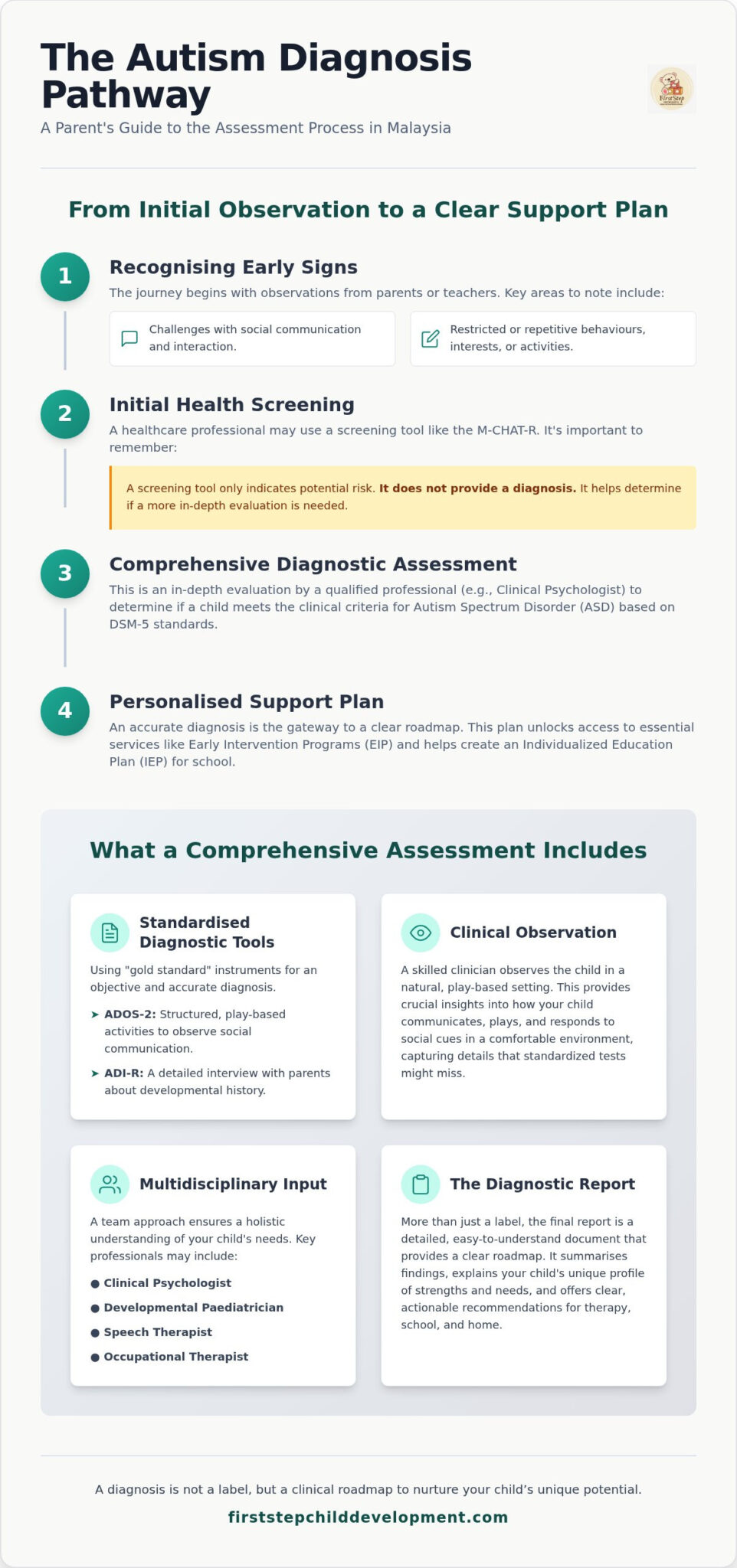
The journey to a formal diagnosis often begins with a parent’s observation or a teacher’s feedback. Recognising the early signs is crucial, but it’s equally important to understand the structured pathway that follows, from informal screening to a comprehensive clinical assessment.
- Recognising early signs: Signs of Autism Spectrum Disorder (ASD) typically fall into two categories: challenges with social communication and interaction, and restricted or repetitive patterns of behaviour, interests, or activities. This could look like delayed speech, difficulty with back-and-forth conversation, intense interest in specific topics, or sensitivity to sensory input like sounds or textures.
- The role of screening tools: In Malaysia, healthcare professionals often use screening tools like the Modified Checklist for Autism in Toddlers, Revised (M-CHAT-R) during routine check-ups. This is a simple questionnaire to see if a child is at risk and needs further evaluation.
- Screening vs. Diagnostic Assessment: A screening tool only indicates potential risk; it does not provide a diagnosis. A formal diagnostic assessment is a much more in-depth evaluation conducted by a qualified professional, such as a Clinical Psychologist, to determine if a child meets the clinical criteria for ASD.
- Why early diagnosis is critical: An early and accurate diagnosis is the gateway to accessing essential Early Intervention Programs (EIP). These specialised therapies can significantly support a child’s development during the critical neuroplasticity window of early childhood.
When to Move from Screening to Assessment
If a screening tool flags a potential concern or your parental intuition tells you something is amiss, it is time to seek a formal assessment. Red flags might include a lack of response to their name, difficulty making eye contact, or delays in language development. Acting early provides a clear roadmap for specialised support, moving away from a “wait and see” approach that can delay access to vital therapies.
The Diagnostic Standards (DSM-5)
Clinical Psychologists in Malaysia use the Diagnostic and Statistical Manual of Mental Disorders, Fifth Edition (DSM-5), the international standard for diagnosing neurodevelopmental conditions. This ensures the assessment is thorough, consistent, and based on established clinical criteria. A formal diagnosis from a registered professional is recognised by schools and is essential for creating an Individualized Education Plan (IEP) and accessing long-term support services.
Screening (M-CHAT-R) -> Formal Assessment -> Support Plan.”>
What a Comprehensive Autism Assessment Package Includes
A reliable autism diagnosis is not based on a single test or a brief conversation. It is a comprehensive process that combines standardised tools, clinical observation, and input from multiple professionals to build a complete picture of your child’s strengths and challenges.
A high-quality assessment package should be built on four key pillars:
- Standardised Diagnostic Tools: The “gold standard” instruments for diagnosing autism are the Autism Diagnostic Observation Schedule, Second Edition (ADOS-2) and the Autism Diagnostic Interview-Revised (ADI-R). The ADOS-2 involves a series of structured and semi-structured play-based activities to observe a child’s social communication and interaction, while the ADI-R is a detailed interview with parents about the child’s developmental history.
- Clinical Observation: Beyond formal testing, a skilled clinician will observe your child in a natural, play-based setting. This allows them to see how your child communicates, plays, and responds to social cues in a comfortable environment, providing insights that standardised tests might miss.
- Multidisciplinary Input: A thorough diagnosis benefits from a team approach. Collaboration between a Clinical Psychologist, a Developmental Paediatrician, a Speech Therapist, and an Occupational Therapist ensures a holistic understanding of your child’s needs, from cognitive skills to sensory processing and communication.
- The Diagnostic Report: The final report is more than just a diagnosis. It should be a detailed, easy-to-understand document that summarises the findings, explains your child’s unique profile of strengths and needs, and provides clear, actionable recommendations for therapy, school support, and home strategies.
The Multidisciplinary Team Advantage
At Firststep, our assessments are conducted by a multidisciplinary team. The Clinical Psychologist leads the evaluation, assessing cognitive and behavioural patterns. An Occupational Therapist may contribute by evaluating sensory processing needs and motor skills, while a Speech Therapist can provide crucial input on functional communication and language abilities. This collaborative approach ensures the final recommendations are integrated and tailored to your child as a whole person.
Standardised Testing vs. Clinical Observation
While tools like the ADOS-2 provide essential, objective data for an accurate diagnosis, they are most powerful when combined with skilled clinical observation. A good assessment balances the data from standardised tests with an appreciation for your child’s unique personality, interests, and strengths. This ensures the evaluation captures a holistic view, leading to a more personalised and effective intervention plan.
Choosing Between Private and Government Diagnostic Services
In Malaysia, parents have two main pathways for an autism diagnosis: government hospitals and private child development centres. While both can provide a formal diagnosis, there are significant differences in wait times, environment, and the overall experience that are important to consider.
Here is a comparison to help you decide which option is right for your family:
- Wait Times: Government hospitals often have long waitlists for developmental assessments, sometimes lasting many months or even over a year. Private centres can typically offer an appointment much sooner, which is critical for accessing early intervention without delay.
- Environment: A busy, clinical hospital setting can be overwhelming for any child, particularly one with sensory sensitivities. Private child development centres are often designed to be gentle, quiet, and child-friendly, using a play-based approach to help children feel safe and comfortable during the assessment.
- Cost Transparency: While government services are subsidised, the process can sometimes involve multiple appointments with various specialists, making the final cost less predictable. Many private centres, including Firststep, offer fixed-price assessment packages that include all consultations, testing, the final report, and a feedback session, providing complete cost transparency from the start.
- Continuity of Care: One of the key benefits of a private centre is the seamless transition from diagnosis to therapy. The same team that assesses your child can often develop and deliver their intervention plan, ensuring a consistent and integrated approach to their care.
Evaluating Clinic Quality and Expertise
When choosing a private clinic, it is essential to verify their credentials. Ensure the assessment is led by a Clinical Psychologist registered with the Malaysian Society of Clinical Psychology (MSCP). Ask about the experience of their multidisciplinary team and their approach to neurodiversity. A good clinic will be happy to answer your questions and provide clarity on their process. For more information on what to look for, our 2026 Parent Guide to Neurodevelopmental Assessments offers further insights.
The Benefit of Fixed-Price Packages
A fixed-price package removes the financial uncertainty from the diagnostic process. It ensures there are no hidden costs for additional reports or follow-up meetings. A comprehensive package should clearly state that it includes the full assessment, a detailed written report suitable for schools, and a dedicated feedback session where the psychologist explains the findings and answers all of your questions.
Preparing Your Child for Their Diagnostic Appointment
The thought of an assessment can be stressful for parents and children alike. However, with some simple preparation, you can help make the experience as calm and positive as possible. The goal is to create an atmosphere where your child can be themselves, allowing the clinical team to get an accurate understanding of their abilities.
Here are a few tips to prepare for the day:
- Explain the visit simply: You can tell your child they are going to a new place to play with a new teacher or doctor. Frame it as a fun visit where they will get to play with different toys and talk to someone. Avoid using words like “test” or “assessment” that might cause anxiety.
- What to bring: Pack a bag with your child’s favourite snacks, a drink, and a few comforting toys or books. This can help them feel more secure in an unfamiliar environment. Also, be sure to bring any previous school reports, medical records, or notes from teachers.
- Manage your own anxiety: Children are highly attuned to their parents’ emotions. By staying calm and positive, you create a reassuring atmosphere for your child. Trust the professionals to guide the process with sensitivity.
- Embrace the play-based approach: A quality assessment is designed to be engaging, not intimidating. The clinical team will use play to build rapport and observe your child’s skills naturally. Your child’s main job is simply to play and interact as they normally would.
Gathering Essential Documentation
Before your appointment, take some time to compile relevant documents. This includes feedback from teachers, samples of schoolwork, and a brief history of your child’s developmental milestones (e.g., when they first sat up, walked, and spoke). This information provides the clinical team with valuable context. If you are also considering other possibilities, our guide to ADHD diagnosis may offer a useful comparison.
What Happens During the Assessment Day?
A comprehensive autism evaluation can take several hours, sometimes split over two sessions. During this time, the psychologist will engage your child in various play-based activities and may also conduct direct testing. Parents are typically involved in parts of the assessment, particularly the developmental history interview. The priority is always to ensure the child feels safe, respected, and comfortable throughout the process.
Next Steps: From Diagnosis to Personalized Intervention
Receiving an autism diagnosis is not the end of the journey; it is the beginning of a new, more informed one. The diagnostic report serves as a detailed roadmap, guiding the creation of a support system tailored to your child’s specific needs and strengths. This is the moment where a diagnosis transforms from a clinical term into a practical tool for growth.
The post-diagnostic process should include:
- The Feedback Session: This is a dedicated meeting where the Clinical Psychologist explains the assessment findings in detail. It is your opportunity to ask questions and gain a deep understanding of your child’s unique cognitive and sensory profile.
- Creating a Therapy Roadmap: Based on the report’s recommendations, the next step is to create an Individualized Education Plan (IEP) or therapy plan. This roadmap outlines specific, measurable goals for your child’s development.
- Accessing Multidisciplinary Support: The plan will likely recommend a combination of therapies. This could include Speech Therapy to improve communication, Occupational Therapy to address sensory needs and daily living skills, and other specialised support tailored to your child.
- Parental Support and Guidance: A good clinic supports the entire family. This includes empowering parents with strategies to use at home and providing a space to discuss any concerns, ensuring you feel confident as your child’s best advocate.
The Firststep Approach to Post-Diagnostic Care
At Firststep, we believe in seamless continuity of care. Our multidisciplinary team works collaboratively to transition your child from assessment directly into a personalised early intervention program. The insights gained during the diagnosis are used to create a targeted therapy plan, implemented by therapists who already understand your child’s profile. We are committed to empowering parents with clear, actionable feedback to support their child’s progress at every stage.
A Holistic View of Growth and Potential
Ultimately, an autism diagnosis is about understanding, not limitation. It provides the framework to focus on a child’s strengths while providing targeted support for their challenges. In a gentle, professional, and nurturing environment, a clear diagnosis is the first step towards helping your child build skills, gain confidence, and unlock their full potential.
Frequently Asked Questions (FAQs)
How much does an autism diagnosis cost in Malaysia for 2026?
The cost varies significantly between government and private facilities. In the private sector, a comprehensive assessment package in 2026 can range from RM 2,500 to over RM 5,000, depending on the number of specialists involved and the depth of the evaluation. It is best to inquire directly with clinics about their fixed-price packages.
What is the best age to get a child tested for autism in Malaysia?
While a reliable diagnosis can be made as early as 18-24 months, most diagnoses occur after the age of 3. There is no “wrong” age to seek an assessment. Early diagnosis leads to early intervention, which is highly beneficial, but an assessment at any age can provide valuable clarity and support.
Can a paediatrician diagnose autism, or do I need a clinical psychologist?
A general paediatrician can screen for developmental delays, but a formal diagnosis of Autism Spectrum Disorder should be made by a specialist, such as a Developmental Paediatrician or, most commonly in Malaysia, a qualified Clinical Psychologist who is trained in using gold-standard diagnostic tools.
Is an autism diagnosis from a private clinic recognised by Malaysian schools?
Yes, a diagnostic report from a registered Clinical Psychologist is recognised by both public and private schools in Malaysia. It is the official document required to apply for special educational needs (SEN) support and to develop an Individualized Education Plan (IEP).
What happens if my child is non-verbal during the assessment?
This is very common, and assessors are highly experienced in working with non-verbal or minimally verbal children. Tools like the ADOS-2 are specifically designed to be adapted for children with different communication levels, using play-based observation to assess social interaction and behaviour without relying on speech.
Does insurance in Malaysia cover neurodevelopmental assessments?
Coverage for diagnostic assessments varies widely among insurance providers and policies in Malaysia. Most standard medical insurance plans do not cover it. However, some comprehensive corporate or individual plans may offer partial coverage. It is essential to check directly with your insurance provider.
If you have questions about your child’s development or wish to understand the assessment process better, our team is here to provide guidance. You can learn more about our autism assessment services or contact us at https://firststepchilddevelopment.com/ for a consultation.
Article by
Firststep Child Development Team
Firststep Child Development Team provides evidence-informed educational resources to help parents better understand child development, behaviour and learning. Our multidisciplinary services include clinical psychology, occupational therapy, speech and language therapy, developmental assessments and other child development support in Kuala Lumpur and Selangor.
Disclaimer
This article is for general educational and informational purposes only and is not a substitute for professional medical, psychological or therapeutic advice, diagnosis or treatment. Every child develops differently. If you have concerns about your child's development, behaviour, learning or wellbeing, please consult an appropriately qualified healthcare or allied health professional.