



Articulation Therapy for Kids in Malaysia (2026)

Imagine watching your four-year-old try to tell a story at a local playground in Kuala Lumpur, only to see their peers tilt their heads in confusion. It’s a heavy feeling when you realise your child’s “cute” toddler talk isn’t fading, and worry about potential bullying starts to settle in. You aren’t alone in feeling unsure whether to wait or seek help, especially when you want a clinic that looks at your child’s whole development rather than just speech sounds. Articulation therapy for kids in Malaysia is a specialised process that uses play-based techniques to help children master difficult speech sounds and communicate with confidence.
This guide helps you understand how to identify persistent challenges and the exact steps to access professional speech delay treatment for your child. We’ll explore developmental milestones for comparison, provide a practical roadmap for starting therapy, and share ways you can nurture your child’s progress within your own home. By understanding this process, you can transform frustration into a journey of confident communication and growth.
Key Takeaways
- Learn to distinguish between typical toddler speech and persistent delays by identifying specific signs, such as when a child is difficult for strangers to understand by age three.
- Discover the structured pathway for articulation therapy for kids Malaysia, beginning with a comprehensive assessment to create a clear, goal-oriented roadmap for your child.
- Gain practical, gentle techniques to support progress at home, including how to use focused stimulation and positive modelling during your daily routines.
- Understand the value of a multidisciplinary approach that combines clinical expertise with play-based engagement to support your child’s emotional and developmental growth.
Understanding Articulation Therapy for Kids in Malaysia
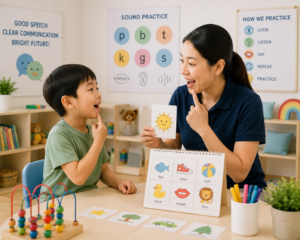
Articulation refers to the physical mechanics of speech. It is the precise movement of the tongue, lips, and jaw to produce clear, distinct sounds. When a child struggles with these physical movements, they may require articulation therapy for kids Malaysia to ensure they can be understood by peers and teachers. In our local context, where children often navigate multilingual households, clear speech is the foundation for social confidence and future academic success.
Choosing to “wait it out” can sometimes lead to avoidable challenges. If a child’s speech remains unclear as they enter primary school, they may face social isolation or struggle with early literacy. Early intervention provides the tools a child needs to close these gaps before they impact their self-esteem or their willingness to participate in class.
Articulation vs. Language: What is the Difference?
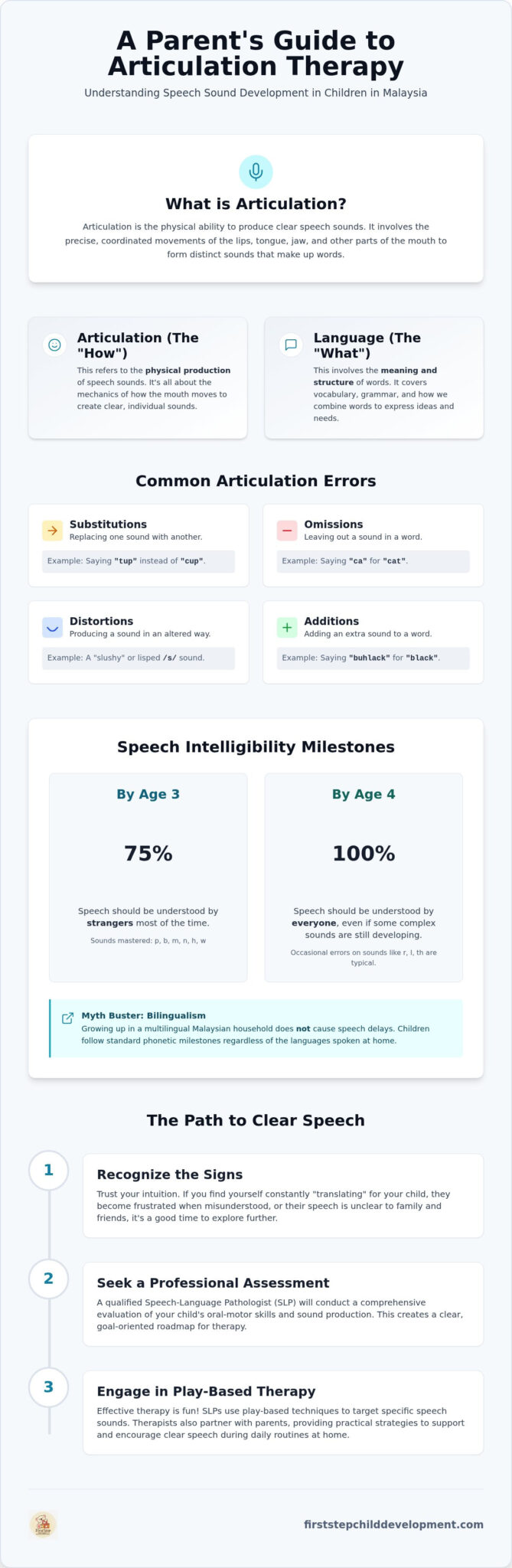
It’s helpful to view speech as the “how” and language as the “what.” Language involves the meaning of words and how we combine them, whereas articulation is purely about the physical production of sounds. For a foundational look at these mechanics, Understanding Speech Sound Disorders explains the various ways sounds can be impacted. Common errors include:
- Substitutions: Replacing one sound with another, such as saying “tup” instead of “cup.”
- Omissions: Leaving sounds out of words, like “ca” for “cat.”
- Distortions: Producing a sound in an altered way, such as a “slushy” s-sound.
- Additions: Adding extra sounds where they don’t belong.
The Role of a Speech-Language Pathologist (SLP)
In Malaysia, qualified SLPs hold specialised degrees and are trained to evaluate oral-motor skills and phonetic placement. At Firststep, our speech therapy approach focuses on the therapist as a partner. They don’t just work with the child in isolation; they provide parents with practical strategies to encourage clear speech during daily play and conversation. This collaborative model ensures that the progress made in the clinic translates into the child’s natural environment.
Recognizing the Signs: Does Your Child Need Articulation Support?
Parents often wonder if their child’s speech is simply a phase or something that requires professional attention. One of the most reliable indicators is how well people outside your immediate family understand your child. By the time a child reaches age three, they should be roughly 75% intelligible to strangers. If you find yourself constantly “translating” for others or if your child becomes visibly frustrated when they can’t communicate their needs, it may be time to consider articulation therapy for kids Malaysia.
Other signs include persistent “baby talk” beyond expected ages or speech that sounds slurred or muffled. You should also observe their physical habits. Difficulties with chewing or swallowing can sometimes point to oral-motor issues that affect speech production. To better understand these nuances, you can explore the various Types of Speech Disorders in Children, which helps distinguish between sound production and other communication challenges.
Speech Milestones for Malaysian Children
In our diverse society, it’s a common myth that bilingualism causes speech delays. In reality, children in Malaysia follow standard phonetic milestones regardless of the languages spoken at home. By age three, most children have mastered sounds like *p, b, m, n, h,* and *w*. By age four, their speech should be 100% intelligible to everyone, even if they still make occasional errors on complex sounds like *r* or *th*.
When to Seek a Professional Assessment
Red flags include a sudden loss of speech skills or inconsistent errors where a child says a word correctly once but cannot repeat it. These articulation challenges can sometimes overlap with other developmental needs, making a comprehensive clinical assessment a valuable first step. For broader context on communication growth, you may find our Speech Delay Guide for Parents in Malaysia (2026) helpful in identifying when to seek support. Early clinical attention ensures your child receives the specific tools they need to thrive. If you have concerns about your child’s milestones, a professional speech therapy consultation can provide the clarity you need.
The Step-by-Step Path of Effective Speech Delay Treatment
Effective articulation therapy for kids Malaysia follows a structured, evidence-based roadmap. It moves beyond simple word repetition to address the underlying mechanics of speech production. In Malaysia, professional standards are maintained by the Malaysian Association of Speech-Language & Hearing (MASH), ensuring that therapists use validated methods to support your child’s growth. The journey typically unfolds in five clear steps:
- Step 1: A comprehensive initial assessment to map your child’s phonetic inventory.
- Step 2: Collaborative goal setting where parents and therapists decide which sounds to target first.
- Step 3: Active therapy using techniques like phonetic placement to teach the physical “how” of sounds.
- Step 4: Regular progress monitoring to adjust targets as your child masters specific sounds.
- Step 5: Transitioning skills so the child uses their new speech patterns at home and in school.
What Happens During the Initial Assessment?
The first session involves standardized testing to compare your child’s speech to national development norms. We also observe play-based communication to see how they use sounds in a natural, relaxed setting. If we suspect broader delays, understanding how assessments work can help you prepare for a more comprehensive neurodevelopmental evaluation that looks at your child’s overall profile.
Common Therapy Techniques Used in Sessions
Therapists use a variety of multisensory tools to help children find the right mouth placement. This includes auditory bombardment, where the child hears the correct sound repeated in context, and visual cueing using mirrors or hand signs. For some, tactile feedback helps them physically feel where their tongue or lips should be. These methods ensure the learning process is engaging rather than repetitive.
Practical Home Strategies to Support Articulation Progress
Home is where the most significant progress happens. While clinic sessions provide the technical foundation, your daily interactions reinforce these new habits. Instead of correcting your child when they mispronounce a word, try modelling the correct version. If they say “look at the tat,” you can gently respond with, “Yes, I see the cat! It’s a big, fluffy cat.” This approach removes the pressure and fear of failure, creating a safe space for them to practice.
How to Encourage Your Toddler to Talk
One of the most effective tools is “Wait Time.” It’s tempting to finish your child’s sentences, but giving them five to ten seconds of silence allows them to process their thoughts and attempt the sounds themselves. You can also use rhythmic books and songs to practice difficult phonemes naturally. For more ideas on supporting early communication, our speech therapy specialists offer specific exercises tailored to your child’s needs. Verbal risk-taking should always be met with encouragement rather than criticism.
Turning Daily Routines into Therapy Opportunities
Low-pressure windows like bath time or mealtime are perfect for articulation therapy for kids Malaysia. You can use “choice-making” to elicit specific sounds. For example, asking “Do you want the apple or the banana?” encourages them to use the target sounds for ‘a’ or ‘b’ in a functional way. Consistency is key. Small, frequent bursts of practice are far more effective than long “drill” sessions. When you provide steady praise for their effort, your child gains the confidence to keep trying. If you’re ready to take the next step, a professional speech therapy assessment can help you build a roadmap for progress.
Comprehensive Speech Delay Therapy at Firststep Psychology
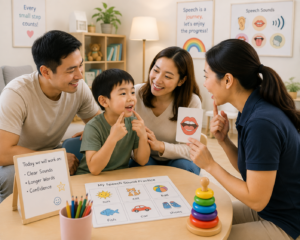
At Firststep, we believe that speech progress is most sustainable when it is nurtured in a gentle and professional environment. Our approach to articulation therapy for kids Malaysia is built on the understanding that every child’s phonetic profile is unique. Instead of using rigid, repetitive drills, we utilise play-based assessments and therapy techniques that respect your child’s emotional state. This ensures that therapy feels like a natural extension of their world, fostering a positive relationship with communication and learning.
The Multidisciplinary Advantage
A significant benefit of our center is the synergy between our various specialists. A clinical psychologist consultation can help identify if a child’s speech challenges are impacting their emotional resilience or social confidence. We also collaborate closely with pediatricians to rule out physical factors, such as hearing loss or structural oral-motor issues. This holistic view ensures we aren’t just addressing isolated sounds, but supporting your child’s entire developmental journey with a team of expert advisors behind them.
Your Partner in Your Child’s Growth
We view parents as the most vital members of our therapeutic team. Our specialists design personalised treatment plans that focus on your child’s specific sound masteries and challenges. After every session, you’ll receive clear, actionable feedback so you feel empowered to be an active participant in your child’s progress. We’re committed to professional clarity, avoiding cold clinical jargon in favour of compassionate, practical guidance. Taking the first step toward clearer communication starts with a speech therapy assessment. Our dedicated team is here to guide you through every milestone, ensuring your child has the tools to speak with confidence and clarity.
Empowering Your Child’s Communication Journey
Supporting your child through speech challenges is a collaborative effort that begins with understanding their specific needs. By identifying signs early and using gentle home strategies, you provide the essential foundation for clear communication. Professional articulation therapy for kids Malaysia offers the structured support required to bridge developmental gaps, ensuring your child enters school with social confidence. At Firststep, our multidisciplinary team of speech-language therapists, psychologists, and pediatricians works in harmony to provide evidence-based, play-centered care. We prioritise detailed diagnostic reporting so you’re always informed and empowered throughout your child’s progress. If you’re ready to gain professional clarity on your child’s speech milestones and developmental potential, we invite you to book a professional speech assessment at Firststep. Your proactive steps today will shape their ability to connect with the world with confidence and joy. We look forward to being a trusted partner in your child’s growth and helping them find their voice.
Frequently Asked Questions
How long does articulation therapy typically take for a child?
The duration of therapy varies based on the severity of the sound error and the child’s consistency in practice. Some children master a single sound in a few months; others with multiple errors may require a year or longer. Progress depends heavily on the child’s age, motivation, and the level of support they receive at home. Regular reviews ensure the treatment remains effective.
Can bilingualism in Malaysia cause my child to have an articulation delay?
Bilingualism does not cause articulation delays or disorders. Growing up in a multilingual environment like Malaysia is a cognitive advantage that doesn’t impair a child’s ability to physically produce sounds. If a child has difficulty with specific sounds, it’s likely due to an underlying motor or phonological issue rather than the number of languages they’re learning at home.
What is the difference between a speech delay and an articulation disorder?
A speech delay is a broad term meaning a child isn’t meeting expected communication milestones, whereas an articulation disorder specifically involves difficulty physically producing certain sounds. A child with a delay might have a limited vocabulary. In contrast, a child with an articulation issue may talk a lot but be difficult to understand because they swap or drop specific letter sounds.
Will my child outgrow their speech sound errors without therapy?
While some children naturally master sounds as they mature, those with persistent errors beyond the typical age of acquisition often require professional support. Waiting too long can lead to these errors becoming fossilised, making them harder to correct later. Early intervention for articulation therapy for kids Malaysia prevents these patterns from impacting a child’s reading, writing, and social interactions.
Is articulation therapy covered by insurance in Malaysia?
Insurance coverage for therapy varies significantly between providers and specific policy terms in Malaysia. Some premium health plans or corporate insurance packages may cover developmental assessments and follow-up sessions, while others exclude them entirely. It’s best to check with your insurance agent or HR department to confirm if speech-language services are included under your current medical coverage benefits.
How often should my child attend speech therapy sessions?
Most children benefit from attending therapy once or twice a week to maintain momentum and reinforce new skills. The frequency is determined by the therapist based on the child’s needs and the family’s ability to practice at home. Shorter, more frequent sessions are often more effective for younger children than long, infrequent appointments that can lead to fatigue.
Can I do articulation therapy at home without a professional?
While home practice is essential for success, it should always be guided by a professional therapist to ensure sounds are being taught correctly. Attempting to fix sounds without proper training can inadvertently reinforce incorrect mouth placements. A therapist provides the specific techniques and tools you need to support articulation therapy for kids Malaysia effectively during your daily routines.
What age is best to start articulation therapy for a child?
The best time to start is as soon as you notice your child is falling behind typical phonetic milestones. Many therapists begin working with children as young as three if their speech is significantly unintelligible. Early support ensures that speech challenges don’t interfere with school readiness or social development, giving the child a better start in their academic journey.

Article by
Firststep Child Development Team
Firststep Child Development Team provides evidence-informed educational resources to help parents better understand child development, behaviour and learning. Our multidisciplinary services include clinical psychology, occupational therapy, speech and language therapy, developmental assessments and other child development support in Kuala Lumpur and Selangor.
Disclaimer
This article is for general educational and informational purposes only and is not a substitute for professional medical, psychological or therapeutic advice, diagnosis or treatment. Every child develops differently. If you have concerns about your child’s development, behaviour, learning or wellbeing, please consult an appropriately qualified healthcare or allied health professional.