



Imagine standing in a crowded supermarket while your child has an intense meltdown over a simple request. You feel the weight of every judgmental glance from onlookers, and in that moment, the exhaustion feels like a permanent burden. It’s natural to worry that these outbursts or moments of defiance are more than just a phase, perhaps fearing they might lead to a permanent label for your child. You aren’t alone in these feelings, and your frustration doesn’t make you a bad parent. Many families find themselves at this crossroads, seeking a way to support their child without feeling overwhelmed by child behavioral therapy or clinical jargon.
This guide is here to help you understand that behavior is often a form of unspoken communication. We’ll explore how professional support offers a constructive way to decode these messages, moving away from the cycle of punishment toward a path of growth and emotional balance. You’ll learn the hidden “why” behind common struggles and see how specialized care provides the clarity your family needs to thrive. We will examine the roots of these challenges and show you how a gentle, multidisciplinary approach can support your child’s unique development and potential.
Key Takeaways
- Learn why behavior is actually a form of communication and how to look beneath the surface to identify hidden triggers like sensory processing issues.
- Discover how child behavioral therapy differs from traditional discipline by focusing on proactive skill-building rather than reactive punishment.
- Identify the specific signs that indicate your child’s struggles have moved beyond a temporary phase and require professional intervention to protect their social development.
- Understand the benefits of a multidisciplinary, gentle approach that provides a safe haven for your child to find emotional balance.
- Move from a place of exhaustion to empowerment with a clear, professional plan tailored to your child’s unique developmental needs.
What is Child Behavioral Therapy and How Does It Work?
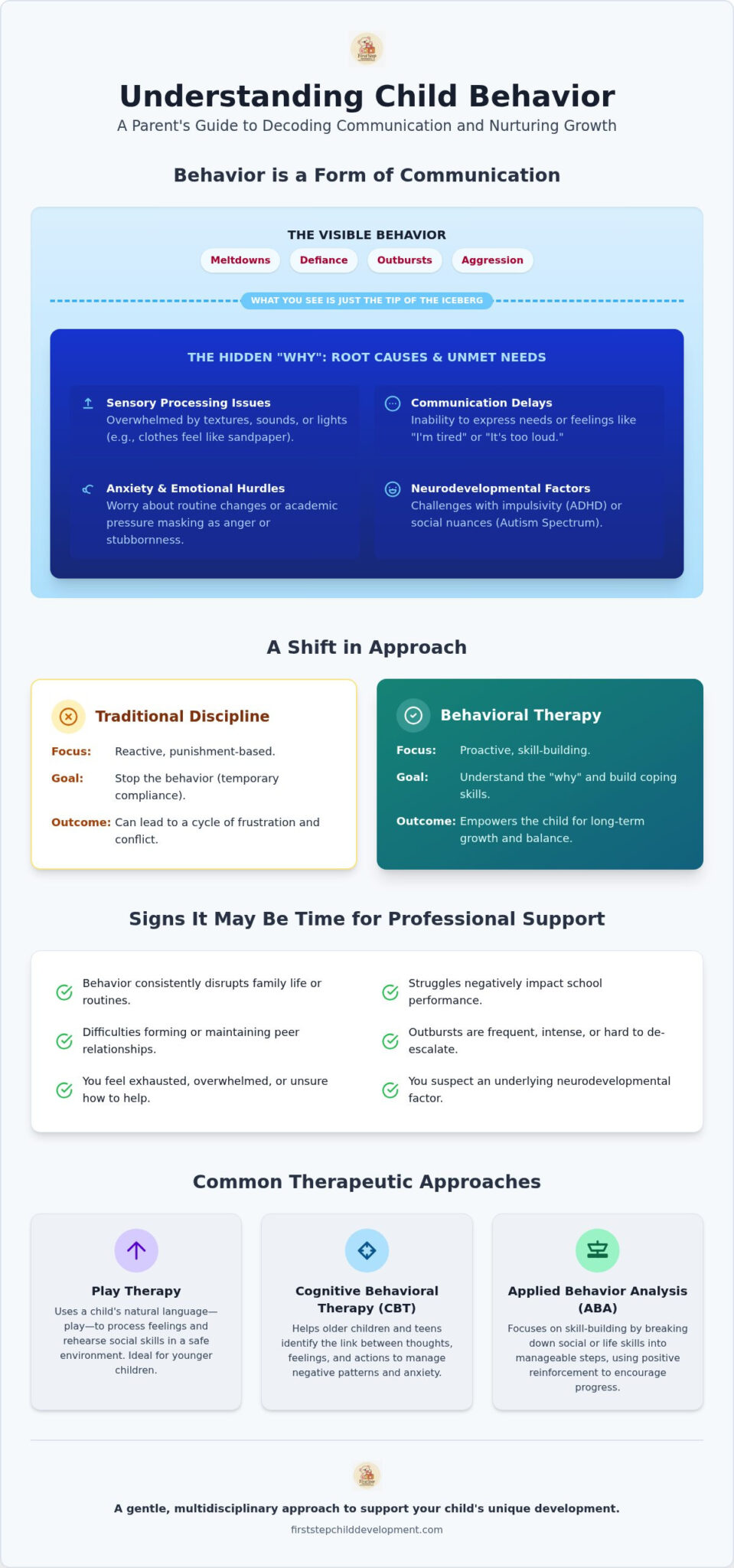
At its heart, child behavioral therapy is a compassionate, evidence-based approach designed to help children regulate their emotions and navigate their world with more confidence. Many parents initially feel that therapy is a way to “fix” a defiant or difficult child. However, we view behavior as a vital form of communication. When a child struggles, they’re often signaling a need or a skill deficit that they don’t yet have the words to explain. By shifting the focus from simply stopping a behavior to understanding its root cause, we create a path for long-term growth rather than temporary compliance.
A clinical psychologist serves as a trusted advisor in this journey. They work closely with your family to identify specific patterns that might be triggering distress. Instead of applying a one-size-fits-all solution, they use personalized assessments to determine which interventions will be most effective for your child’s unique developmental stage. This collaborative process ensures that the support provided is both scientifically grounded and deeply human, respecting the child’s individuality while providing clear structure.
The Core Goals of Therapeutic Intervention
The primary objective of any intervention is to empower both the child and the family. This involves developing healthy coping mechanisms so that “big emotions” don’t lead to overwhelming meltdowns. We also focus on improving social communication and peer interactions, which are often the foundation for a child’s self-esteem. Finally, therapy aims to strengthen the parent-child bond by giving parents the tools to respond with empathy and clarity rather than frustration.
Common Modalities: Beyond Talk Therapy
Children often lack the cognitive maturity to sit and discuss their feelings for an hour. That’s why child behavioral therapy utilizes diverse, age-appropriate methods to reach them where they are:
- Play Therapy: Since play is the natural language of children, this modality allows them to process complex feelings and “rehearse” social scenarios in a safe, guided environment. It’s particularly effective for younger children who cannot yet articulate their internal struggles.
- Cognitive Behavioral Therapy (CBT): For older children and adolescents, Cognitive behavioral therapy helps them identify the link between their thoughts, feelings, and actions. It provides practical strategies to challenge negative thought patterns and manage anxiety.
- Applied Behavior Analysis (ABA): This approach focuses on skill-building through positive reinforcement. It helps children master specific social or life skills by breaking them down into manageable, rewarding steps, making the learning process feel achievable and encouraging.
The Psychology of Behavior: Identifying Common Roots
When a child acts out, it’s easy to focus on the immediate noise or the defiance. However, behavior is really just the tip of the iceberg. Underneath the surface lies a complex mix of unmet needs, sensory triggers, and emotional hurdles. For example, a child who refuses to wear certain clothes isn’t simply being difficult; they might be experiencing sensory processing issues where the fabric feels like sandpaper. Understanding these underlying causes is the first step in effective child behavioral therapy.
Communication delays are another frequent root of outbursts. If a child can’t express “I’m tired” or “This is too loud,” they might resort to physical aggression to get their point across. For school-age children, anxiety often masks itself as anger. Changes in routine or academic pressure can lead to significant emotional transitions that manifest as stubbornness. Information from the CDC on Treating Children’s Mental Health emphasizes that early identification of these emotional drivers is key to successful intervention and long-term well-being.
Neurodevelopmental Factors
ADHD isn’t just about high energy. It’s fundamentally about executive functioning and impulsivity. A child with ADHD might act before they think, leading to social friction and frustration. Similarly, Autism Spectrum Disorder involves social-behavioral nuances that require a specialized lens to understand. This is why a comprehensive neurodevelopmental assessment is so vital. It moves the conversation from “why won’t they listen?” to “how does their brain process information?” This clinical clarity is essential before starting child behavioral therapy to ensure the approach matches the child’s neurological profile.
Environmental and Emotional Triggers
Managing transitions is a common pain point for parents in Malaysia. Why does a five-minute warning for dinner trigger a meltdown? For many children, moving from a preferred activity to a non-preferred one feels like a sudden loss of control. Family dynamics or major life changes, such as moving house or a new sibling, also play a significant role in a child’s stability. Emotional behavioral support for children addresses how these internal states become too heavy, helping a child learn how to regain their balance without resorting to disruptive behaviors in a safe, professional environment.
Behavioral Therapy vs. Traditional Discipline
Many parents feel a sense of confusion when their usual methods of discipline, like time-outs or loss of privileges, stop working. It’s common to feel that you’ve run out of options. Traditional discipline is often reactive; it focuses on what happened in the past and applies a consequence to stop a specific action. In contrast, child behavioral therapy is proactive. It focuses on the future by identifying the skill deficits that led to the behavior in the first place. Instead of simply punishing a child for a meltdown, therapy seeks to build the emotional and cognitive tools they need to avoid the meltdown next time.
A core component of this approach is the clinical use of positive reinforcement. While some parents worry that rewards are just “bribes,” professional Behavioral Therapies for Children use reinforcement to strengthen the neural pathways responsible for better decision-making. We aren’t just giving a child a treat for being “good.” We are systematically validating their effort to use a new coping skill, such as taking a breath or using their words, which makes that positive choice more likely to happen again in the future.
One of the most frequent objections we hear from families in Malaysia is the fear that seeking help makes them look like “bad parents.” It’s important to reframe this perspective. Seeking child behavioral therapy is actually a sign of an exceptionally dedicated parent. It shows a commitment to understanding your child’s unique needs rather than relying on generic, one-size-fits-all punishments that may not be effective for a child with neurodevelopmental challenges.
Building Skills Instead of Enforcing Rules
Therapy teaches children the “how” of behaving, not just the “what.” For example, a child might know they shouldn’t hit, but they don’t know how to handle the physical surge of anger they feel. This is where multidisciplinary support, such as pediatric occupational therapy, becomes invaluable for supporting physical self-regulation. We often find that “time-ins” and emotional coaching, where a parent stays with the child to help them process the emotion, outperform traditional “time-outs” because they teach regulation rather than isolation.
Empowering Parents as Partners
Therapy isn’t something that happens to a child in a vacuum; it’s a collaborative process that involves the whole family. It provides parents with a practical “toolkit” for home management, helping to reduce the exhaustion and burnout that often come with chronic behavioral struggles. By working with a professional through a Child Psychology Consultation Malaysia, you gain a trusted advisor who helps you transition from a state of constant firefighting to a place of calm, confident parenting.
When to Seek Professional Support: A Guide for Parents
Every child has difficult days. It’s a natural part of growing up to test boundaries and express frustration. However, parents often struggle to distinguish between a temporary developmental phase and a persistent pattern that requires intervention. In Malaysia’s structured school environments, teachers are often the first to notice when a child’s reactions seem out of proportion compared to their peers. If these behaviors persist for more than six months or occur across multiple settings, such as both at home and in the classroom, it’s likely time to consider child behavioral therapy.
The impact of unaddressed behavioral struggles can ripple through a child’s life, affecting their academic performance and their ability to form meaningful friendships. When a child’s struggles begin to overshadow their strengths, the emotional toll on the entire household becomes significant. Early intervention is the most effective way to ensure long-term success. By addressing these challenges early, we provide children with the tools they need to navigate social complexities before they lead to deeper self-esteem issues or academic gaps.
Often, a suggestion for a consultation comes from a pediatrician or a concerned educator who has observed the child in a social group. These professionals see hundreds of children and can often identify when a child is working harder than they should have to just to get through the day. Seeking support isn’t an admission of failure. It’s a proactive step toward providing your child with a specialized support system that understands their unique wiring.
Red Flags and Behavioral Indicators
While every child is different, certain indicators suggest that professional guidance is necessary. Extreme aggression toward siblings or peers, as well as any form of self-harming behavior, should be addressed immediately. You should also look for significant social withdrawal or a persistent inability to make and keep friends. Intense anxiety that interferes with daily routines, such as a child refusing to go to school or extreme distress during minor changes, often signals that a child’s internal regulation system is overwhelmed.
The Path to a Clear Answer
Finding the “why” begins with a comprehensive clinical psychologist consultation. This initial meeting allows for a professional overview of your child’s history and current challenges. From there, the process may involve standardized testing or IQ assessments to rule out learning difficulties or other underlying factors. A formal Neurodevelopmental Assessment Malaysia provides the clinical clarity needed to create a personalized intervention plan. This data-driven approach ensures that child behavioral therapy is targeting the right areas for growth.
If you’ve noticed these persistent patterns in your child’s daily life, taking the first step toward professional clarity can bring immediate peace of mind. You can schedule a consultation with our multidisciplinary team to begin finding the answers your family deserves.
The Firststep Approach: Gentle, Professional, and Holistic
Firststep Psychology & Child Development Centre operates as a multidisciplinary hub where your child’s well-being is the central focus. We understand that visiting a clinical setting can feel intimidating for both parents and children. That’s why we’ve designed our center as a safe haven, a nurturing space where clinical expertise meets compassionate care. Our multidisciplinary team, which includes clinical psychologists, pediatricians, and nutritionists, works in harmony to ensure every aspect of your child’s development is addressed. This holistic perspective is essential for effective child behavioral therapy, as it looks beyond the surface to support the whole child.
One of the hallmarks of our approach is the use of play-based assessments. We recognize that children express themselves most freely through play, and traditional clinical environments can often trigger anxiety. By observing your child in a natural, play-oriented setting, we can gather accurate data while keeping them comfortable. Following these assessments, we prioritize clear, actionable feedback for parents. You won’t just receive a report full of jargon; you’ll gain a deep understanding of your child’s needs and a clear roadmap for the future. We believe that when parents are empowered with professional clarity, they can become the most effective advocates for their child’s growth.
Your Child’s First Visit
Your journey begins with a gentle introduction during the initial consultation. We focus on building rapport with your child through careful observation and interactive play before diving into formal assessments. This initial phase is crucial for establishing trust, ensuring your child feels safe and understood. Once we achieve diagnostic clarity, we transition seamlessly into a personalized therapy plan. This plan isn’t a generic template; it’s a bespoke strategy tailored to your family’s specific goals and your child’s unique developmental profile. We move at a pace that respects your child’s comfort, ensuring that the therapeutic process feels like a partnership rather than a series of clinical tests.
A Multidisciplinary Path to Growth
Growth rarely happens in isolation. Our center integrates various therapeutic modalities to provide comprehensive support. Depending on your child’s needs, their plan might include speech therapy to improve communication, pediatric occupational therapy for sensory regulation, or play therapy to process emotional hurdles. We also believe in the role of nutrition and pediatric support in holistic care, ensuring that physical health supports psychological progress. This collaborative model allows us to address the root causes of behavioral struggles from every angle. If you are ready to move from concern to empowerment, you can book a consultation with our specialists today to begin this transformative journey.
Building a Brighter Path for Your Child’s Future
Understanding the “why” behind your child’s struggles is the first step toward transforming your home from a place of conflict to one of connection. We’ve explored how behavior serves as the tip of the iceberg, often masking sensory needs, emotional transitions, or communication gaps. By choosing child behavioral therapy, you aren’t simply managing symptoms; you’re equipping your child with the essential skills they need for long-term emotional regulation and social success.
At Firststep, our clinical psychologist-led multidisciplinary team is dedicated to providing specialized ADHD and Autism assessments within a gentle, play-based environment. We believe that early intervention is a powerful gift of potential, offering the professional clarity you need to move forward with confidence. You don’t have to navigate these complex developmental challenges alone. Our specialists are here to act as your trusted advisors, ensuring every intervention is as unique as your child’s own personality.
Empower your child’s journey with a professional consultation at Firststep and discover a supportive, professional path toward growth and emotional balance. Your family’s peace of mind is within reach, and we’re honored to partner with you in your child’s development.
Frequently Asked Questions
What is the difference between a child psychologist and a behavioral therapist?
A clinical child psychologist has broad training to diagnose and treat a wide range of mental health and developmental concerns through various therapeutic lenses. Behavioral therapists often focus more specifically on modifying actions and teaching concrete skills. At Firststep, our clinical psychologists lead the multidisciplinary team to ensure your child receives a holistic plan that addresses both their internal emotional state and their external actions.
How long does child behavioral therapy typically take to show results?
Progress is highly individual, but many families begin to notice subtle improvements in emotional regulation within 8 to 12 weeks of consistent sessions. Sustainable, long-term change usually requires six months or more of dedicated support. The focus is on building lasting skills rather than providing a temporary fix, ensuring your child can maintain their growth in different environments like home and school.
Can behavioral therapy help my child if they have ADHD or Autism?
Yes, child behavioral therapy is a primary intervention for children with ADHD or Autism. For those with ADHD, it provides strategies to manage impulsivity and improve executive functioning. For children on the spectrum, it offers essential tools for social communication and sensory regulation, helping them navigate social interactions with more confidence and less frustration.
Is behavioral therapy suitable for toddlers, or should I wait until they are older?
Early intervention is highly effective for toddlers and can begin as early as 18 to 24 months. Waiting for a child to “grow out of it” can sometimes lead to more ingrained patterns of frustration. For very young children, the process is almost entirely play-based, focusing on building a strong developmental foundation and supporting the parent-child bond through guided interaction.
What happens if my child refuses to participate or talk during the session?
It’s quite common for children to feel hesitant or even refuse to engage during their first few visits. Our specialists are experts at building rapport through observation and play rather than forcing direct conversation. We meet your child where they are, using their natural interests to create a safe space where they eventually feel secure enough to participate at their own pace.
Will my child be ‘labeled’ for life if they receive behavioral therapy?
Receiving professional support doesn’t mean your child is permanently labeled in a negative way. Instead, gaining clinical clarity provides a constructive roadmap for their development and ensures they receive the correct support in school. Understanding their unique wiring actually protects them from being unfairly labeled as “naughty” or “difficult” by teachers or peers who may not understand their struggles.
How involved do I need to be in my child’s therapy sessions?
Parents are considered essential partners in the therapeutic journey. While your child will have individual time with the specialist, we provide regular feedback sessions and practical home strategies. This ensures that the progress made in the center translates into your daily routine, helping to reduce parental exhaustion and creating a more harmonious home environment for everyone.
What are the costs associated with child behavioral therapy in Malaysia?
Fees for pediatric support in Malaysia typically vary depending on the level of specialization and the specific type of assessment or session required. Initial clinical consultations and standardized diagnostic tests usually have a different fee structure than ongoing weekly therapy. You should check with your private insurance provider, as an increasing number of plans in Malaysia now offer coverage for developmental assessments and emotional behavioral support for children and psychological services.

Article by
Firststep Child Development Team
Firststep Child Development Team provides evidence-informed educational resources to help parents better understand child development, behaviour and learning. Our multidisciplinary services include clinical psychology, occupational therapy, speech and language therapy, developmental assessments and other child development support in Kuala Lumpur and Selangor.
Disclaimer
This article is for general educational and informational purposes only and is not a substitute for professional medical, psychological or therapeutic advice, diagnosis or treatment. Every child develops differently. If you have concerns about your child's development, behaviour, learning or wellbeing, please consult an appropriately qualified healthcare or allied health professional.