



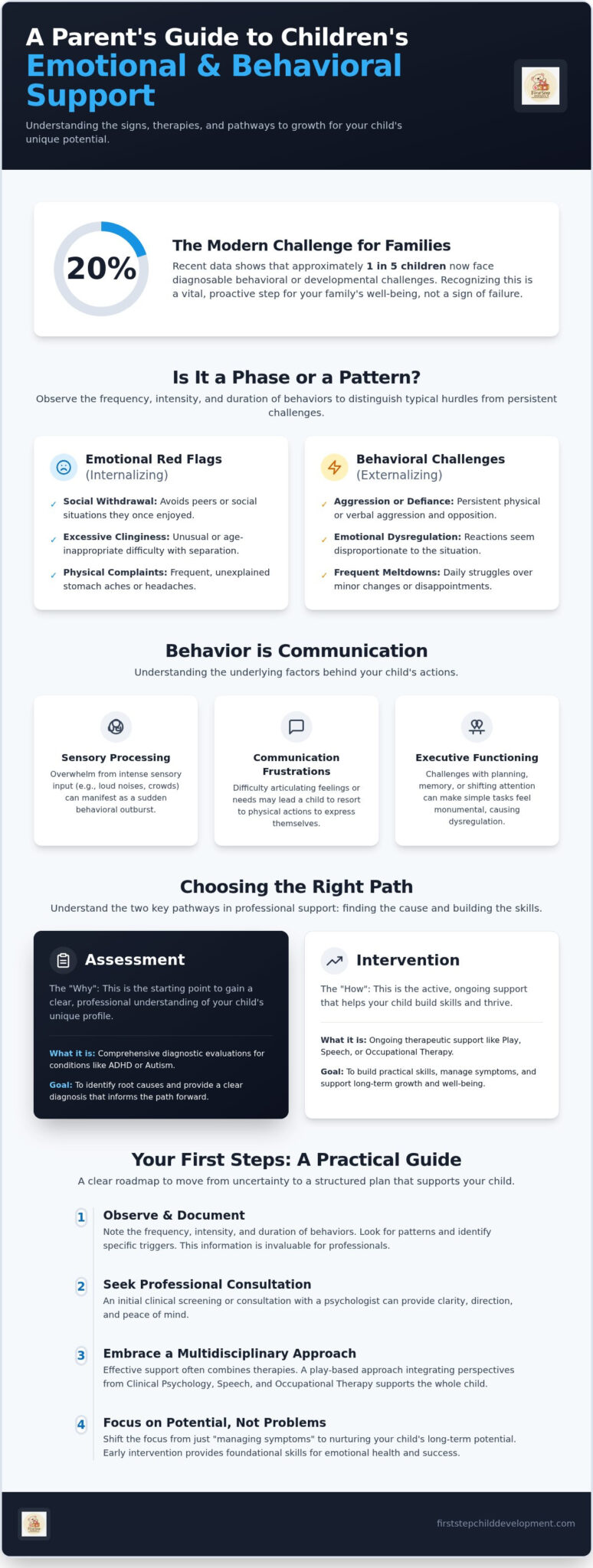
What if the “difficult” behavior your child displays isn’t a sign of your failure as a parent, but a silent SOS for a different kind of connection? It’s incredibly exhausting to spend your days second-guessing whether a persistent tantrum is just a developmental phase or an underlying neurodevelopmental concern. You aren’t alone in feeling overwhelmed by conflicting advice, especially when searching for reliable emotional behavioral support for children within our local Malaysian context. With recent data showing that roughly 20% of children now face diagnosable behavioral or developmental challenges, seeking clarity is a vital, proactive step for your family’s well-being.
We understand that you want more than just labels; you want a path forward that honors your child’s unique potential. This 2026 guide is designed to replace your anxiety with actionable clarity, helping you navigate the complexities of child development with confidence. You’ll learn how to distinguish between different therapeutic approaches like Play Therapy, Speech Therapy, and Occupational Therapy, while gaining a clear roadmap for professional assessments. We’ll provide the steps you need to move from a place of uncertainty to a structured plan that supports your child’s growth and restores your peace of mind.
Key Takeaways
- Learn to distinguish between typical developmental hurdles and persistent behavioral patterns such as social withdrawal or extreme emotional dysregulation.
- Discover how professional emotional behavioral support for children through Play Therapy provides a safe, non-verbal space for your child to process their feelings.
- Understand the difference between comprehensive diagnostic assessment packages for ADHD or Autism and ongoing interventions like Speech or Occupational Therapy.
- Follow a practical roadmap for documenting behavioral triggers and preparing for an initial clinical screening with confidence.
- Explore how a multidisciplinary, play-based approach focuses on your child’s long-term potential rather than just managing immediate symptoms.
Recognizing the Signs: When Your Child Needs Emotional and Behavioral Support
Every child experiences moments of frustration or sadness. It’s a natural part of growing up. However, as a parent, you might find yourself wondering where the line is between a “difficult phase” and something that requires more focused attention. Identifying the need for emotional behavioral support for children begins with observing the frequency, intensity, and duration of certain patterns. If your child’s reactions seem disproportionate to the situation or if they struggle to recover after a disappointment, it’s often a signal that they need help building their coping toolkit.
Distinguishing between typical developmental hurdles and persistent challenges is crucial. While a three-year-old might have a tantrum because they can’t have a snack, a seven-year-old who has a daily meltdown over minor schedule changes is communicating a different level of distress. Understanding the broader context of an Emotional and Behavioral Disorders Overview helps parents recognize that these behaviors aren’t choices. They are often the result of a child’s nervous system feeling overwhelmed by their environment or internal experiences.
Emotional Red Flags vs. Behavioral Challenges
Distress doesn’t always look like “bad” behavior. Some children internalize their struggles, showing signs of childhood anxiety through social withdrawal, excessive clinginess and separation anxiety in children, or frequent physical complaints like stomach aches. These are quiet red flags that are just as significant as louder outbursts. Others display externalizing behaviors, such as aggression or persistent defiance. A toddler might bite out of frustration, but a school-aged child might use verbal aggression to push people away when they feel insecure. Recognizing these signs early allows for a more compassionate, targeted approach to support.
The ‘Why’ Behind the Behavior
Behavior is almost always a form of communication. When a child “acts out,” they’re often trying to solve a problem they don’t yet have the skills to handle. Several underlying factors can contribute to these emotional surges:
- Sensory Processing: Some children feel sensory input more intensely. A crowded room or a loud television can lead to a sensory overload that manifests as a sudden behavioral outburst.
- Communication Frustrations: If a child struggles to articulate their feelings, they may resort to physical actions to express their needs.
- Executive Functioning: Challenges with planning, memory, or shifting attention can make simple tasks feel monumental, leading to significant dysregulation.
Early intervention is the most effective way to address these roots. By providing emotional behavioral support for children through professional guidance, you aren’t just managing symptoms. You’re giving your child the foundational skills they need for long-term emotional health and academic success. Taking this first step isn’t a sign of failure. It’s a powerful act of advocacy for your child’s future potential.
The Multidisciplinary Roadmap: Types of Professional Support Available
Finding the right path for your child often feels like trying to solve a complex puzzle without having the picture on the box. When you seek emotional behavioral support for children, it’s rare that a single type of therapy provides every answer. Instead, a multidisciplinary approach looks at your child from several angles at once. This collaborative method ensures that we aren’t just treating a “behavior,” but rather supporting a whole human being who is trying to find their way in the world.
Professional support is most effective when it combines different clinical perspectives. For instance, while one specialist might focus on the emotional root of a child’s anxiety, another might look at how their physical environment triggers a meltdown. By integrating evidence-based therapies for children, families can move away from trial-and-error and toward a structured, reliable plan for growth.
Clinical Psychology and Play Therapy
A Clinical Psychologist Consultation is often the first step in understanding the “why” behind a child’s distress. These specialists use play-based assessments to build a bridge of trust, allowing children to express themselves in their natural language: play. This approach is particularly effective for addressing childhood trauma, social-emotional delays, and persistent anxiety. For parents seeking a deeper understanding of how these services work locally, our child psychology consultation Malaysia guide provides essential context on what to expect during your first visit.
Play Therapy itself offers a safe, non-verbal sanctuary. It allows children to process complex feelings that they don’t yet have the vocabulary to explain. Through guided play, they can “act out” their fears and find new ways to resolve conflicts, which naturally leads to a reduction in behavioral outbursts at home and school.
OT and Speech: The Physical and Communicative Link
Sometimes, what looks like a “behavioral issue” is actually a physical or communicative struggle. Pediatric Occupational Therapy (OT) focuses on sensory integration. If a child’s nervous system is constantly in a state of sensory “overload,” they will likely experience frequent meltdowns or difficulty with transitions. OTs help children regulate these internal responses, making the world feel less threatening.
Similarly, Speech Therapy plays a vital role in emotional behavioral support for children. When a child has a speech delay, their inability to be understood often leads to intense frustration and “acting out.” By improving their ability to communicate, we often see a corresponding drop in aggressive or defiant behaviors. You can explore how our multidisciplinary team at Firststep Psychology & Child Development Centre works together to create these holistic, personalized support plans for every family.
Assessment vs. Intervention: Choosing the Right Path for Your Child
Choosing between a formal diagnostic assessment and starting immediate therapy is one of the most common dilemmas parents face. While you might feel an urgent need to “fix” a behavior today, effective emotional behavioral support for children often requires a pause to understand the underlying architecture of their mind. Think of an assessment as a detailed map and intervention as the actual journey. Without the map, you might move quickly but in the wrong direction. Assessments aren’t just about labels; they’re professional blueprints that explain how your child processes information and why they react to the world in specific ways.
A diagnosis acts as a tool for empowerment rather than a limitation. It shifts the narrative from “my child is being difficult” to “my child’s brain works differently in these specific areas.” This clarity reduces parental guilt and allows for a more targeted approach. Instead of broad strategies that may or may not work, you gain a precise set of instructions for helping your child thrive in their unique way. Whether you’re considering an ADHD Assessment or an Autism Assessment, the goal is always to unlock the right resources for your child’s specific needs.
The Value of Diagnostic Clarity
A comprehensive neurodevelopmental assessment goes far beyond a simple checklist. It typically includes standardized testing to evaluate cognitive strengths and weaknesses. For instance, an IQ Assessment or a Learning Difficulties Assessment can reveal if behavioral outbursts are actually a reaction to academic frustration or hidden cognitive gaps. When parents receive clear feedback reports, they aren’t left with vague clinical terms. They get a roadmap that details exactly how to adjust their support at home and in school to better match their child’s abilities.
Therapy as a Proactive Tool
Sometimes, you don’t need a full diagnostic package to begin making progress. Starting with per-session Clinical Psychologist Consultations provides immediate emotional behavioral support for children who are currently struggling with daily dysregulation. These sessions allow for real-time goal setting and provide a safe space for your child to begin processing their emotions. Success might look like a child using a “calm-down” strategy once a week or a parent feeling more equipped to handle a difficult morning transition. Parental involvement is the heartbeat of this process. You aren’t just an observer; you’re an active partner in the therapeutic journey, ensuring that the skills learned in the clinic translate to your daily life in Malaysia.
Implementing Emotional & Behavioral Support: Parent Guide
Moving from the observation phase to taking active steps is a significant milestone in your family’s journey. Effective emotional behavioral support for children is most successful when it bridges the gap between professional therapy and your daily life at home. You don’t have to do everything at once. Instead, focus on a structured approach that builds momentum through small, consistent wins.
- Step 1: Document Patterns and Triggers. Keep a simple behavior diary for one week. Note what happened before an outburst, the time of day, and how your child responded to your intervention. This data is invaluable during a professional screening.
- Step 2: Schedule an Initial Screening. Book a Clinical Psychologist Consultation to discuss your observations. This session helps determine if your child needs a specific diagnostic assessment or immediate therapeutic support.
- Step 3: Build a ‘Regulation Station.’ Create a designated physical space in your home filled with sensory tools like weighted blankets, fidget toys, or noise-canceling headphones. This is a “no-judgment” zone for cooling down.
- Step 4: Align with the School. Share the strategies provided by your clinical team with your child’s teachers. Consistency across environments reduces confusion and anxiety for the child.
- Step 5: Review and Adjust. Progress isn’t always linear. Meet with your multidisciplinary team every few months to refine your goals based on your child’s development.
If you’re ready to move from uncertainty to a clear plan, you can book a consultation with our clinical team to begin your child’s personalized support roadmap.
Building a Supportive Home Environment
Your home should be a safe haven where your child feels understood even during their most difficult moments. Using visual schedules is a practical way to reduce transition-based anxiety; they provide a clear “what’s next” that makes the day feel predictable. During meltdowns, focus on co-regulation rather than discipline. Co-regulation is the process where a parent provides their own calm nervous system to help settle a child’s dysregulated state. By staying calm yourself, you teach your child how to manage their own internal storms.
Navigating the Professional Journey
Preparing your child for their first visit to a child development centre is essential for a positive experience. Avoid using clinical language; instead, describe it as a place where they will play games and talk with a “worry doctor” or a “feelings teacher.” During your feedback sessions, come prepared with questions about how to implement emotional behavioral support for children in specific scenarios, such as family gatherings or grocery trips. Maintaining an open line of communication between your Speech Therapist, Occupational Therapist, and teachers ensures everyone is working toward the same goals.
The Firststep Approach: Gentle, Expert Support for Your Child’s Potential
At Firststep Psychology & Child Development Centre, we believe that effective emotional behavioral support for children requires more than just managing symptoms. It requires seeing the whole child. Our approach is grounded in the understanding that every behavior is a signal of an underlying need. We’ve built a gentle, professional environment where complex developmental concerns are handled with sensitivity. By focusing on the “why” behind the action, we help children navigate their emotions while building the skills they need to thrive in school and at home.
Our philosophy is built on quiet confidence and professional clarity. We don’t just provide labels; we provide a path forward that honors your child’s unique developmental journey. This multidisciplinary perspective ensures that every aspect of your child’s growth is considered, from their communicative abilities to their sensory processing and emotional resilience. We’re here to be your trusted advisor, turning confusion into a structured plan for success.
A Safe Haven for Growth
Our multidisciplinary team includes Clinical Psychologists, Speech Therapists, and Occupational Therapists working in unison. We also integrate Nutritionist Consultations for families dealing with behavioral feeding issues, ensuring a truly holistic care model. Our specialized facility is designed as a safe haven, specifically tailored to support various sensory and emotional needs. Whether you’re visiting us for an Autism Assessment or an IQ Assessment, we prioritize your child’s comfort above all else. This play-based, child-centered atmosphere is essential for reducing the anxiety often associated with clinical visits, allowing your child’s true potential to shine through.
Supporting families nationally is a core part of our mission. We understand the specific needs of the Malaysian community and provide guidance that is both clinically grounded and culturally sensitive. By offering a range of services under one roof, we ensure that your child’s care is seamless and that every specialist is aligned with your family’s goals. This collaborative environment fosters faster progress and provides parents with the comprehensive support they deserve.
Your First Step Toward Clarity
Gaining clarity shouldn’t be a source of stress. When you book an initial Clinical Psychologist Consultation, you’re starting a partnership dedicated to your child’s well-being. Following our play-based assessments, you’ll receive a detailed feedback report. This isn’t just a clinical summary; it’s a personalized intervention plan filled with actionable steps you can implement immediately at home and in school. We’re committed to helping families across Malaysia reach their full potential through professional clarity and compassionate care. Take the first step toward supporting your child’s growth today.
Empowering Your Child’s Journey Toward Emotional Resilience
Navigating your child’s developmental challenges is a journey that requires both patience and the right professional partnership. By recognizing the subtle signs of distress and moving toward a multidisciplinary roadmap, you’ve already taken the most important step in advocacy. Whether you’re seeking clarity through a specific assessment or looking for long-term emotional behavioral support for children, remember that professional insight isn’t a limitation; it’s a blueprint for growth. Our specialized team of Clinical Psychologists and Occupational Therapists is dedicated to providing the clarity you need to help your child thrive in every environment.
At Firststep, we provide a play-based, gentle assessment environment designed to keep your child comfortable while we gather essential insights. You’ll receive comprehensive feedback reports that translate clinical observations into actionable strategies for your home and school life in Malaysia. You don’t have to navigate these complexities alone. Our experts are ready to partner with you to unlock your child’s full potential and restore peace to your family dynamic. Book a Consultation with Our Multidisciplinary Team today and begin the transition from uncertainty to a clear, supportive plan for the future.
Frequently Asked Questions
What is the difference between emotional and behavioral support?
Emotional support focuses on your child’s internal world, helping them understand and manage feelings like anxiety, sadness, or grief. Behavioral support addresses observable actions and reactions, such as meltdowns or social difficulties. While they overlap, emotional behavioral support for children often begins by identifying the “why” behind an action so we can address the root cause rather than just the symptom. This dual approach ensures your child feels heard while learning better ways to interact with others.
How do I know if my child needs an ADHD or Autism assessment?
You should consider an assessment if your child’s challenges with focus, social interaction, or emotional regulation are persistent and interfere with their daily life at school or home. While every child develops at their own pace, consistent difficulty with transitions or extreme sensory sensitivities may indicate a neurodevelopmental concern. A Clinical Psychologist Consultation is the best way to determine if a formal ADHD or Autism Assessment is the right next step for your family.
Can behavioral support help with my child’s school performance?
Yes, professional support directly impacts academic success by improving a child’s executive functioning and self-regulation skills. When a child learns to manage frustration and follow multi-step directions, they become more available for learning. Our multidisciplinary team often works with parents to translate therapeutic goals into classroom strategies. This ensures that the progress made in our center supports your child’s confidence and performance in their school environment.
How long does it take to see progress in behavioral therapy?
Progress varies for every child, but most parents notice small, positive shifts in emotional regulation within four to eight weeks of consistent therapy. Lasting change is a gradual process that depends on the complexity of your child’s needs and the consistency of support at home. We focus on building foundational skills rather than quick fixes. Regular reviews with your clinical team help track these milestones and adjust the intervention plan as your child grows.
Is play therapy effective for serious behavioral challenges?
Play therapy is highly effective for serious challenges because it allows children to process complex emotions in their most natural language. It provides a safe, non-threatening space to explore traumatic experiences or intense frustrations that they cannot yet verbalize. By working through these issues through guided play, children develop better coping mechanisms. This clinical approach is a cornerstone of emotional behavioral support for children, helping to reduce aggression and improve social-emotional resilience.
What should I do if my child refuses to participate in therapy sessions?
It’s quite common for children to feel anxious or resistant during their first few visits. Our team uses a gentle, play-based approach specifically designed to lower these defenses and build trust at your child’s pace. We don’t force participation; instead, we create an inviting environment where they feel in control. Often, once a child realizes the session is about play and connection rather than “work,” their resistance naturally transforms into engagement.
How much do diagnostic assessment packages cost in Malaysia?
Costs for diagnostic assessment packages in Malaysia vary depending on the complexity of the tests required and the multidisciplinary specialists involved. A comprehensive evaluation typically includes standardized testing, clinical observations, and a detailed parental feedback report. Since every child’s needs are unique, we recommend contacting our center directly for a clear breakdown of fees. This ensures you receive accurate information tailored to the specific assessments your child may need, such as IQ or Autism evaluations.
Does my child need a referral from a pediatrician to start support?
No, you don’t need a formal referral from a pediatrician to begin support at our center. Many parents in Malaysia choose to book a Clinical Psychologist Consultation directly when they notice persistent behavioral or emotional concerns. While we often collaborate with pediatricians to ensure holistic care, your journey can start with a simple phone call to our team. This direct access allows for earlier intervention, which is often the key to the most successful long-term outcomes.

Article by
Firststep Child Development Team
Firststep Child Development Team provides evidence-informed educational resources to help parents better understand child development, behaviour and learning. Our multidisciplinary services include clinical psychology, occupational therapy, speech and language therapy, developmental assessments and other child development support in Kuala Lumpur and Selangor.
Disclaimer
This article is for general educational and informational purposes only and is not a substitute for professional medical, psychological or therapeutic advice, diagnosis or treatment. Every child develops differently. If you have concerns about your child's development, behaviour, learning or wellbeing, please consult an appropriately qualified healthcare or allied health professional.