



Child Stuttering Treatment in Malaysia: 2026 Guide

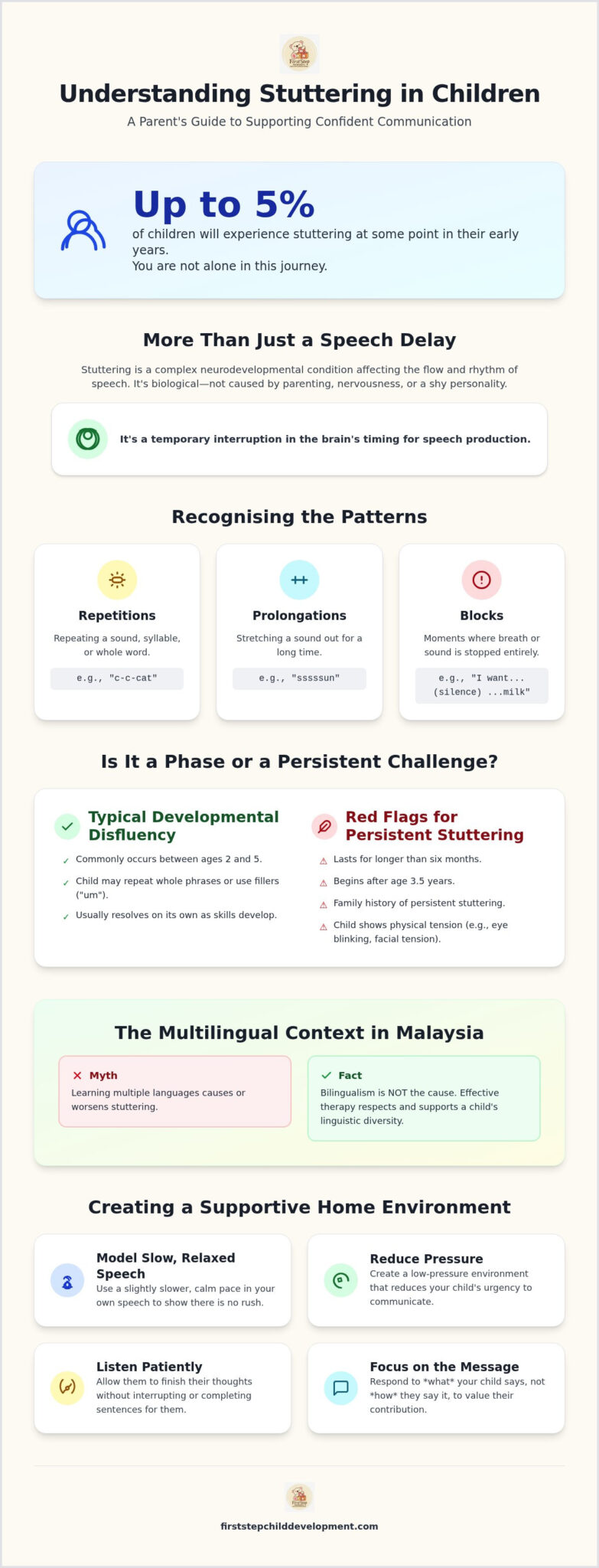
Imagine your child standing at the school gate, their face tightening as they try to say “hello” to a new friend, only for the words to get stuck. It’s a moment that many parents in Malaysia face, often leading to a deep sense of frustration and worry about potential bullying or future social success. You aren’t alone in this journey; global data suggests that up to 5% of children will experience stuttering at some point in their early years. It’s natural to feel confused about whether your child is experiencing normal developmental disfluency or a more permanent challenge.
We understand that you want a clear path toward confident communication for your little one. This guide provides a comprehensive look at stuttering treatment for children Malaysia, offering evidence-based strategies tailored for our unique multilingual environment. You’ll learn how to identify the root causes of speech struggles and find gentle, child-friendly therapy approaches that prioritize your child’s emotional well-being. We’ll also explore practical ways you can support your child’s fluency at home, helping them find their voice with ease and quiet confidence.
Key Takeaways
- Understand that stuttering is a neurodevelopmental condition rather than a simple delay, and that Malaysia’s multilingual environment doesn’t cause or worsen these speech patterns.
- Discover how evidence-based stuttering treatment for children Malaysia, such as the Lidcombe Program, empowers parents to take an active, guided role in their child’s progress.
- Learn practical ways to foster fluency at home by modeling slow, relaxed speech and creating a low-pressure environment that reduces your child’s urgency to communicate.
- Explore the benefits of a multidisciplinary approach where speech therapists and clinical psychologists collaborate to support both your child’s speech flow and their emotional confidence.
Understanding Stuttering in Children: More Than Just a Speech Delay
Stuttering is often misunderstood as a simple phase or a sign of a shy personality, but it’s actually a complex neurodevelopmental condition. It specifically affects the flow and rhythm of speech, occurring when the brain’s timing for speech production faces a temporary interruption. Gaining a clear understanding of stuttering in children is the first step toward finding effective support. When you seek stuttering treatment for children Malaysia, the goal isn’t just “fixing” a sound; it’s about supporting the child’s entire communication journey.
Speech disfluencies generally fall into three categories. Repetitions occur when a child repeats a sound, syllable, or whole word, such as saying “c-c-cat.” Prolongations happen when a sound is stretched out, like “sssssun.” Finally, blocks are perhaps the most frustrating for a child; these are moments where the breath or sound is stopped entirely, and no noise comes out for several seconds. Recognizing these patterns helps specialists determine the best path forward for your family.
It’s vital for parents to know that stuttering isn’t caused by your parenting style, nor is it a result of a child being “too nervous.” While anxiety can make a stutter more noticeable, it isn’t the root cause. Stuttering is biological. By removing the weight of guilt, you can focus on being the supportive, calm partner your child needs. Early identification is the most powerful tool we have. Addressing these interruptions early on significantly increases the likelihood of long term communication success and helps preserve your child’s natural desire to share their thoughts.
Common Signs and Symptoms of Stuttering
Beyond the sounds themselves, stuttering often involves physical and emotional indicators. You might notice “secondary behaviors” where a child struggles to get a word out. These can include frequent eye blinking, lip tremors, or visible tension in the face and neck. Emotionally, a child might start avoiding specific words that they find difficult or show visible frustration when they can’t express themselves quickly. If your child seems to be “fighting” with their words, it’s a sign that professional stuttering treatment for children Malaysia could provide much needed relief.
Developmental Disfluency vs. Persistent Stuttering
Many toddlers between the ages of 2 and 5 go through a period of “normal” disfluency. As their vocabulary grows faster than their motor skills can keep up, they might repeat whole phrases or use fillers like “um.” This usually resolves on its own. However, red flags for persistent stuttering include disfluency that lasts longer than six months or speech struggles that begin after age 3.5. Family history also plays a significant role; if a close relative has a persistent stutter, the child may have a higher genetic predisposition, making early intervention even more critical.
Navigating Speech Language Therapy for Kids in Malaysia: The Multilingual Context
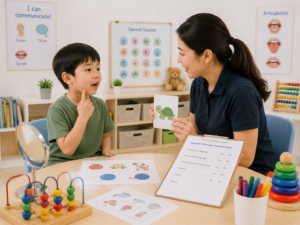
In the vibrant, multicultural landscape of Malaysia, most children grow up navigating a blend of Malay, English, Mandarin, or Tamil. For parents of a child who stutters, this often raises a difficult question: is the multilingual environment making the problem worse? It’s a common myth that learning multiple languages causes stuttering. Research consistently shows that bilingualism is not the root cause. Instead, stuttering is a neurodevelopmental challenge that would likely exist regardless of how many languages a child speaks. Effective stuttering treatment for children Malaysia must respect this linguistic diversity rather than asking families to simplify their home life.
You might notice your child stutters more in one language than another. This usually happens in the language where they have less vocabulary or a weaker grasp of grammar. When the brain has to work harder to find the right words, the physical flow of speech can become more interrupted. Rather than dropping a language, therapy should focus on strengthening the child’s overall communication confidence across all the languages they use daily. Our goal is to ensure your child feels like their home is a safe haven where every word is valued, no matter which language they choose.
How Multiple Languages Affect Speech Fluency
Processing multiple grammars creates what specialists call a “language load.” In Malaysia, code-switching, which is mixing languages in a single sentence, is a natural part of our culture. While this mental switching requires effort, it isn’t something to be feared. The best Practical Strategies for Parents involve allowing the child to use whichever language feels easiest in the moment. This reduces the pressure to perform and keeps the conversation focused on the joy of sharing ideas rather than the mechanics of the words. Maintaining bilingualism is entirely possible while working on fluency; it simply requires a patient, supportive approach that follows the child’s lead.
The Social and Emotional Impact of Stuttering
The playground can be a challenging space for a child who struggles to get their words out. In Malaysian schools, where social interaction is fast-paced, a stutter can lead to social withdrawal or anxiety. Children may begin to stay quiet to avoid being teased or misunderstood. This emotional toll is why our team often suggests looking at the child’s development holistically. Understanding the emotional side of these challenges is as important as the speech itself, which you can explore further in our Child Psychology in Malaysia: 2026 Parent’s Guide. If you’ve noticed your child becoming more reserved, it might be time to speak with a clinical psychologist or speech therapist to address their confidence.
Evidence-Based Stuttering Treatment for Children in Malaysia
Once you’ve identified that your child’s speech patterns require professional attention, the next step is choosing a methodology that works. Finding effective stuttering treatment for children Malaysia often involves a choice between direct and indirect therapy. Indirect therapy focuses on the child’s environment, helping parents learn how to reduce communicative pressure. Direct therapy, however, works on the speech itself. For many families, a combination of both provides the most stable foundation for progress. We believe that therapy shouldn’t feel like a chore for the child; instead, it should be a supportive, engaging experience that builds their desire to speak.
The choice of treatment often depends on the child’s age and the severity of their disfluency. While some children respond well to environmental changes, others need more structured support to change their speech patterns. Early intervention is particularly effective because a child’s brain is highly adaptable. By addressing these challenges before they become deeply ingrained habits, we can help children develop a sense of mastery over their own voices. This proactive approach doesn’t just improve speech; it protects the child’s self-esteem during a critical stage of development.
The Lidcombe Program: A Proven Approach for Malaysian Families
The Lidcombe Program is widely considered the gold standard for treating stuttering in preschool aged children. It’s a parent-led behavioral treatment where you, the parent, become the primary therapist under the guidance of a specialist. You’ll learn to provide “verbal contingencies,” which are gentle, positive comments about your child’s speech. For example, you might praise a moment of smooth speech or occasionally ask the child to say a stuck word again in a relaxed way. This program happens in two stages. Stage one focuses on achieving near-total fluency, while stage two is about maintaining those gains over the long term. It’s especially effective for children under six, as it leverages the natural bond between parent and child to create a safe, encouraging space for growth.
Multidisciplinary Care: Speech Therapy Meets Psychology
For some children, stuttering is accompanied by other developmental hurdles. When a child faces multiple challenges, a multidisciplinary approach is essential. Our team often combines speech therapy with support from clinical psychologists to address the “speech anxiety” that can develop when a child realizes they’re struggling. If a child is also dealing with other communication issues, you might find our Speech Delay Guide for Parents in Malaysia (2026) helpful for understanding the broader picture. By having specialists collaborate, we ensure that the physical stutter and the emotional impact are treated with equal care. This holistic view helps your child feel understood and supported from every angle, making their path to confident communication much smoother.
Practical Strategies for Parents: Supporting Fluency at Home

While clinical interventions are vital, the most significant progress often happens within the four walls of your home. Creating a supportive, patient environment is a cornerstone of effective stuttering treatment for children Malaysia. Your goal isn’t to “fix” your child’s speech every time they talk; instead, it’s about reducing the underlying urgency they feel to communicate quickly. When a child feels they have all the time in the world to finish a thought, their physical tension often begins to ease naturally.
One of the most powerful tools you have is your own speech pattern. Rather than telling your child to “slow down” or “take a breath,” which can actually increase self-consciousness, try modeling slow, relaxed speech yourself. Use longer pauses between your own sentences and speak in a calm, unhurried manner. This sets a natural pace for the conversation without making the child feel like they’re being corrected or evaluated. If you’re looking for personalized guidance on how to implement these techniques, our speech therapy specialists are here to partner with your family.
Setting aside just 10 to 15 minutes of “special time” each day can also work wonders. During this window, focus entirely on your child without distractions like phones or work. Follow their lead in play and keep your own questions to a minimum. This dedicated, calm interaction builds their confidence and reinforces that you value what they have to say more than how they say it. It’s a simple but profound way to support the goals of any stuttering treatment for children Malaysia.
Communication Dos and Don’ts for the Family
Small changes in how the whole family interacts can significantly lower a child’s stress levels. Consistent habits from everyone in the household help create a safe haven for speech. Consider these practical guidelines:
- Do: Maintain natural eye contact and wait patiently for your child to finish their sentence, even during a long block.
- Don’t: Finish their words or sentences for them. While it’s tempting to “help,” it can make a child feel rushed or incompetent.
- Do: Focus on the message they’re sharing. Respond to the content of their story rather than commenting on the stutter.
- Don’t: Interrupt or allow siblings to talk over them during a moment of disfluency.
Helping Your Child Navigate School and Social Settings
In Malaysia, the school environment is often high-energy and fast-paced, which can be daunting for a child who stutters. It’s helpful to speak with your child’s teachers early in the year to ensure they understand the condition. Suggest ways they can help, such as giving the child extra time to answer questions without pressure or avoiding “round-robin” reading if it causes significant distress. You can also empower your child with simple “scripts” to use with peers. A phrase like, “Sometimes my words get stuck, just give me a second,” can take the mystery out of the stutter and reduce the risk of teasing. Encouraging participation in non-verbal activities, like sports, music, or art, is another excellent way to build general confidence that carries over into their communication.
The Firststep Approach: Personalized Stuttering Care for Your Child
At Firststep, we believe that effective stuttering treatment for children Malaysia must go beyond the mechanics of speech flow. Every child who walks through our doors brings a unique personality, a specific set of interests, and an individual emotional landscape. Our approach is built on a foundation of quiet confidence and professional clarity, ensuring that parents feel as supported as their children. We don’t just focus on the disfluency itself; we look at how it impacts your child’s ability to engage with their world. By combining the expertise of our speech therapists and clinical psychologists, we create a holistic care plan that addresses both the physical rhythm of speech and the emotional resilience needed for social success.
Transparency and collaboration are the heart of our practice. We rely on consistent parental feedback to track progress in real-world settings, ensuring that the strategies practiced in our center translate effectively to your home and school life. This partnership allows us to adjust our methods in real-time, providing a truly personalized journey for every family. We view ourselves as your dedicated guide, helping you navigate the complexities of speech development with sensitivity and clinical expertise.
Play-Based Therapy: Making Progress Enjoyable
Therapy shouldn’t feel like a clinical chore for a young child. We utilize a play-based approach where games, toys, and creative activities become the primary tools for practicing fluency. In this gentle, low-stress environment, children often don’t even realize they’re “working” on their speech. This reduction in pressure is critical for successful outcomes, as it prevents the development of negative associations with speaking. If your child is also struggling with specific sound production or clarity, you might find our guide on Articulation Therapy for Kids in Malaysia (2026) a valuable resource for understanding how we address various speech challenges through play.
Comprehensive Support from Assessment to Maintenance
Your journey begins with a thorough initial evaluation. During this session, we assess your child’s speech patterns, language development, and emotional readiness in a relaxed, child-centered setting. We take the time to understand your family’s multilingual context and specific concerns, ensuring the diagnostic process is as stress-free as possible. Our commitment doesn’t end when fluency is first achieved; we provide long-term maintenance support to prevent relapse and ensure your child continues to communicate with ease as they grow. If you’re ready to take the first step toward empowering your child’s voice, we invite you to book a consultation with our specialists today.
Empowering Your Child’s Voice for the Future
Navigating speech challenges is a journey that requires both clinical expertise and a parent’s nurturing touch. We’ve explored how early identification and evidence-based programs provide a clear path forward for families. By focusing on the holistic needs of your child and respecting Malaysia’s unique multilingual landscape, you can transform moments of frustration into opportunities for deep connection. Every child possesses immense potential, and with the right support, their stutter doesn’t have to define their future social or academic success.
At Firststep, our multidisciplinary team of clinical psychologists and speech therapists provides a gentle, professional environment where your child can thrive. We specialize in play-based interventions that make progress feel natural and enjoyable. Finding the right stuttering treatment for children Malaysia is a vital step toward ensuring your child communicates with quiet confidence in every setting. We’re here to be your trusted advisor and partner in this developmental journey. Empower your child’s communication—schedule a professional speech assessment today. Together, we can help your child find their voice and share their thoughts with the world with ease.
Frequently Asked Questions
Is it normal for a 3-year-old to stutter in Malaysia?
It is common for children aged 3 to experience periods of disfluency as their language skills develop rapidly. In our local multilingual environment, this often occurs when a child is processing multiple grammars and vocabularies at once. While many outgrow this phase naturally, you should monitor if the stuttering lasts longer than six months or is accompanied by physical tension in the face or neck.
Can stuttering in children be cured permanently?
While clinicians often avoid the word “cure,” early intervention leads to significant and lasting recovery for many children. Success rates are highest when treatment begins before age six, utilizing evidence-based programs like the Lidcombe Program. Professional stuttering treatment for children Malaysia focuses on achieving near-total fluency and maintaining those gains through consistent, long-term follow-up care.
How long does speech therapy for stuttering usually take?
The duration of therapy depends on the child’s age, the severity of the stutter, and the family’s consistency with home strategies. Generally, the first stage of intensive therapy may last several months until fluency is achieved in daily life. This is followed by a maintenance phase that can last up to a year to ensure the child remains confident and fluent as they grow and face new social challenges.
Will my child be bullied at school because of their stutter?
It’s a natural concern for parents, but proactive communication with teachers and peers can significantly reduce the risk of bullying. Providing your child with simple scripts to explain their stutter empowers them to handle social situations with quiet confidence. We often recommend that parents work closely with school staff to foster a supportive classroom environment where every child feels safe to speak at their own pace.
Does learning two languages make a stutter worse?
No, learning multiple languages does not cause or worsen a stutter. While a child might experience more disfluency in the language they are less proficient in, dropping a language is rarely the solution for Malaysian families. Instead, therapy focuses on building overall communication confidence across all the languages your child uses daily, ensuring they don’t lose their cultural or linguistic heritage.
What should I do when my child gets stuck on a word?
The best response is to wait patiently and maintain natural eye contact until your child finishes their thought. Avoid finishing their words or telling them to “slow down,” as this can increase their frustration and self-consciousness. Focus on the message they are sharing rather than the mechanics of how they are saying it, showing them that their ideas are valued more than their fluency.
How do I know if my child needs a speech therapist or a psychologist?
If the primary concern is the physical flow and rhythm of speech, a speech therapist is the first point of contact. However, if your child shows signs of social withdrawal, anxiety, or intense frustration, a clinical psychologist can provide essential emotional support. Our multidisciplinary team often collaborates to address both the speech patterns and the psychological impact of stuttering simultaneously for a holistic recovery.
Are there any home remedies for stuttering in children?
There are no medical home remedies or herbs that can stop a stutter, but your home environment plays a critical role in the success of any clinical program. Implementing strategies like modeling slow, relaxed speech and setting aside daily “special time” for focused interaction can significantly improve fluency. These supportive habits are a core part of effective stuttering treatment for children Malaysia, providing the foundation for clinical success.
Article by
Firststep Child Development Team
Firststep Child Development Team provides evidence-informed educational resources to help parents better understand child development, behaviour and learning. Our multidisciplinary services include clinical psychology, occupational therapy, speech and language therapy, developmental assessments and other child development support in Kuala Lumpur and Selangor.
Disclaimer
This article is for general educational and informational purposes only and is not a substitute for professional medical, psychological or therapeutic advice, diagnosis or treatment. Every child develops differently. If you have concerns about your child’s development, behaviour, learning or wellbeing, please consult an appropriately qualified healthcare or allied health professional.