



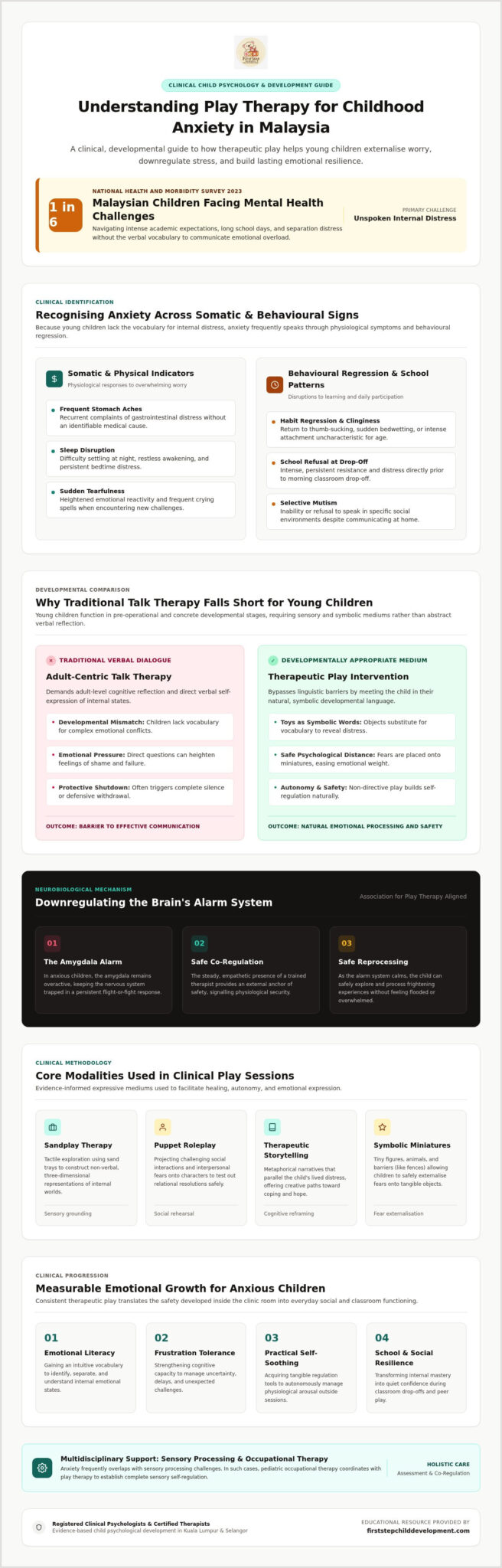
Did you know that according to the National Health and Morbidity Survey 2023, approximately one in six children in Malaysia now faces mental health challenges? It’s incredibly difficult to watch your child struggle with school refusal or intense separation anxiety, especially when your gentle questions are met with heavy silence or tears. You aren’t alone in feeling helpless, but there’s a way to bridge this communication gap. Professional play therapy for anxiety in children in Malaysia offers a gentle, evidence-based path for your little one to express their distress and regain their confidence.
We understand that navigating emotional struggles can feel overwhelming, particularly when facing local stigmas around childhood mental health. This article explains how therapeutic play helps children process complex emotions they can’t yet put into words. You’ll learn to recognise the specific signs of anxiety that benefit from professional intervention and discover what actually happens during clinical sessions in a supportive Malaysian setting. By using play as their natural language, children can find the safety they need to heal and thrive.
Key Takeaways
- Learn how to distinguish between typical childhood worries and persistent anxiety that disrupts daily learning and socialisation within a Malaysian academic context.
- Understand how play therapy for anxiety in children in Malaysia uses toys as symbolic words, allowing them to communicate distress they cannot yet express verbally.
- Discover the clinical journey of therapeutic play, moving from the initial parental intake to regular progress reviews in a specially curated, safe environment.
- Identify the essential qualifications to look for in a practitioner, ensuring your child receives support from registered clinical psychologists or certified therapists.
Understanding Childhood Anxiety: When Does Worry Require Professional Support?
Childhood anxiety isn’t just a phase of “nerves.” It’s a persistent state of worry that disrupts a child’s ability to learn, socialise, and rest. In Malaysia, children often navigate specific cultural triggers, such as intense academic pressure and separation fears during long school days. Because young children lack the vocabulary to explain internal distress, anxiety often speaks through the body. You might notice frequent stomach aches, sleep disruption, or sudden tearfulness when faced with new challenges. When these symptoms persist, seeking professional support through play therapy anxiety children Malaysia becomes a vital step for the family.
Common Signs of Anxiety in Malaysian Pre-Schoolers and Primary Students
Anxious children often exhibit behavioural regression. You might see a primary student return to thumb-sucking, experience sudden bedwetting, or display intense clinginess that feels unusual for their age. In school settings, this can manifest as selective mutism or persistent school refusal patterns observed right before the morning drop-off. While occasional fear is a normal part of growing up, clinical anxiety is distinguished by its intensity and the degree to which it impairs a child’s ability to participate in daily activities like classroom learning or family gatherings.
Why Traditional Talk Therapy Often Falls Short for Young Children
Adults process emotions through verbal reflection, but children are in pre-operational and concrete developmental stages. Direct questioning about their feelings often heightens a child’s sense of shame or leads to a complete emotional shutdown. Play therapy bypasses this barrier by using toys as a safe, symbolic medium for expression. Sometimes, anxiety overlaps with sensory processing challenges, where pediatric occupational therapy provides additional support for self-regulation. By meeting children where they are developmentally, we can help them process fears without the pressure of finding the right words.
How Play Therapy Alleviates Anxiety: Mechanism and Therapeutic Benefits
Clinical play therapy isn’t just “playing.” It’s a structured, evidence-informed psychological intervention where toys act as a child’s symbolic words. For young children, play serves as their natural language, allowing them to express complex internal states that they can’t yet articulate. This approach is foundational to our multidisciplinary work, as detailed in our guide on Play-Based Therapy: A Parent’s Guide to Growth (2026).
When a child engages in play therapy anxiety children Malaysia, they enter a safe, co-regulated environment. The steady, empathetic presence of a trained therapist helps downregulate the amygdala, which is the brain’s “alarm system.” By calming this flight-or-fight response, the child can begin to process scary experiences without feeling overwhelmed. According to the Association for Play Therapy, these interventions allow children to address their own problems in a way that feels developmentally appropriate and safe.
Therapeutic Modalities Used in Clinical Play Sessions
Therapists use varied expressive mediums like sandplay, puppet roleplay, and therapeutic storytelling to facilitate healing. By using symbolic miniatures, such as tiny animals or fences, children can externalise their fears onto the toys rather than feeling the direct weight of the emotion themselves. Non-directive play creates a secure space where children develop the autonomy needed to build lasting emotional self-regulation. If you’re noticing persistent distress, a clinical psychologist consultation can help identify if these modalities are the right fit for your child.
Key Developmental and Emotional Benefits for Anxious Children
Through consistent sessions, children often show measurable growth in emotional literacy and frustration tolerance. They learn practical self-soothing strategies that help them navigate the world outside the clinic. This sense of mastery during play translates directly into improved resilience within school and social environments, helping them face new challenges with quiet confidence.
What to Expect During a Professional Play Therapy Journey in Malaysia
Families seeking play therapy anxiety children Malaysia often start with a sense of uncertainty about the process. It’s important to understand that a professional therapeutic play room is not a standard recreational area; it’s a curated clinical space where every toy is selected to facilitate emotional expression. Clinical psychologists at Firststep Child Development ensure that while the child’s room remains a private sanctuary for healing, parents are kept informed through regular feedback sessions. This structured approach provides a steady, predictable path for both the child and the family.
The Step-by-Step Clinical Process for Families
The journey typically follows a methodical progression to ensure the child feels safe and the parents feel supported:
- Step 1: Initial Parent Consultation: A parent-only session to gather comprehensive developmental, medical, and family history.
- Step 2: Child Observation: Relationship-building sessions where the therapist uses non-directive techniques to understand the child’s internal world.
- Step 3: Therapeutic Intervention: Structured sessions focused on developing specific coping mechanisms to manage anxiety symptoms.
Collaborative Multidisciplinary Support for Complex Needs
Anxiety rarely exists in a vacuum. Sometimes, what looks like emotional distress is actually a sensory processing challenge. In these cases, pediatric occupational therapy is integrated to help the child regulate their physical responses to the environment. If the therapist suspects broader developmental concerns, they may suggest learning how assessments work to rule out neurodivergent profiles. This collaborative approach ensures the child receives holistic care tailored to their unique needs.
Most children attend weekly sessions, with regular reviews scheduled to track progress against collaborative goals. If you’re ready to begin this supportive journey, you can book a clinical psychologist consultation to discuss the next steps for your child.
Choosing the Right Centre: Seeking Compassionate Anxiety Support in KL and Selangor
Selecting a provider for play therapy anxiety children Malaysia requires looking beyond a friendly environment. It’s essential to ensure the centre employs practitioners registered with relevant Malaysian or international professional bodies, such as the Board of Counsellors or Allied Health Professions Council. A multidisciplinary approach provides the most comprehensive care, as anxiety often intersects with other developmental needs. When clinical psychologists work alongside speech and occupational therapists, your child receives a holistic support system that addresses every facet of their growth.
What to Look for in a Malaysian Child Development Centre
A high-quality centre should offer dedicated therapeutic rooms equipped with certified expressive materials, such as specific sand trays and symbolic miniatures. Beyond the sessions, look for a team that prioritises regular parent debriefs and is willing to collaborate with your child’s school when necessary. Because anxiety can sometimes mask other underlying conditions, choose a centre capable of screening for co-occurring concerns through an ADHD assessment Malaysia or other developmental screenings. This ensures no part of your child’s struggle is overlooked.
Supporting Your Anxious Child at Home: Practical Routine Adjustments
While clinical sessions are vital, the work continues at home. You can reinforce emotional security by implementing predictable visual schedules and creating a “calm-down corner” where your child feels safe to retreat. Try to dedicate ten minutes each day to child-led play, following their lead without giving instructions. It’s helpful to validate their fears with calm, non-judgmental reassurance while gently encouraging them to face challenges. Avoiding the reinforcement of avoidance behaviours helps them build the resilience they’ve started developing in therapy.
Every child’s journey is unique, and finding the right path starts with a professional conversation. If you’re ready to explore how we can support your family, scheduling a clinical psychologist consultation is a practical first step toward restoring your child’s peace of mind.
Empowering Your Child to Navigate Anxiety with Confidence
Childhood anxiety can feel like a heavy burden for a family to carry, but it doesn’t have to define your child’s future. By recognising that play is their natural language, you’ve taken the first step toward helping them process complex emotions that words can’t always reach. Through professional play therapy for anxiety in children in Malaysia, your little one can safely navigate their fears within a gentle, child-centred environment that prioritises their emotional safety.
At Firststep Child Development, our multidisciplinary team integrates clinical psychology, speech, and occupational therapies to provide holistic care. We work closely with experienced paediatricians from Firststep Child Specialist Clinic to ensure every developmental concern is handled with professional clarity and care. If your child is struggling with persistent worry or school reluctance, learn more about our gentle clinical psychologist consultation or explore our comprehensive services at Firststep Child Development. You don’t have to navigate this journey alone; we’re here to help your child regain their quiet confidence and thrive.
Frequently Asked Questions
How do I know if my child’s worry is normal or clinical anxiety?
Clinical anxiety is distinguished by its persistence and the degree to which it impairs daily life. While it’s normal to feel nervous before a school performance, clinical anxiety involves intense distress that lasts for weeks and disrupts sleep or attendance. If your child’s worry prevents them from participating in activities they once enjoyed, a professional behavioural and emotional assessment at our centre in Selangor can provide much-needed clarity.
At what age can a child in Malaysia start play therapy?
Children in Malaysia typically begin play therapy between the ages of 3 and 12, as this aligns with their peak years of symbolic and imaginative development. During this stage, kids use toys as their primary means of communication. While older children may transition to more verbal methods, youngsters in this age bracket benefit most from a play-based approach that respects their natural developmental milestones and cognitive abilities.
How is clinical play therapy different from everyday playing at home?
Clinical play therapy differs from home play through its intentional therapeutic focus and the presence of a trained professional. While home play is recreational, clinical sessions use a curated selection of toys designed to facilitate emotional expression. The therapist carefully tracks the child’s themes and reactions, providing a safe, non-judgmental space where the child can externalise internal conflicts that wouldn’t necessarily be addressed during a standard playdate.
How long does it usually take to see improvements in an anxious child?
Every child’s journey is unique, but many families start noticing positive shifts in behaviour after 12 to 20 weekly sessions. Initial progress often appears as improved emotional regulation at home or a slight reduction in school-morning tears. Consistency is vital for play therapy anxiety children Malaysia, as building a trust-based relationship takes time. We conduct regular progress reviews to ensure therapeutic goals are being met effectively.
Can play therapy help children who also have ADHD or sensory sensitivities?
Yes, play therapy is highly effective for children navigating co-occurring challenges like ADHD or sensory sensitivities. Because our centre in Kuala Lumpur uses a multidisciplinary approach, we often integrate play sessions with support from our pediatric occupational therapists. This combination helps children manage both their emotional distress and their physical sensory needs. It creates a comprehensive support system that addresses the child’s development from multiple clinical angles simultaneously.

Article by
Firststep Child Development Team
Firststep Child Development Team provides evidence-informed educational resources to help parents better understand child development, behaviour and learning. Our multidisciplinary services include clinical psychology, occupational therapy, speech and language therapy, developmental assessments and other child development support in Kuala Lumpur and Selangor.
Disclaimer
This article is for general educational and informational purposes only and is not a substitute for professional medical, psychological or therapeutic advice, diagnosis or treatment. Every child develops differently. If you have concerns about your child's development, behaviour, learning or wellbeing, please consult an appropriately qualified healthcare or allied health professional.