


Imagine standing in a busy Kuala Lumpur shopping centre when your child suddenly has an intense emotional outburst. You feel the sting of judging eyes and the weight of pure exhaustion, wondering if this is simply a difficult phase or a sign of a deeper issue. Seeking effective child anger management Malaysia can feel overwhelming when you’re caught in constant power struggles at home.
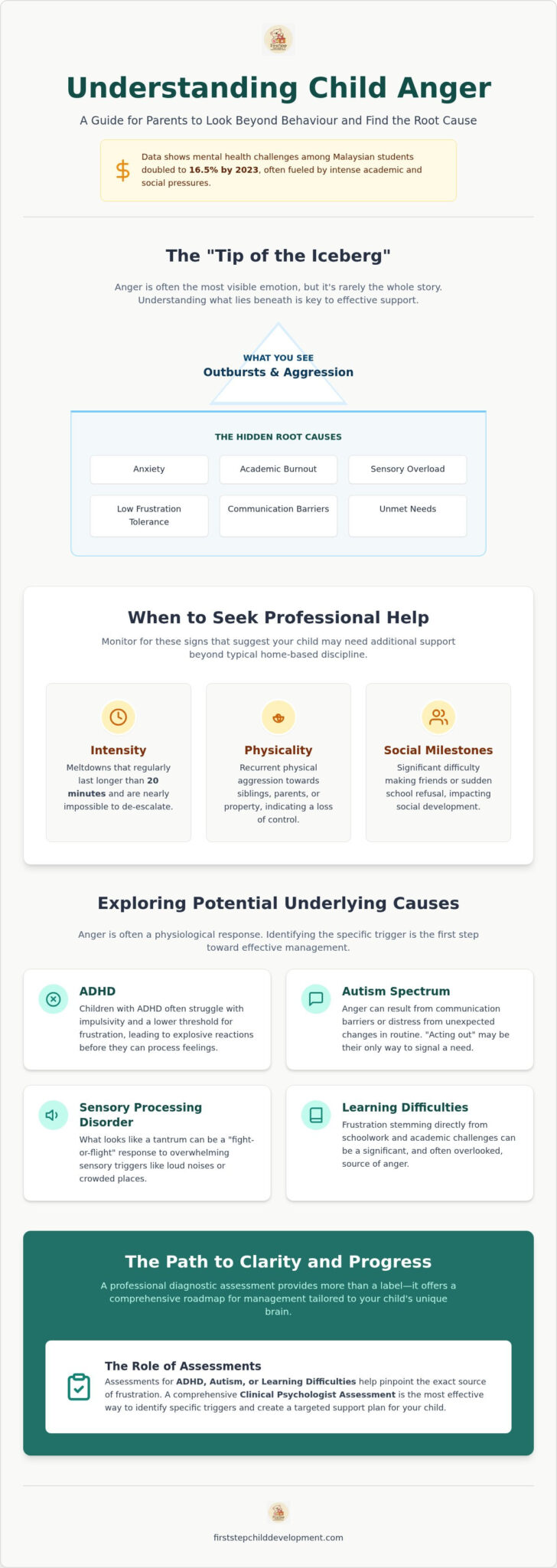
It’s natural to feel confused when traditional discipline doesn’t seem to work. You aren’t alone in this struggle. Recent data from the National Health and Morbidity Survey shows that mental health challenges among Malaysian students doubled to 16.5% by 2023, often triggered by intense academic pressure. This guide will help you look beyond the “bad behaviour” to identify the true root causes of your child’s distress. We’ll explore how professional, multidisciplinary strategies, such as clinical psychologist consultations and play therapy, provide a clear path toward emotional regulation and long-term growth for your family.
Key Takeaways
- Learn to distinguish between typical developmental outbursts and persistent emotional dysregulation that impacts your child’s daily life in KL or Selangor.
- Identify how underlying neurodevelopmental factors, such as ADHD or communication barriers in Autism, may be the primary drivers of your child’s frustration.
- Gain practical co-regulation strategies and learn to create a supportive “Calm Down Corner” to help your child navigate intense feelings at home.
- Discover how professional child anger management Malaysia through play therapy and occupational therapy supports your child in developing healthy emotional regulation.
Understanding Child Anger in the Malaysian Context
Anger is a universal human emotion, yet for many families in Kuala Lumpur and Selangor, it can feel like an overwhelming force that disrupts the harmony of the home. While feeling angry is a natural response to frustration, seeking professional child anger management Malaysia becomes a priority when these emotions interfere with a child’s daily functioning. In our local schools, children often face intense academic pressure and high social expectations, which can significantly elevate their baseline stress levels.
It’s vital to distinguish between developmentally appropriate outbursts and persistent dysregulation. A toddler’s tantrum is often a standard milestone of asserting independence. However, in older children, frequent explosions are often the “tip of the iceberg.” Beneath the surface, the child may be grappling with internalised anxiety, academic burnout, or sensory overload. These underlying feelings often manifest as aggressive behaviour because the child lacks the vocabulary to express their distress in a more constructive way.
When Should Parents in Malaysia Seek Professional Help?
Recognising when to transition from home-based discipline to a professional Clinical Psychologist Consultation is a compassionate step toward clarity. You should monitor for specific signs that suggest your child needs additional support:
- Intensity: “Meltdowns” that regularly last longer than 20 minutes and are nearly impossible to de-escalate.
- Physicality: Recurrent physical aggression toward siblings, parents, or property.
- Social Milestones: Significant difficulty making friends or sudden school refusal in local primary schools.
Early intervention is key to preventing long-term emotional challenges. By introducing age-appropriate Anger Management Techniques, specialists help children build the resilience they need to navigate life’s frustrations. Addressing these concerns early ensures that emotional outbursts don’t become a permanent barrier to your child’s happiness and social success.
Identifying the Root Causes: Why Children Struggle with Anger
To effectively support child anger management Malaysia, we must look past the immediate outburst and understand what’s happening internally. For many children, anger isn’t a choice; it’s a physiological response to a world that feels overwhelming. Neurodevelopmental conditions like ADHD often play a significant role. Children with ADHD frequently struggle with impulsivity and have a lower threshold for frustration, meaning they might react explosively before they’ve had a chance to process their feelings.
Similarly, children on the autism spectrum may experience anger as a result of communication barriers or unexpected changes in their daily routine. When a child can’t express a need or feels their world has become unpredictable, “acting out” becomes their only way to signal distress. We also see many cases where Sensory Processing Disorder (SPD) is the culprit. In these instances, what looks like a tantrum is actually a “fight-or-flight” response to sensory triggers like loud noises or crowded KL shopping malls. A clinical psychologist assessment is the most effective way to identify these specific underlying triggers and provide Professional Support for Anger.
The Role of Diagnostic Assessments
Clarity leads to progress. Gaining a clear diagnosis is a transformative step for any family. An ADHD assessment or autism assessment provides more than just a label; it offers a comprehensive roadmap for management tailored to your child’s unique brain. For children whose frustration stems from schoolwork, learning difficulties assessments can pinpoint exactly where academic-related anger begins. These professional evaluations provide the foundation for long-term child anger management Malaysia. If you’re feeling uncertain about your child’s emotional path, you can learn more about how our assessments work to find the clarity your family deserves.
Practical Strategies for Managing Anger at Home
Supporting your child through big emotions starts with co-regulation. When an outburst occurs, your child’s nervous system is looking to yours for cues of safety. By modelling a calm voice and steady breathing, you provide a template for their own emotional regulation. This is a cornerstone of effective child anger management Malaysia, especially when external pressures like school or tuition are high.
Creating a “Calm Down Corner” in your Kuala Lumpur or Selangor home can offer a dedicated safe haven. This isn’t a place for punishment; it’s a sensory-friendly space with pillows, soft lighting, or stress balls where a child can retreat to reset. We also recommend the “Name it to Tame it” technique. Helping your child label their feelings—moving from “I’m angry” to “I feel frustrated because I can’t finish this task”—builds the emotional vocabulary needed to replace physical aggression with communication.
Establishing consistent daily routines is equally vital. Predictability reduces the underlying anxiety that often bubbles over into anger. Simple visual schedules for morning and bedtime can make a significant difference in a child’s sense of security and control over their environment.
Communication Tips for Caregivers
In many local households, discipline can unintentionally lean toward shame, which often escalates anger in sensitive children. Instead, try using clear, simple instructions and heavy doses of positive reinforcement when your child manages a frustration well. Focus on the effort they put into staying calm rather than just the outcome. If you find these home strategies difficult to implement, a parent consultation can provide personalised guidance tailored to your family’s unique dynamics. You can learn more about our supportive approach to help your family thrive and find balance.
Professional Support: A Multidisciplinary Approach to Anger
While home strategies are essential, effective child anger management Malaysia often benefits from a multidisciplinary perspective. Anger is rarely an isolated issue; it’s frequently intertwined with sensory needs, developmental milestones, or even physical health. At Firststep, our specialists work together to ensure every angle of your child’s well-being is considered through a coordinated care plan.
Play Therapy is a vital tool in this process. It provides a safe, symbolic environment where children can express and process intense anger without the pressure of verbal explanation. For children whose outbursts are triggered by environmental noise or physical discomfort, Pediatric Occupational Therapy helps them manage sensory-driven frustration. We also consider physiological factors through a nutritionist consultation, as fluctuations in mood can sometimes be linked to dietary patterns or blood sugar levels. This collaborative effort between our psychologists and pediatricians ensures that we address the root cause rather than just the symptoms.
What to Expect in a Consultation
Your journey begins with a thorough clinical interview. We take the time to gather your family’s history and observe your child’s behaviour in a relaxed, non-threatening setting. This isn’t a formal test; it’s a way for us to understand their unique world. We then engage in collaborative goal setting, ensuring you’re an active partner in every decision made for your child’s emotional growth.
Firststep Psychology & Child Development Centre is designed to be a gentle, child-centered space. We prioritise your child’s comfort to ensure they feel secure enough to explore their emotions. By combining clinical expertise with a nurturing environment, we help your family move from a state of constant crisis to one of lasting understanding and peace.
Supporting Your Child’s Journey Toward Emotional Balance
Recognising that persistent outbursts are often a form of communication rather than simply defiance is a transformative step for any family. When you look beneath the surface to identify neurodevelopmental or environmental triggers, you move away from constant power struggles and toward meaningful connection. Comprehensive child anger management Malaysia relies on this holistic view, considering your child’s sensory, psychological, and even nutritional needs to foster lasting growth.
If your child is struggling with intense emotions, professional clarity is the essential first step toward peace. Our multidisciplinary team provides play-based, child-gentle diagnostic assessments at our convenient locations in KL and Selangor. Learn more about our Clinical Psychologist Consultations or visit Firststep Child Development to explore our full range of supportive services. You don’t have to navigate these emotional challenges alone; a calmer, more understanding future for your family is well within reach.
Frequently Asked Questions
Is anger management therapy effective for young children in Malaysia?
Yes, professional support is highly effective when it’s tailored to a child’s specific developmental stage. In Malaysia, child anger management Malaysia often involves play therapy or behavioural guidance rather than traditional talk therapy. These methods help children process complex emotions symbolically while teaching parents co-regulation skills. Early intervention is crucial, as it provides families with the tools to manage frustrations before they impact school performance or social relationships.
What is the difference between a tantrum and a sensory meltdown?
A tantrum is usually goal-oriented, such as wanting a specific toy or resisting a task, and it often stops once the child’s desire is met. In contrast, a sensory meltdown is an involuntary “fight-or-flight” response to an overwhelming environment, such as a crowded KL shopping mall. Meltdowns occur when a child’s nervous system can no longer process sensory input. They require calm co-regulation rather than standard disciplinary measures.
How much does a child psychology consultation cost in Kuala Lumpur?
Fees for child psychology consultations in Kuala Lumpur and Selangor vary depending on the specialist’s experience and the facility’s multidisciplinary offerings. Many private centres provide per-session professional consultation fees for emotional or behavioural support. For more complex concerns, centres often offer fixed-price diagnostic assessment packages that include standardised testing and detailed feedback reports. It’s best to contact a centre directly to discuss your child’s needs and receive their current fee schedule.
Can ADHD or Autism cause my child to be angry?
ADHD and Autism don’t directly cause anger, but they can make emotional regulation significantly more challenging for a child. Children with ADHD often struggle with impulsivity and low frustration tolerance, which can lead to sudden outbursts. Those on the autism spectrum may experience intense frustration due to communication barriers or unexpected changes in their routine. Identifying these neurodevelopmental factors through a professional assessment is a vital step in child anger management Malaysia.
How long does it take to see improvements in a child’s anger management?
The timeline for improvement is unique to every child and depends on the underlying causes of their emotional distress. Some families notice positive shifts in communication after just a few sessions of play therapy or parent guidance. However, developing robust emotional regulation is a gradual process of building new neurological skills. Consistency at home, combined with professional multidisciplinary support, ensures that progress is steady and sustainable as your child grows.

Article by
Firststep Child Development Team
Firststep Child Development Team provides evidence-informed educational resources to help parents better understand child development, behaviour and learning. Our multidisciplinary services include clinical psychology, occupational therapy, speech and language therapy, developmental assessments and other child development support in Kuala Lumpur and Selangor.
Disclaimer
This article is for general educational and informational purposes only and is not a substitute for professional medical, psychological or therapeutic advice, diagnosis or treatment. Every child develops differently. If you have concerns about your child's development, behaviour, learning or wellbeing, please consult an appropriately qualified healthcare or allied health professional.