Why Does My Child Struggle With Transitions? 10 Ways to Help Children Cope With Change
Many parents wonder: “Why does my child get so upset whenever we have to stop one activity and start another?”
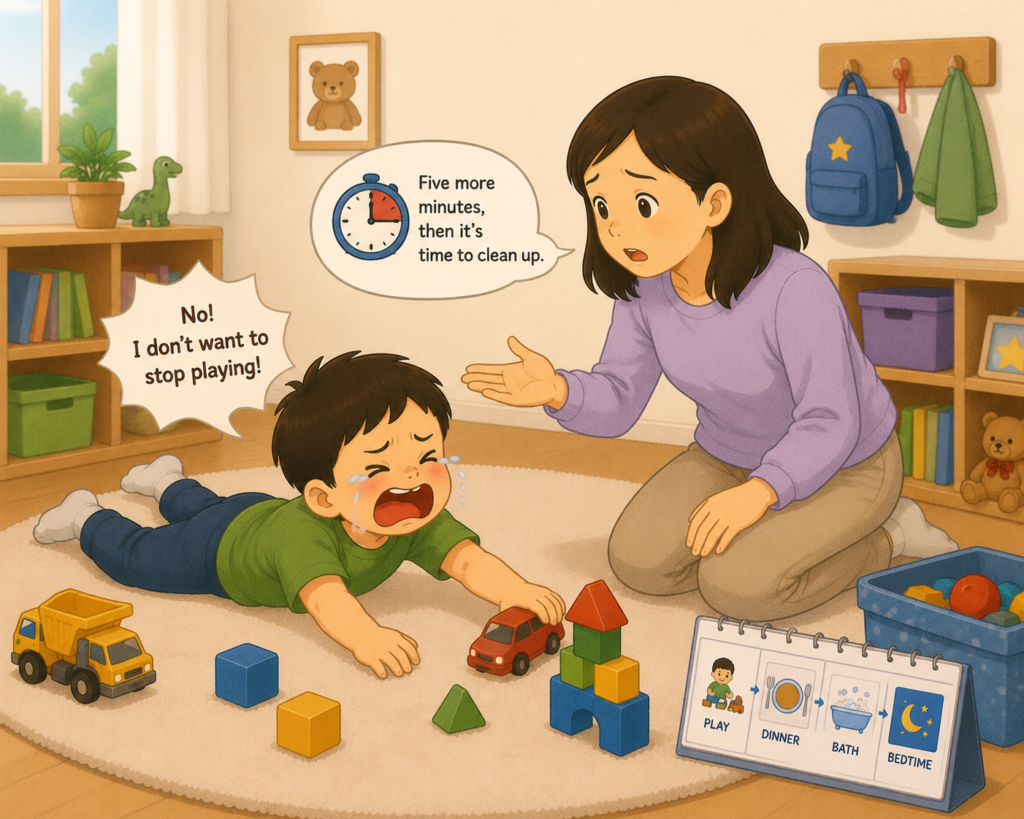
Maybe your child becomes upset when it is time to leave the playground, refuses to stop watching television, cries when the daily routine changes, or becomes frustrated when plans do not go as expected.
Transitions are a normal part of everyday childhood. Children constantly move from one activity, place, or expectation to another such as from playtime to mealtime, from home to school, or from screen time to bedtime.
However, some children find these changes particularly difficult.
When transition difficulties happen frequently or significantly affect a child’s daily life, understanding the reason behind the behaviour can help parents provide the right support.
What Are Transitions?
A transition is simply a change from one activity, environment, person, or routine to another.
For children, transitions can include:
✿ Finishing playtime and getting ready for school
✿ Turning off the television or tablet
✿ Moving from one classroom activity to another
✿ Leaving the playground
✿ Getting ready for bedtime
✿ Changing from one caregiver to another
✿ Going somewhere unfamiliar
✿ Adapting when plans suddenly change
While some children can move between activities with little difficulty, others may need more preparation and support.
Why Are Transitions Hard for Some Children?
Transitions ask children to stop what they are doing, shift attention, understand what comes next, and adjust.
Some children find this hard because they may:
✿ Need more time to switch focus
✿ Get very absorbed in what they are doing
✿ Struggle with unexpected changes
✿ Not know what will happen next
✿ Feel anxious in new situations
✿ Have trouble managing emotions
✿ Be sensitive to sounds, touch, or busy environments
✿ Find instructions hard to follow
Children with autism may especially find transitions difficult because they often prefer routines and predictability. However, difficulty with transitions alone does not mean a child has autism.
1. Gets very upset when an activity ends
Your child may become upset when stopping something they enjoy.
For example:
- Crying when play ends
- Refusing to leave the playground
- Getting angry when screen time stops
- Saying “no” many times
- Having tantrums during changes
This is not just “bad behaviour.” It can feel genuinely hard for them.
2. Needs extra time to switch activities
Some children need more time to move on.
You may notice they:
- Take a long time to get ready
- Need many reminders
- Get distracted during changes
- Struggle to stop one activity
- Need step-by-step help
Extra time can make transitions easier.
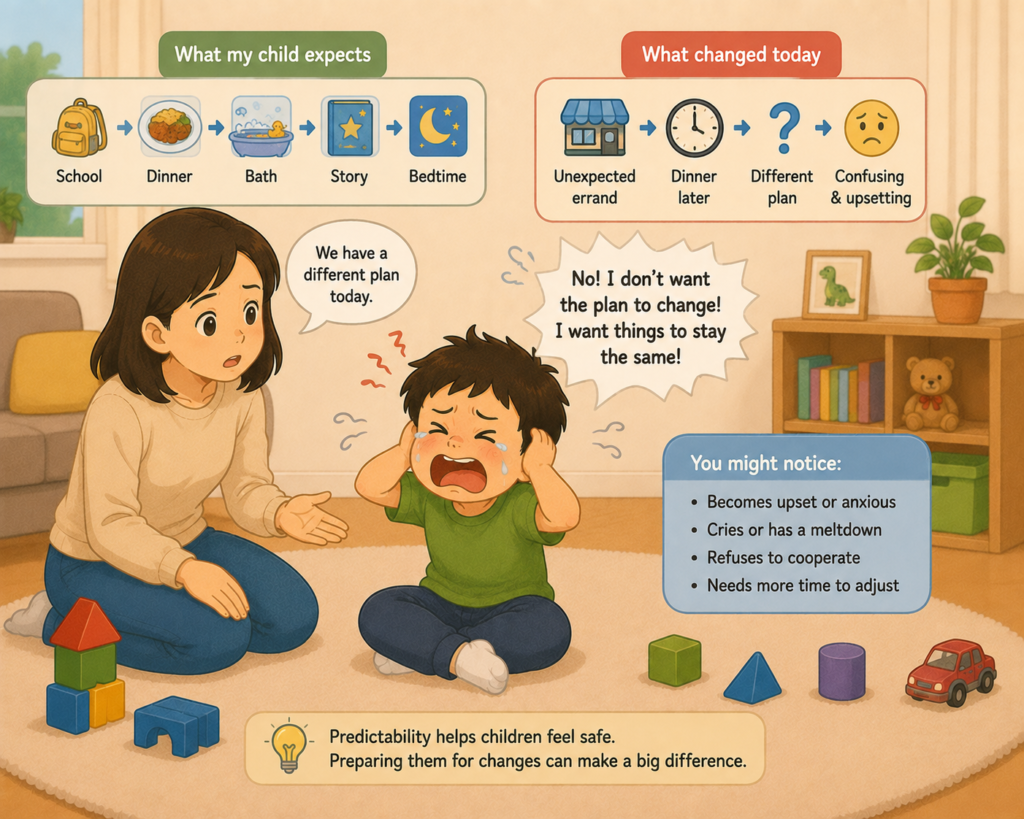
3. Gets upset when routines change
Some children rely on routines to feel safe.
Changes like:
- A different route to school
- A cancelled plan
- A new teacher
- A change in mealtime or bedtime
- Furniture being moved
Can cause distress.
Even small changes can feel big to them.
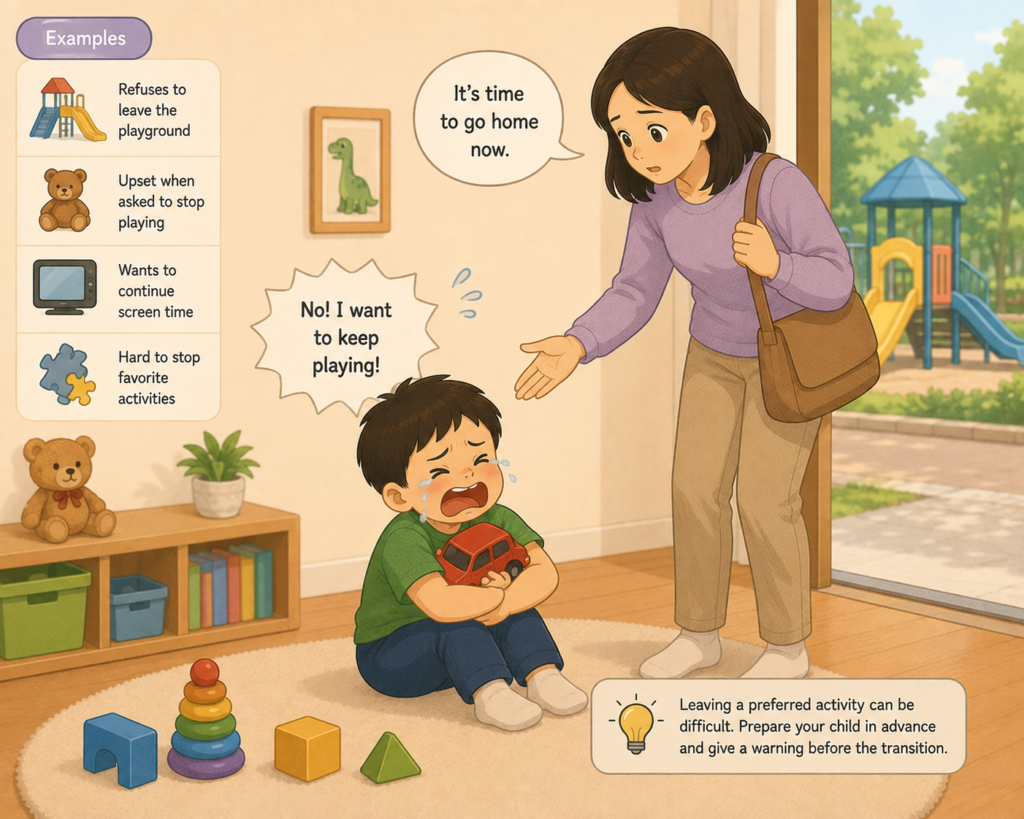
4. Finds it hard to leave preferred activities
Some activities are very hard to stop.
Your child may:
- Refuse to stop playing
- Get upset leaving the playground
- Keep talking about one topic
- Struggle when a favourite activity ends
This often happens when they are very focused.
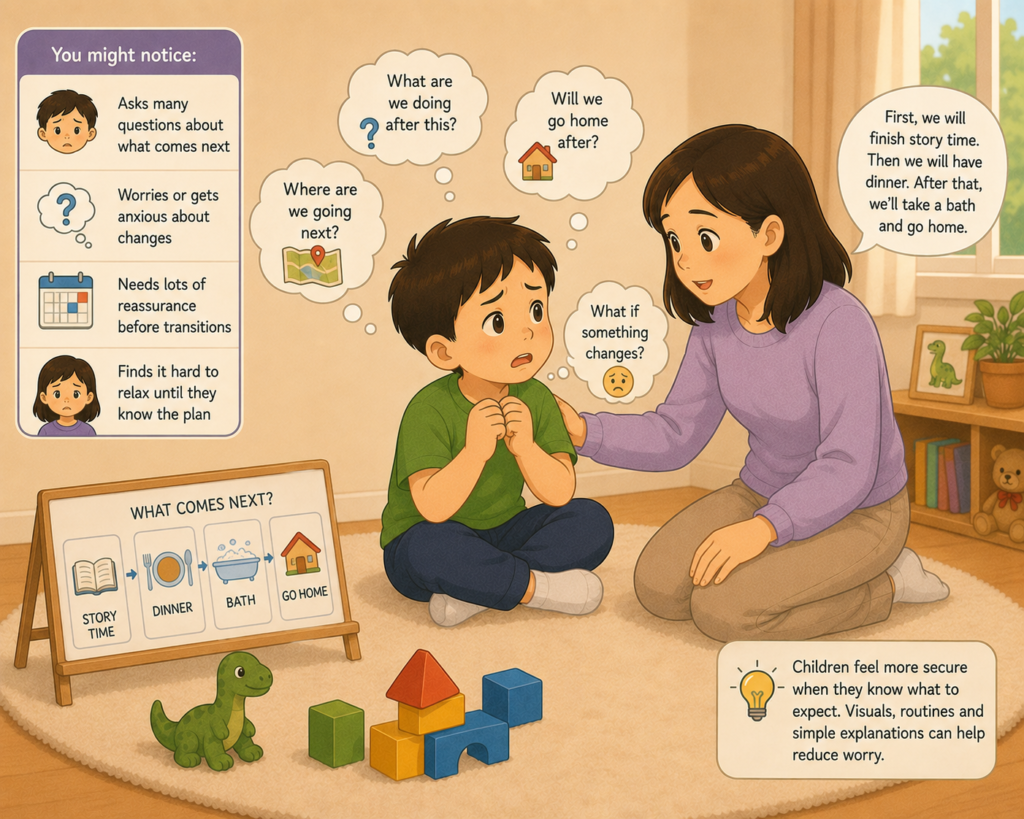
5. Worries about what happens next
Sometimes the problem is not leaving, but it is not knowing what comes after.
They may ask:
“Where are we going?”
“What happens next?”
“When can I play again?”
Clear information can help reduce worry.
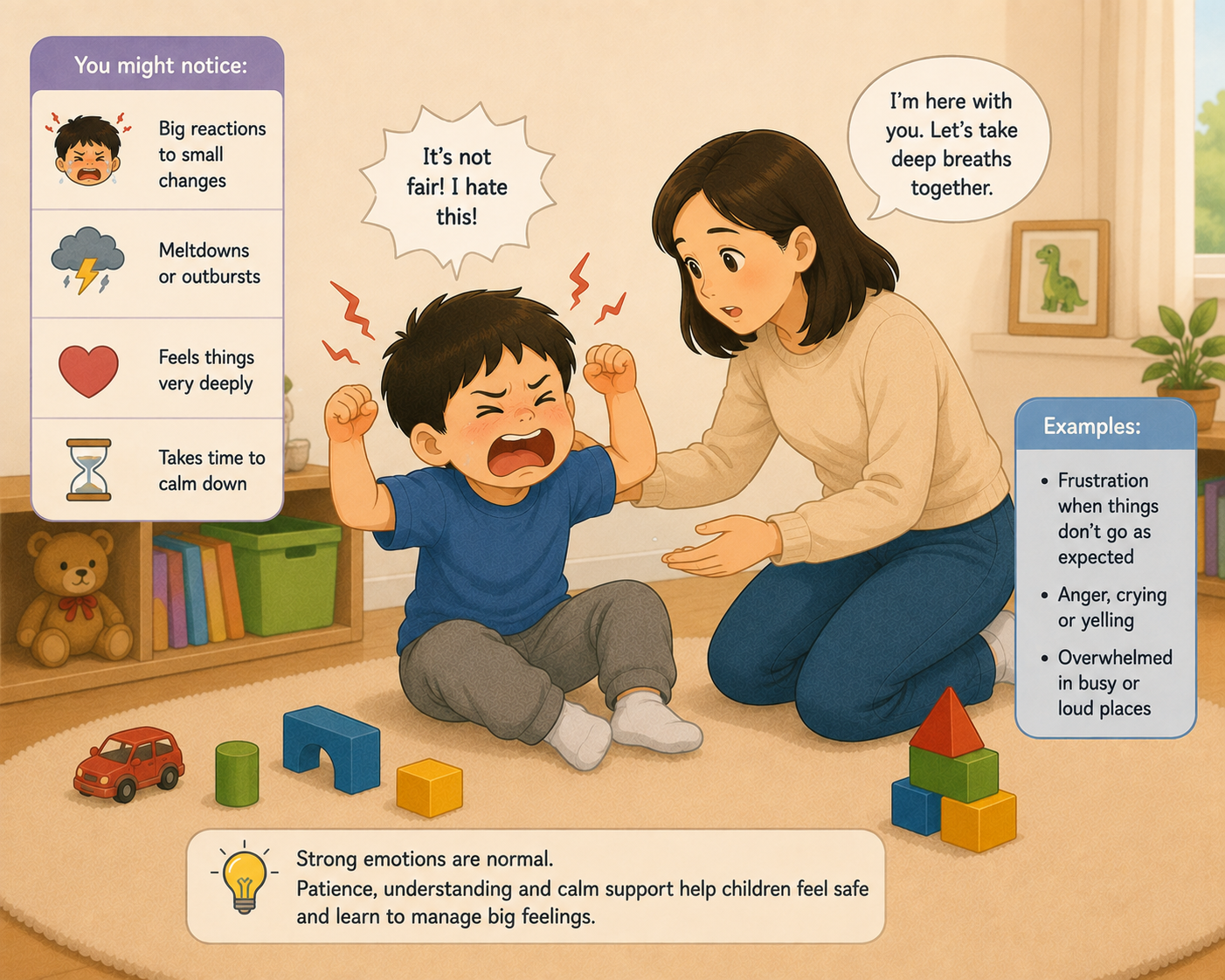
6. Has strong emotional reactions
Transition difficulties may look like:
- Crying
- Screaming
- Refusing
- Hiding
- Dropping to the floor
- Running away
- Meltdowns
These are signs your child may feel overwhelmed.
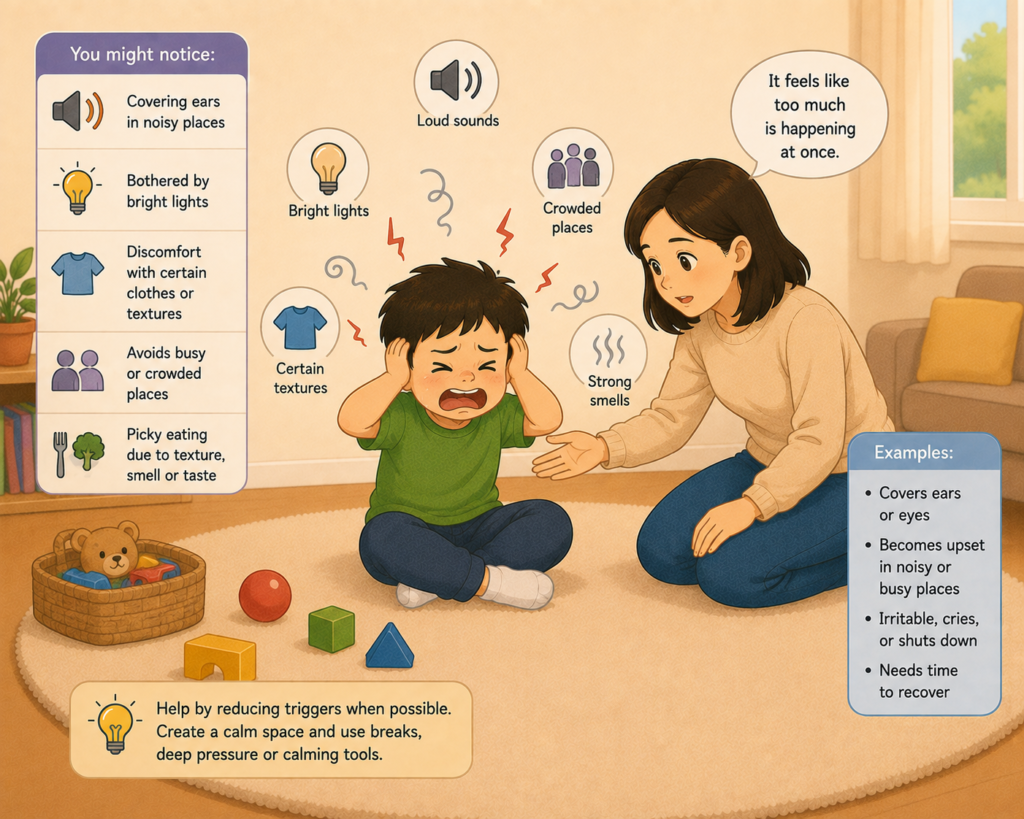
7. Struggles more with sensory overload
Some transitions happen in busy or uncomfortable environments.
For example:
- Leaving a noisy classroom
- Entering a crowded shop
- Moving from quiet to loud places
- Wearing uncomfortable clothes
- Switching between indoor and outdoor spaces
Sensory needs can make transitions harder. Occupational therapists can help support these challenges.
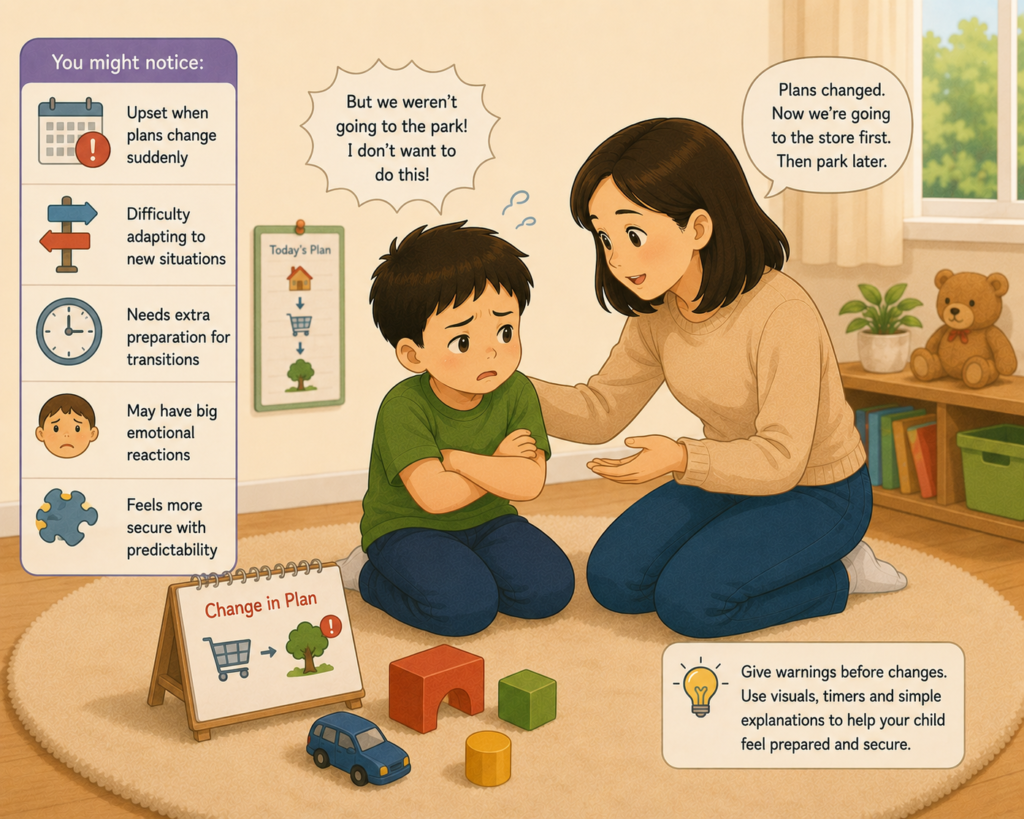
8. Struggles with unexpected changes
Some children cope better when they are warned ahead of time.
For example:
“We are going to the park.”
But then:
“The park is closed.”
This sudden change may lead to strong reactions.
They may need help learning flexibility.
10 Ways Parents Can Help With Transitions
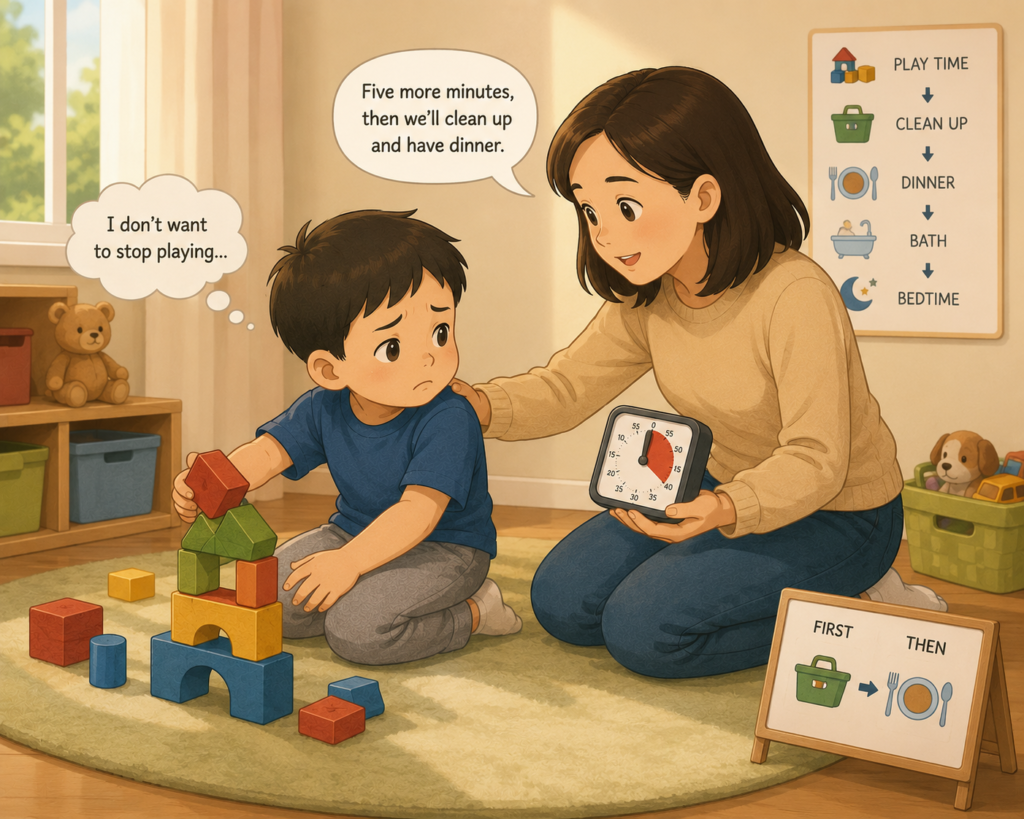
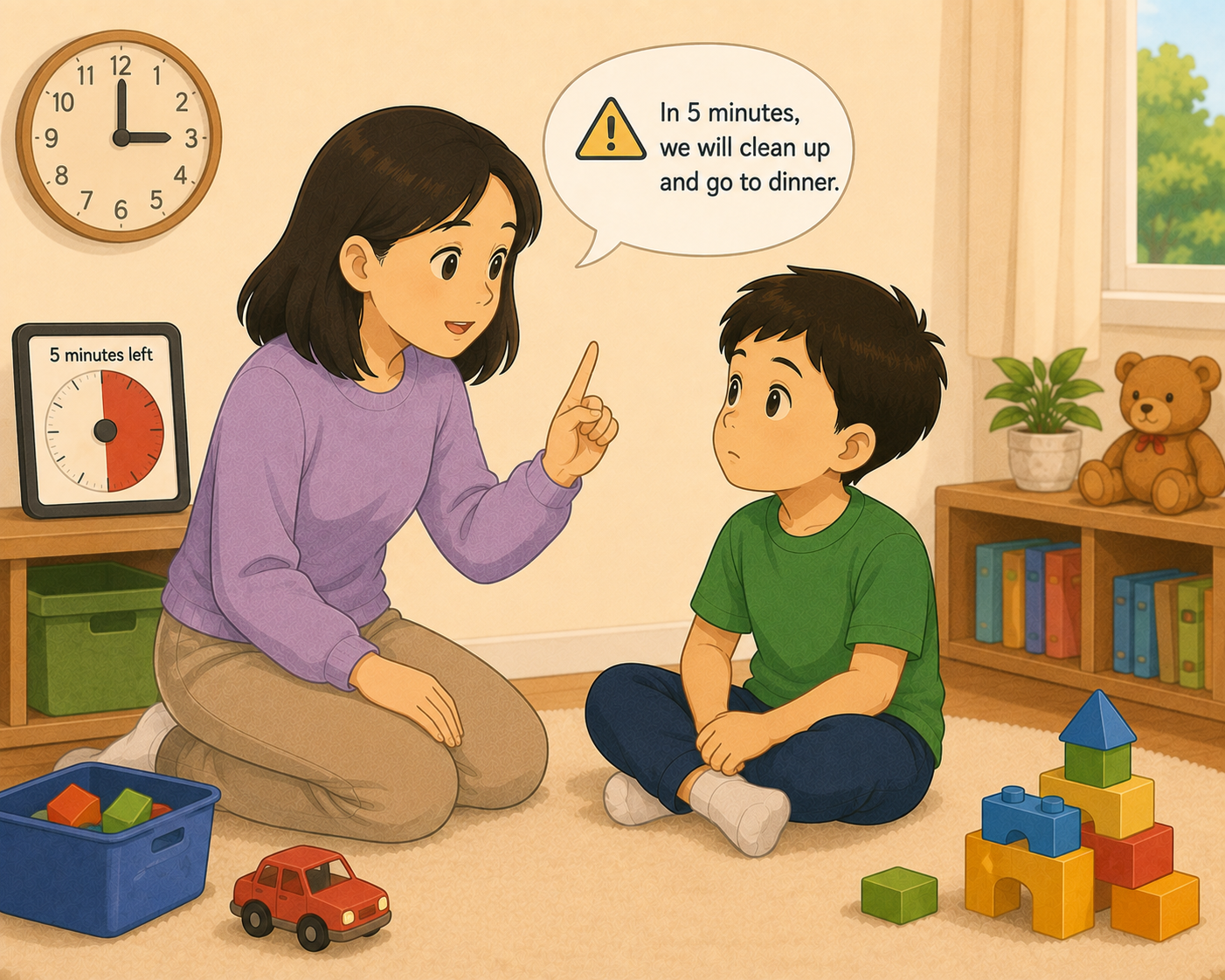
1. Give a warning
Instead of sudden changes, try:
“Five more minutes, then we leave.”
This helps your child prepare.
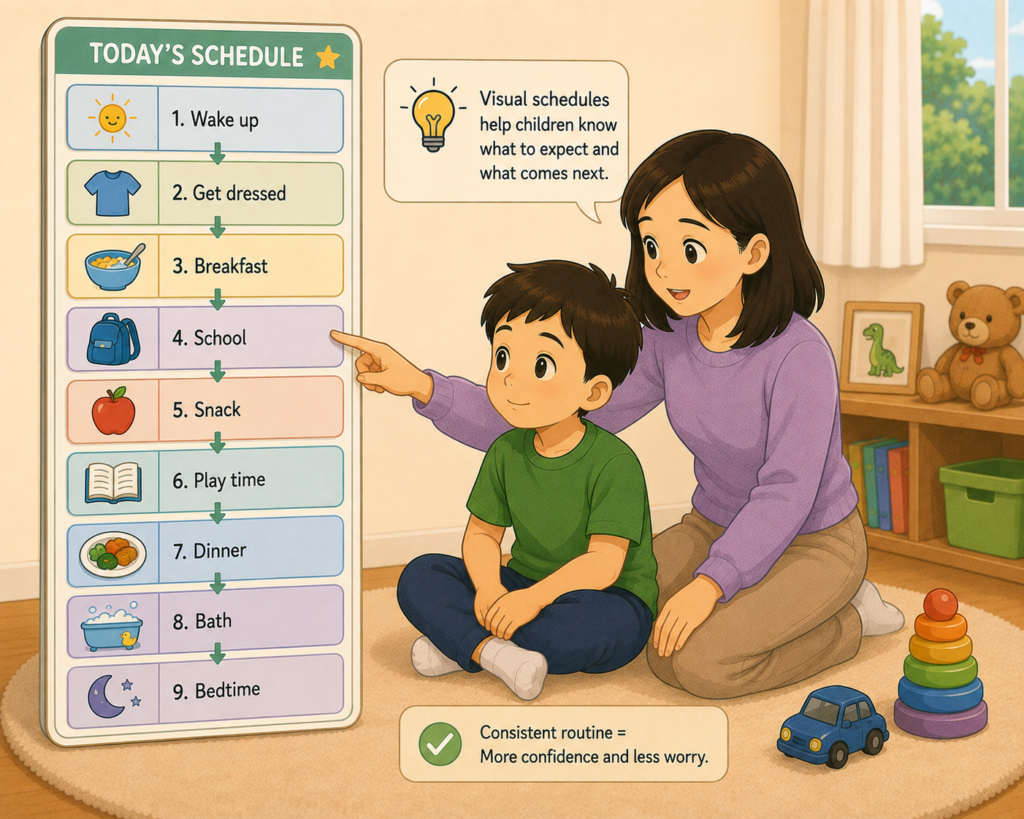
2. Use a visual schedule
Pictures showing the day can help children understand what comes next:
Wake up → Breakfast → School → Play → Bath → Bed
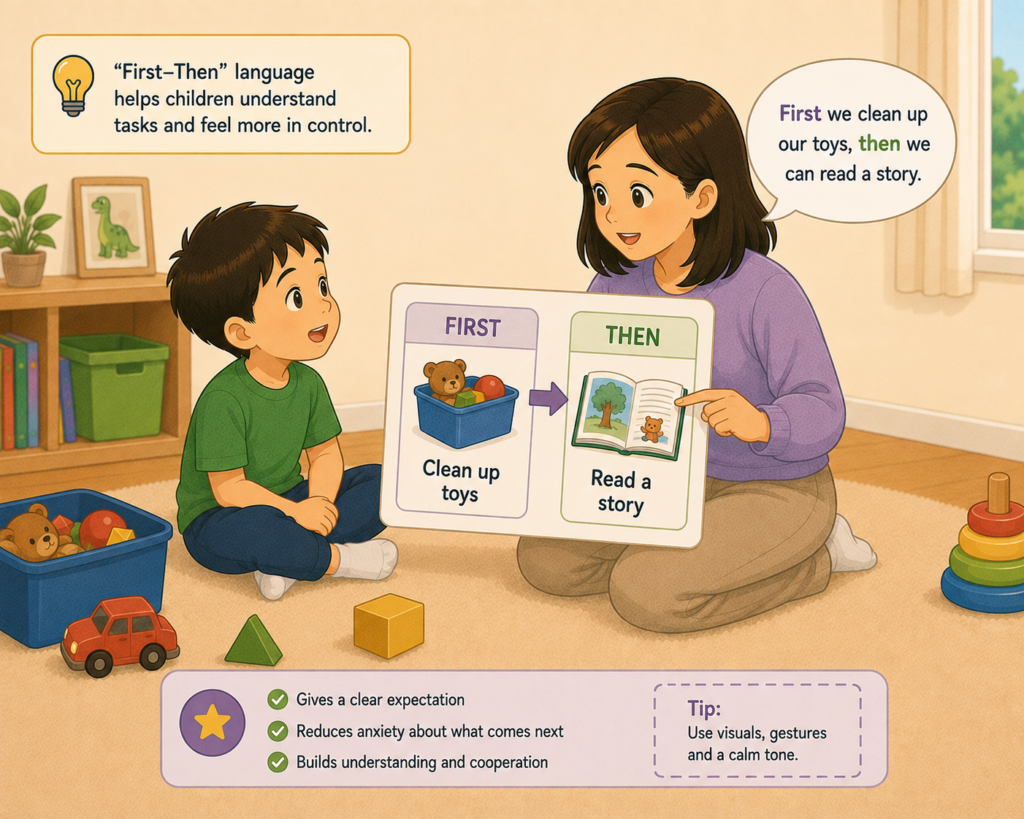
3. Use “First–Then” language
Keep it simple:
“First clean, then read.”
“First homework, then TV.”
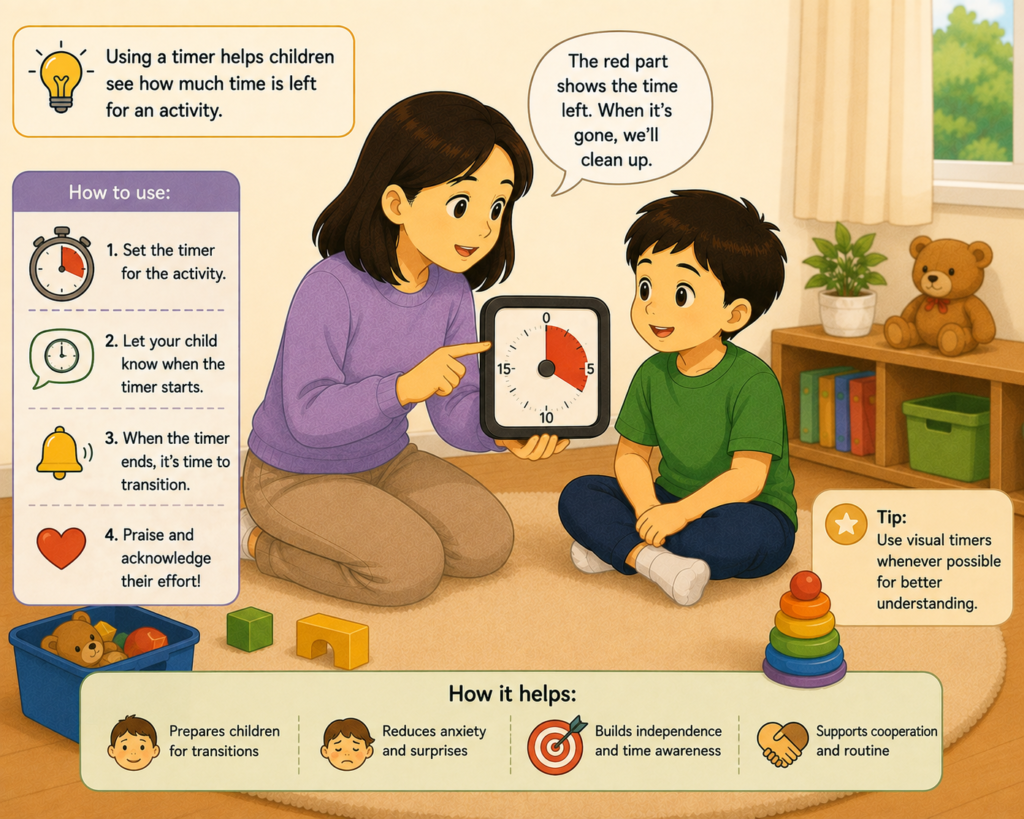
4. Use a timer
A timer helps make endings predictable:
“When the timer rings, we stop.”
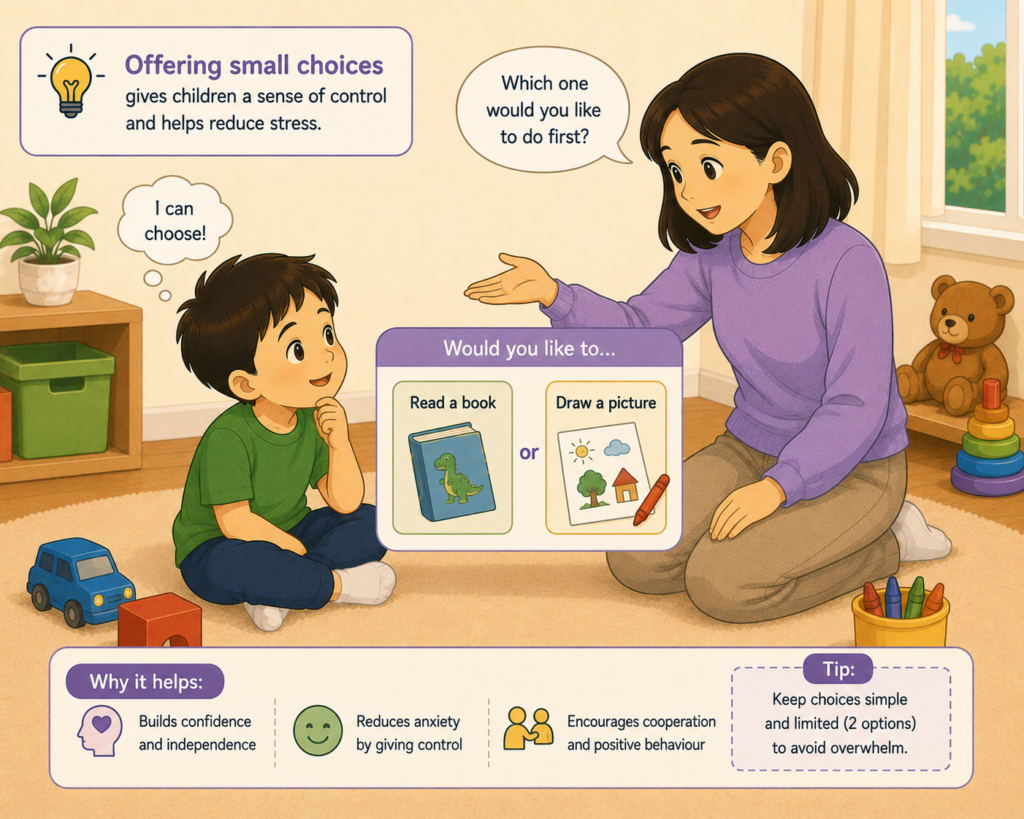
5. Offer small choices
Give limited control:
“Read first or draw first?”
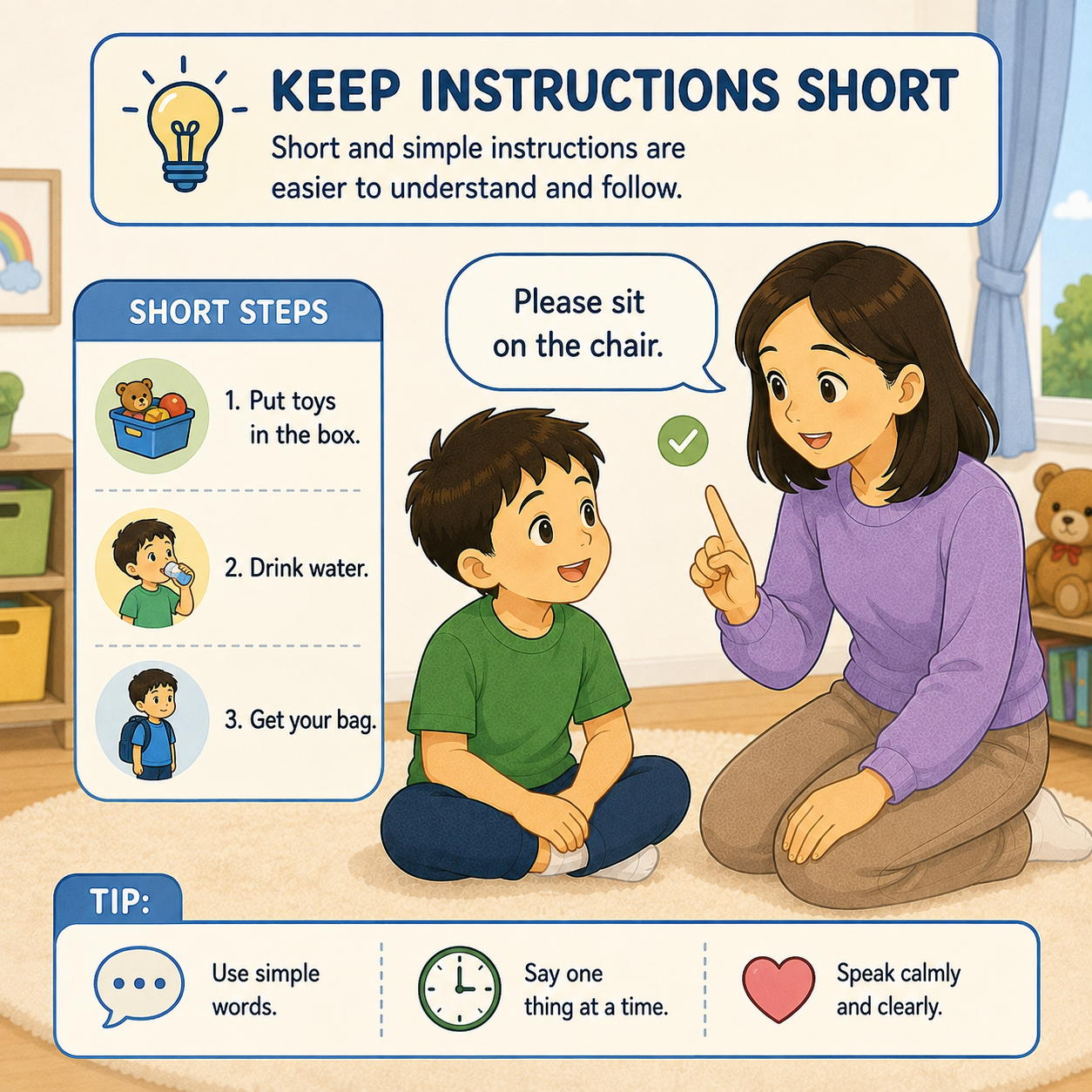
6. Keep instructions short
Instead of many steps, try one at a time:
“Shoes on.”
“Now bag.”
“Let’s go.”
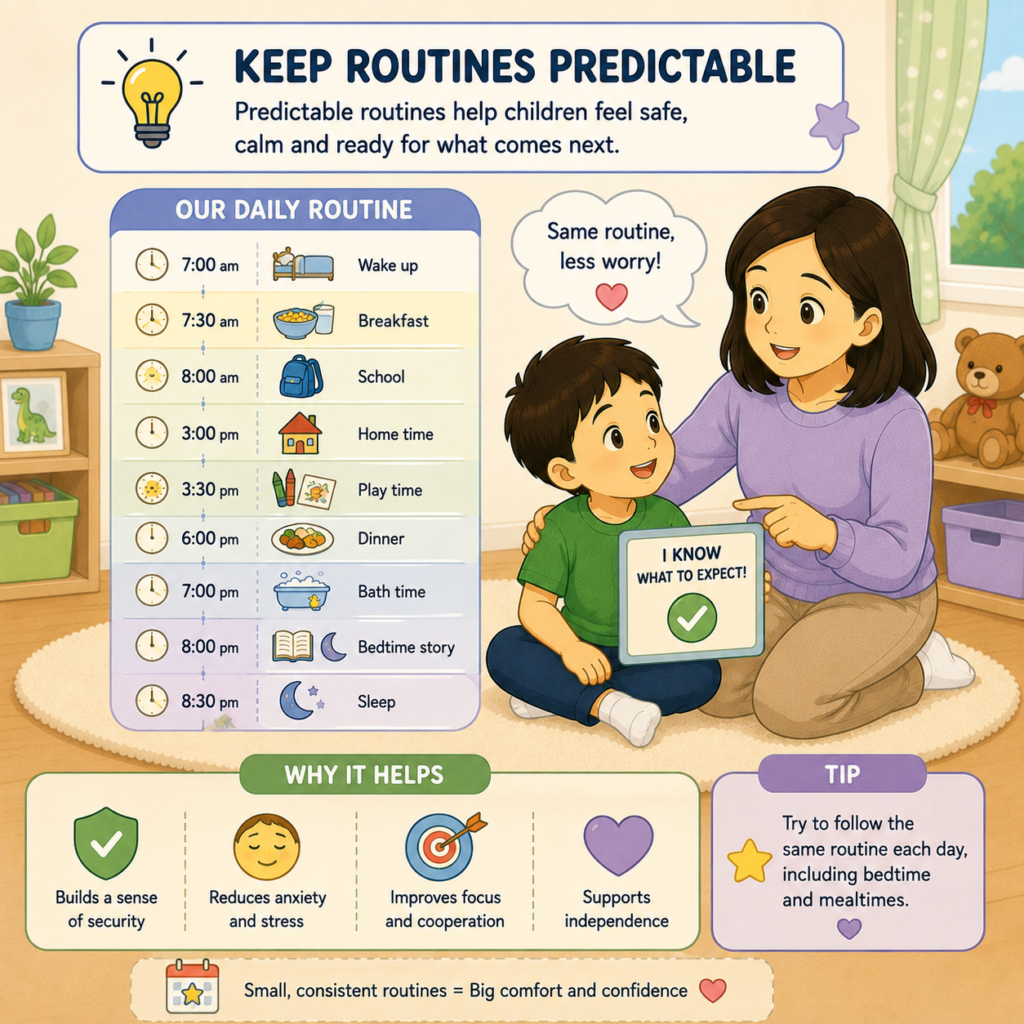
7. Keep routines predictable
Try to keep daily routines similar:
- Morning
- Meals
- Homework
- Bedtime
Predictability helps children feel safe.
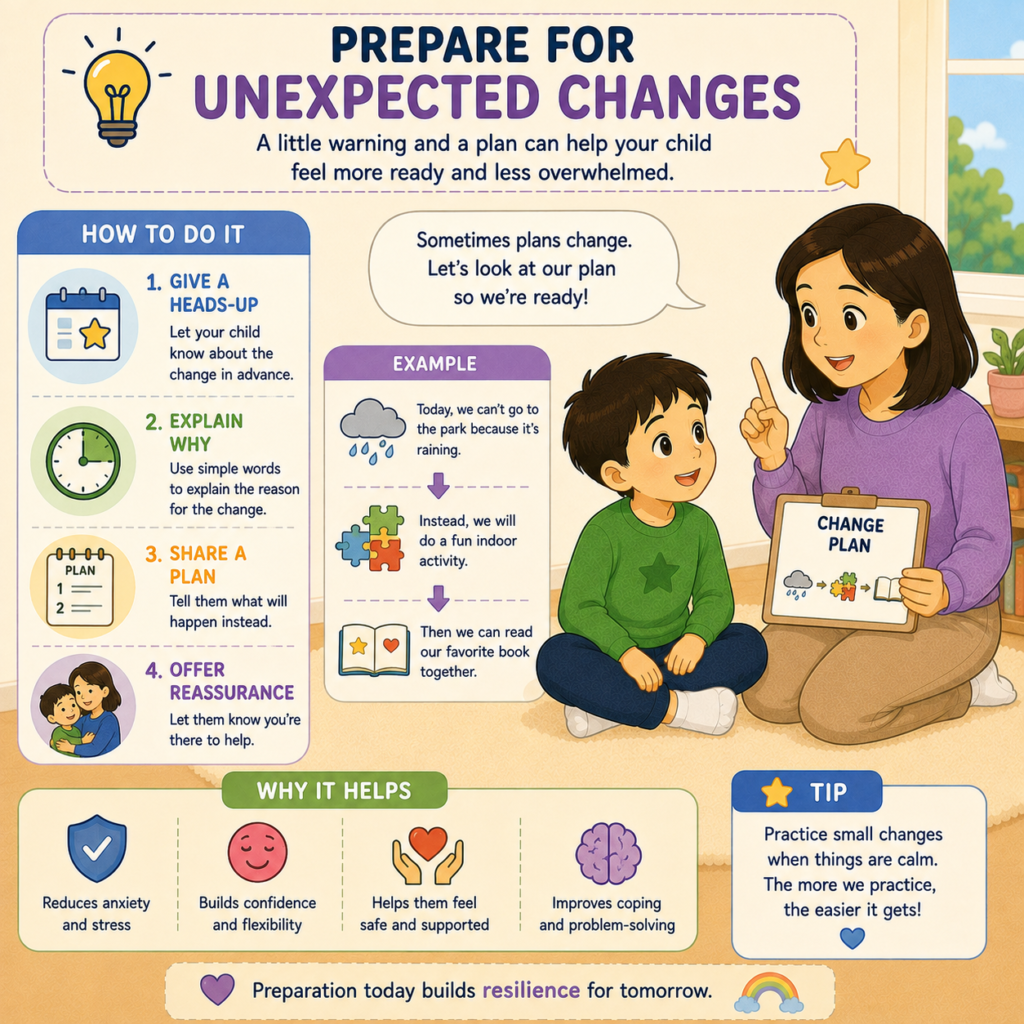
8. Prepare for unexpected changes
Acknowledge feelings:
“I know you wanted the park. It is closed today. We will go home and choose something else.”
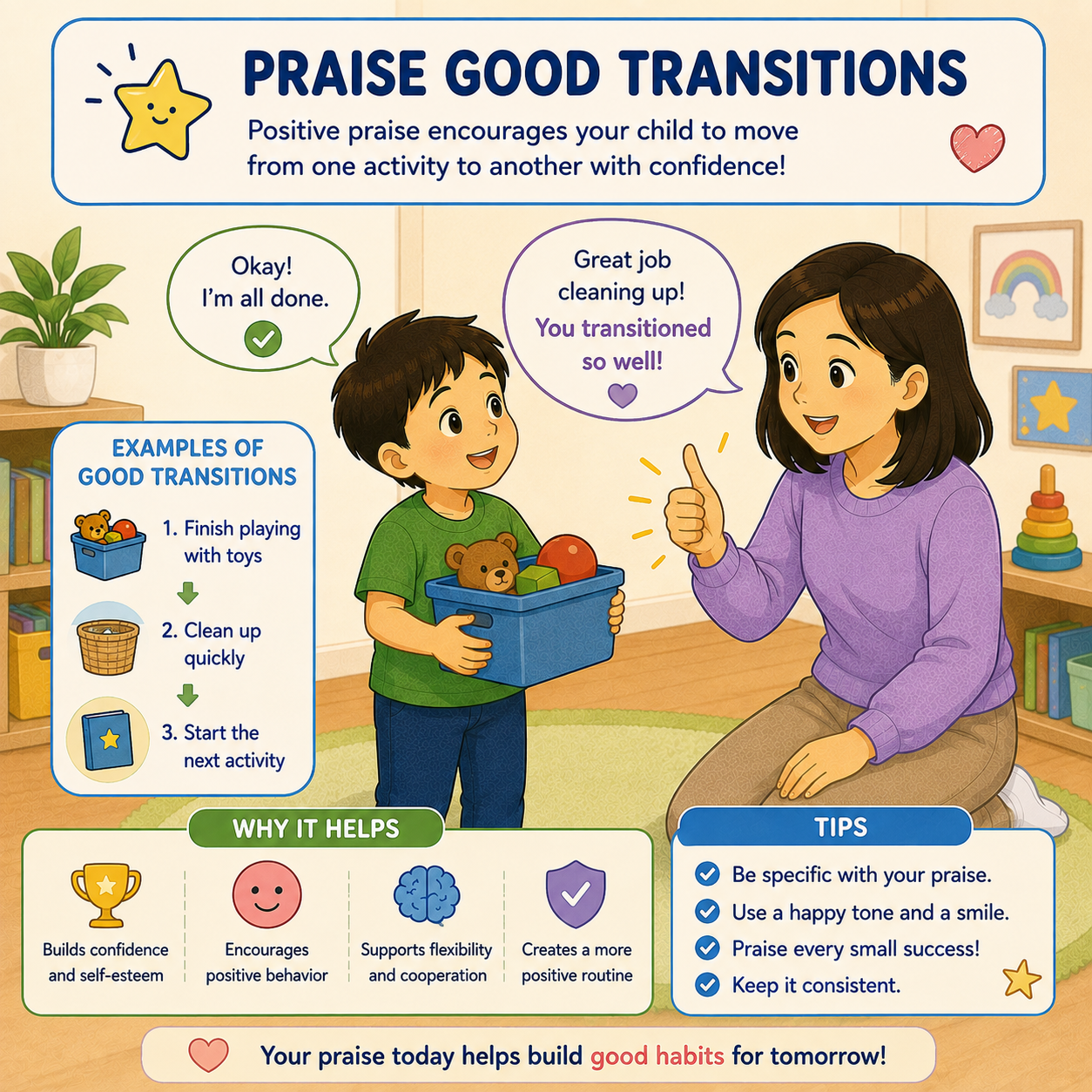
9. Praise good transitions
Notice effort:
“You did a great job stopping play.”
“You handled that change well.”
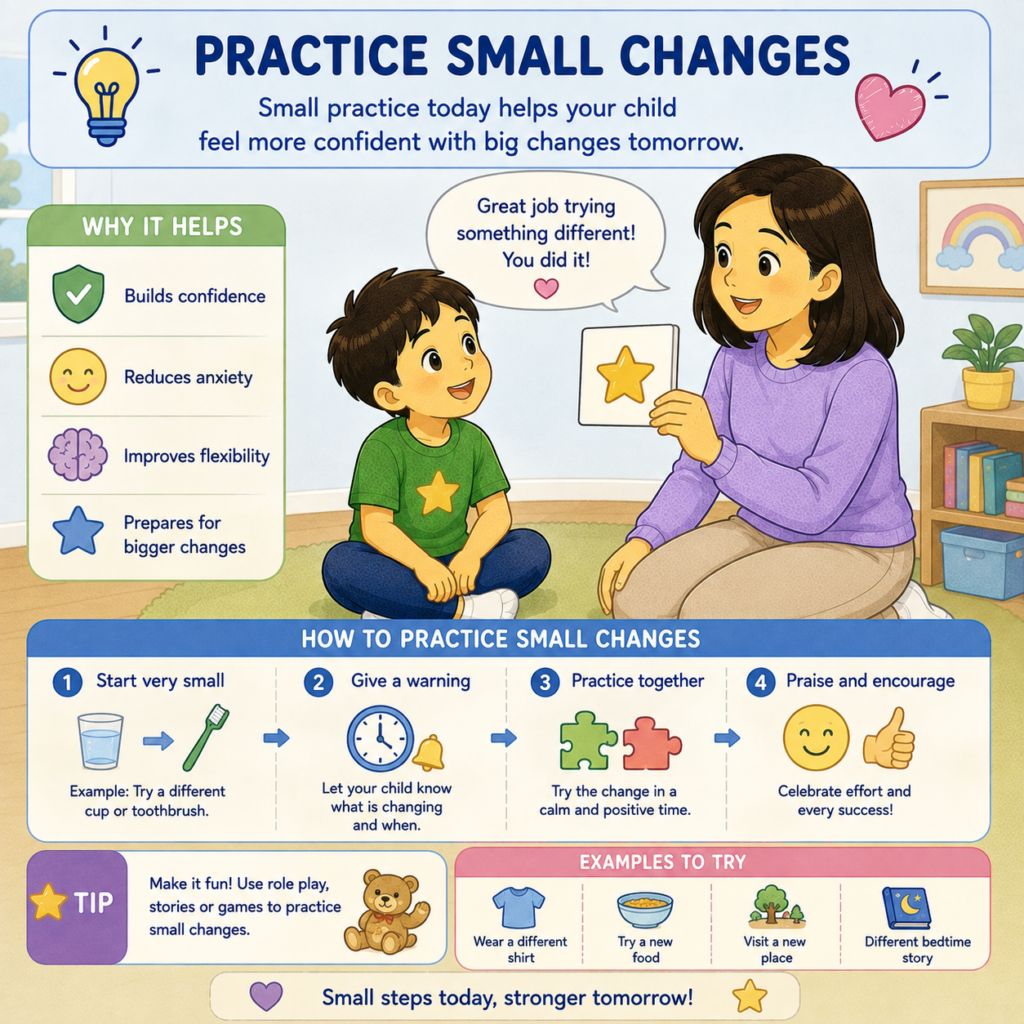
10. Practice small changes
Start small:
- Change seating
- Try a new route
- Switch activity order
- Introduce small new routines
This builds flexibility over time.
When Should Parents Seek Professional Advice?
Consider support if your child:
❀ Has frequent strong reactions
❀ Struggles daily with changes
❀ Has meltdowns often
❀ Has trouble at school or childcare
❀ Finds family routines very hard
❀ Has sensory or communication difficulties
Transition struggles alone do not mean a diagnosis. A full assessment looks at many areas of development.
Key Takeaway
Transitions are part of everyday life, but some children need extra support.
If your child struggles, it may be because changes feel confusing, overwhelming, or unexpected.
With support, children can learn to handle changes with more confidence.
🌟 Stay Connected with Us! We love sharing tips, insights, and inspiring stories about children’s growth and mental wellbeing.
💙 Follow us on Instagram and Facebook for more updates and parenting advice.
Join our community and let’s grow together. One positive step at a time!
References
American Psychiatric Association. (2022). Diagnostic and statistical manual of mental disorders (DSM-5-TR).
Psychiatry.org; American Psychiatric Association. https://www.psychiatry.org/psychiatrists/practice/dsm
Working Hours
Tuesday to Saturday – 8.30am to 6pm
Monday & Sunday – Closed
Please also subscribe us at
Contact Us
Discover Our Team!
📞+60102502833
firststepdevelopmentcentre@gmail.com
B1-7, Plaza Damas 3, Jalan Sri Hartamas 1, 50480 Kuala Lumpur.
Copyright 2025. Firststep Child Development Sdn Bhd. All rights reserved.