



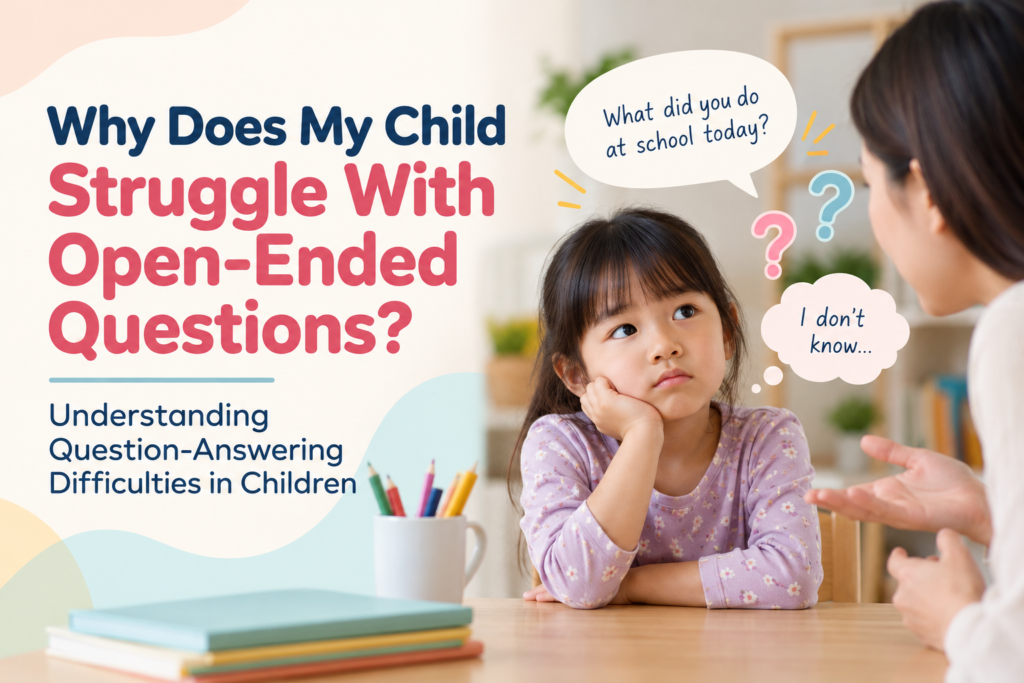
Why Does My Child Struggle With Open-Ended Questions? Understanding Question-Answering Difficulties in Children
Does your child answer “yes” or “no” when you ask about their day, but struggle when you ask, “What did you do at school today?”
Or perhaps you ask your child an open-ended question such as, “What happened?” or “What do you want to play?” and they simply say, “I don’t know.”
Some children may know what they want to say but find it difficult to organise their thoughts into an answer.
Others may understand the words in the question but struggle to know what information is expected from them.
This can sometimes be related to a child’s language development, communication skills, attention, processing abilities or confidence when speaking.
Understanding why a child struggles with open-ended questions can help parents provide the right support without putting unnecessary pressure on them.
What Are Open-Ended Questions?
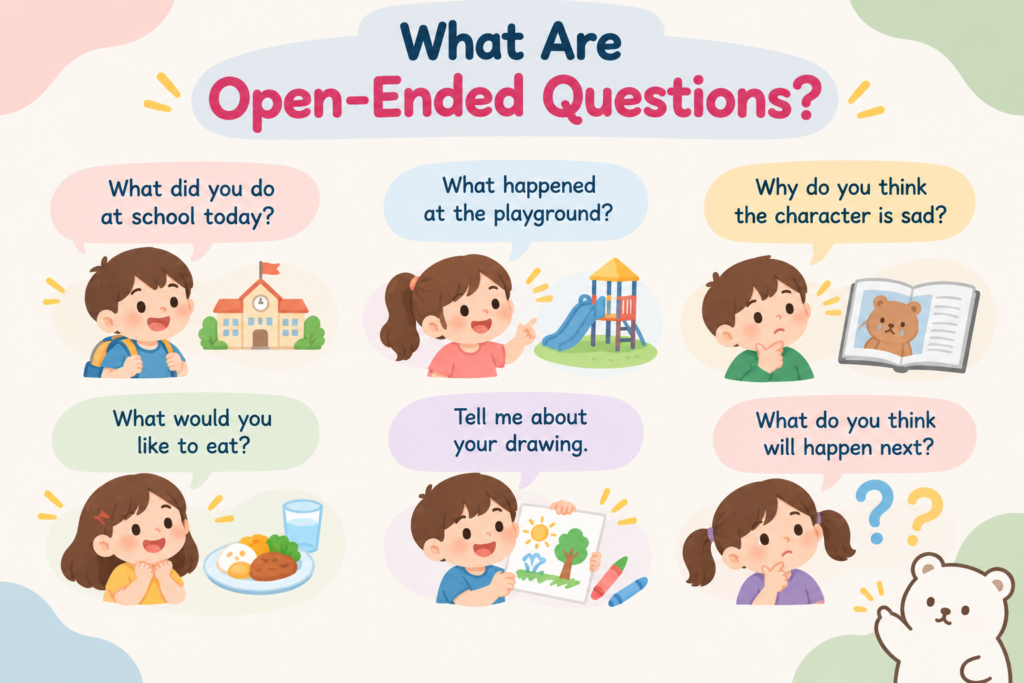
Open-ended questions are questions that cannot usually be answered with a simple “yes” or “no”.
They encourage children to provide more information, explain their thoughts or describe an experience.
For example:
🌺 “What did you do at school today?”
🌺 “What happened at the playground?”
🌺 “Why do you think the character is sad?”
🌺 “What would you like to eat?”
🌺 “Tell me about your drawing.”
🌺 “What do you think will happen next?”
These questions require children to understand the question, think about what information is relevant, organise their thoughts and communicate their answer.
For some children, this can be much more challenging than answering simple questions.
Signs Your Child May Struggle With Open-Ended Questions
Every child develops communication skills at their own pace.
However, parents may notice certain patterns when a child finds open-ended questions difficult.
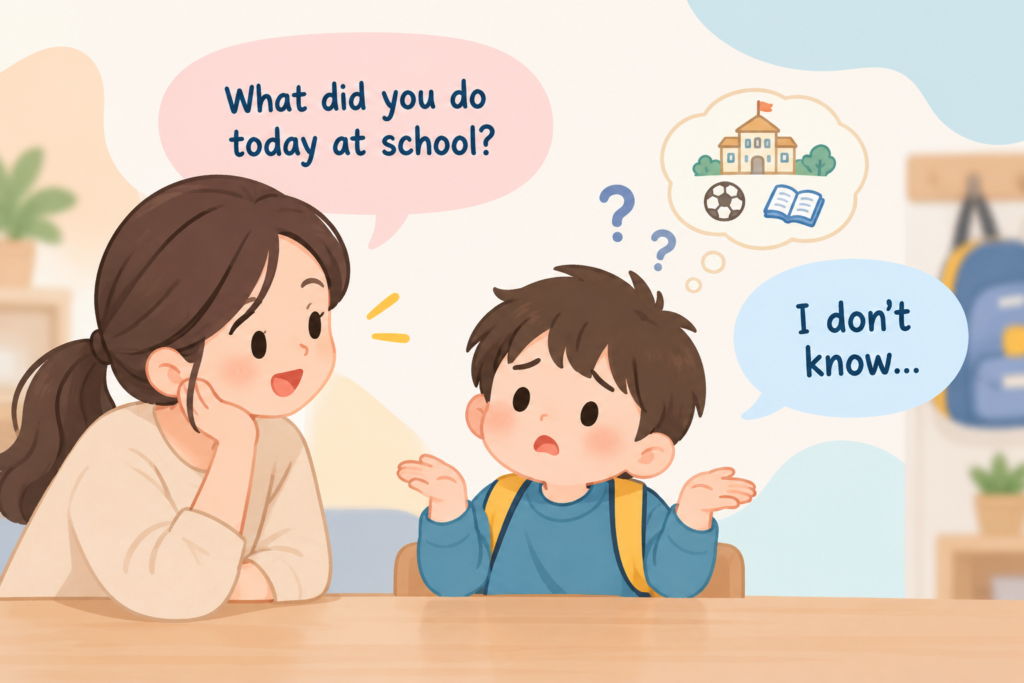
1. Frequently Saying “I Don’t Know”
One of the most noticeable signs is frequently responding with:
“I don’t know.”
This may happen even when your child appears to know the answer.
For example, your child may have just returned from school, but when you ask:
“What did you do today?”
They immediately respond:
“I don’t know.”
This does not always mean that they genuinely do not remember.
They may not know where to start, which details to include or how to organise their answer.
2. Giving Very Short Answers
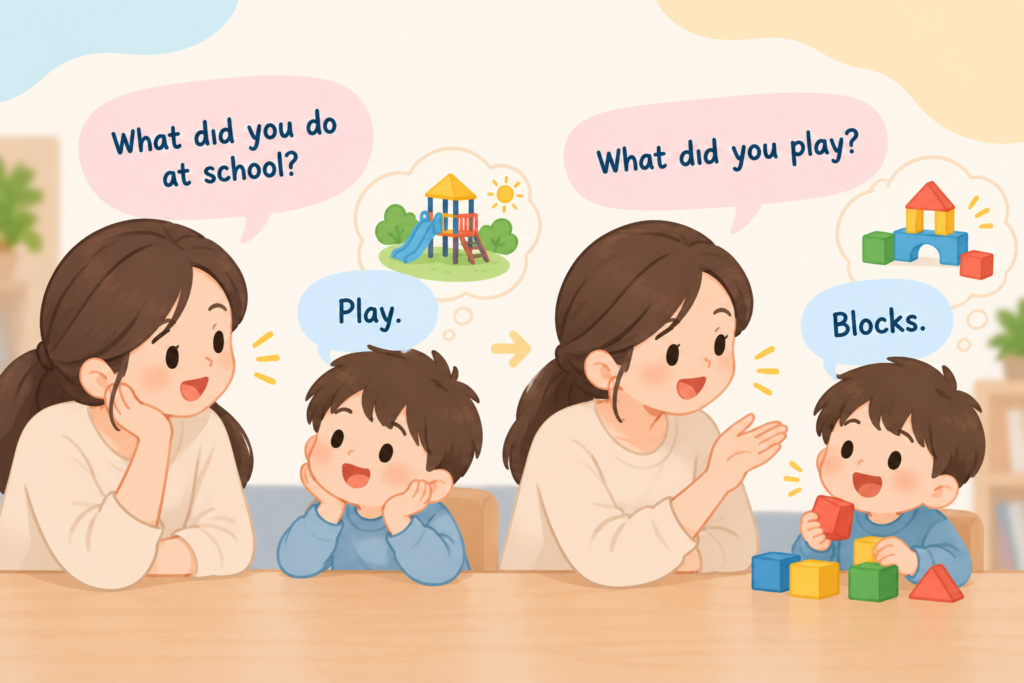
Some children may answer questions but provide very little information.
For example:
Parent: “What did you do at school?”
Child: “Play.”
Parent: “What did you play?”
Child: “Blocks.”
The child may have more information to share but may need additional support to expand their answer.
3. Answering With Something Unrelated
A child may sometimes provide an answer that does not appear to match the question.
For example:
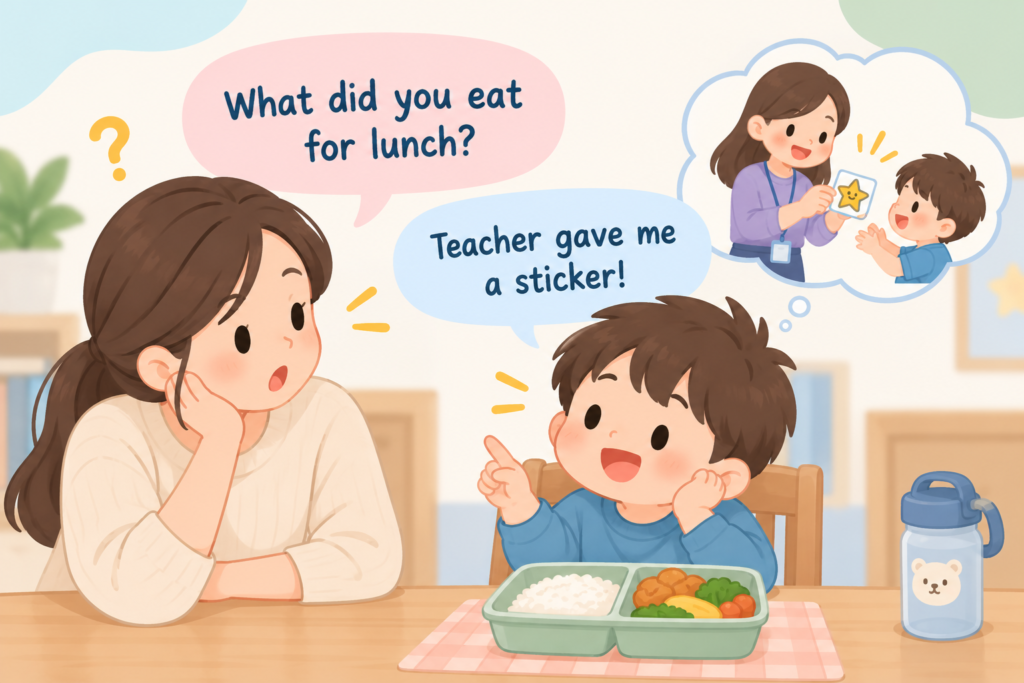
Parent: “What did you eat for lunch?”
Child: “Teacher gave me a sticker.”
This may happen because the child has difficulty understanding exactly what information the question is asking for.
It can also happen when a child is distracted, processing the question slowly or thinking about something else they want to tell you.
4. Struggling With “Why” and “How” Questions
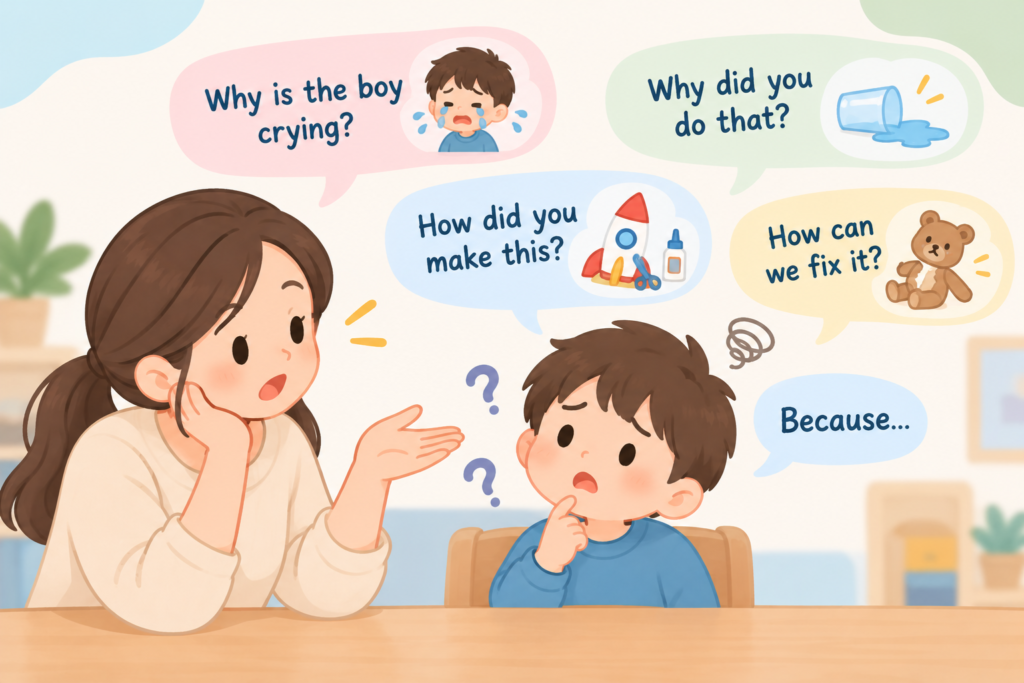
Questions such as “why” and “how” often require more complex language and reasoning.
For example:
🌺“Why is the boy crying?”
🌺“Why did you do that?”
🌺“How did you make this?”
🌺“How can we fix it?”
A child may understand what happened but struggle to explain the reason behind it.
They may answer:
“Because.”
or simply repeat part of the question.
5. Finding It Difficult to Tell a Story
Some children can name objects and answer simple questions but struggle to describe an event from beginning to end.
For example, when asked:
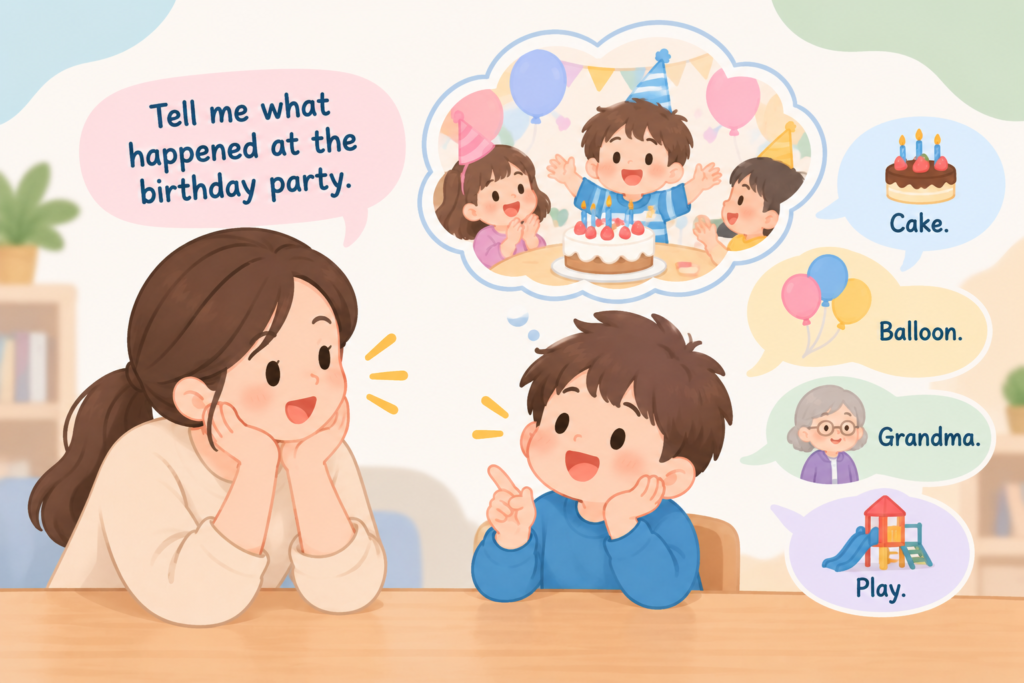
“Tell me what happened at the birthday party.”
They may provide isolated details:
“Cake.”
“Balloon.”
“Grandma.”
“Play.”
The individual words may be accurate, but connecting them into a meaningful sequence can be difficult.
There is no single reason why a child may find these questions difficult.
Possible factors include:
1. Language Development
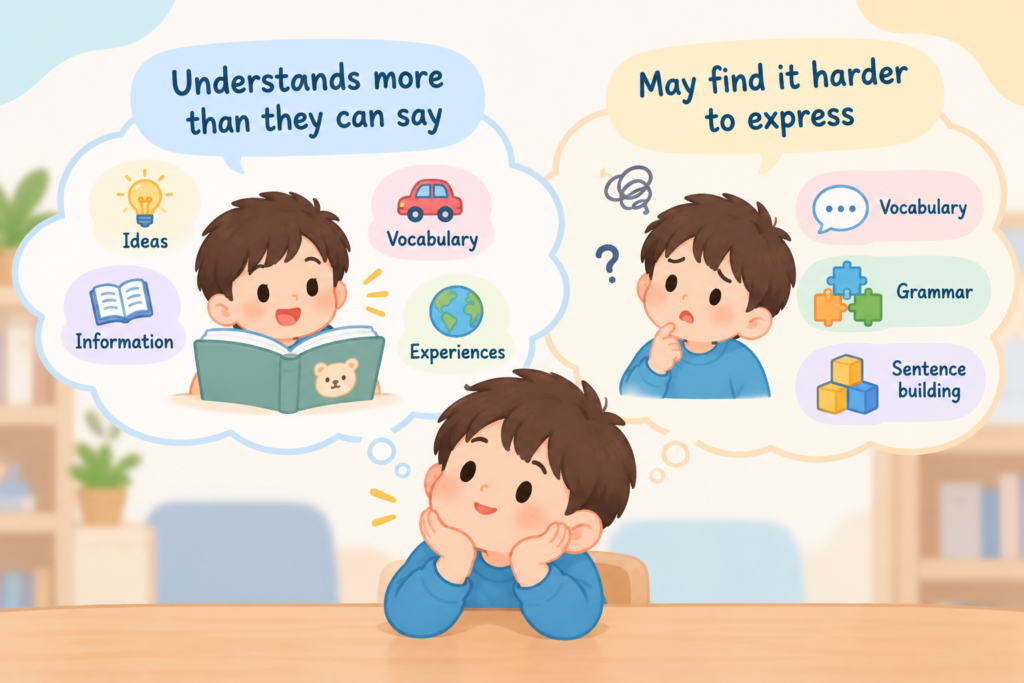
Children need vocabulary, grammar and sentence-building skills to formulate detailed answers.
A child may understand more language than they can express.
2. Difficulty Understanding the Question
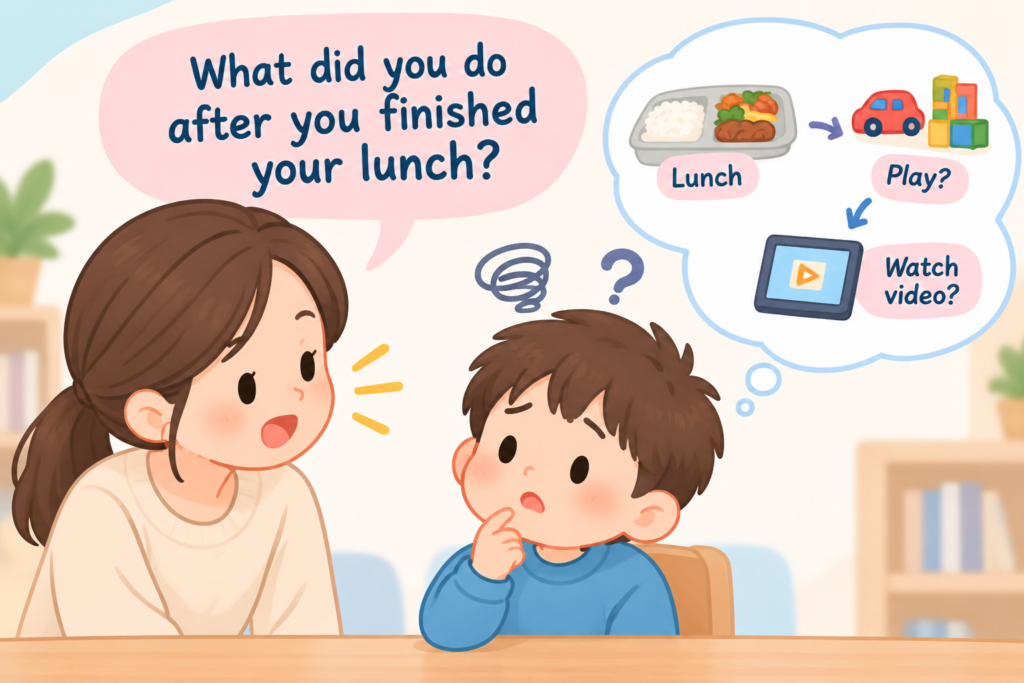
Some children may understand individual words but struggle to understand the overall meaning of a longer or more complex question.
For example, “What did you do after you finished your lunch?” requires the child to understand both the question and the sequence being referred to.
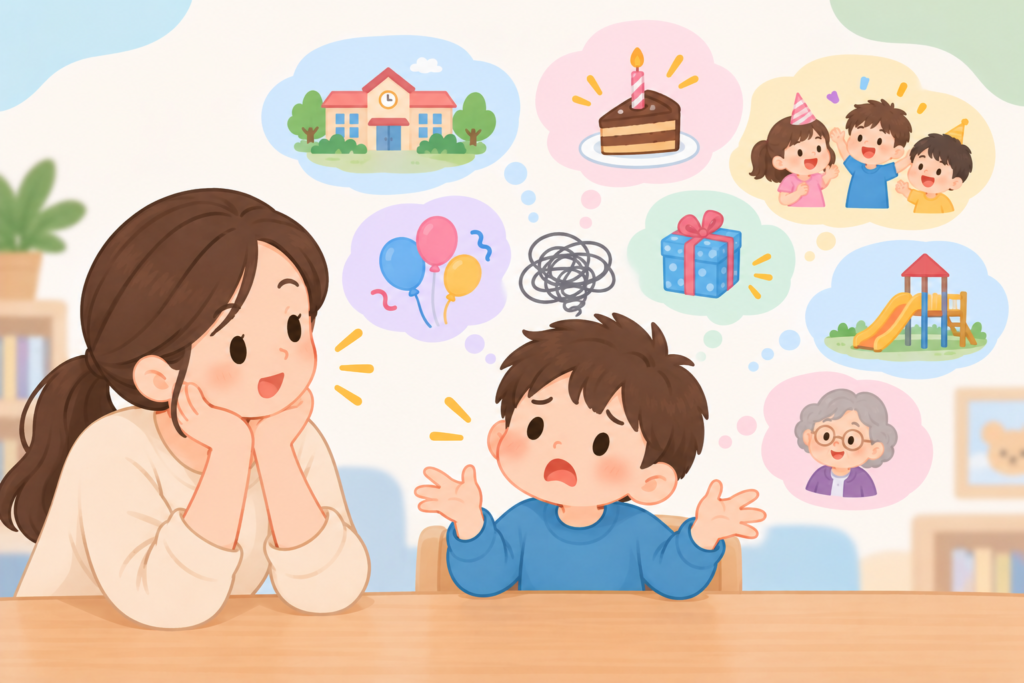
3. Difficulty Organising Thoughts
A child may have many thoughts but struggle to decide which information is important.
They may know what happened but not know how to explain it.
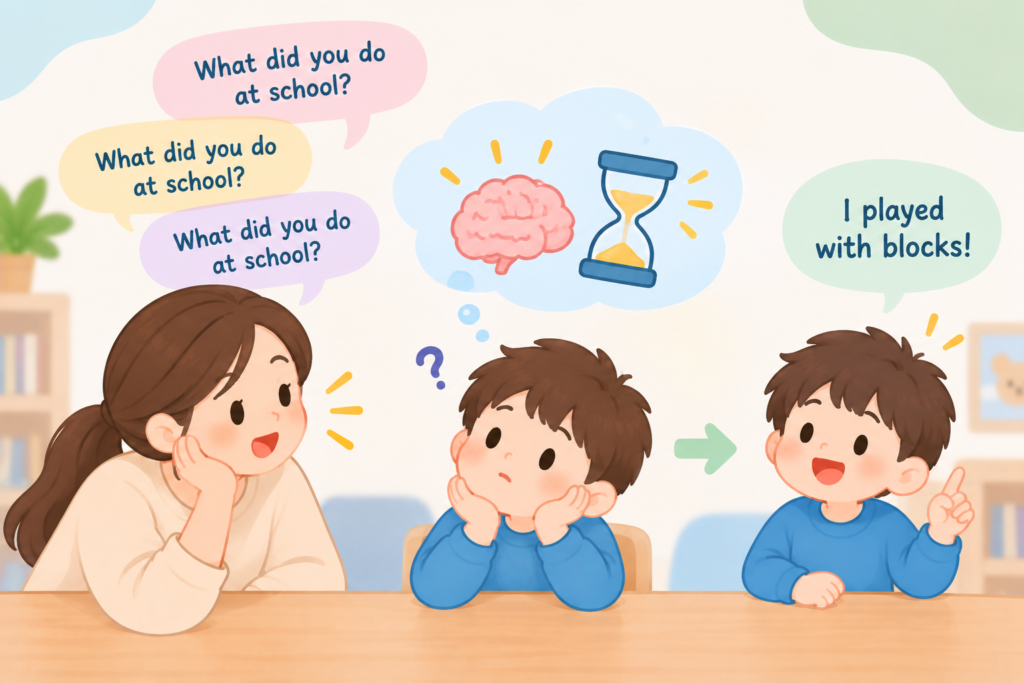
4. Processing Time
Some children need additional time to understand a question and formulate their response.
Repeatedly asking the same question before they have had time to respond may make it more difficult for them.
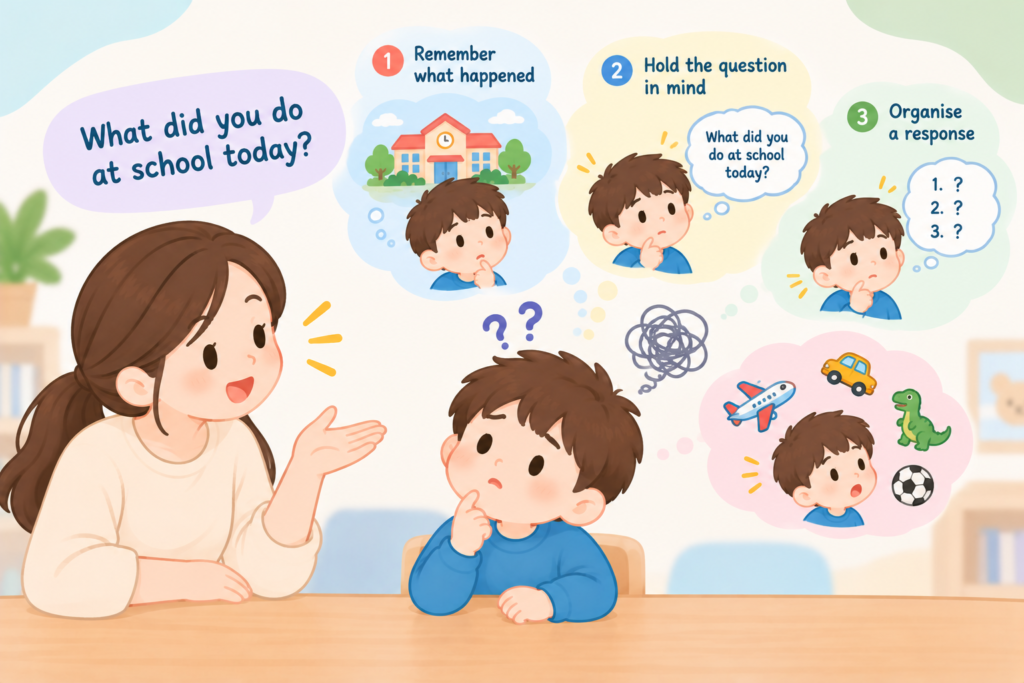
5. Attention and Working Memory
Answering a question may require a child to remember information, hold the question in mind and organise a response.
Children who have difficulties with attention or working memory may therefore find some questions more challenging.
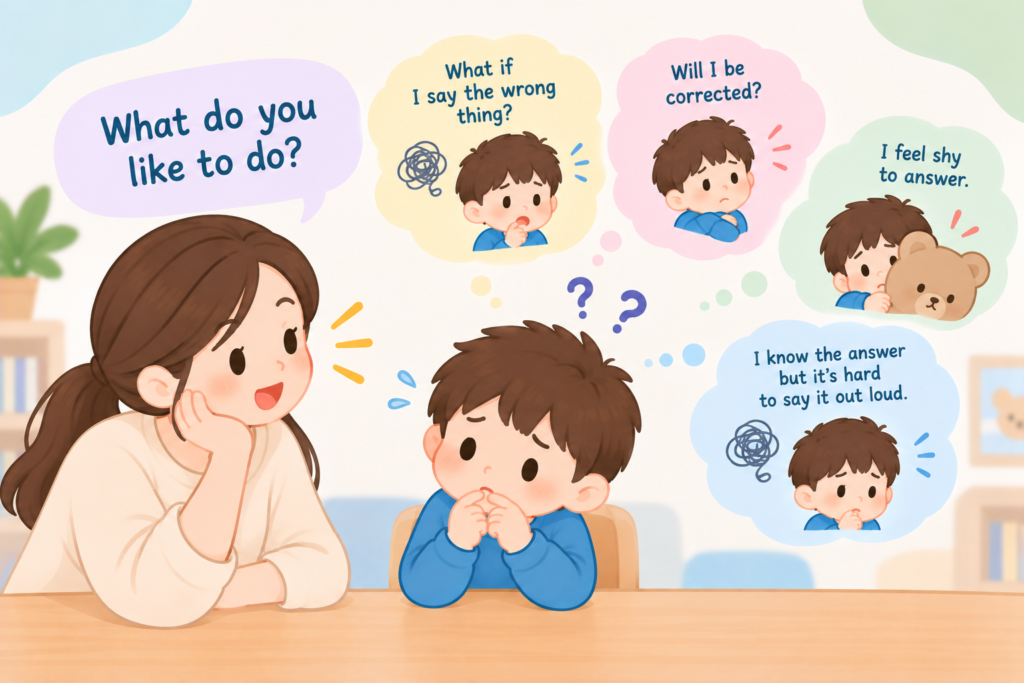
6. Confidence and Communication Anxiety
Some children may know the answer but become uncomfortable when expected to respond verbally.
They may avoid answering because they are worried about making a mistake or being corrected.
How Can Parents Help?
Parents can support question-answering skills through everyday conversations.
1. Give Your Child Extra Time
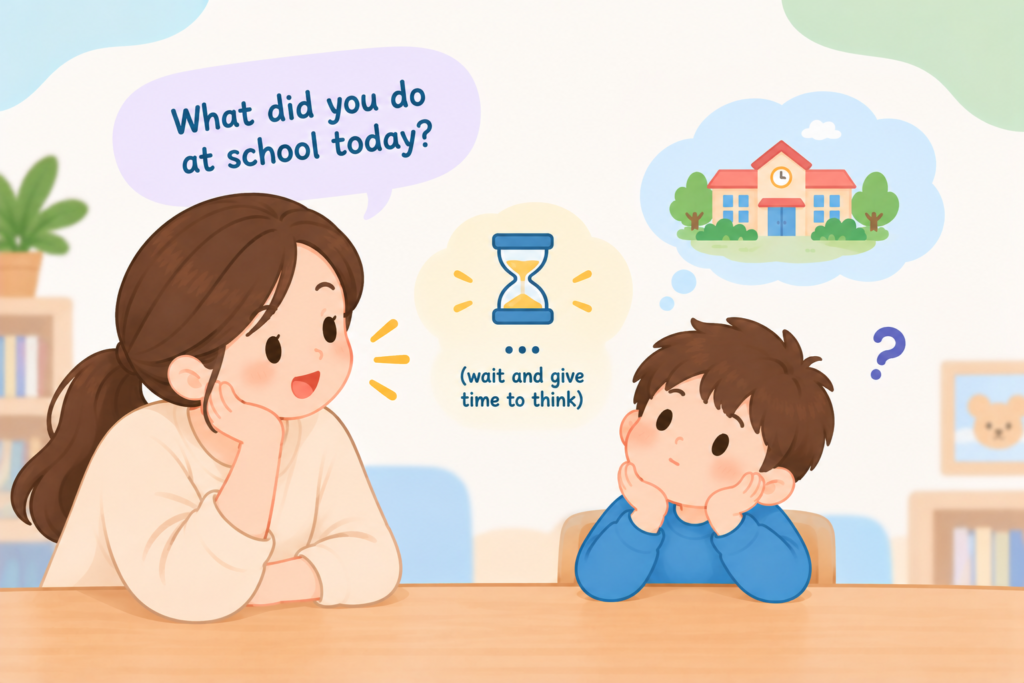
After asking a question, pause and give your child time to think.
Try not to immediately repeat the question or answer it for them.
You can say:
“What did you do at school today?”
Then wait.
A few extra seconds can give your child time to process the question and organise their response.
2. Start With Easier Questions
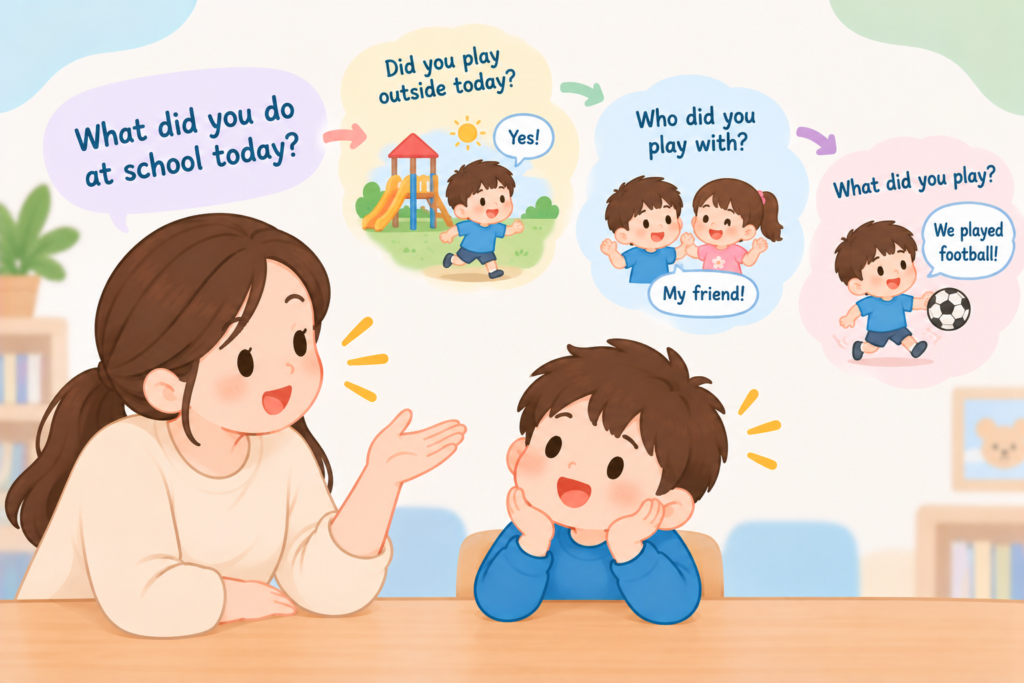
Instead of immediately asking a broad question, begin with something more specific.
For example, instead of:
“What did you do at school today?”
Try:
“Did you play outside today?”
Then:
“Who did you play with?”
Then:
“What did you play?”
This can help your child gradually build a longer response.
3. Use Visuals When Helpful
Pictures, photographs and objects can give children something concrete to talk about.
For example, if your child went to the zoo, look at photographs together and ask:
🌺“What is this?”
🌺“What did the elephant do?”
🌺“What did you like?”
Visual support can make it easier for some children to retrieve information and organise their thoughts.

4. Model Longer Answers
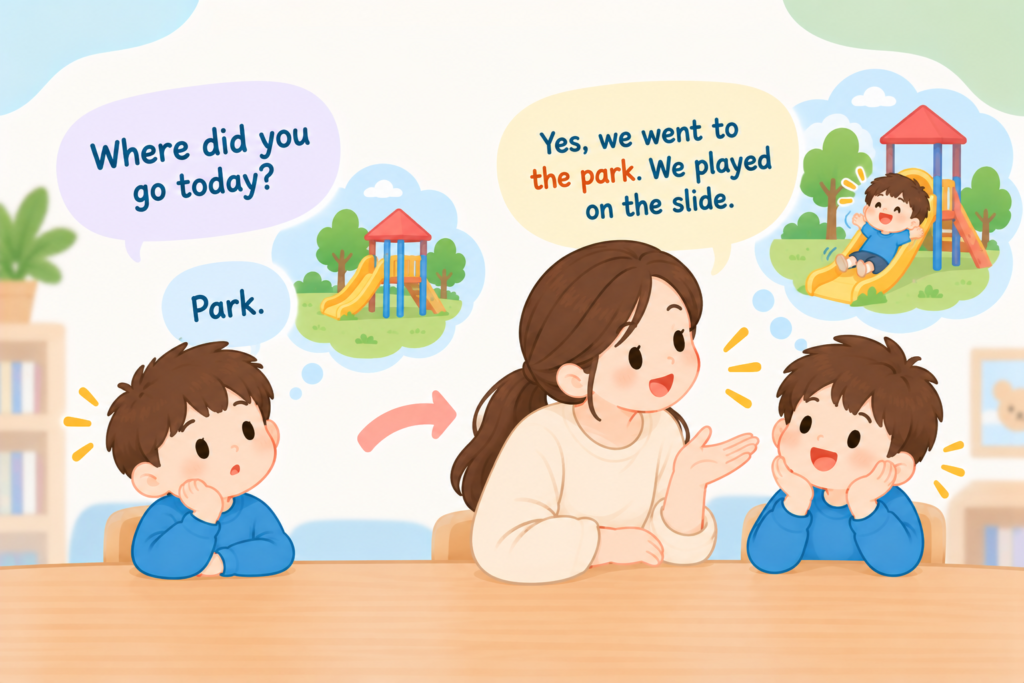
If your child gives a one-word response, you can model a slightly longer sentence rather than simply telling them to “say more.”
For example:
Child: “Park.”
Parent: “Yes, we went to the park. We played on the slide.”
This gives your child an example of how a short idea can become a complete sentence.
5. Ask One Question at a Time
Too many questions at once can become overwhelming for some children. Instead of asking several questions in one sentence, break the conversation into smaller, simpler questions.
For example, instead of asking, “What did you do at school, who did you play with, and what did you eat?”, try asking one question at a time:
🌺“Did you play outside today?”
🌺“Who did you play with?”
🌺“What did you play?”
🌺“What did you eat for lunch?”
Give your child time to answer each question before moving on to the next. This can help them focus on one idea at a time and gradually build a longer response.

6. Make Conversations Natural
Question-answering skills do not need to be practised only through direct questions. Parents can encourage communication naturally during everyday activities, such as preparing meals, playing with toys, reading picture books or travelling in the car.
For example, while playing with toy cars together, a parent might say:
Parent: “What colour is your car?”
Child: “Blue.”
Parent: “Yes, it’s a blue car! Where should your car go?”
Child: “To the garage.”
Parent: “Let’s drive it to the garage. What happens next?”
Child: “It needs petrol!”
Through simple, enjoyable interactions like these, children have opportunities to practise answering questions, sharing ideas and expanding their responses without feeling pressured.
The goal is to make communication a natural part of everyday life rather than turning every conversation into a test.

When Should Parents Seek Professional Help?
Struggling with open-ended questions does not automatically mean that a child has a language or developmental difficulty.
Some children are naturally quieter, need more processing time or simply prefer shorter conversations.
However, parents may wish to seek professional guidance if their child:
🌺Consistently struggles to answer age-appropriate questions
🌺Frequently responds “I don’t know” even when they appear to understand the topic
🌺Has difficulty explaining what happened during everyday events
🌺Gives very short or unrelated answers
🌺Struggles to follow conversations
🌺Has difficulty understanding “why,” “how” or other more complex questions
🌺Has difficulty telling or retelling a simple story
🌺Shows concerns in other areas of communication or development
🌺Becomes frustrated when trying to communicate
A speech and language assessment can help identify whether the difficulty is related to receptive language, expressive language, vocabulary, sentence formulation, narrative skills or another aspect of communication.
Depending on the child’s overall development, other professionals may also be involved when appropriate.
What Should Parents Remember?
A child who struggles with open-ended questions is not necessarily being difficult, inattentive or unwilling to talk.
Sometimes, the challenge is not knowing what to say but knowing how to organise and communicate the answer.
Parents can support their child by remembering that:
🌺 Give your child enough time to process questions.
🌺 Start with simple questions and gradually increase complexity.
🌺 Use pictures and real-life experiences to support conversations.
🌺 Model longer answers instead of repeatedly asking your child to “say more.”
🌺 Ask one question at a time.
🌺 Keep communication practice natural and enjoyable.
🌺 Seek professional guidance if communication difficulties are persistent or affect everyday life.
🌟 Stay Connected with Us! We love sharing tips, insights, and inspiring stories about children’s growth and mental wellbeing.
💙 Follow us on Instagram and Facebook for more updates and parenting advice.
Join our community and let’s grow together. One positive step at a time!

References
Pico, D. L., Prahl, A. H., Biel, C. H., Peterson, A. K., Biel, E. J., Woods, C., & Contesse, V. A. (2021).
Interventions designed to improve narrative language in school-age children: A systematic review with meta-analyses. Language, Speech, and Hearing Services in Schools, 52(4), 1109–1126.
https://childmind.org/article/understanding-academic-anxiety/
Working Hours
Tuesday to Saturday – 8.30am to 6pm
Monday & Sunday – Closed
Please also subscribe us at
Contact Us
Discover Our Team!
📞+60102502833
firststepdevelopmentcentre@gmail.com
B1-7, Plaza Damas 3, Jalan Sri Hartamas 1, 50480 Kuala Lumpur.
Copyright 2025. Firststep Child Development Sdn Bhd. All rights reserved.