



Why Does My Child Keep Repeating What I Say? Understanding Echolalia in Children
Does your child often repeat the exact words or questions you have just said?
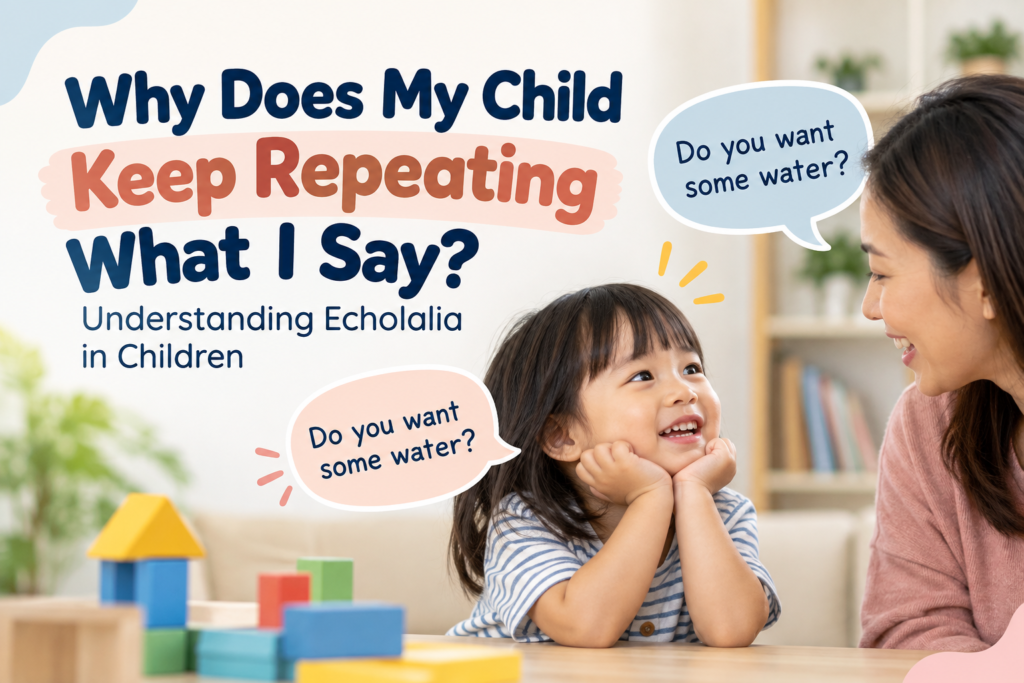
You might ask, “Do you want some water?” and your child responds, “Do you want some water?”
Or perhaps they repeat phrases from cartoons, books, songs, or conversations they heard earlier.
This is known as echolalia.
For some children, repeating words and phrases can be part of language development.
Children may repeat language as they learn how words and sentences are used.
However, when repetition continues frequently or makes it difficult for your child to communicate their own thoughts, feelings or needs, it may be helpful to understand what the repetition means.
Echolalia is not simply “copying” or “being difficult.” In some children, repeated language can be a way of communicating, practising language, participating in an interaction, or expressing something they may not yet know how to say independently.
What Is Echolalia in Children?
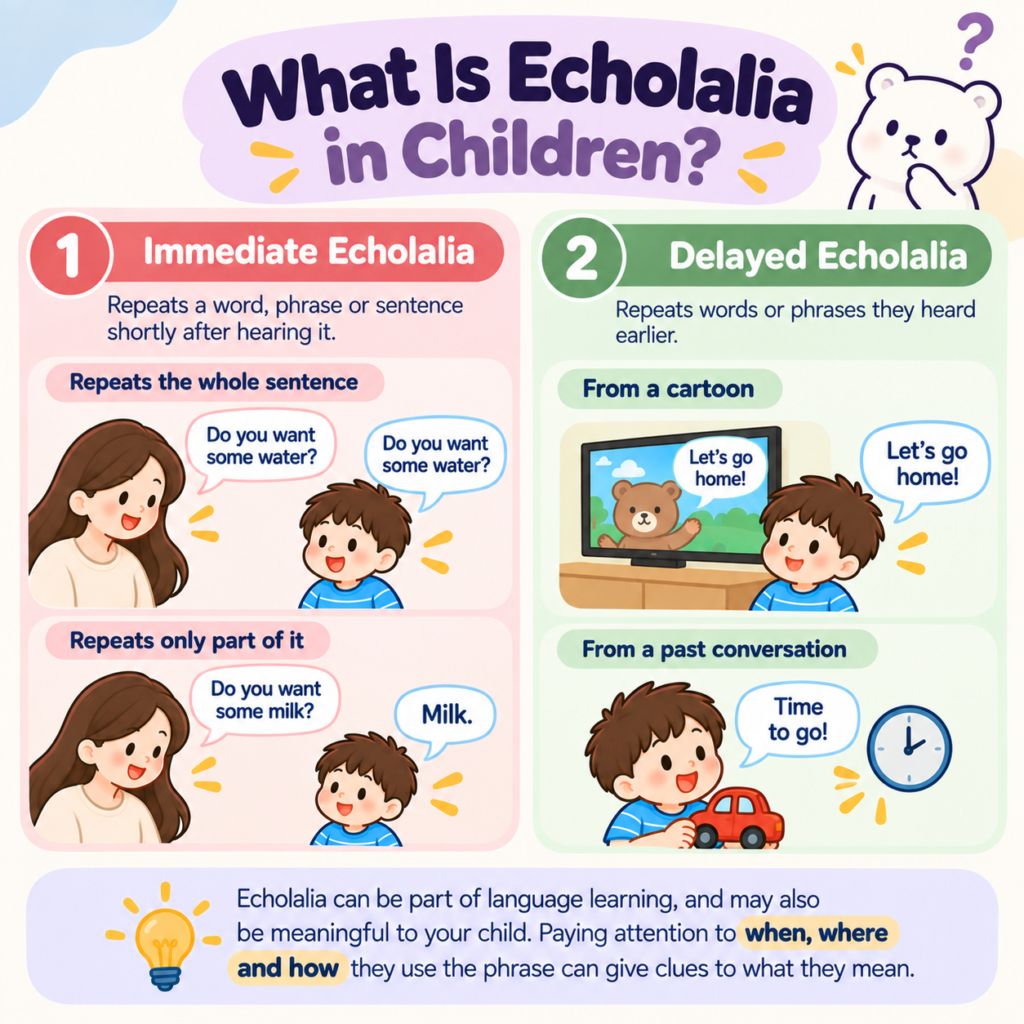
Echolalia refers to the repetition of words, phrases or sentences that a child has heard from someone else or from another source, such as television, videos or books.
There are two common forms of echolalia:
1. Immediate Echolalia
Immediate echolalia occurs when a child repeats a word, phrase, or sentence shortly after hearing it.
For example:
Parent: “Do you want some water?”
Child: “Do you want some water?”
Sometimes, a child may repeat only part of what they hear rather than the entire sentence.
For example:
Parent: “Do you want some milk?”
Child: “Milk.”
The child may repeat the whole question or only a key word instead of giving a direct answer.
For some young children, repetition can be part of the process of learning how language works.
They may repeat words and phrases as they practise sounds, vocabulary, sentence structures, and conversational patterns.
However, if a child frequently relies on repeating what others say instead of using their own words to communicate, it may be helpful to look more closely at their overall language development.
Immediate echolalia can sometimes occur during early language development, when children are still learning how to understand and use language.
2. Delayed Echolalia
This happens when a child repeats words or phrases they heard earlier.
For example, your child may repeat a line from a cartoon several hours or days after watching it.
They may also repeat phrases from previous conversations or familiar routines.
Delayed echolalia can sometimes be meaningful to the child, even when the connection is not immediately obvious to adults.
Looking at when, where and how the phrase is used can give parents clues about what the child may be trying to communicate.
Why Does My Child Keep Repeating What I Say?
There can be different reasons why a child repeats language.
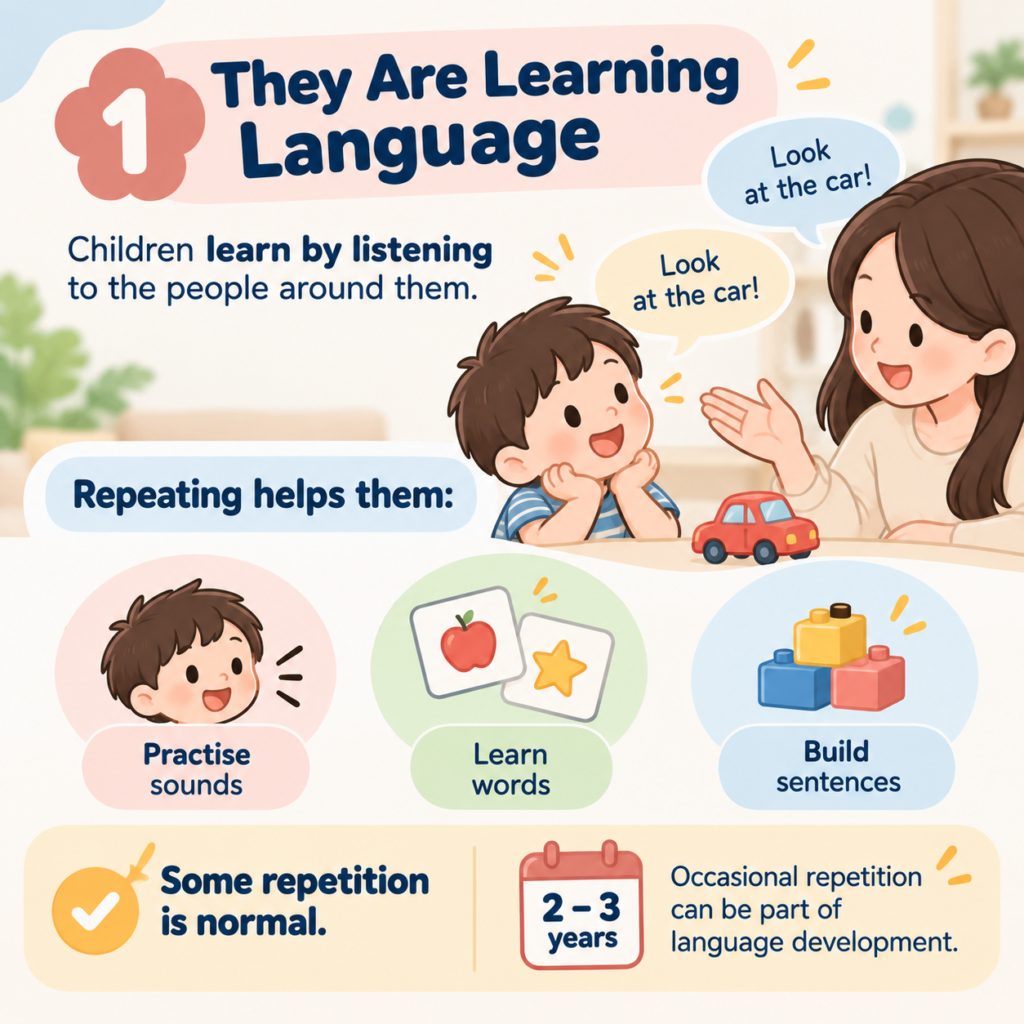
1. They Are Learning How Language Works
Young children often learn by listening to the people around them.
Repeating words and phrases can give children opportunities to practise sounds, words and sentence patterns.
Some repetition is therefore a normal part of early communication development.
For example, children between 2 and 3 years may occasionally repeat words or phrases as they develop their language skills.
2. They May Not Know How to Answer Yet
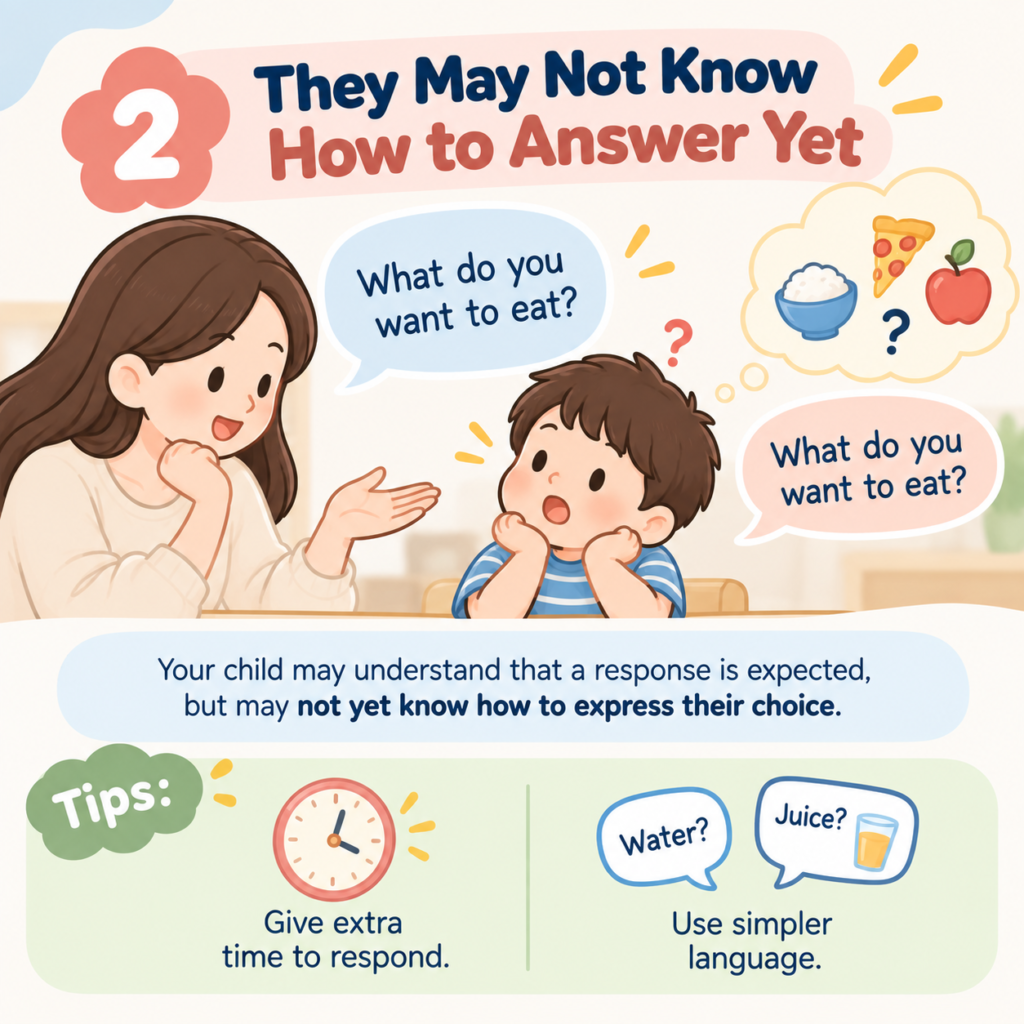
Sometimes a child repeats your question because they do not know how to formulate an answer.
Parent: “What do you want to eat?”
Child: “What do you want to eat?”
The child may understand that a response is expected but may not yet know how to express their choice.
In these situations, giving your child additional processing time and using simpler language may help.
3. They May Be Trying to Communicate
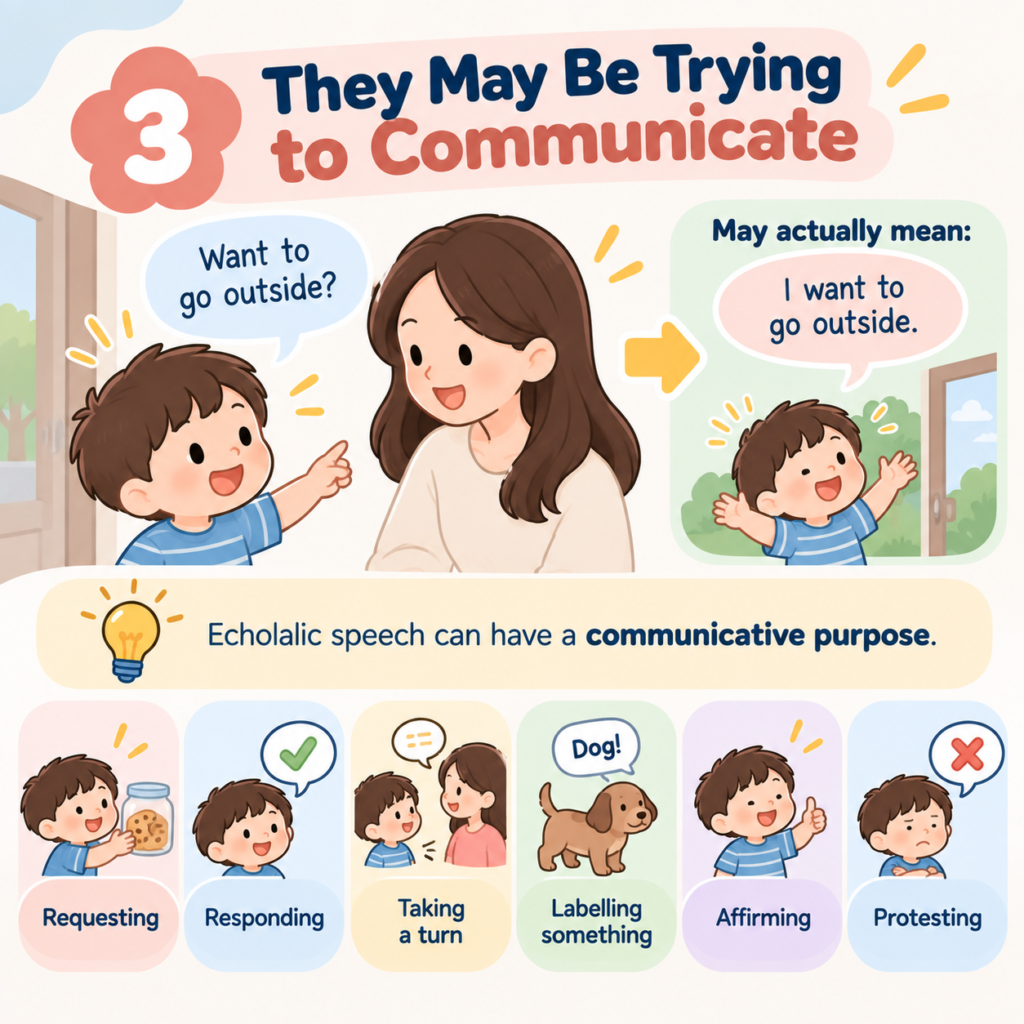
Repetition does not necessarily mean that a child has nothing to say.
Echolalic speech can sometimes have a communicative purpose, such as requesting, responding, taking a turn, labelling something, affirming or protesting.
For example, a child who repeatedly says “Want to go outside?” may actually be trying to communicate:
“I want to go outside.”
The words may not be used in the same way an adult would use them, but they can still carry meaning.
4. They May Be Using Familiar Phrases to Express Feelings
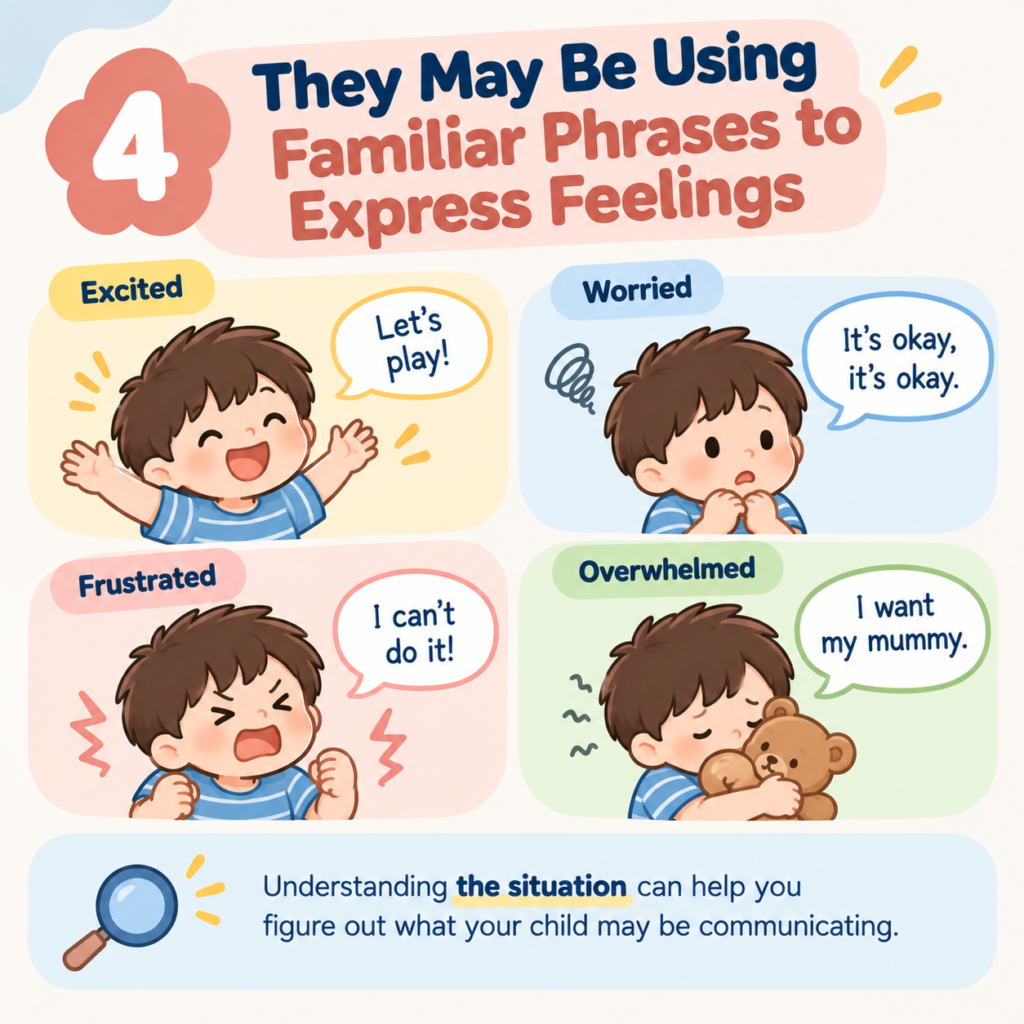
Some children use phrases they have heard before when they are excited, worried, frustrated or overwhelmed.
For example, a child might repeat a phrase from a favourite show when they are excited or use a familiar phrase when they do not know what else to say.
Understanding the situation surrounding the repetition can help parents work out what the child may be communicating.
5. They May Be Processing What They Heard
Some children need additional time to process spoken language.
Repeating what someone has said may give them time to think about the information before responding.
If your child repeats your question, try pausing instead of immediately repeating the question again.
Give them some time to process and respond.
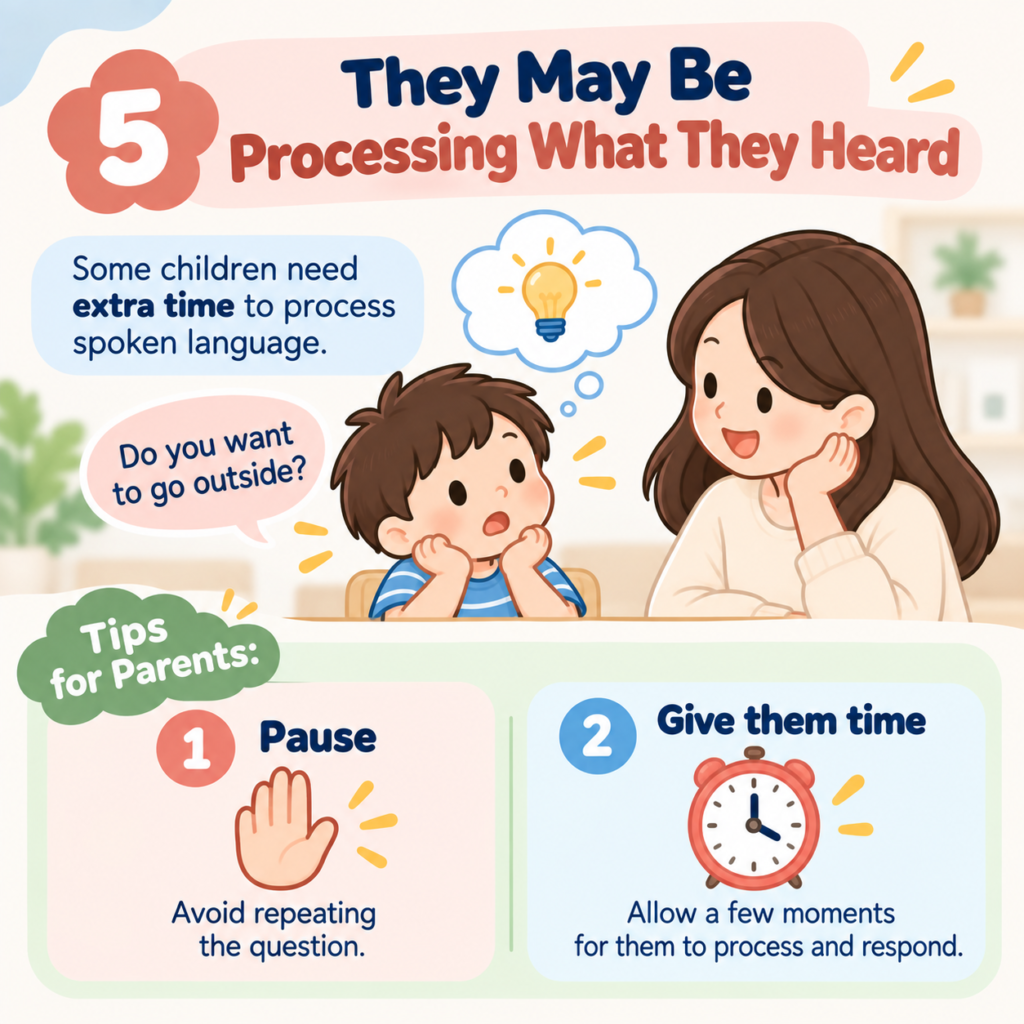
Is Echolalia Always a Sign of Autism?
No.
Echolalia can occur as part of typical language development, particularly in younger children.
It can also occur in children with communication or developmental differences, including some autistic children.
However, echolalia by itself does not diagnose autism.
Autistic children who use echolalia may repeat language immediately or after a delay, and the repeated language may sometimes serve a communicative purpose.
Rather than looking at repetition alone, professionals consider the child’s overall communication, language development, social interaction and developmental profile.
What Can Parents Do When Their Child Repeats Them?
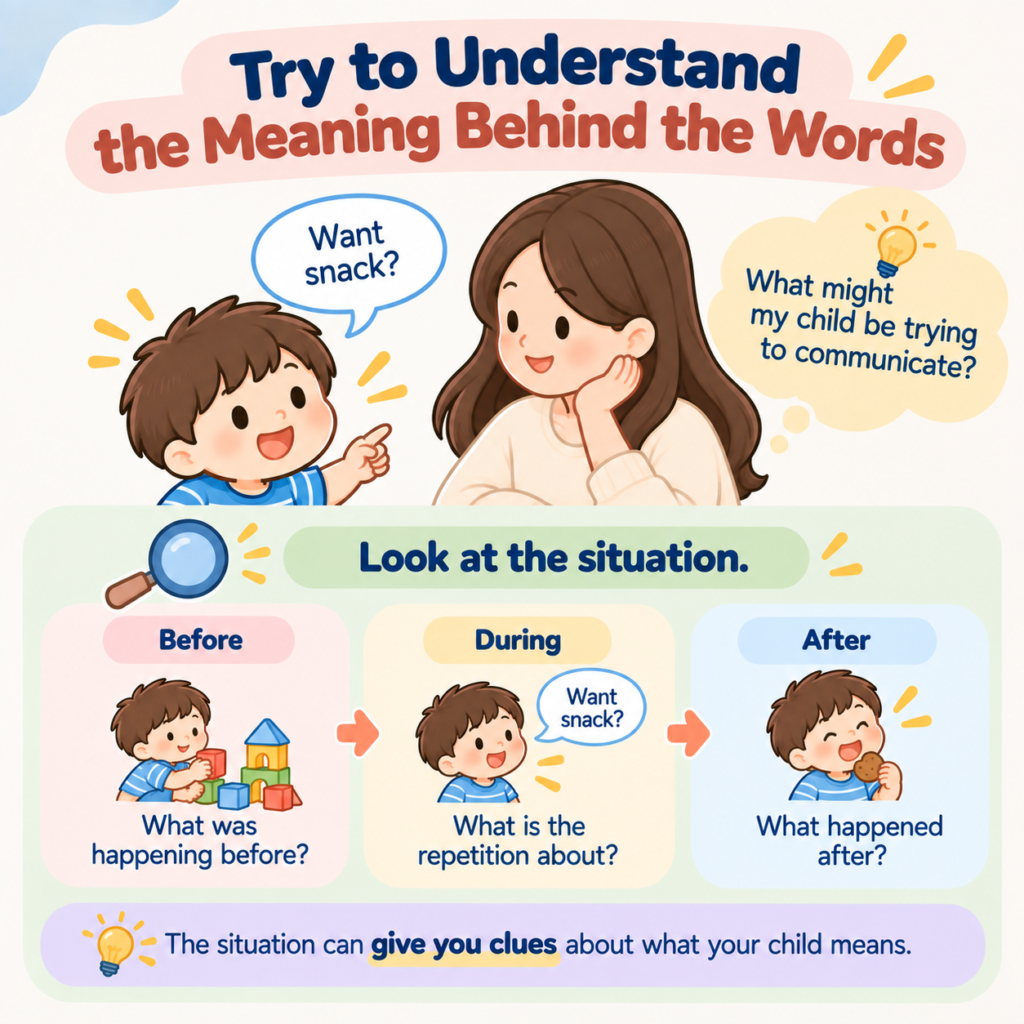
1. Try to Understand the Meaning Behind the Words
Instead of immediately thinking, “Why is my child copying me?”, ask yourself:
“What might my child be trying to communicate?”
Look at what was happening before, during and after the repetition.
The situation may give you clues about what your child means.
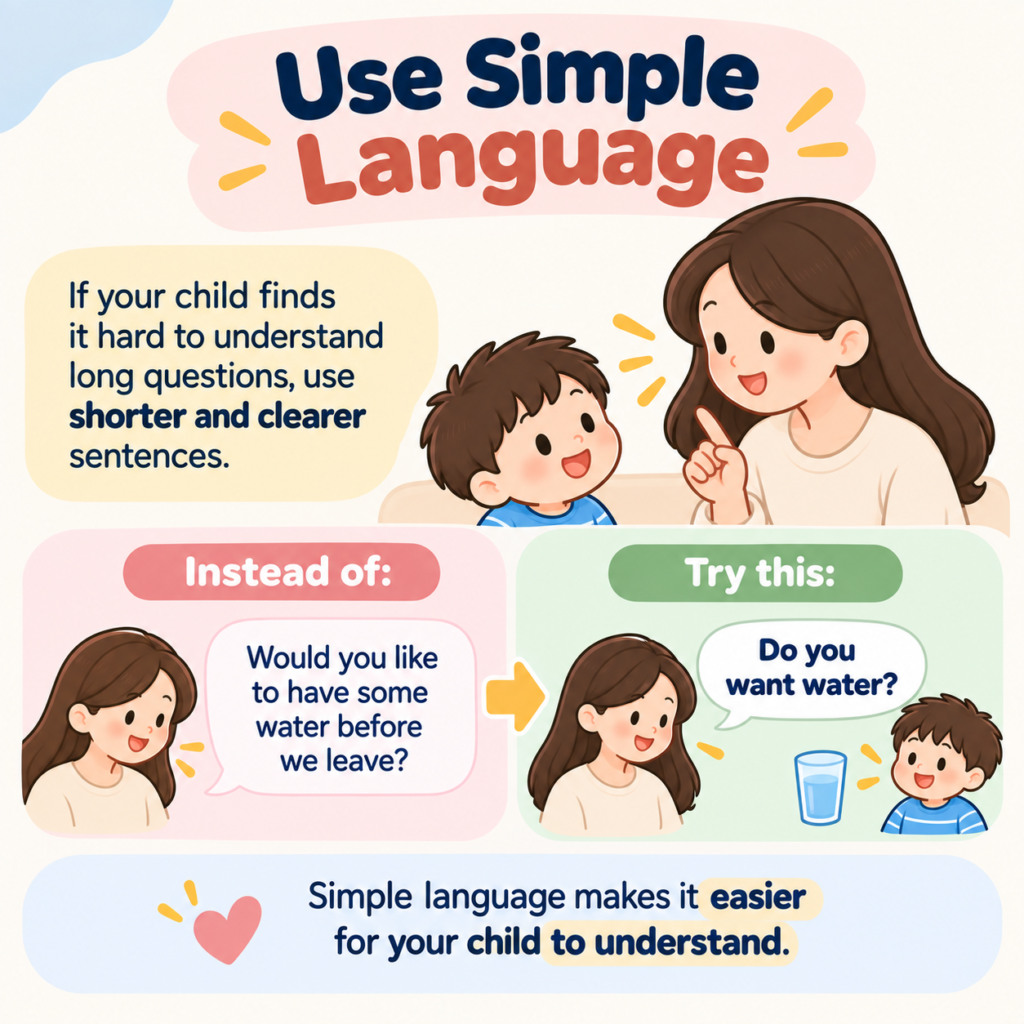
2. Use Simple Language
If your child has difficulty understanding long questions, try using shorter and clearer sentences.
Instead of:
“Would you like to have some water before we leave the house?”
Try:
“Do you want water?”
Simple language can make it easier for your child to understand what you are asking.
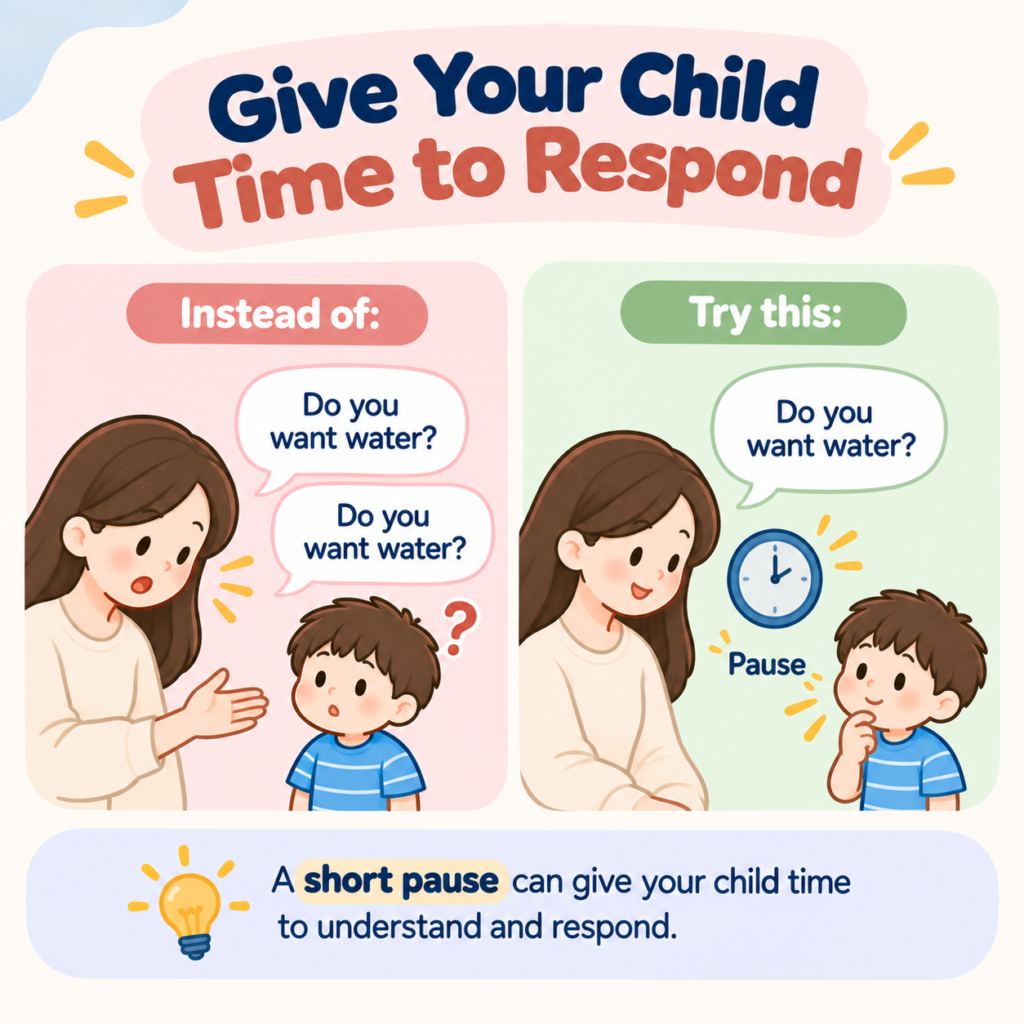
3. Give Your Child Time to Respond
After asking a question, give your child some extra time to process what you said.
Avoid immediately asking the same question again.
A short pause can give your child an opportunity to understand the question and formulate a response.
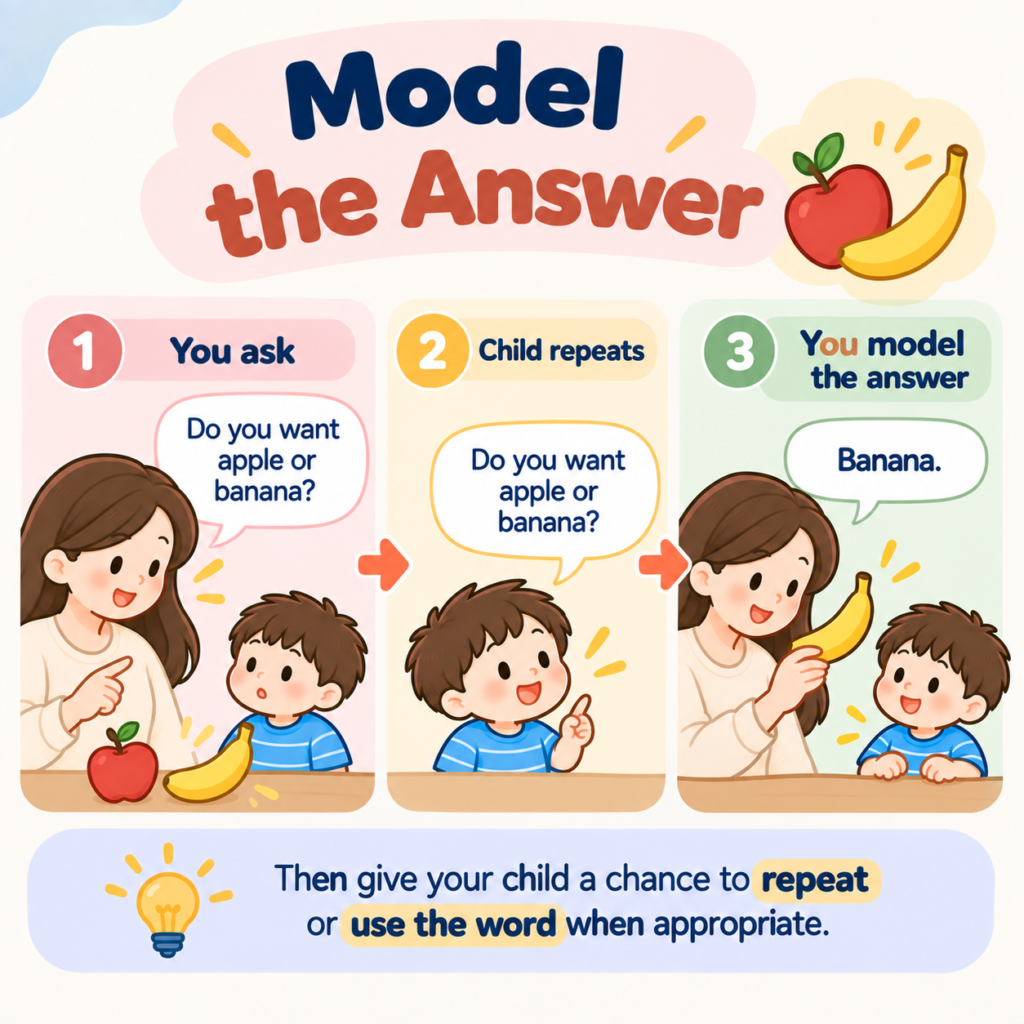
4. Model the Answer
If your child repeats your question instead of answering, you can model a simple response.
For example:
Parent: “Do you want apple or banana?”
Child: “Do you want apple or banana?”
Parent: “Banana.”
You can then give your child the opportunity to repeat or use the word “banana” when appropriate.
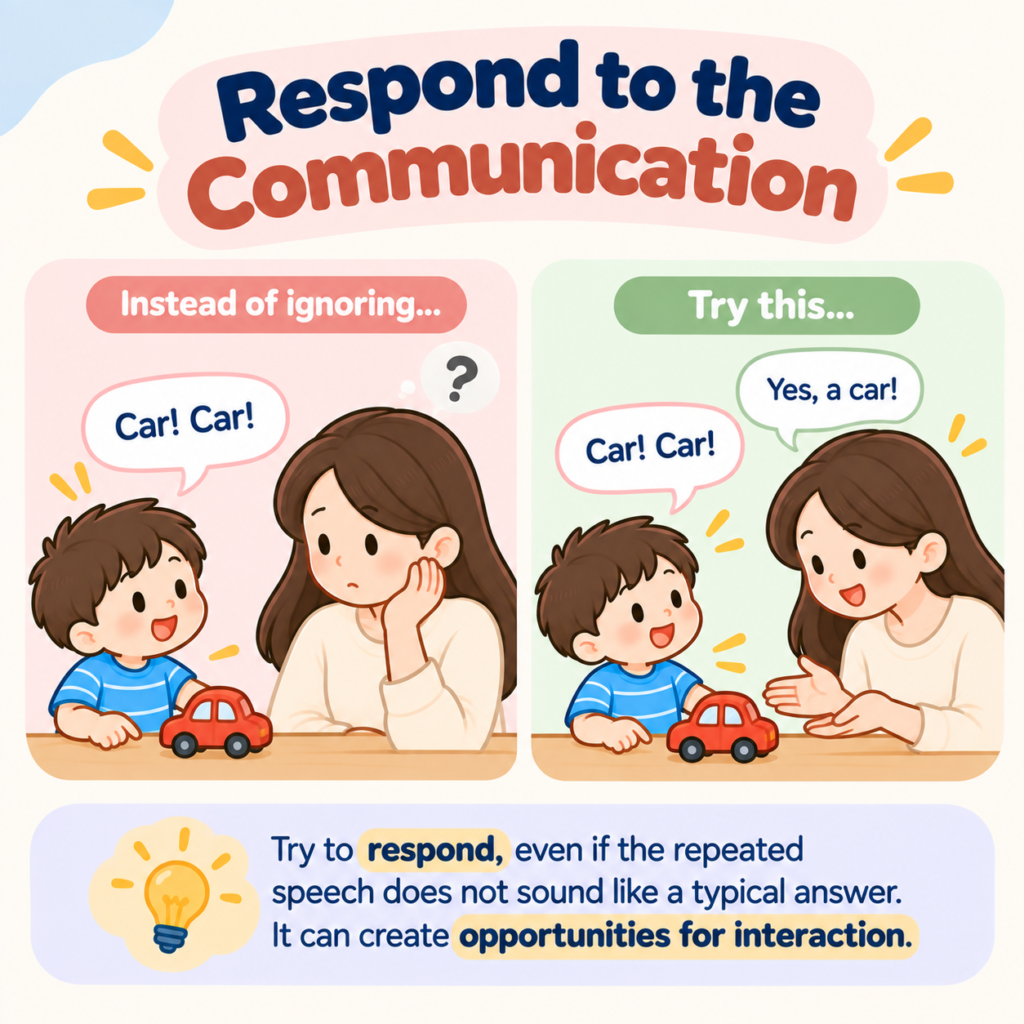
5. Respond to the Communication
Try not to ignore repeated speech simply because it does not sound like a typical answer.
Even when you are unsure what your child means, responding and trying to understand their communication can help create opportunities for interaction.
When Should Parents Seek Professional Help?
Echolalia is not automatically a cause for concern.
However, parents may want to consider speaking with a speech-language professional if:
🌸 Your child frequently repeats questions instead of answering them
🌸 Your child has difficulty expressing their own wants, needs or feelings
🌸 Your child relies heavily on repeated phrases to communicate
🌸 Your child has difficulty understanding everyday instructions
🌸 Your child is not developing age-appropriate communication skills
🌸 Repetition is affecting your child’s ability to communicate or participate in daily activities
🌸 You have concerns about your child’s overall speech, language or social communication development
A speech-language assessment can help identify how your child understands and uses language and whether the repeated speech is serving a particular communicative function.
What Should Parents Remember?
Echolalia is more than simply repeating what someone else says.
🌸 Mistakes are part of learning.
🌸 Encourage effort rather than perfection.
🌸 Help your child understand that failure does not define them.
🌸 Avoid unnecessary comparisons.
🌸 Give your child opportunities to try, make mistakes and try again.
🌸 Seek support if perfectionism is causing significant distress or affecting daily life.
🌸 Repetition can be part of early language development.
🌸 Some children use repeated language to communicate.
🌸 Echolalia can happen immediately or after a delay.
🌸 Echolalia does not automatically mean that a child has autism.
🌸 Pay attention to the situation and possible meaning behind your child’s repeated words.
🌸 Give your child time to process language and respond.
🌸 Seek professional support if communication difficulties are persistent or affecting daily life.
🌟 Stay Connected with Us! We love sharing tips, insights, and inspiring stories about children’s growth and mental wellbeing.
💙 Follow us on Instagram and Facebook for more updates and parenting advice.
Join our community and let’s grow together. One positive step at a time!

References
Dinello, A., & Gladfelter, A. (2025). Intervention techniques targeting echolalia: A scoping review.
American Journal of Speech-Language Pathology, 34(3), 1528–1543.
https://childmind.org/article/understanding-academic-anxiety/
Working Hours
Tuesday to Saturday – 8.30am to 6pm
Monday & Sunday – Closed
Please also subscribe us at
Contact Us
Discover Our Team!
📞+60102502833
firststepdevelopmentcentre@gmail.com
B1-7, Plaza Damas 3, Jalan Sri Hartamas 1, 50480 Kuala Lumpur.
Copyright 2025. Firststep Child Development Sdn Bhd. All rights reserved.