



Why Does My Child Get Upset So Easily? Signs of Emotional Regulation Difficulties
Many parents wonder:
“Why does my child react so strongly to things that seem small?”
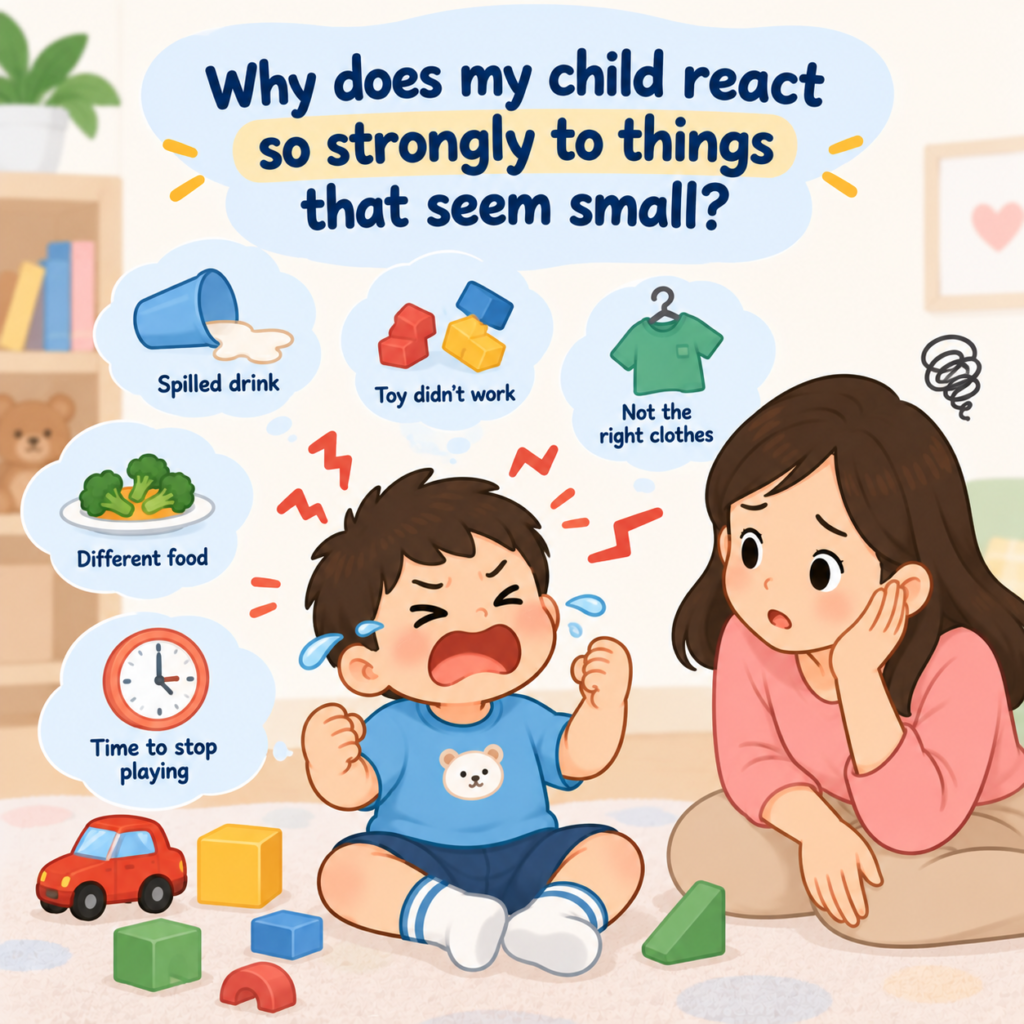
Children are still learning how to understand and manage their emotions.
They may cry, scream, become angry, withdraw, or have difficulty calming down after something goes wrong.
However, when emotional reactions happen frequently, feel very intense, or interfere with daily life, it may be helpful to look more closely at their emotional regulation skills.
Understanding the early signs can help parents respond with clarity, support, and the right intervention at the right time.
What Is Emotional Regulation?
Emotional regulation refers to a child’s ability to recognise, understand, express, and manage their emotions in ways that are appropriate for the situation.
Children do not automatically know how to manage big feelings. They gradually develop these skills with support, practice, and guidance from adults.
A child who struggles with emotional regulation may find it difficult to calm down, cope with frustration, or express what they are feeling.
1. Gets Upset Over Small Things
Your child may have a very strong reaction when something does not go the way they expected.
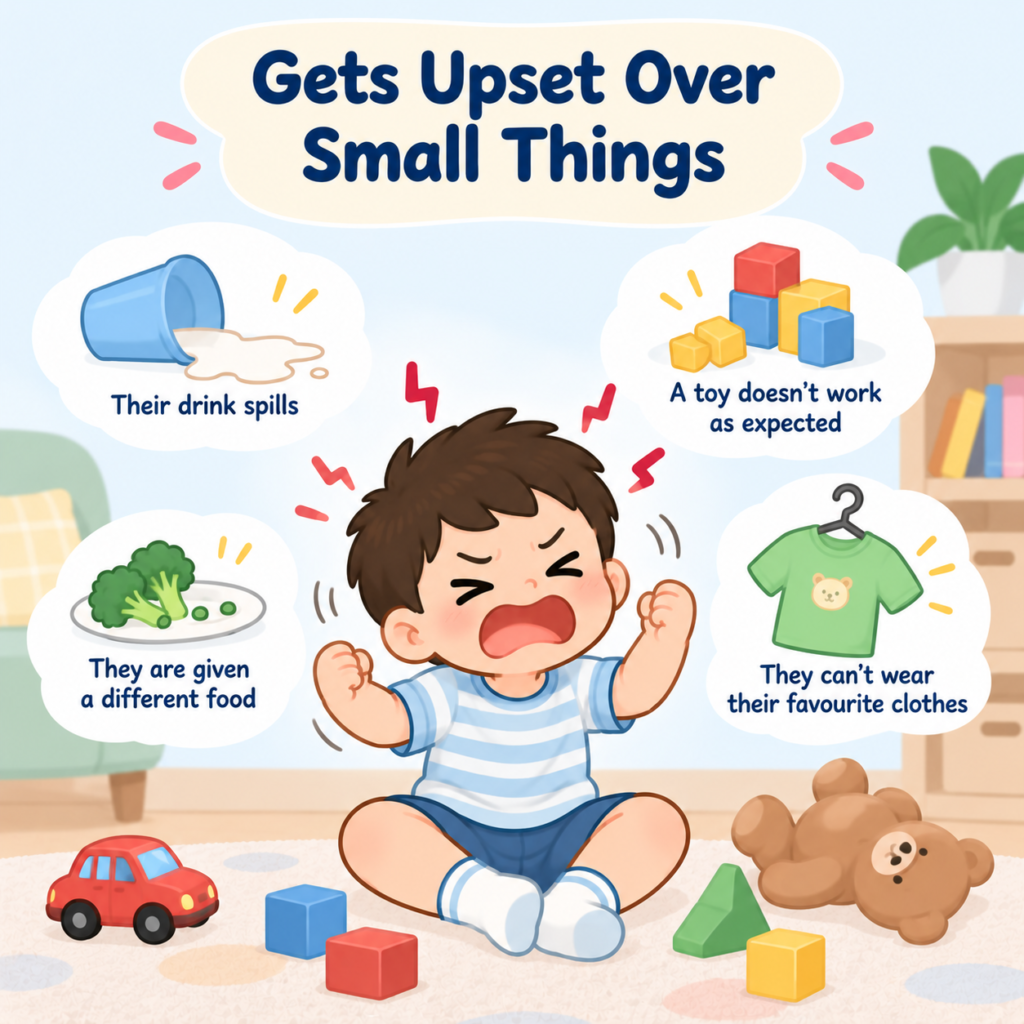
For example, they may cry or become angry because their favourite cup is unavailable or because they lost a game.
2. Has Difficulty Calming Down
Once upset, your child may take a long time to return to a calm state.
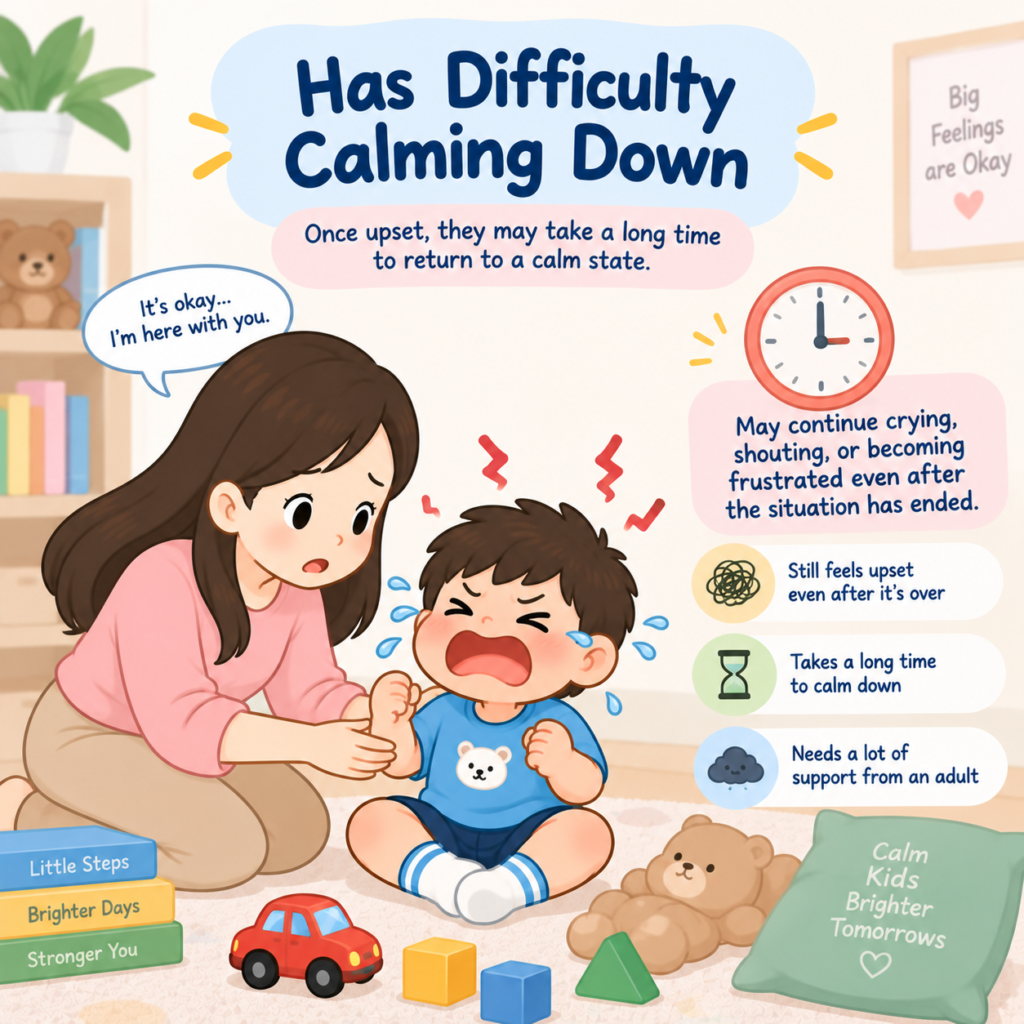
They may continue crying, shouting, or becoming increasingly frustrated even after the situation has ended.
3. Has Very Strong Emotional Reactions
Their emotions may appear much bigger than the situation.
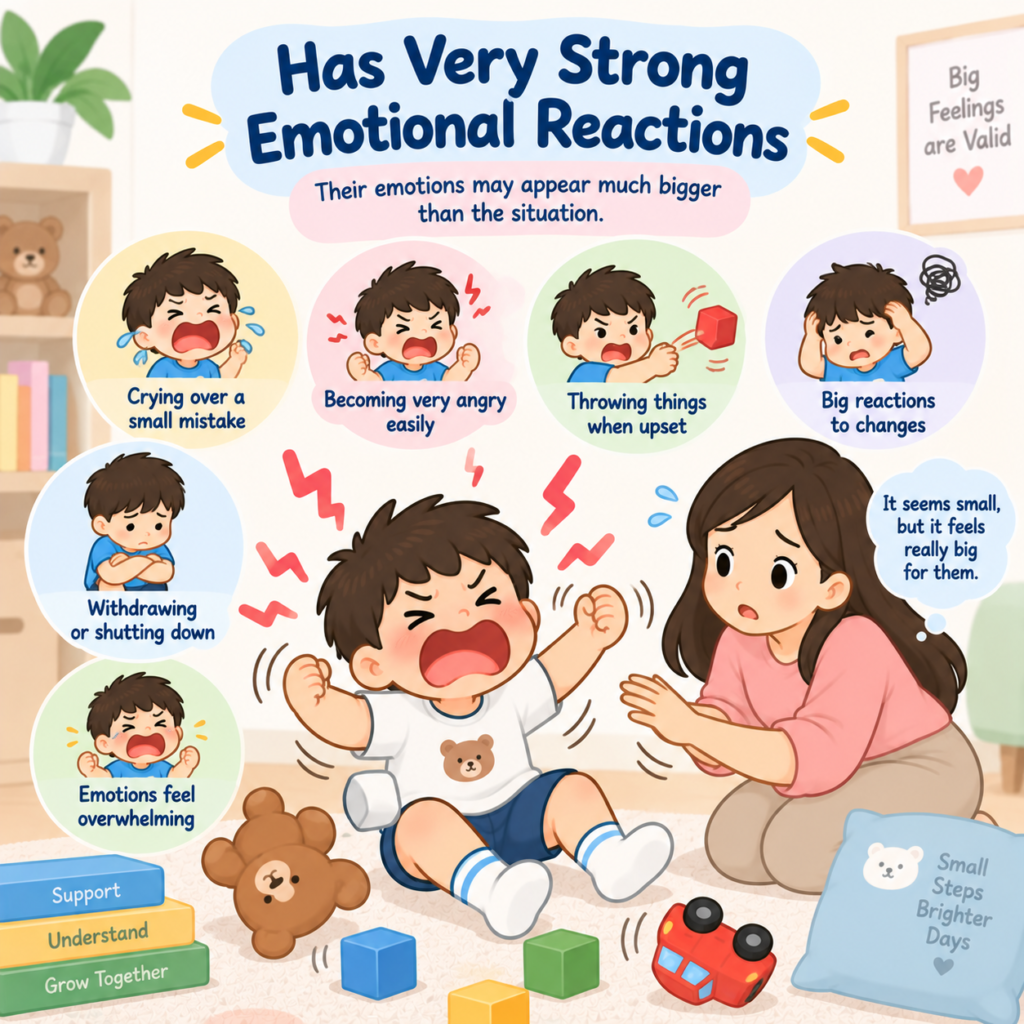
For example, a small disagreement with a sibling may quickly turn into screaming, crying, or throwing things.
4. Struggles to Express Feelings With Words
Some children may know that they feel upset but cannot explain why.
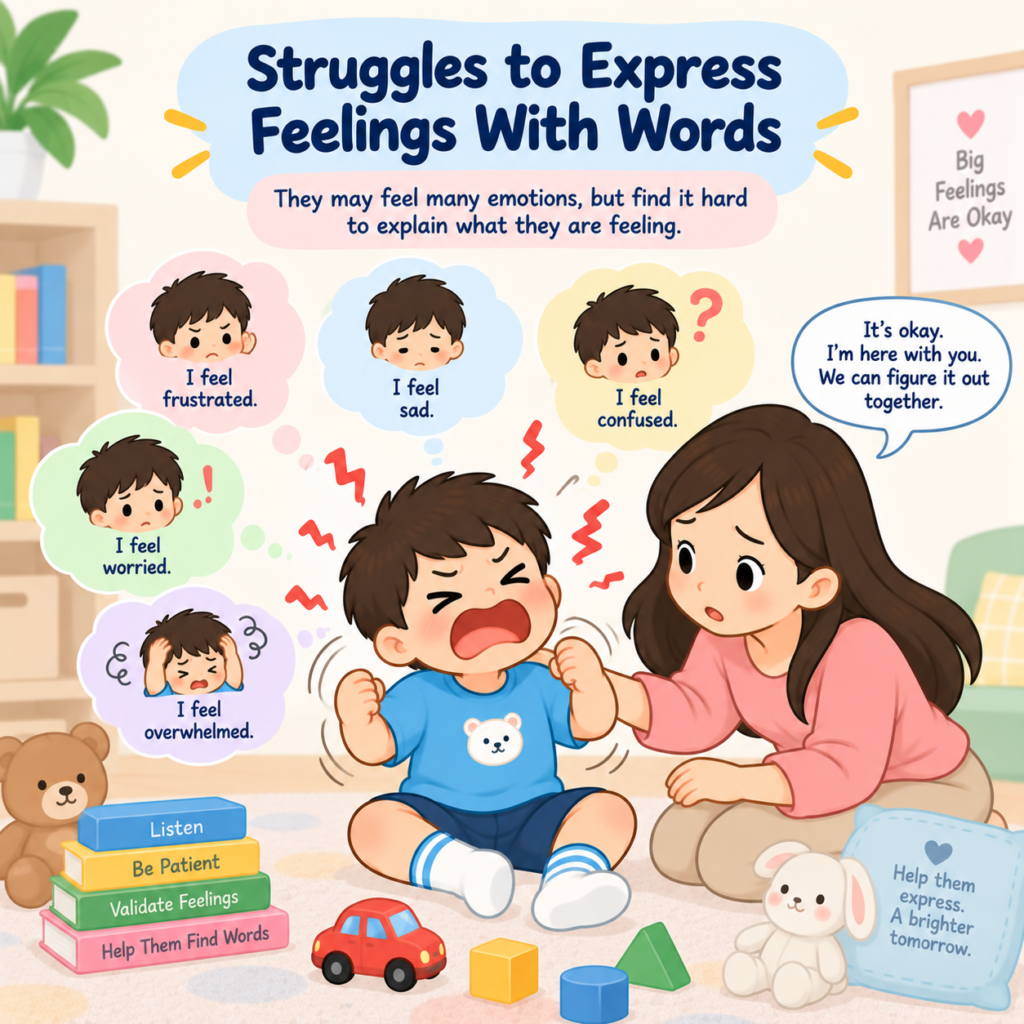
Instead of saying:
“I’m frustrated because I can’t do it.”
They may cry, shout, walk away, or refuse to continue.
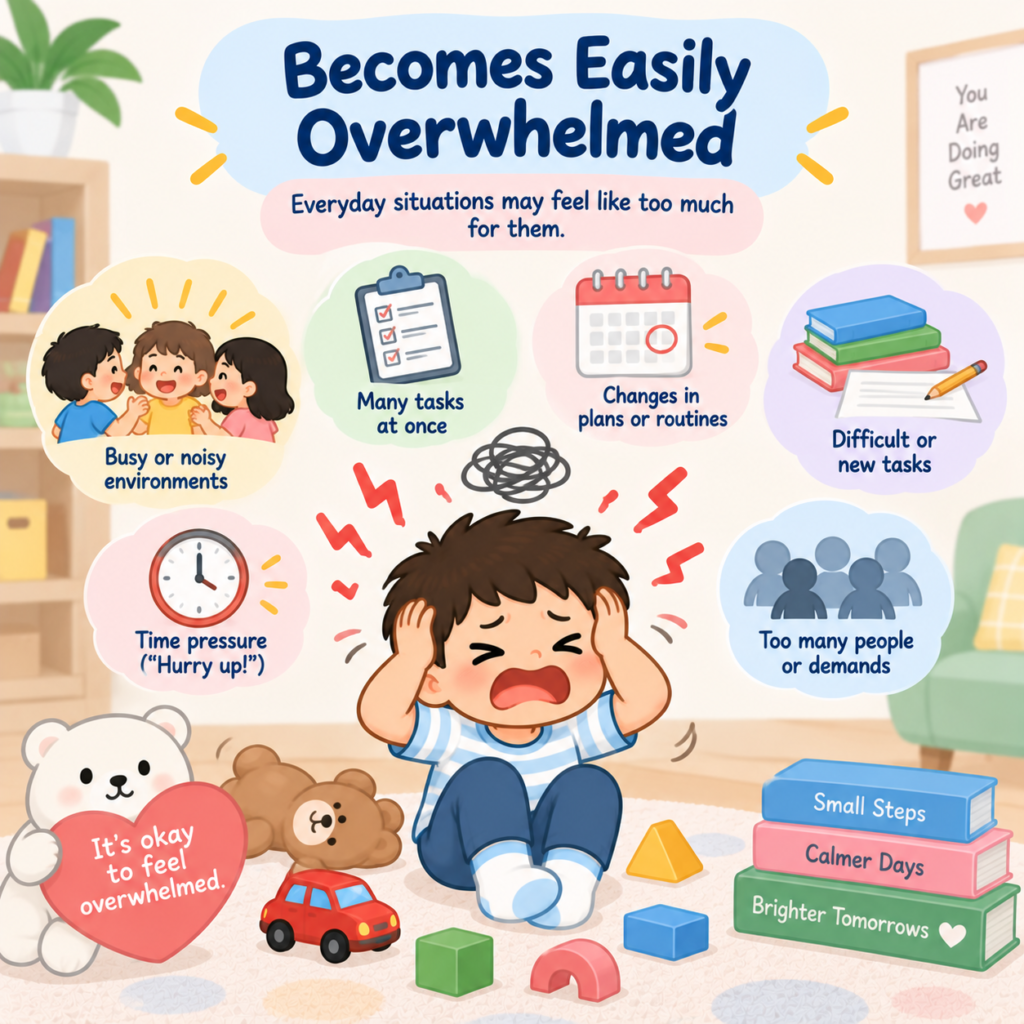
5. Becomes Easily Overwhelmed
Busy environments, changes in plans, difficult tasks, or too many demands may become overwhelming.
Your child may withdraw, become tearful, become irritable, or refuse to participate.
6. Needs a Lot of Adult Help to Manage Emotions
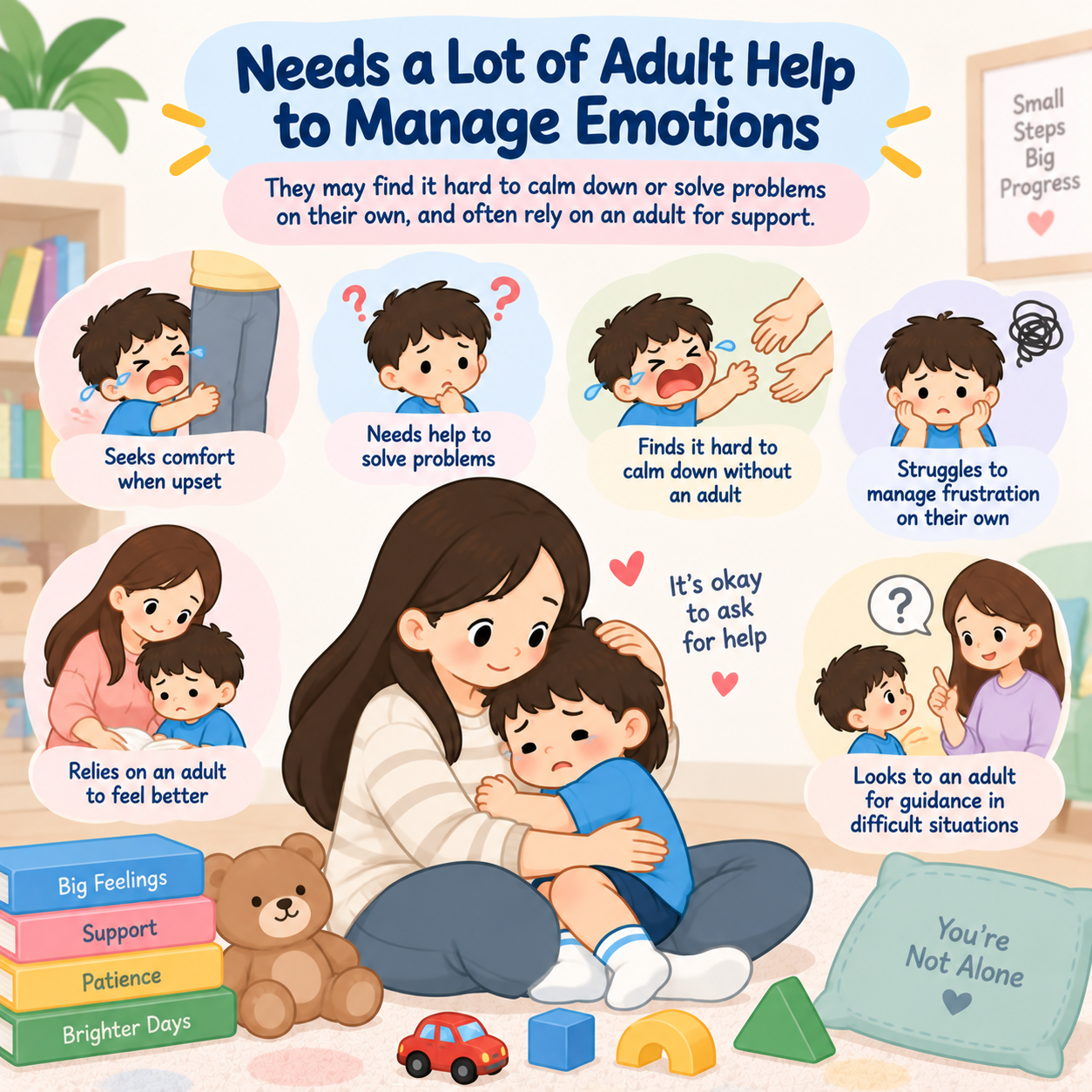
Your child may depend heavily on a parent or caregiver to calm down, solve problems, or manage disappointment.
They may struggle to use calming strategies independently.
6 Ways Parents Can Help
1. Name the Emotion
✿ Help your child put words to what they are feeling.
✿ For example:
“You look frustrated because the toy isn’t working.”
✿ This helps children gradually build emotional vocabulary.
2. Stay Calm and Model Regulation
✿ Children learn from how adults respond to difficult situations.
✿ Use a calm voice and show your child how you manage frustration, disappointment, or anger.
3. Create Predictable Routines
✿ Predictable routines can help children know what to expect.
✿ Give your child a warning before changes when possible.
✿ For example:
“Five more minutes, then it is time to clean up.”
4. Teach Simple Calming Strategies
✿ Practise calming strategies when your child is already calm.
✿ These may include:
1. Taking slow breaths
2. Taking a short break
3. Hugging a comfort item
4. Sitting in a quiet space
5. Asking an adult for help
5. Give Your Child Time to Calm Down
✿ When emotions are very strong, your child may not be ready to talk about the problem immediately.
✿ Give them some time and space before discussing what happened.
6. Seek Professional Support When Needed
✿ If your child’s emotional reactions are frequent, intense, or affecting home, school, friendships, or daily activities, consider seeking professional guidance.
✿ A Clinical Psychologist can help understand your child’s emotional and behavioural patterns and identify strategies that may support their emotional development.
When Should Parents Seek Professional Advice?
Consider seeking further advice if your child:
✿ Has frequent or intense emotional outbursts
✿ Takes a long time to calm down
✿ Becomes easily overwhelmed by everyday situations
✿ Struggles to express emotions appropriately
✿ Has difficulty coping with frustration or disappointment
✿ Experiences emotional difficulties that affect school, friendships, family life, or daily activities
It is also important to consider whether these difficulties are persistent and happening across different settings.
Key Takeaway
❀ Every child experiences big emotions, but learning how to manage them takes time.
❀ If your child frequently becomes overwhelmed, has strong emotional reactions, or needs significant support to calm down, it may be helpful to understand what is contributing to these difficulties.
❀ Emotional regulation is a skill that can be developed with the right support, patience, and guidance.
🌟 Stay Connected with Us! We love sharing tips, insights, and inspiring stories about children’s growth and mental wellbeing.
💙 Follow us on Instagram and Facebook for more updates and parenting advice.
Join our community and let’s grow together. One positive step at a time!

References
American Psychiatric Association. (2022). Diagnostic and statistical manual of mental disorders (DSM-5-TR).
Psychiatry.org; American Psychiatric Association. https://www.psychiatry.org/psychiatrists/practice/dsm
Working Hours
Tuesday to Saturday – 8.30am to 6pm
Monday & Sunday – Closed
Please also subscribe us at
Contact Us
Discover Our Team!
📞+60102502833
firststepdevelopmentcentre@gmail.com
B1-7, Plaza Damas 3, Jalan Sri Hartamas 1, 50480 Kuala Lumpur.
Copyright 2025. Firststep Child Development Sdn Bhd. All rights reserved.