



Why Does My Child Avoid Certain Textures? Understanding Sensory Sensitivities in Children
Have you noticed that your child refuses to touch certain materials, becomes upset when their hands get messy, dislikes particular clothing fabrics, or refuses foods because of the way they feel?
Perhaps your child happily plays with toys but immediately pulls their hands away when you introduce playdough.
Maybe they hate having sticky hands, refuse to walk barefoot on grass, or become distressed when wearing certain socks or clothes.
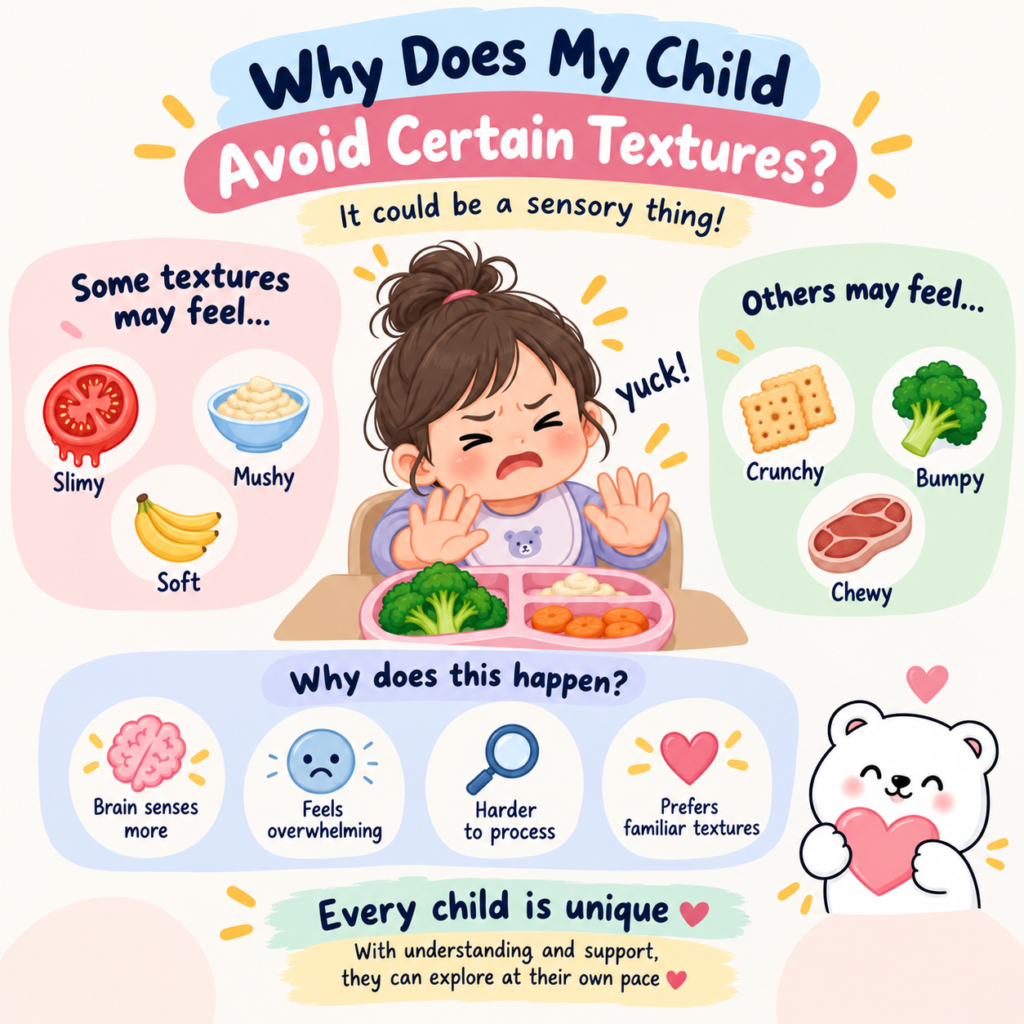
For some children, these reactions may be more than simply being fussy or having preferences.
They may be related to sensory sensitivities, particularly differences in how the brain processes information from touch and texture.
Understanding why your child reacts this way can help you respond with greater patience and find ways to make everyday experiences more comfortable.
What Are Sensory Sensitivities?
Our brains constantly receive information from our senses, including what we see, hear, smell, taste and feel.
The tactile system, or sense of touch, helps children understand information about textures, pressure, temperature and other sensations coming from their skin.
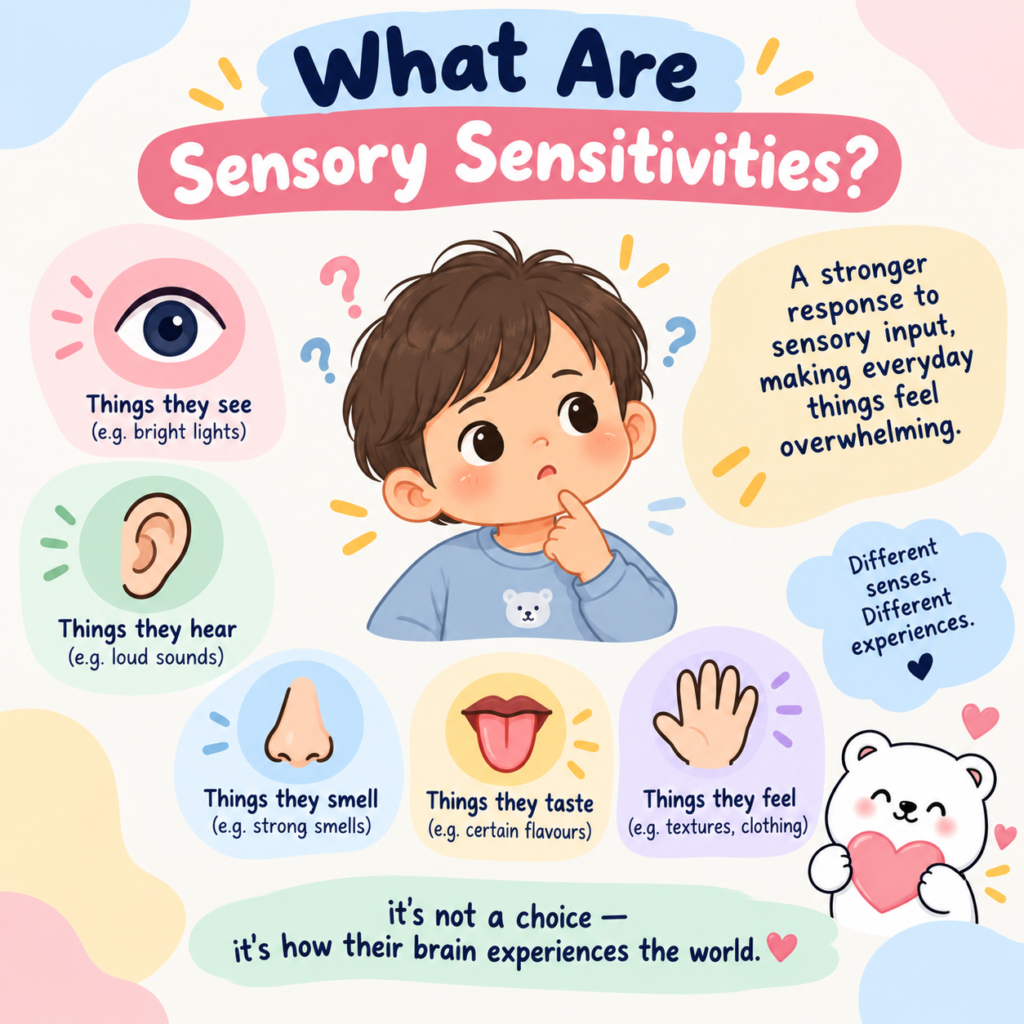
Most of the time, the brain processes these sensations without us thinking about them. However, some children may experience certain sensations as much stronger, uncomfortable or overwhelming.
This can sometimes be described as tactile sensitivity or tactile defensiveness.
For example, a texture that feels completely ordinary to an adult may feel unpleasant or even distressing to a child.
This can lead a child to avoid, escape from or strongly react to certain textures and touch experiences.
For children, these skills are still developing.
What Textures Might a Child Avoid?
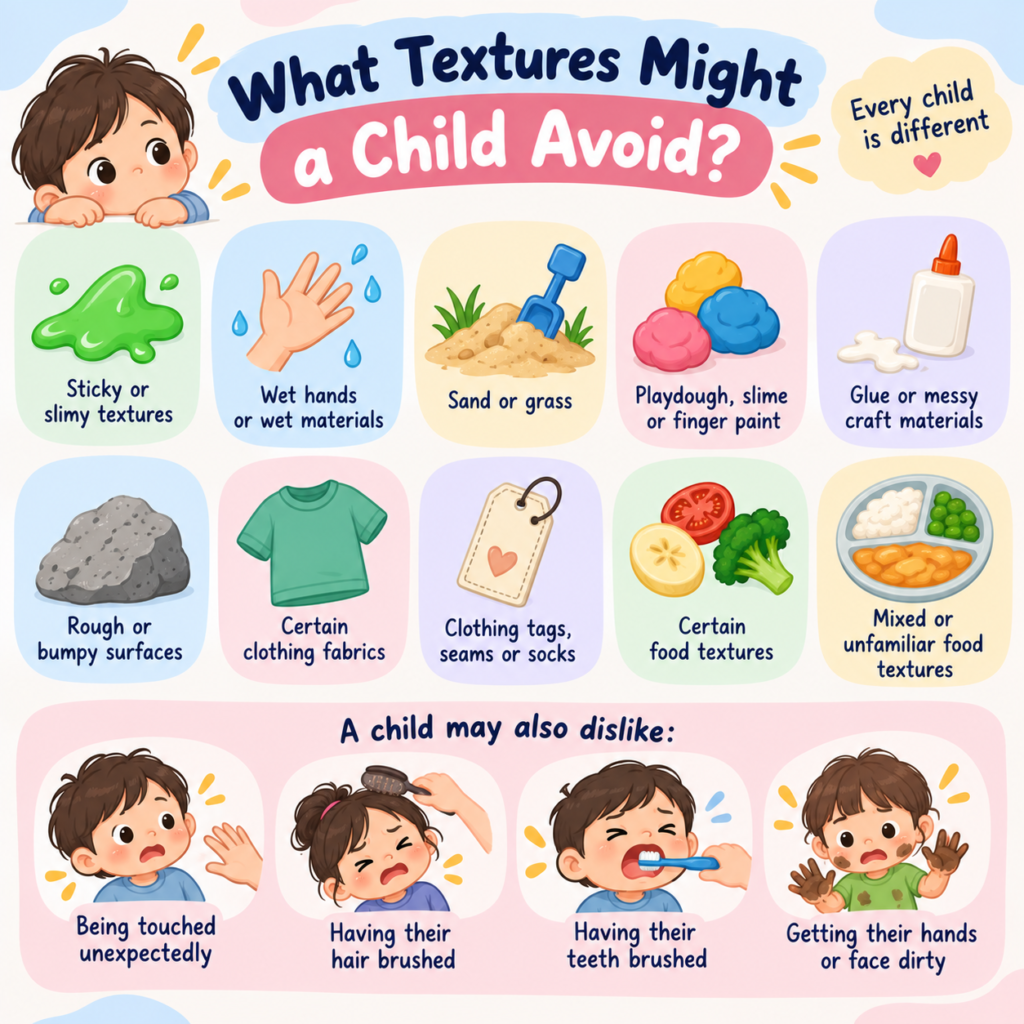
Every child is different, but some children may be particularly uncomfortable with:
❃ Sticky or slimy textures
❃ Wet hands or wet materials
❃ Sand or grass
❃ Playdough, slime or finger paint
❃ Glue or messy craft materials
❃ Rough or bumpy surfaces
❃ Certain clothing fabrics
❃ Clothing tags, seams or socks
❃ Certain food textures
❃ Mixed or unfamiliar food textures
A child may also dislike being touched unexpectedly, having their hair brushed, having their teeth brushed, or getting their hands or face dirty.
Why Does My Child Avoid Certain Textures?
There isn’t always one simple explanation.
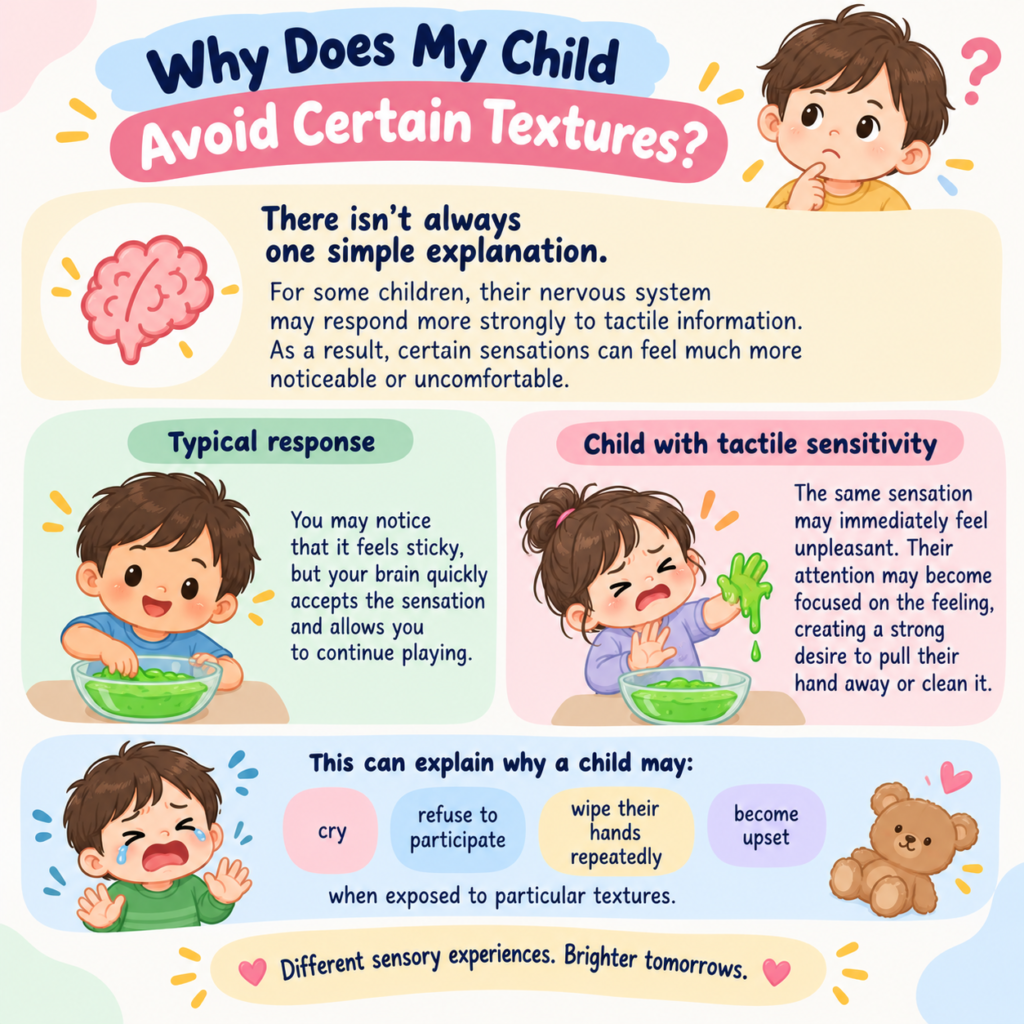
For some children, their nervous system may respond more strongly to tactile information. As a result, certain sensations can feel much more noticeable or uncomfortable.
Imagine putting your hand into a bowl of slime.
You may notice that it feels sticky, but your brain quickly accepts the sensation and allows you to continue playing.
For a child with tactile sensitivity, the same sensation may immediately feel unpleasant. Their attention may become focused on the feeling, creating a strong desire to pull their hand away or clean it.
This can explain why a child may cry, refuse to participate, wipe their hands repeatedly or become upset when exposed to particular textures.
Signs Your Child May Be Sensitive to Certain Textures
Texture sensitivity can look different from child to child.
You may notice that your child:
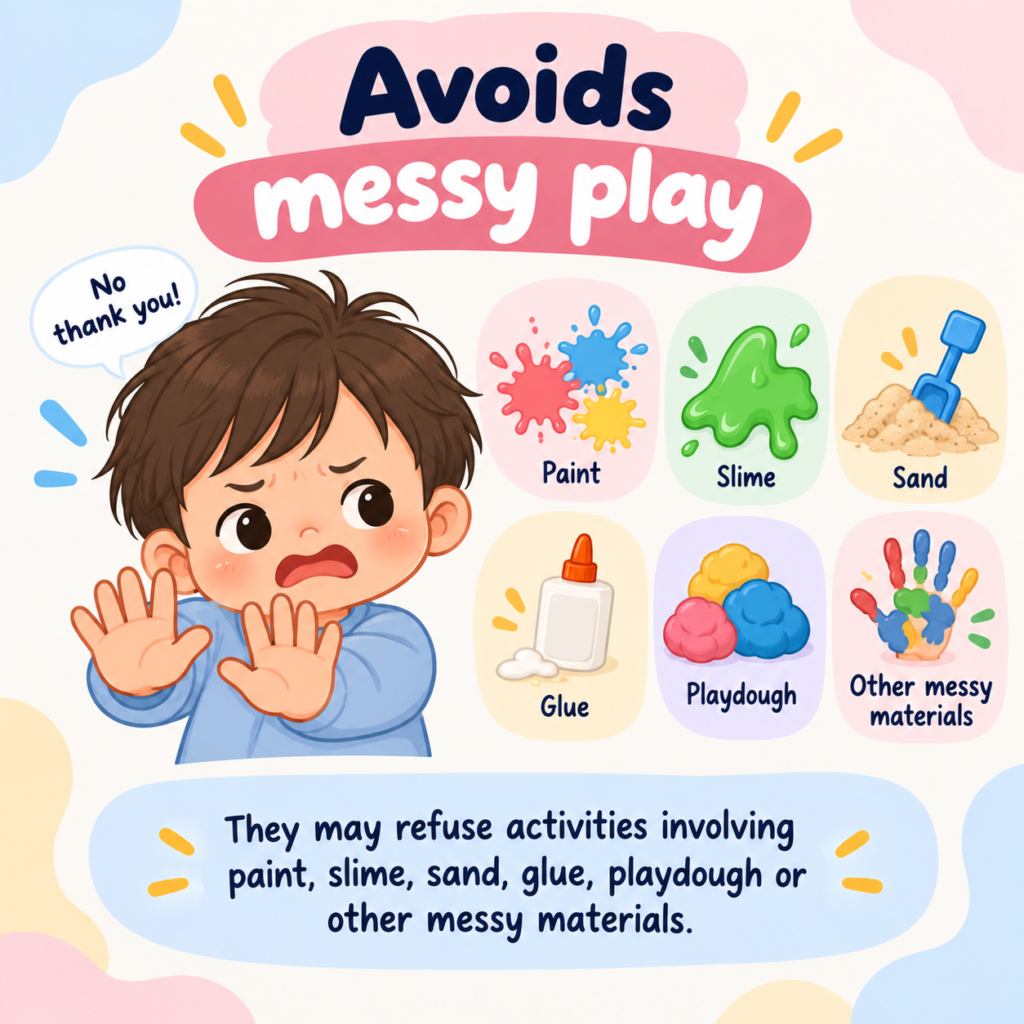
1. Avoids messy play
They may refuse activities involving paint, slime, sand, glue, playdough or other messy materials.
2. Doesn't like getting their hands dirty
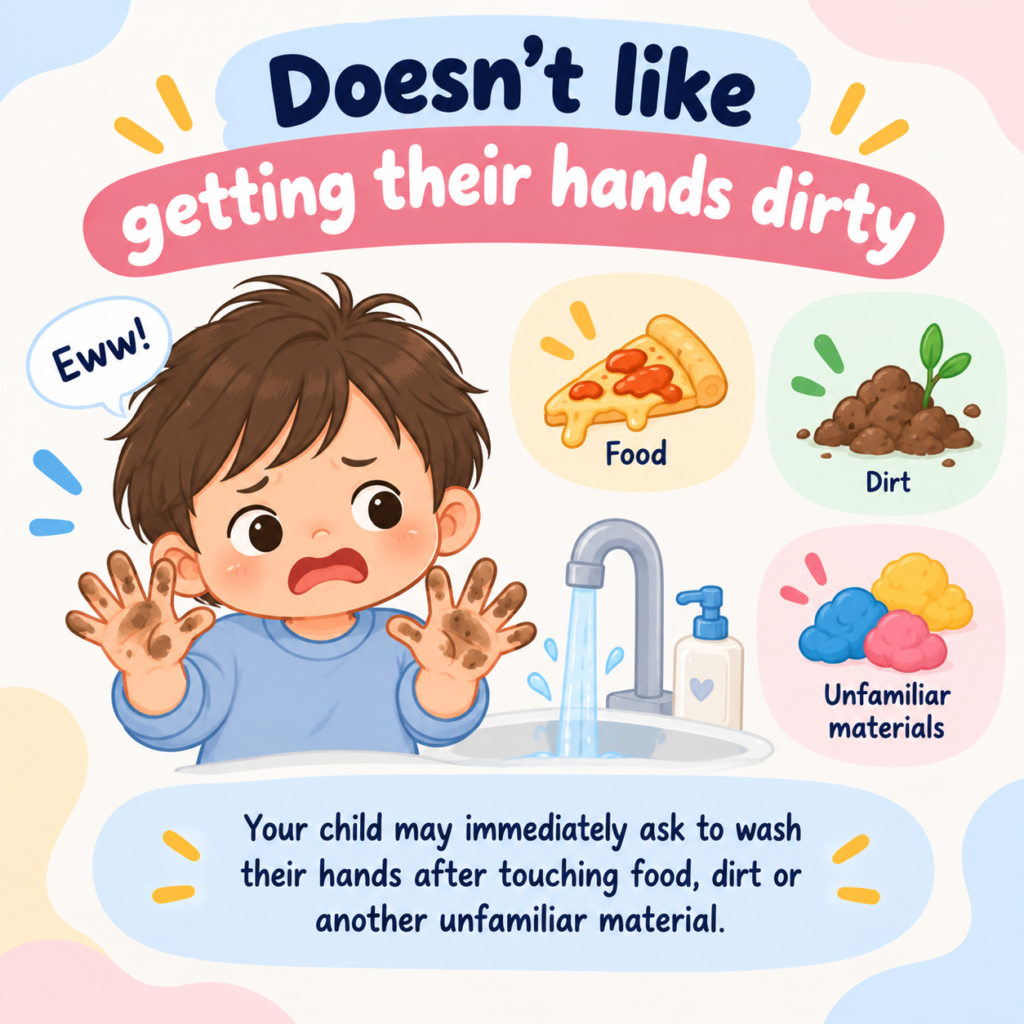
Your child may immediately ask to wash their hands after touching food, dirt or another unfamiliar material.
3. Dislikes certain clothing
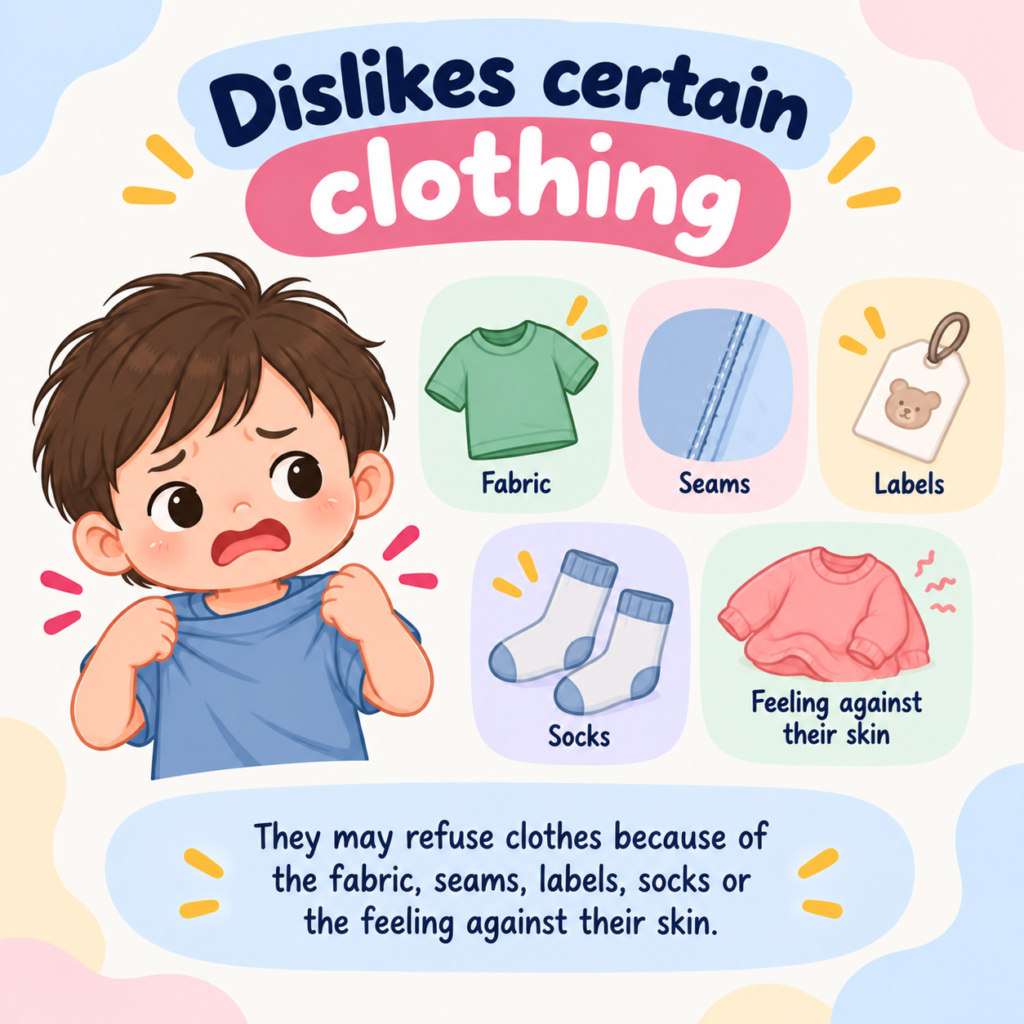
They may refuse clothes because of the fabric, seams, labels, socks or the feeling against their skin.
4. Avoids certain foods
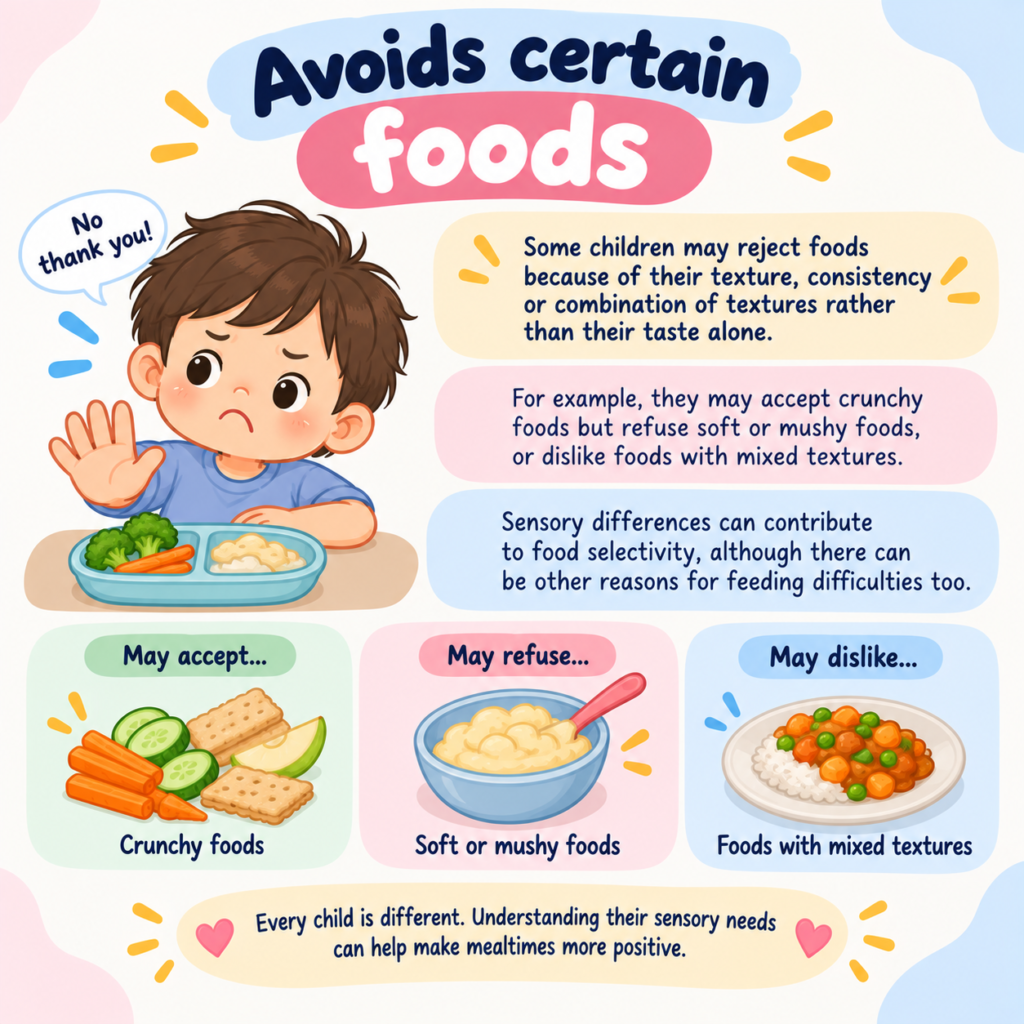
Some children may reject foods because of their texture, consistency or combination of textures rather than their taste alone.
For example, they may accept crunchy foods but refuse soft or mushy foods, or dislike foods with mixed textures.
Sensory differences can contribute to food selectivity, although there can be other reasons for feeding difficulties too.
5. Becomes distressed when touched unexpectedly
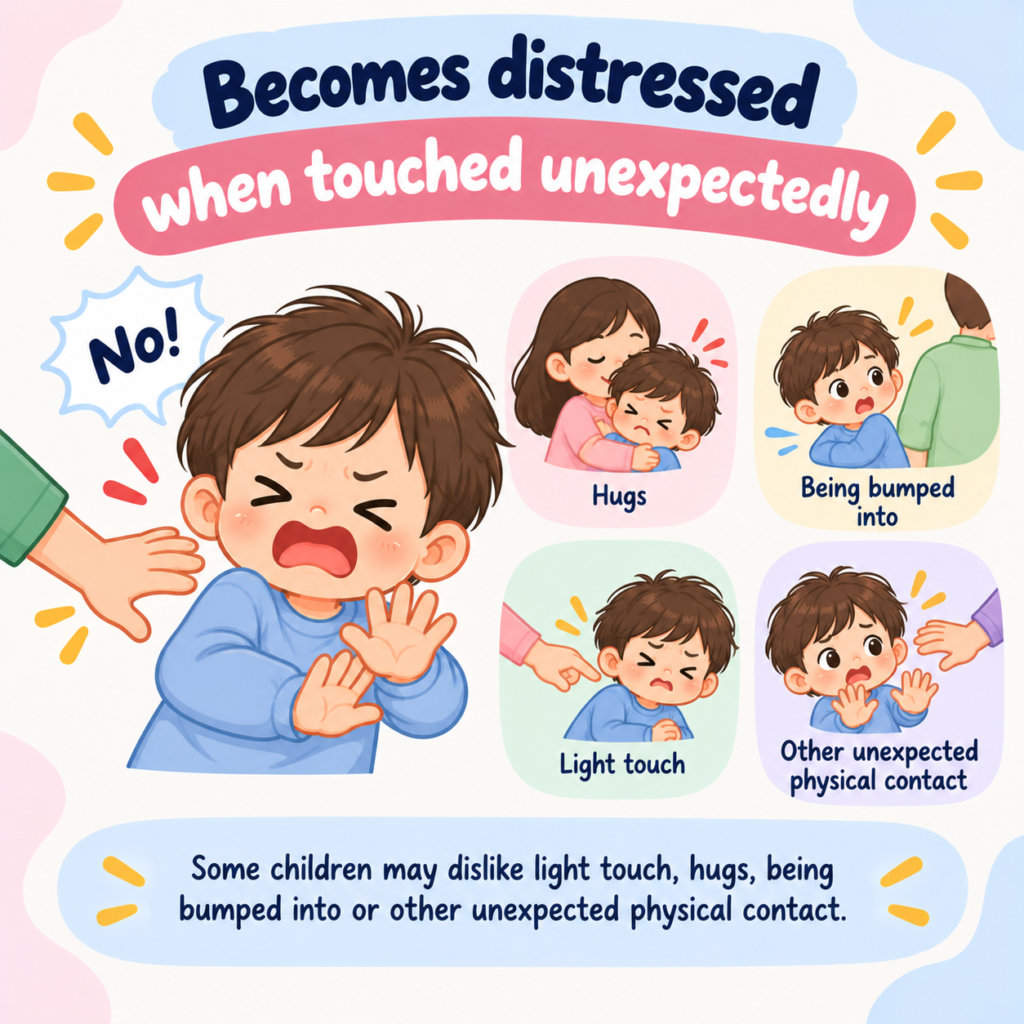
Some children may dislike light touch, hugs, being bumped into or other unexpected physical contact.
6. Avoids certain everyday activities
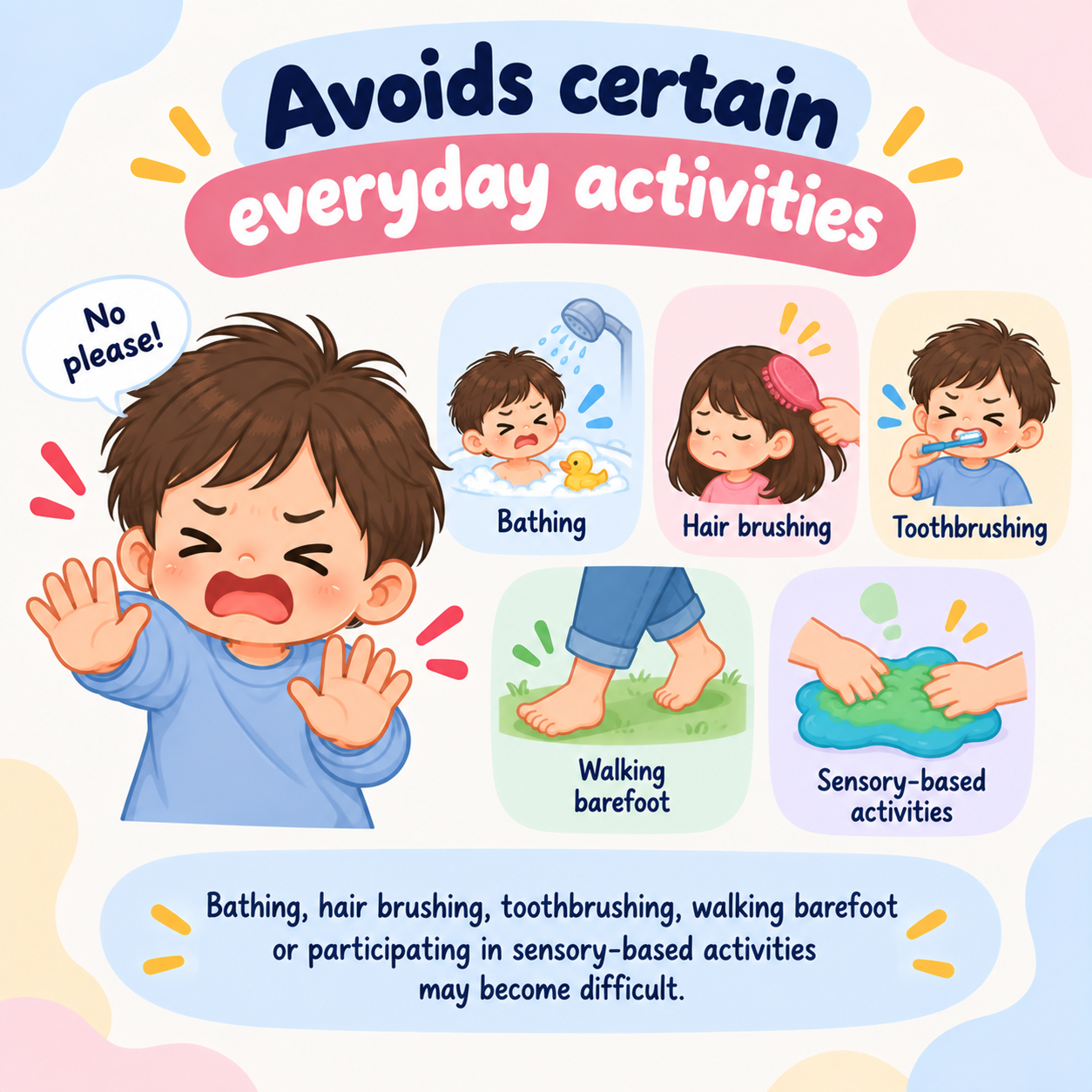
Bathing, hair brushing, toothbrushing, walking barefoot or participating in sensory-based activities may become difficult.
Is It Just Picky Behaviour?
Not necessarily.
Children naturally have preferences. A toddler may dislike a particular food, and some children simply need time to become comfortable with unfamiliar experiences.
However, texture avoidance may deserve closer attention when the reaction is persistent, intense or significantly affects everyday life.
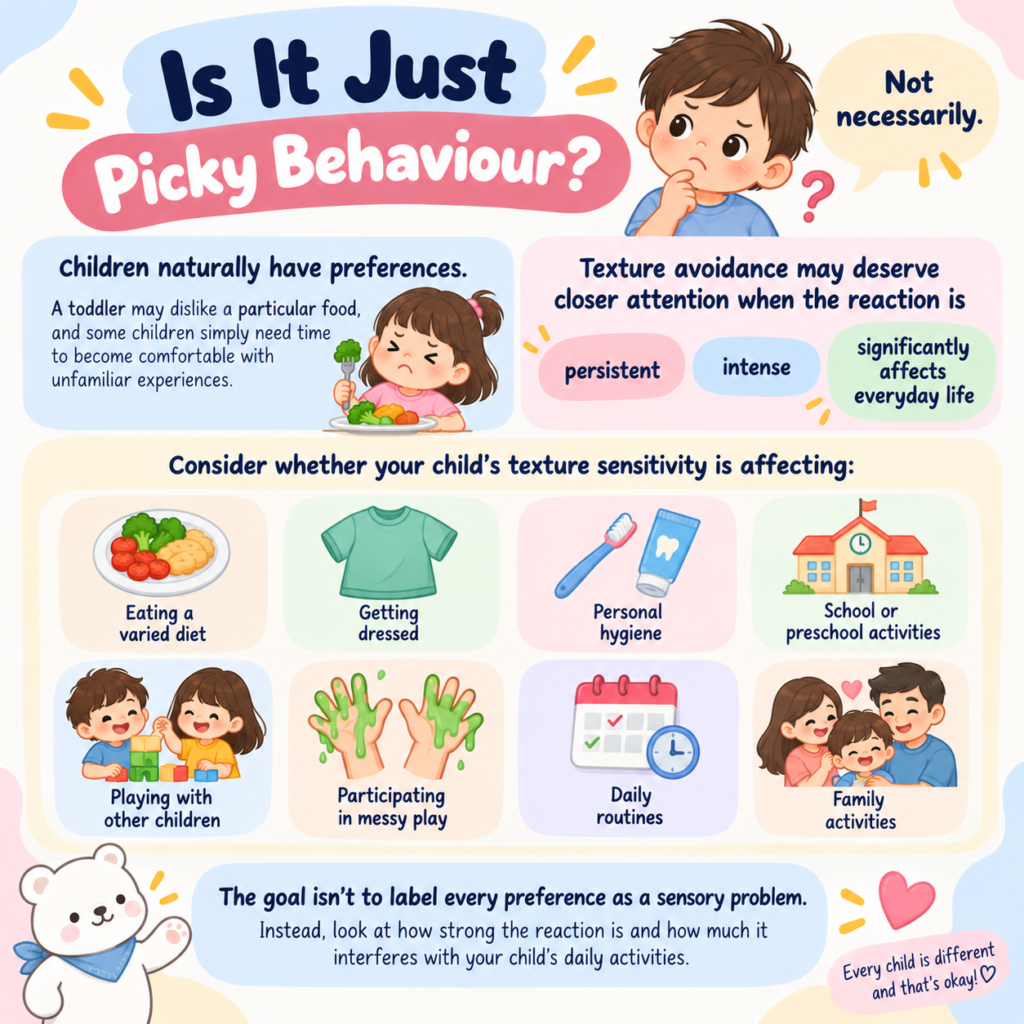
For example, consider whether your child’s texture sensitivity is affecting:
❁ Eating a varied diet
❁ Getting dressed
❁ Personal hygiene
❁ School or preschool activities
❁ Playing with other children
❁ Participating in messy play
❁ Daily routines
❁ Family activities
The goal isn’t to label every preference as a sensory problem. Instead, parents can look at how strong the reaction is and how much it interferes with the child’s daily activities.
How Can Parents Help?
The first step is to avoid turning textures into a battle.
If your child becomes distressed when touching something, forcing them to continue may make the experience even more negative.
Instead, try introducing textures gradually and at your child’s pace.
Start With Familiar Textures
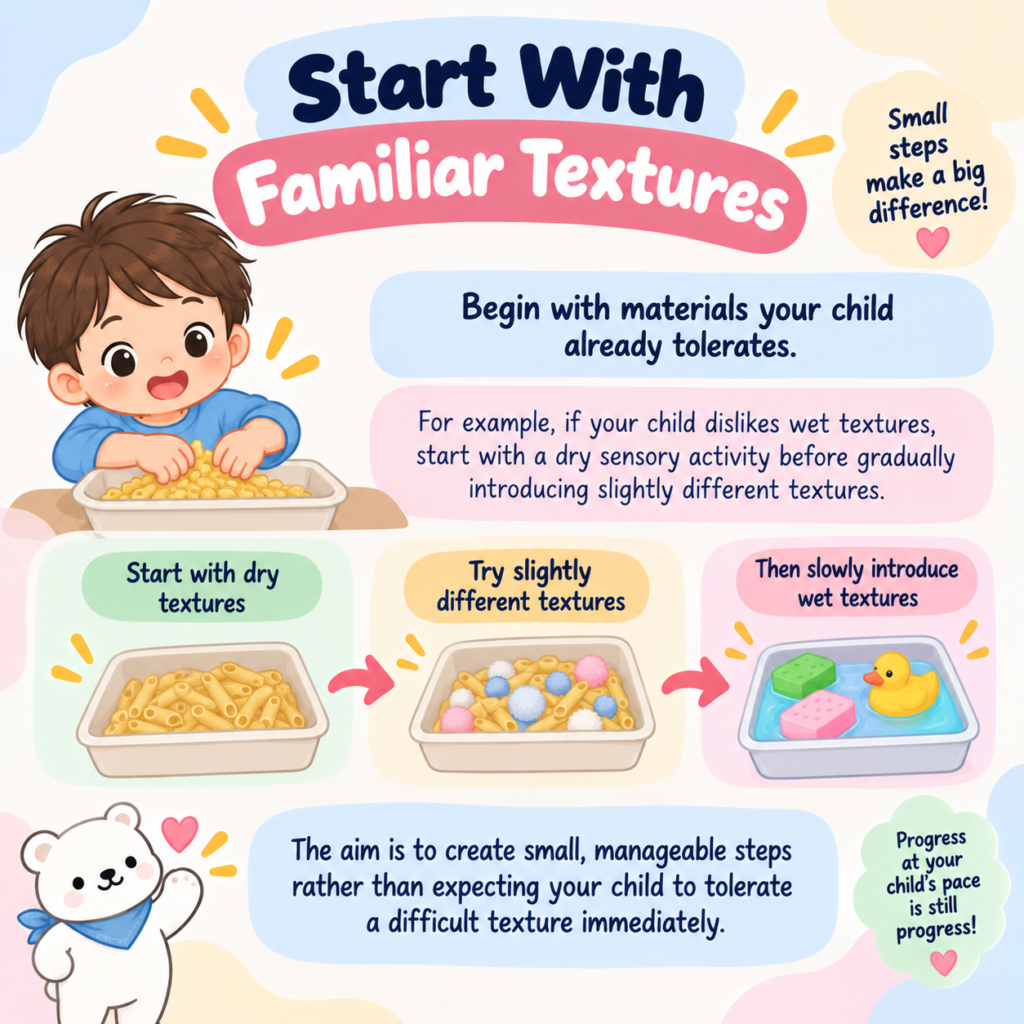
Begin with materials your child already tolerates.
For example, if your child dislikes wet textures, start with a dry sensory activity before gradually introducing slightly different textures.
The aim is to create small, manageable steps rather than expecting your child to tolerate a difficult texture immediately.
Let Your Child Have Some Control
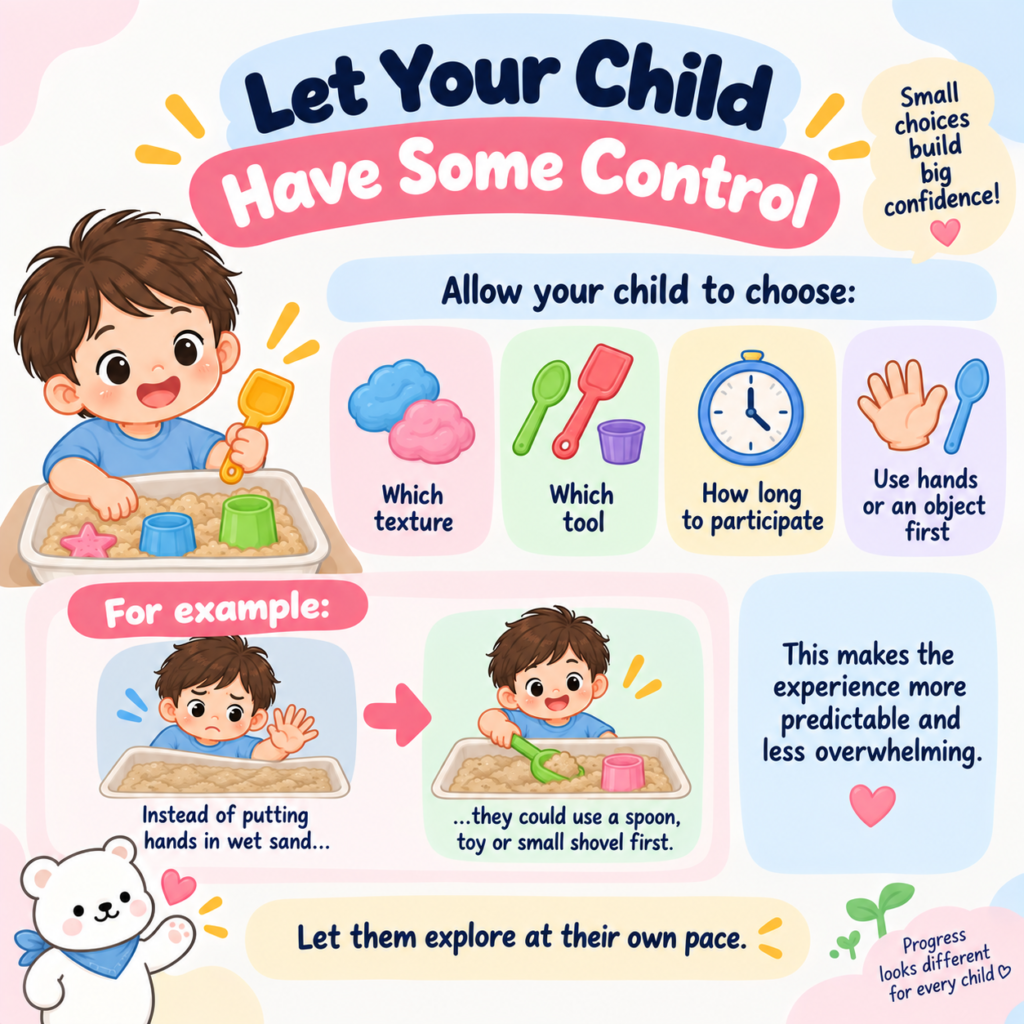
Allow your child to choose:
❁ Which texture to explore
❁ Which tool to use
❁ How long to participate
❁ Whether to use their hands or an object first
For example, instead of asking your child to put their hands directly into wet sand, they could first use a spoon, toy or small shovel.
This can make the experience feel more predictable and less overwhelming. Gradual introduction and allowing the child to participate at their own pace are commonly recommended approaches for tactile sensitivity.
Use Play to Introduce New Textures
Sensory exploration doesn’t have to feel like therapy.
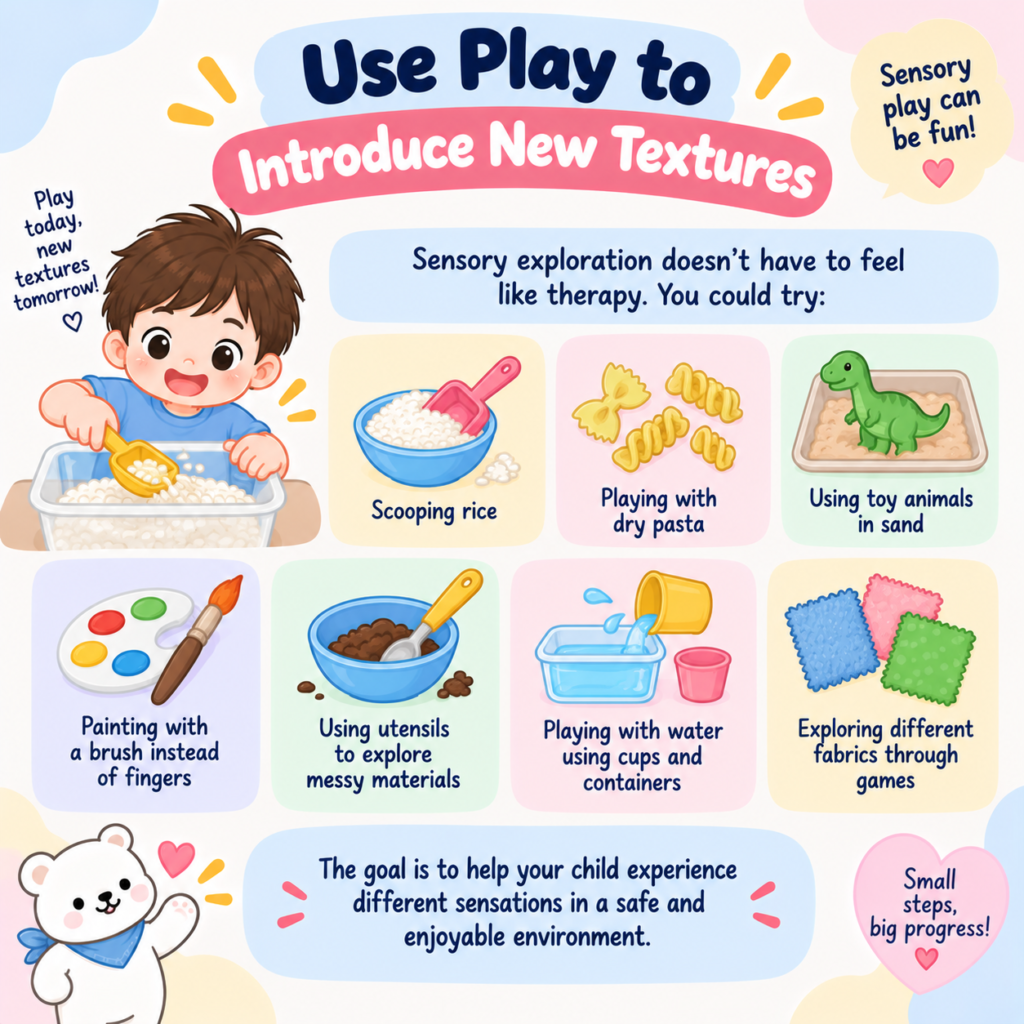
You could try:
❁ Scooping rice
❁ Playing with dry pasta
❁ Using toy animals in sand
❁ Painting with a brush instead of fingers
❁ Using utensils to explore messy materials
❁ Playing with water using cups and containers
❁ Exploring different fabrics through games
The goal is to help your child experience different sensations in a safe and enjoyable environment.
Don't Force Your Child
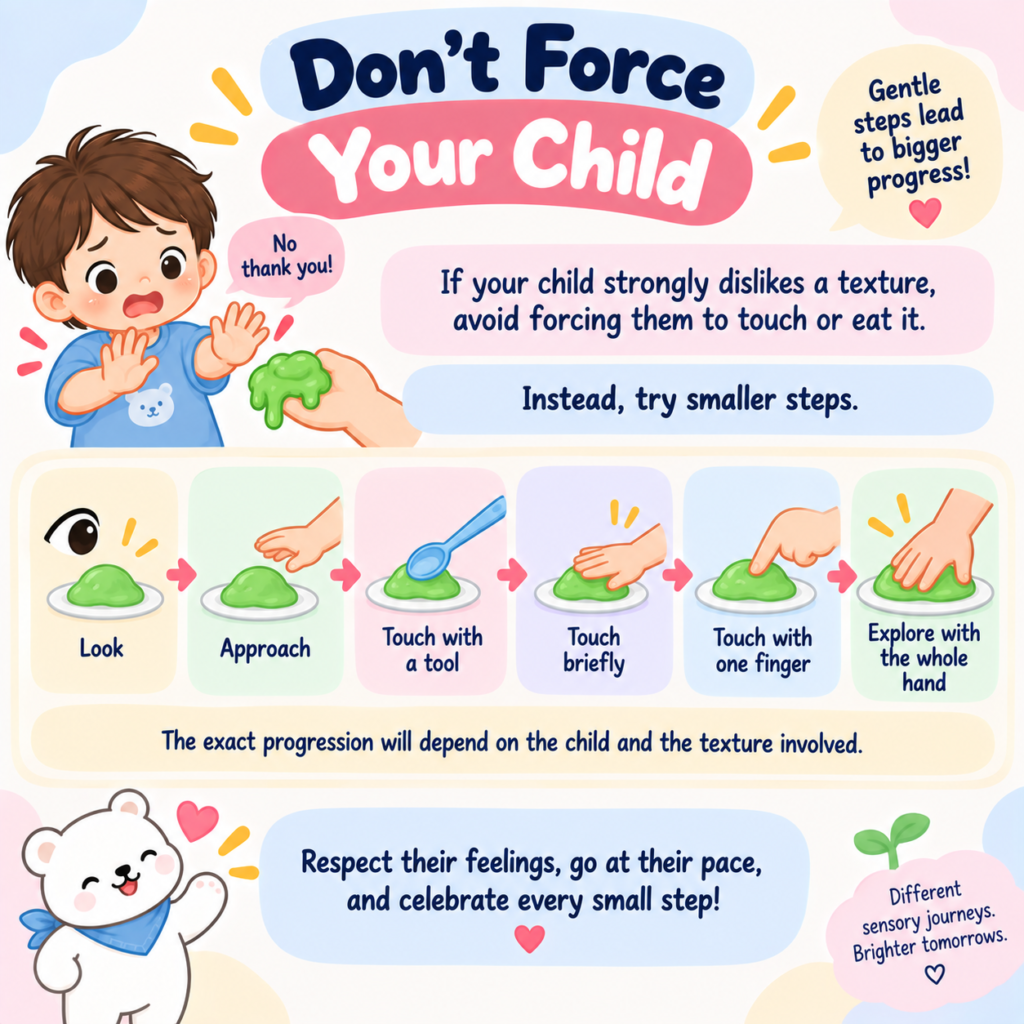
If your child strongly dislikes a particular texture, avoid forcing them to touch or eat it.
Instead, look for smaller steps.
For example:
Look → approach → touch with a tool → touch briefly → touch with one finger → explore with the whole hand
The exact progression will depend on the child and the texture involved.
When Should Parents Seek Professional Support?
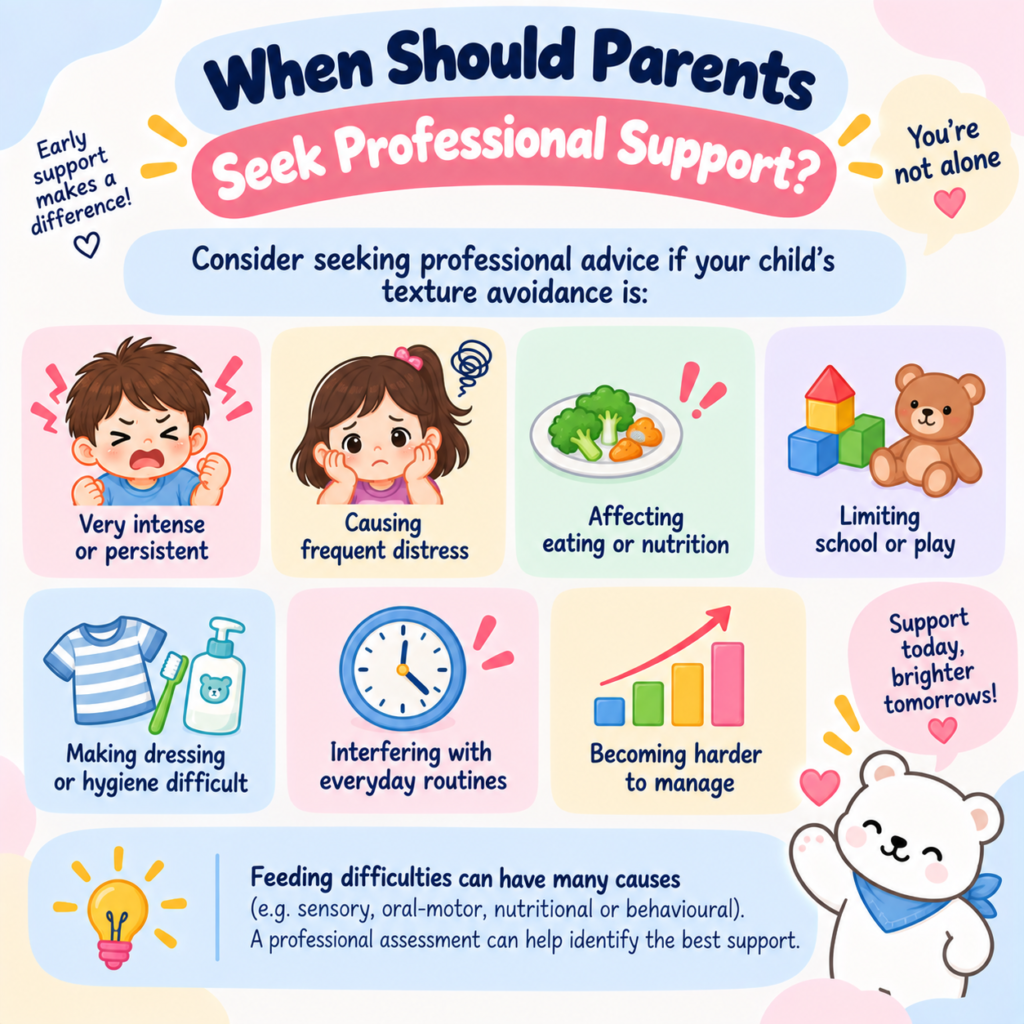
Consider seeking professional advice if your child’s texture avoidance is:
❁ Very intense or persistent
❁ Causing frequent distress
❁ Affecting eating or nutrition
❁ Limiting participation in school or play
❁ Making dressing or hygiene difficult
❁ Interfering with everyday routines
❁ Becoming increasingly difficult to manage
For feeding-related concerns, it is particularly important to consider the wider picture rather than assuming that every food refusal is simply sensory.
Feeding difficulties can involve sensory, oral-motor, nutritional, behavioural or other factors, and assessment may help identify what is contributing to the problem.
🌟 Stay Connected with Us! We love sharing tips, insights, and inspiring stories about children’s growth and mental wellbeing.
💙 Follow us on Instagram and Facebook for more updates and parenting advice.
Join our community and let’s grow together. One positive step at a time!

References
American Occupational Therapy Association. (2023). Sensory integration and processing.
American Occupational Therapy Association. https://www.aota.org/practice/clinical-topics/sensory-integration-and-processing
Working Hours
Tuesday to Saturday – 8.30am to 6pm
Monday & Sunday – Closed
Please also subscribe us at
Contact Us
Discover Our Team!
📞+60102502833
firststepdevelopmentcentre@gmail.com
B1-7, Plaza Damas 3, Jalan Sri Hartamas 1, 50480 Kuala Lumpur.
Copyright 2025. Firststep Child Development Sdn Bhd. All rights reserved.