



Why Does My Child Act Before Thinking? Understanding Impulse Control in Children
Does your child interrupt others, grab things without asking, rush into activities, or act before considering what might happen?
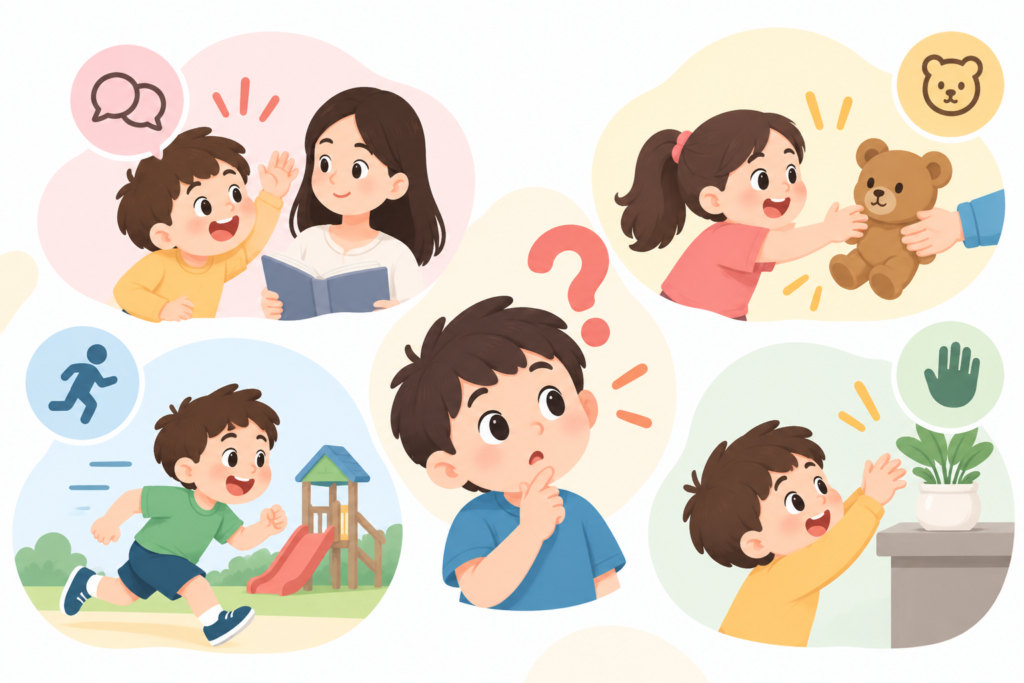
Children are still developing the ability to pause, think, and control their actions.
It is normal for young children to act impulsively sometimes, especially when they are excited, frustrated, or tired.
However, when impulsive behaviours happen frequently and begin to affect your child’s learning, relationships, routines, or everyday activities, it may be helpful to understand what is happening and whether your child needs additional support.
Understanding impulse control can help parents recognise these behaviours and learn ways to support their child’s developing self-control and decision-making skills.
What Is Impulse Control?
Impulse control is the ability to pause before acting, think about what might happen, and choose an appropriate response.
For children, this skill develops gradually. They may need support to:
1. Wait for their turn
2. Stop themselves from interrupting
3. Think before touching or taking something
4. Follow rules even when excited
5. Manage strong reactions
6. Consider how their actions may affect others
Difficulty with impulse control does not automatically mean that a child has a behavioural or developmental disorder.
Children develop self-control at different rates, and their behaviour can also be influenced by their age, environment, emotions, sleep, and other factors.
1. Acts Before Thinking

Your child may quickly do something without considering what might happen next.
For example, they may:
- Grab a toy from another child
- Run into the road without stopping
- Touch something after being told not to
- Start an activity without listening to the instructions
They may understand the rule but find it difficult to pause and apply it in the moment.
2. Has Difficulty Waiting for Their Turn
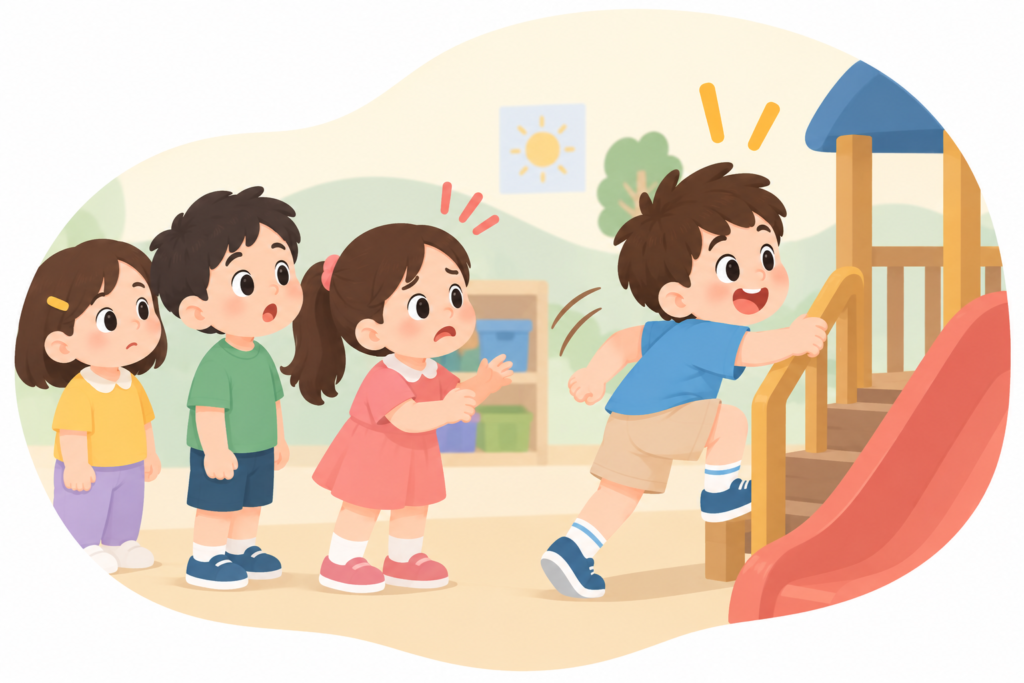
Your child may find waiting particularly challenging.
You may notice that they:
- Interrupt games
- Become upset while waiting
- Take another child’s turn
- Ask repeatedly when it will be their turn
- Leave an activity because they do not want to wait
Waiting requires children to manage their impulses while keeping their attention on what is happening around them.
3. Frequently Interrupts Others
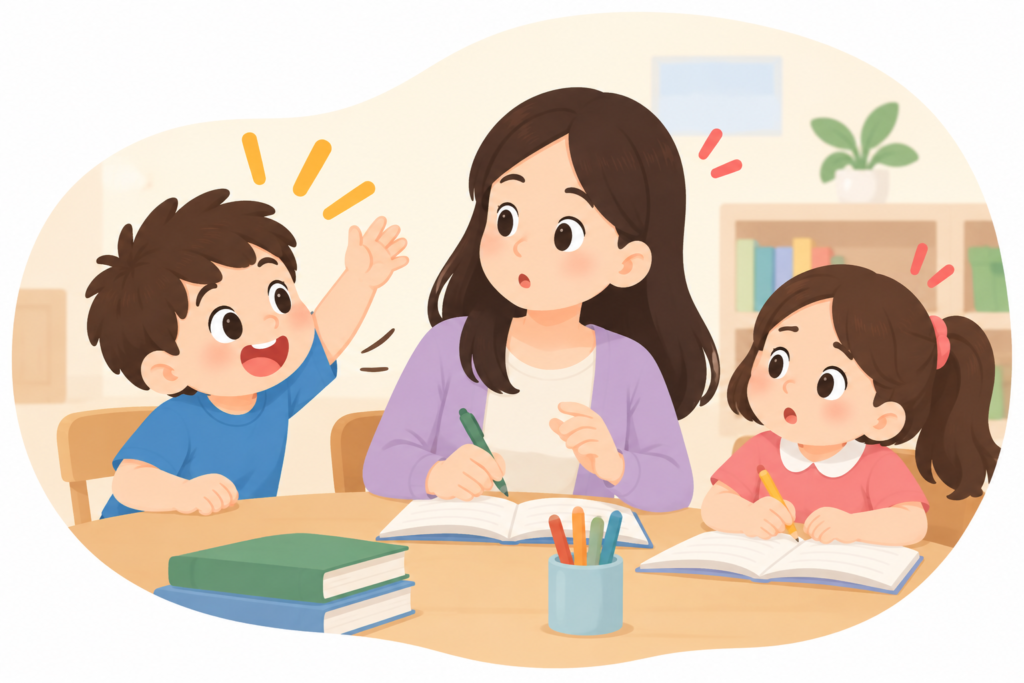
Your child may call out or speak while someone else is talking.
For example:
“Mummy, mummy, mummy! Look at this!”
They may interrupt conversations, answer questions before they are finished, or have difficulty waiting until someone has finished speaking.
This does not necessarily mean they are being intentionally rude.
They may be finding it difficult to hold onto their thought while waiting for an appropriate opportunity to speak.
4. Has Difficulty Stopping an Activity
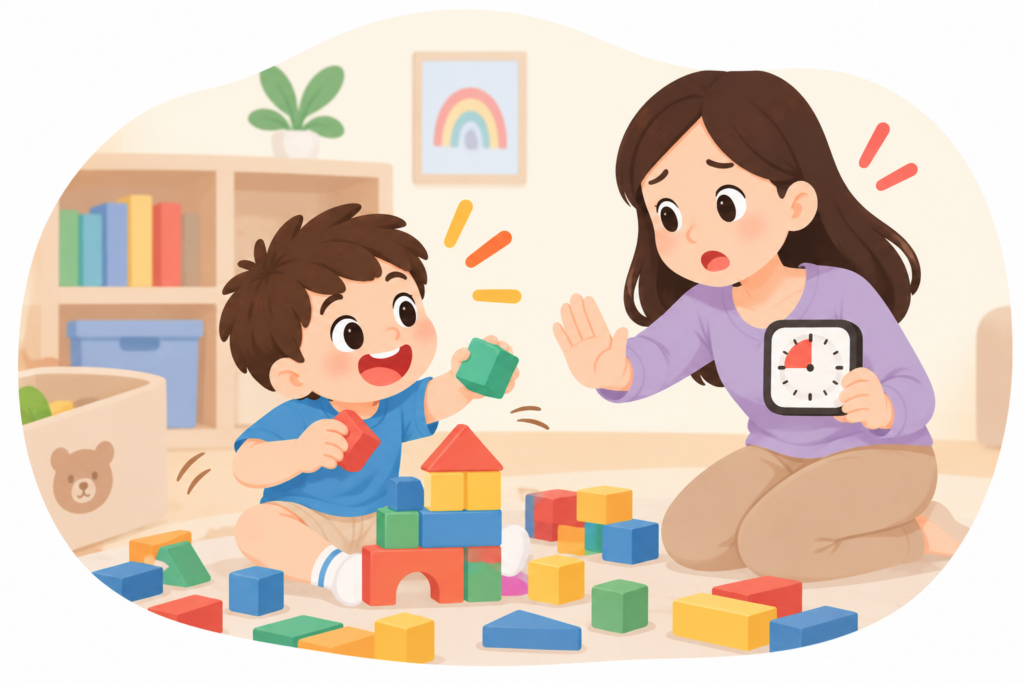
Your child may struggle to stop what they are doing, even when you tell them it is time to move on.
For example, they may:
- Keep playing when it is time to leave
- Continue using a device after screen time ends
- Struggle to stop an exciting activity
- Become upset when an activity suddenly finishes
Moving from one activity to another requires children to pause their current behaviour and shift their attention.
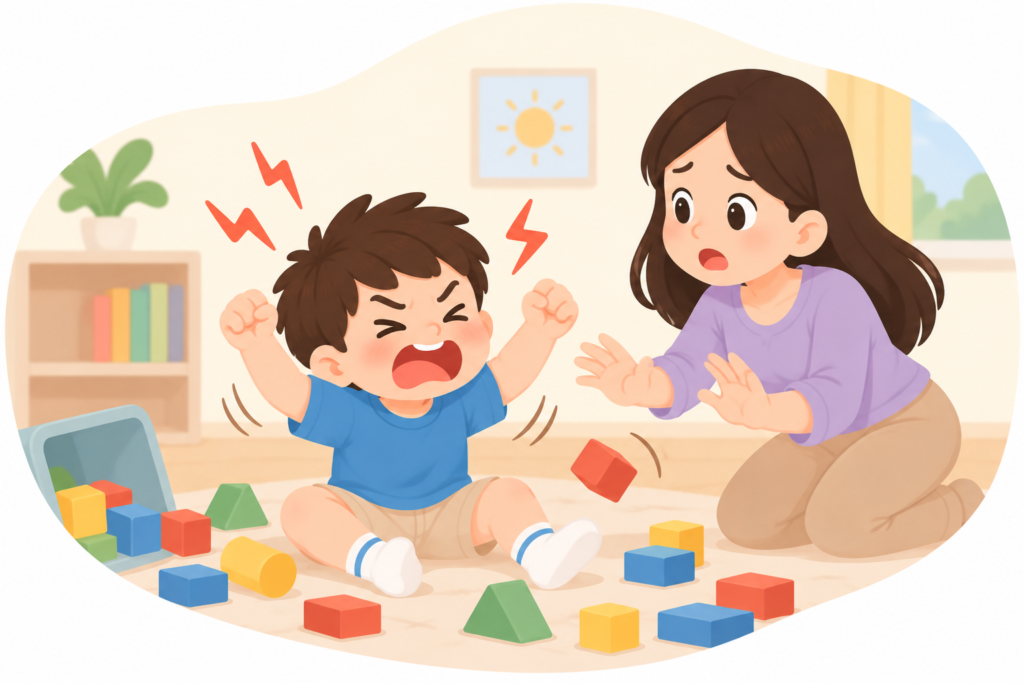
5. Has Strong or Quick Reactions
Your child may react quickly when something does not go their way.
You may notice:
- Shouting
- Crying
- Throwing objects
- Pushing or hitting
- Quickly becoming upset
- Difficulty calming down after becoming frustrated
Strong emotions are common in childhood, but some children may need more support to pause and manage their response before acting.
6. Makes Quick Decisions Without Considering Consequences
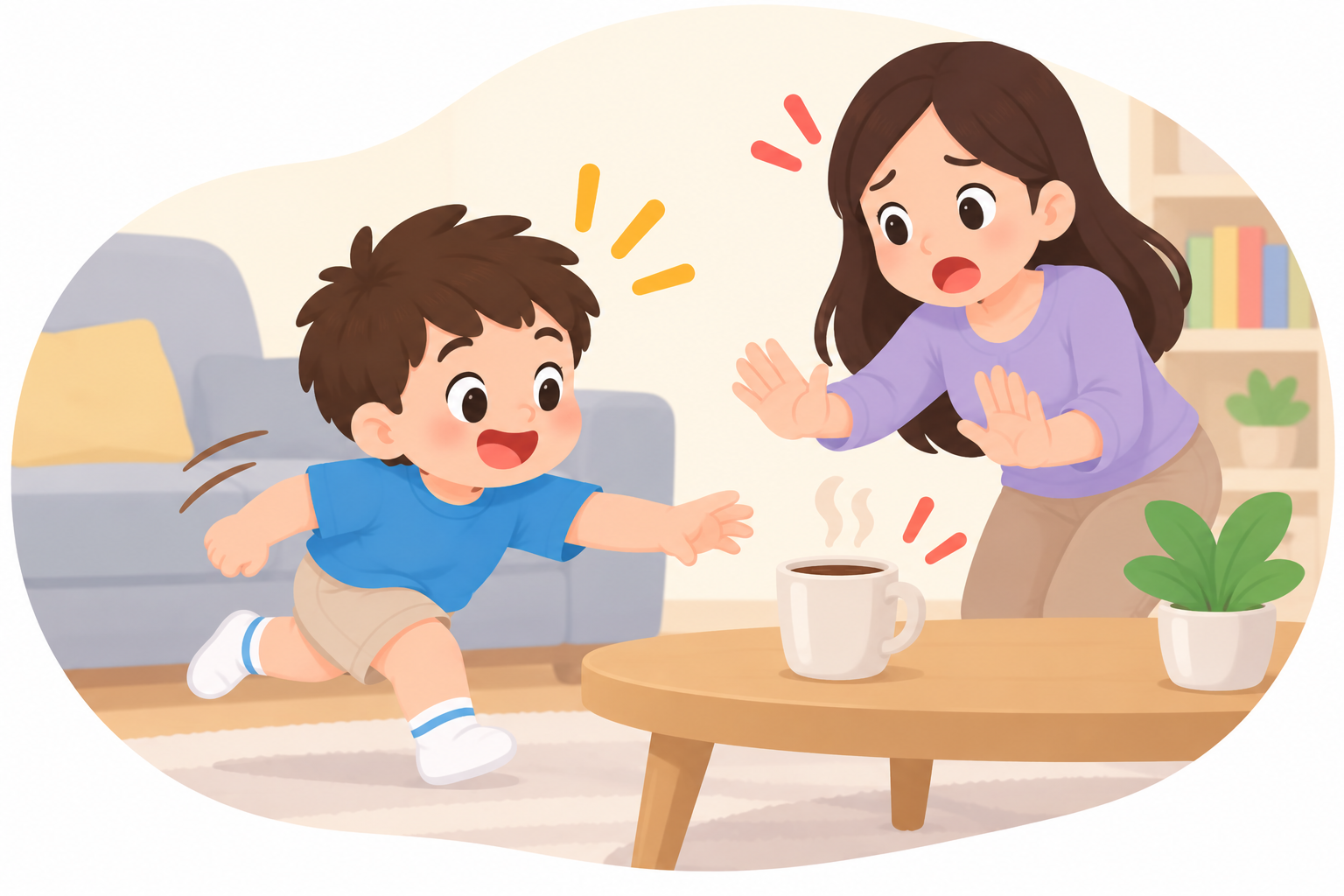
Your child may do something exciting or interesting without thinking about what could happen afterwards.
For example, they might:
- Climb somewhere unsafe
- Run away during an outing
- Take something without asking
- Break a rule because they want to do something immediately
- Choose an action without considering how it may affect someone else
Children are still developing the ability to think about what might happen next, so they may need adults to help them practise this skill.
What Can Parents Do?
1. Give Simple and Clear Instructions
✿ Keep instructions short and specific.
✿ Instead of:
“Don’t be so careless and remember to behave properly.”
✿ Try:
“Let’s put the toy down first, then we can continue.”
✿ Simple instructions can make it easier for your child to understand what they need to do.
2. Practise Waiting Through Everyday Activities
✿ Use everyday situations to practise waiting.
✿ For example:
1. Take turns during games
2. Wait together before crossing the road
3. Take turns choosing a story
4. Wait for food to be served
5. Practise waiting before opening a gift
✿ Praise your child when they successfully wait.
“You waited for your turn. Well done!”
3. Teach “Stop, Think, Then Act”
✿ Help your child develop a simple routine:
STOP → THINK → ACT
✿ For example:
1. Stop: “What are you about to do?”
2. Think: “What might happen?”
3. Act: “What is the safe choice?”
✿ Practise this when your child is calm so they can gradually use the strategy during everyday situations.
4. Give Warnings Before Transitions
✿ If your child finds it difficult to stop an activity, give them some preparation.
✿ For example:
“Five more minutes, then we are going home.”
✿ Then:
“Two more minutes, then it is time to pack up.”
✿ This can help your child prepare for the change instead of stopping suddenly.
5. Use Games to Practise Self-Control
✿ Games can make practising impulse control more enjoyable.
✿ Try:
1. Simon Says – practise listening and stopping
2. Red Light, Green Light – practise stopping and starting
3. Musical Statues – practise controlling movement
4. Board games – practise waiting and taking turns
5. I Spy – practise listening and waiting before answering
✿ During these activities, praise your child’s effort to stop, wait, listen, and take turns.
6. Praise the Behaviour You Want to See
✿ Notice when your child successfully controls an impulse.
✿ For example:
“You wanted the toy, but you waited until it was your turn.”
or
“You stopped when I asked you to. That’s good self-control.”
✿ Specific praise helps children understand what behaviour they did well.
When Should Parents Seek Professional Advice?
❀ Consider seeking professional advice if your child’s impulsive behaviours are frequent, difficult to manage, or affecting their learning, relationships, safety, or everyday activities.
❀ You can discuss your concerns with a Clinical Psychologist, who can help understand your child’s behaviour and determine whether further assessment may be appropriate.
❀ An assessment may consider your child’s behaviour across different settings and situations, rather than looking at one behaviour in isolation.
❀ It is also important to remember that impulsive behaviour alone does not mean a child has ADHD or another developmental condition.
❀ Professionals consider the child’s overall development, behaviour, and functioning before determining what support may be appropriate.
Key Takeaway
❀ Children are still developing the ability to pause, think, and control their actions, so occasional impulsive behaviour is a normal part of growing up.
❀ However, frequent difficulty with waiting, interrupting, stopping activities, managing reactions, or thinking about consequences may indicate that a child needs additional support with self-control and impulse control.
❀ Parents can help by providing clear instructions, practising waiting and turn-taking, preparing children for transitions, and praising positive self-control.
❀ If impulsive behaviours persist or affect your child’s learning, relationships, safety, or daily activities, parents can consider seeking an assessment from a Clinical Psychologist to better understand their child’s behaviour, emotional regulation, and support needs.
❀ The goal is not to expect children to control every impulse perfectly, but to help them gradually develop the skills to pause, think, and make appropriate choices.
🌟 Stay Connected with Us! We love sharing tips, insights, and inspiring stories about children’s growth and mental wellbeing.
💙 Follow us on Instagram and Facebook for more updates and parenting advice.
Join our community and let’s grow together. One positive step at a time!

References
American Academy of Pediatrics. (n.d.). Understanding ADHD: Information for parents.
https://www.healthychildren.org/English/health-issues/conditions/adhd/Pages/default.aspx
Centers for Disease Control and Prevention. (n.d.). ADHD in children and teens.
https://www.cdc.gov/adhd/about/index.html
Centers for Disease Control and Prevention. (2026). Symptoms of ADHD.
Working Hours
Tuesday to Saturday – 8.30am to 6pm
Monday & Sunday – Closed
Please also subscribe us at
Contact Us
Discover Our Team!
📞+60102502833
firststepdevelopmentcentre@gmail.com
B1-7, Plaza Damas 3, Jalan Sri Hartamas 1, 50480 Kuala Lumpur.
Copyright 2025. Firststep Child Development Sdn Bhd. All rights reserved.