



When Should a Child See an Occupational Therapist? 10 Common Warning Signs
As parents, it’s natural to wonder whether your child is simply developing at their own pace or if they may need a little extra support.
The truth is, every child develops at their own pace. Some children simply need more time to master certain skills, while others may benefit from extra support to help them thrive.
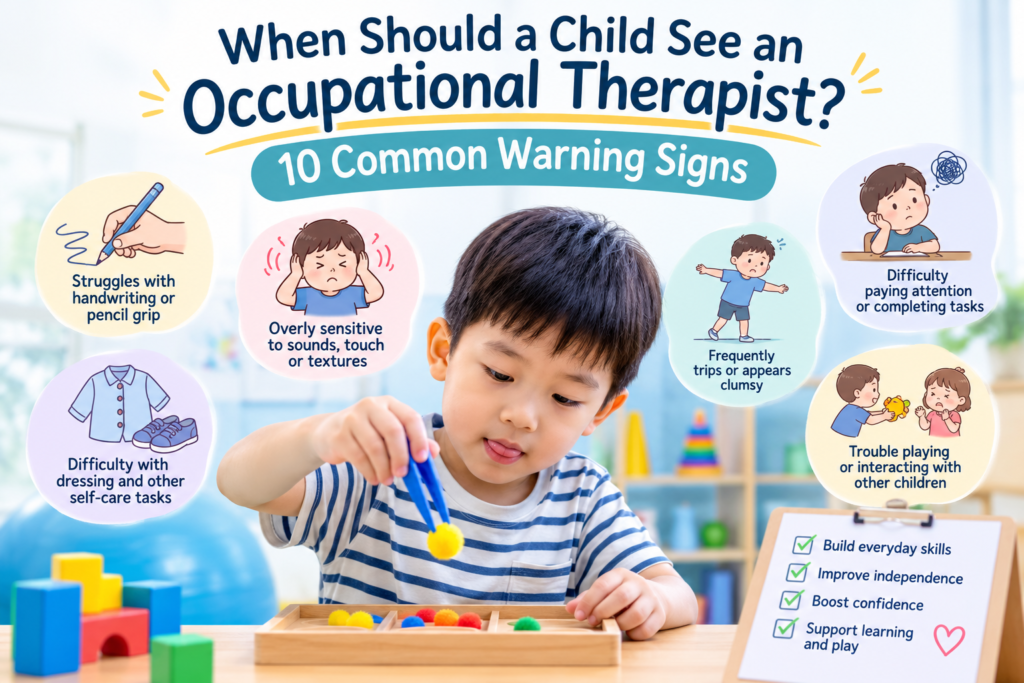
Occupational Therapy isn’t just for children with a diagnosis.
It helps children develop the skills they need to participate confidently in everyday activities such as from getting dressed and holding a pencil to paying attention in class and playing with friends.
Recognising the early signs can make a significant difference.
The earlier a child receives support, the easier it can be to build the skills they need for success at home, at school, and in everyday life.
Rather than focusing only on the task a child struggles with, Occupational Therapists look at the underlying skills that may be affecting their ability to complete everyday activities.
Understanding the early signs can help parents respond with clarity, support, and the right intervention at the right time.
What Does an Occupational Therapist Do?
Pediatric Occupational Therapists help children develop the skills needed to participate confidently in everyday activities.
These include:
✿ Fine motor skills (holding a pencil, cutting with scissors)
✿ Gross motor coordination
✿ Handwriting
✿ Sensory processing
✿ Self-care skills (dressing, feeding, toileting)
✿ Attention and concentration
✿ Emotional regulation
✿ Play and social participation
✿ School readiness
Sessions are engaging, play-based, and designed to build confidence while helping children achieve meaningful goals.
Understanding 10 Common Warning Signs Your Child May Benefit from Occupational Therapy
1. Difficulty Holding a Pencil or Using Scissors
These may be signs that your child is experiencing delays in fine motor development, hand strength, or hand-eye coordination.
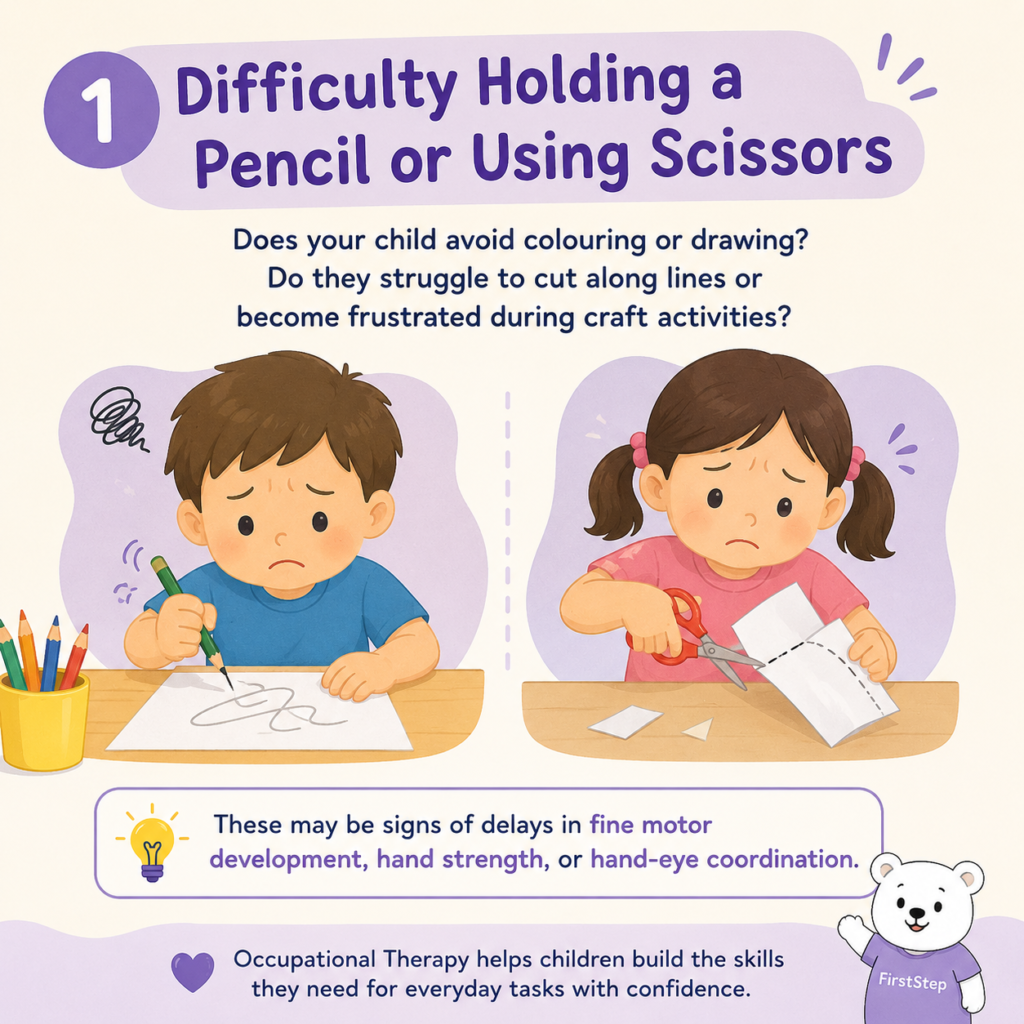
You may notice that your child:
- Uses an awkward pencil grip
- Presses too hard or too softly when writing
- Tires quickly during colouring
- Avoids fine motor activities altogether
Occupational Therapy helps children strengthen the muscles and coordination needed for everyday classroom tasks.
2. Handwriting Is Difficult to Read
Messy handwriting is common when children first learn to write. However, if handwriting remains significantly difficult compared to peers, there may be underlying challenges.
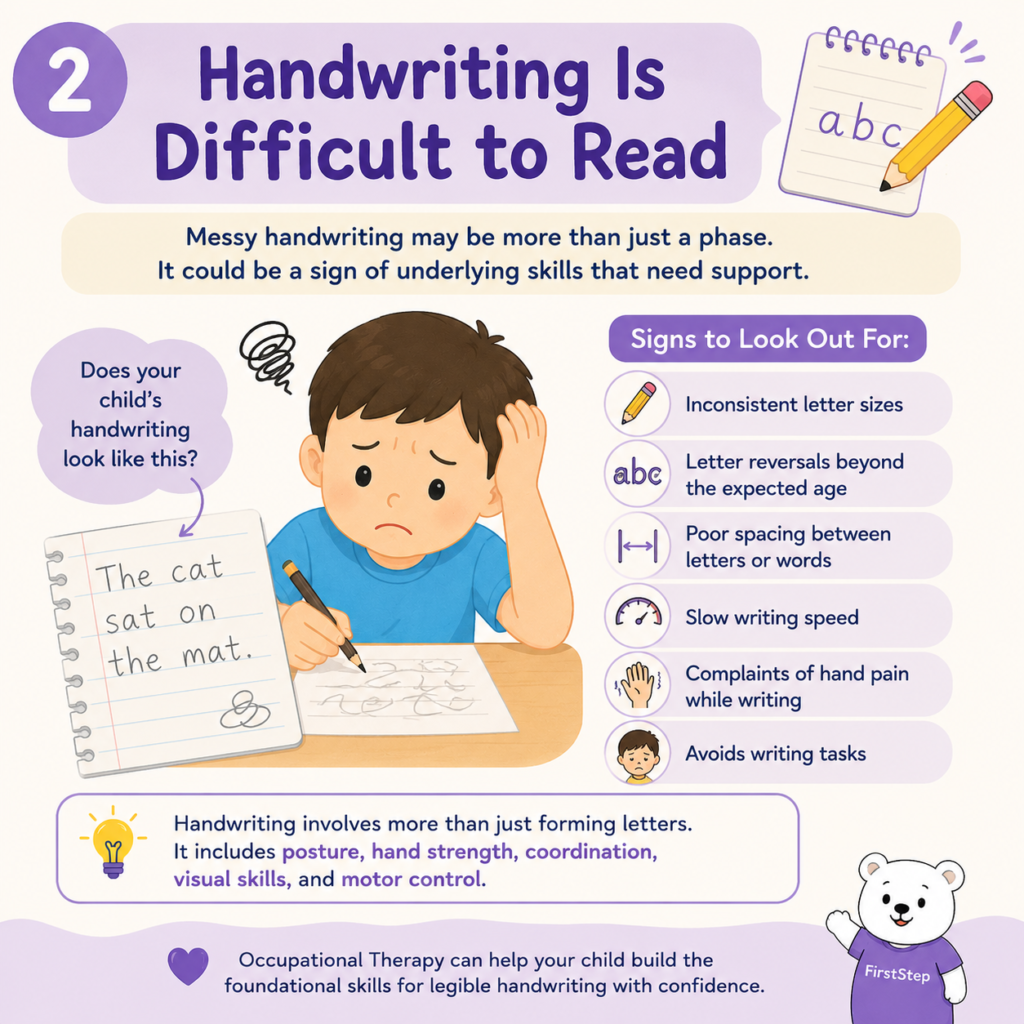
Signs include:
- Inconsistent letter sizes
- Poor spacing between words
- Slow writing speed
- Letter reversals beyond the expected age
- Complaints of hand pain while writing
Improving handwriting isn’t just about practising letters and it also involves developing posture, core strength, hand control, and visual-motor integration.
3. Your Child Frequently Trips or Appears Clumsy
Some children naturally enjoy running and climbing.
However, if your child frequently bumps into objects, falls often, or struggles with playground activities, it may indicate difficulties with coordination or balance.
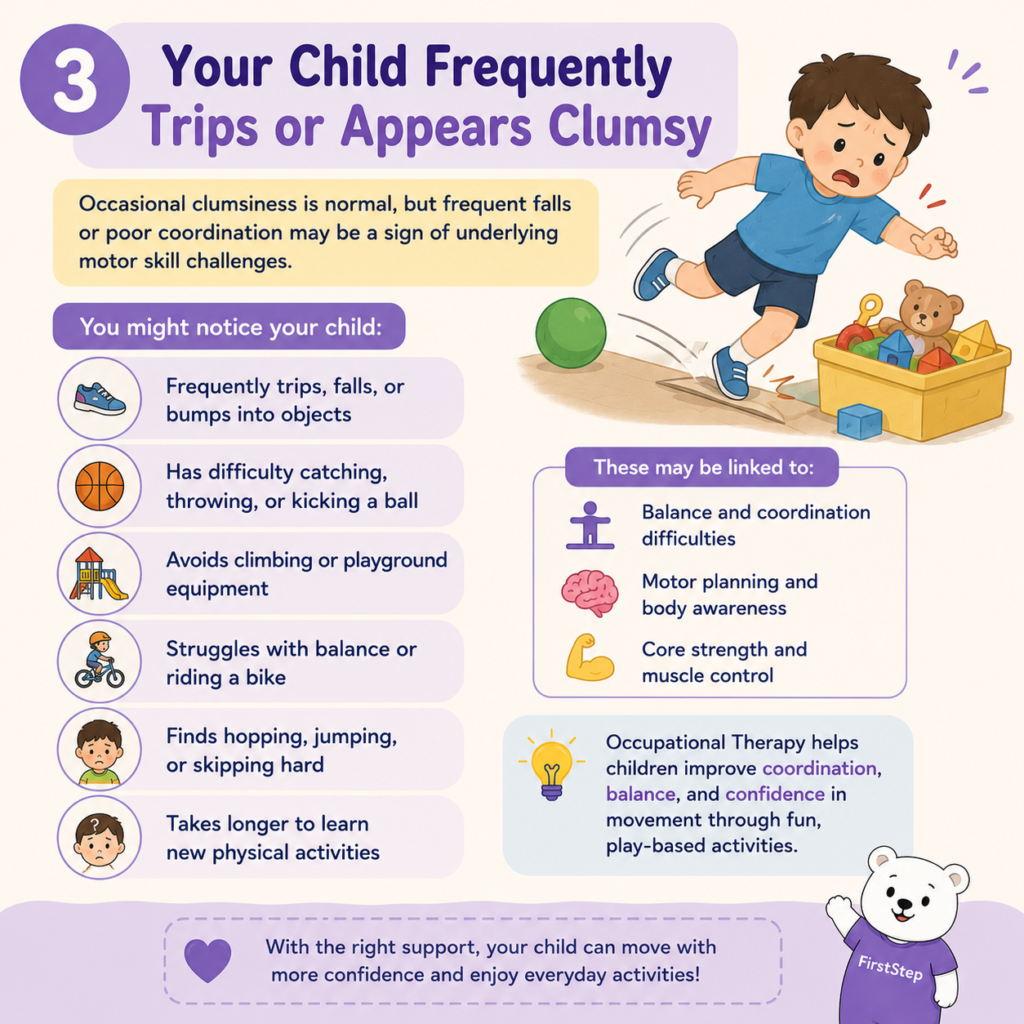
You might notice your child:
- Has trouble catching or throwing a ball
- Avoids climbing equipment
- Finds hopping or skipping difficult
- Appears less coordinated than children of the same age
Occupational Therapy can help improve balance, coordination, motor planning, and body awareness.
4. Everyday Self-Care Tasks Are a Challenge
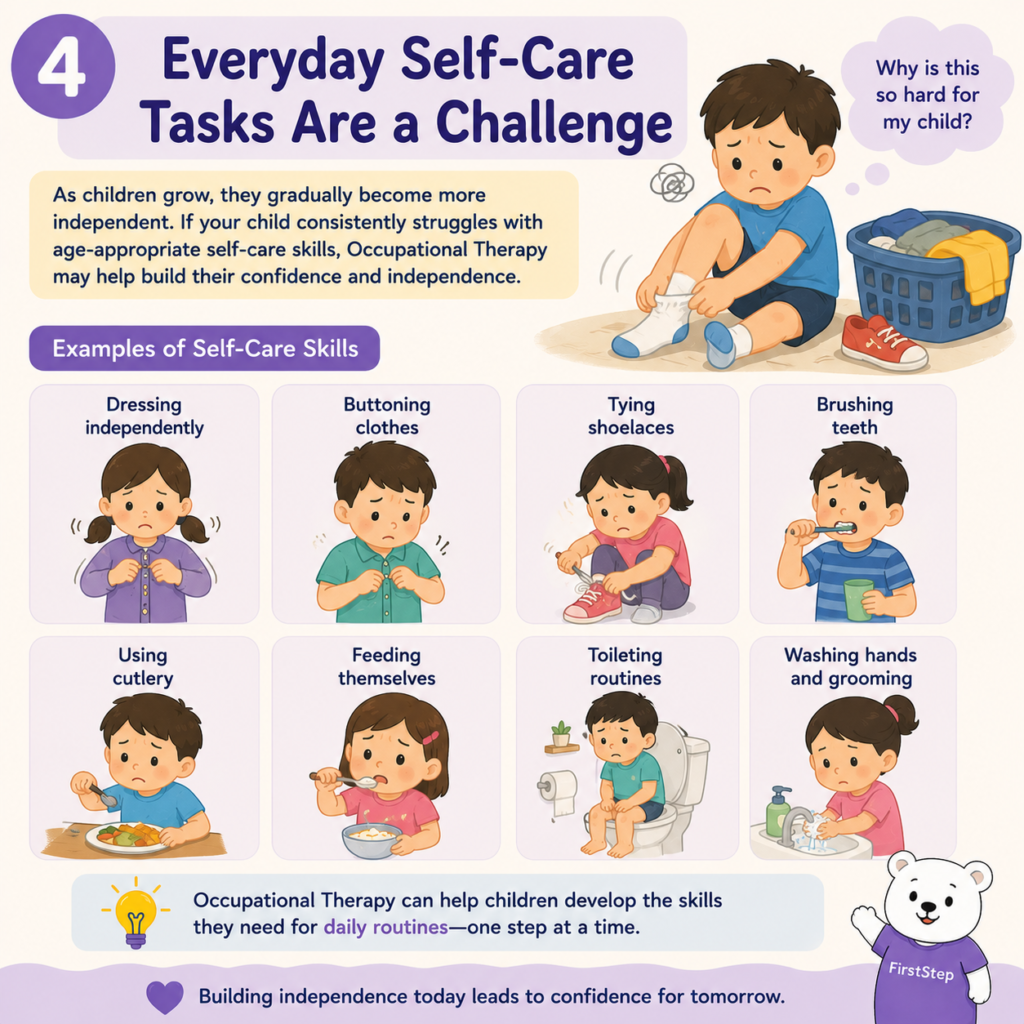
As children grow, they gradually become more independent with daily routines.
If your child continues to struggle with age-appropriate self-care skills, Occupational Therapy may help.
Examples include:
- Dressing independently
- Buttoning clothes
- Tying shoelaces
- Brushing teeth
- Using cutlery
- Feeding themselves
- Toileting routines
Building independence in these skills also improves confidence and self-esteem.
5. Your Child Is Overly Sensitive to Sounds, Textures, or Touch
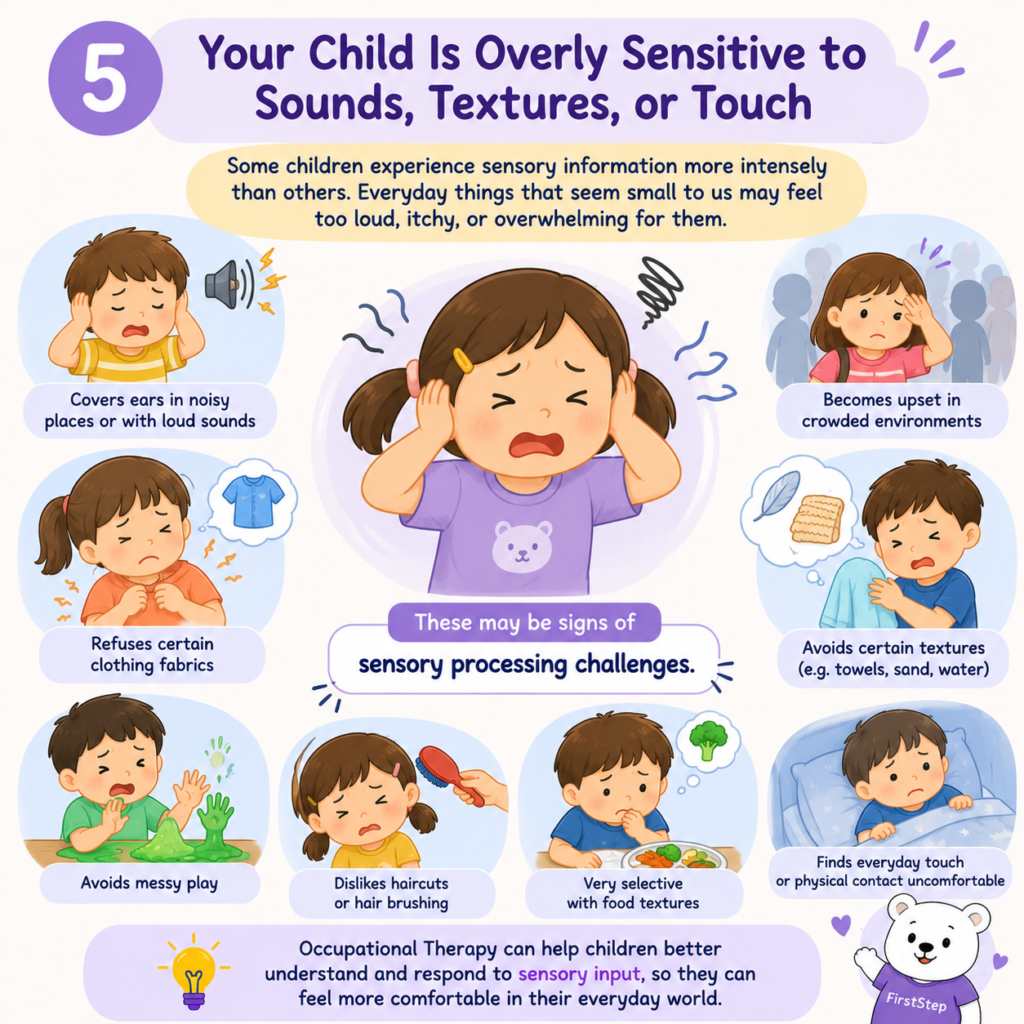
Some children experience sensory information differently.
They may become overwhelmed by everyday experiences that don’t bother other children.
Examples include:
- Covering their ears in noisy places
- Refusing certain clothing fabrics
- Disliking haircuts or nail trimming
- Avoiding messy play
- Becoming upset in crowded environments
- Being extremely selective with food textures
Occupational Therapists can assess sensory processing patterns and help children respond more comfortably to sensory experiences.
6. They Constantly Need to Move
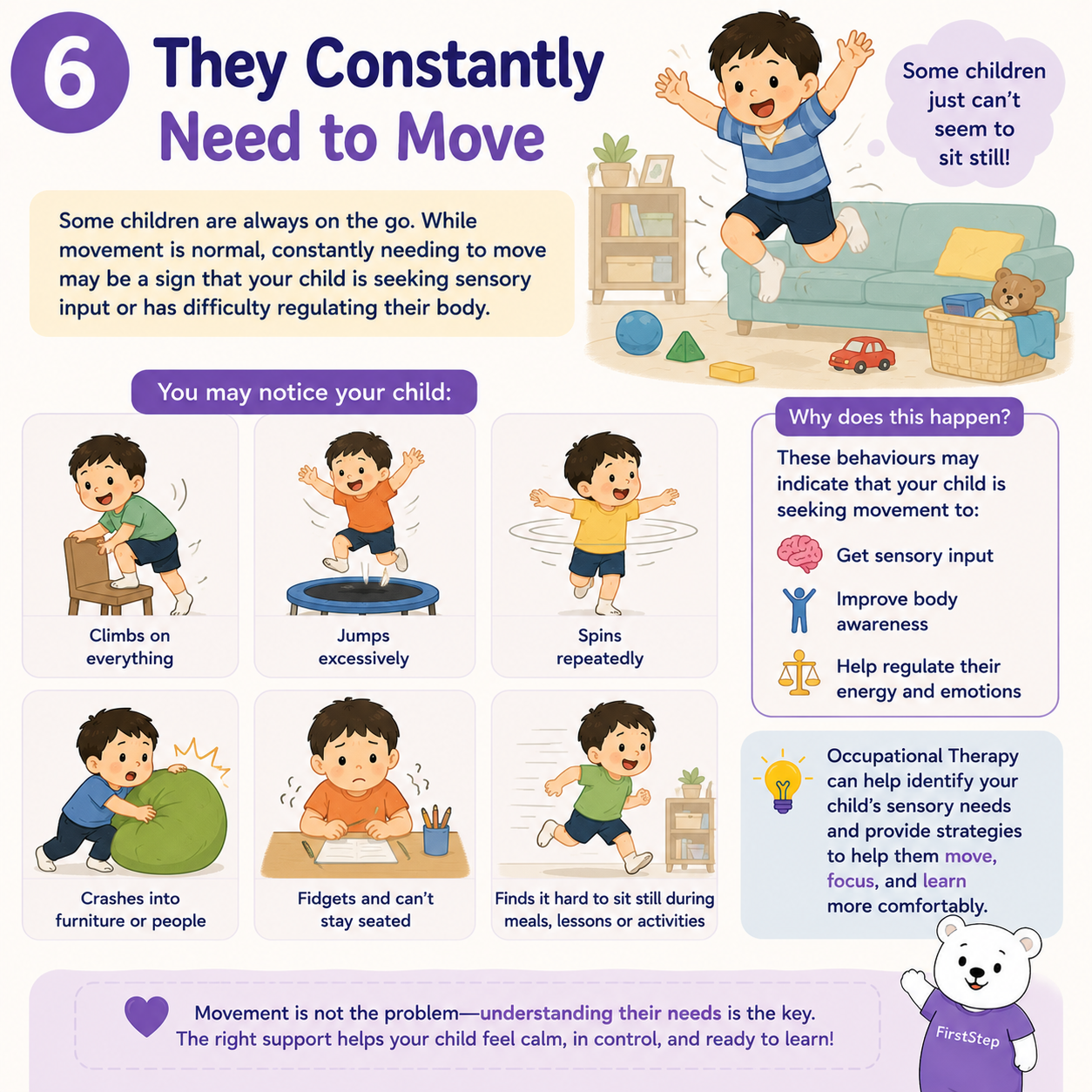
Some children seem unable to sit still not simply because they’re energetic, but because they are constantly seeking movement.
You may notice your child:
- Climbs everything
- Jumps excessively
- Spins repeatedly
- Crashes into furniture
- Fidgets constantly
- Finds it difficult to stay seated during meals or lessons
An Occupational Therapist can identify sensory needs and provide strategies to help children regulate their bodies more effectively.
7. Difficulty Paying Attention or Following Instructions
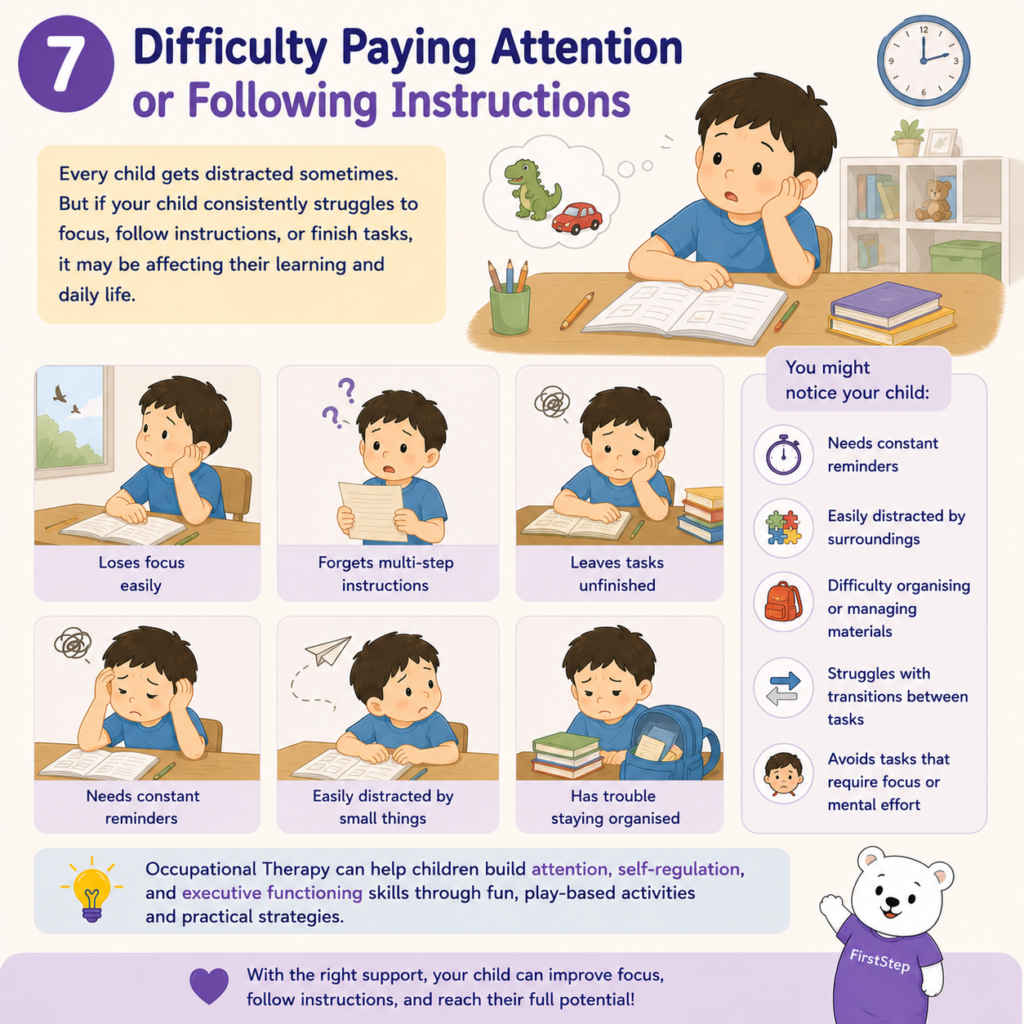
Children naturally become distracted sometimes.
However, if your child consistently struggles to focus or complete simple tasks, it may begin affecting their learning.
You may notice they:
- Lose focus quickly
- Forget multi-step instructions
- Leave tasks unfinished
- Become easily distracted
- Need constant reminders
Occupational Therapy supports attention, executive functioning, and self-regulation through engaging, play-based activities.
8. Your Child Avoids Playing with Other Children
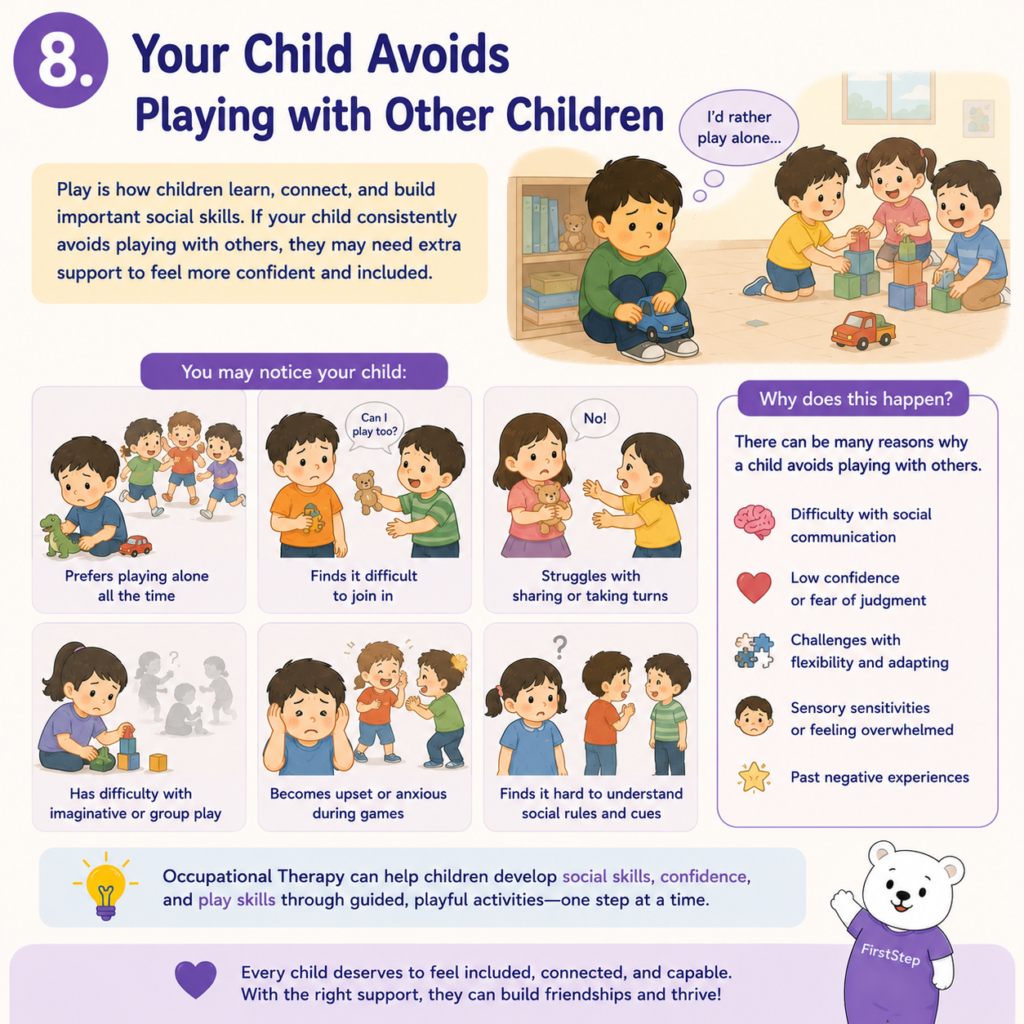
Play is how children learn.
If your child finds it difficult to join group play, take turns, or interact with peers, they may benefit from additional support.
Signs include:
- Prefers playing alone all the time
- Finds sharing difficult
- Struggles with imaginative play
- Becomes upset during group games
- Has difficulty understanding social rules
Occupational Therapy can help children develop the social, communication, and problem-solving skills needed for successful interactions.
9. Frequent Emotional Outbursts or Difficulty Managing Feelings
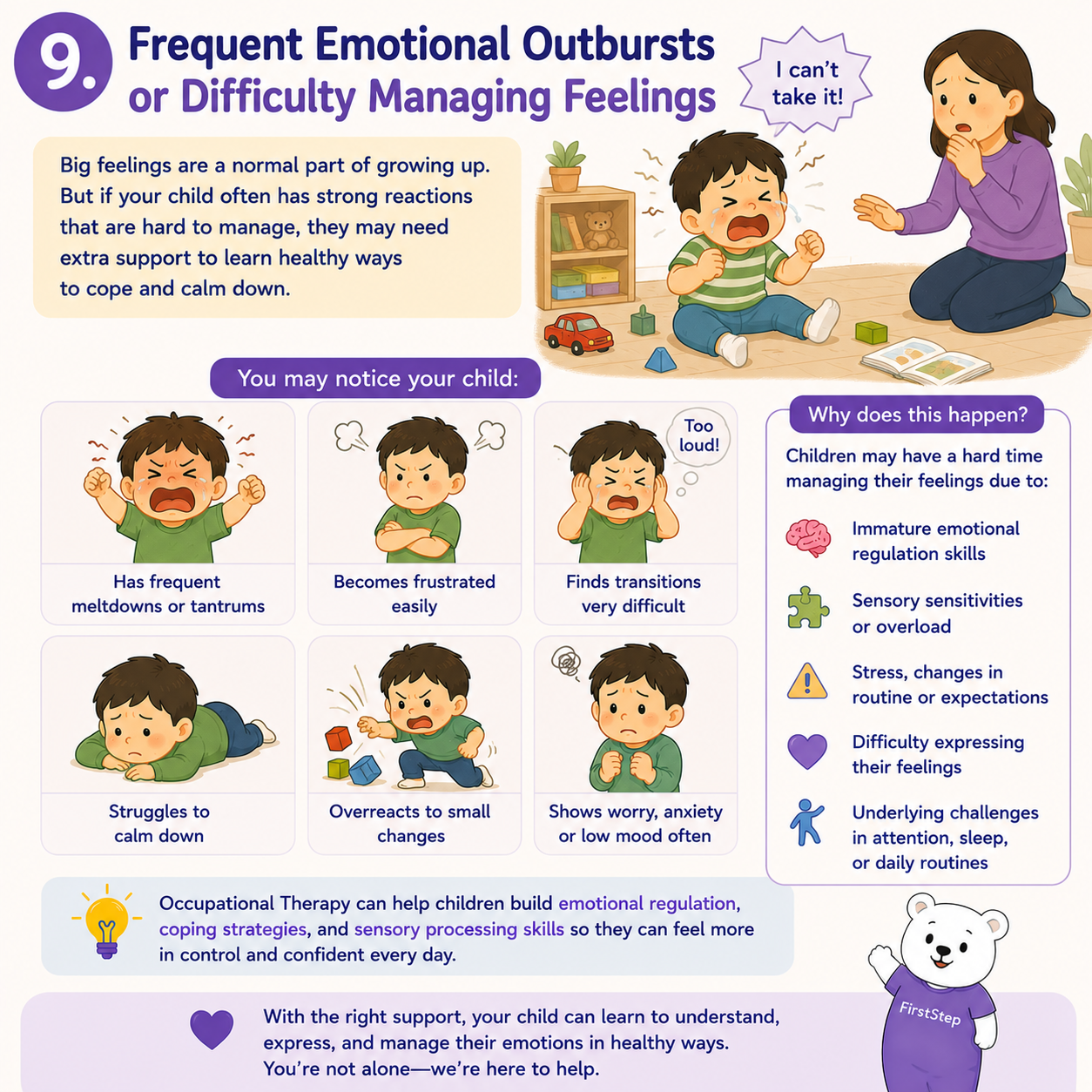
Children experience big emotions, but some find it especially difficult to regulate them.
You might notice your child:
- Has frequent meltdowns
- Becomes frustrated easily
- Finds transitions difficult
- Struggles to calm down
- Reacts strongly to small changes
Occupational Therapists work with children to develop emotional regulation strategies and coping skills that support everyday functioning.
10. Teachers Have Raised Concerns
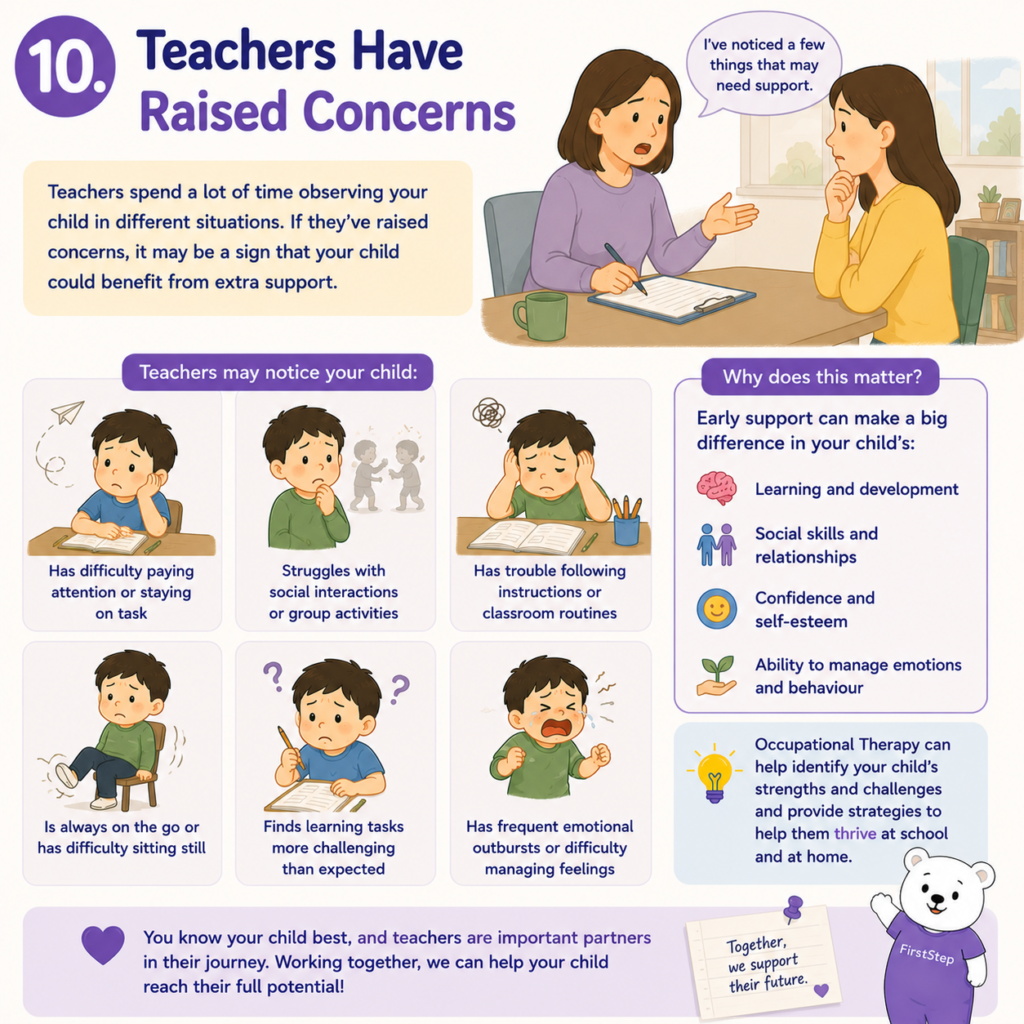
Sometimes the first signs become noticeable in school.
A teacher may mention that your child:
- Has difficulty sitting during lessons
- Avoids handwriting tasks
- Struggles with classroom routines
- Has poor organisation
- Finds group activities challenging
- Appears easily overwhelmed
When concerns are observed both at home and at school, it’s worth speaking to an Occupational Therapist for further guidance.
Does My Child Need a Diagnosis Before Seeing an Occupational Therapist?
No, because many children attend Occupational Therapy without having a formal diagnosis.
Parents often seek support because they’ve noticed difficulties with everyday activities or because teachers have raised concerns.
An Occupational Therapist will assess your child’s strengths, challenges, and functional skills before recommending whether therapy is appropriate.
Does My Child Need a Diagnosis Before Seeing an Occupational Therapist?
During your child’s first appointment, the Occupational Therapist will:
✿ Discuss your concerns and goals
✿ Review your child’s developmental history
✿ Observe your child’s play and movement
✿ Assess fine motor, sensory, and daily living skills
✿ Identify strengths and areas of difficulty
✿ Recommend appropriate therapy goals
✿ Answer any questions you may have
Following the consultation, you’ll receive recommendations on the next steps based on your child’s individual needs.
🌟 Stay Connected with Us! We love sharing tips, insights, and inspiring stories about children’s growth and mental wellbeing.
💙 Follow us on Instagram and Facebook for more updates and parenting advice.
Join our community and let’s grow together. One positive step at a time!

References
American Psychiatric Association. (2022). Diagnostic and statistical manual of mental disorders (DSM-5-TR).
Psychiatry.org; American Psychiatric Association. https://www.psychiatry.org/psychiatrists/practice/dsm
Working Hours
Tuesday to Saturday – 8.30am to 6pm
Monday & Sunday – Closed
Please also subscribe us at
Contact Us
Discover Our Team!
📞+60102502833
firststepdevelopmentcentre@gmail.com
B1-7, Plaza Damas 3, Jalan Sri Hartamas 1, 50480 Kuala Lumpur.
Copyright 2025. Firststep Child Development Sdn Bhd. All rights reserved.