



What Your Child’s Play May Be Telling You: Understanding Children Through Play
Have you ever watched your child play and wondered what is going on in their little world?
Maybe your child always chooses the same toy, repeats the same game, creates elaborate pretend stories, or spends hours arranging their cars in a particular order.
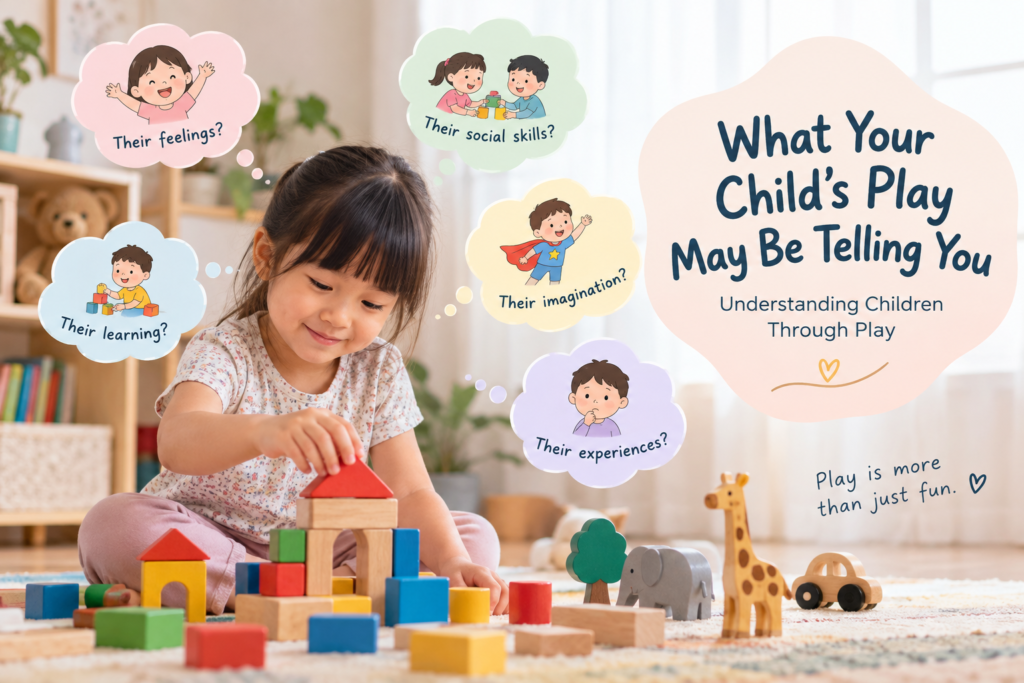
To us, it may look like “just playing.”
But for children, play is one of the most natural ways they learn, communicate, and make sense of the world around them.
Children may not always have the words to tell us that they are worried, frustrated, excited, or confused. Sometimes, these feelings can appear through the way they play.
This doesn’t mean that every toy choice or game has a hidden psychological meaning. Children play differently depending on their age, personality, interests, and experiences.
However, paying attention to patterns in your child's play can give parents useful clues about their development, emotions, and social skills.
Why Is Play So Important for Children?
Play is much more than entertainment.
When children play, they are constantly practising skills that help them navigate everyday life. Building with blocks, pretending to run a restaurant, playing with dolls, or kicking a ball can all involve different developmental skills.
Through play, children can practise:
❃ Communication and language
❃ Problem-solving
❃ Imagination and creativity
❃ Social interaction
❃ Emotional expression
❃ Taking turns and sharing
❃ Fine and gross motor skills
❃ Flexibility and self-regulation
For young children especially, play can provide a safe space to explore experiences and express things they may not yet know how to explain with words.
Understanding 7 Ways Your Child May Communicate Through Play
1. Your Child May Be Exploring Their Feelings
Children are still learning what emotions are and how to manage them.

Sometimes, they use pretend play to explore feelings such as anger, fear, sadness, excitement, or frustration.
For example, your child may create a story where a toy gets upset, someone gets hurt, or a character needs to be comforted.
This doesn’t necessarily mean your child is experiencing the exact same situation.
Instead, pretend play can give children a safe opportunity to experiment with different emotions and situations.
Try observing before jumping in with questions.
You might say:
“I wonder how Teddy is feeling.”
This gives your child the opportunity to tell you what is happening in their own way.
2. Your Child May Be Replaying Something They Experienced
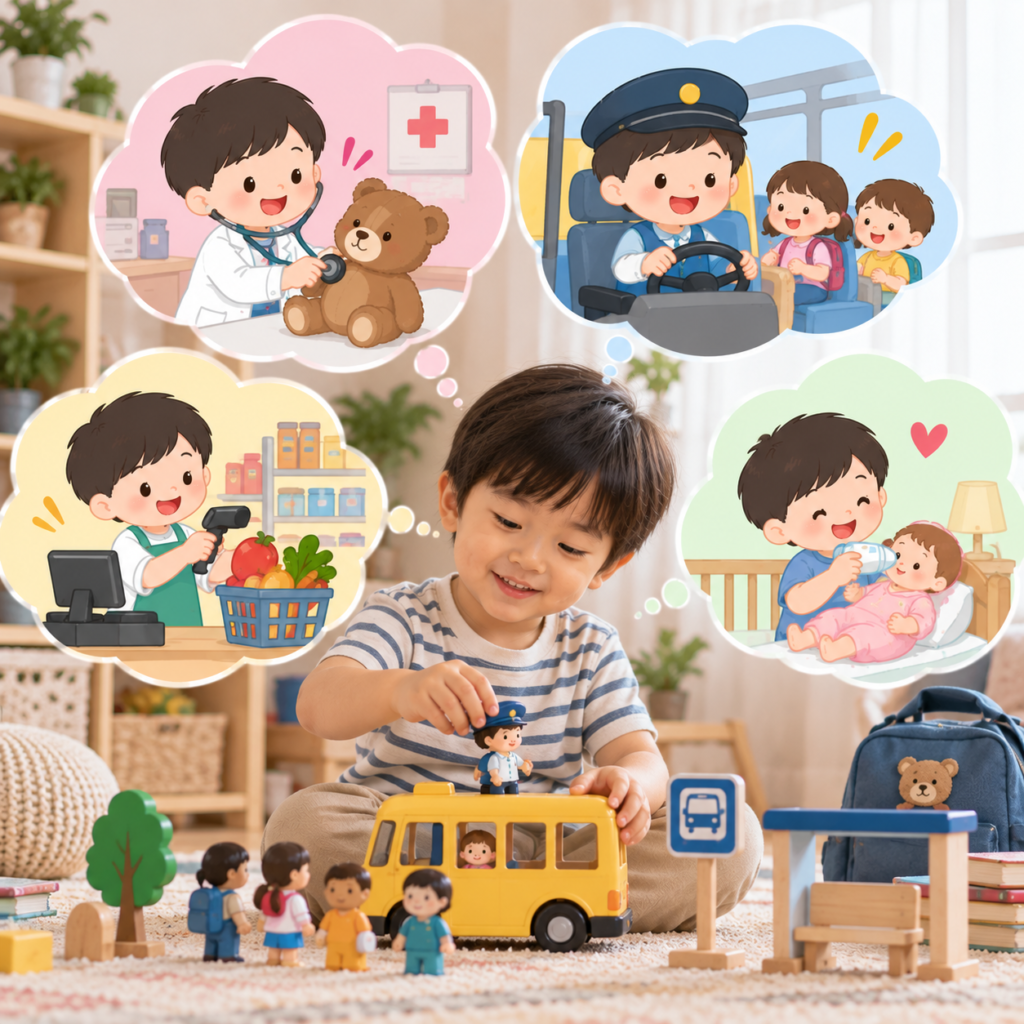
Have you ever noticed your child suddenly pretending to be a doctor after visiting a clinic?
Or playing “school” repeatedly after starting kindergarten?
Children sometimes recreate real-life experiences through play.
They may pretend to be the doctor, teacher, parent, cashier, or even the child in the situation.
Replaying an experience can help children understand something new, unfamiliar, or memorable.
It can also give them a sense of control over an experience that may have felt unfamiliar in real life.
3. Repetition May Help Your Child Feel More Comfortable
Does your child like playing the same game again and again?
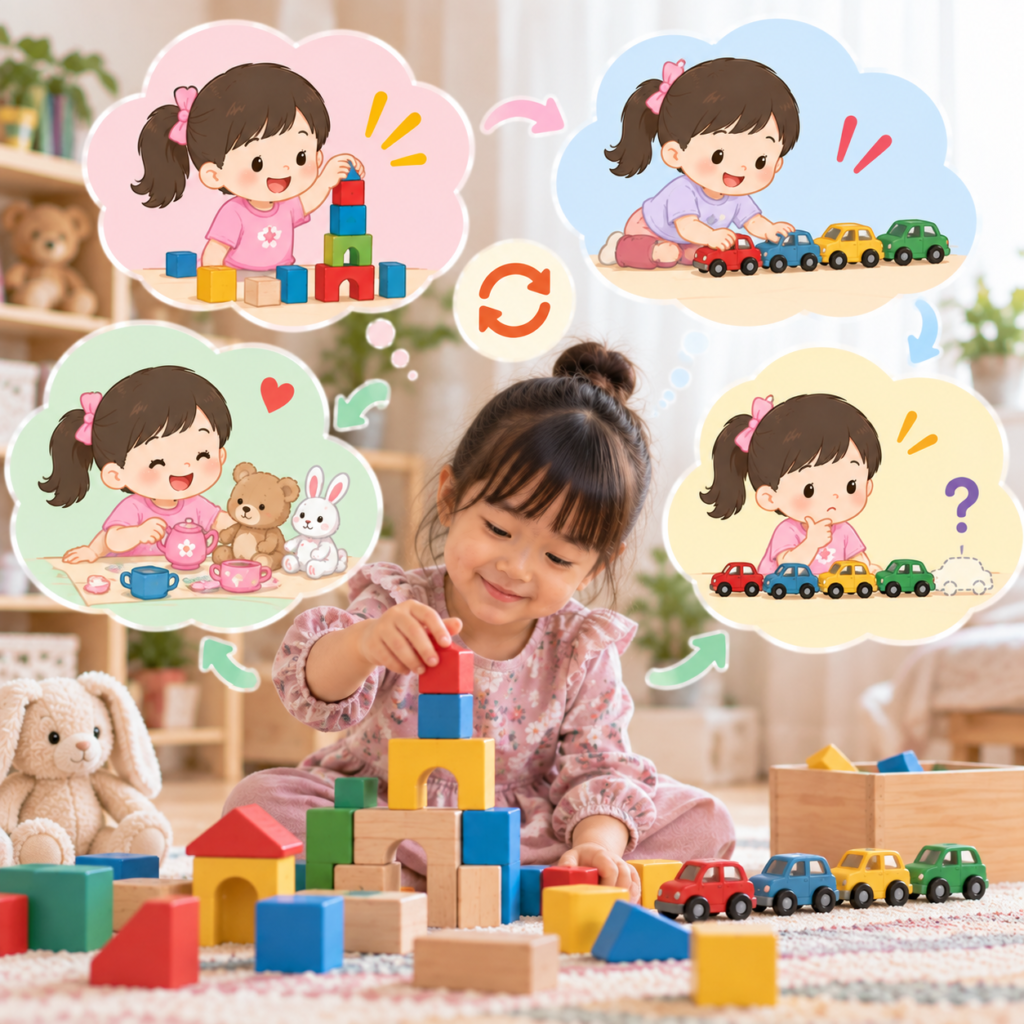
Perhaps they build the same tower every day, line up their cars in a particular order, or insist that everyone follows the same rules.
Repetition is often a normal part of childhood play.
Children repeat activities because it allows them to practise skills, predict what will happen next, and become more confident with something they are learning.
However, it can be useful to observe how your child responds when something changes.
Can they adapt when you move a toy?
Can they try a different way of playing?
Do small changes cause significant distress?
The answers can tell you more than the repetition itself.
4. Play Can Show How Your Child Solves Problems
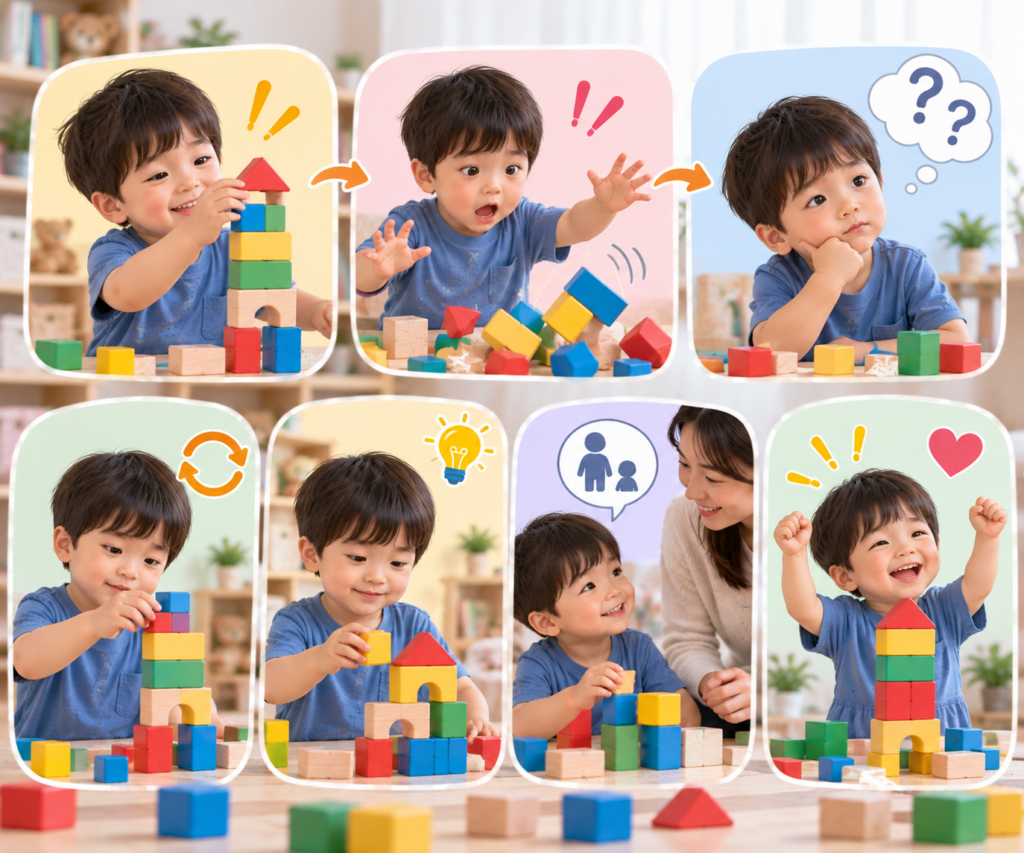
Play can be a mini problem-solving laboratory for children.
Imagine your child is building a tower and it suddenly falls down.
What do they do next?
Do they try again?
Do they change their approach?
Do they ask for help?
Or do they immediately become frustrated and give up?
These simple moments involve important skills such as:
❃ Planning
❃ Problem-solving
❃ Persistence
❃ Frustration tolerance
❃ Flexible thinking
❃ Decision-making
Instead of immediately fixing the problem for your child, try giving them some space to work it out.
You could ask:
“What could we try this time?”
This encourages your child to think about possible solutions rather than simply waiting for an adult to solve the problem.
5. Your Child's Play Can Show Their Social Skills
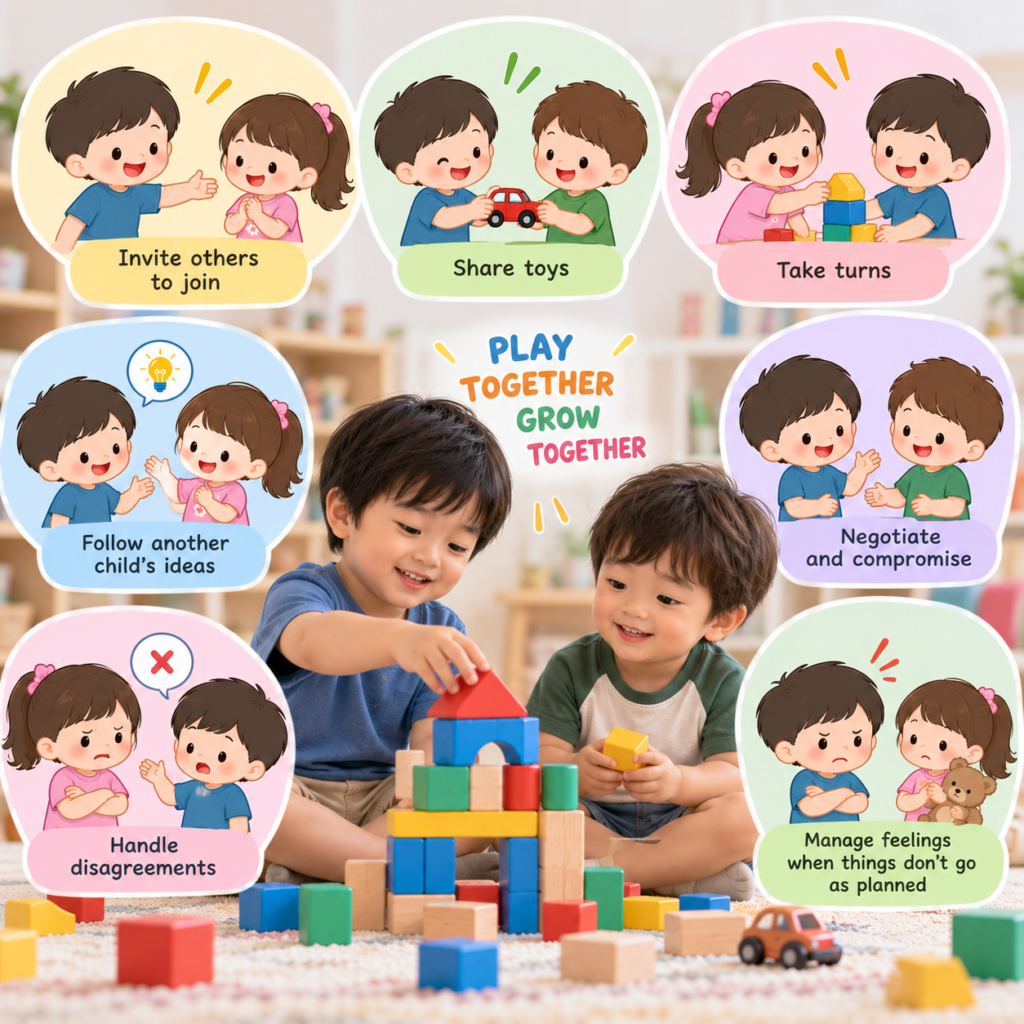
Play is also a way for children to practise interacting with other people.
When children play together, they learn how to share ideas, negotiate, take turns, follow rules, and handle disagreements.
Watch what happens when your child plays with another child.
Do they:
❃ Invite others to join?
❃ Take turns?
❃ Share toys?
❃ Follow another child’s ideas?
❃ Try to control the entire game?
❃ Become upset when someone changes the rules?
❃ Know how to respond when another child says “no”?
These everyday moments can provide useful information about your child’s developing social and communication skills.
6. Sometimes Your Child Just Wants to Connect With You
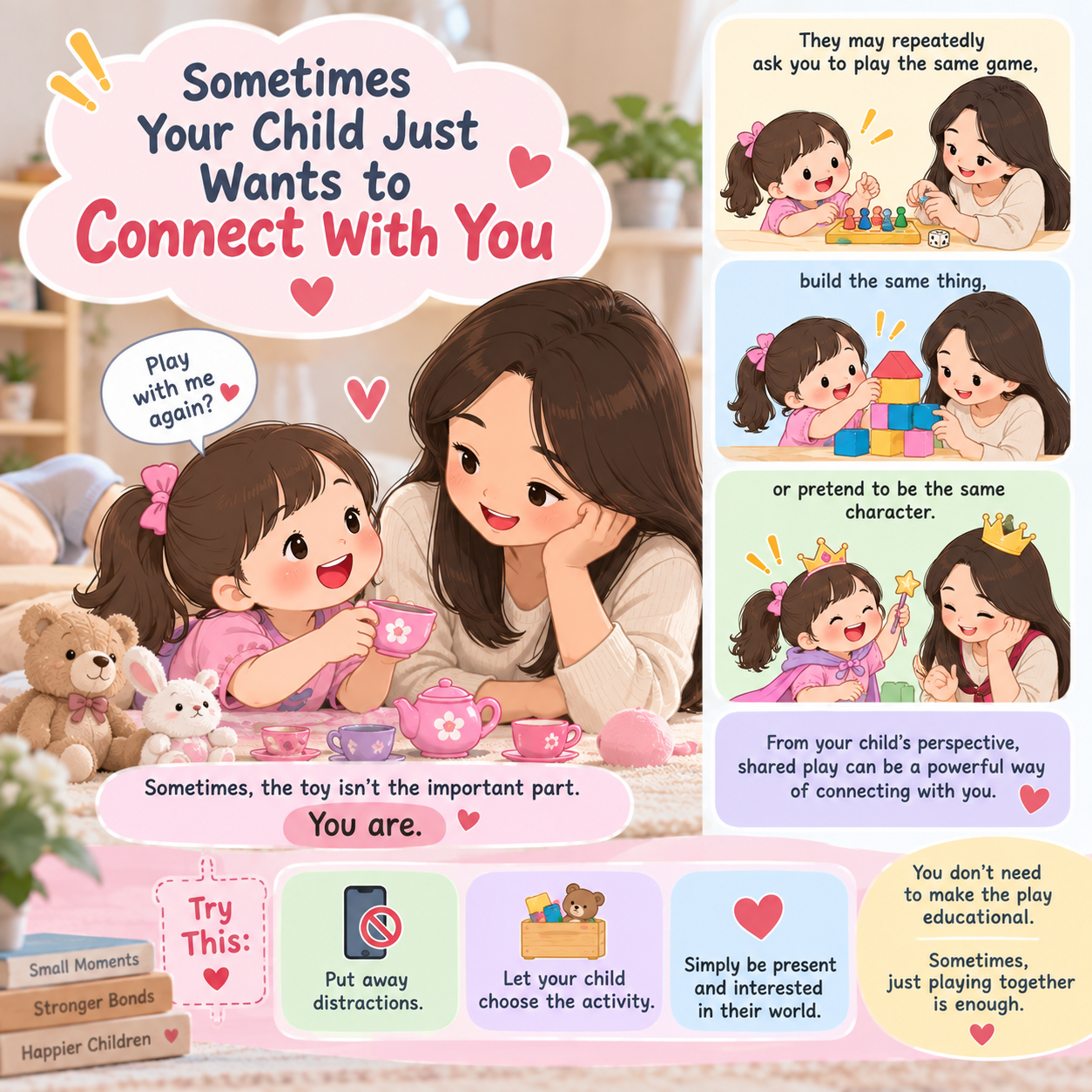
Try setting aside a little time for child-led play.
Put away distractions and allow your child to choose the activity.
You don’t need to make the play educational.
Sometimes, simply being present and interested in their world is enough.
Your child may repeatedly ask you to play the same game, build the same thing, or pretend to be the same character.
It can feel repetitive, especially when you’ve already played the game ten times.
But from your child’s perspective, shared play can be a powerful way of connecting with you.
Sometimes, the toy isn’t the important part.
You are.
7. Changes in Play May Be Worth Noticing
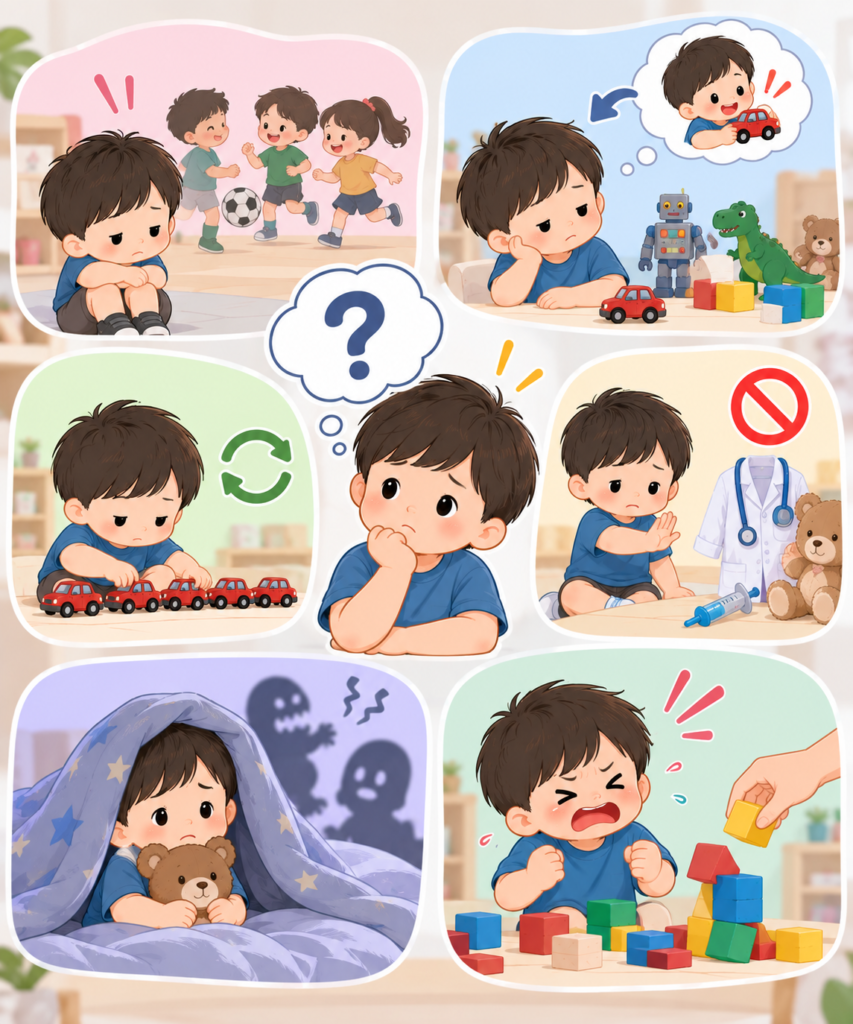
One of the most useful things parents can observe is change.
For example, your child may suddenly:
❃ Stop playing with other children
❃ Lose interest in activities they previously enjoyed
❃ Become much more repetitive in their play
❃ Avoid certain pretend games
❃ Become unusually fearful during play
❃ Become extremely upset when play doesn’t go according to plan
A change in play does not automatically mean that something is wrong.
Children naturally develop new interests and go through different phases.
However, if a significant change continues or appears together with other concerns about communication, behaviour, emotions, social interaction, or development, it may be worth discussing with a professional.
How Can Parents Learn From Their Child's Play?
You don’t need to become an expert in child psychology.
Start by becoming a curious observer.
Ask yourself:
❃ What does my child enjoy?
❃ How do they respond when something goes wrong?
❃ Do they invite others to play?
❃ Can they take turns?
❃ How do they communicate during play?
❃ Can they change the rules or try something new?
❃ Are there themes that appear repeatedly?
❃ Has their usual way of playing changed?
You can also join your child’s play without taking over.
Try asking open-ended questions such as:
❃ “Tell me about what you’re making.”
❃ “What happens next?”
❃ “Who is this character?”
These questions allow your child to lead the conversation and show you what is important to them.
Does Every Type of Play Have a Hidden Meaning?
No.
This is important.
A child who plays with superhero toys is not necessarily aggressive.
A child who plays “doctor” is not necessarily worried about being sick.
A child who prefers to play alone does not automatically have a developmental difficulty.
Children play for many different reasons.
❃ They play because it is fun.
❃ They play because they are curious.
❃ They play because they are practising.
❃ They play because they enjoy repetition.
❃ They play because they want to connect.
Rather than trying to interpret one particular toy or behaviour, look at the overall pattern of your child’s play and development.
When Should Parents Seek Professional Support?
Play alone cannot diagnose a developmental, emotional, or psychological condition.
However, it may be helpful to seek professional advice if you notice persistent concerns alongside your child’s play, such as:
❃ Difficulty communicating with others
❃ Significant difficulty interacting socially
❃ Frequent emotional or behavioural difficulties
❃ Extreme distress when routines or activities change
❃ Difficulty participating in age-appropriate play
❃ Loss of previously acquired skills
❃ Significant changes in your child’s usual behaviour or interests
❃ Concerns about your child’s development across home, school, or other settings
A professional can look at the bigger picture and consider your child’s individual developmental needs.
Play Is a Window Into Your Child's World
Your child’s play may not always come with words.
Sometimes, it comes through a doll, a block tower, a toy car, a drawing, a pretend doctor’s kit, or an imaginary superhero.
Play gives children a space to explore, practise, communicate, connect, and learn.
So the next time you watch your child play, try not to focus only on the toys they are using.
Look at how they play.
What are they trying to do?
How do they respond when something goes wrong?
How do they interact with others?
And most importantly, what are they trying to show you?
You don’t need to analyse every game or pretend story.
Sometimes, the best thing you can do is simply slow down, watch, and join your child in their world.
Because when children play, they may be telling us more than we realise.
🌟 Stay Connected with Us! We love sharing tips, insights, and inspiring stories about children’s growth and mental wellbeing.
💙 Follow us on Instagram and Facebook for more updates and parenting advice.
Join our community and let’s grow together. One positive step at a time!

References
Yogman, M., Garner, A., Hutchinson, J., Hirsh-Pasek, K., & Golinkoff, R. M. (2018). The power of play: A pediatric role in enhancing development in young children.
Pediatrics; American Academy of Pediatrics. https://publications.aap.org/pediatrics/article/142/3/e20182058/38649/The-Power-of-Play-A-Pediatric-Role-in-Enhancing
Working Hours
Tuesday to Saturday – 8.30am to 6pm
Monday & Sunday – Closed
Please also subscribe us at
Contact Us
Discover Our Team!
📞+60102502833
firststepdevelopmentcentre@gmail.com
B1-7, Plaza Damas 3, Jalan Sri Hartamas 1, 50480 Kuala Lumpur.
Copyright 2025. Firststep Child Development Sdn Bhd. All rights reserved.