



Stuttering in Children: Signs Parents Should Know
Does your child repeat sounds or words, stretch out sounds, pause while speaking, or seem frustrated when trying to get their words out?
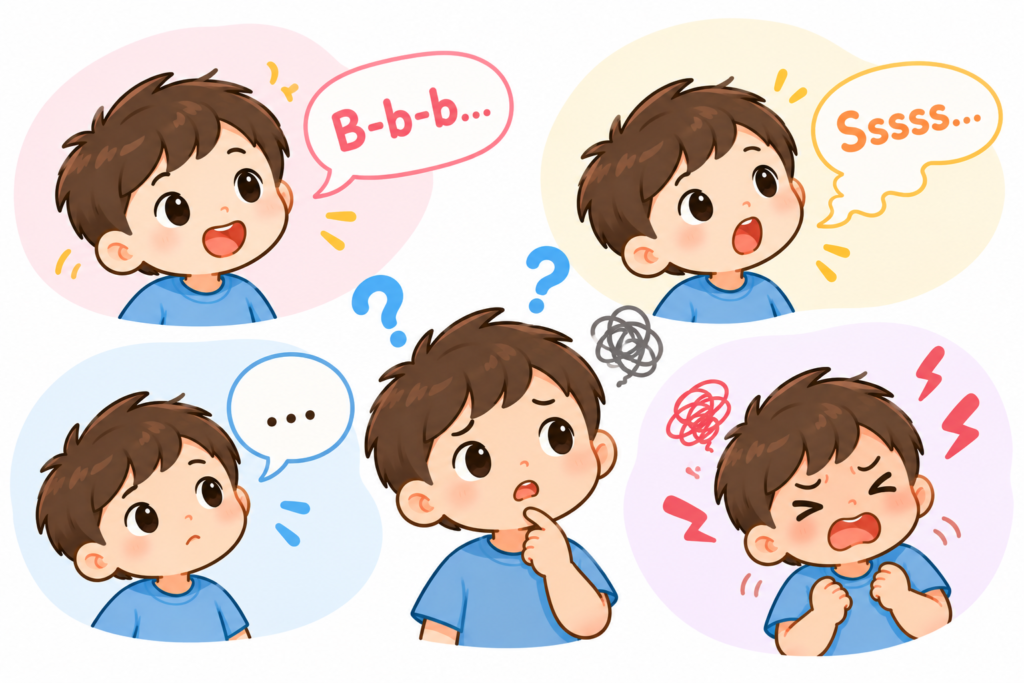
Children may sometimes repeat words or pause while speaking, especially as they are developing language.
However, some children experience more noticeable or persistent disruptions in the flow of speech, which may be associated with stuttering.
Understanding the possible signs can help parents recognise when their child may benefit from additional support.
What Is Stuttering?
Stuttering is a speech fluency difficulty that can interrupt the natural flow of speaking.
It may involve repeating sounds, syllables, or words, stretching sounds, or experiencing blocks where a child has difficulty getting a sound out.
Stuttering commonly begins during childhood, particularly while children are developing their speech and language skills.
Some children may stop stuttering over time, while others may continue to experience difficulties.
It is important to remember that not every repetition or pause means a child is stuttering.
1. Repeats Sounds or Syllables
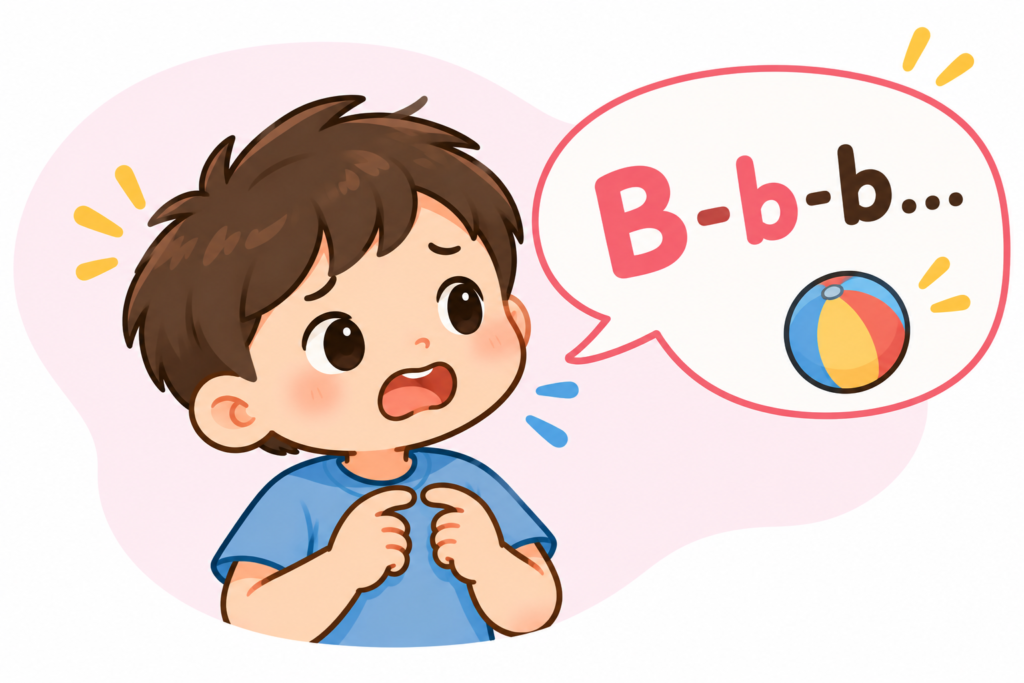
Your child may repeat sounds or parts of words when speaking.
For example:
- “B-b-b-ball”
- “M-m-mummy”
- “I-I-I want it”
Repeating sounds or syllables can be a noticeable sign of stuttering.
2. Repeats Whole Words or Phrases
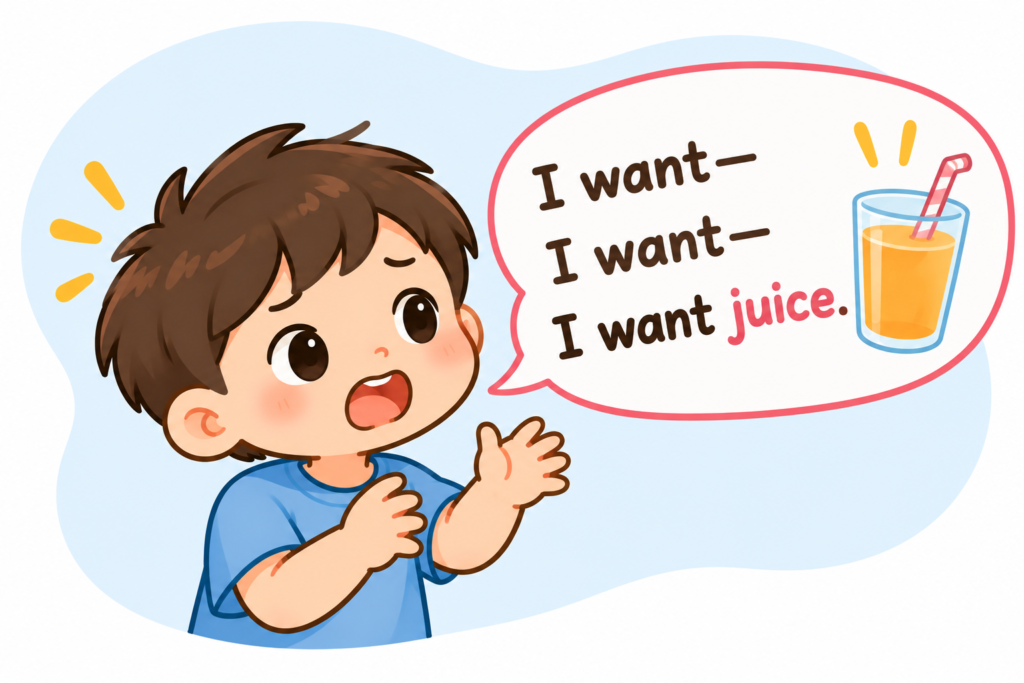
Your child may repeat a whole word or phrase several times before continuing.
For example:
- “I want—I want—I want juice.”
- “Can we go, can we go outside?”
Whole-word or phrase repetitions can also occur during typical speech development, so it is helpful to consider how often they happen and whether your child shows other signs of stuttering.
3. Stretches Out Sounds
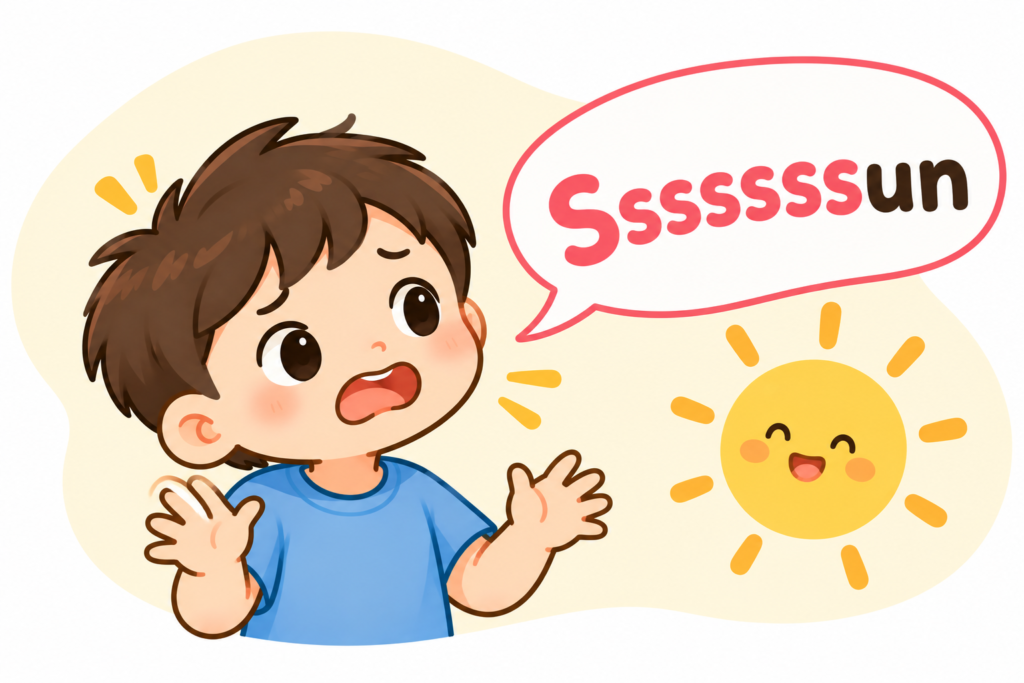
Your child may hold a sound for longer than usual.
For example:
- “Sssssssun”
- “Mmmmmum”
- “Fffffish”
Sound prolongations are one of the speech characteristics associated with stuttering.
4. Gets Stuck or Has Blocks
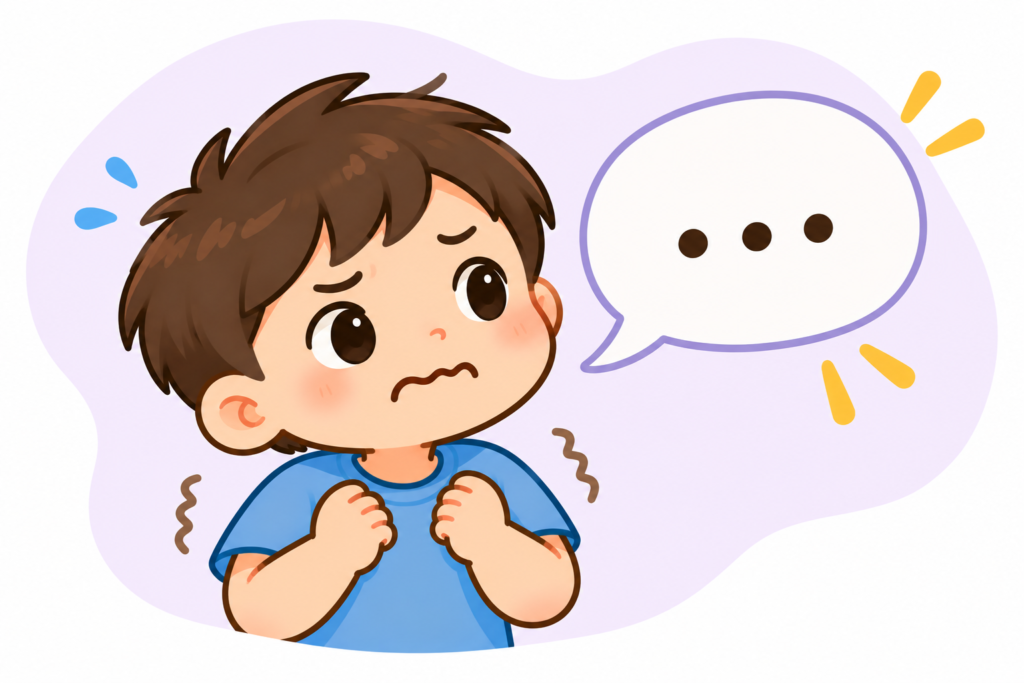
Your child may appear to get stuck when trying to start a word.
You may notice:
- A pause before a word comes out
- Mouth movements without a sound
- Difficulty starting a word
- Visible effort or tension while speaking
These speech blocks can be accompanied by physical tension or struggle.
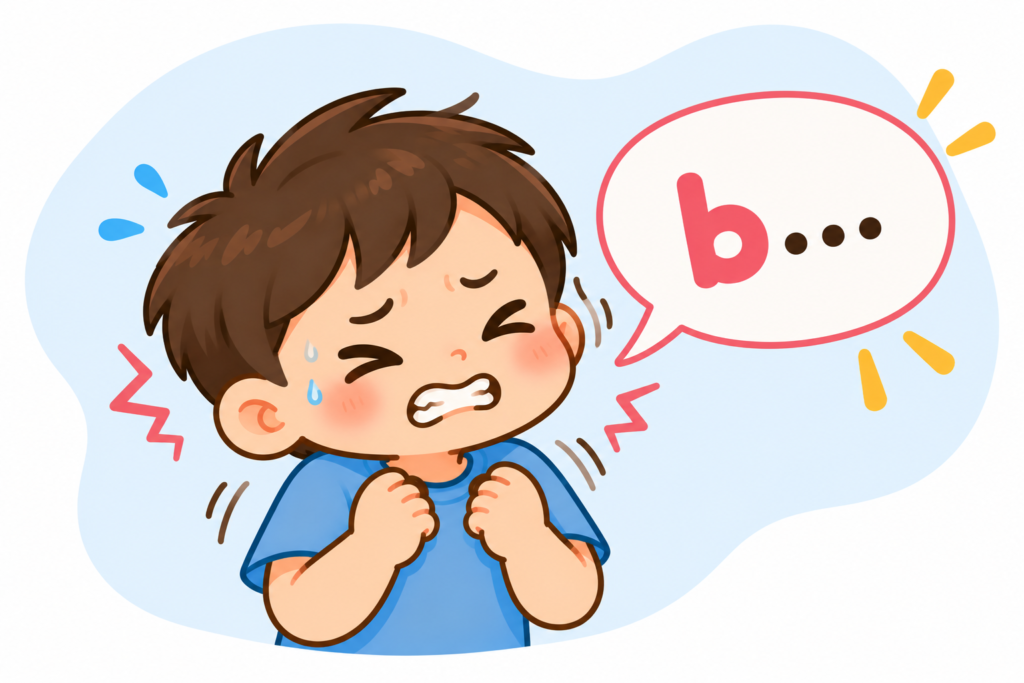
5. Shows Physical Signs of Struggle
Some children may show physical movements when they are having difficulty getting their words out.
For example, you may notice:
- Eye blinking
- Facial movements
- Head movements
- Tightening around the mouth
- Extra body movements
These behaviours can occur alongside stuttering, particularly when a child is experiencing physical tension or effort while speaking.
6. Becomes Frustrated When Speaking
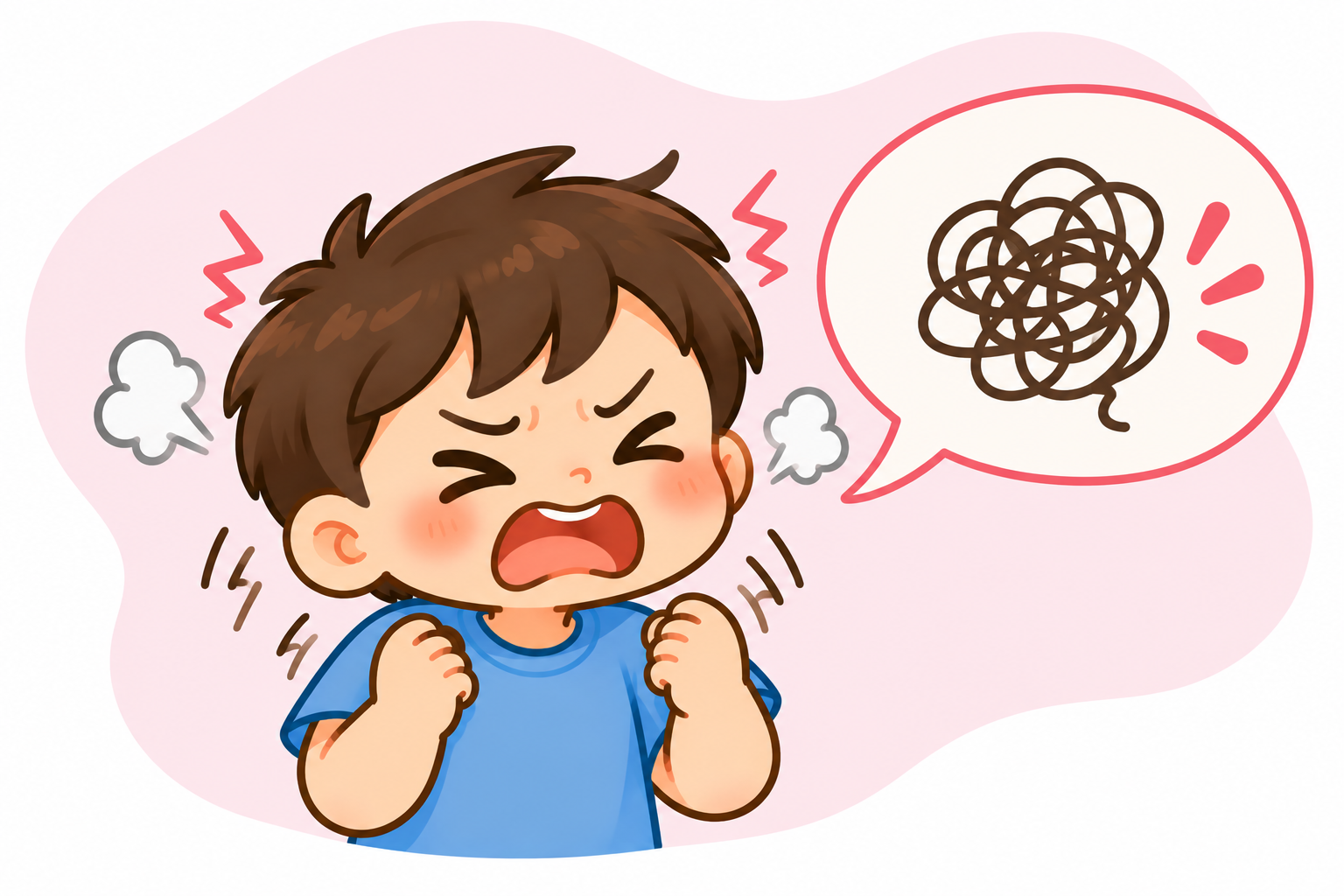
Your child may become upset or frustrated when they cannot say what they want to say smoothly.
You may notice that they:
- Avoid certain words
- Stop talking
- Say “I can’t say it”
- Become upset when speaking
- Avoid certain speaking situations
A child’s reactions and feelings about speaking are important to consider alongside the speech behaviours themselves.
What Can Parents Do?
1. Give Your Child Time to Talk
✿ Create quiet, relaxed opportunities for your child to talk and allow them enough time to finish what they want to say.
✿ Try not to rush them, interrupt, or complete their sentences.
✿ Let your child communicate at their own pace without feeling pressured.
2. Listen to What Your Child Is Saying
✿ Focus on your child’s message, rather than how smoothly they are speaking.
✿ Show that you are interested in what they have to say.
3. Speak in a Calm and Relaxed Way
✿ Try using a comfortable, unhurried speaking pace during conversations.
✿ This can help create a relaxed communication environment.
4. Avoid Telling Your Child to “Slow Down”
✿ Instead of asking your child to slow down or start again, give them time to finish their thought without interruption.
5. Respond Positively to Stuttering
✿ If your child talks about their stuttering, respond calmly and openly.
✿ Let them know that it is okay to take their time and that they can communicate even when they stutter.
When Should Parents Seek Professional Advice?
❀ If your child’s stuttering is persistent, becomes more noticeable, involves physical struggle, or affects their willingness to communicate, you can seek an assessment from a Speech-Language Therapist.
❀A Speech-Language Therapist can look at your child’s speech patterns, when the stuttering began, how often it occurs, family history, and how it affects your child’s communication.
❀ A Speech-Language Therapist can assess your child’s speech fluency across different tasks and situations and consider the patterns, frequency, and impact of stuttering on their communication.
❀ Remember, stuttering can vary from day to day and across different situations, so one conversation alone may not show the full picture.
Key Takeaway
❀ Stuttering can involve repeating sounds or words, stretching sounds, getting stuck, or showing physical effort while speaking.
❀ Some children may also become frustrated or avoid speaking when stuttering affects their communication.
❀ However, occasional repetitions and pauses can be part of typical speech development, particularly in young children.
❀ What matters is looking at the overall pattern and how it affects your child’s communication.
❀ If your child’s stuttering persists or affects their communication, you can seek an assessment from a Speech-Language Therapist to better understand your child’s speech needs and support options.
❀ The goal is not to make your child feel pressured to speak perfectly, but to create a supportive environment where they feel comfortable communicating.
🌟 Stay Connected with Us! We love sharing tips, insights, and inspiring stories about children’s growth and mental wellbeing.
💙 Follow us on Instagram and Facebook for more updates and parenting advice.
Join our community and let’s grow together. One positive step at a time!

References
American Speech-Language-Hearing Association. (n.d.). Stuttering, cluttering, and fluency.
https://www.asha.org/practice-portal/clinical-topics/fluency-disorders/
American Speech-Language-Hearing Association. (n.d.). Characteristics of typical disfluency and stuttering.
National Institute on Deafness and Other Communication Disorders. (n.d.). Stuttering.
Working Hours
Tuesday to Saturday – 8.30am to 6pm
Monday & Sunday – Closed
Please also subscribe us at
Contact Us
Discover Our Team!
📞+60102502833
firststepdevelopmentcentre@gmail.com
B1-7, Plaza Damas 3, Jalan Sri Hartamas 1, 50480 Kuala Lumpur.
Copyright 2025. Firststep Child Development Sdn Bhd. All rights reserved.