



Speech Sound Difficulties in Children: Signs Parents Should Know
Does your child have difficulty saying certain sounds, leave sounds out of words, or become frustrated when others cannot understand what they are saying?
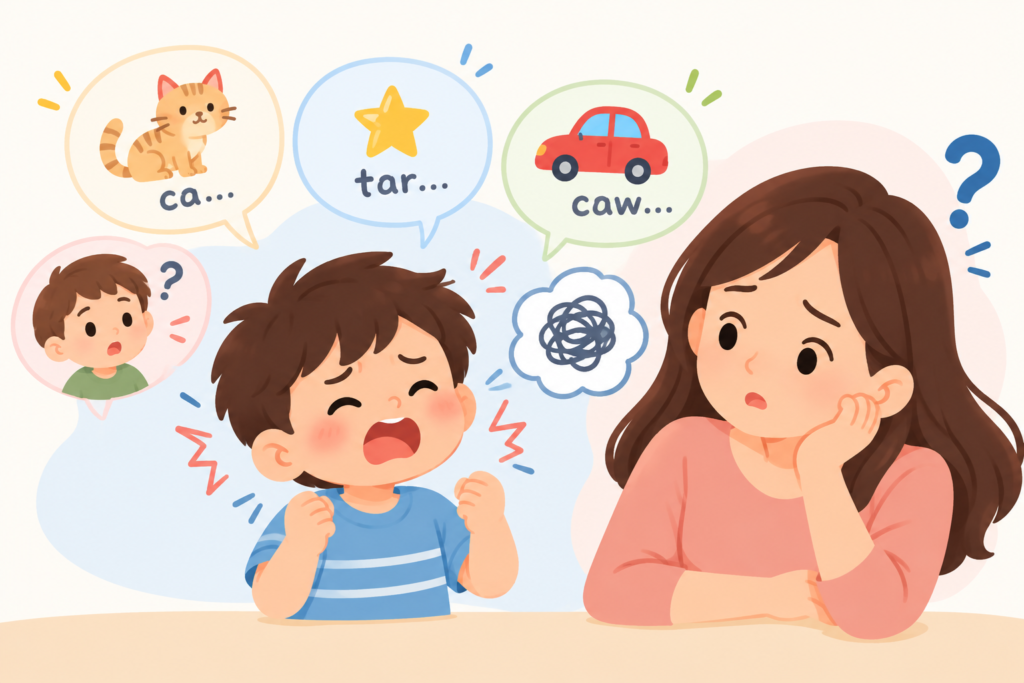
Children learn to produce speech sounds gradually as they grow.
It is common for younger children to have difficulty with some sounds while their speech is still developing.
However, some children may continue to experience difficulties with producing or using speech sounds, making their speech harder for others to understand.
Understanding the signs can help parents recognise when their child may benefit from additional support.
What Are Speech Sound Difficulties?
Speech sound difficulties happen when a child has trouble producing speech sounds clearly or using sounds correctly in words.
For example, a child may:
1. Leave certain sounds out
2. Replace one sound with another
3. Change sounds within words
4. Have difficulty producing particular sounds
5. Be difficult for others to understand
Speech sound difficulties can look different from one child to another.
Some children may have difficulty with only a few sounds, while others may have broader difficulties with speech clarity.
1. Has Difficulty Pronouncing Certain Sounds
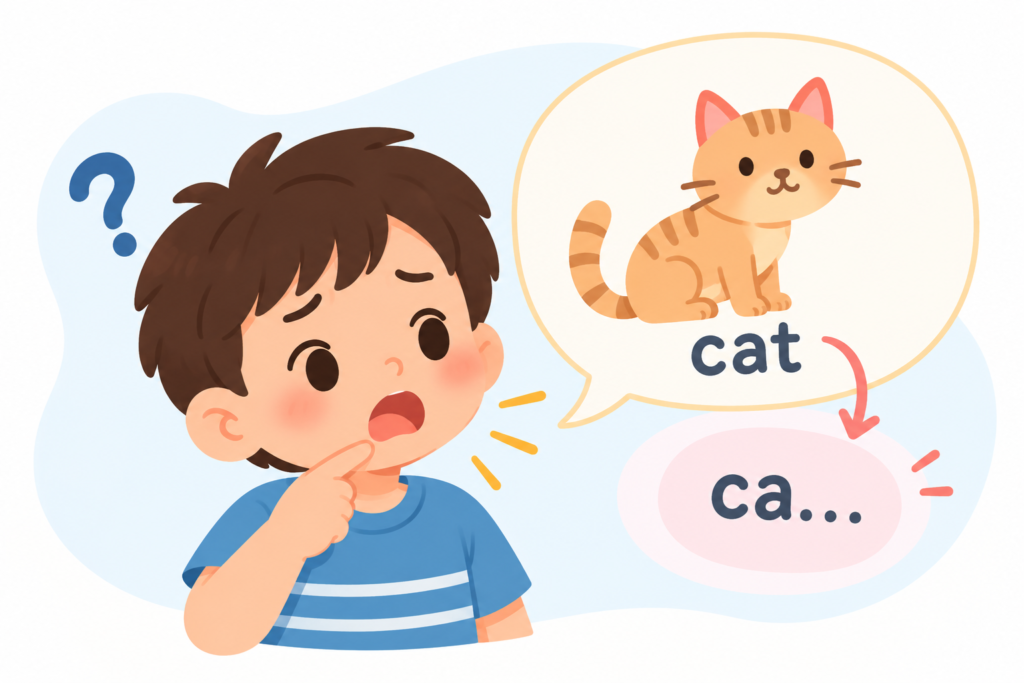
Your child may consistently have trouble producing particular speech sounds.
For example, they may find some sounds difficult to say clearly even though they can hear and understand the words around them.
You may notice that the same sound is difficult across many different words.
2. Leaves Sounds Out of Words
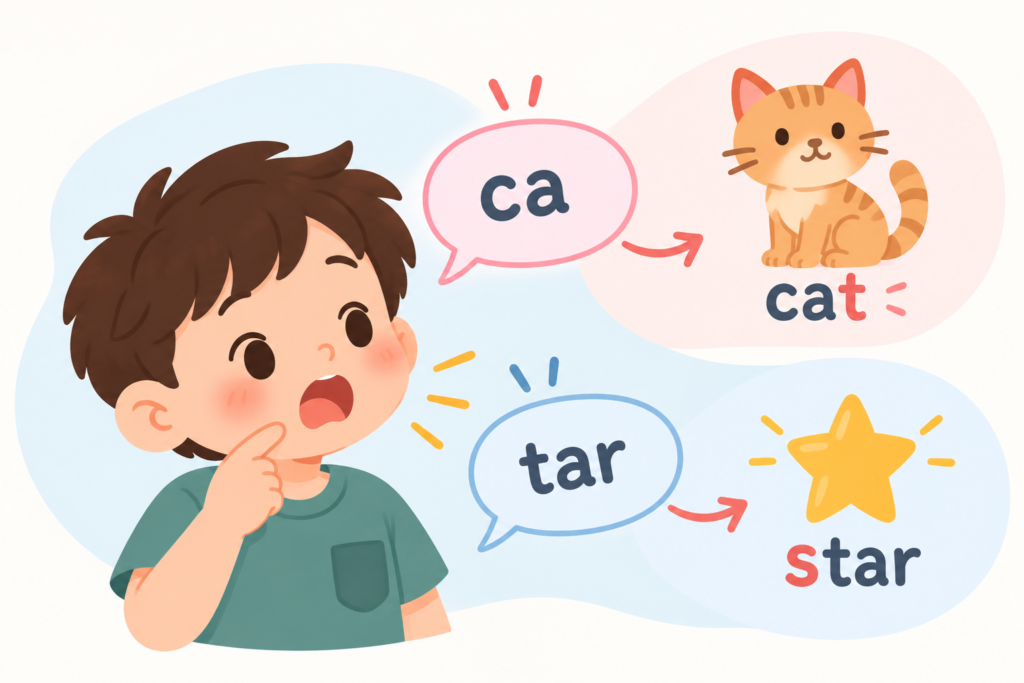
Your child may leave out sounds when saying certain words.
For example:
“ca” instead of “cat”
“tar” instead of “star”
This may happen more often when words are longer or contain several sounds.
3. Replaces One Sound With Another
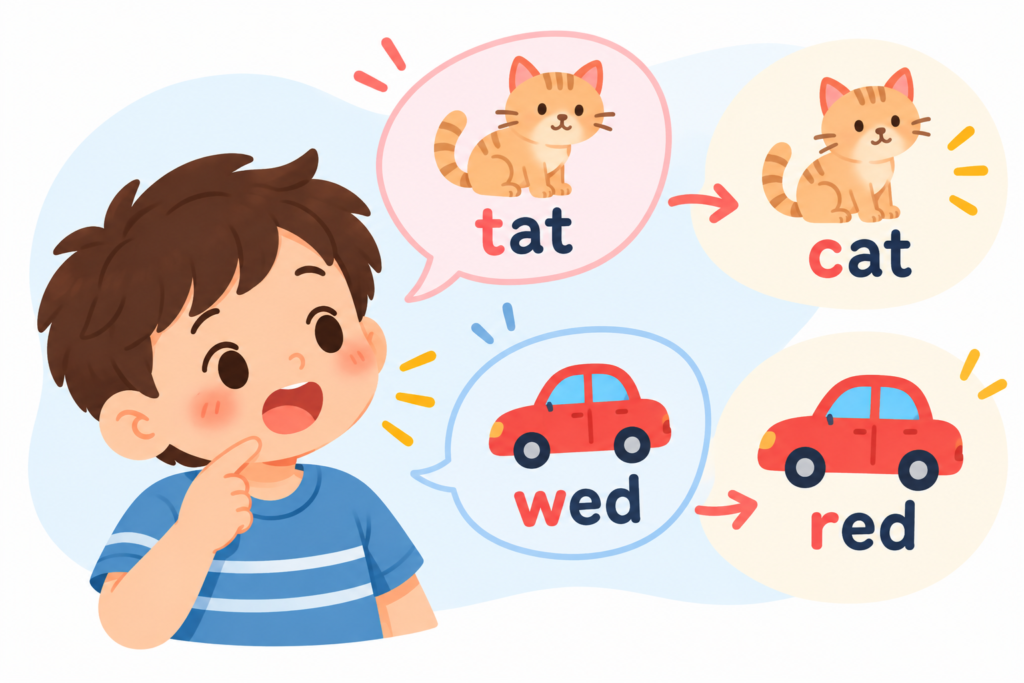
Your child may use one sound instead of the sound they are trying to say.
For example:
“tat” instead of “cat”
“wed” instead of “red”
If this happens consistently, it may make your child’s speech difficult for others to understand.
4. Changes Sounds Within Words
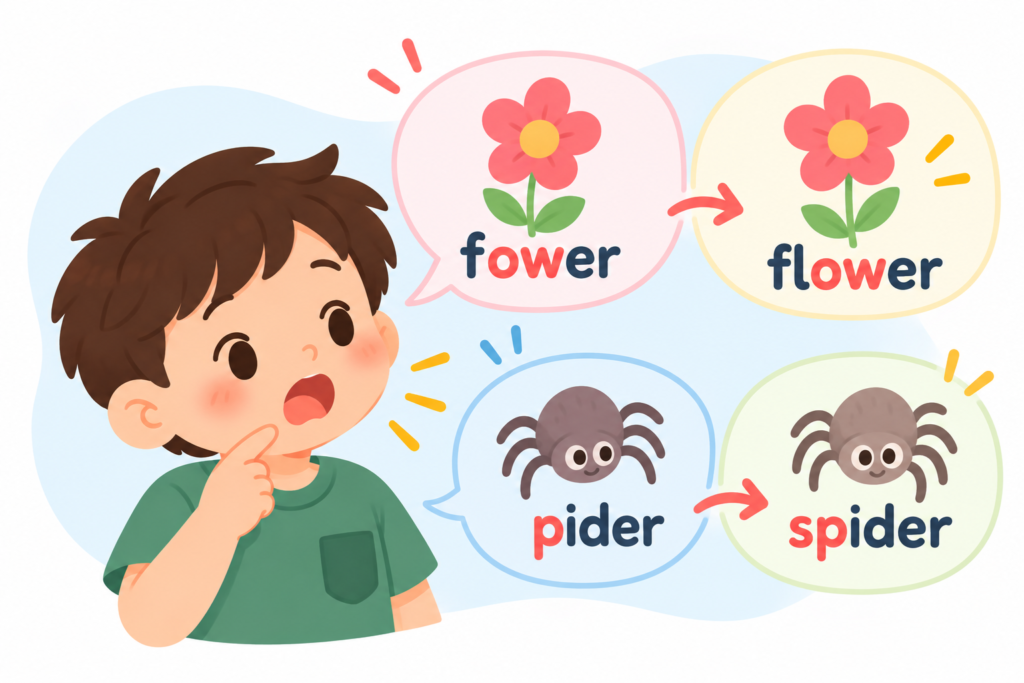
Your child may produce a word differently from the expected pronunciation.
For example, sounds may be changed, rearranged, or produced inconsistently.
You may notice that your child can say a particular sound correctly in one word but has difficulty using it in another.
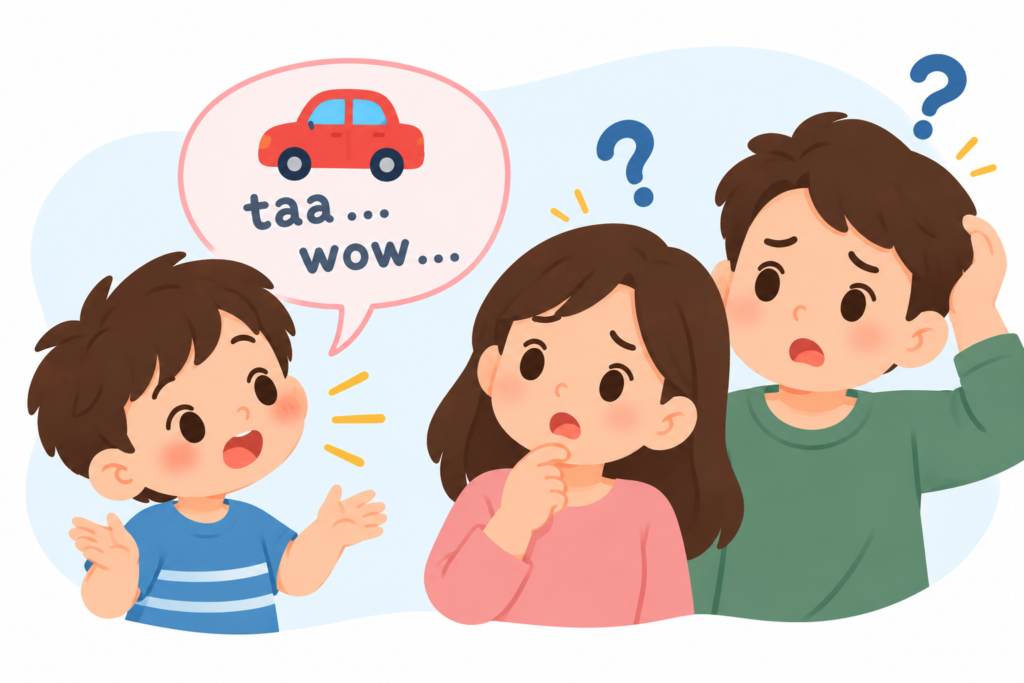
5. Is Difficult for Others to Understand
You may understand your child’s speech because you are familiar with the way they speak, while other people struggle to understand them.
For example, relatives, teachers, or other children may frequently ask:
“What did you say?”
“Can you say that again?”
If communication difficulties happen regularly, it may be worth paying closer attention to your child’s speech development.
6. Becomes Frustrated When Trying to Communicate
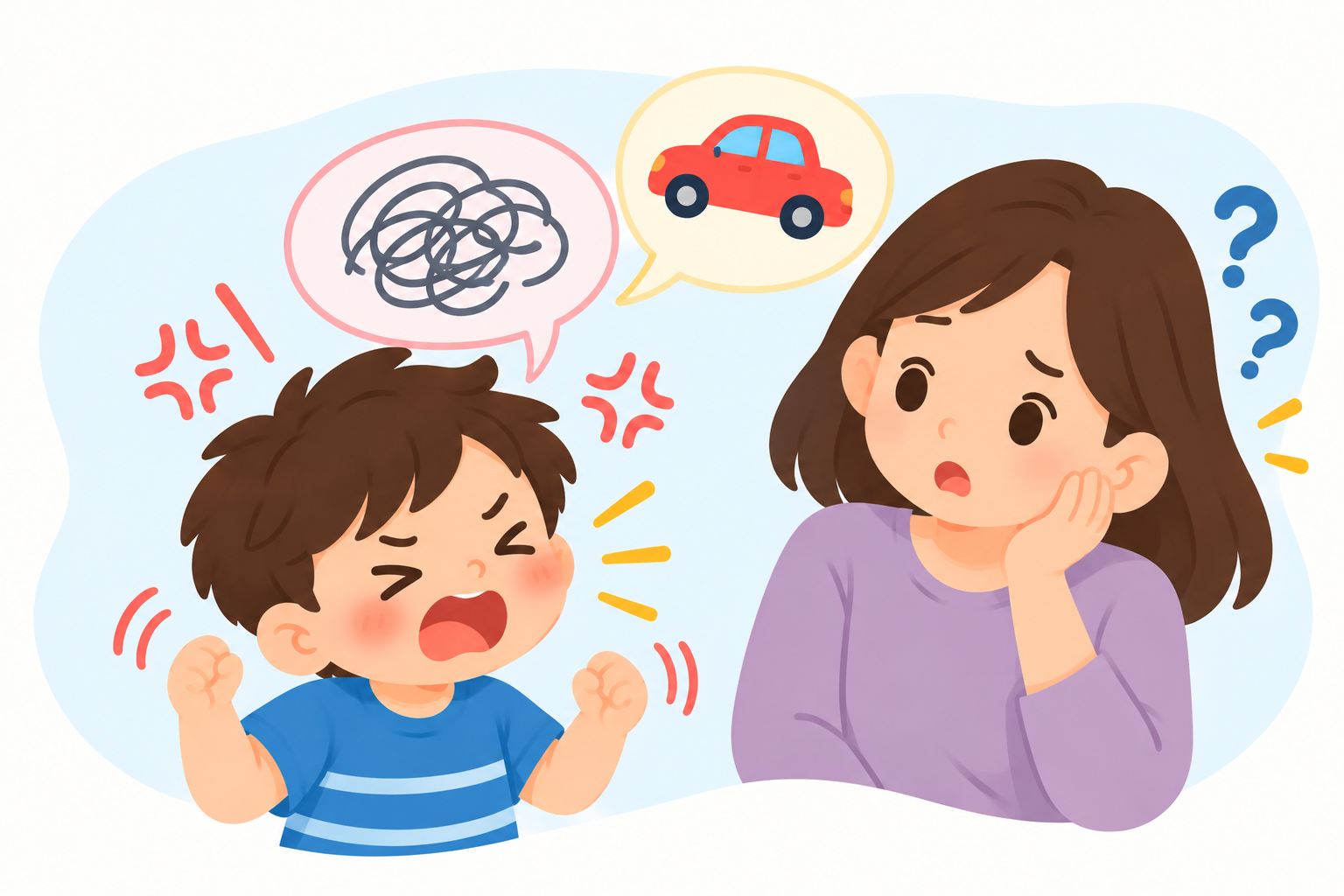
Your child may become upset when others cannot understand what they are saying.
They may:
- Repeat themselves frequently
- Give up trying to explain
- Become upset when asked to repeat a word
- Avoid speaking in certain situations
- Rely on gestures instead of words
Difficulty being understood can be frustrating, particularly when a child knows what they want to say but cannot communicate it clearly.
What Can Parents Do?
1. Listen Without Interrupting
✿ Give your child enough time to finish what they are saying.
✿ Avoid repeatedly correcting every pronunciation mistake while they are talking.
✿ Instead, focus on understanding and responding to their message.
2. Model the Correct Sound
✿ If your child says:
“I want a tat.”
You can naturally respond:
“You want a cat? Here’s the cat.”
✿ This allows your child to hear the correct pronunciation without making communication feel like a test.
3. Encourage Talking Through Play
✿ Use everyday activities such as:
1. Pretend play – Talk about what you are doing and encourage your child to describe or name things.
2. Books – Ask simple questions about the pictures and give your child time to answer.
3. Songs – Sing together and pause occasionally to let your child fill in a word or sound.
4. Toys – Talk about the toy, what it is doing, and encourage your child to respond.
5. Drawing – Ask your child about their drawing and give them time to explain what they made.
6. Everyday conversations – Talk about daily activities and give your child time to respond without rushing them.
✿ These provide natural opportunities for your child to practise communicating.
4. Avoid Making Them Repeat Words Too Often
✿ Constantly asking your child to repeat themselves can sometimes make communication frustrating.
✿ If you understand what they mean, respond naturally and continue the conversation.
5. Pay Attention to Patterns
✿ Instead of focusing on one pronunciation mistake, notice which sounds your child struggles with and how often it happens.
✿ You can also note whether the difficulty occurs:
1. In certain words
2. During longer sentences
3. When speaking quickly
4. With unfamiliar people
5. In different situations
✿ This information can be useful if you later seek professional advice.
6. Create Opportunities for Conversation
✿ Ask simple questions, talk about your child’s interests, and encourage them to describe what they are doing.
✿ Focus on communication rather than perfect pronunciation.
When Should Parents Seek Professional Advice?
❀ Consider speaking with a Speech-Language Therapist if your child’s speech difficulties are persistent or begin to affect how well they communicate with others.
❀ You may want to seek advice if your child:
1. Is frequently difficult for others to understand
2. Continues to struggle with particular sounds
3. Becomes frustrated when speaking
4. Avoids talking because of their speech
5. Has difficulty communicating at school or with other children
6. Has speech difficulties alongside other communication concerns
❀ A Speech-Language Therapist can assess your child’s speech sound development and overall communication skills and determine whether support may be helpful.
❀ The goal is not to label the difficulty, but to understand your child’s speech needs and find the right support to help them communicate clearly and confidently.
Key Takeaway
❀ Children develop speech sounds at different rates, and some pronunciation mistakes can be part of normal speech development.
❀ However, if speech sound difficulties persist, make your child difficult to understand, or affect their confidence and communication, you can seek an assessment from a Speech-Language Therapist to better understand your child’s speech needs and support options.
❀ Speech difficulties can have different contributing factors, so looking at your child’s individual speech and communication skills is important.
❀ Early support can help children develop clearer communication skills and feel more confident when expressing themselves.
🌟 Stay Connected with Us! We love sharing tips, insights, and inspiring stories about children’s growth and mental wellbeing.
💙 Follow us on Instagram and Facebook for more updates and parenting advice.
Join our community and let’s grow together. One positive step at a time!

References
American Speech-Language-Hearing Association. (n.d.). Speech sound disorders: Articulation and phonology.
https://www.asha.org/practice-portal/clinical-topics/articulation-and-phonology/
National Institute on Deafness and Other Communication Disorders. (n.d.). Speech and language developmental milestones.
Working Hours
Tuesday to Saturday – 8.30am to 6pm
Monday & Sunday – Closed
Please also subscribe us at
Contact Us
Discover Our Team!
📞+60102502833
firststepdevelopmentcentre@gmail.com
B1-7, Plaza Damas 3, Jalan Sri Hartamas 1, 50480 Kuala Lumpur.
Copyright 2025. Firststep Child Development Sdn Bhd. All rights reserved.