



Slow Processing Speed in Children: Signs Parents and Teachers Should Know
Many parents wonder:
“Why does my child take so long to understand or complete something, even when they seem to know the answer?”
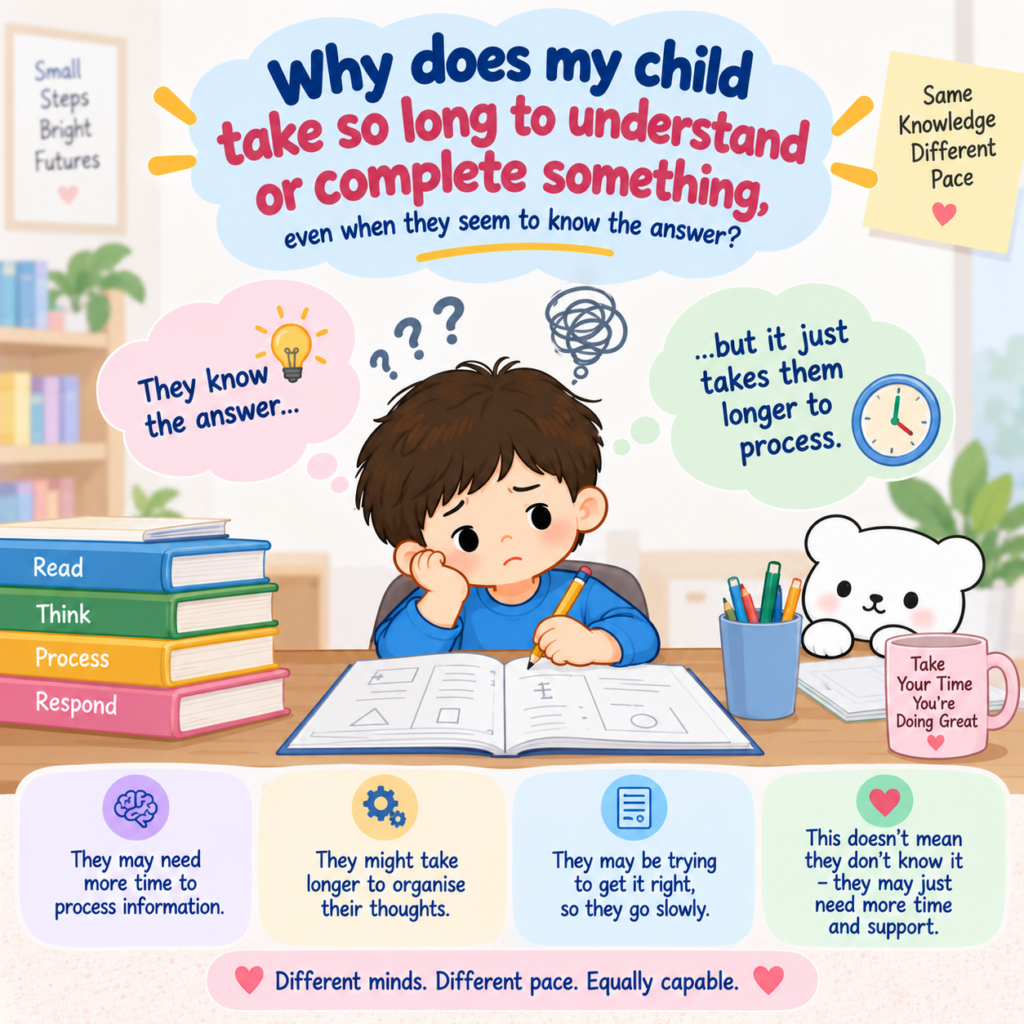
Some children may need more time to understand instructions, think about a question, complete written work, or respond during conversations.
This can sometimes be mistaken for laziness, carelessness, or a lack of effort.
However, some children may simply process information at a slower pace.
Understanding processing speed can help parents and teachers recognise when a child may need additional time, clearer instructions, or other forms of support.
What Is Processing Speed?
Processing speed refers to how efficiently a child can take in information, understand it, respond to it, and complete a task.
It can be involved in many everyday activities, such as:
✿ Listening to and understanding instructions
✿ Answering questions
✿ Reading and responding to information
✿ Completing written work
✿ Finding information
✿ Copying information from a board
✿ Completing familiar tasks
Processing speed is not the same as intelligence.
A child may understand a concept well and know the correct answer but still need more time to process the information and respond.
Children also develop at different rates, and their processing speed may vary depending on the type of task, how familiar it is, and how much information they need to manage at one time.
1. Takes Longer to Respond to Questions
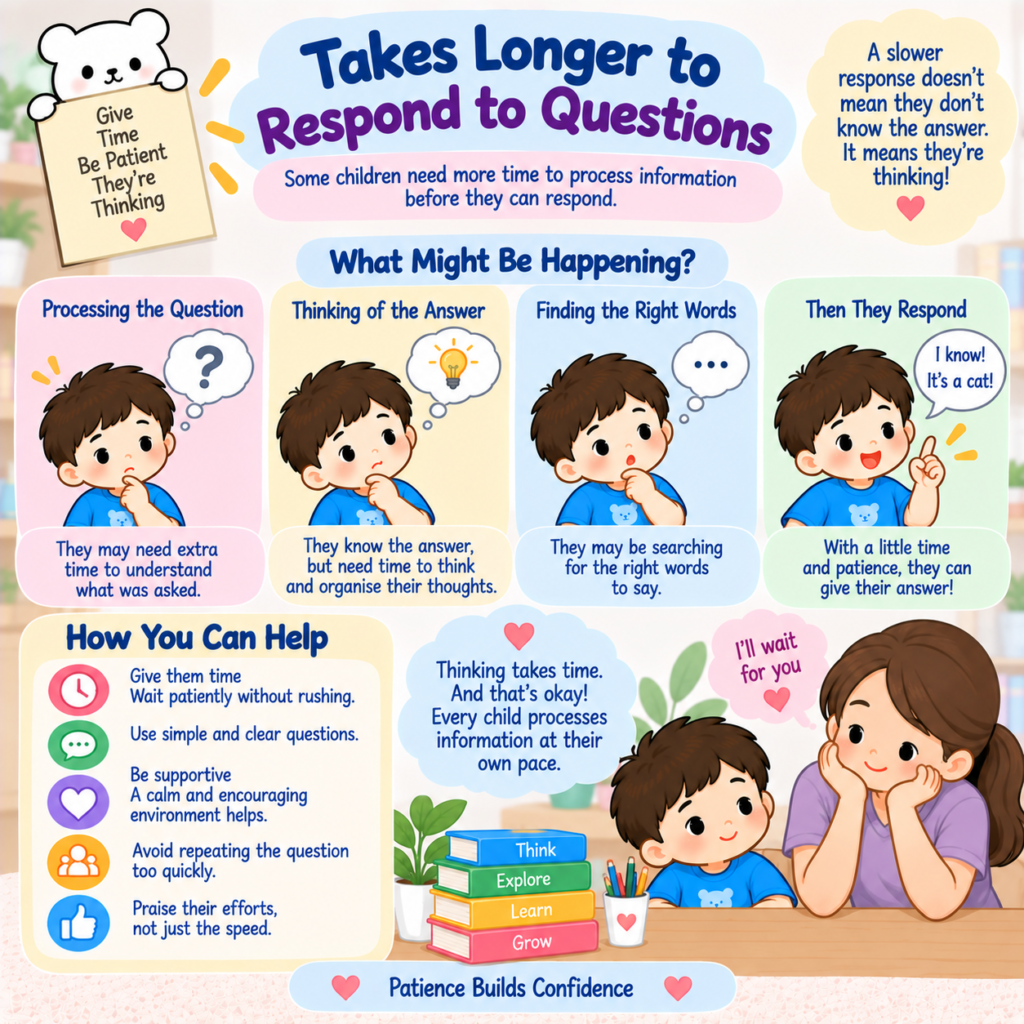
Your child may understand what someone has asked but take longer than expected to answer.
For example, after being asked a question, there may be a noticeable pause before they respond.
This does not necessarily mean that they do not know the answer.
They may simply need additional time to process the question and organise their response.
2. Needs Instructions Repeated
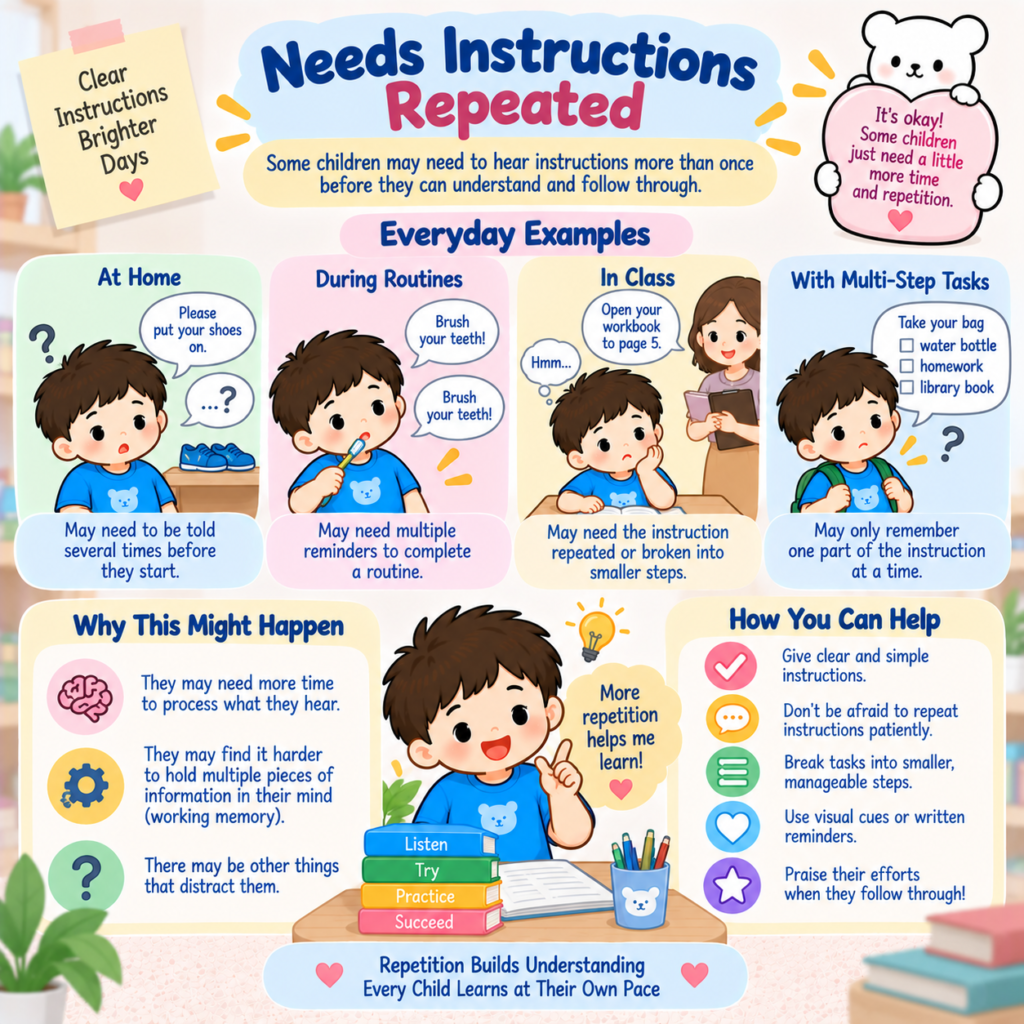
A child may frequently ask:
“What do I need to do?”
They may need instructions repeated or explained in smaller steps, particularly when several instructions are given at once.
This can be more noticeable in busy classroom environments where children are expected to listen, remember information, and begin a task quickly.
3. Takes a Long Time to Complete Schoolwork
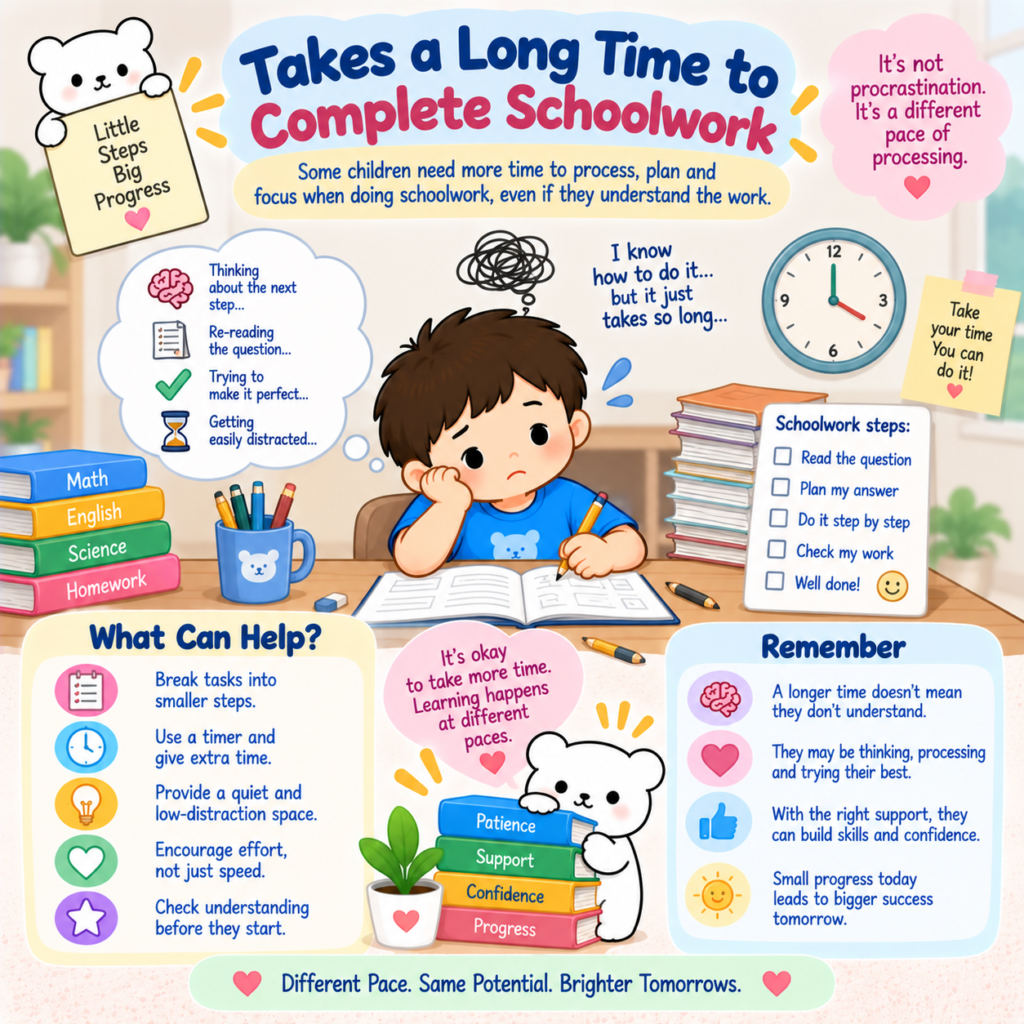
Some children may take much longer than their classmates to complete worksheets, written assignments, reading tasks, or other schoolwork.
They may understand the work but work at a slower pace.
As a result, they may regularly need extra time to finish tasks or may leave work incomplete even when they know how to do it.
4. Works Slowly Even When They Understand the Task
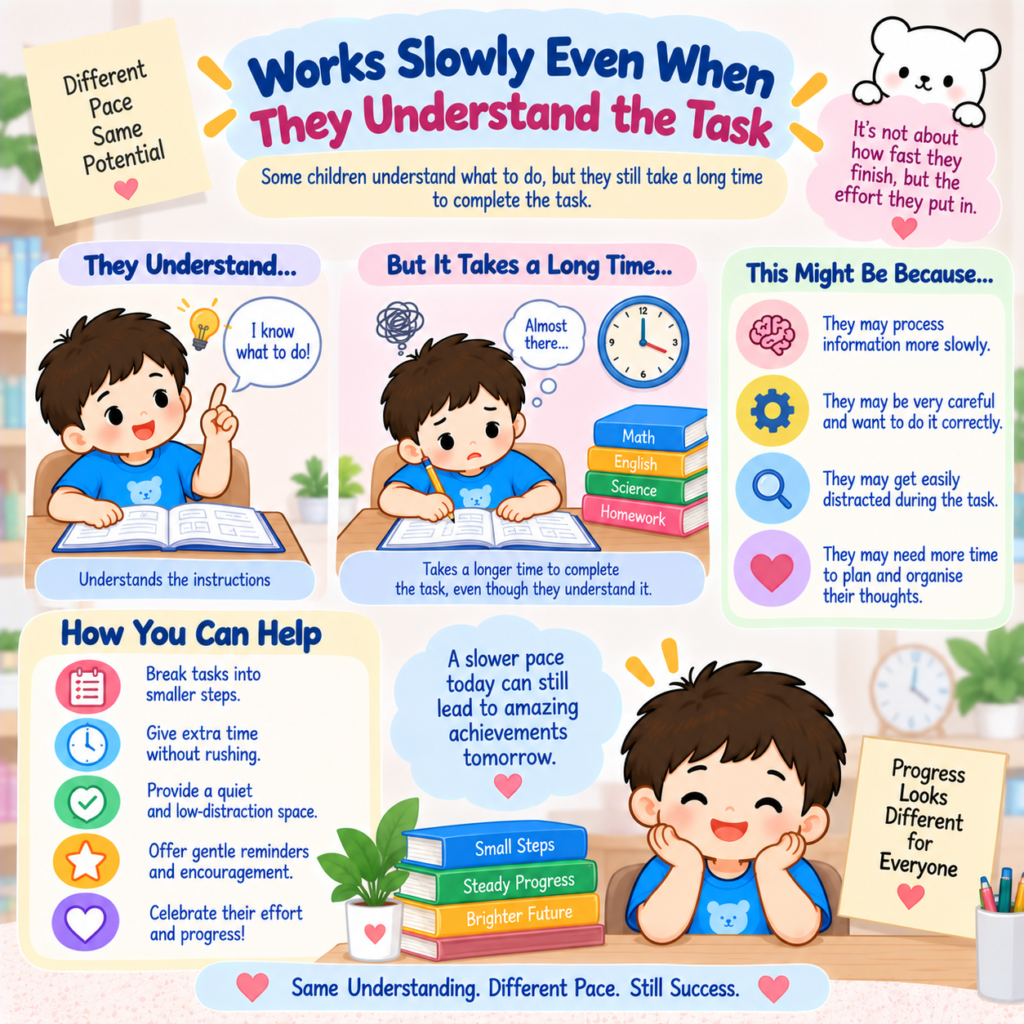
A child may appear to understand what they are supposed to do but take a long time to get through each step.
For example, they may know how to complete a familiar worksheet but work much more slowly than expected.
Parents and teachers may sometimes assume the child is not trying hard enough, when the actual difficulty may be the speed at which they process and respond to information.
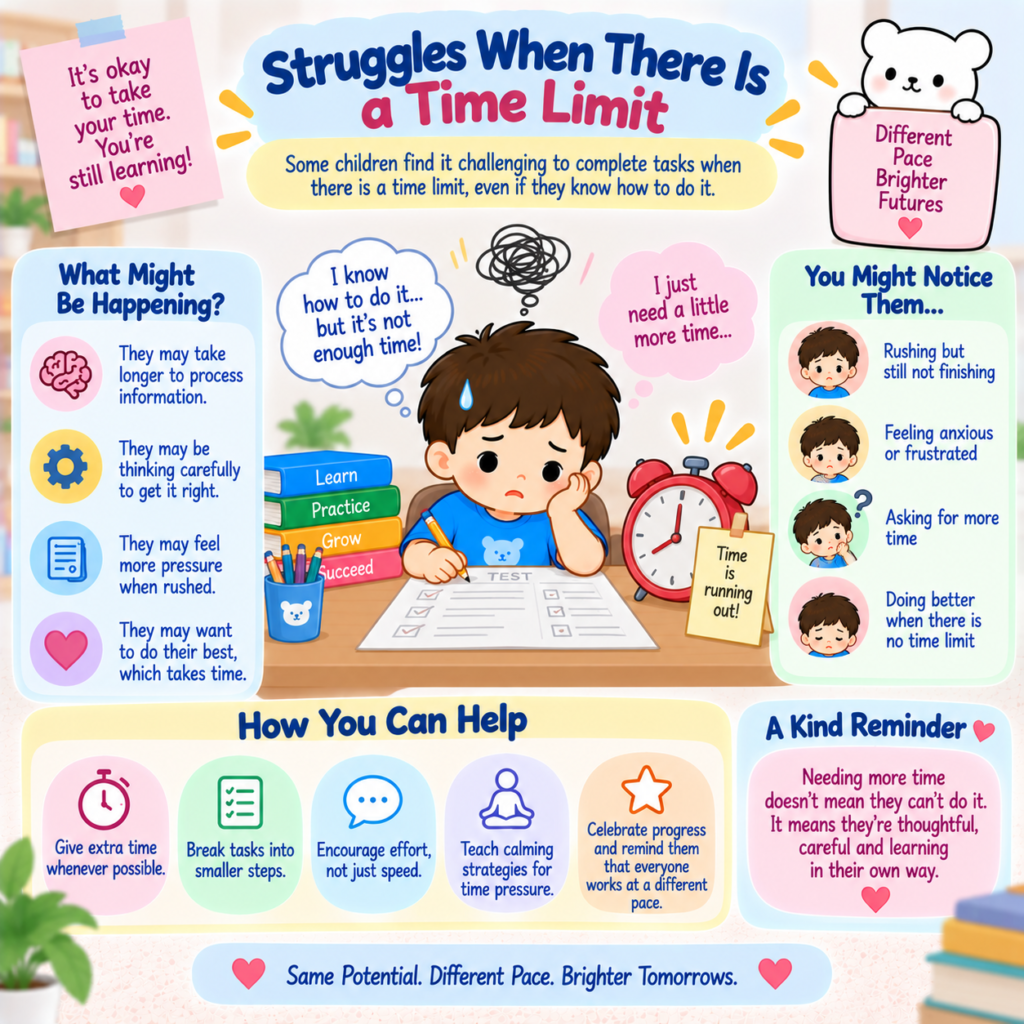
5. Struggles When There Is a Time Limit
Children with slower processing speed may find timed activities particularly challenging.
They may become rushed, anxious, or frustrated when they are expected to complete something within a short period.
They may perform better when given additional time without the pressure of a countdown.
6. Becomes Tired After Information-Heavy Tasks
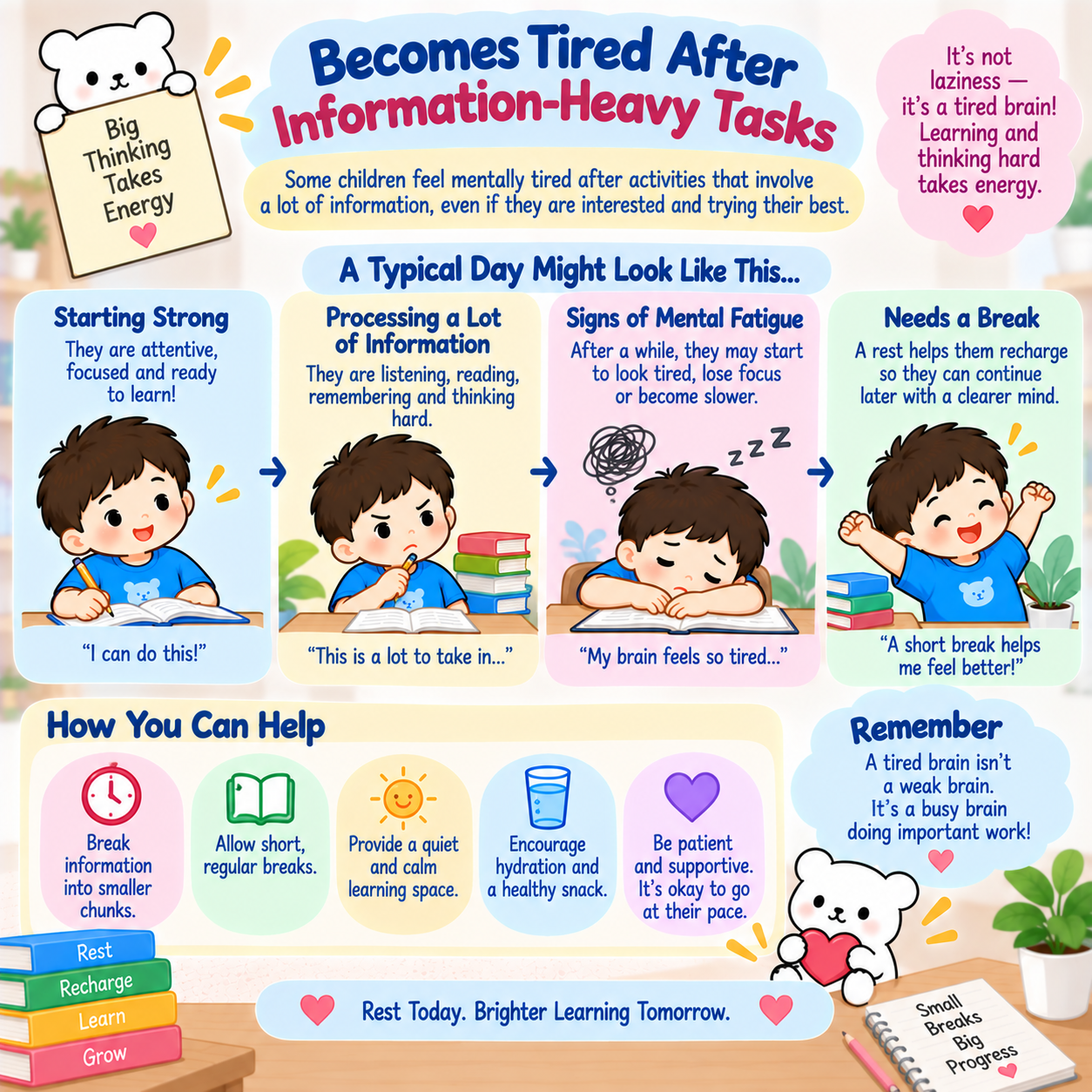
Processing information can require considerable mental effort.
A child may appear tired or overwhelmed after activities that require a lot of listening, reading, writing, problem-solving, or responding quickly.
They may need more breaks than expected before they are ready to continue.
6 Ways Parents and Teachers Can Support a Child
1. Give the Child Extra Time
✿ If a child needs additional time to process information, rushing them may increase stress and make it harder for them to respond.
✿ Allowing a reasonable amount of extra time can give the child an opportunity to demonstrate what they know.
2. Give Clear and Concise Instructions
✿ Instead of giving several instructions at once, break them into smaller steps.
✿ For example:
“Take out your maths book.”
Then:
“Open to page 20.”
✿ This can make it easier for the child to understand and act on the instruction.
3. Allow Time to Think Before Expecting an Answer
✿ After asking a question, give the child a little more time to respond.
✿ Avoid immediately repeating the question or answering for them.
✿ A short pause can give the child time to process what was asked and organise their response.
4. Reduce Unnecessary Time Pressure
✿ Not every activity needs to be completed as quickly as possible.
✿ Where appropriate, consider giving the child additional time for tasks that require significant reading, writing, thinking, or responding.
✿ This can help parents and teachers see the child’s actual understanding rather than only their speed.
5. Break Longer Tasks Into Smaller Parts
✿ Large tasks can feel overwhelming when a child already needs more time to process information.
✿ Breaking the task into smaller sections can make it easier to manage.
✿ For example:
“Let’s finish these five questions first, then take a short break.”
6. Focus on Understanding, Not Just Speed
✿ A child who works slowly may still have a good understanding of the material.
✿ Instead of focusing only on how quickly the child finishes, consider:
1. Do they understand the instructions?
2. Can they explain the concept?
3. Are they accurate when given enough time?
4. Does their performance improve when time pressure is reduced?
✿ This can provide a clearer picture of the child’s abilities.
When Should Parents Seek Professional Advice?
Children naturally work at different speeds, and being slower than classmates does not automatically mean that a child has a processing difficulty.
However, parents may consider seeking professional advice if slower processing appears to be:
✿ Persistent across different activities
✿ Affecting school performance
✿ Making it difficult to complete classroom work
✿ Affecting homework or daily routines
✿ Causing frequent frustration or distress
✿ Making it difficult for the child to keep up with age-appropriate demands
✿ Noticeably different from the child’s previous level of functioning
A Clinical Psychologist can help explore a child’s cognitive and learning profile and understand areas of strength and difficulty.
In some cases, a psychological or psychoeducational assessment may be considered to better understand how a child processes information, learns, remembers, and approaches different types of tasks.
Key Takeaway
❀ Slow processing speed does not mean that a child is less intelligent or less capable.
❀ Some children simply need more time to take in information, think about it, and respond.
❀ Parents and teachers can support these children by:
✿ Allowing additional processing time
✿ Giving clear and manageable instructions
✿ Breaking larger tasks into smaller steps
✿ Reducing unnecessary time pressure
✿ Giving opportunities to take breaks
✿ Focusing on understanding rather than speed
❀ When a child’s slower pace consistently affects learning, daily routines, or confidence, understanding the reason behind the difficulty can help adults provide more appropriate support.
🌟 Stay Connected with Us! We love sharing tips, insights, and inspiring stories about children’s growth and mental wellbeing.
💙 Follow us on Instagram and Facebook for more updates and parenting advice.
Join our community and let’s grow together. One positive step at a time!

References
American Psychiatric Association. (2022). Diagnostic and statistical manual of mental disorders (DSM-5-TR).
Psychiatry.org; American Psychiatric Association. https://www.psychiatry.org/psychiatrists/practice/dsm
Working Hours
Tuesday to Saturday – 8.30am to 6pm
Monday & Sunday – Closed
Please also subscribe us at
Contact Us
Discover Our Team!
📞+60102502833
firststepdevelopmentcentre@gmail.com
B1-7, Plaza Damas 3, Jalan Sri Hartamas 1, 50480 Kuala Lumpur.
Copyright 2025. Firststep Child Development Sdn Bhd. All rights reserved.