



Sleep Problems in Children: Signs of Poor Sleep Parents Should Know
Have you noticed that your child takes a long time to fall asleep, wakes up several times during the night, or seems unusually tired and irritable during the day?
Perhaps your child struggles to get out of bed in the morning, becomes easily frustrated over small things, or has difficulty concentrating at school.
While occasional sleep difficulties are common in children, persistent problems with sleep can affect a child’s mood, behaviour, attention and ability to function during the day.
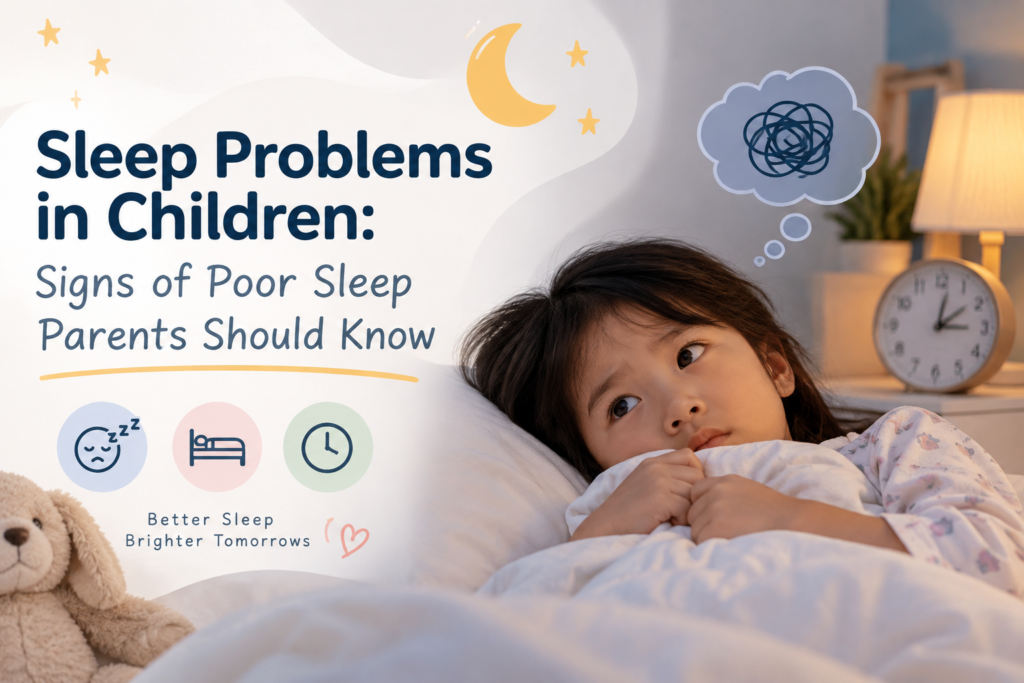
Understanding the signs of poor sleep can help parents recognise when their child may need additional support.
Why Is Sleep Important for Children?
Sleep is an important part of childhood development.
While children are asleep, their bodies and brains have time to rest and recover.
Good-quality sleep supports areas such as learning, memory, attention, emotional regulation and physical development.
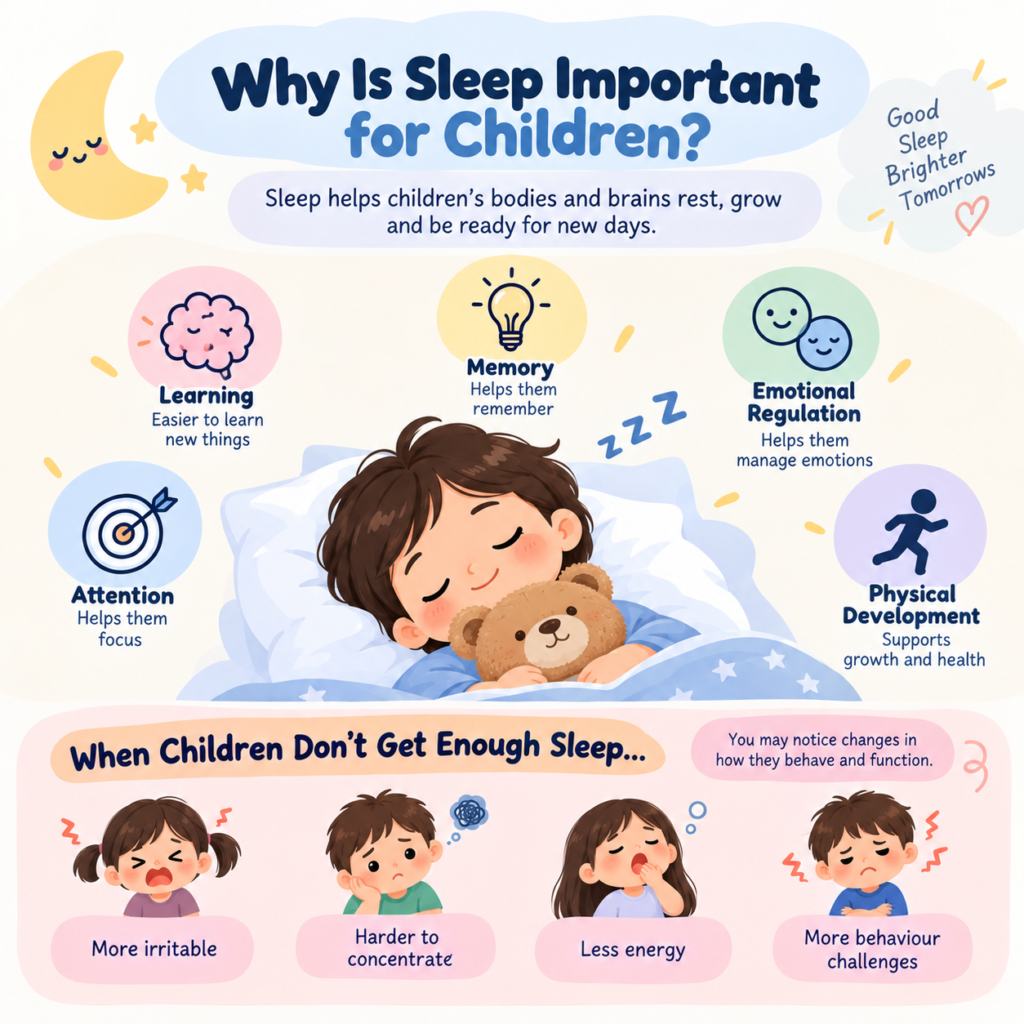
When a child consistently does not get enough quality sleep, you may notice changes in how they behave and function during the day.
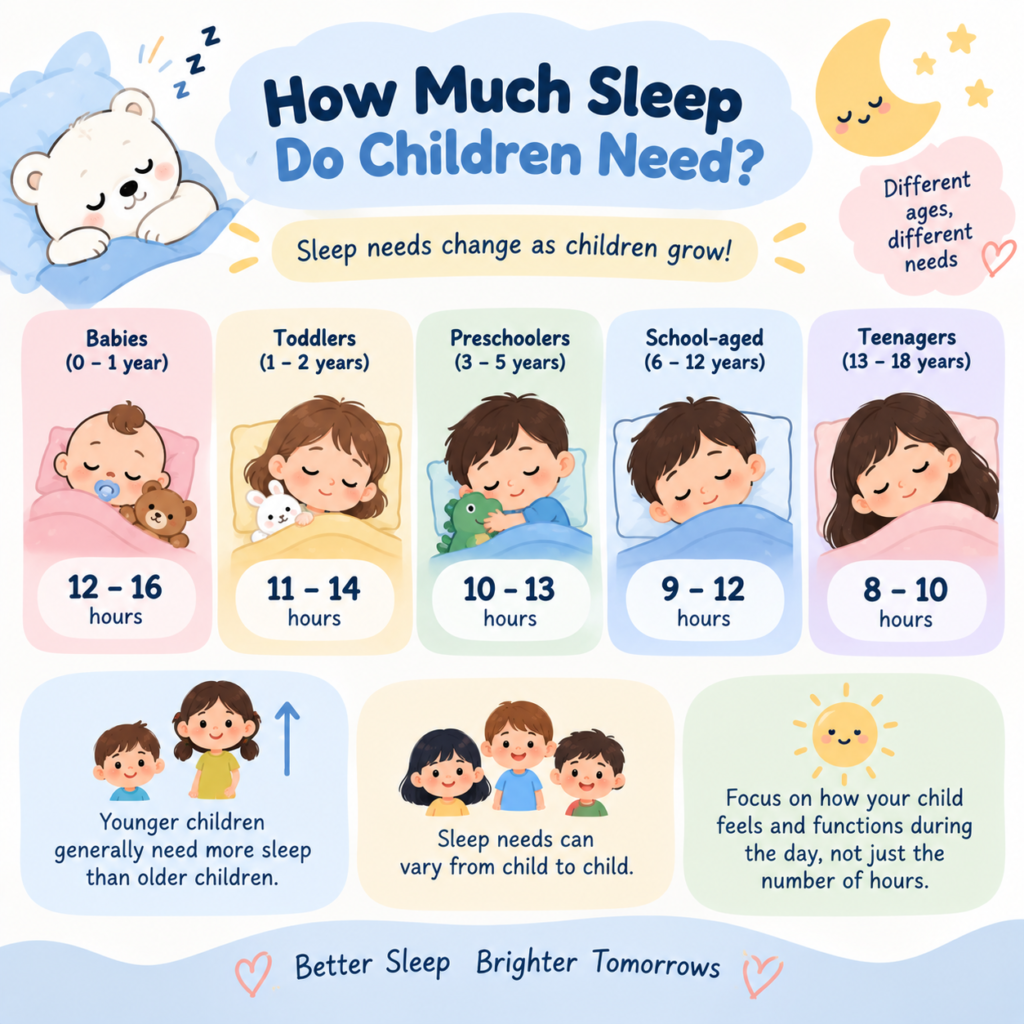
How Much Sleep Do Children Need?
The amount of sleep a child needs changes as they grow.
In general, younger children need more sleep than older children. Sleep needs can also vary from child to child.
Rather than focusing only on the number of hours, parents can also pay attention to whether their child wakes feeling rested and is able to function comfortably during the day.
Signs Your Child May Not Be Getting Enough Sleep
Sleep problems can look different from child to child.
You may notice that your child:
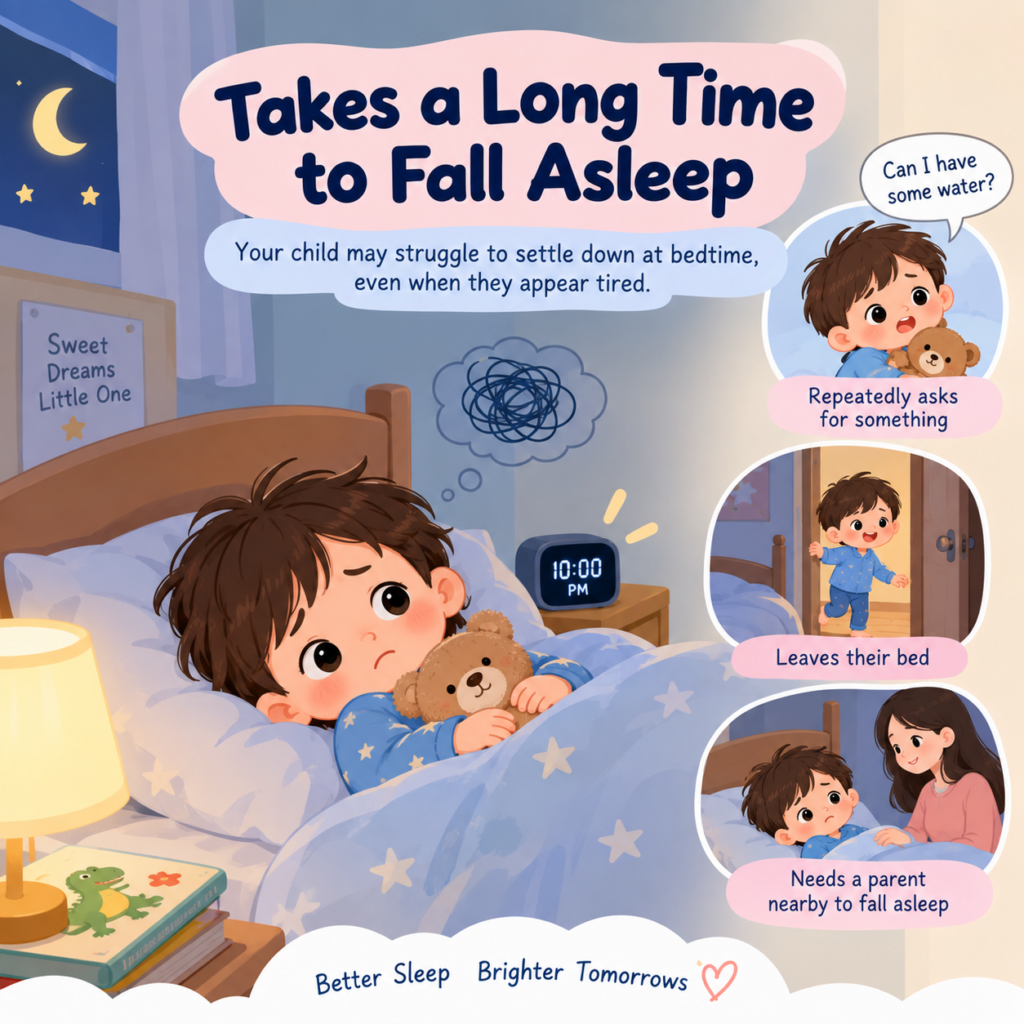
1. Takes a Long Time to Fall Asleep
Your child may regularly struggle to settle down at bedtime, even when they appear tired.
They may repeatedly ask for something, leave their bed, or need a parent nearby before they can fall asleep.
2. Wakes Up Frequently During the Night
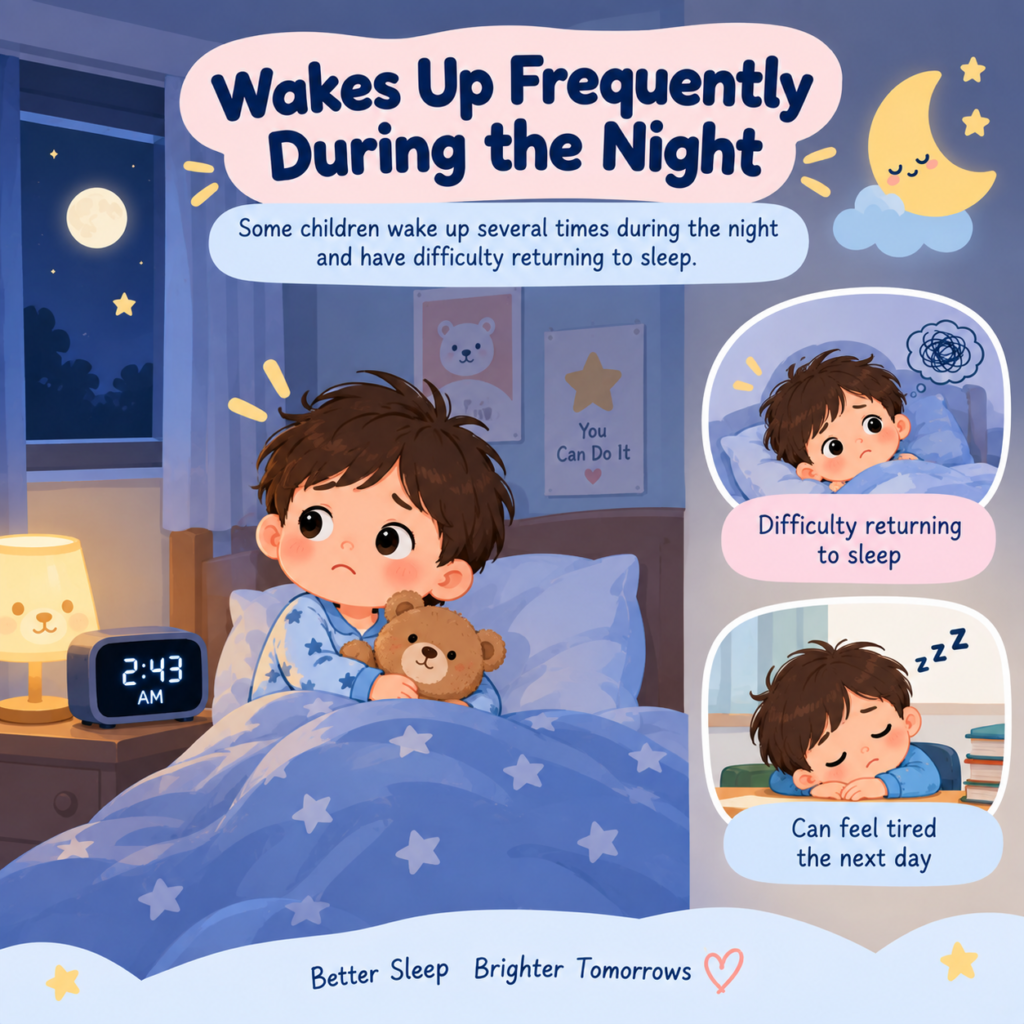
Some children wake up several times during the night and have difficulty returning to sleep.
Frequent night waking can leave a child feeling tired the following day, particularly when it happens regularly.
3. Has Difficulty Waking Up in the Morning
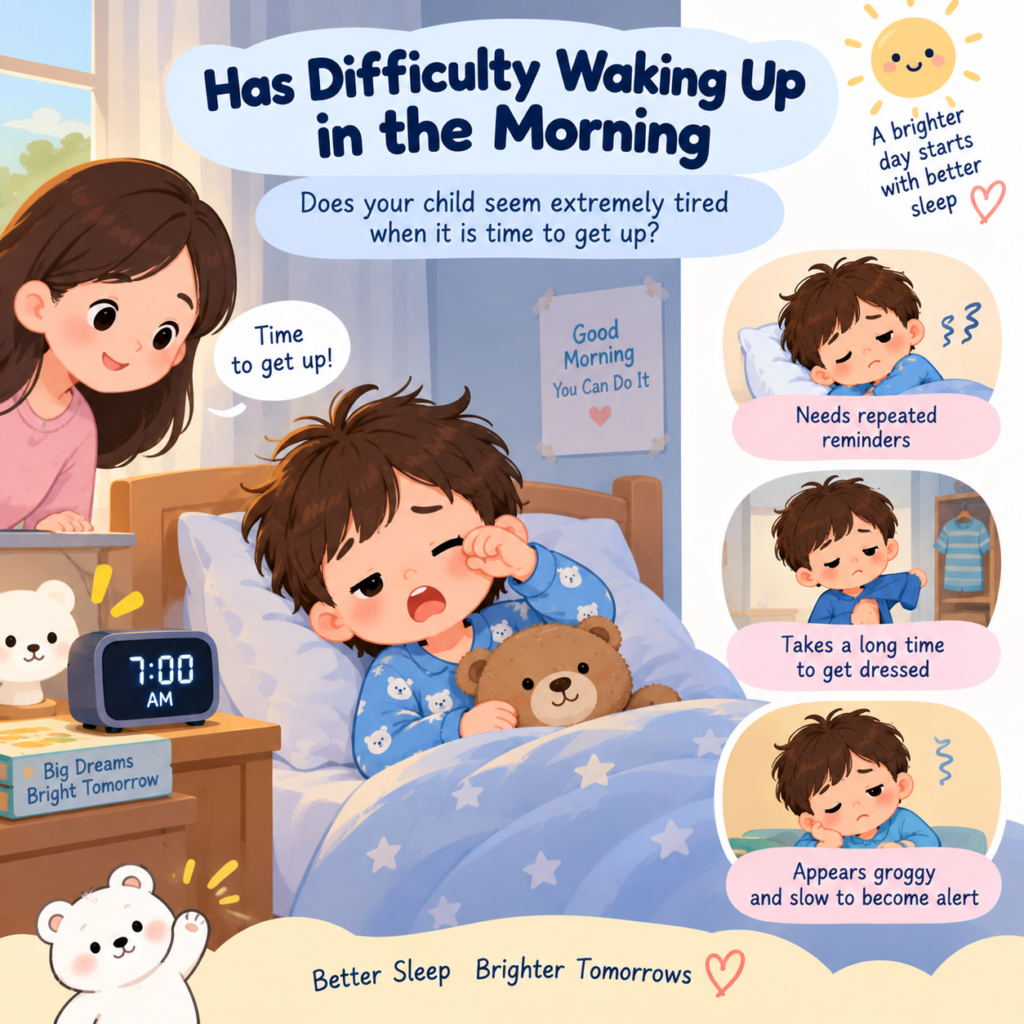
Does your child seem extremely tired when it is time to get up?
They may need repeated reminders, take a long time to get dressed, or appear groggy and slow to become alert in the morning.
4. Becomes Irritable or Easily Upset
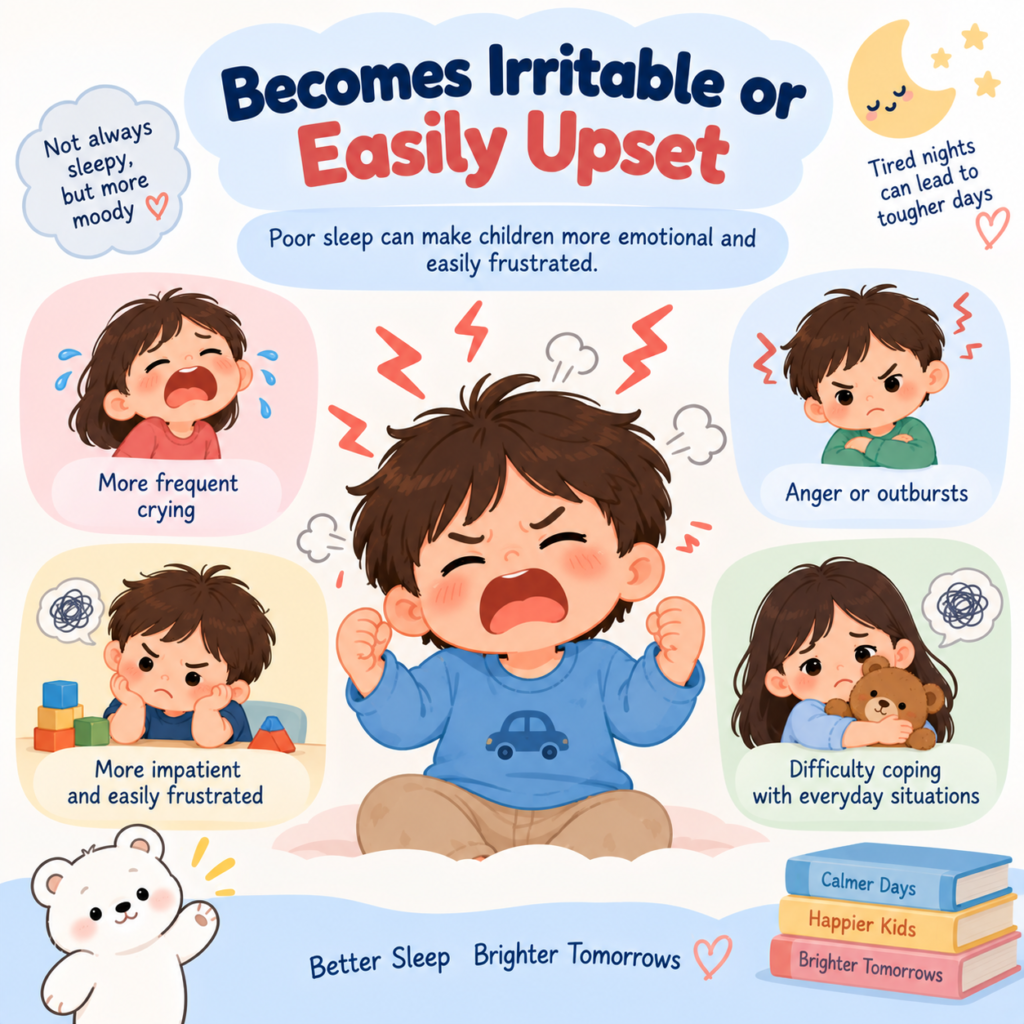
Poor sleep does not always make children look sleepy.
Instead, some children may become more emotional, impatient or easily frustrated.
You may notice more frequent crying, anger or difficulty coping with everyday situations.
5. Has Trouble Concentrating
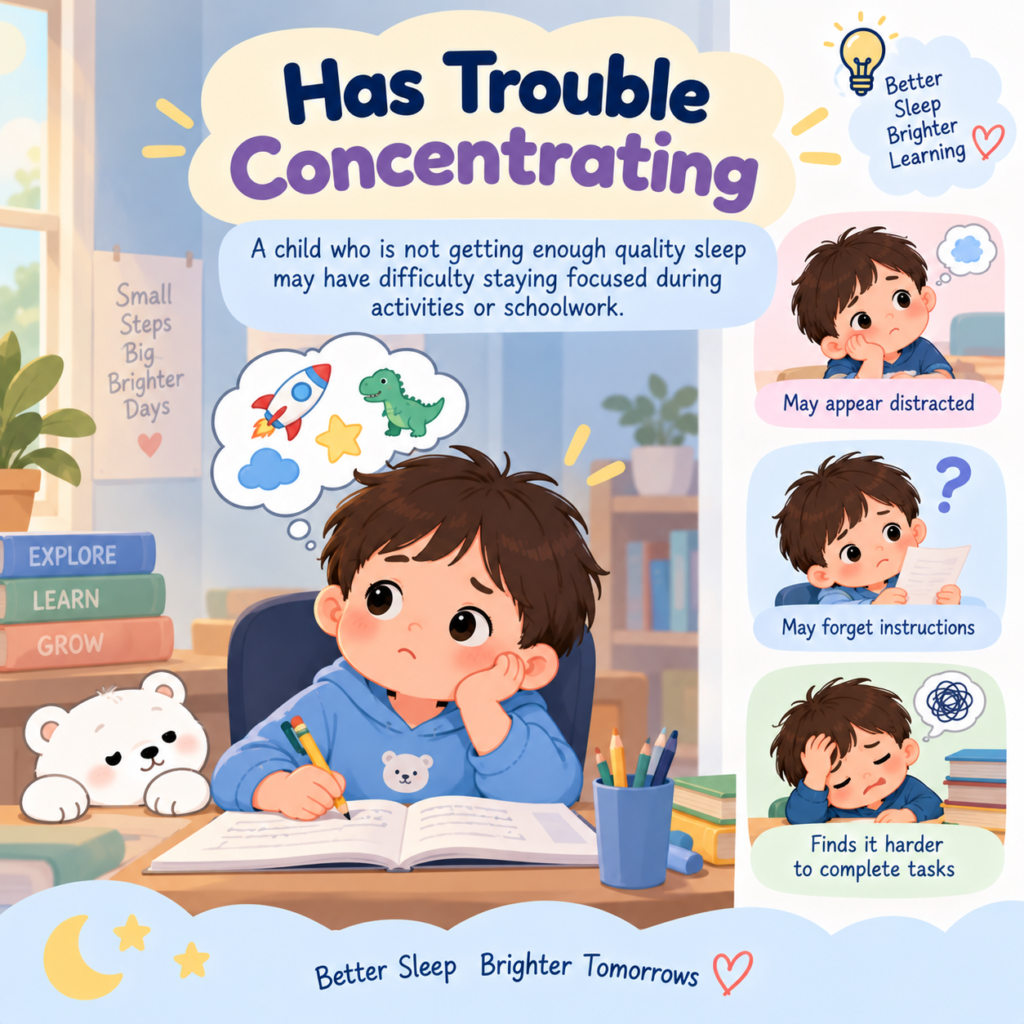
A child who is not getting enough quality sleep may have difficulty staying focused during activities or schoolwork.
They may appear distracted, forget instructions or find it harder to complete tasks.
6. Seems More Hyperactive or Restless
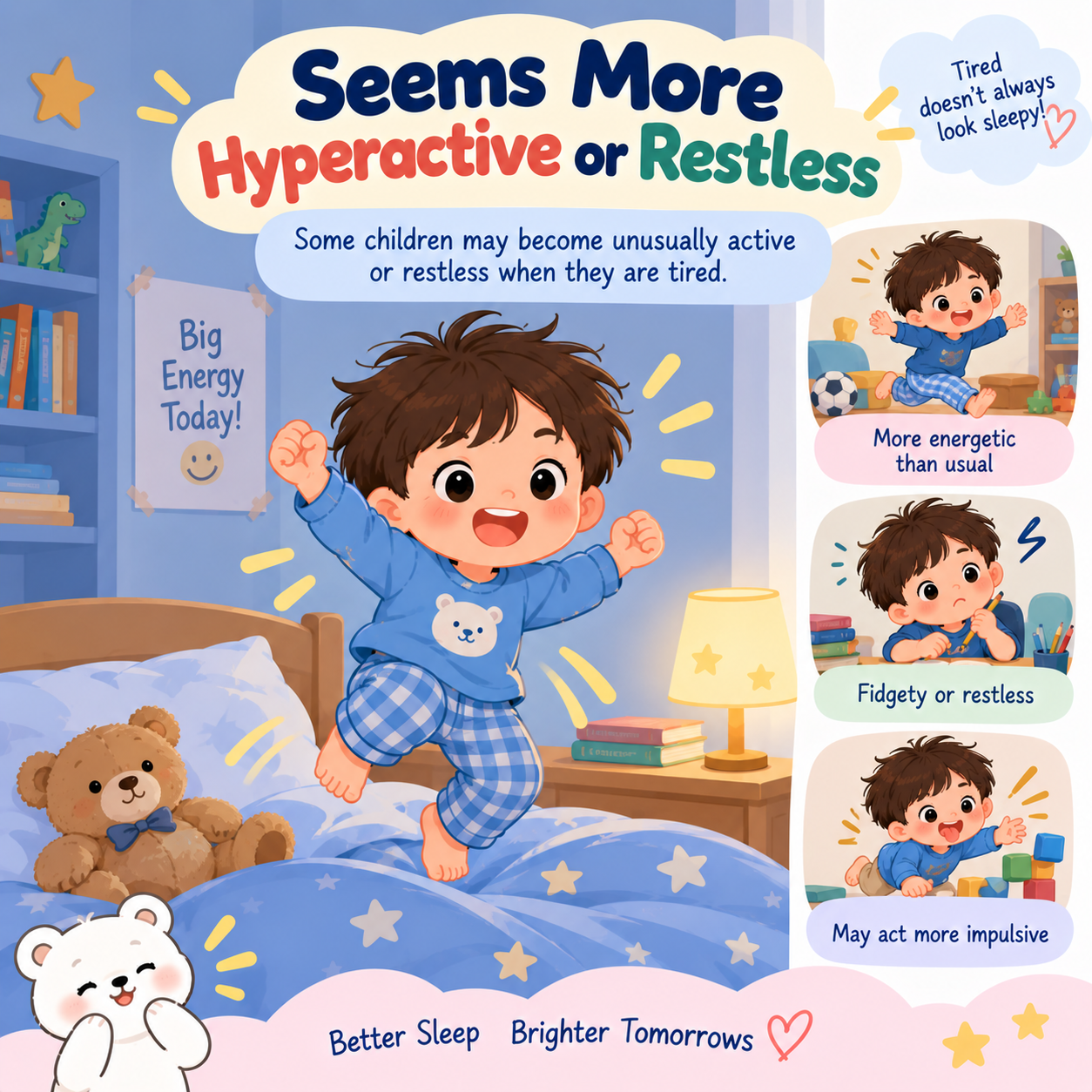
Some children may become unusually active or restless when they are tired.
Instead of slowing down, they may become more energetic, fidgety or impulsive.
This can sometimes make tiredness less obvious to parents.
7. Falls Asleep During the Day
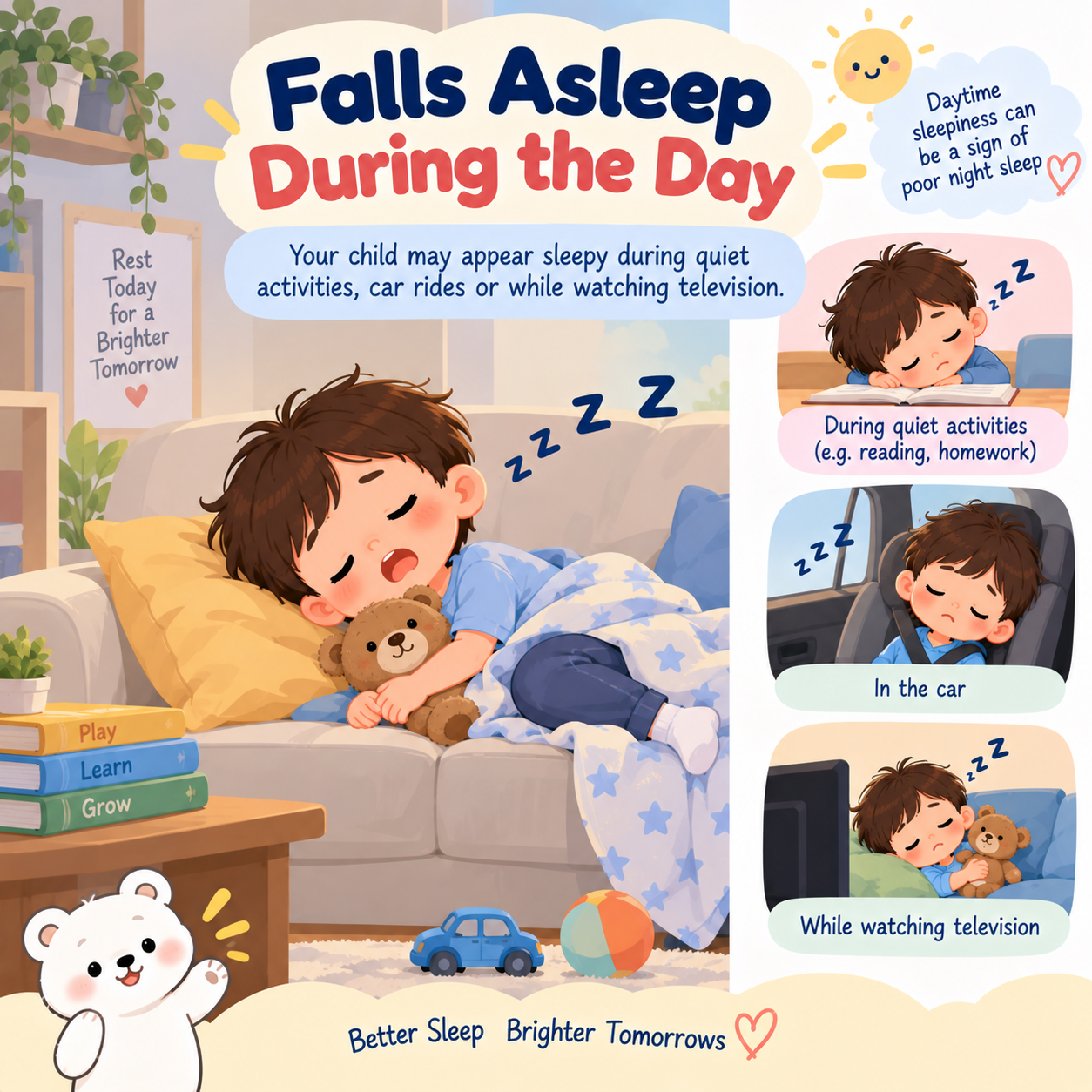
Your child may appear sleepy during quiet activities, car rides or while watching television.
Younger children may also become unusually dependent on daytime naps.
What Can Affect a Child's Sleep?
There isn’t always one reason why a child has difficulty sleeping.
Some possible factors include:
❁ Inconsistent bedtime routines
❁ Too much screen time before bed
❁ Anxiety or worries
❁ Changes in routine
❁ Environmental factors such as noise or light
❁ Difficulty settling independently
❁ Physical discomfort or illness
❁ Frequent night waking
❁ Changes in daytime naps
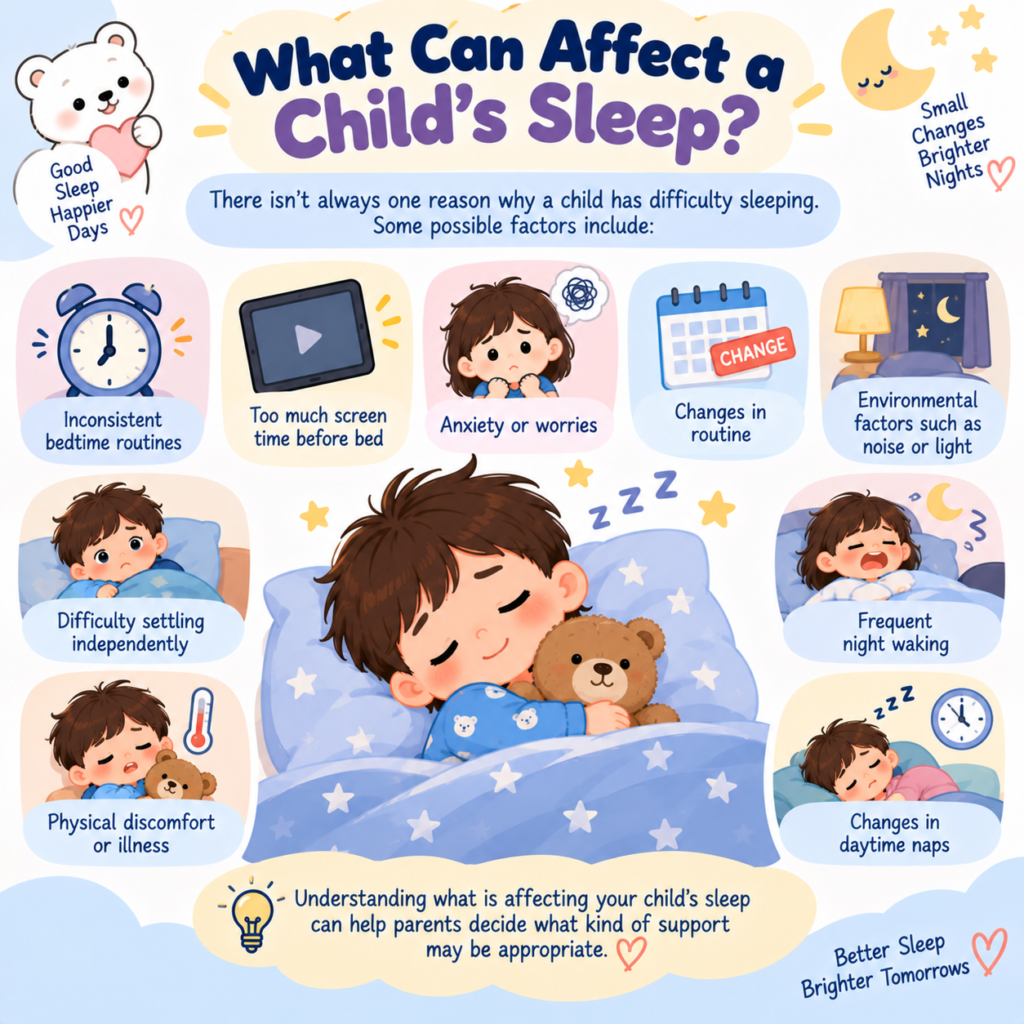
Understanding what is affecting your child’s sleep can help parents decide what kind of support may be appropriate.
How Can Parents Support Healthy Sleep?
Small changes to a child’s daily routine may help create better sleep habits.
Keep a Consistent Bedtime Routine
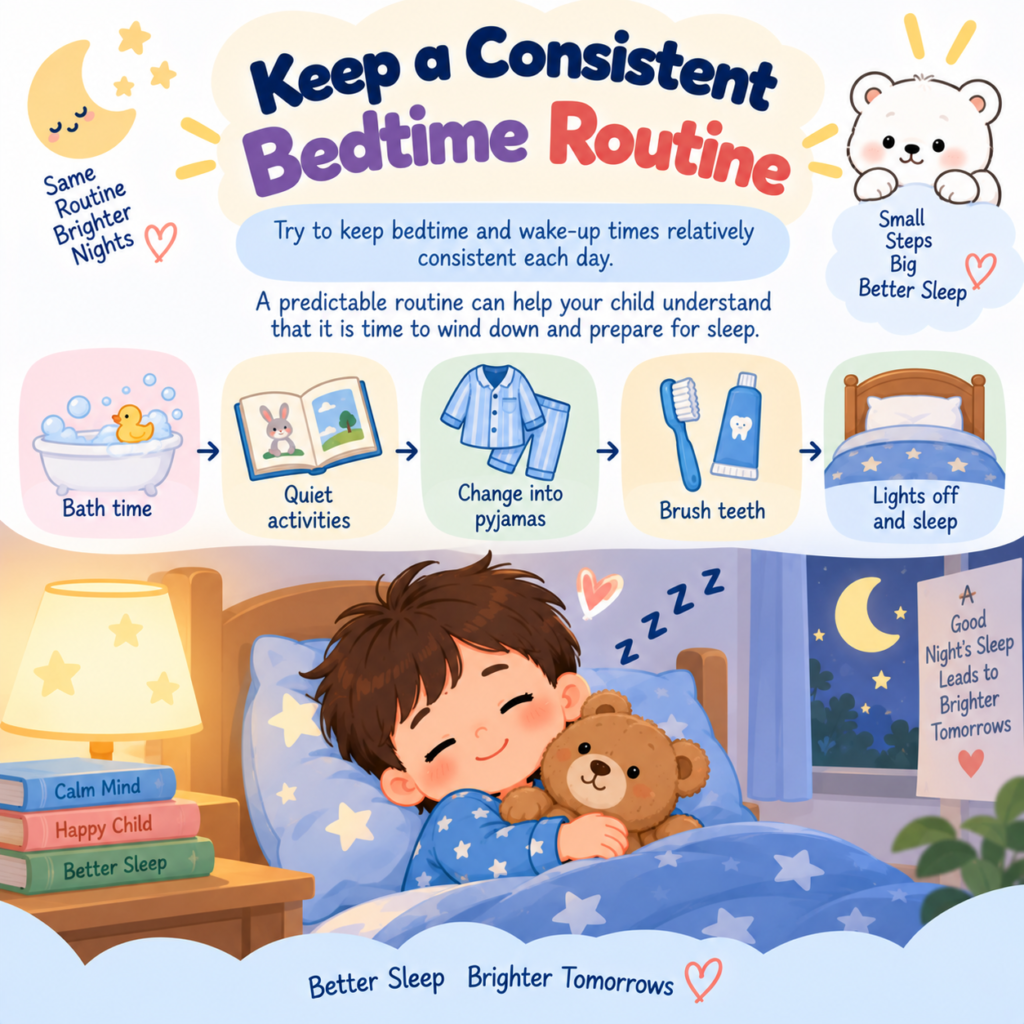
Try to keep bedtime and wake-up times relatively consistent each day.
A predictable routine can help your child understand that it is time to wind down and prepare for sleep.
Create a Calm Sleep Environment
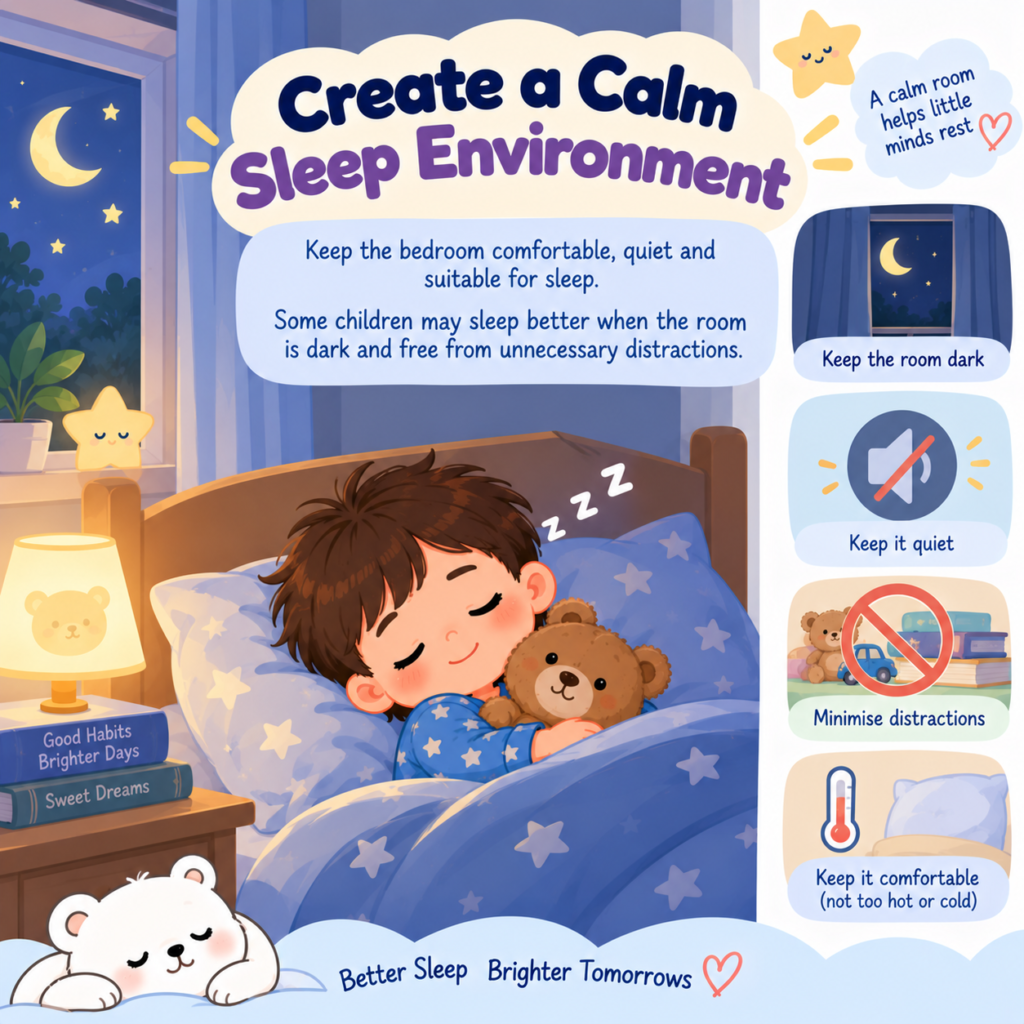
Keep the bedroom comfortable, quiet and suitable for sleep.
Some children may sleep better when the room is dark and free from unnecessary distractions.
Reduce Screen Time Before Bed
Screens can make it harder for some children to settle down before bedtime.

Consider replacing screen time with quieter activities such as reading, drawing or listening to a story.
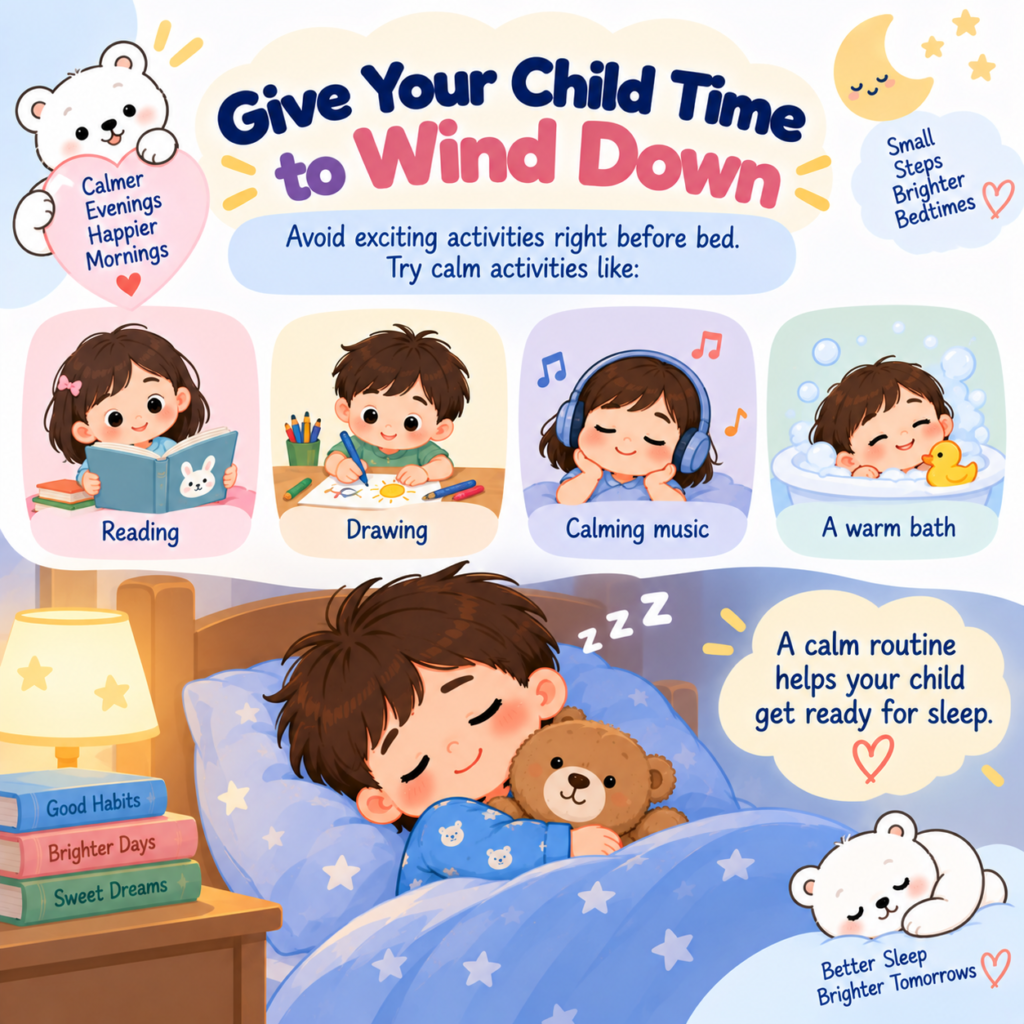
Give Your Child Time to Wind Down
Avoid moving directly from exciting activities into bedtime.
A short period of calm activities can help your child transition from daytime activities to sleep.
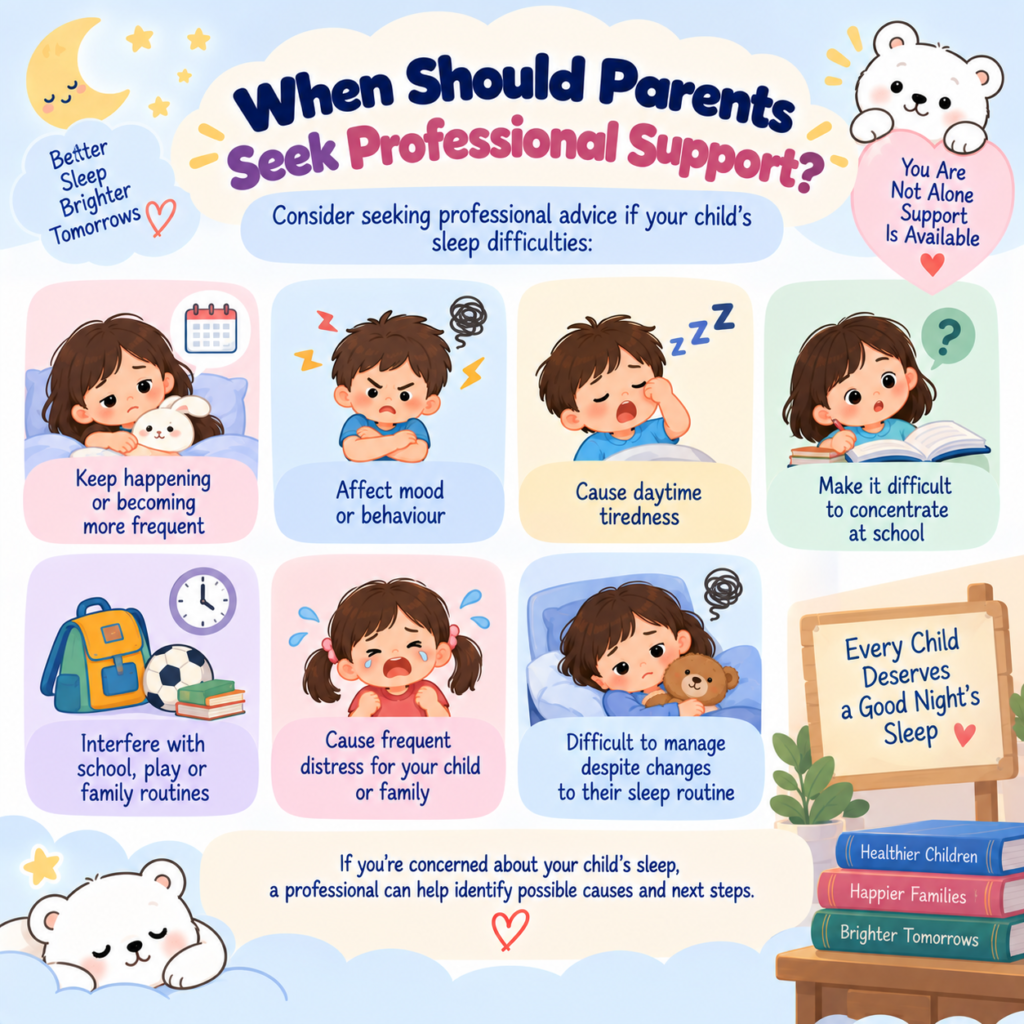
When Should Parents Seek Professional Support?
Consider seeking professional advice if your child’s sleep difficulties are:
❁ Persistent or becoming more frequent
❁ Affecting their mood or behaviour during the day
❁ Making it difficult for them to concentrate at school
❁ Causing significant daytime tiredness
❁ Interfering with school, play or family routines
❁ Causing frequent distress for your child or family
❁ Difficult to manage despite changes to their sleep routine
❁ Becoming increasingly difficult to manage
Sleep difficulties can have many possible causes.
If you are concerned about your child's sleep, a professional can help you understand the wider picture and determine whether further assessment or support may be appropriate.
Helping Your Child Get Better Sleep
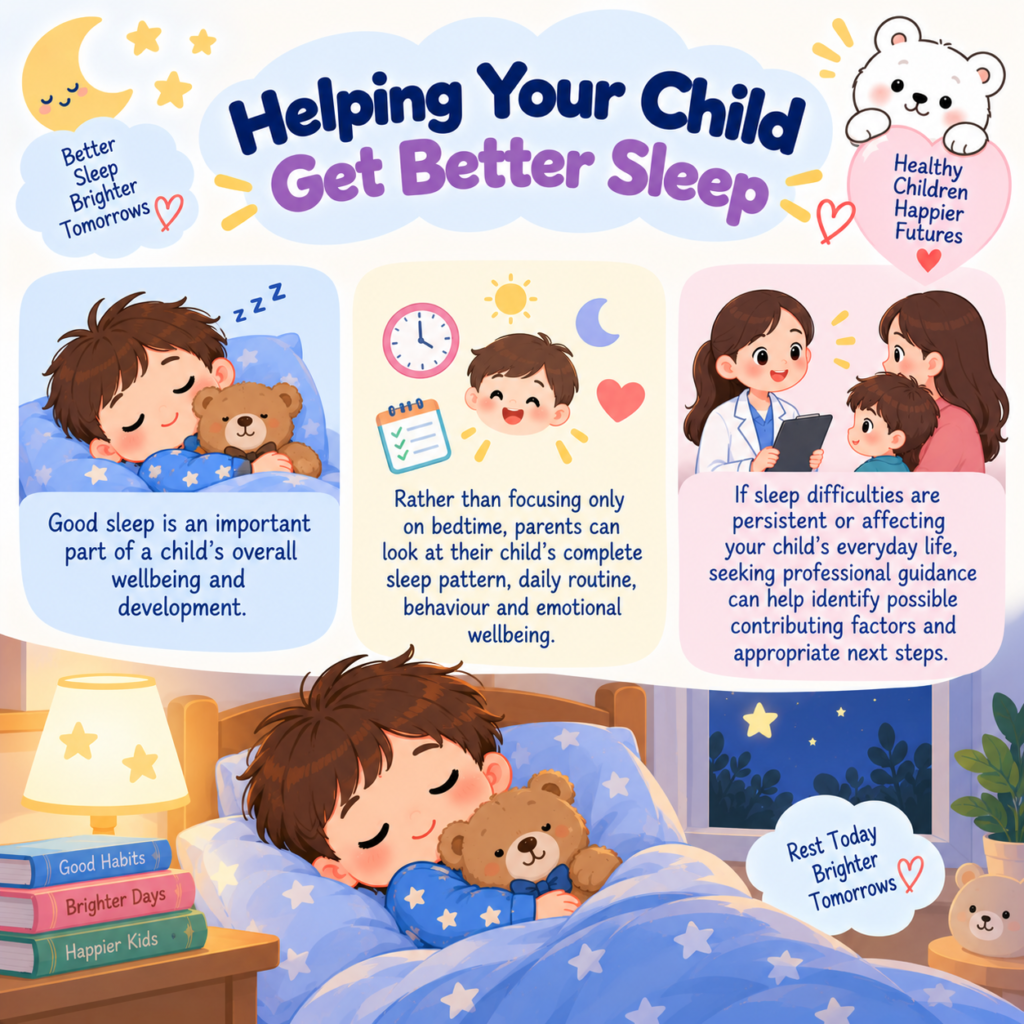
Good sleep is an important part of a child's overall wellbeing and development.
Rather than focusing only on bedtime, parents can look at their child’s complete sleep pattern, daily routine, behaviour and emotional wellbeing.
If sleep difficulties are persistent or affecting your child’s everyday life, seeking professional guidance can help identify possible contributing factors and appropriate next steps.
🌟 Stay Connected with Us! We love sharing tips, insights, and inspiring stories about children’s growth and mental wellbeing.
💙 Follow us on Instagram and Facebook for more updates and parenting advice.
Join our community and let’s grow together. One positive step at a time!

References
Centers for Disease Control and Prevention. (2024). About Sleep.
Centers for Disease Control and Prevention. https://www.cdc.gov/sleep/about/
Working Hours
Tuesday to Saturday – 8.30am to 6pm
Monday & Sunday – Closed
Please also subscribe us at
Contact Us
Discover Our Team!
📞+60102502833
firststepdevelopmentcentre@gmail.com
B1-7, Plaza Damas 3, Jalan Sri Hartamas 1, 50480 Kuala Lumpur.
Copyright 2025. Firststep Child Development Sdn Bhd. All rights reserved.