


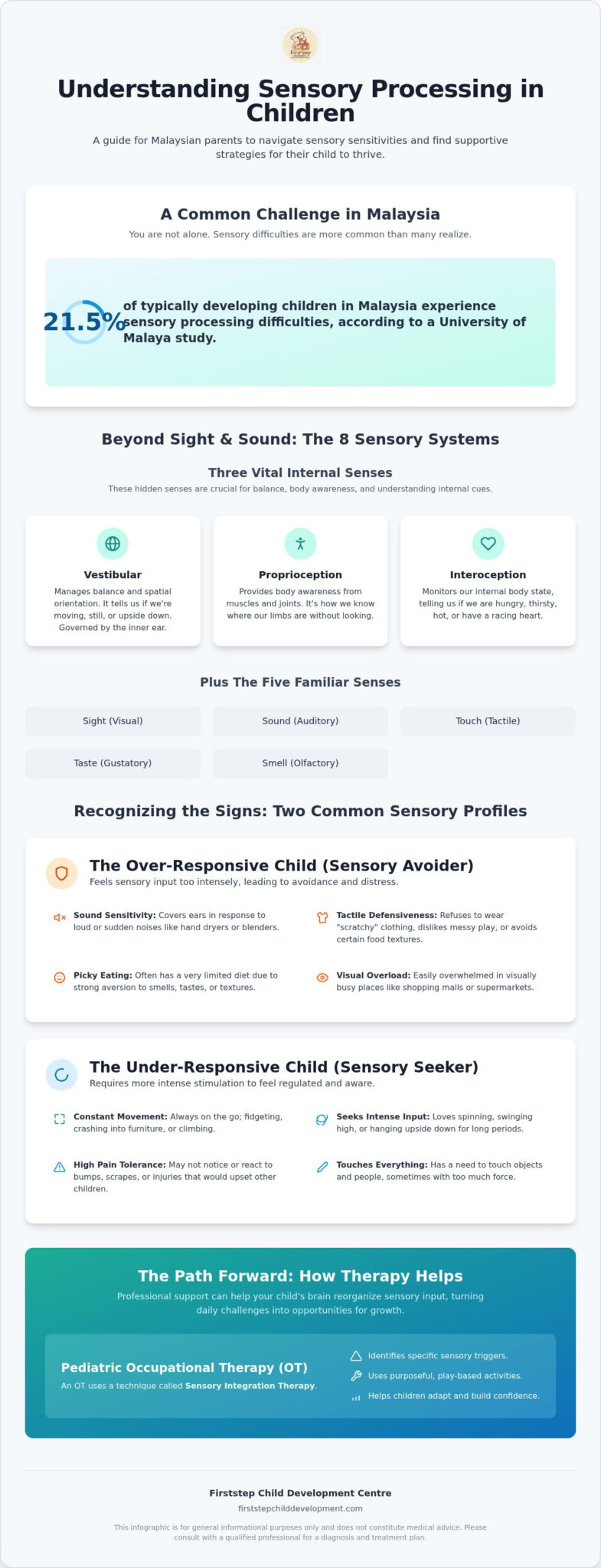
Imagine you’re enjoying a weekend outing at Suria KLCC when the bright lights and echoing crowds suddenly trigger an intense meltdown for your little one. While it’s easy to feel overwhelmed, these reactions often stem from sensory processing issues child Malaysia families frequently encounter. A University of Malaya study found that 21.5% of typically developing children in Malaysia experience these difficulties, a rate higher than in many other nations. You aren’t alone in wondering why certain textures cause distress or why picky eating feels like a constant battle. It’s natural to feel exhausted when your child’s world seems so much louder than yours.
This guide aims to provide clarity by helping you understand why your child reacts differently and how specialised support in Malaysia can help them thrive. We’ll explore common signs of sensory sensitivities, clarify the differences between sensory issues, ADHD, and autism, and outline the pathways to professional assessment. By identifying these patterns early, you can move from uncertainty toward a supportive strategy that empowers your child to navigate daily life with confidence and calm.
Key Takeaways
- Understand how sensory processing acts as the brain’s internal organiser for the eight senses, including often overlooked internal senses like proprioception and interoception.
- Learn to distinguish between hypersensitivity and hyposensitivity to better interpret your child’s unique physical and emotional reactions to their environment.
- Discover how play-based Pediatric Occupational Therapy provides a path forward for sensory processing issues child Malaysia, helping children adapt to daily triggers with greater ease.
- Gain actionable strategies for creating supportive spaces at home and effectively advocating for your child’s sensory needs within Malaysian school environments.
What are Sensory Processing Issues in Children?
At its core, sensory processing is the brain’s way of organising information from the environment. Every second, a child’s brain receives a flood of data from their surroundings. For most, this process is seamless. However, when a child reacts with distress to a sound or texture, it isn’t a result of “bad parenting” or a child being “difficult”. It’s a neurological response where the brain struggles to manage sensory input. In the context of sensory processing issues child Malaysia families face, understanding this mechanism is the first step toward empathy. These glitches in communication between the body and brain can make the world feel unpredictable and frightening.
The Eight Senses: Beyond Sight and Sound
Most of us are familiar with sight, sound, touch, taste, and smell. However, the brain also monitors three internal systems that are vital for daily functioning:
- Vestibular: Located in the inner ear, this manages balance and spatial orientation. It tells a child if they’re moving or standing still.
- Proprioception: This provides body awareness, telling the brain where limbs are without looking at them. It’s why we can walk without watching our feet.
- Interoception: This sense monitors internal states like hunger, thirst, or a racing heart.
Sensory Processing Disorder (SPD) vs. Sensory Sensitivities
While many children have occasional sensitivities, Sensory Processing Disorder (SPD) involves chronic challenges that disrupt daily life. Sensory Processing Disorder is a condition where sensory signals don’t get organised into appropriate responses. These challenges often overlap with neurodevelopmental conditions. This is why a professional autism assessment or ADHD assessment may be recommended. A specialist in pediatric occupational therapy can help determine if these sensitivities are standalone or part of a broader developmental profile.
Common Signs and Red Flags for Parents in Malaysia
Identifying Sensory Processing Disorder in Children involves looking at how they react to everyday environments. In Malaysia, this might mean a child who becomes inconsolable at a loud, humid pasar malam or one who constantly bumps into furniture at home. These behaviours aren’t just “phases”; they are indicators of how a child’s nervous system handles input. Recognising these patterns early is essential for supporting your child’s development.
The Over-Responsive Child (Sensory Avoiders)
These children feel sensory input too intensely. They might cover their ears at the sound of a hand dryer in a shopping centre or refuse to wear “scratchy” school uniforms. Food also becomes a challenge. What looks like “picky eating” is often a strong aversion to the smell of sambal or the slimy texture of certain local vegetables. If your child struggles with these daily battles, a nutritionist consultation can help identify if sensory issues are driving their limited diet.
The Under-Responsive Child (Sensory Seekers)
Conversely, some children require more stimulation to feel “regulated”. You might notice them “crashing” into walls, spinning for long periods, or showing a surprisingly high pain tolerance after a fall. Because they don’t receive enough feedback from their muscles and joints, they often appear clumsy. These children are constantly seeking intense movement to satisfy their brain’s needs. Whether your child is avoiding or seeking, these sensory processing issues child Malaysia families face can be managed with the right professional guidance. Understanding these red flags helps you move away from frustration and toward a more supportive, tailored environment for your little one.
How Pediatric Occupational Therapy Helps Sensory Issues
When managing sensory processing issues child Malaysia, a Pediatric Occupational Therapist (OT) acts as a vital guide. Their role is to identify specific triggers and design a path forward through Sensory Integration therapy. This approach uses purposeful play to help the brain reorganise how it receives and responds to sensory input. By working alongside clinical psychologists, OTs ensure a holistic view of the child’s development. Early intervention is key; it helps prevent secondary challenges like social anxiety or school refusal that often arise when a child feels misunderstood by their environment.
What Happens During a Sensory Assessment?
Many parents worry that a clinical setting will be intimidating for their little ones. However, how assessments work is through structured, play-based observation. The therapist uses specialised equipment such as:
- Swings to stimulate the vestibular system for balance.
- Weighted blankets for calming proprioceptive input.
- Tactile bins filled with rice or sand to explore touch in a safe way.
This gentle approach allows the therapist to see how the child naturally interacts with different stimuli without the pressure of a traditional medical exam.
Creating a “Sensory Diet” for Your Child
A sensory diet isn’t about food. It is a personalised activity plan designed to keep your child regulated throughout their day. It often includes “heavy work” activities that provide intense muscle and joint feedback. Practical examples include pushing a heavy laundry basket, performing wall push-ups before school, or carrying a slightly weighted backpack. These tasks help ground the child, making it easier for them to focus and remain calm. If you’ve noticed these signs, seeking professional guidance is a proactive step toward your child’s well-being. Learn more about how Pediatric Occupational Therapy can support your family’s journey.
Practical Strategies for Home and School in KL & Selangor
Living in a bustling metropolitan area like Kuala Lumpur presents unique challenges for families managing sensory processing issues child Malaysia. From the sensory overload of a weekend at Mid Valley Megamall to the structured demands of a classroom, having a toolkit of practical strategies is essential. At home, you can start by creating a “calm-down corner”. This isn’t a place for punishment, but a safe haven with dim lights, soft textures, and perhaps a weighted lap pad to help your child decompress when their environment becomes too intense. These small adjustments provide a predictable space where a child can regain their emotional balance.
Navigating Public Spaces in Malaysia
Family gatherings and shopping centres in KL are often loud, brightly lit, and crowded. Carrying noise-cancelling headphones can make a trip to a busy food court much more manageable for a child sensitive to sound. It’s also helpful to “pre-warn” your child about upcoming sensory changes in their routine. Giving them a five-minute countdown before leaving the house or arriving at a busy event helps their brain prepare for the sensory shift, reducing the likelihood of a meltdown. Planning your route to include “quiet zones” within malls can also offer much-needed breaks during long outings.
Working with Your Child’s School
Many private and international schools in Selangor and KL are increasingly open to supporting diverse learners. When speaking with teachers, suggest simple classroom accommodations such as allowing “fidget tools” or providing preferential seating away from noisy air-conditioners or high-traffic doorways. Sensory support is a tool for school success, not a crutch. Professional parent consultation and guidance can help you articulate these needs clearly to educators. By working together, you can ensure that these strategies are tailored to your family’s specific needs, helping your child feel confident and capable in every environment they encounter.
Empowering Your Child’s Developmental Growth
Understanding that your child’s intense reactions are a neurological response rather than a behavioural choice is the first step toward a calmer household. By identifying the specific signs of sensory processing issues child Malaysia, you can move from feeling overwhelmed to taking proactive, supportive action. Whether it’s creating a sensory diet at home or advocating for classroom adjustments in Selangor, these strategies provide the foundation for your child to thrive in a world that often feels too loud or too bright.
If you are concerned about your child’s sensory development, book a consultation with our experienced team at Firststep Psychology & Child Development Centre today. Our multidisciplinary specialists in KL and Selangor offer a gentle, play-based assessment environment designed to provide you with comprehensive feedback and a clear path forward. You don’t have to navigate these complexities alone; professional guidance can help unlock your child’s true potential and bring peace of mind to your family.
Frequently Asked Questions
Is sensory processing disorder the same as autism?
Sensory processing disorder isn’t the same as autism, though the two conditions frequently overlap. While many autistic children experience sensory sensitivities, a child can have sensory processing issues without being on the autism spectrum. A 2021 study from the University of Malaya highlights this connection, noting that 68.8% of Malaysian children with autism struggle with sensory input. Professional assessments help clarify your child’s specific developmental profile and ensure they receive appropriate support.
Can a child outgrow sensory processing issues?
Children don’t typically outgrow these challenges, but they can learn effective ways to manage them. With early intervention, like pediatric occupational therapy, children develop the self-regulation skills needed to navigate their environment. The goal isn’t to wait for the issues to disappear, but to provide tools that help the brain adapt. This proactive approach ensures sensory processing issues child Malaysia families face don’t hinder a child’s long-term academic or social success.
What should I do if my child is a very picky eater?
If your child’s eating habits go beyond typical pickiness, it may be a sign of sensory sensitivity to textures or smells. Start by keeping a food diary to identify specific triggers, such as mushy or crunchy textures. Consulting a nutritionist or an occupational therapist is a helpful next step. These specialists can determine if the behaviour is sensory-based and provide gentle strategies to expand your child’s diet safely and comfortably.
Does insurance in Malaysia cover occupational therapy for sensory issues?
Coverage for occupational therapy varies significantly among insurance providers in Malaysia. Many private medical plans classify sensory or developmental challenges as “congenital” or “developmental” conditions, which are often excluded from standard policies. It’s best to check your specific policy details or speak with your HR department regarding corporate benefits. Some parents in KL and Selangor find that specialised education or wellness riders offer more flexible support for these essential services.
How long does sensory integration therapy typically take?
There is no fixed timeline because every child’s nervous system responds differently to intervention. Most families begin to see meaningful progress in self-regulation and focus after three to six months of regular sessions. The duration depends on the complexity of the child’s needs and how consistently strategies are used at home. Your therapist will provide regular feedback and adjust the plan to ensure your child continues to reach their developmental milestones.

Article by
Firststep Child Development Team
Firststep Child Development Team provides evidence-informed educational resources to help parents better understand child development, behaviour and learning. Our multidisciplinary services include clinical psychology, occupational therapy, speech and language therapy, developmental assessments and other child development support in Kuala Lumpur and Selangor.
Disclaimer
This article is for general educational and informational purposes only and is not a substitute for professional medical, psychological or therapeutic advice, diagnosis or treatment. Every child develops differently. If you have concerns about your child's development, behaviour, learning or wellbeing, please consult an appropriately qualified healthcare or allied health professional.