


Selective Mutism in Children: Signs Parents Should Know & How to Help
Have you noticed that your child talks comfortably at home but becomes very quiet or does not speak at school, around unfamiliar people, or in certain social situations?
Perhaps your child chats freely with family members but stays silent when a teacher asks a question or when other children try to talk to them.
While some children may naturally be shy or slow to warm up, consistently being unable to speak in certain situations may be a sign of selective mutism.
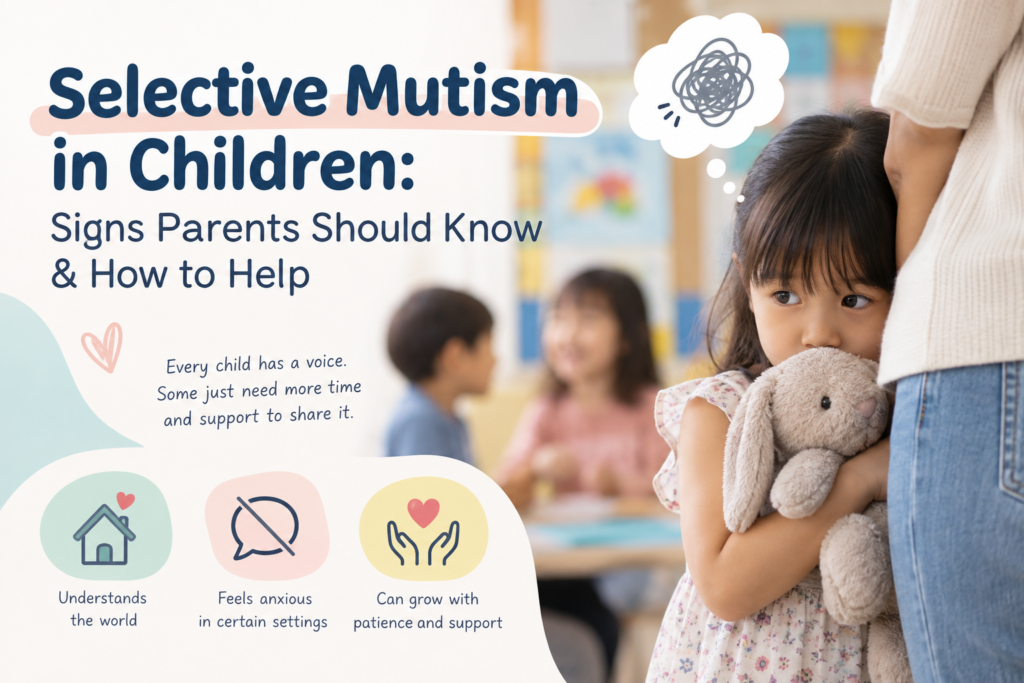
Understanding the signs of selective mutism can help parents recognise when their child may need additional support.
What Is Selective Mutism?
Selective mutism is an anxiety-related condition in which a child is consistently unable to speak in certain social situations, even though they are able to speak comfortably in other situations.
For example, a child may:
🌸Talk normally with parents at home
🌸Speak freely with close family members
🌸Become silent when entering school
🌸Avoid speaking to teachers or classmates
🌸Use gestures, nodding or pointing instead of talking
The word “selective” does not mean that a child is deliberately choosing when to speak. Anxiety can trigger a freeze response, making it extremely difficult for the child to speak in certain situations.
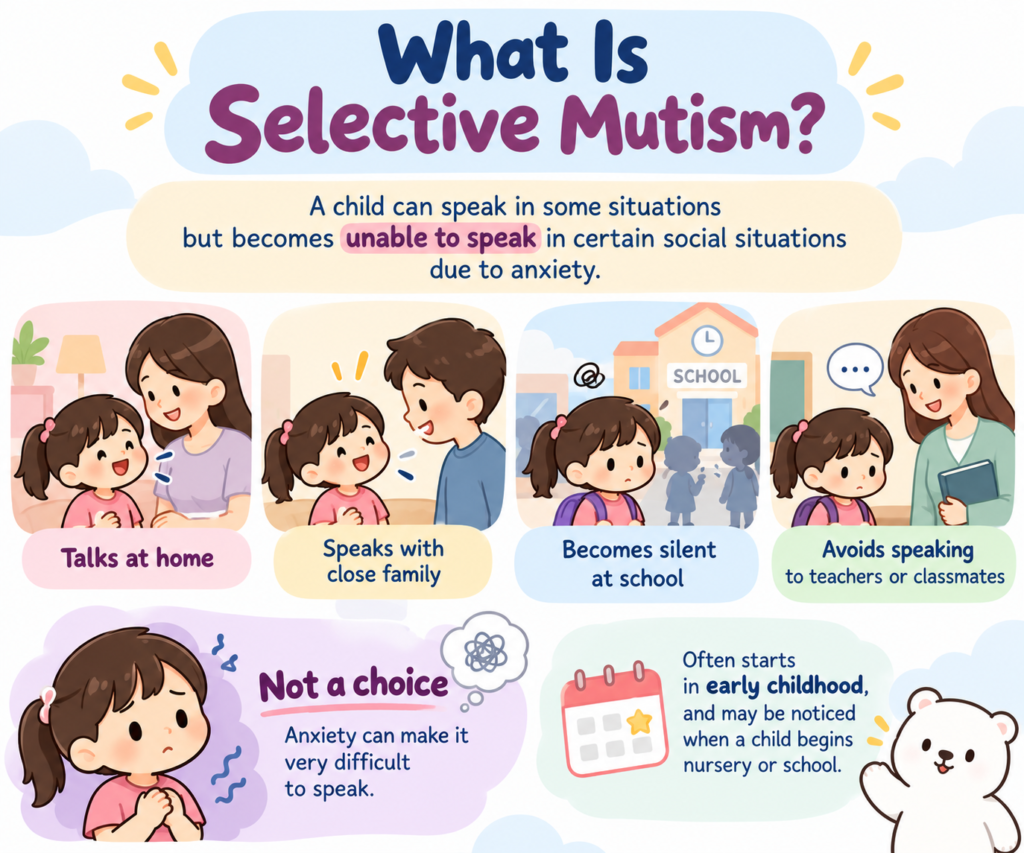
Selective mutism commonly begins during early childhood and may become noticeable when a child starts nursery or school.
Is Selective Mutism Just Shyness?
Not necessarily.
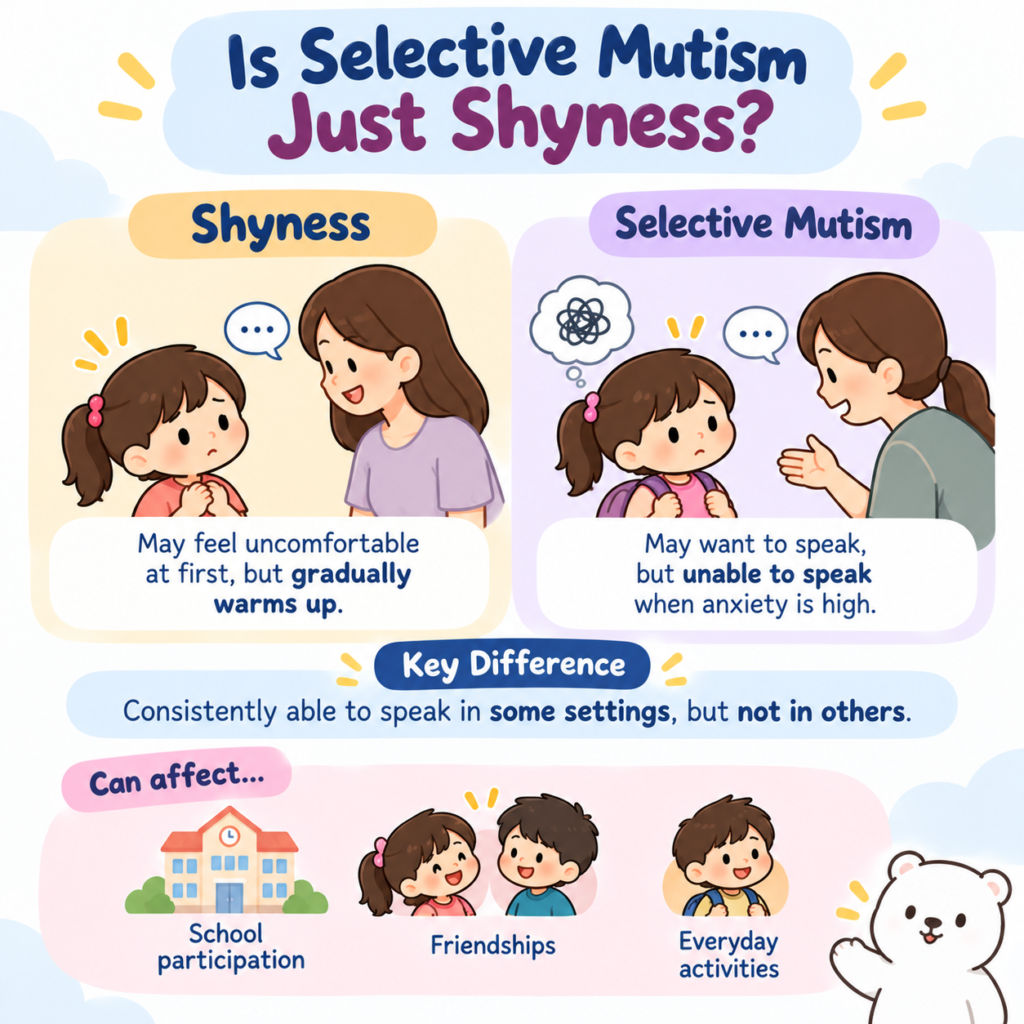
A shy child may initially feel uncomfortable speaking to unfamiliar people but may gradually become more comfortable as they get to know the person or situation.
A child with selective mutism may want to communicate but find that they are unable to speak when anxiety becomes overwhelming.
The key difference is often the consistent pattern of being able to speak in some settings but not in others.
Selective mutism can also affect a child’s participation in school, friendships and everyday activities.
Signs of Selective Mutism Parents Should Know
Selective mutism can look different from one child to another.
You may notice that your child:
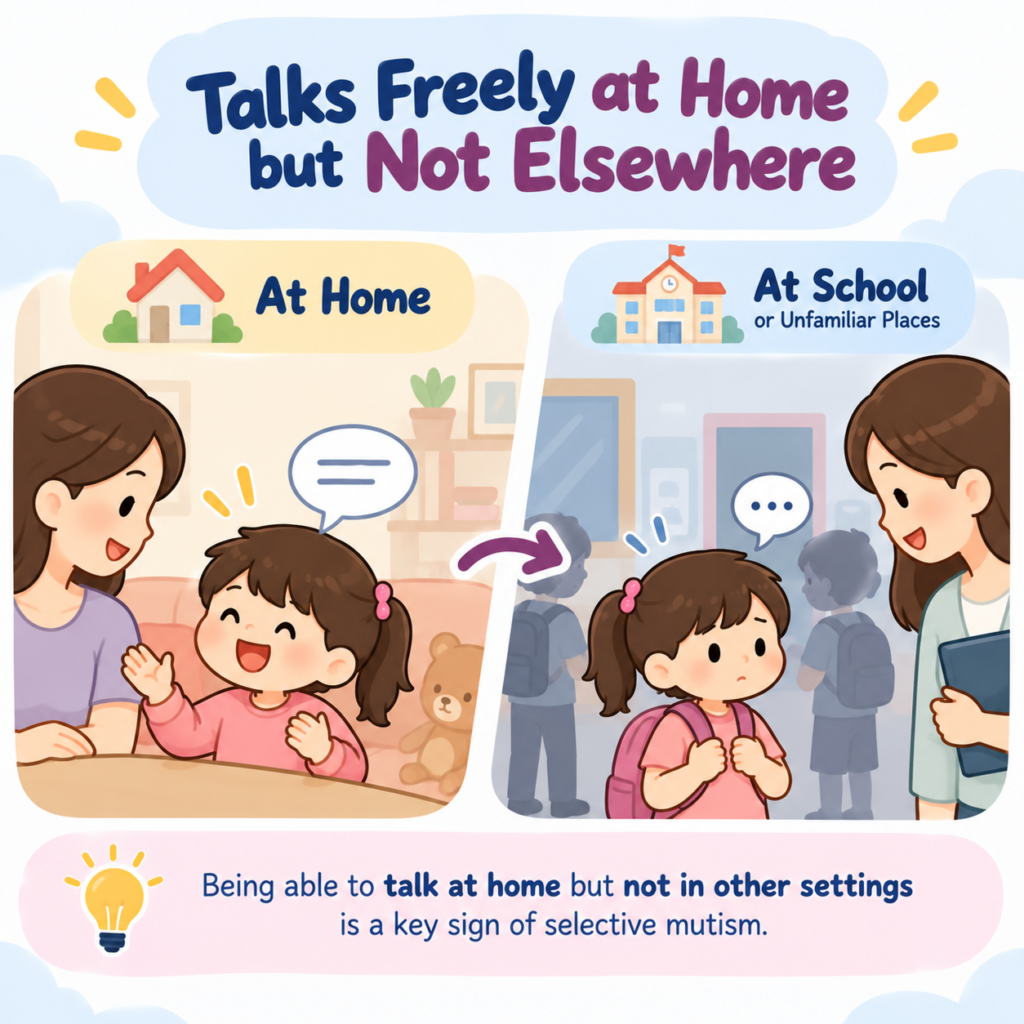
1. Talks Freely at Home but Not Elsewhere
Your child may have plenty to say at home but become very quiet or completely silent in school or unfamiliar environments.
This difference between settings is one of the important signs parents may notice.
2. Becomes Very Still or Frozen
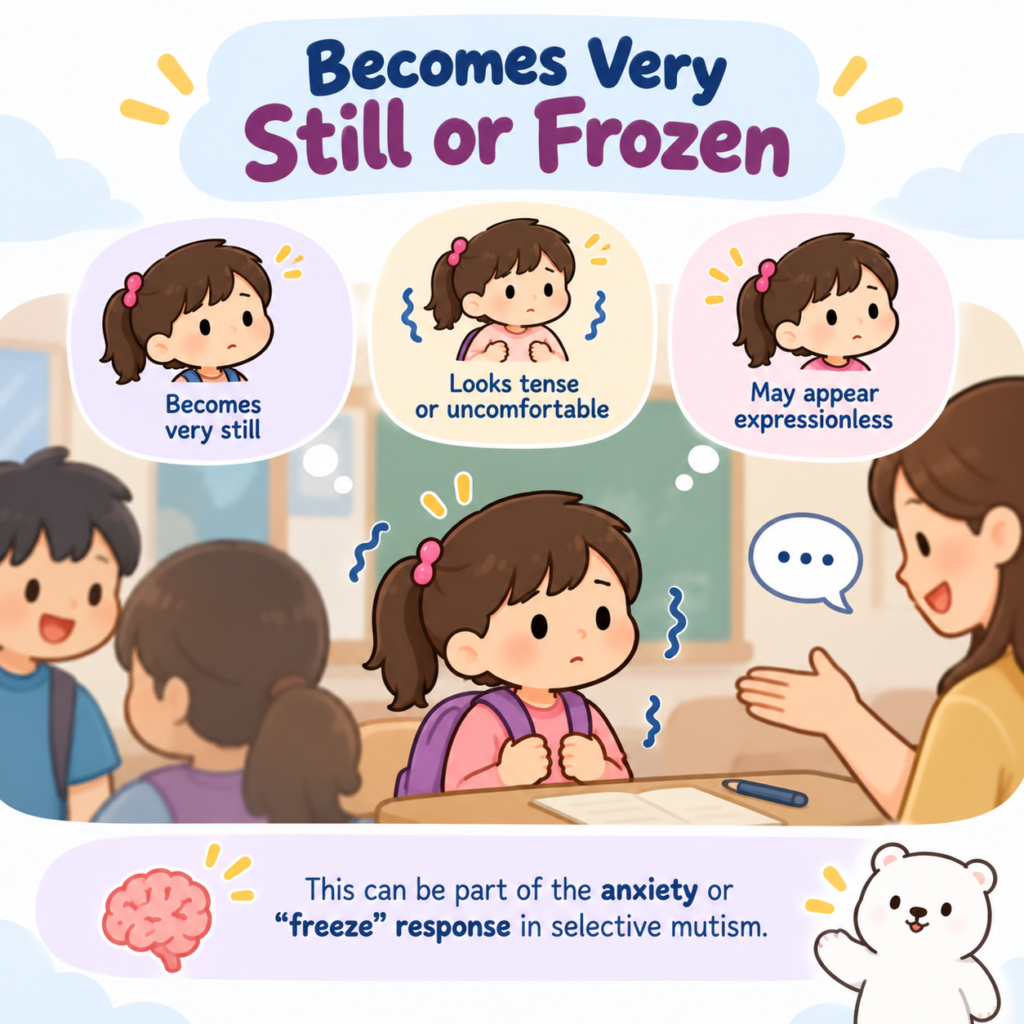
🌸When expected to speak, your child may suddenly become still, tense or expressionless.
🌸They may look uncomfortable but appear unable to respond.
🌸This can be part of the anxiety or “freeze” response associated with selective mutism.
3. Uses Gestures Instead of Words
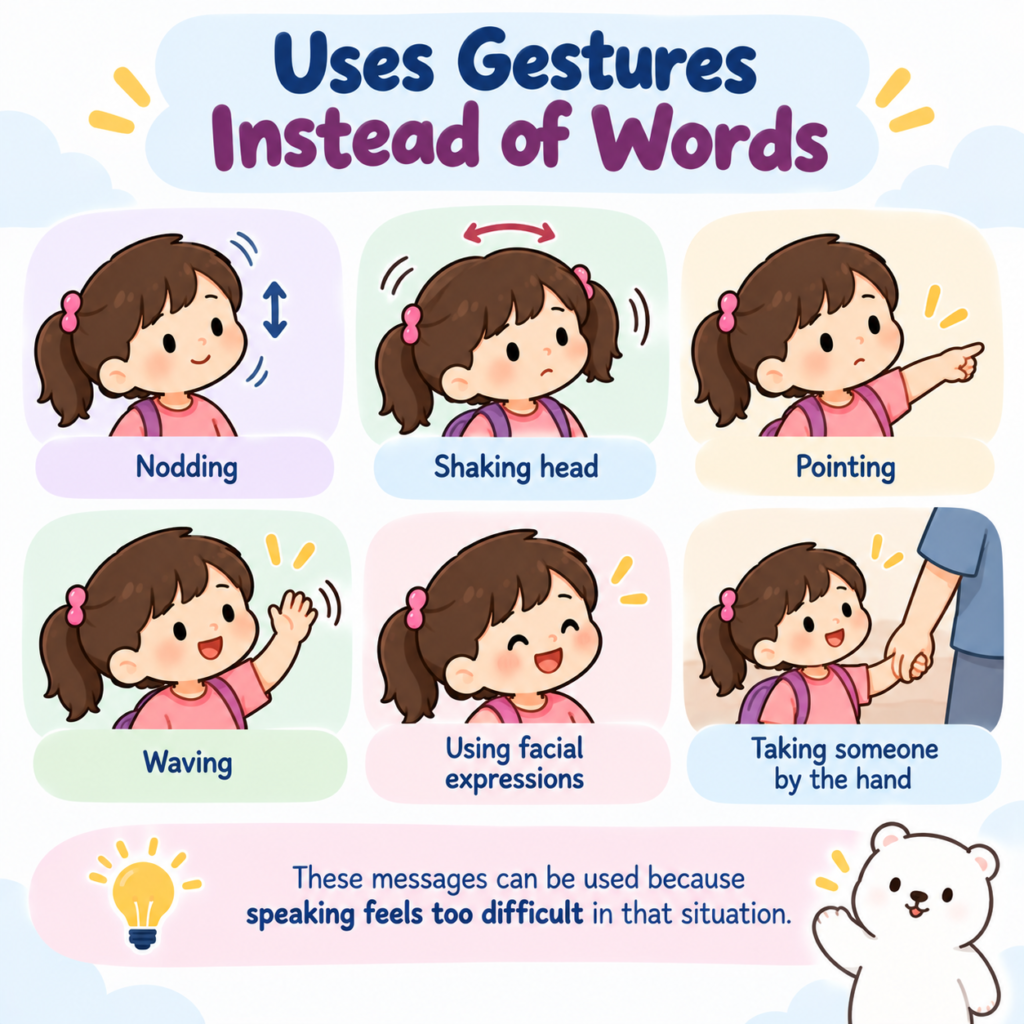
Your child may communicate by:
🌸Nodding or shaking their head
🌸Pointing
🌸Waving
🌸Using facial expressions
🌸Taking someone by the hand
Some children may use these forms of communication because speaking feels too difficult in that situation.
4. Avoids Eye Contact or Social Interaction
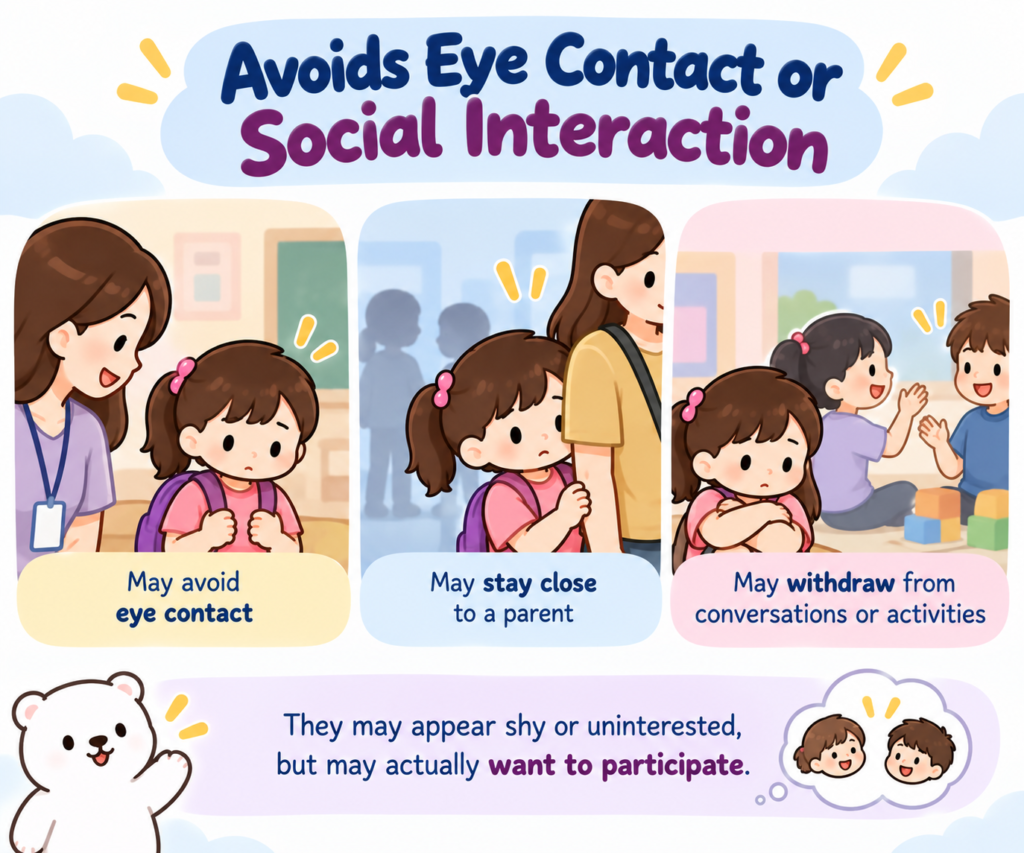
🌸A child may avoid looking at people, withdraw from conversations or stay close to a parent when they feel anxious.
🌸They may appear shy, withdrawn or uninterested even though they may actually want to participate.
5. Struggles to Answer Simple Questions
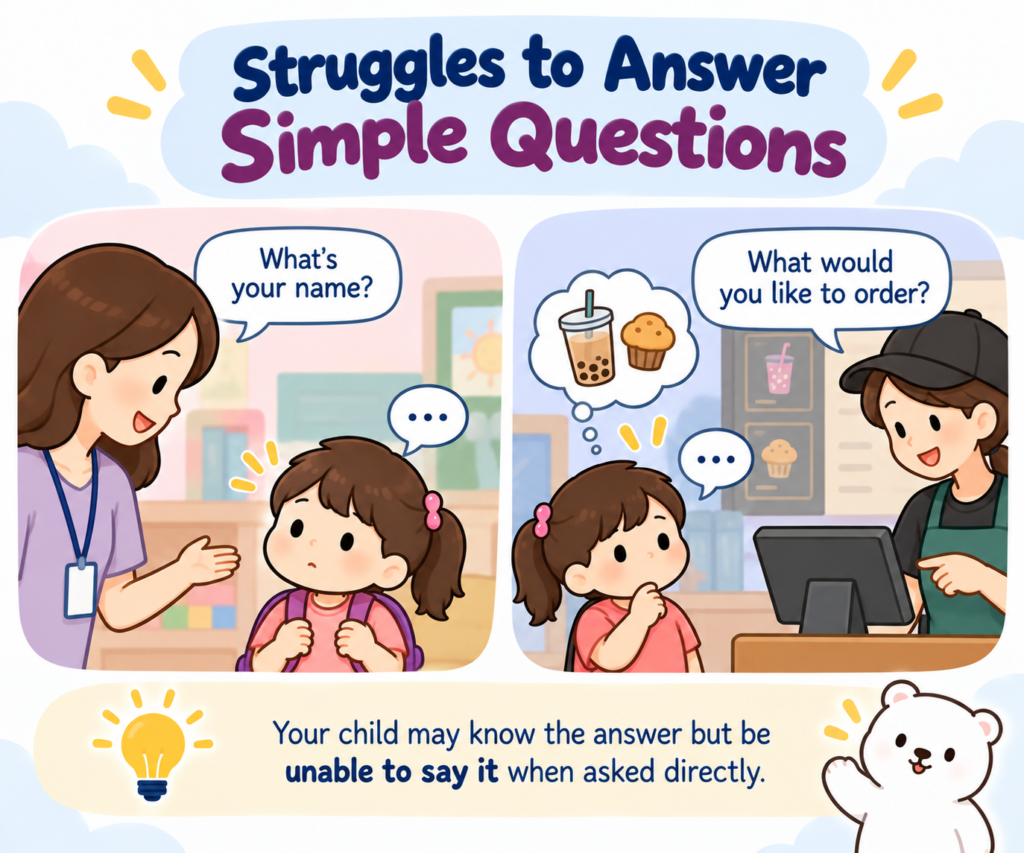
🌸Your child may know the answer but be unable to say it when someone asks them directly.
🌸For example, they may know what they want to order but be unable to tell the cashier.
6. Has Difficulty Speaking at School
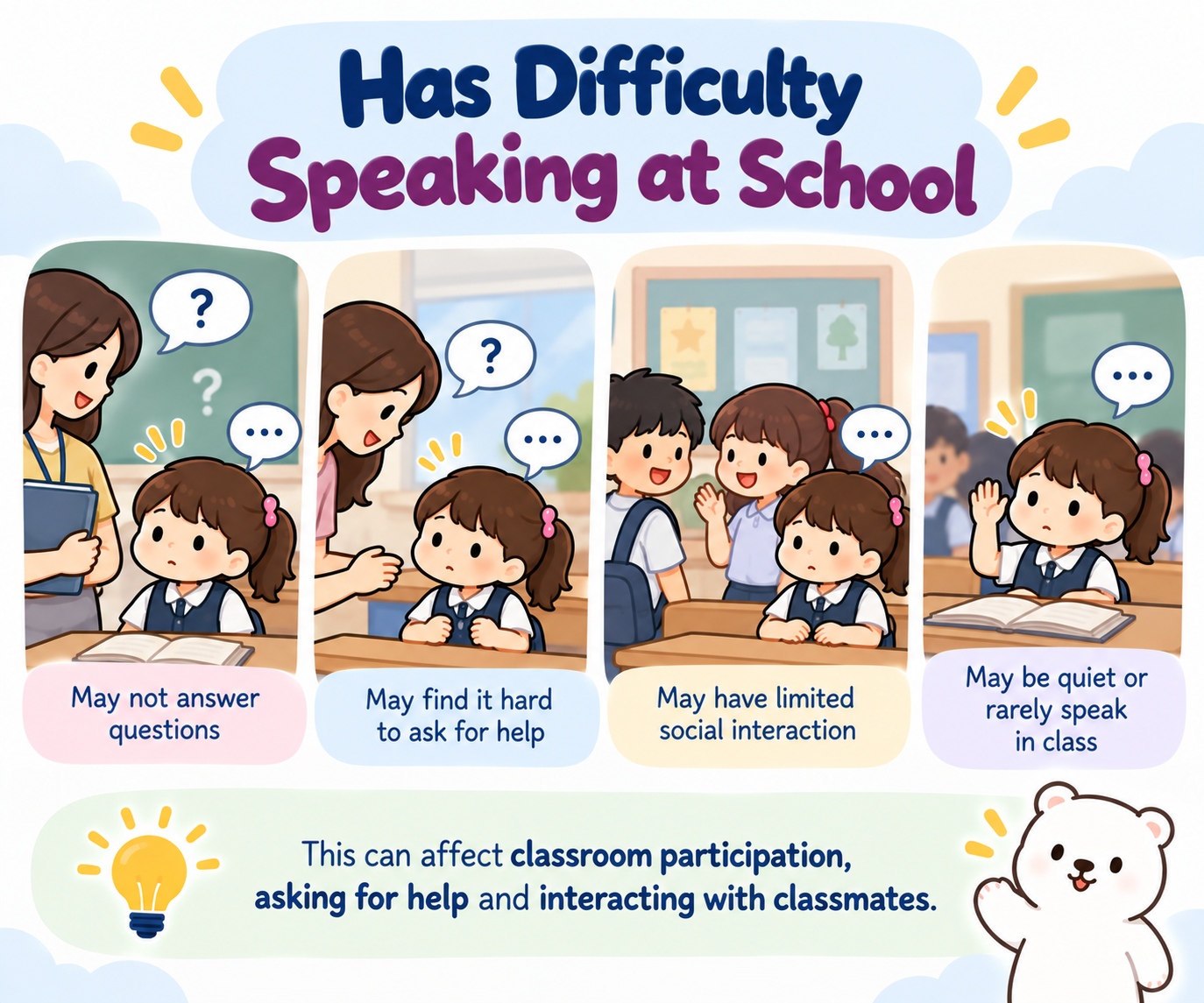
🌸Some children with selective mutism may rarely or never speak at school.
🌸This can affect classroom participation, asking for help, answering questions and interacting with classmates.
7. Shows Anxiety in Social Situations
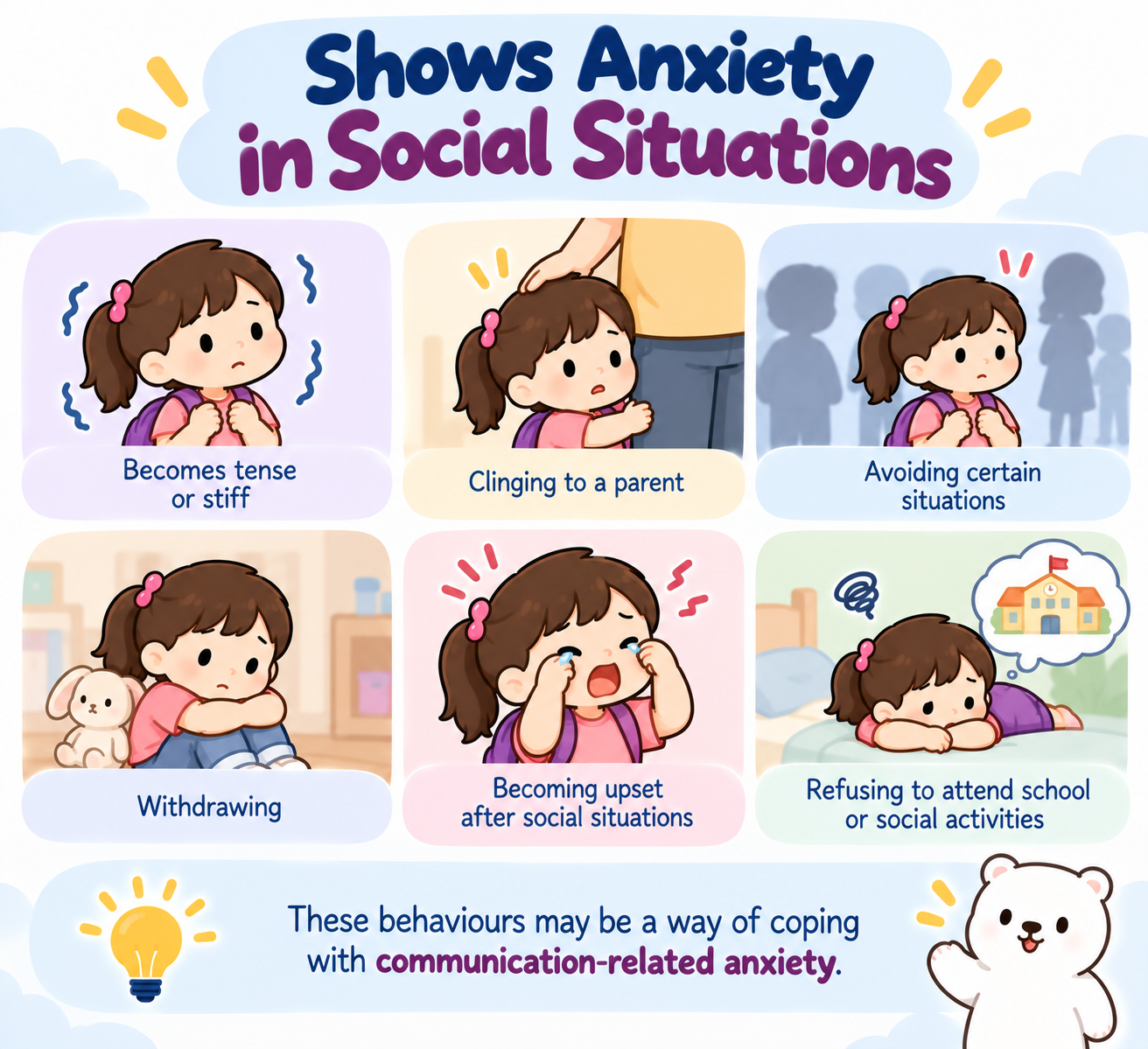
You may notice physical or behavioural signs of anxiety, such as:
🌸Becoming tense or stiff
🌸Clinging to a parent
🌸Avoiding certain situations
🌸Withdrawing
🌸Becoming upset after social situations
🌸Refusing to attend school or social activities
These behaviours may be the child’s way of coping with communication-related anxiety.
What Causes Selective Mutism?
There is no single known cause of selective mutism.
It is strongly associated with anxiety, and different factors may contribute to a child’s difficulties.
Possible contributing factors may include:
🌸A tendency towards anxiety
🌸Difficulty coping with unfamiliar situations
🌸Speech or language difficulties
🌸Hearing difficulties
🌸Sensory sensitivities
🌸Stressful or overwhelming environments
🌸Difficulty communicating in certain social situations
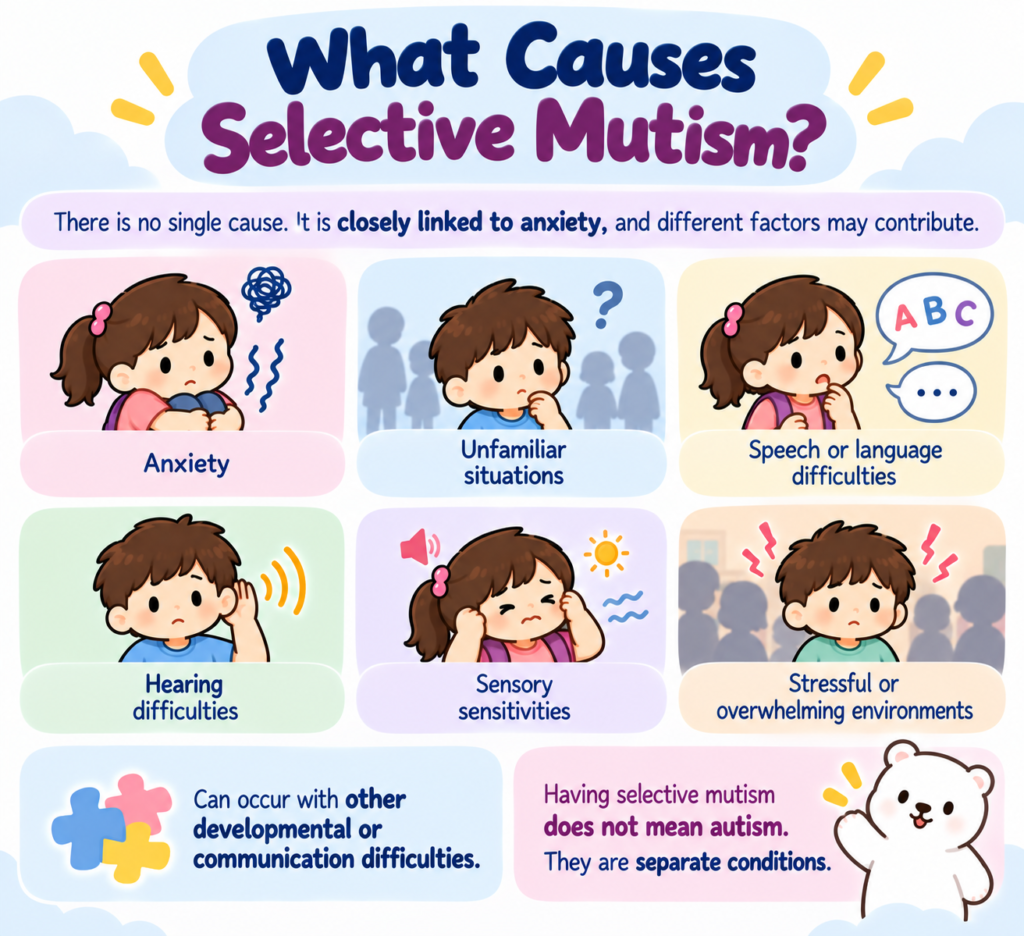
Selective mutism can occur alongside other developmental or communication difficulties, although having selective mutism does not mean that a child is autistic.
A child can have selective mutism and autism at the same time, but they are separate conditions.
How Can Parents Help?
Supporting a child with selective mutism is not about forcing them to speak.
Instead, the goal is to reduce anxiety and gradually help the child feel more comfortable communicating.
Create a Low-Pressure Environment
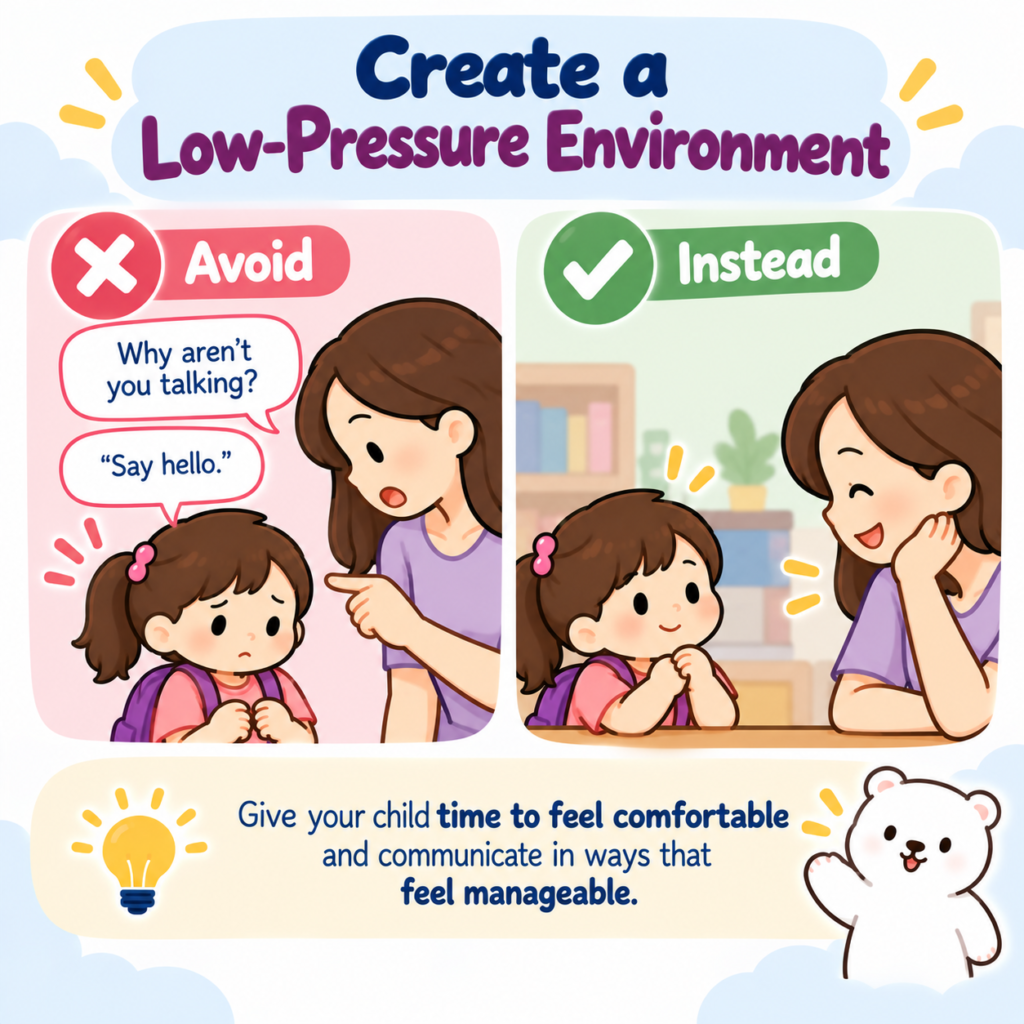
Avoid repeatedly asking:
“Why aren’t you talking?”
or
“Say hello.”
🌸Putting pressure on a child to speak may increase their anxiety.
🌸Instead, allow them time to become comfortable and communicate in ways that feel manageable.
Accept Non-Verbal Communication
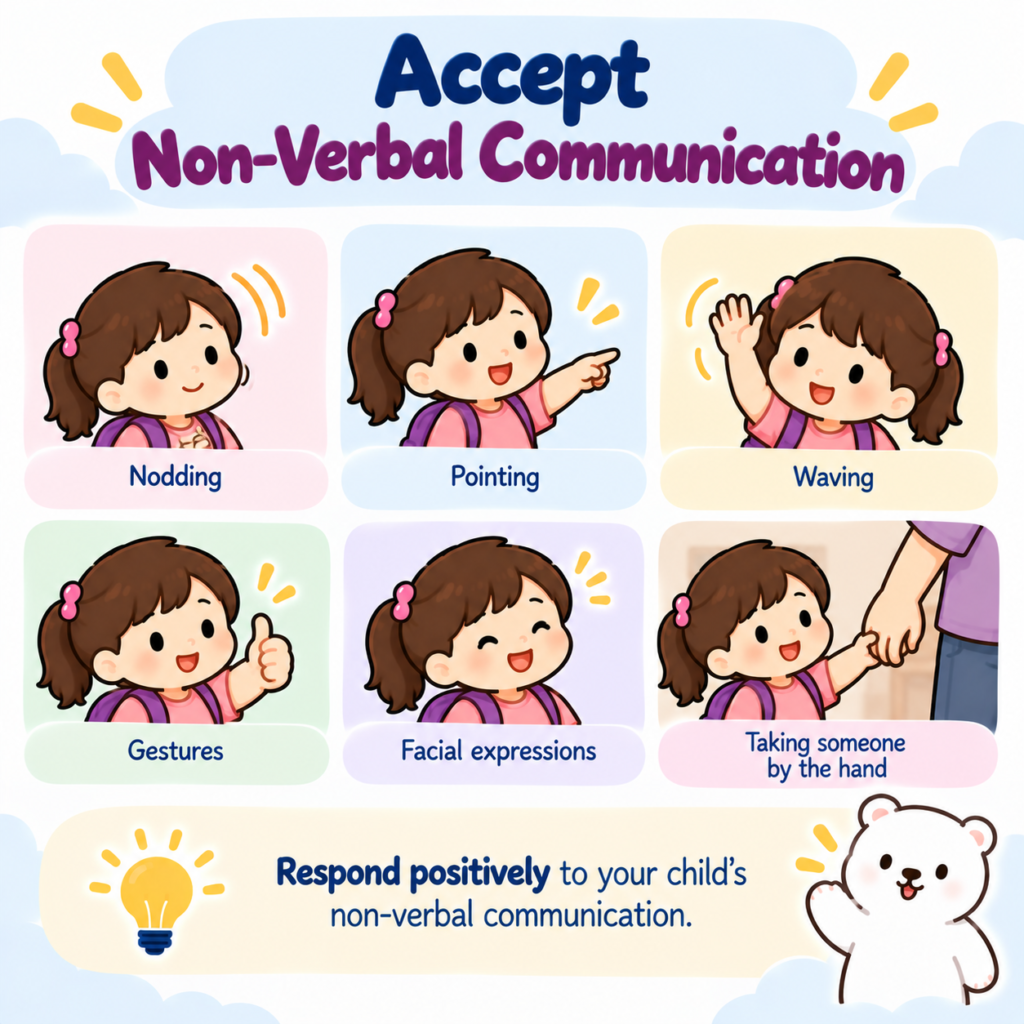
🌸Nodding, pointing, waving and other gestures can be useful forms of communication.
🌸Respond positively to these attempts rather than treating them as a failure to speak.
Give Your Child Time to Warm Up
🌸New people and unfamiliar environments can feel overwhelming.
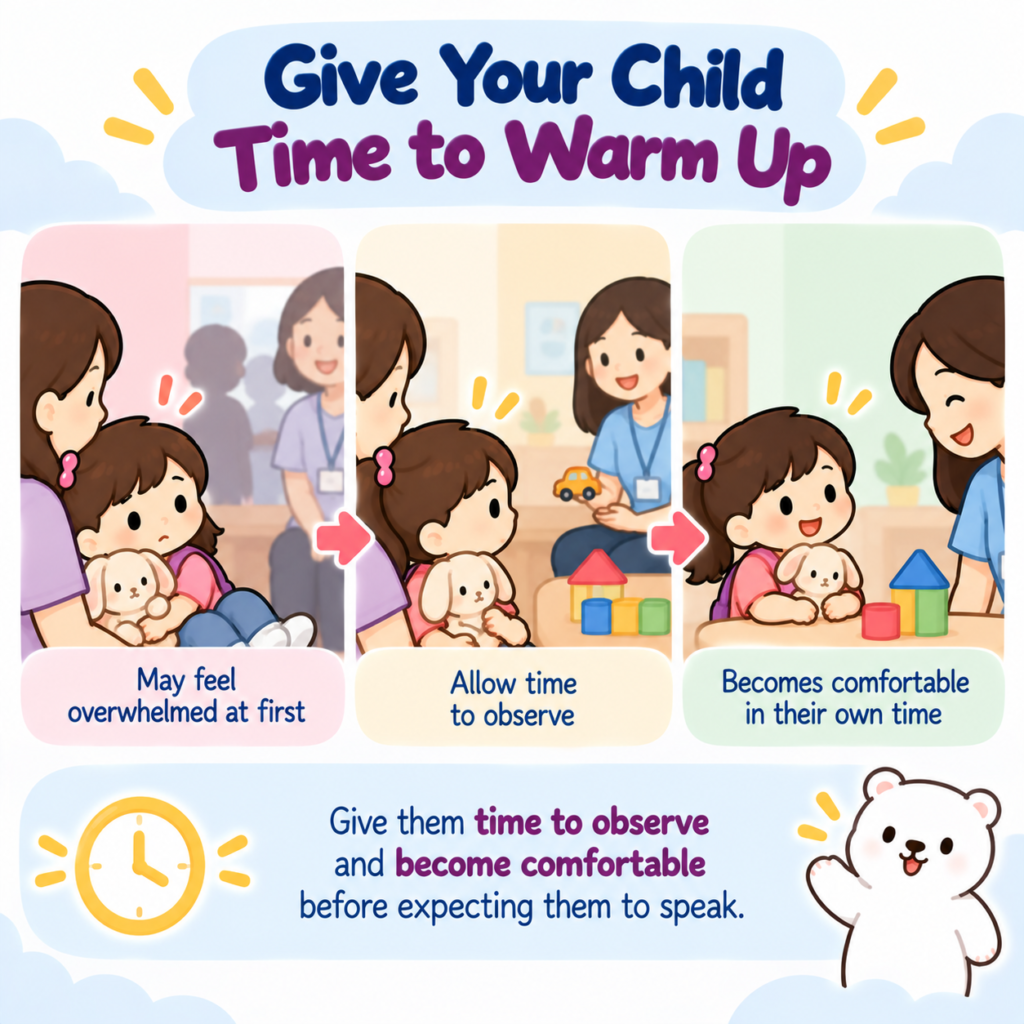
🌸Allow your child to observe and become comfortable before expecting them to participate verbally.
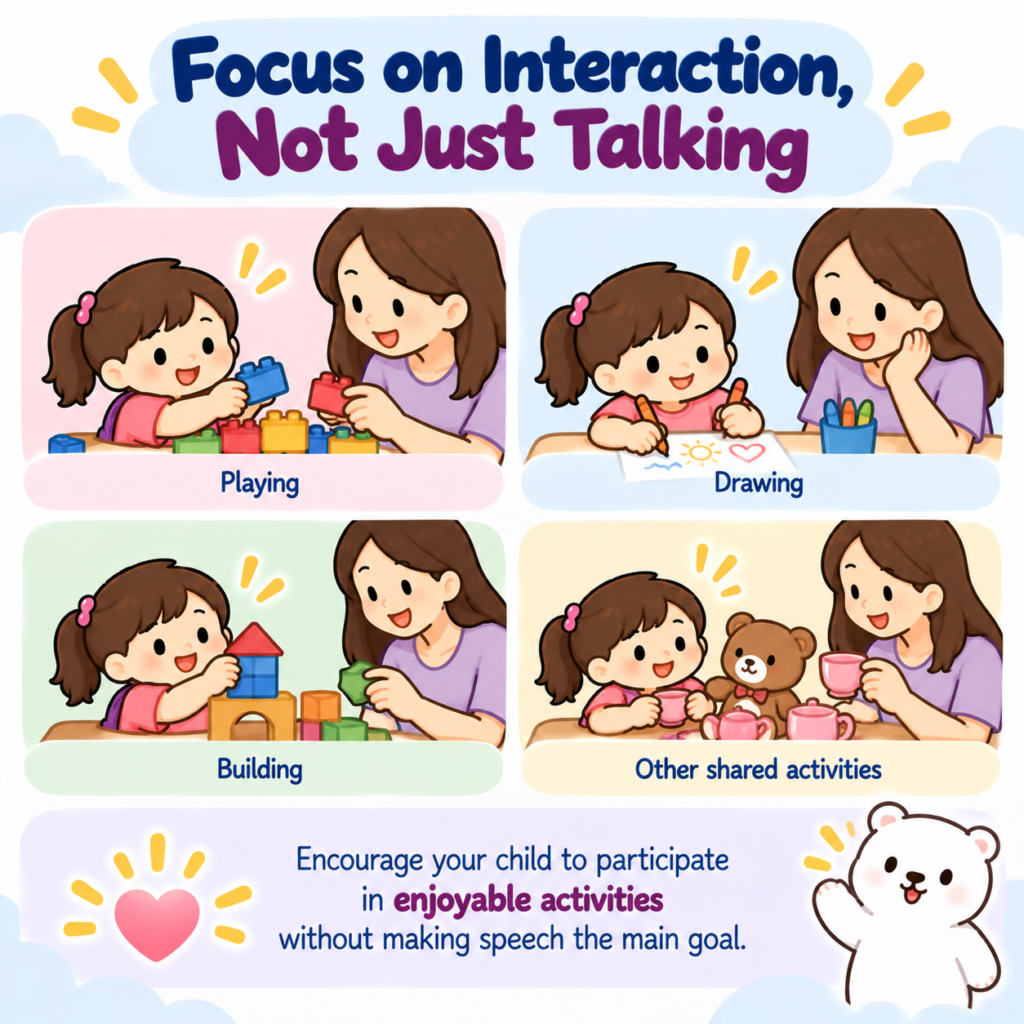
Focus on Interaction, Not Just Talking
🌸Encourage your child to participate in enjoyable activities without making speech the main goal.
🌸Playing, drawing, building and other shared activities can help create a more comfortable social environment.
When Should Parents Seek Professional Support?
Consider seeking professional advice if your child’s difficulty speaking is:
🌸Persistent or becoming more frequent
🌸Happening consistently in certain settings
🌸Affecting school participation
🌸Making it difficult to communicate their needs
🌸Interfering with friendships or social activities
🌸Causing significant anxiety or distress
🌸Preventing them from asking for help
Early recognition and support can help reduce the impact of selective mutism on a child’s communication, education and social development.
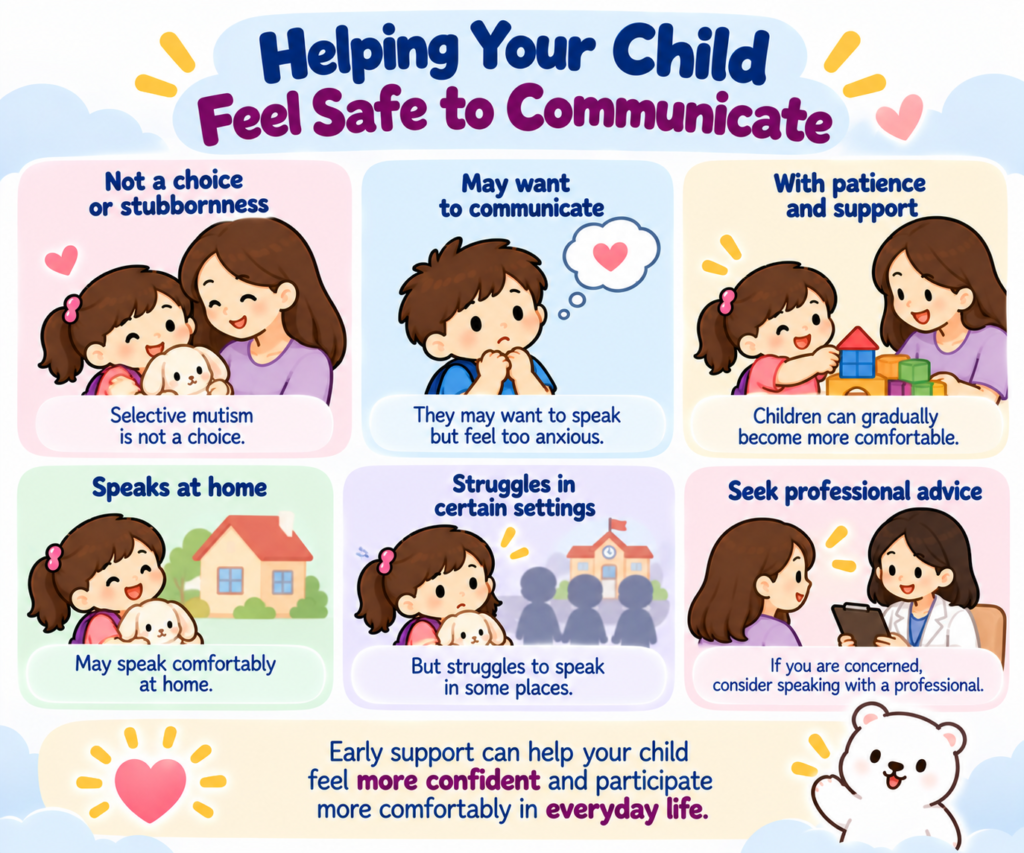
Helping Your Child Feel Safe to Communicate
Selective mutism is not simply a child being stubborn or refusing to talk.
🌸A child may genuinely want to communicate but feel unable to speak when anxiety becomes overwhelming.
🌸With patience, understanding and appropriate support, children can gradually become more comfortable communicating across different people and environments.
🌸If you are concerned that your child speaks comfortably at home but consistently struggles to speak in certain settings, consider discussing your concerns with a qualified professional.
🌸Early support can help your child develop confidence and participate more comfortably in everyday life.
🌟 Stay Connected with Us! We love sharing tips, insights, and inspiring stories about children’s growth and mental wellbeing.
💙 Follow us on Instagram and Facebook for more updates and parenting advice.
Join our community and let’s grow together. One positive step at a time!

References
NHS. (2023). Selective mutism.
NHS. https://www.nhs.uk/mental-health/conditions/selective-mutism/
Working Hours
Tuesday to Saturday – 8.30am to 6pm
Monday & Sunday – Closed
Please also subscribe us at
Contact Us
Discover Our Team!
📞+60102502833
firststepdevelopmentcentre@gmail.com
B1-7, Plaza Damas 3, Jalan Sri Hartamas 1, 50480 Kuala Lumpur.
Copyright 2025. Firststep Child Development Sdn Bhd. All rights reserved.