



School Refusal in Children: Why Does My Child Not Want to Go to School?
Does your child often complain about going to school, become upset in the morning, or frequently ask to stay home?
For some children, going to school can feel overwhelming.
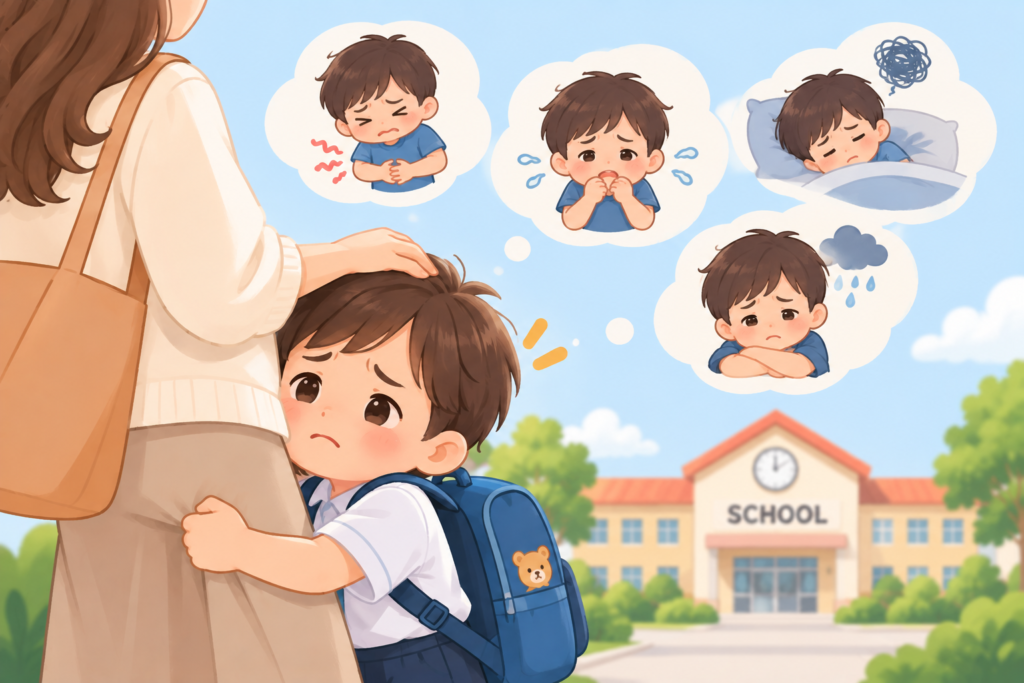
They may complain of stomach aches, headaches, tiredness, or become tearful when it is time to leave home.
While occasional reluctance to attend school can be normal, repeated or persistent difficulties going to school may be a sign that your child is struggling with something underneath the behaviour.
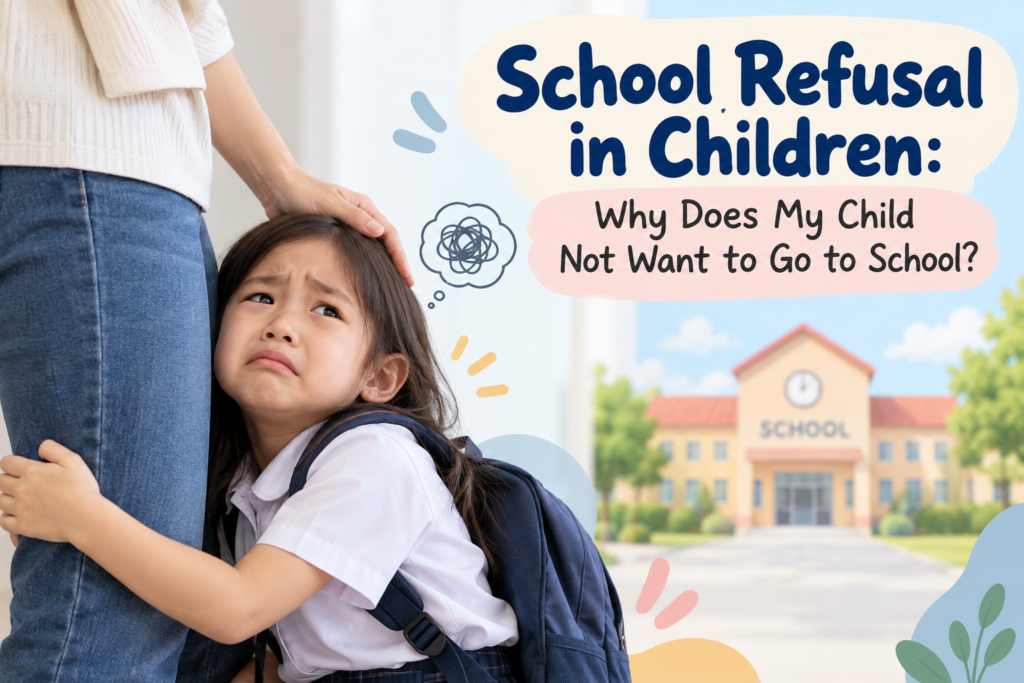
Understanding why your child does not want to go to school can help parents respond with the right support.
What Is School Refusal?
School refusal refers to a child having significant difficulty attending school or staying in school because of emotional distress.
It is different from simply choosing to skip school or refusing to follow rules.
A child experiencing school refusal may genuinely feel worried, frightened, overwhelmed or distressed about going to school.
Ask yourself:
🌸 Does my child become very upset before school?
🌸 Does my child frequently complain of feeling unwell on school mornings?
🌸 Does my child repeatedly ask to stay home?
🌸 Does my child become anxious or distressed when getting ready for school?
🌸 Does my child suddenly refuse to enter the school?
🌸 Does the problem happen repeatedly rather than occasionally?
Why Does My Child Refuse to Go to School?
There is rarely just one reason why a child may struggle with school attendance.
Keep watching your child for changes in their behaviour or physical condition.
1. Anxiety About School
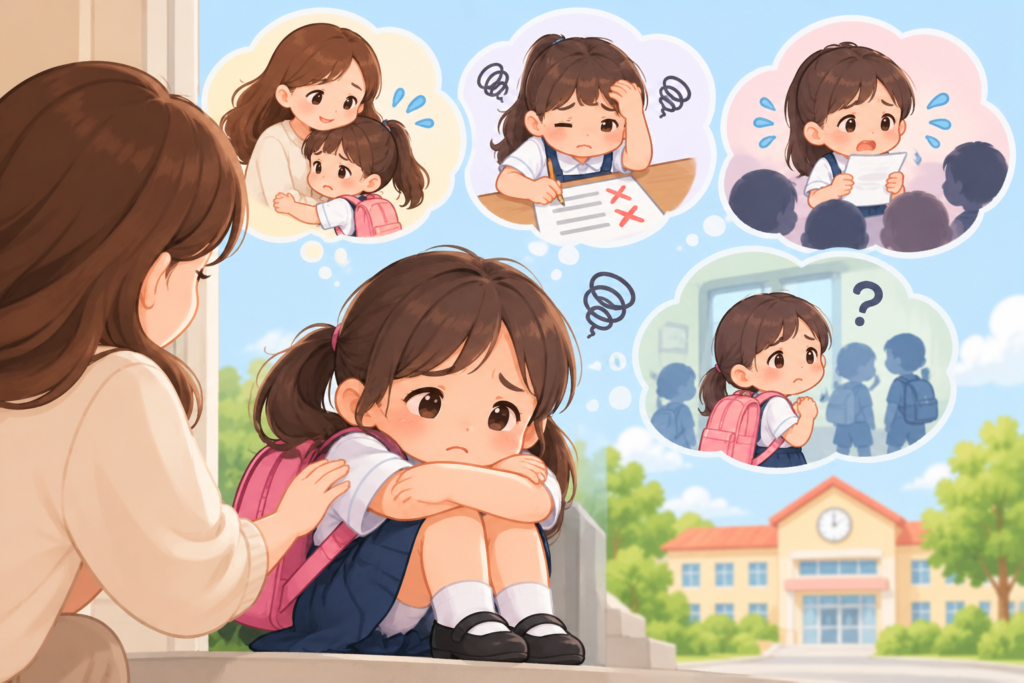
🌸Some children may worry about being away from their parents, making mistakes, speaking in front of others, or coping with unfamiliar situations.
🌸For these children, school may feel overwhelming even when there is no obvious problem from an adult’s perspective.
2. Difficulties With Friends or Social Situations
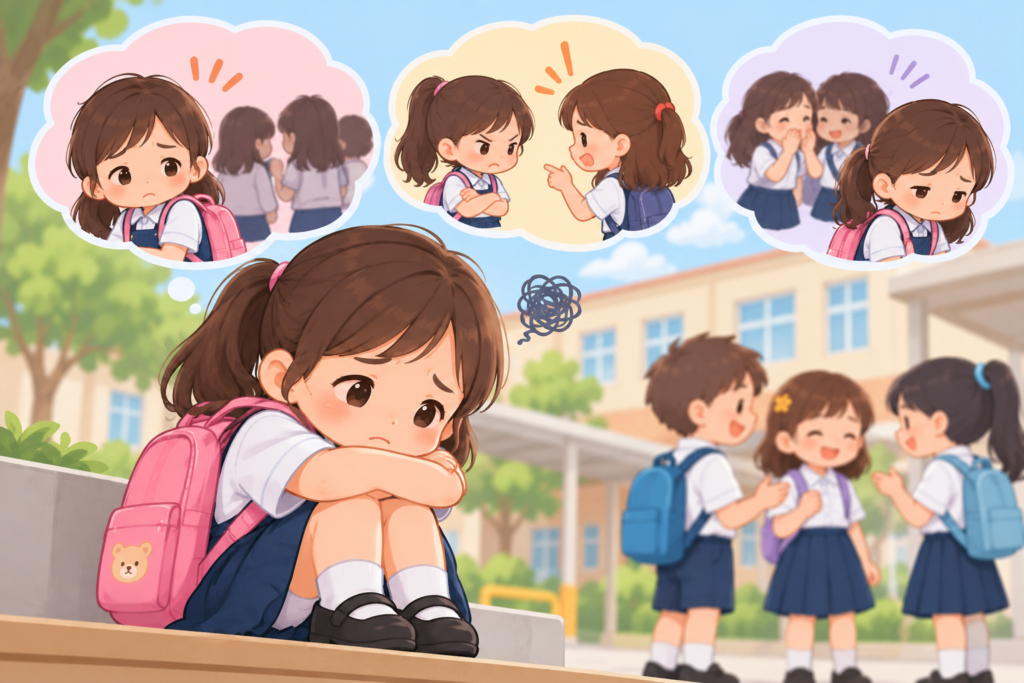
🌸Friendship problems, feeling left out, arguments with classmates, or difficulty knowing how to interact with peers can make school uncomfortable.
🌸A child may not always tell their parents directly that they are having difficulties with friends.
3. Academic Pressure
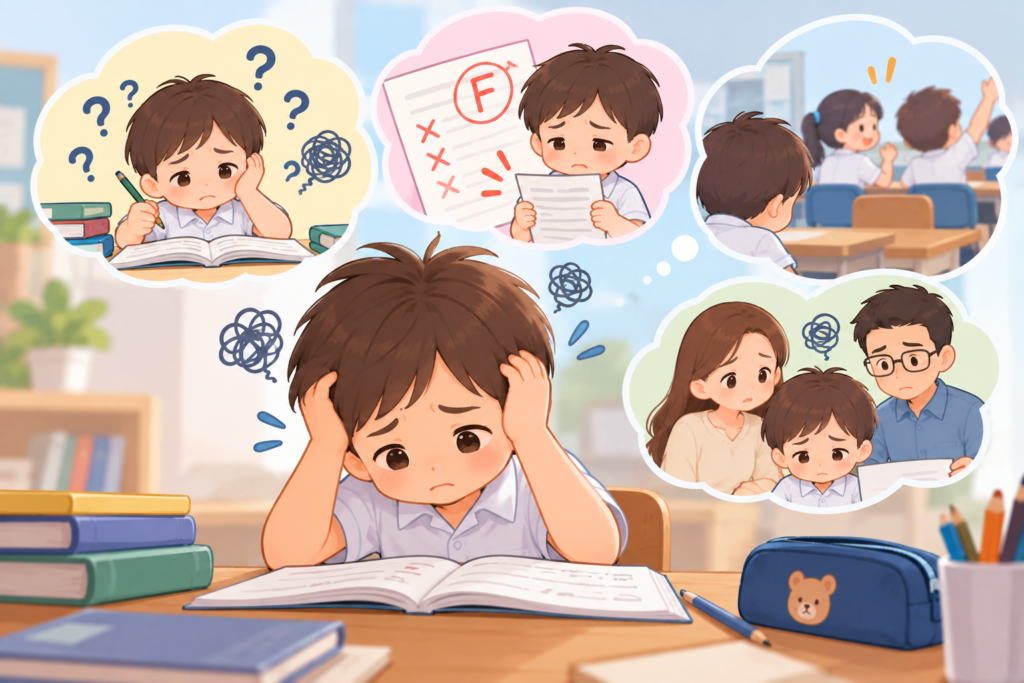
🌸Some children may feel worried because they are struggling with schoolwork or believe that they cannot keep up with their classmates.
🌸They may become afraid of getting answers wrong, receiving poor grades, or disappointing their parents or teachers.
4. Bullying or Negative Experiences
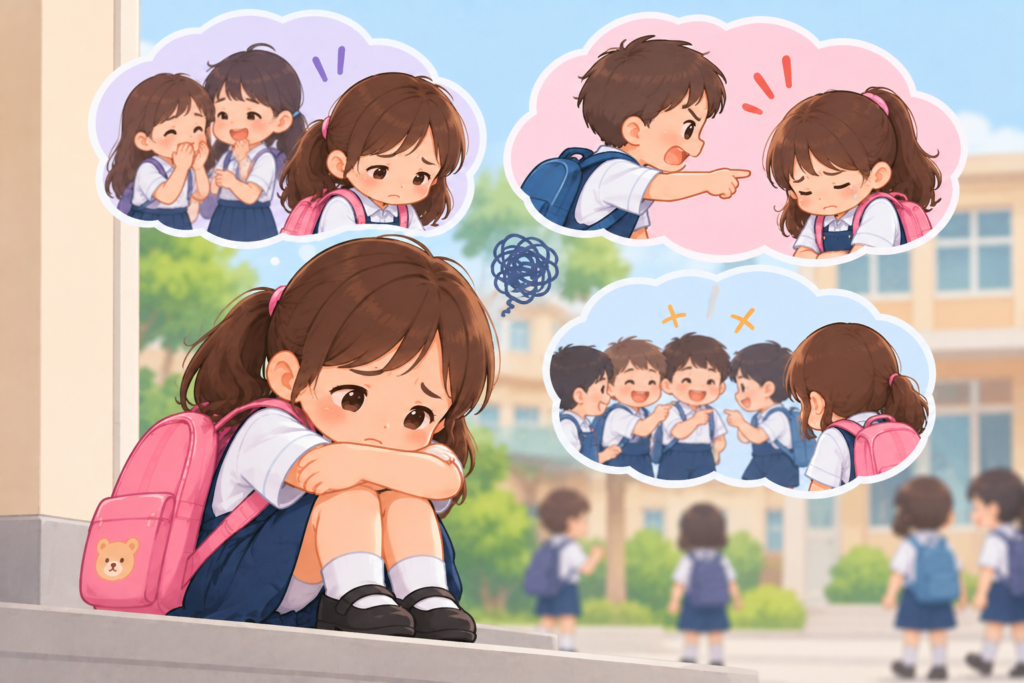
🌸Bullying, teasing or other negative experiences at school can contribute to school refusal.
🌸 Changes in your child’s behaviour, mood or willingness to talk about school may be worth paying attention to.
5. Difficulty With Changes and Transitions
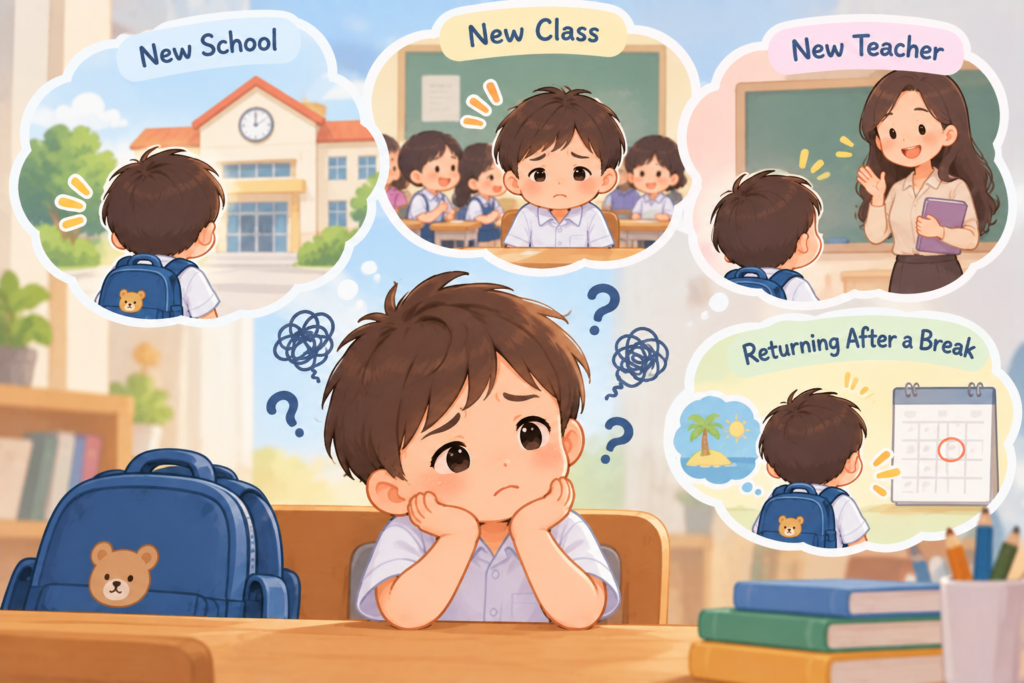
🌸Starting a new school, moving to a new class, having a new teacher or returning to school after a long break can be difficult for some children.
🌸Even positive changes can feel stressful when a child does not know what to expect.
6. Separation From Parents
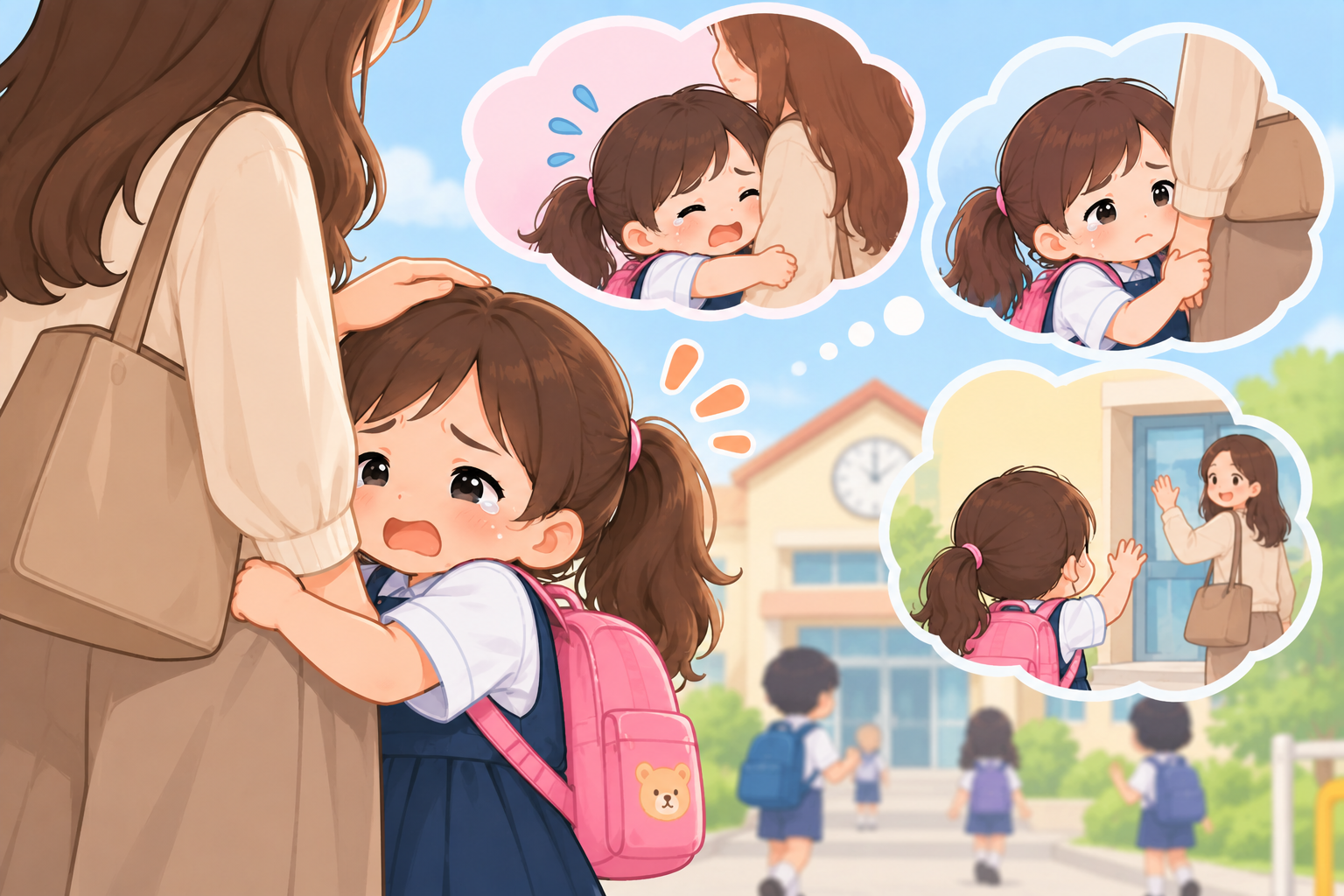
🌸Some children may find it particularly difficult to separate from their parents in the morning.
🌸They may become tearful, clingy or repeatedly ask when their parent will come back.
What Signs Should Parents Look Out For?
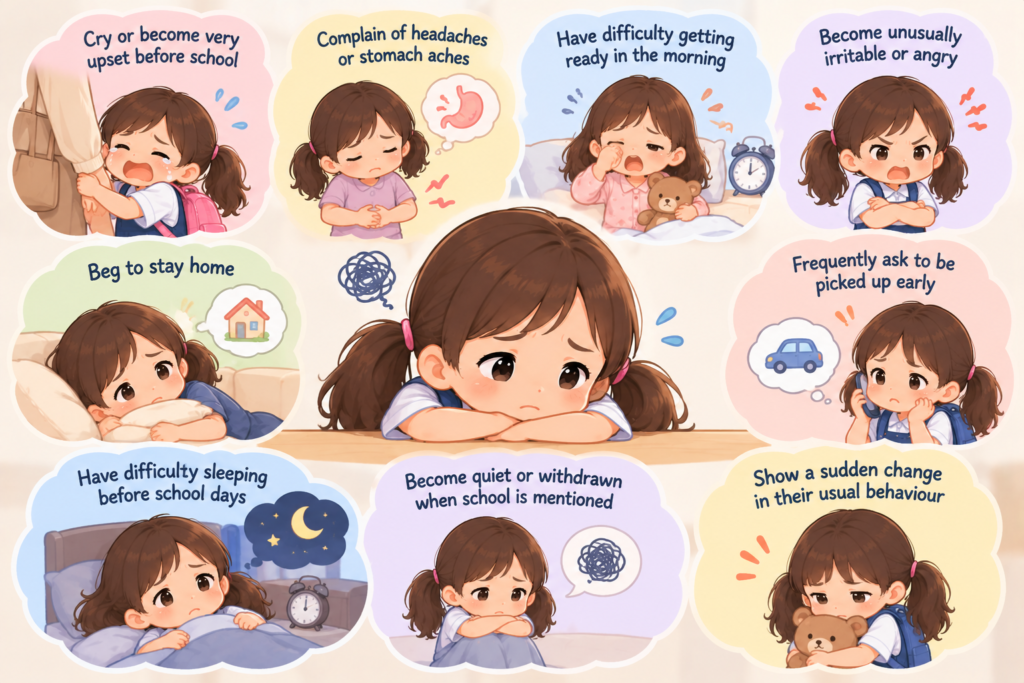
School refusal may appear through emotional, physical or behavioural changes.
Your child may:
🌸 Cry or become very upset before school
🌸 Complain of headaches or stomach aches
🌸 Have difficulty getting ready in the morning
🌸 Become unusually irritable or angry
🌸 Beg to stay home
🌸 Frequently ask to be picked up early
🌸 Have difficulty sleeping before school days
🌸 Become quiet or withdrawn when school is mentioned
🌸 Show a sudden change in their usual behaviour
Physical complaints should not automatically be assumed to be caused by anxiety.
If your child is experiencing repeated or concerning physical symptoms, it is important to speak with a healthcare professional.
What Can Parents Do?
1. Listen to Your Child
Try to understand what is making school difficult instead of immediately focusing on getting your child to attend.
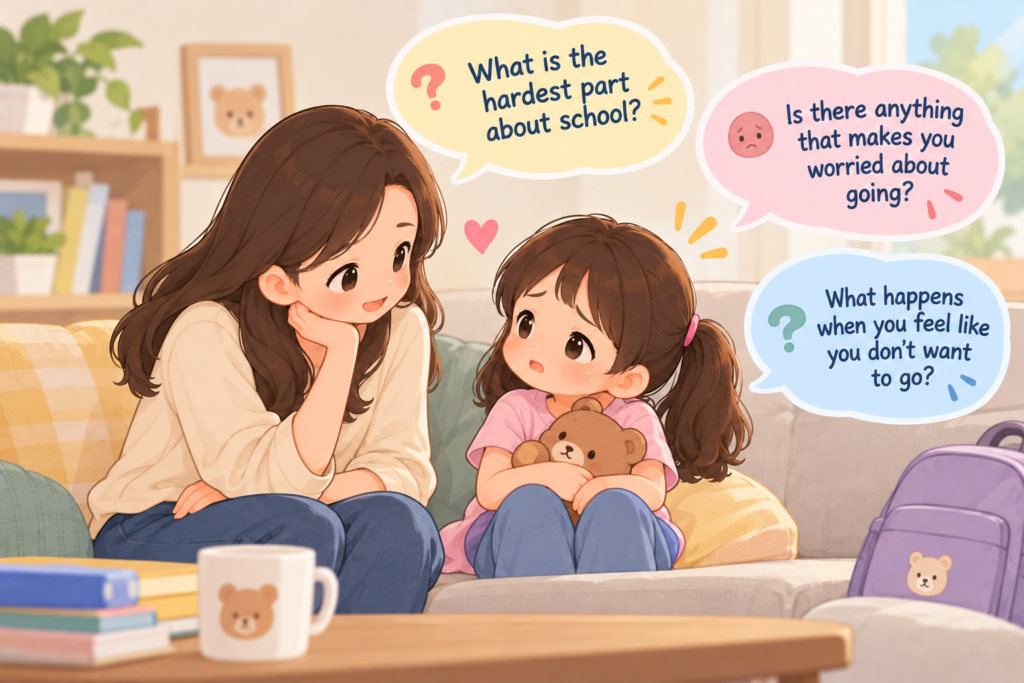
Ask gentle questions such as:
🌸 “What is the hardest part about school?”
🌸 “Is there anything that makes you worried about going?”
🌸 “What happens when you feel like you don’t want to go?”
Give your child time to explain without immediately correcting or dismissing their concerns.
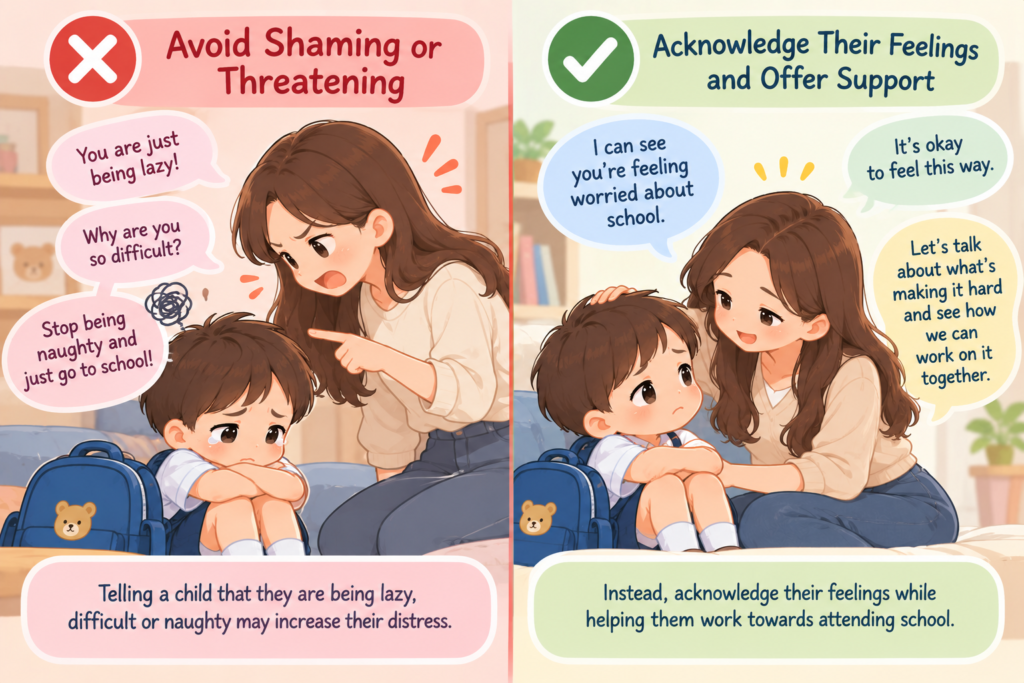
2. Avoid Shaming or Threatening
Telling a child that they are being lazy, difficult or naughty may increase their distress.
Instead, acknowledge their feelings while helping them work towards attending school.
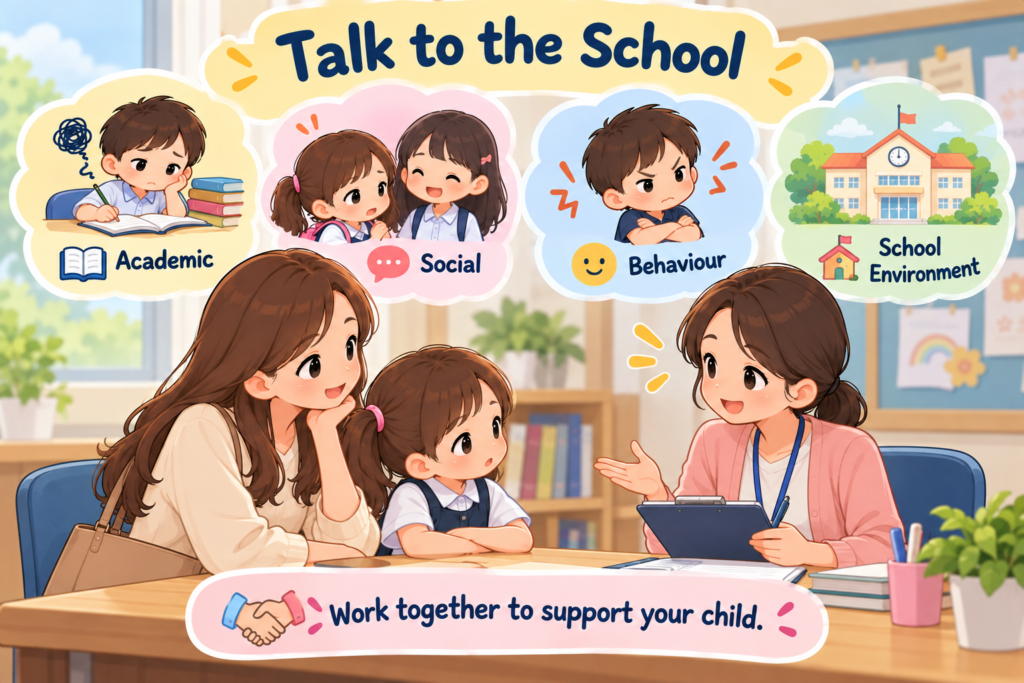
3. Talk to the School
Teachers and school staff may notice things that parents do not see at home.
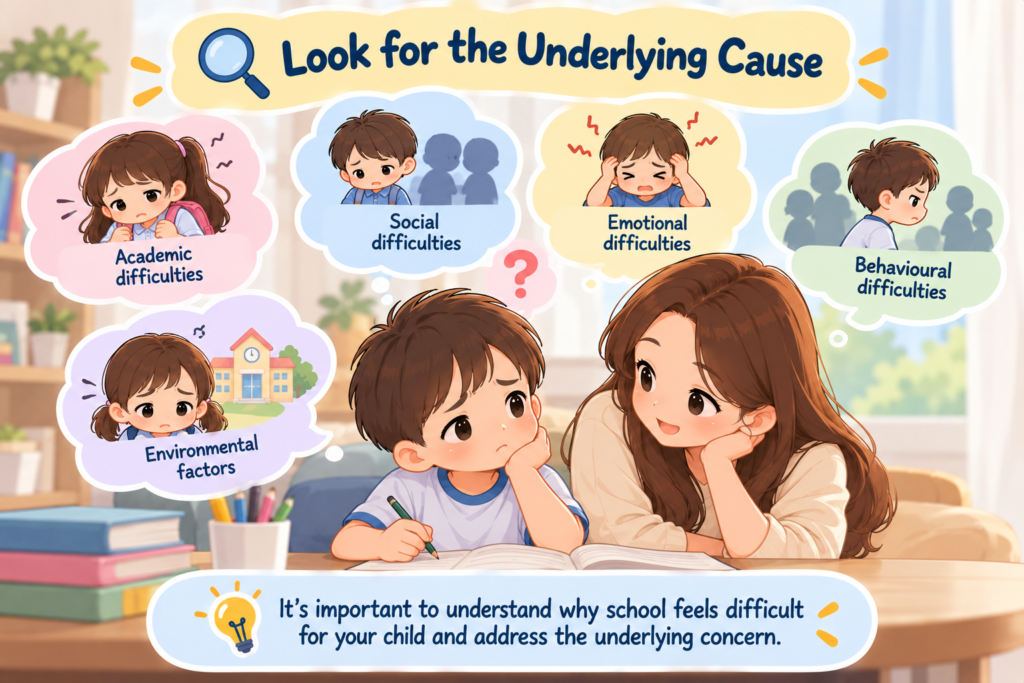
Working together can help identify whether there are academic, social, behavioural or environmental difficulties affecting your child.
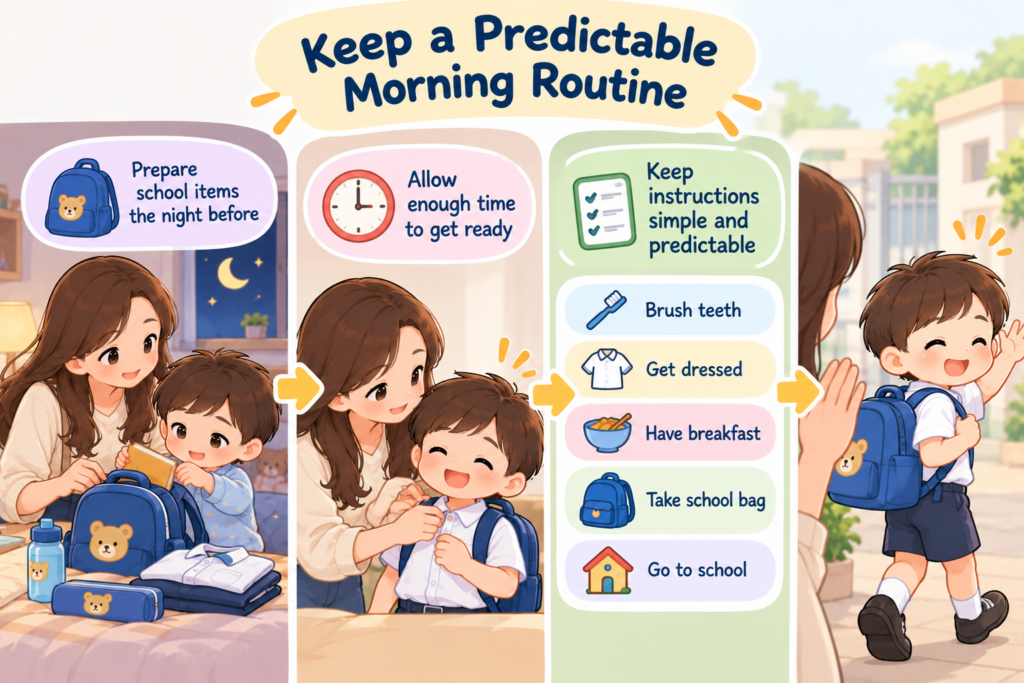
4. Keep a Predictable Morning Routine
A consistent morning routine can help reduce uncertainty.
Prepare school items the night before, allow enough time to get ready and keep instructions simple and predictable.
5. Look for the Underlying Cause
The goal should not only be to make your child attend school.
It is also important to understand why school feels difficult for them and address the underlying concern.
When Should Parents Seek Professional Help?
🌸 Your child frequently experiences physical complaints around school
Physical complaints should not automatically be assumed to be related to school refusal or anxiety.
If your child has repeated or concerning symptoms, make sure they have been checked by a healthcare professional.
Occasional complaints about school may not necessarily indicate a serious problem.
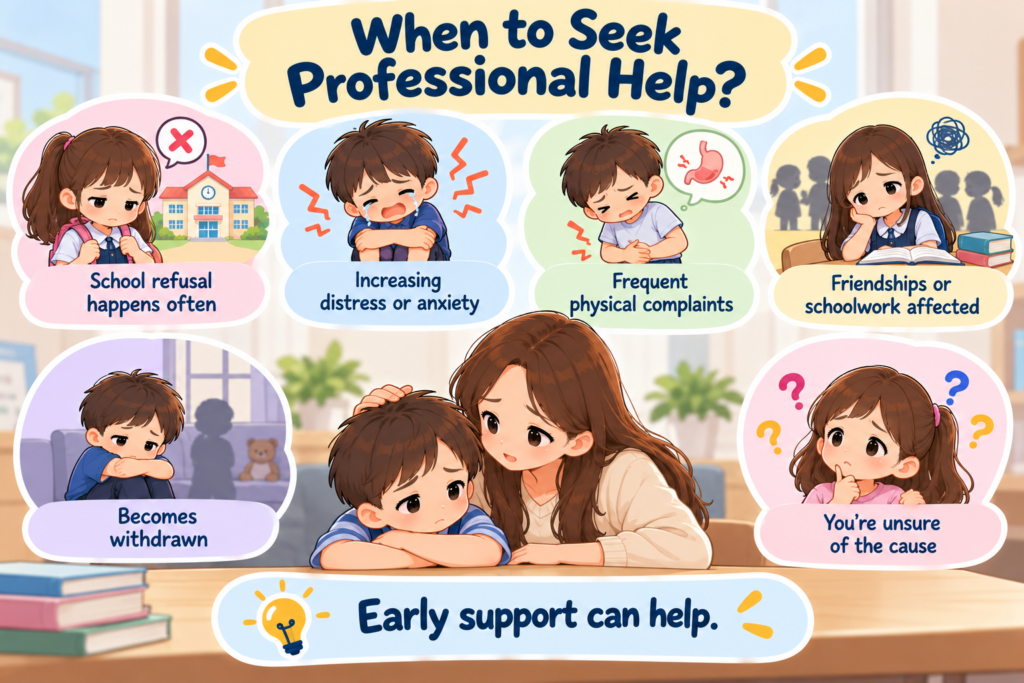
However, parents may want to seek professional support if:
🌸 School refusal happens repeatedly
🌸 Your child’s distress is becoming more intense
🌸 Your child frequently experiences physical complaints around school
🌸 Your child becomes extremely anxious about attending school
🌸 Your child’s friendships or academic performance are being affected
🌸 Your child has become withdrawn or noticeably different from their usual self
🌸 You are unsure what is causing the problem
Early support can help families understand the underlying difficulties and identify appropriate strategies.
🌟 Stay Connected with Us! We love sharing tips, insights, and inspiring stories about children’s growth and mental wellbeing.
💙 Follow us on Instagram and Facebook for more updates and parenting advice.
Join our community and let’s grow together. One positive step at a time!

References
American Academy of Child and Adolescent Psychiatry. (2026). School refusal.
Facts for Families.
https://www.aacap.org/AACAP/AACAP/Families_and_Youth/Facts_for_Families/FFF-Guide/School-Refusal-007.aspx
Working Hours
Tuesday to Saturday – 8.30am to 6pm
Monday & Sunday – Closed
Please also subscribe us at
Contact Us
Discover Our Team!
📞+60102502833
firststepdevelopmentcentre@gmail.com
B1-7, Plaza Damas 3, Jalan Sri Hartamas 1, 50480 Kuala Lumpur.
Copyright 2025. Firststep Child Development Sdn Bhd. All rights reserved.