



Reading Comprehension Difficulties: Signs Parents Should Know
Many parents wonder:
“My child can read the words, so why do they still struggle to understand what they read?”
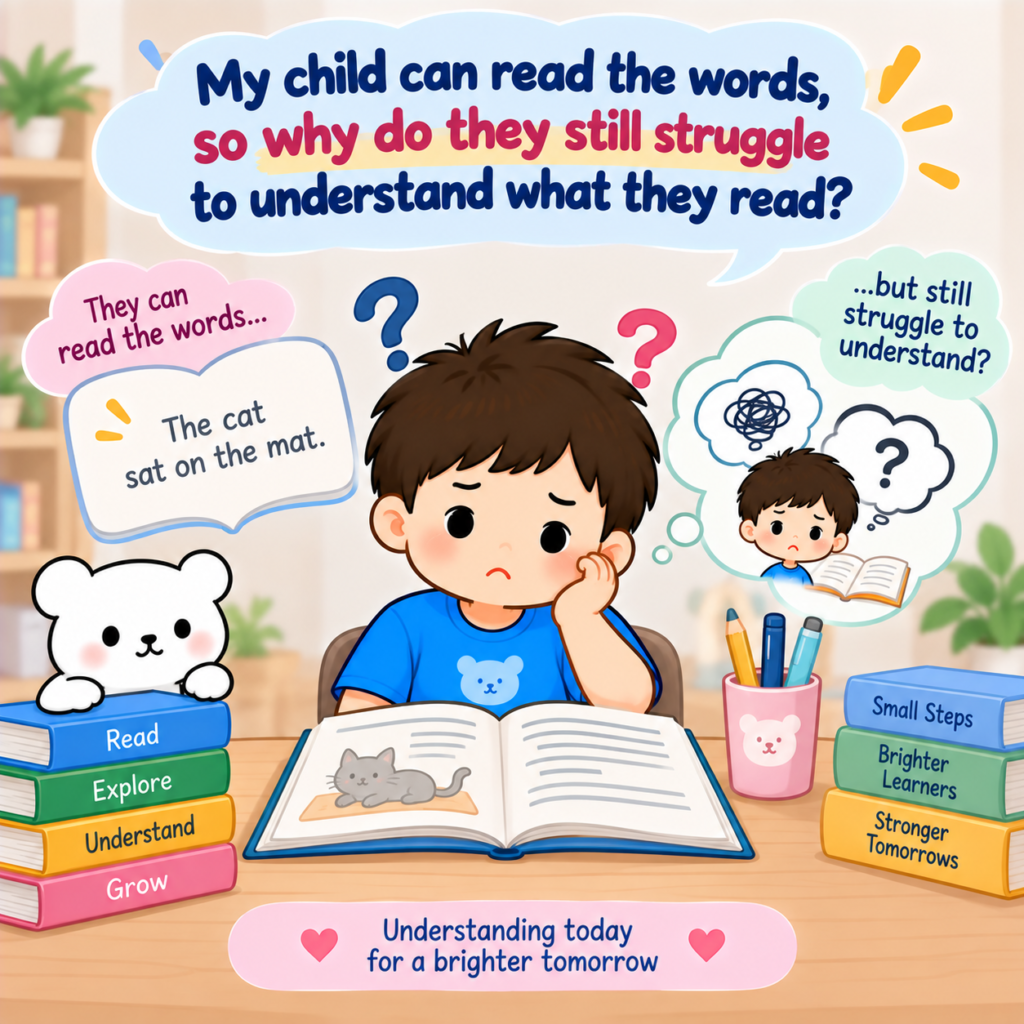
Some children may be able to read words accurately but have difficulty understanding, remembering, or making sense of the information in a passage or story.
This can sometimes be mistaken for not paying attention or not trying hard enough.
However, reading comprehension involves more than simply reading the words.
Children also need to understand vocabulary, connect ideas, identify important information, and think about what they have read.
Understanding reading comprehension difficulties can help parents and teachers recognise when a child may need additional support.
What Is Reading Comprehension?
Reading comprehension refers to a child’s ability to understand and make meaning from what they read.
It can involve many skills, such as:
✿ Understanding the meaning of words
✿ Identifying the main idea
✿ Remembering important details
✿ Understanding the sequence of events
✿ Making connections between ideas
✿ Making simple inferences
✿ Understanding characters’ thoughts and feelings
✿ Explaining what they have read
A child may be able to read words aloud but still have difficulty understanding the meaning of the text.
Reading comprehension can be affected by different factors, including decoding, vocabulary, background knowledge, language skills, and the ability to think about and connect information.
1. Has Difficulty Explaining What They Read
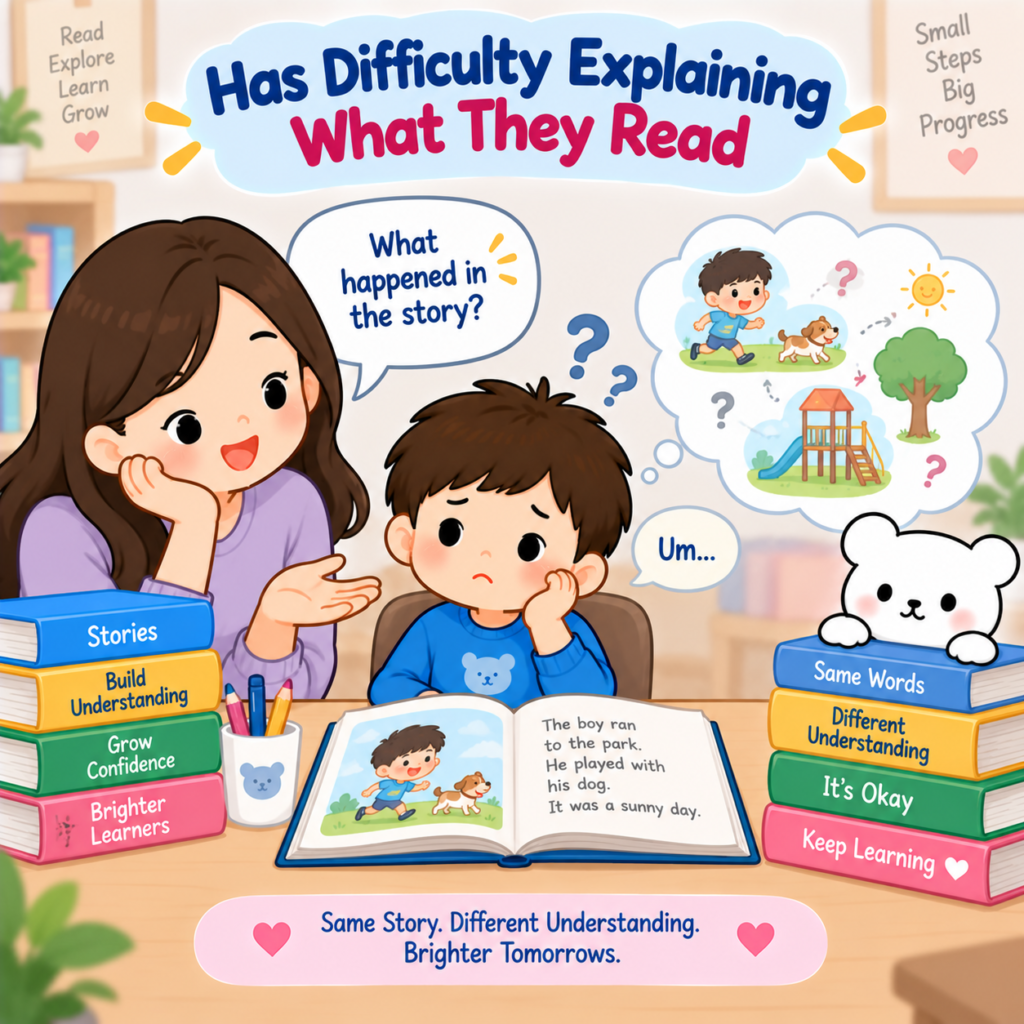
Your child may be able to read a passage but struggle to explain what it was about.
For example, after reading a short story, they may remember some words or details but have difficulty describing the main events.
2. Struggles to Identify the Main Idea
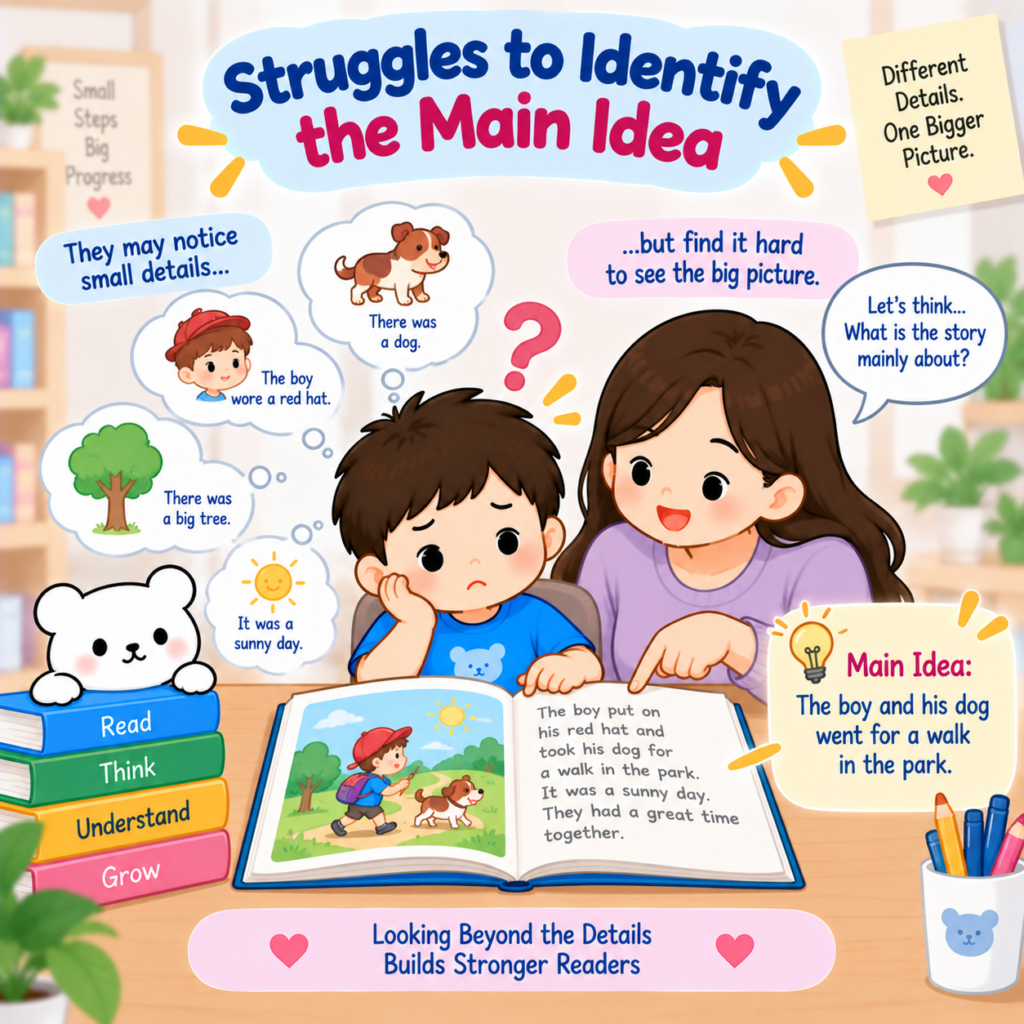
Your child may focus on small details but miss the overall meaning of the passage.
For example, they may remember what a character was wearing but struggle to explain what the story was mainly about.
3. Has Difficulty Answering Questions About the Text
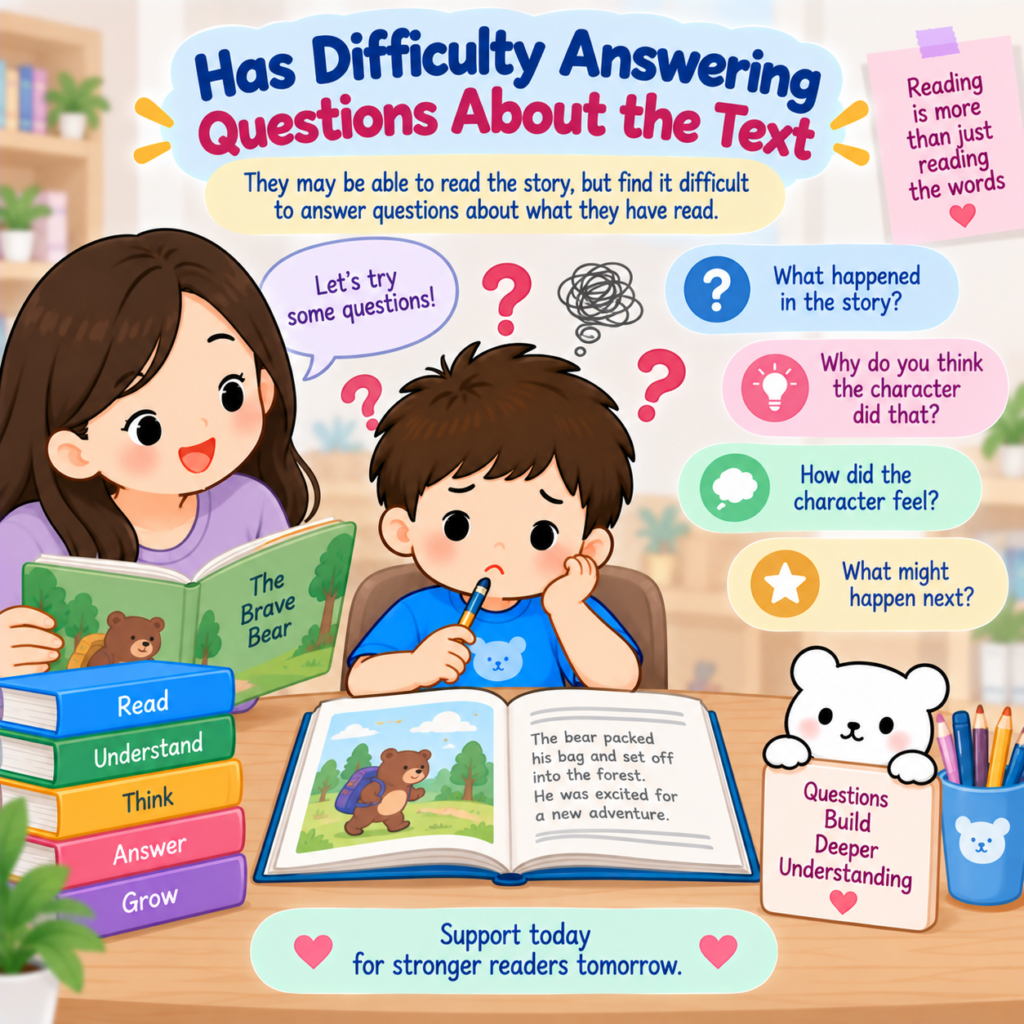
Your child may find it difficult to answer questions such as:
“Why did the character do that?”
or
“What happened after this?”
They may be able to find individual words in the passage but struggle to connect the information to form an answer.
4. Struggles to Make Inferences
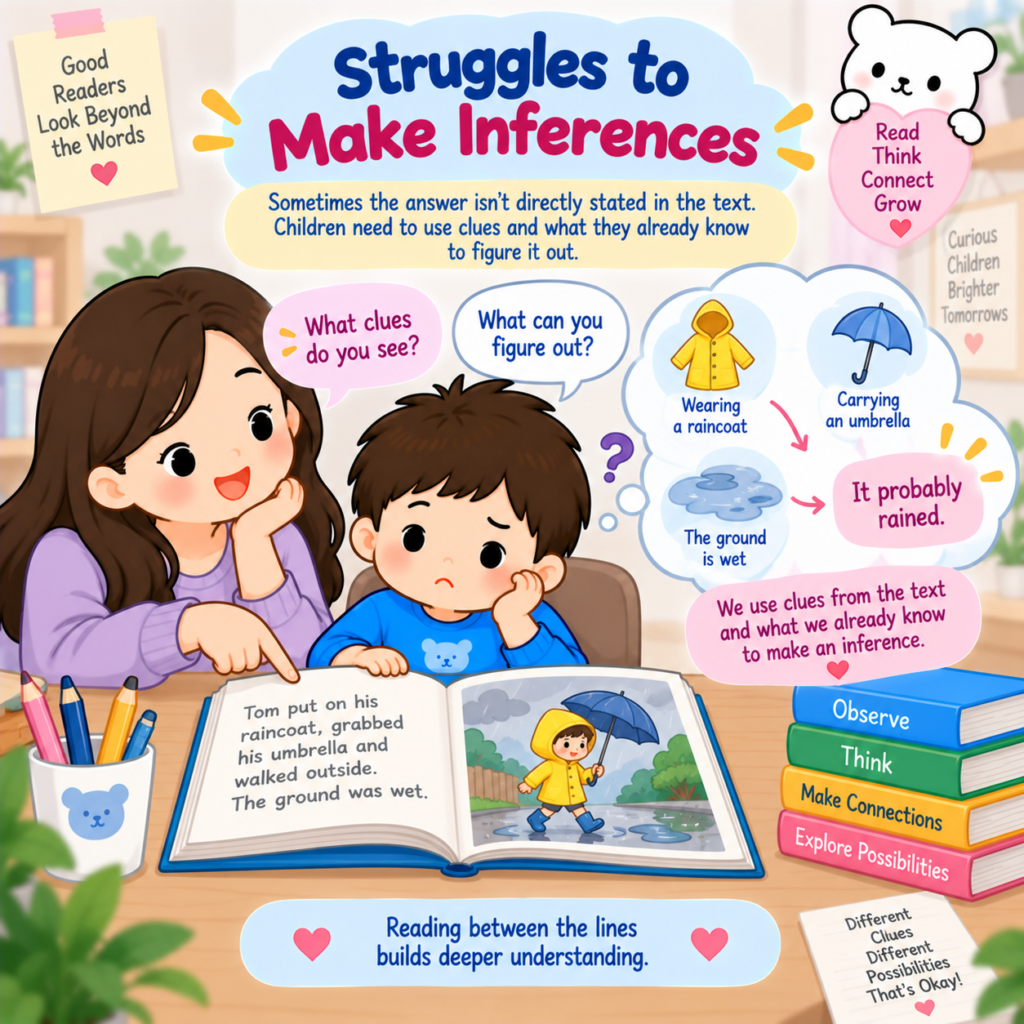
Some information in a story is not stated directly.
Your child may have difficulty working out what a character is feeling, why something happened, or what might happen next.
For example, if a character is carrying an umbrella and the ground is wet, your child may struggle to infer that it has been raining.
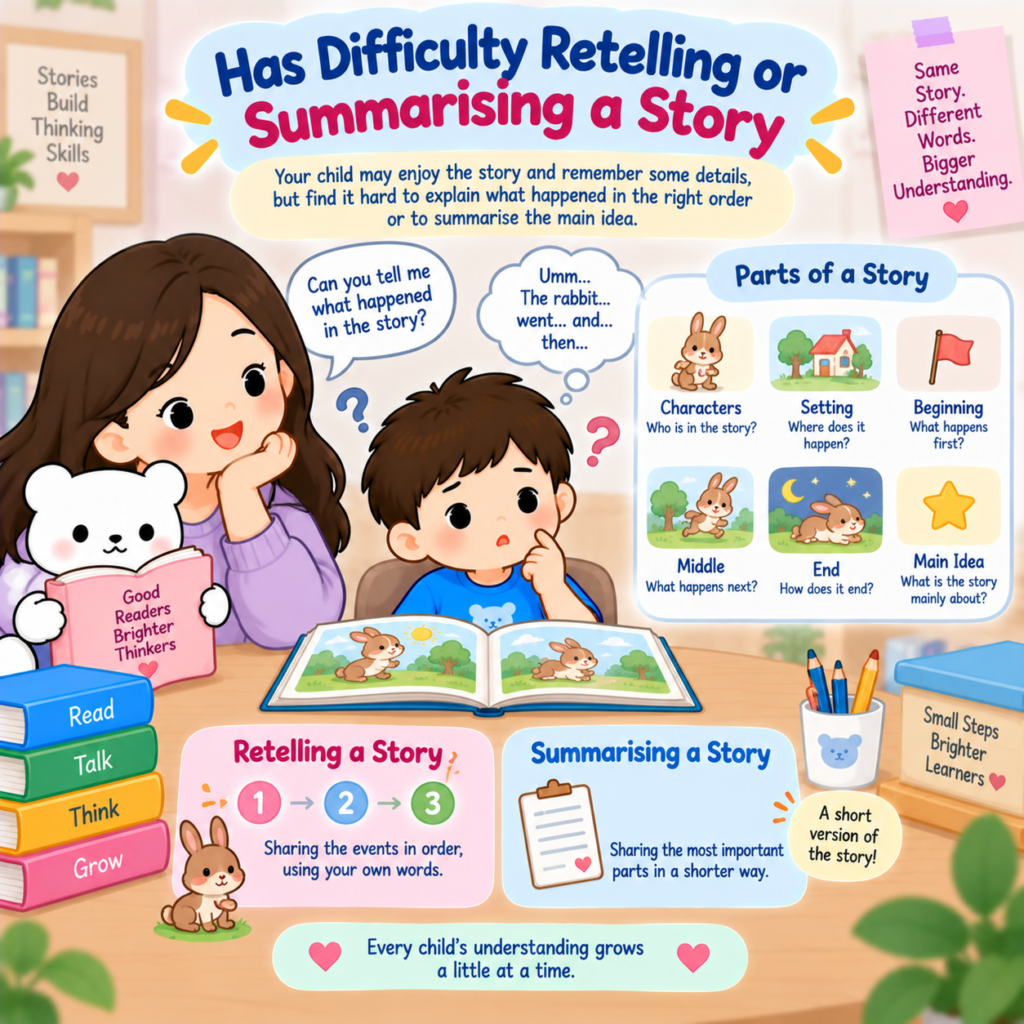
5. Has Difficulty Retelling or Summarising a Story
Your child may remember isolated details but struggle to explain the story in the correct order.
They may leave out important events or include information that is not relevant to the main story.
6. Finds Longer Reading Tasks Difficult
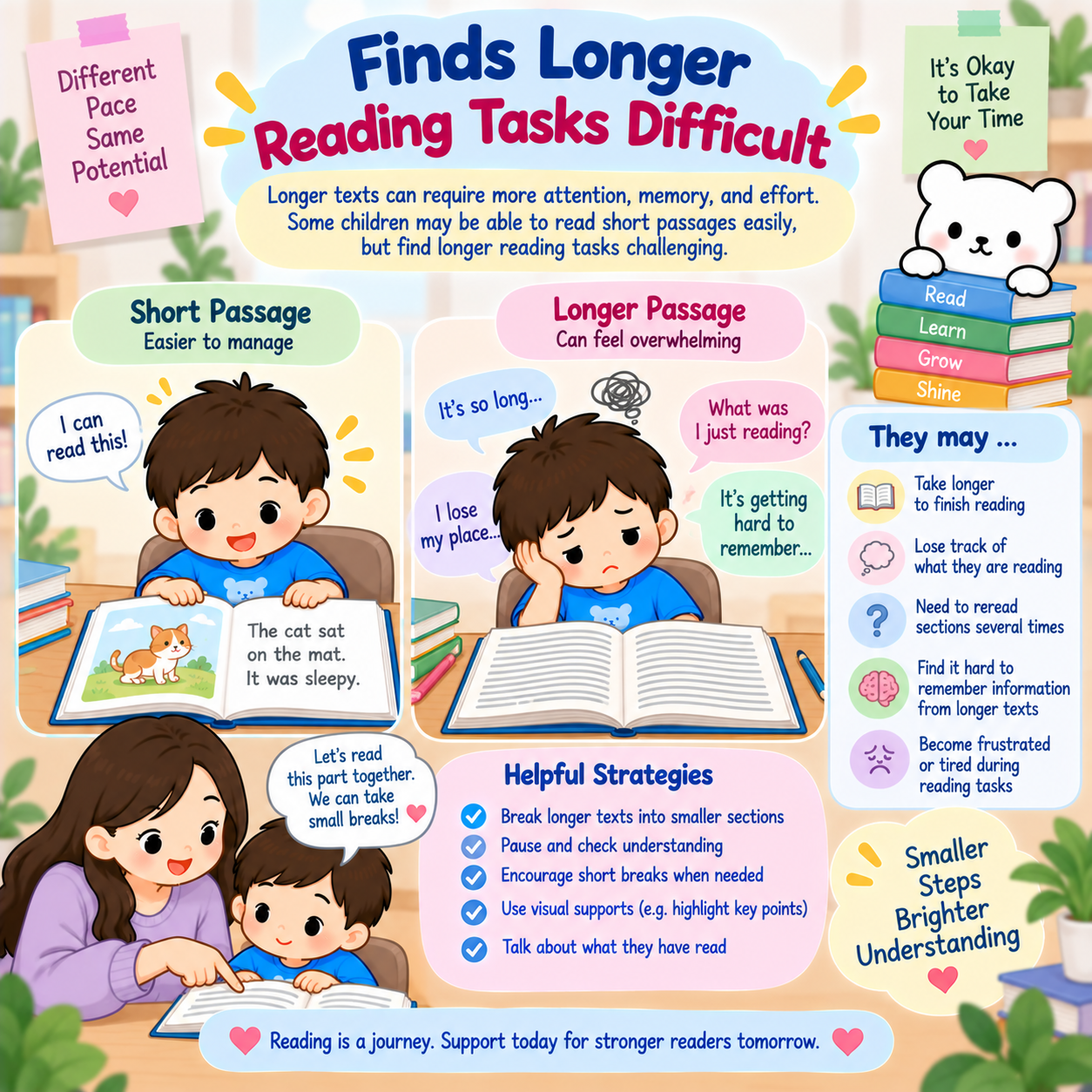
Your child may understand short passages but become confused or lose track of information when reading longer texts.
They may need to reread sections several times or become frustrated when they cannot remember what they have just read.
6 Ways Parents Can Support Reading Comprehension
1. Ask Questions About What They Read
✿ After reading, talk about the story together.
✿ For example:
“What happened in the story?”
“Why do you think the character did that?”
“How do you think they felt?”
✿ These conversations encourage your child to think beyond simply reading the words.
2. Break Longer Texts Into Smaller Sections
✿ If a passage feels overwhelming, read it in smaller parts.
✿ Pause after each section and ask your child to explain what happened before moving on.
3. Encourage Your Child to Retell the Story
✿ Ask your child to tell you what happened using their own words.
✿ You can help by asking:
“What happened first?”
“What happened next?”
“How did the story end?”
4. Explain New Words
✿ Vocabulary plays an important role in understanding what children read.
✿ When your child comes across an unfamiliar word, explain its meaning and connect it to something they already know.
✿ For example:
“A huge building is a very big building.”
5. Help Them Make Connections
✿ Encourage your child to connect the story with their own experiences, other books, or things they already know.
✿ For example:
“Have you ever felt the same way as this character?”
✿ Making connections can help children understand and remember what they read.
6. Encourage Rereading When Needed
✿ It is okay if your child needs to read a sentence or paragraph more than once.
✿ Encourage them to stop and ask:
“Does this make sense?”
✿ If it does not, go back and read the section again together.
When Should Parents Seek Professional Advice?
❀ Children develop reading skills at different rates, and occasional difficulty understanding a story does not necessarily mean that a child has a reading difficulty.
❀ However, parents may consider seeking professional advice if reading comprehension difficulties are:
✿ Persistent across different types of reading
✿ Affecting school performance
✿ Making it difficult to complete reading assignments
✿ Affecting the child’s ability to answer questions about texts
✿ Causing frequent frustration or avoidance of reading
✿ Making it difficult to follow information in longer passages
✿ Noticeably different from the child’s previous level of reading
❀ Reading comprehension difficulties can occur alongside other reading or learning difficulties.
❀ A broader assessment may help identify whether difficulties are related to word reading, fluency, vocabulary, language, attention, memory, or other learning skills.
Key Takeaway
❀ Reading comprehension is more than being able to read words aloud.
❀ Some children may read accurately but still have difficulty understanding, remembering, or connecting information from what they read.
❀ Parents can support comprehension by:
✿ Asking questions about the text
✿ Breaking longer passages into smaller sections
✿ Encouraging retelling and summarising
✿ Explaining unfamiliar vocabulary
✿ Making connections to everyday experiences
✿ Encouraging rereading when something does not make sense
❀ When reading comprehension difficulties consistently affect a child’s learning or confidence, understanding the underlying difficulties can help parents and professionals provide more appropriate support.
🌟 Stay Connected with Us! We love sharing tips, insights, and inspiring stories about children’s growth and mental wellbeing.
💙 Follow us on Instagram and Facebook for more updates and parenting advice.
Join our community and let’s grow together. One positive step at a time!

References
American Psychiatric Association. (2022). Diagnostic and statistical manual of mental disorders (DSM-5-TR).
Psychiatry.org; American Psychiatric Association. https://www.psychiatry.org/psychiatrists/practice/dsm
Working Hours
Tuesday to Saturday – 8.30am to 6pm
Monday & Sunday – Closed
Please also subscribe us at
Contact Us
Discover Our Team!
📞+60102502833
firststepdevelopmentcentre@gmail.com
B1-7, Plaza Damas 3, Jalan Sri Hartamas 1, 50480 Kuala Lumpur.
Copyright 2025. Firststep Child Development Sdn Bhd. All rights reserved.