



Why Psychotherapy Usually Requires More Than One Session

Psychotherapy sessions are often misunderstood as a one-time solution.
“Can my child’s problem be solved in just one session?”
This is one of the most frequently asked questions by parents when considering psychotherapy.
It is completely understandable to hope for a quick solution, especially when a child or family is facing emotional or behavioral challenges.
When a child is struggling, parents naturally want to see improvements as soon as possible.
However, in most cases, psychotherapy is not a one-time conversation.
Psychotherapy sessions are a structured process that focuses on long-term change.
They concentrate on understanding problems, building trust, learning new skills, and supporting long-term change.
Therapy Begins with Understanding
The first session in psychotherapy is usually a clinical recruitment (consultation).
In this session, the therapist takes the time to understand the child’s experience rather than starting treatment immediately.
This usually involves gentle conversations with the parents, the child, or both, depending on the situation.
The therapist may explore:
- How is the child’s behavior at home and at school
- What emotions are often experienced by the child
- Any recent changes or stress in their life
- Family routines and patterns of communication
- Situations that may trigger certain behaviors or emotional reactions
- Current challenges of children in daily life (for example, difficulties with behavior, emotions, attention, learning, or social interactions))

Children’s emotional or behavioral challenges are often influenced by various factors, such as the environment, experiences, developmental level, and their surrounding relationships.
Because of this, it takes time to understand what is actually happening behind what we can see on the surface.
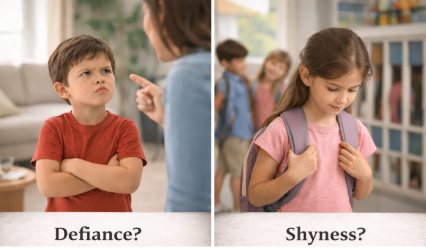
Example:
- “Resistance” may reflect feelings of disappointment, anxiety, or a sense of burden and frustration
- “Shyness” may be related to social anxiety or uncertainty in a new environment
Without taking the time to fully understand these patterns, it is difficult to identify the underlying factors and provide appropriate interventions.
Building Good Relationships Is an Important Part of Therapy
One of the most important aspects in therapy is the relationship between the child and the therapist (Nuñez et al., 2022).
At the beginning, some children may feel shy, unsure, or hesitant to speak openly.
This is completely normal, especially in an unfamiliar environment with a new adult.

As the session progressed and rapport was established, the child:
- Gradually feel more comfortable
- Start to be more open
- Communication becomes easier
Therapy is most effective when children feel safe, supported, and not judged.
When trust develops, the therapist is better able to understand the child’s needs and provide more meaningful guidance.
Real Change Requires Time and Practice
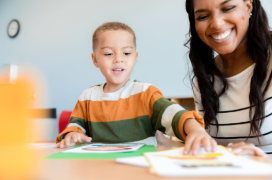

Psychotherapy is not only about talking about problems. It also helps children learn new ways to:
Managing emotions
Facing challenges
Developing healthier coping strategies
Improving communication skills
Reacting to a difficult situation
Building confidence and problem-solving skills
A single session can help a child or parent increase awareness about the problem.
However, meaningful progress requires consistent psychotherapy sessions and practice in daily life.
Consistent psychotherapy sessions help children build emotional skills over time.
How Many Psychotherapy Sessions Are Usually Needed?
There is no set number of therapy sessions suitable for every child.
Many parents wonder how many psychotherapy sessions are needed.
The duration of therapy depends on several factors, including:
The nature of the concerns presented (for example, behavior, emotions, development)
- Readiness and involvement of children in therapy
- Frequency of session attendance
- the dissemination and practice of strategies at home/school
- Level of involvement and support from caregivers
- Respons terhadap intervensi dan kadar kemajuan
- The presence of concurrent difficulties (for example, learning, social, sensory)
- Environmental factors (for example, school support, family pressure)

Due to these factors, therapy is always individually tailored and may take a shorter or longer period depending on the needs of the child.

Research shows that the duration of therapy varies for each child, but there are some general patterns that can help parents understand what to expect (American Psychological Association, 2017).
- Some children show improvement in about 12–16 sessions when therapy is focused on specific issues (for example, a major emotional or behavioral difficulty)
- Many children may need around 15-20 sessions to see a significant improvement.
- Some children continue for about 20-30 sessions (around 6 months) to reinforce progress and help skills become more stable in daily life
- For more complex or long-term difficulties, therapy may take 12–18 months or longer, especially when there are multiple areas of concern
The number of psychotherapy sessions varies depending on individual needs. This is only a guideline, not a fixed rule.
Some children may develop faster, while others may need more time depending on their situation, support system, and consistency of practices at home and school.
Most importantly, therapy is not about the number of sessions, but about helping the child achieve meaningful and lasting improvements in their emotions, behavior, and daily functioning.
Why Consistency in Therapy is Important
Sometimes families may notice improvement after a few sessions and wonder whether therapy is still necessary.
Although early progress is a positive sign, emotional and behavioral changes often take time to stabilize.
If the therapy stops too early:
- Skills may not have fully developed
- Children may face difficulties in using strategies independently
- Old patterns may gradually return
Continuing therapy allows children to:
- Strengthen the emotional skills and adjustments that they have learned
- Practice using this skill in various situations (at home, school, social environments)
- Building confidence in managing challenges independently
Continuous psychotherapy sessions support more stable and lasting progress.
Psychotherapy is a guided process that supports understanding, growth, and long-term emotional well-being.
With consistent psychotherapy sessions and practice, children can develop the emotional skills needed to better understand themselves and manage challenges more confidently.
🌟Stay Connected with Us! We love sharing tips, insights, and inspiring stories about children’s growth and mental well-being.💙Follow us on Instagram and Facebook for more updates and parenting advice.
IFollow us on Instagram and Facebook for more updates and parenting advice. One positive step at a time!

References
American Psychological Association. (2017). How Long Will It Take for Treatment to Work?
Https://Www.apa.org. https://www.apa.org/ptsd-guideline/patients-and-families/length-treatment
Nuñez, L., Fernández, S., Alamo, N., Midgley, N., Capella, C., & Krause, M. (2022). The Therapeutic Relationship and Change Processes in Child Psychotherapy: a Qualitative, Longitudinal Study of the Views of Children, Parents and Therapists. Research in Psychotherapy: Psychopathology, Process and Outcome, 25(1).
Working Hours
Tuesday to Saturday – 8.30am to 6pm
Monday & Sunday – Closed
Please also subscribe us at
Contact Us
Discover Our Team!
📞+60102502833
firststepdevelopmentcentre@gmail.com
B1-7, Plaza Damas 3, Jalan Sri Hartamas 1, 50480 Kuala Lumpur.
Copyright 2025. Firststep Child Development Sdn Bhd. All rights reserved.