



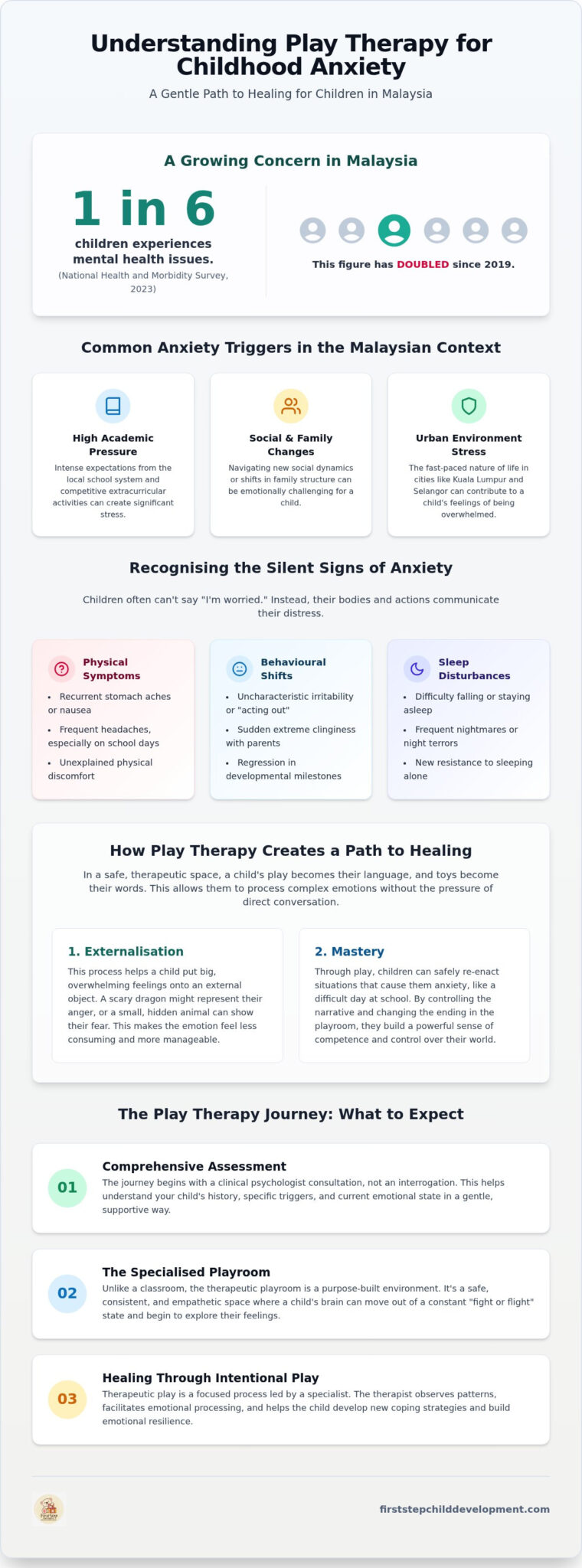
According to the National Health and Morbidity Survey 2023, one in six children in Malaysia now experiences mental health issues, a figure that has doubled since 2019. For families in Kuala Lumpur and Selangor, exploring play therapy for anxiety in children in Malaysia is often the first step toward healing, especially when a child cannot verbalise their internal distress. You’re likely looking for a way to help your child manage the intense academic pressure of local schools without making them feel like they’re in a scary, clinical environment.
It’s completely natural to feel overwhelmed when your child’s worries lead to meltdowns or silence. This guide will show you how play therapy provides a gentle, effective way for children in Malaysia to process anxiety and build emotional resilience. We’ll explain how this therapeutic approach turns a safe playroom into a space for healing. You’ll learn how specialised support helps your child regulate their emotions, move past their worries, and find practical strategies to maintain that sense of calm at home.
Key Takeaways
- Learn how play therapy for anxiety in children in Malaysia provides a safe space for your child to express complex emotions using toys as their natural language.
- Identify common local anxiety triggers, including high school-based academic pressure and social changes, to better support your child’s emotional needs.
- Understand the professional assessment process in KL and Selangor and why a dedicated therapeutic playroom is more effective than a traditional classroom setting.
- Discover the advantages of a multidisciplinary care model where clinical psychologists and specialists collaborate to provide a comprehensive path forward.
Understanding Childhood Anxiety in the Malaysian Context
Anxiety in children often masquerades as “bad behaviour” or extreme shyness, but it’s actually a deep-seated physiological response to stress. In Malaysia, children face unique pressures, particularly the high academic expectations within the local school system and the competitive nature of extracurricular activities. Families living in fast-paced urban centres like Kuala Lumpur and Selangor often find that social transitions or family changes trigger unexpected emotional responses. While adults might process these feelings through conversation, young children lack the complex vocabulary needed for traditional talk therapy. This is why understanding what is play therapy is so helpful; it bridges the communication gap by allowing children to express their world through toys.
Signs of Anxiety in Malaysian Children
Recognising the shift from typical childhood nerves to persistent anxiety is key for effective early intervention. Because children can’t always say “I’m worried about my exams,” their bodies and actions communicate their distress instead. Their actions do the talking. Common indicators include:
- Physical symptoms: Recurrent stomach aches, headaches, or nausea, particularly on school mornings or before tuition classes.
- Behavioural shifts: Sudden regression in milestones, extreme clinginess, or uncharacteristic irritability and “acting out.”
- Sleep disturbances: Difficulty falling asleep, frequent nightmares, or wanting to sleep in the parents’ bed.
If these patterns begin to interfere with daily life, a clinical psychologist consultation can provide the professional clarity needed. Implementing play therapy for anxiety in children in Malaysia ensures that your child has a safe, non-clinical environment to process these heavy emotions before they impact their long-term well-being.
How Play Therapy Works to Resolve Anxiety
Play is often dismissed as a simple pastime, yet for a child, it’s their most powerful tool for communication. In professional settings, toys function as the child’s words and play becomes their language. When we utilise play therapy for anxiety in children in Malaysia, we create a space where complex feelings don’t need to be forced into adult sentences. Instead, children use figures, sand, and art to project their inner world, allowing a specialist to understand their distress without the pressure of direct questioning.
The core of this process lies in the therapeutic relationship. A child needs to feel safe before they can explore what scares them. By providing a consistent, empathetic environment, the therapist helps the child’s brain move out of a constant “fight or flight” state. There is significant evidence supporting the efficacy of play therapy in helping children regulate these physiological responses. Unlike normal play at home, therapeutic play is a focused, intentional process led by a specialist who observes patterns and facilitates emotional processing.
The Mechanics of Healing Through Play
Healing happens through specific psychological shifts that occur during a session. These aren’t accidental; they’re the result of a carefully structured therapeutic environment. Key mechanics include:
- Externalisation: This involves putting big feelings onto external objects. A child might use a dragon to represent their anger or a small, hiding animal to show their fear. This distance makes the emotion feel less overwhelming and more manageable.
- Mastery: Through play, children can re-enact situations that cause them anxiety, such as a difficult day at school or a doctor’s visit. By changing the ending or controlling the narrative in the playroom, they build a sense of competence and control.
If you’re noticing your child struggling to cope with daily stressors, it’s helpful to understand how does an assessments work to determine the best path forward for their emotional growth.
The Play Therapy Journey: What to Expect in KL and Selangor
Starting a therapeutic journey can feel daunting, but the process is designed to be as gentle as possible for both you and your child. When you seek play therapy for anxiety in children in Malaysia, the first step isn’t a clinical interrogation. Instead, it begins with a comprehensive clinical psychologist assessment to understand your child’s history, their specific triggers in the Malaysian school system, and their current emotional struggles.
The playroom itself is a specialised environment. Unlike a traditional classroom in KL or Selangor, which might represent academic pressure and strict rules, our play space is a sanctuary. It’s filled with carefully selected toys that encourage expression rather than performance. Consistency is vital here; regular weekly sessions allow the child to build a deep trust with their therapist, which is the foundation for lasting change. Progress is tracked methodically and shared through clear, professional feedback sessions.
Step-by-Step: Your First Visit to Firststep Psychology & Child Development Centre
We’ve streamlined our intake process to ensure you feel supported from the very beginning. Your journey typically follows these steps:
- Parent Consultation: You’ll meet with our clinical team to share your observations and concerns without your child present, allowing for an honest discussion.
- Child Observation: We introduce your child to the play space in a low-pressure way, observing how they naturally interact with the environment.
- Goal Setting: Together, we define what success looks like for your child, whether it’s improved school attendance or fewer nighttime worries.
The Role of Parental Feedback
You are the expert on your child. Regular check-ins bridge the gap between our centre and your home life. We provide actionable strategies you can use daily to support an anxious child, ensuring the progress made in the playroom translates to real-world confidence. If you’re ready to begin, you can learn more about our clinical psychologist assessment today.
Integrating Play Therapy with a Multidisciplinary Approach
Anxiety rarely exists in isolation. For many families, an anxious child might also struggle with focus, sensory processing, or social cues. This is why we look at the whole child rather than just a single symptom. Overlapping symptoms with ADHD, autism, or developmental delays are common. When you choose play therapy for anxiety in children in Malaysia, having clinical psychologists, therapists, and nutritionists in one facility ensures nothing is missed. A coordinated approach means every professional is working toward the same goal for your child’s well-being. It saves you the stress of navigating multiple clinics across KL and Selangor.
If your child’s anxiety seems linked to broader developmental milestones, it’s often wise to start with a neurodevelopmental assessment. This evaluation helps us determine if play therapy should be the primary focus or part of a broader intervention strategy. By building a holistic support system, we provide children in Malaysia with the tools they need to thrive across all areas of life. This multidisciplinary care ensures that the emotional progress made in the playroom is supported by physical and developmental gains elsewhere.
When Play Therapy is Part of a Larger Plan
Sometimes, anxiety is a secondary response to sensory overwhelm or physical discomfort. In these cases, we integrate specialised support to address the root causes of distress. This creates a more robust foundation for the child’s growth. Our team collaborates daily to adjust plans based on your child’s real-time progress.
- Sensory Regulation: Children with sensory processing sensitivities often feel anxious in loud or bright environments. We use pediatric occupational therapy to help them process environmental stimuli more effectively. This naturally lowers their overall anxiety levels.
- Nutritional Support: Stress can significantly impact a child’s relationship with food. Whether it’s restrictive eating driven by anxiety or digestive issues caused by chronic worry, a nutritionist consultation ensures their physical health supports their emotional recovery.
Supporting Your Child’s Path to Emotional Resilience
Identifying the signs of distress is the first step toward a calmer, more confident future for your child. By choosing play therapy for anxiety in children in Malaysia, you provide them with a safe haven to process their world without the pressure of finding the right words. We’ve explored how our specialised playroom environment and multidisciplinary expert team in KL and Selangor work together to address not just the symptoms, but the root causes of worry. This child-centred, gentle therapeutic approach ensures that every session builds emotional strength.
It’s vital to remember that your child doesn’t have to carry their worries alone. Our dedicated specialists provide clear parental guidance and feedback, ensuring you have the practical tools to support growth at home. Every child deserves the opportunity to thrive. If your child is struggling with anxiety, contact Firststep Child Development Centre today to schedule a professional consultation and discover how play therapy can help. We’re here to be your trusted partner in that journey, providing the professional clarity your family needs to move forward with peace of mind.
Frequently Asked Questions
Is play therapy effective for children who are very young or non-verbal?
Yes, play therapy is highly effective for young or non-verbal children because it doesn’t rely on spoken language. Since play is the natural way children explore their world, they can express fears through toys and creative materials. This approach allows them to communicate internal distress without the frustration of finding words. It remains a vital tool for early emotional development when starting play therapy for anxiety in children in Malaysia.
How many sessions of play therapy will my child need for anxiety?
The number of sessions varies depending on the severity of the child’s anxiety and their unique history. Typically, a minimum of 12 to 20 weekly sessions is recommended to establish trust and achieve meaningful progress. While some children show improvement sooner, consistency is the most important factor. Your therapist will provide regular updates to track development and determine the appropriate duration for your child’s specific journey toward emotional resilience.
Can play therapy help with school refusal in Malaysia?
Yes, play therapy for anxiety in children in Malaysia is a common approach for addressing school refusal. This behaviour is often a symptom of underlying fears, such as academic pressure or social separation anxiety. By exploring these themes in a safe playroom, children learn to regulate their stress responses. This builds the confidence they need to return to the classroom environment with improved emotional coping strategies and a sense of mastery.
What is the difference between a play therapist and a clinical psychologist?
A clinical psychologist is a mental health professional who conducts comprehensive assessments and provides various therapeutic interventions. A play therapist specifically uses play as the primary medium for healing. At our centre, clinical psychologists often oversee the care plan, ensuring that play therapy is integrated with other necessary supports. Both roles collaborate to provide a multidisciplinary approach to your child’s developmental well-being, ensuring professional clarity throughout the process.
How do I explain play therapy to my child before the first session?
Keep your explanation simple, positive, and age-appropriate. Tell your child they are going to a special playroom with lots of toys where they can play and talk to a helper. Emphasise that this is a safe space just for them. Avoid using words like “doctor” or “assessment” if those trigger anxiety. Instead, focus on the idea of having a dedicated time to explore, have fun, and feel supported.

Article by
Firststep Child Development Team
Firststep Child Development Team provides evidence-informed educational resources to help parents better understand child development, behaviour and learning. Our multidisciplinary services include clinical psychology, occupational therapy, speech and language therapy, developmental assessments and other child development support in Kuala Lumpur and Selangor.
Disclaimer
This article is for general educational and informational purposes only and is not a substitute for professional medical, psychological or therapeutic advice, diagnosis or treatment. Every child develops differently. If you have concerns about your child's development, behaviour, learning or wellbeing, please consult an appropriately qualified healthcare or allied health professional.