


What if the most effective way to help an overwhelmed child isn’t asking them to talk, but inviting them to play? When a young child faces intense emotional outbursts, school distress, or developmental hurdles, sitting in a formal clinic room can feel deeply intimidating. You might worry that standard counselling won’t work, or feel guilty that you cannot soothe their distress on your own. Clinical play-based therapy for children bridges this gap. Because play is a child’s natural language, skilled practitioners use carefully chosen toys, sand trays, and creative arts to help young minds express complex thoughts without words.
Far from ordinary playtime, these structured clinical sessions transform imaginative exploration into practical coping skills, emotional resilience, and better behavioural regulation. In this guide, you’ll discover how structured play works, who can benefit most, and what Malaysian parents can expect from initial consultations and multidisciplinary developmental care across Kuala Lumpur and Selangor.
Key Takeaways
- Understand how clinical play-based therapy for children turns toys and creative media into meaningful communication tools, helping young minds process big emotions safely.
- Discover the differences between child-centred and directive approaches, and how clinicians tailor these methods to your child’s specific emotional needs.
- Learn what to expect throughout the therapeutic process, from the initial intake consultation to ongoing parental guidance and collaborative progress reviews.
- Explore how integrating multidisciplinary support with paediatricians and allied health specialists addresses co-occurring sensory, speech, and developmental challenges.
What Is Play-Based Therapy for Children and How Does It Work?
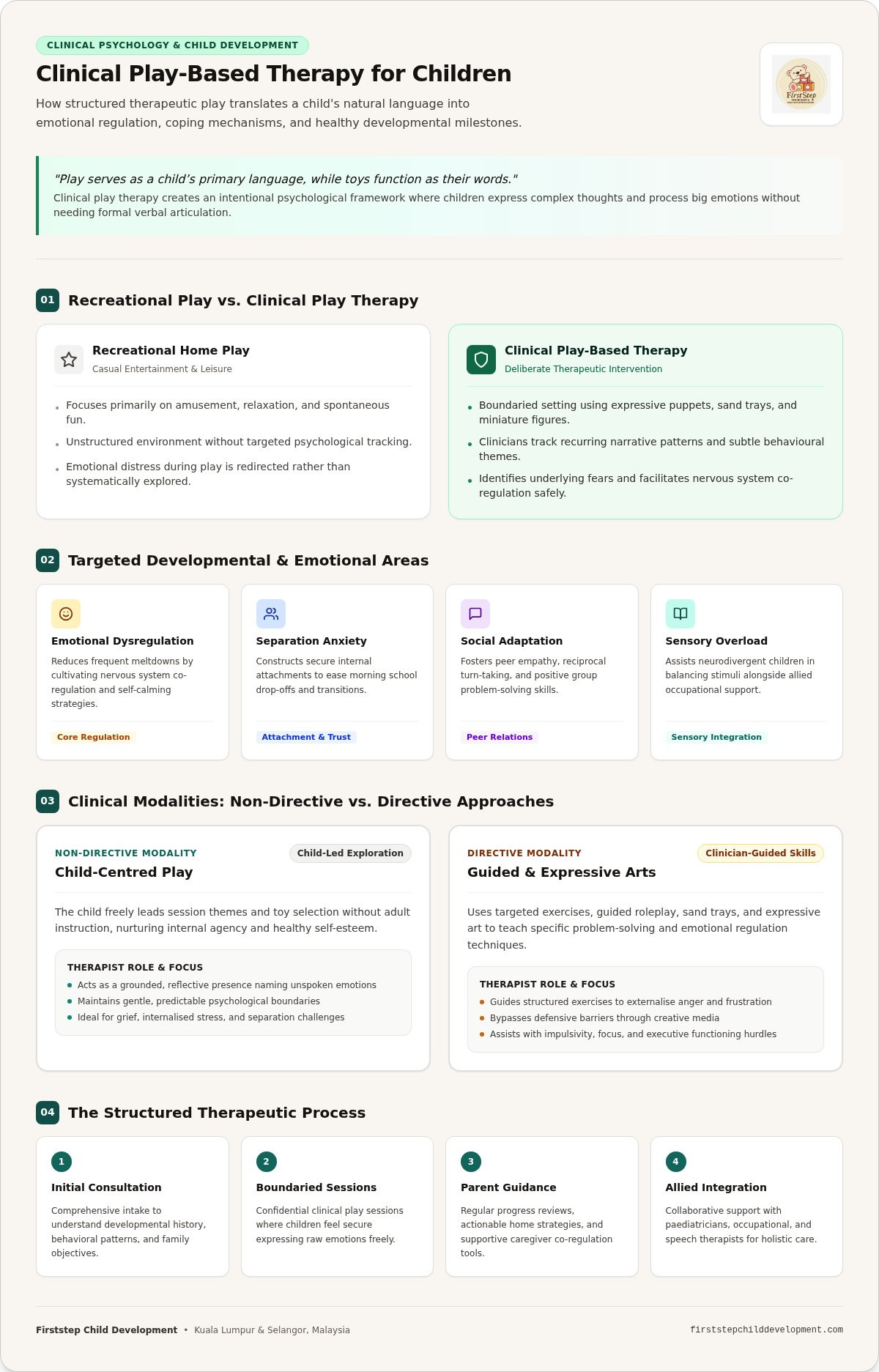
Adults often rely on verbal reflection to process distress, but young minds lack the complex vocabulary required to articulate anxiety, grief, or frustration. As a recognised clinical discipline, play therapy bridges this developmental gap. Within this modality, play serves as a child’s primary language, while toys function as their words. Rather than sitting across an intimidating desk, structured play-based therapy for children provides an intentional psychological framework that transforms ordinary actions into clinical insights.
The Core Difference Between Recreational Play and Therapeutic Play
While casual home play provides wonderful entertainment, therapeutic sessions follow a deliberate clinical design. A trained practitioner creates a secure, boundaried environment where a child feels safe exploring unresolved conflicts. Carefully selected materials, such as expressive puppets, sand trays, and miniature roleplay figures, invite emotional projection. By tracking subtle behavioral themes and repeated narrative patterns, the therapist identifies underlying fears without ever forcing a verbal explanation.
Childhood Difficulties Supported by Play-Based Interventions
Children communicate distress through actions rather than conversations. Clinical play-based therapy for children systematically targets several common developmental and emotional hurdles:
- Emotional Dysregulation: Reducing frequent meltdowns by teaching nervous system co-regulation.
- Separation Anxiety: Building secure internal attachments to ease morning school drop-offs.
- Social Adaptation: Fostering turn-taking and peer empathy through collaborative scenarios.
- Sensory Overload: Supporting neurodivergent children who struggle to balance environmental stimuli alongside complementary care like pediatric occupational therapy.
Addressing these challenges early equips young learners with practical coping mechanisms, paving the way for smoother classroom adjustments and positive social connections.
Key Modalities in Play Therapy: Child-Centred vs. Directive Approaches
Every child processes stress differently, which is why clinical practice doesn’t rely on a rigid plan. Professional standards from organisations like the Association for Play Therapy (APT) emphasise that child-centred therapy fosters autonomy, while directive activities teach targeted coping mechanisms. A qualified clinician evaluates each young person’s emotional safety and developmental stage, adjusting between these two primary modalities as self-regulation strengthens over time.
Child-Centred (Non-Directive) Play Therapy
In non-directive sessions, the child leads the activity entirely without adult instruction. By choosing toys and creating their own storylines, children build personal agency, healthy self-esteem, and emotional mastery. The clinician acts as a grounded, reflective presence, naming hidden feelings and maintaining gentle, consistent boundaries. This patient approach works exceptionally well for youngsters processing grief, separation anxiety, or internalised stress that feels too overwhelming to confront directly.
Directive and Expressive Arts Modalities
Directive techniques use structured activities to build practical problem-solving skills and emotional resilience. Using guided roleplay, therapeutic sand trays, and expressive art, clinicians help children externalise feelings like anger or frustration safely. These targeted exercises bypass defensive barriers, making play-based therapy for children especially valuable for those managing impulsivity or executive functioning difficulties. If you are unsure which path suits your family, a personalised clinical psychologist consultation can help identify your child’s specific developmental needs.
What Parents Should Expect During a Play-Based Therapy Journey
Starting play-based therapy for children is a collaborative partnership between your family and the clinician. As peer-reviewed research highlighted in An Overview of Play Therapy confirms, consistent parental involvement significantly enhances therapeutic outcomes. To foster trust, therapists uphold child confidentiality during sessions, giving young clients the freedom to express raw feelings while providing parents with regular developmental updates and home strategies.
The Step-by-Step Clinical Process: From Intake to Growth
Therapy follows a structured pathway tailored to your child’s evolving emotional needs:
- Parental Intake: A comprehensive discussion covering developmental history, school feedback, and current concerns.
- Rapport Building: Initial sessions where the therapist establishes a secure, non-judgemental environment.
- Active Therapy and Progress Tracking: Weekly sessions paired with periodic parental consultations to evaluate noticeable improvements at home and in the classroom.
Preparing Your Child for Their First Session
Preparation shapes how comfortably your child enters the clinic. Frame the visit simply: explain that they are visiting a welcoming playroom where they can play with toys and meet someone who helps children share their feelings. Avoid framing the visit as a way to fix naughty behaviour, which triggers defensiveness.
If your child feels shy, clingy, or tearful during early sessions, clinicians patiently pace the introduction until confidence grows. To see how our clinical team guides families from initial evaluations through targeted support plans, learn how developmental assessments work at our centre.
Integrating Developmental Support: When to Seek Multidisciplinary Care in Malaysia
Emotional challenges rarely exist in isolation. An explosive afternoon meltdown or quiet school avoidance might look purely behavioural on the surface, but it often stems from hidden sensory overload or communication barriers. Child development is interconnected. By collaborating alongside paediatricians and allied health specialists across Kuala Lumpur and Selangor, clinical psychologists look at the complete child, sparing families months of emotional exhaustion and fragmented appointments.
Connecting Play Therapy with Occupational and Speech Therapies
When a young child struggles to regulate sensory input, a busy classroom can feel completely overwhelming. Incorporating specialised pediatric occupational therapy alongside play sessions addresses sensory processing sensitivities and motor planning hurdles directly. Likewise, when developmental speech delays prevent a child from articulating simple wishes, pairing play interventions with speech therapy provides a direct release for bottled-up frustration. This coordinated model ensures play-based therapy for children supports emotional healing while practical physical and linguistic tools are strengthened in parallel.
Taking the Next Step for Your Child’s Emotional Well-Being
Reaching out for clinical guidance is an empowering act of advocacy, not a parental failure. When persistent distress, intense separation anxiety, or school difficulties interfere with daily family life, an integrated screening offers immediate peace of mind. A comprehensive assessment clarifies whether play-based therapy for children, occupational exercises, or communication support will create the clearest route to progress, giving your family a compassionate roadmap tailored to your child’s distinct profile.
Nurturing Your Child’s Potential Through Purposeful Play
Children communicate best when we meet them at their developmental level. By translating imaginative exploration into healthy coping mechanisms, clinical play-based therapy for children helps young minds navigate intense feelings, school anxiety, and social friction. Paired with consistent parental guidance, structured therapeutic play fosters lasting resilience both at home and in the classroom.
You don’t have to navigate these developmental hurdles alone. Serving families across Kuala Lumpur and Selangor, our multidisciplinary team collaborates closely with paediatricians from Firststep Child Specialist Clinic. We unite comprehensive play-based assessments with supportive parental feedback to give your family a clear, cohesive path forward.
If you’re ready to support your child’s emotional well-being, discover how our gentle support works at Firststep Child Development or schedule a clinical psychologist consultation today. With the right clinical guidance, your child can build the inner confidence to thrive.
Frequently Asked Questions
Is play-based therapy effective for young children with emotional or behavioural issues?
Yes, clinical play intervention is an established, evidence-supported approach for young children experiencing emotional and behavioural hurdles. Because children communicate complex emotions through symbolic play rather than abstract conversation, the playroom offers a safe space to process distress. Working through scenarios with a trained therapist helps children develop self-regulation, healthy emotional expression, and constructive problem-solving skills that carry over into home and school settings.
Can play therapy help a child who has been diagnosed with ADHD or autism?
Play therapy supports neurodivergent children by offering predictable, low-pressure ways to explore social communication and emotional regulation. For autistic children or those with ADHD, clinicians tailor sessions to match individual sensory preferences and attention spans. Rather than forcing rigid compliance, therapists use structured play routines to support impulse management, emotional transitions, and flexible thinking alongside broader developmental therapies.
How long does a child typically attend play-based therapy sessions?
The overall duration varies based on your child’s individual needs, family circumstances, and the specific goals established during initial assessments. Many children attend weekly sessions over several months to achieve meaningful, lasting change. Clinicians conduct regular review milestones with caregivers to assess ongoing developmental progress, ensuring therapy continues only for as long as it actively benefits the child’s daily functioning.
What happens during a parent feedback consultation in play therapy?
Parent feedback consultations are dedicated discussions between caregivers and the therapist to review behavioural observations and therapeutic milestones. The clinician shares recurring emotional themes observed during sessions without breaking the child’s clinical trust. Parents receive practical home strategies, communication adjustments, and collaborative guidance designed to reinforce emotional regulation across family routines in Kuala Lumpur and Selangor.
How is clinical play therapy different from playing at home with educational toys?
While home play supports creativity and learning, clinical play-based therapy for children is an intentional psychological intervention guided by a trained specialist. The therapist uses deliberate behavioural tracking, reflective responses, and therapeutic boundaries to help the child resolve internal conflicts. Every toy, boundary, and interaction in the clinic serves an explicit developmental purpose that ordinary toys cannot replicate alone.

Article by
Firststep Child Development Team
Firststep Child Development Team provides evidence-informed educational resources to help parents better understand child development, behaviour and learning. Our multidisciplinary services include clinical psychology, occupational therapy, speech and language therapy, developmental assessments and other child development support in Kuala Lumpur and Selangor.
Disclaimer
This article is for general educational and informational purposes only and is not a substitute for professional medical, psychological or therapeutic advice, diagnosis or treatment. Every child develops differently. If you have concerns about your child's development, behaviour, learning or wellbeing, please consult an appropriately qualified healthcare or allied health professional.