



Picky Eating in Children: What Your Child’s Eating Habits May Be Telling You
Picky eating is common in childhood, especially during the toddler and preschool years. Some children may refuse certain foods, eat only a small selection of foods, or become upset when new foods are introduced.
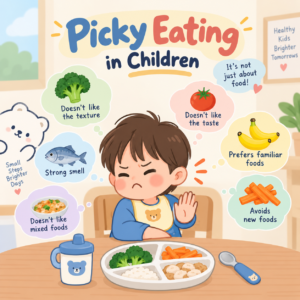
While picky eating can sometimes be part of normal development, it can also be influenced by sensory sensitivities, anxiety, oral-motor difficulties, or other underlying concerns.
Instead of asking only, “Why is my child so picky?”, it can be helpful to ask:
“What might my child’s eating behaviour be trying to tell me?”
Understanding Picky Eating in Children
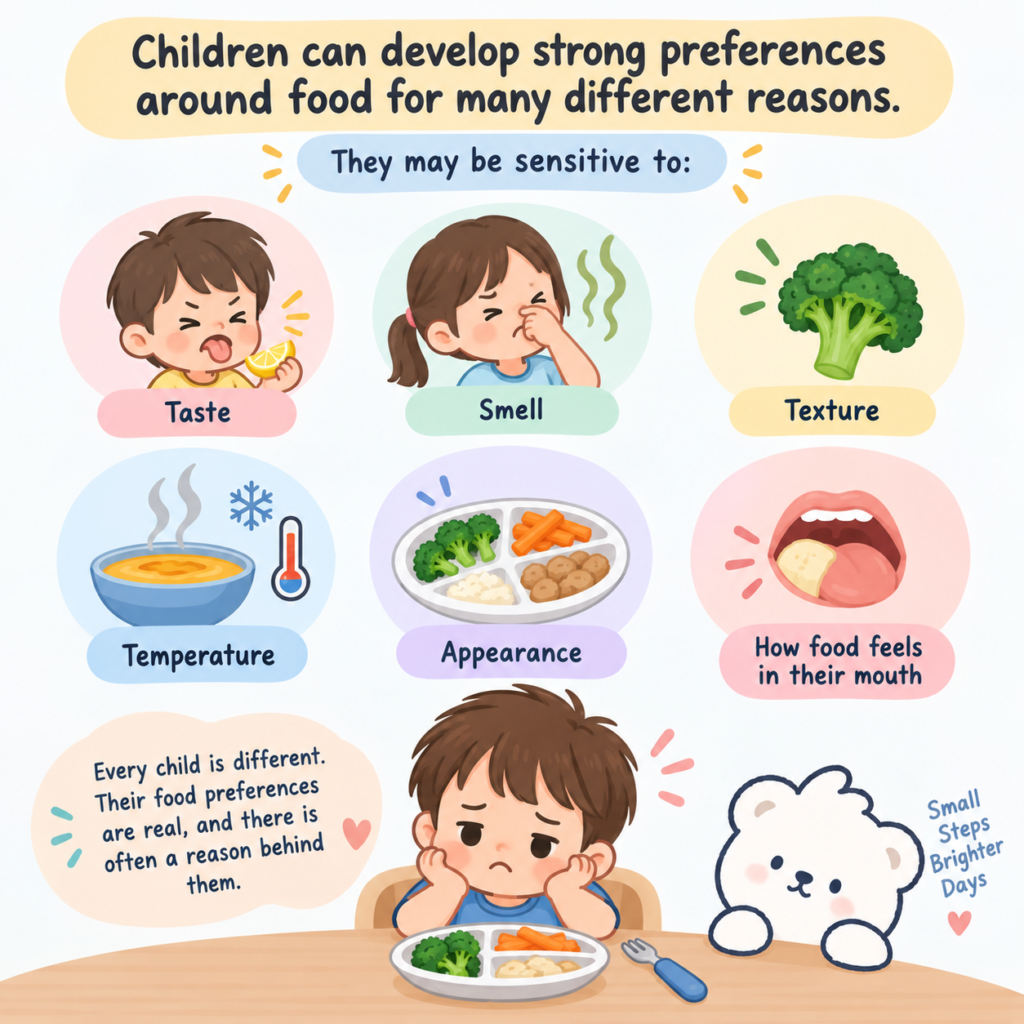
Children can develop strong preferences around food for many different reasons.
They may be sensitive to:
- Taste
- Smell
- Texture
- Temperature
- Appearance
- How food feels in their mouth
Some children may also find new foods unfamiliar or unpredictable.
This means that refusing food is not always simply about being stubborn or difficult.
Sometimes, eating behaviour can provide clues about what a child is experiencing.
1. Refusing Certain Textures May Reflect Sensory Sensitivity
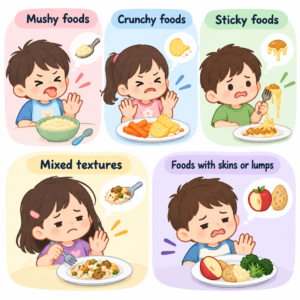
Some children strongly dislike particular textures, such as:
- Mushy foods
- Crunchy foods
- Sticky foods
- Mixed textures
- Foods with skins or lumps
For example, a child may happily eat crackers but refuse fruit, vegetables, or foods with a soft texture.
This may be related to sensory processing differences rather than simply disliking the taste.
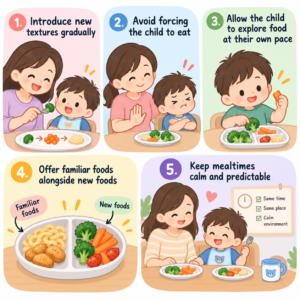
What parents can do:
- Introduce new textures gradually
- Avoid forcing the child to eat
- Allow the child to explore food at their own pace
- Keep mealtimes calm and predictable
- Offer familiar foods alongside new foods
Katsikari, A., & Varela, P. (2025). Individual differences in sensitivity to texture as drivers of food preferences and eating behaviour. Food Quality and Preference, 136, 105752. https://doi.org/10.1016/j.foodqual.2025.105752
2. Eating Only a Few Foods May Mean Your Child Needs Predictability
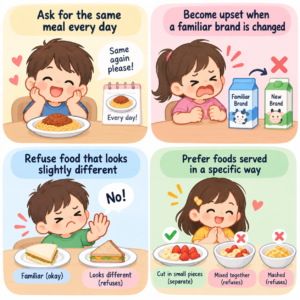
Some children prefer eating the same foods repeatedly.
They may:
- Ask for the same meal every day
- Become upset when a familiar brand is changed
- Refuse food that looks slightly different
- Prefer foods served in a specific way
For some children, familiar foods feel safer and more predictable.
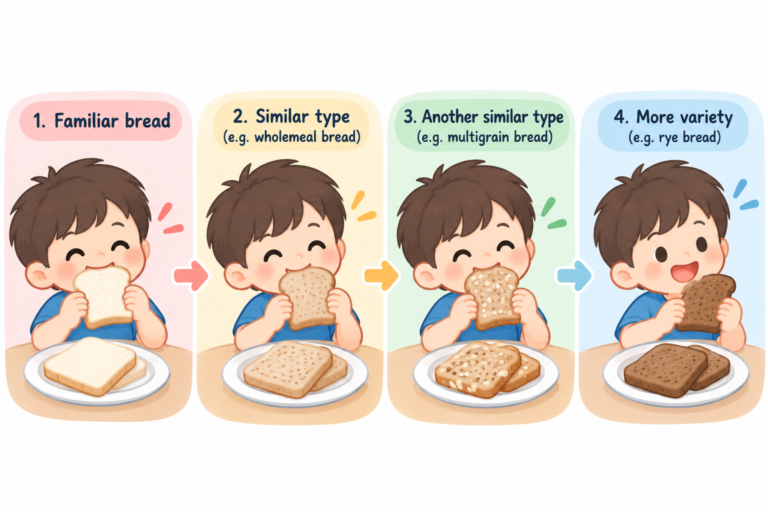
Instead of immediately removing their preferred foods, parents can gradually introduce small changes.
For example, if your child eats one particular type of bread, you might slowly introduce another similar type rather than making a sudden change.
van der Horst, K., Deming, D. M., Lesniauskas, R., Carr, B. T., & Reidy, K. C. (2016). Picky eating: Associations with child eating characteristics and food intake. Appetite, 103, 286–293. https://doi.org/10.1016/j.appet.2016.04.027
3. Avoiding New Foods Does Not Always Mean Your Child Is Being Stubborn
Trying unfamiliar foods can feel challenging for some children.
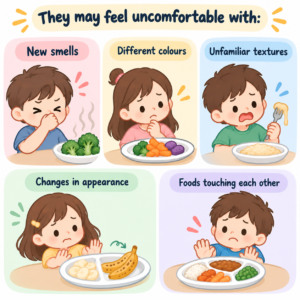
They may feel uncomfortable with:
- New smells
- Different colours
- Unfamiliar textures
- Changes in appearance
- Foods touching each other
This is sometimes called food neophobia, where a child is hesitant or fearful about trying unfamiliar foods
Repeated, pressure-free exposure can help children become more comfortable with new foods over time.
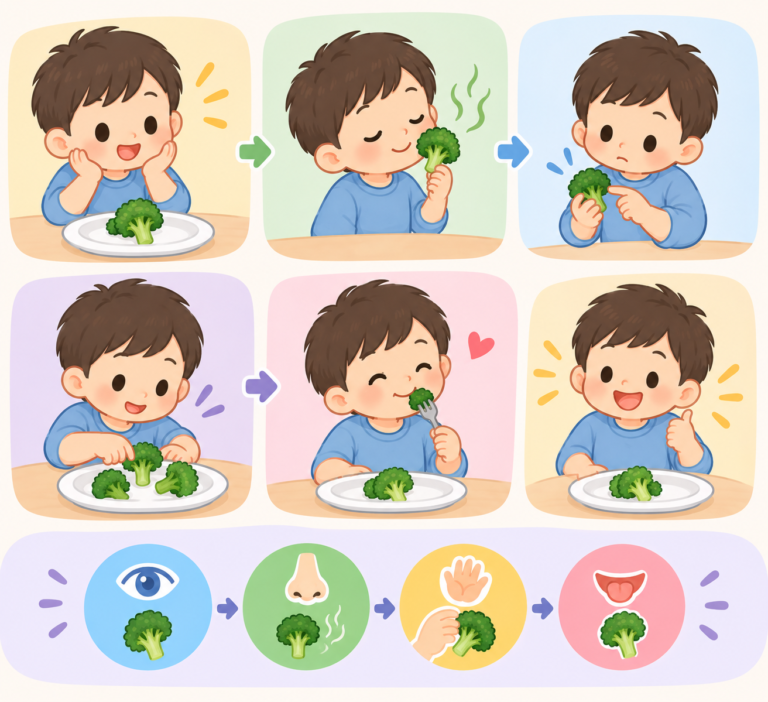
Remember: Seeing a new food is also part of learning about it.
A child may need to see, smell, touch, and interact with a food several times before they are ready to taste it.
Nederkoorn, C., Theiβen, J., Tummers, M., & Roefs, A. (2018). Taste the feeling or feel the tasting: Tactile exposure to food texture promotes food acceptance. Appetite, 120, 297–301. https://doi.org/10.1016/j.appet.2017.09.010
4. Mealtime Behaviour May Be Communicating Discomfort
Sometimes, what looks like a behavioural problem during meals may be a sign that something is difficult for the child.
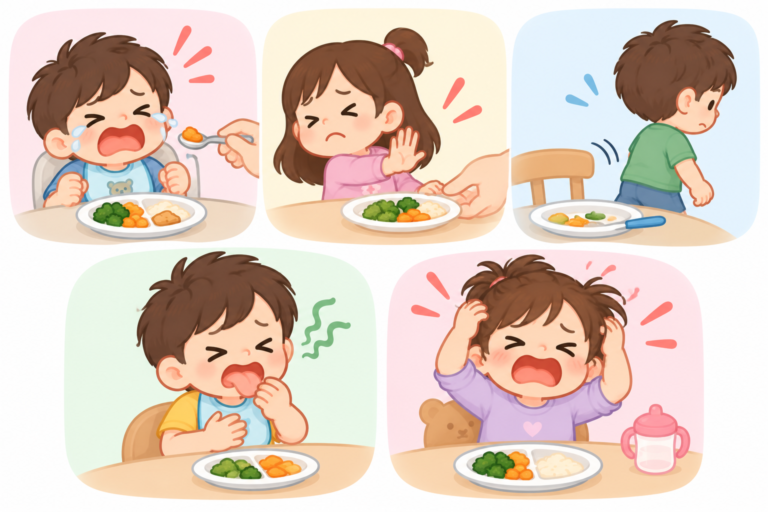
For example, a child may:
- Cry when food is presented
- Push food away
- Leave the table
- Gag when trying certain foods
- Become very distressed during mealtimes
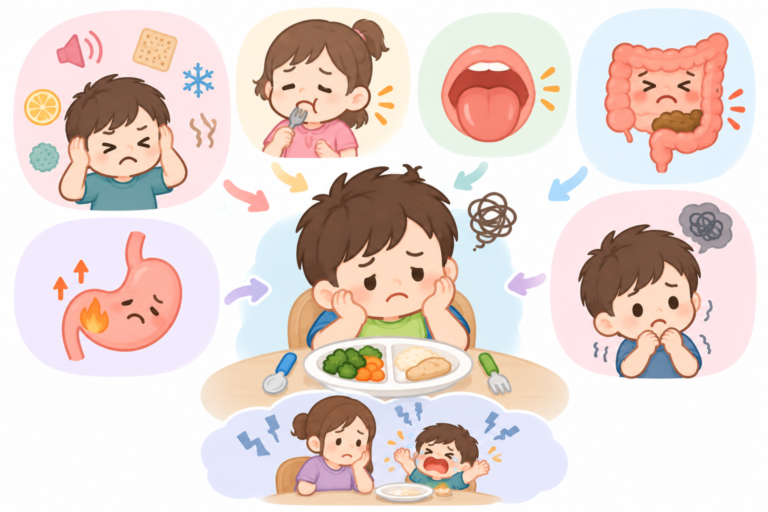
If mealtimes are consistently stressful, it is worth looking at the bigger picture rather than assuming the child is simply refusing to cooperate.
Possible factors may include sensory sensitivity, difficulty chewing, oral-motor challenges, constipation, reflux, or anxiety around eating.
Nelson, J. A., & Holub, S. C. (2025). Parents’ feeding stress and pressure: Family mealtime dynamics with preschoolers across one week. Appetite, 211, 107992. https://doi.org/10.1016/j.appet.2025.107992
5. Picky Eating Can Affect More Than Mealtimes
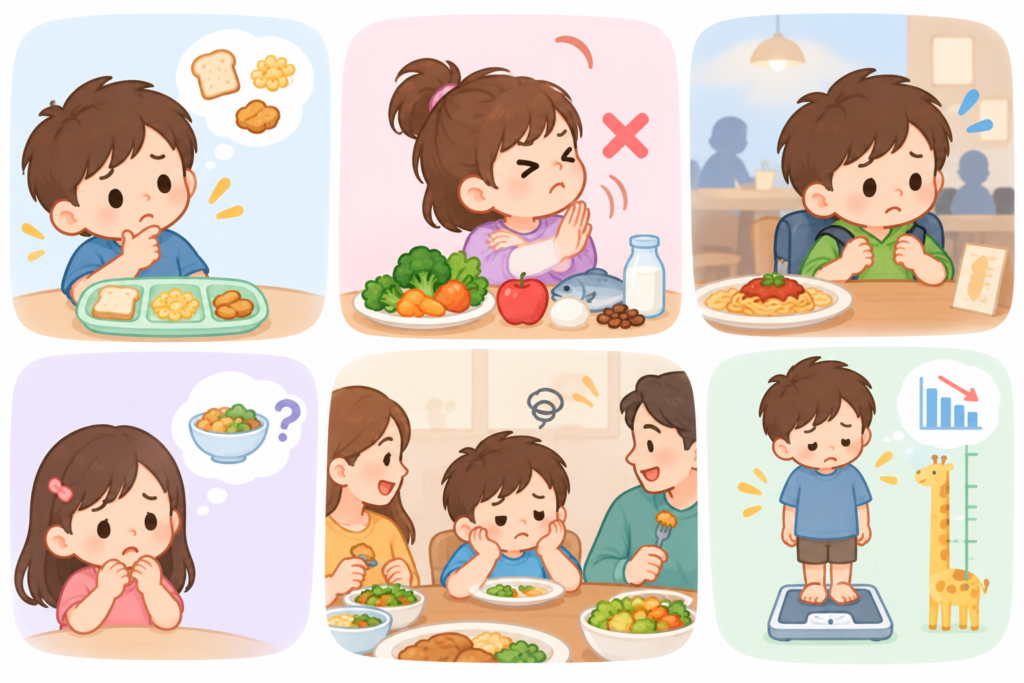
For some children, food preferences may become so limited that they begin to affect everyday life.
Parents may notice:
- A very small range of accepted foods
- Avoidance of entire food groups
- Difficulty eating outside the home
- Anxiety around unfamiliar foods
- Difficulty participating in family meals
- Concerns about nutritional intake or growth
When food choices become very restricted, professional guidance can help identify what may be contributing to the difficulty.
Fonseca, N. K. O., Curtarelli, V. D., Bertoletti, J., Azevedo, K., Cardinal, T. M., Moreira, J. D., & Antunes, L. C. (2024). Avoidant restrictive food intake disorder: Recent advances in neurobiology and treatment. Journal of Eating Disorders, 12(1), 74. https://doi.org/10.1186/s40337-024-01021-z
What Parents Can Do
Here are some simple ways parents can support healthier eating habits:
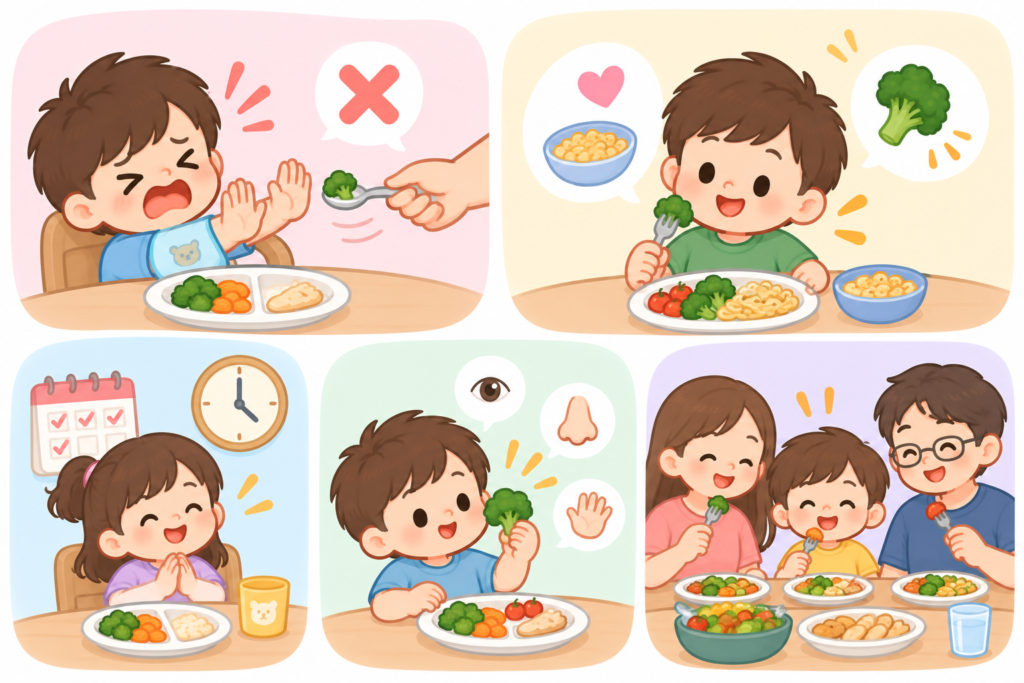
1. Avoid forcing your child to eat
Pressure can make mealtimes more stressful and may increase negative associations with food.
2. Offer familiar and new foods together
A preferred food can help make a new food feel less overwhelming.
3. Keep mealtimes predictable
Consistent routines can help children know what to expect.
4. Let your child explore food
Touching, smelling, or looking at a new food can be an important step before tasting it.
5. Be a positive role model
Children often learn by watching the adults around them. Eat a variety of foods together and keep mealtimes relaxed.
When Should Parents Seek Professional Support?
Consider seeking professional advice if your child’s picky eating is:
- Very intense or persistent
- Causing frequent distress
- Affecting eating or nutrition
- Limiting participation in school or social activities
- Making family mealtimes very difficult
- Associated with gagging, choking or difficulty chewing
- Causing concerns about growth or weight
- Becoming increasingly restrictive
It is important to remember that not every picky eater has a feeding disorder. However, persistent or severe food restriction deserves a closer look so that the underlying factors can be properly understood.
Understanding the Child Behind the Eating Behaviour
Picky eating is not always simply about a child refusing to eat.
Sometimes, it may reflect sensory sensitivities, a need for predictability, anxiety, developmental differences, or difficulties with eating skills.
When parents understand what may be contributing to the behaviour, they can respond with support rather than pressure.
Mealtimes are not just about eating. They are also about helping children feel safe, comfortable, and confident around food.
At FirstStep Psychology and Child Development Centre, we support children and families with developmental, behavioural, sensory, and feeding-related concerns.
Seeking professional help does not always mean something is “seriously wrong”.
If you are concerned about your child’s eating habits, professional guidance can help you better understand the reasons behind the behaviour and identify appropriate support.
You are welcome to reach out to us for a consultation if you would like support with your child’s feeding or developmental concerns.
You are welcome to reach out to us for a consultation if you would like support in understanding your child’s emotions, behaviour, or development.
🌟 Stay Connected with Us! We love sharing tips, insights, and inspiring stories about children’s growth and mental wellbeing.
💙 Follow us on Instagram and Facebook for more updates and parenting advice.
Join our community and let’s grow together. One positive step at a time!

REFERENCES
Fonseca, N. K. O., Curtarelli, V. D., Bertoletti, J., Azevedo, K., Cardinal, T. M., Moreira, J. D., & Antunes, L. C. (2024). Avoidant restrictive food intake disorder: Recent advances in neurobiology and treatment. Journal of Eating Disorders, 12(1), 74. https://doi.org/10.1186/s40337-024-01021-z
Katsikari, A., & Varela, P. (2025). Individual differences in sensitivity to texture as drivers of food preferences and eating behaviour. Food Quality and Preference, 136, 105752. https://doi.org/10.1016/j.foodqual.2025.105752
Nederkoorn, C., Theiβen, J., Tummers, M., & Roefs, A. (2018). Taste the feeling or feel the tasting: Tactile exposure to food texture promotes food acceptance. Appetite, 120, 297–301. https://doi.org/10.1016/j.appet.2017.09.010
Nelson, J. A., & Holub, S. C. (2025). Parents’ feeding stress and pressure: Family mealtime dynamics with preschoolers across one week. Appetite, 211, 107992. https://doi.org/10.1016/j.appet.2025.107992
Taylor, C. M., & Emmett, P. M. (2018). Picky eating in children: Causes and consequences. Proceedings of the Nutrition Society, 78(2), 1–9. https://doi.org/10.1017/s0029665118002586
van der Horst, K., Deming, D. M., Lesniauskas, R., Carr, B. T., & Reidy, K. C. (2016). Picky eating: Associations with child eating characteristics and food intake. Appetite, 103, 286–293. https://doi.org/10.1016/j.appet.2016.04.027
Working Hours
Tuesday to Saturday – 8.30am to 6pm
Monday & Sunday – Closed
Please also subscribe us at
Contact Us
Discover Our Team!
📞+60102502833
firststepdevelopmentcentre@gmail.com
B1-7, Plaza Damas 3, Jalan Sri Hartamas 1, 50480 Kuala Lumpur.
Copyright 2025. Firststep Child Development Sdn Bhd. All rights reserved.