



Perfectionism in Children: When Does High Achievement Become a Concern?
Does your child become very upset when they make a mistake, refuse to try something they might not be good at, or feel that everything has to be “perfect”?
Wanting to do well can be a positive quality in children.
However, for some children, the pressure to be perfect can become overwhelming.
They may spend a long time redoing their work, become extremely upset over small mistakes, avoid new activities because they are afraid of failing, or constantly worry about whether they are doing things correctly.
Perfectionism is not simply about wanting to do well.
When the fear of making mistakes begins to affect your child’s emotions, confidence, schoolwork or daily activities, it may be worth paying attention to.
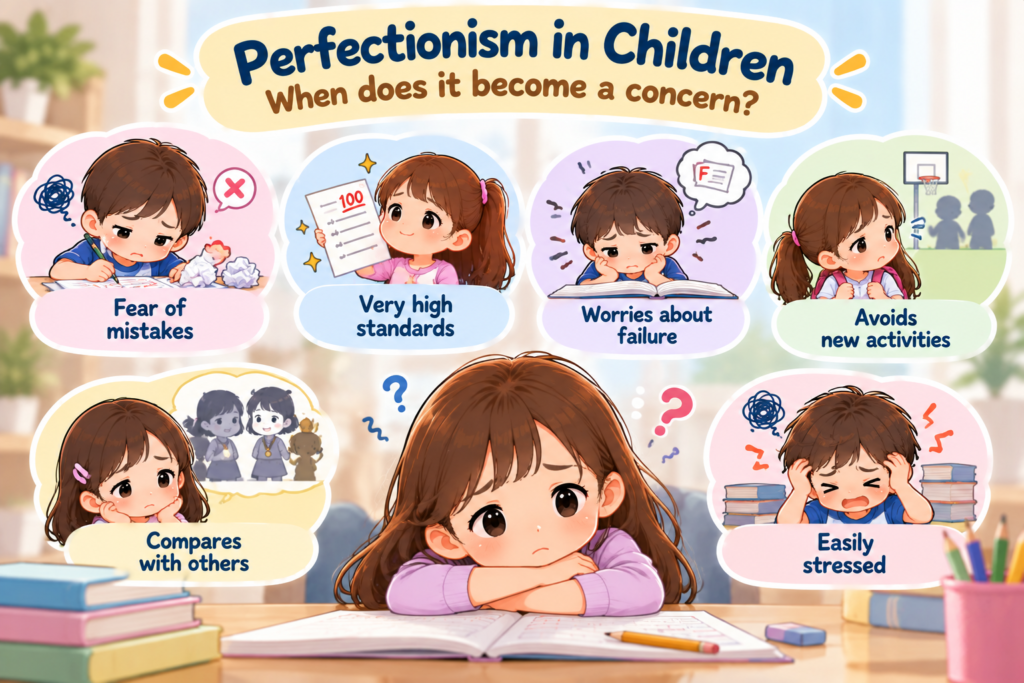
Understanding what is behind your child’s perfectionism can help parents provide the right support.
What Is Perfectionism in Children?
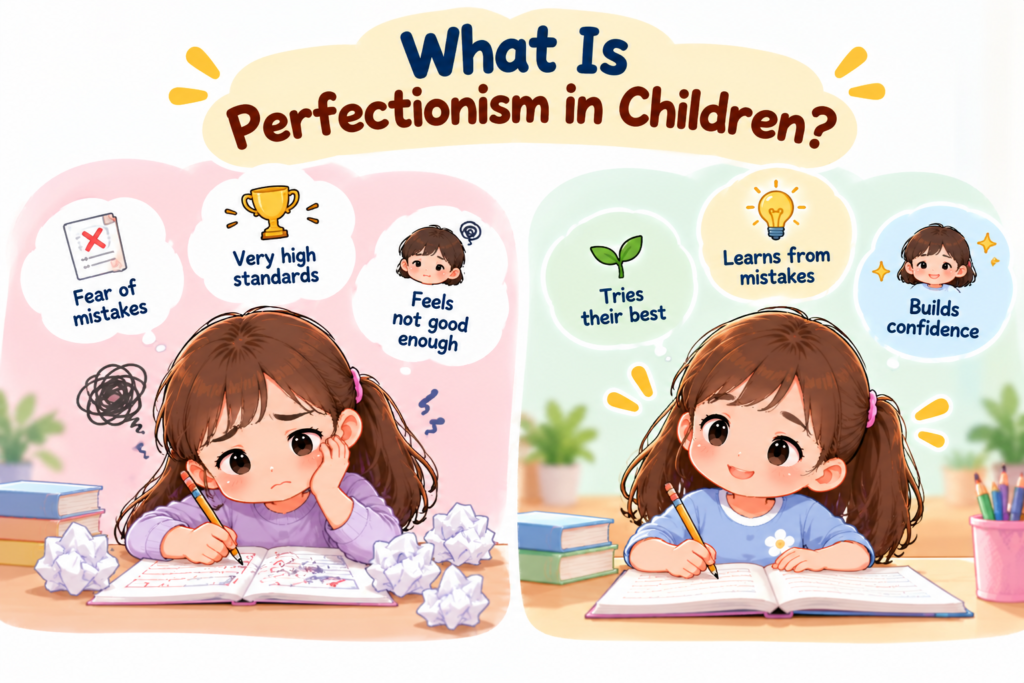
Perfectionism refers to having very high standards for oneself and feeling that mistakes or imperfections are unacceptable.
Some children may put pressure on themselves to get everything right.
They may believe that making a mistake means they are not good enough.
A child can be motivated and hardworking without being a perfectionist.
The concern is when the need to be perfect causes significant worry, distress or avoidance.
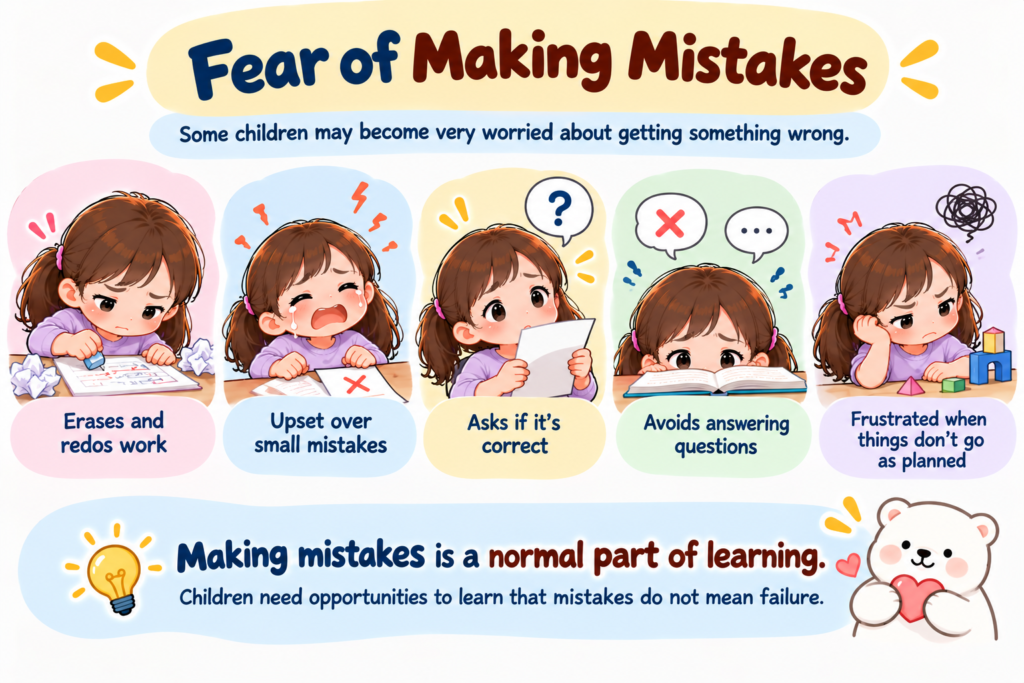
1. Fear of Making Mistakes
Some children may become very worried about getting something wrong.
They may:
🌸 Erase and redo their work repeatedly
🌸 Become upset over small mistakes
🌸 Ask repeatedly if their work is correct
🌸 Avoid answering questions because they are afraid of being wrong
🌸 Become frustrated when things do not go as planned
Making mistakes is a normal part of learning.
Children need opportunities to learn that mistakes do not mean failure.
2. Avoiding New Activities
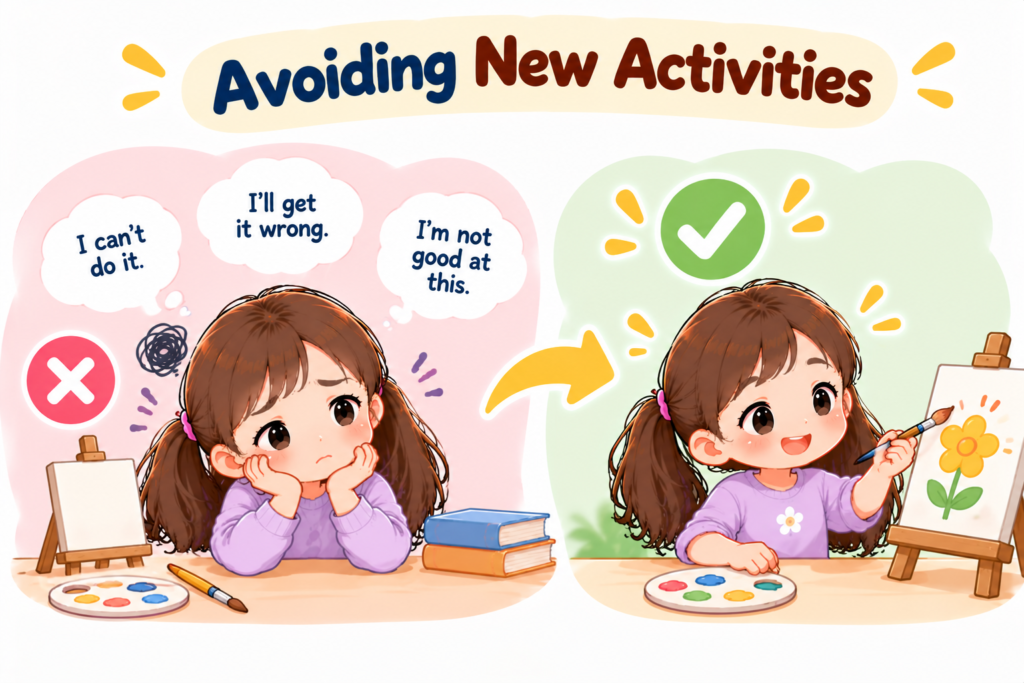
🌸A child who is afraid of making mistakes may avoid activities they have never tried before.
They may say:
🌸 “I can’t do it.”
🌸 “I’m going to get it wrong.”
🌸 “I’m not good at this.”
They may prefer activities they already know they can do well rather than taking a chance and learning something new.
3. Becoming Upset When Things Aren't Perfect
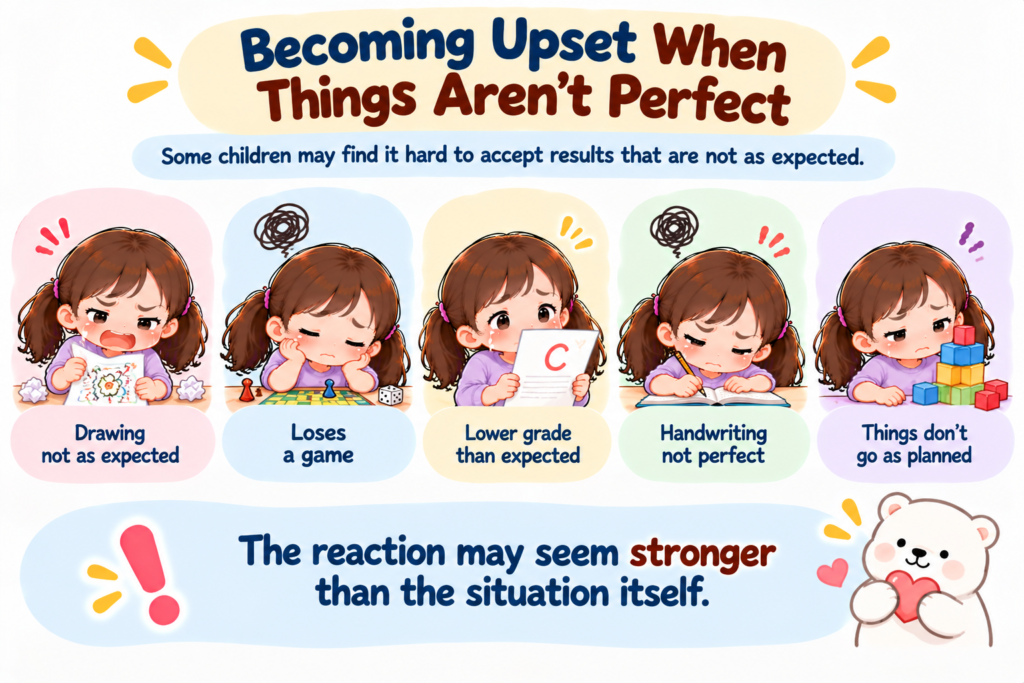
Some children may have difficulty accepting results that are not exactly what they expected.
For example, they may become very upset if:
🌸 Their drawing does not look the way they imagined
🌸 They lose a game
🌸 They receive a lower grade than expected
🌸 Their handwriting is not perfect
🌸 Something does not go according to plan
The reaction may seem stronger than the situation itself because the child may feel that making mistakes is unacceptable.
4. Constantly Comparing Themselves
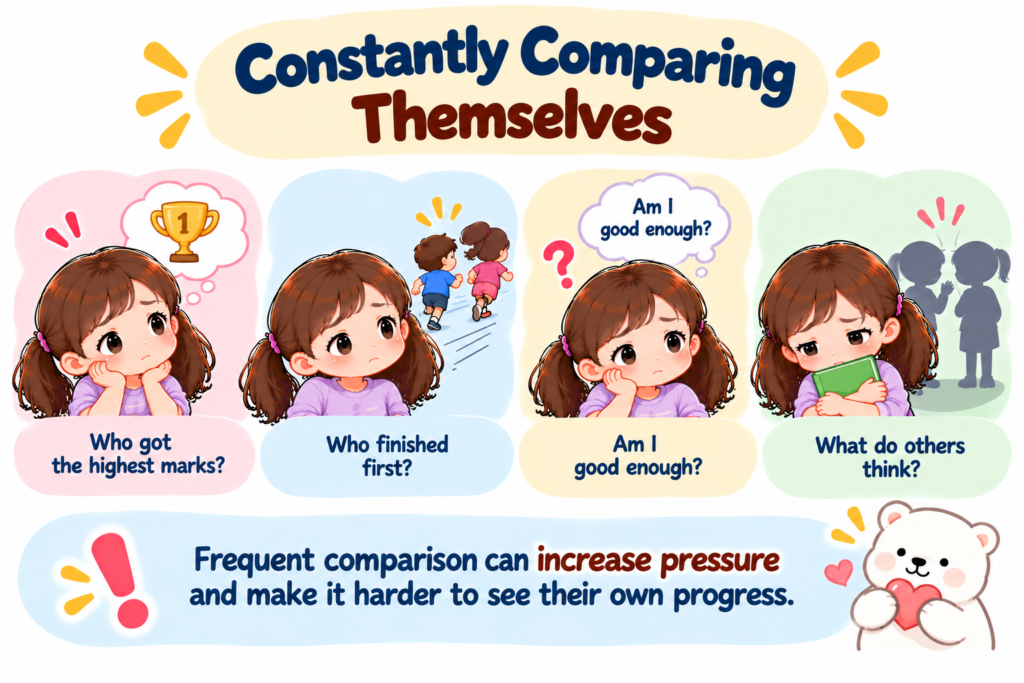
Children may compare their performance with their classmates, siblings or friends.
They may worry about:
🌸 Who got the highest marks
🌸 Who finished first
🌸 Whether they are “good enough”
🌸 What other people think about their work
Frequent comparison can increase pressure and make it difficult for a child to recognise their own progress.
Physical or Emotional Signs
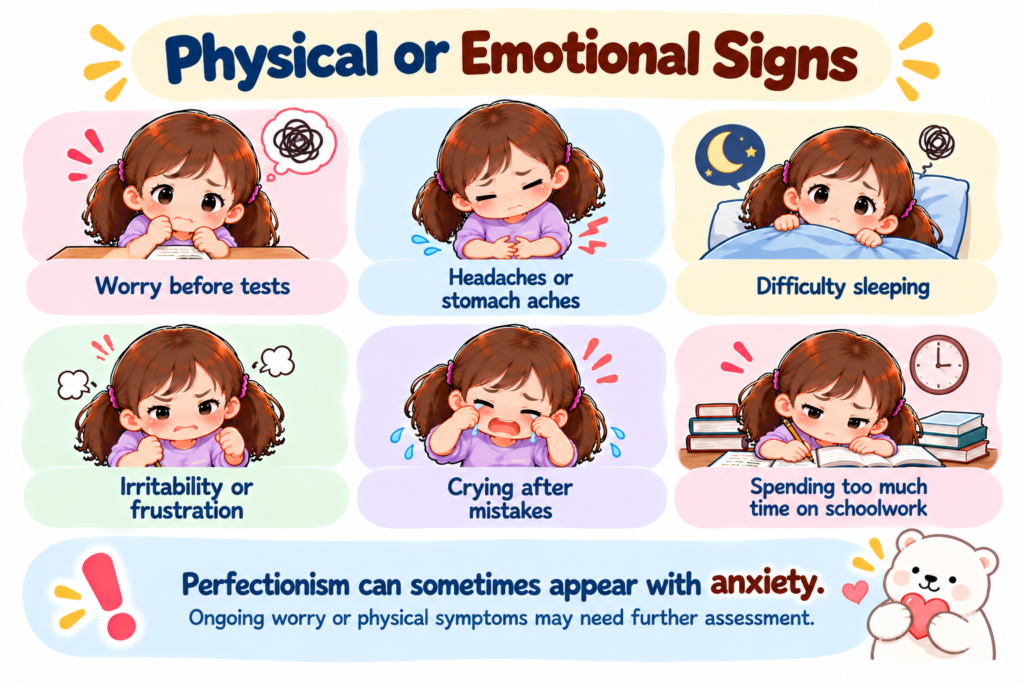
Perfectionism can sometimes be connected with anxiety or school-related stress.
Parents may notice:
🌸 Worry before tests or assignments
🌸 Headaches or stomach aches
🌸 Difficulty sleeping
🌸 Irritability or frustration
🌸 Crying after making mistakes
🌸 Spending excessive time on schoolwork
Perfectionism can sometimes appear alongside anxiety, and persistent worry or physical symptoms that interfere with daily life may need further assessment.
What Can Parents Do?
1. Focus on Effort, Not Perfection
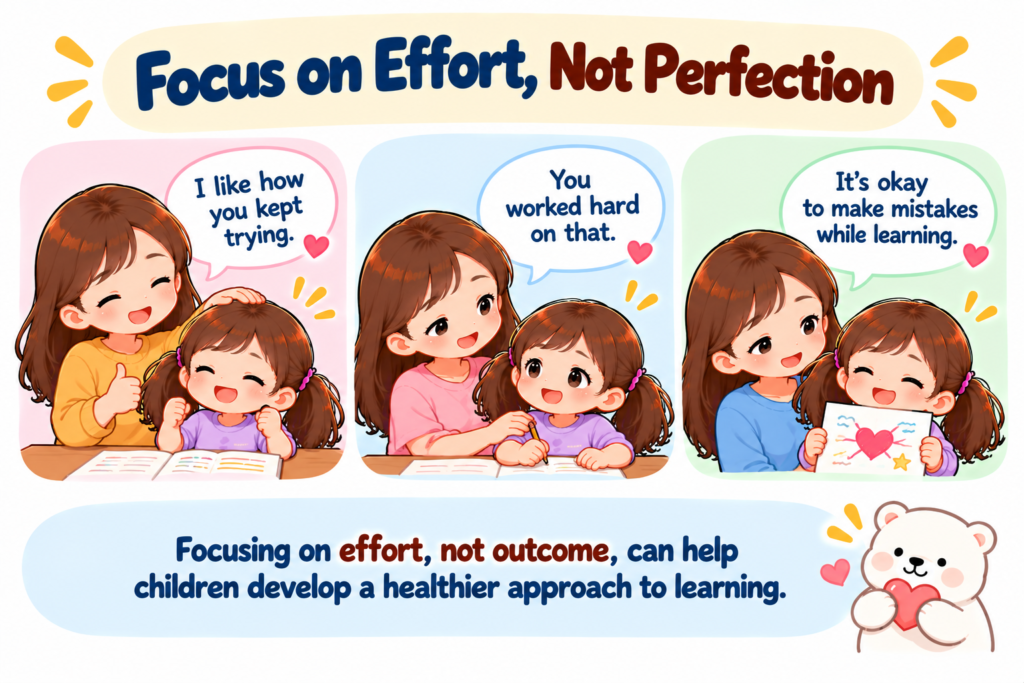
Instead of focusing only on grades or results, praise your child’s effort, persistence and willingness to try.
You can say:
🌸 “I like how you kept trying.”
🌸 “You worked hard on that.”
🌸 “It’s okay to make mistakes while learning.”
Focusing on effort rather than outcome can help children develop a healthier approach to learning.
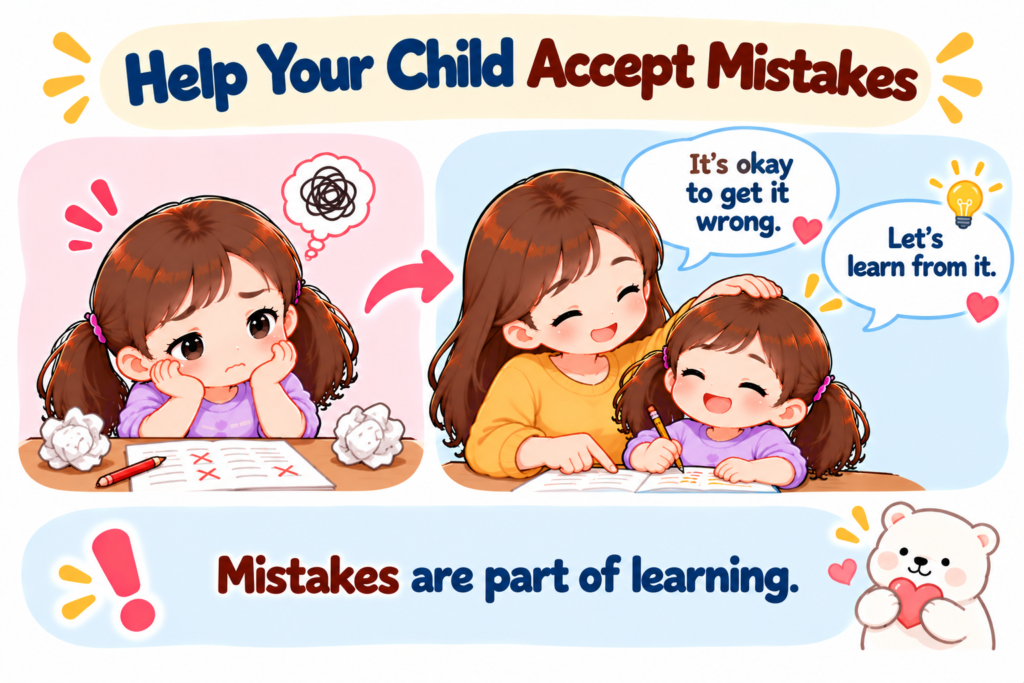
2. Help Your Child Accept Mistakes
Remind your child that mistakes are part of learning.
Try saying:
“It’s okay if you get it wrong. Let’s see what we can learn from it.”
The goal is not to remove mistakes, but to help your child become more comfortable with them.
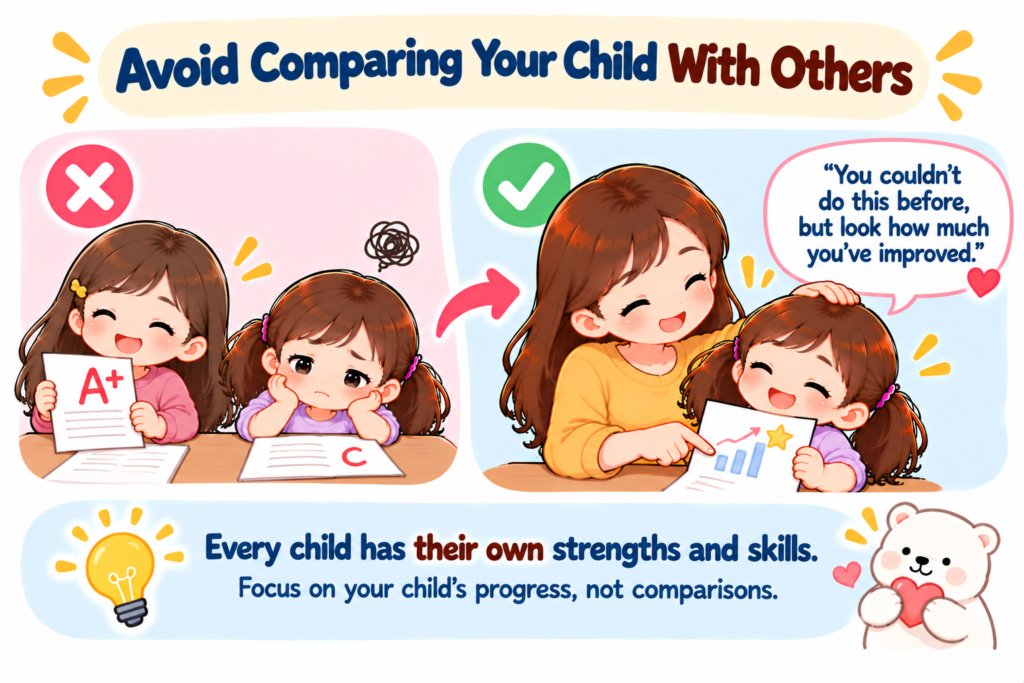
3. Avoid Comparing Your Child With Others
Every child develops different strengths and skills.
Instead of comparing your child with siblings or classmates, help them notice their own progress.
“You couldn’t do this before, but look how much you’ve improved.”
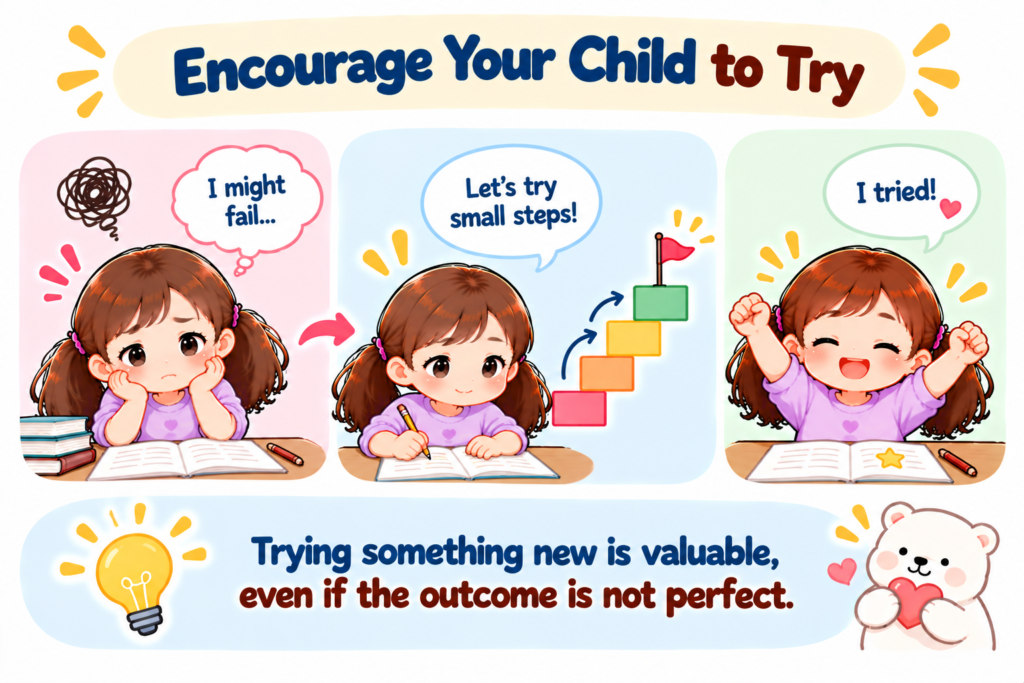
4. Encourage Your Child to Try
If your child avoids something because they are afraid of failing, encourage them to take small steps.
The goal is not to expect immediate success. It is to help your child learn that trying something new is valuable even when the outcome is not perfect.
When Should Parents Seek Professional Help?
Perfectionism does not always mean that a child has an underlying problem.
However, parents may want to seek professional support if:
🌸 Your child’s worry about mistakes is becoming intense
🌸 Your child frequently avoids activities because of fear of failure
🌸 Schoolwork takes an unusually long time
🌸 Your child becomes very distressed when things are not perfect
🌸 Anxiety is affecting sleep, school or daily activities
🌸 Your child’s confidence is noticeably affected
🌸 You are unsure what is causing the behaviour
If anxiety or perfectionism begins to interfere with everyday life, professional support can help identify what may be contributing to the difficulty and what strategies may be appropriate.
What Should Parents Remember?
Perfectionism is not simply about wanting to do well.
🌸 Mistakes are part of learning.
🌸 Encourage effort rather than perfection.
🌸 Help your child understand that failure does not define them.
🌸 Avoid unnecessary comparisons.
🌸 Give your child opportunities to try, make mistakes and try again.
🌸 Seek support if perfectionism is causing significant distress or affecting daily life.
It’s Okay to Make Mistakes
Children do not need to be perfect to succeed.
Helping your child feel comfortable with mistakes can build confidence, resilience and a healthier attitude towards learning.
If you are concerned about your child’s emotional or behavioural difficulties, speaking with a qualified professional can help you better understand your child’s needs and identify appropriate support.
🌟 Stay Connected with Us! We love sharing tips, insights, and inspiring stories about children’s growth and mental wellbeing.
💙 Follow us on Instagram and Facebook for more updates and parenting advice.
Join our community and let’s grow together. One positive step at a time!

References
Child Mind Institute. (2026). When School Stress Is Too Much: Supporting Kids With Academic Anxiety.
Child Mind Institute. https://childmind.org/article/understanding-academic-anxiety/
Working Hours
Tuesday to Saturday – 8.30am to 6pm
Monday & Sunday – Closed
Please also subscribe us at
Contact Us
Discover Our Team!
📞+60102502833
firststepdevelopmentcentre@gmail.com
B1-7, Plaza Damas 3, Jalan Sri Hartamas 1, 50480 Kuala Lumpur.
Copyright 2025. Firststep Child Development Sdn Bhd. All rights reserved.