



Low Self-Esteem in Children: Signs Your Child May Be Struggling With Confidence
Many parents wonder:
“Why does my child always think they are not good enough?”
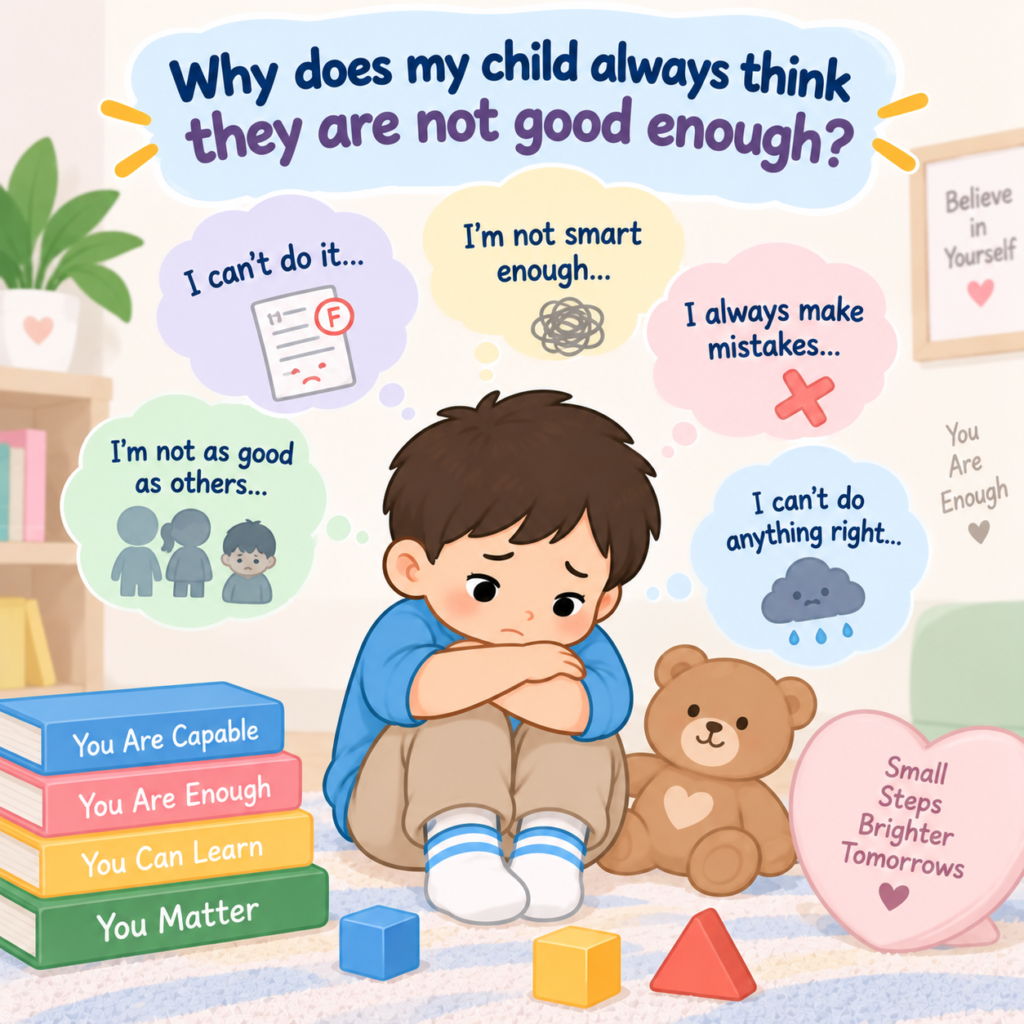
Some children may avoid trying new things, become very upset when they make mistakes, or frequently compare themselves with others.
While occasional self-doubt is a normal part of growing up, persistent negative thoughts about themselves may affect a child’s confidence, relationships, school participation, and willingness to try new experiences.
Understanding the early signs can help parents recognise when a child may be struggling with confidence and provide the right support at the right time.
What Is Self-Esteem?
Self-esteem refers to how children view and feel about themselves, including how they perceive their abilities, qualities, and worth.
Children with healthy self-esteem generally understand that they can make mistakes and still have value. They may feel proud of their achievements while also recognising that they are still learning.
A child who struggles with self-esteem may be overly critical of themselves, worry about making mistakes, or believe that they are not as capable as other children.
Self-esteem develops gradually through a child’s experiences, relationships, and interactions with the people around them.
Every child experiences moments of self-doubt. However, parents may want to pay closer attention when negative self-beliefs happen frequently or begin affecting everyday activities.
1. Frequently Says “I Can’t” or “I’m Not Good Enough”
Your child may regularly doubt their own abilities, even before trying something.
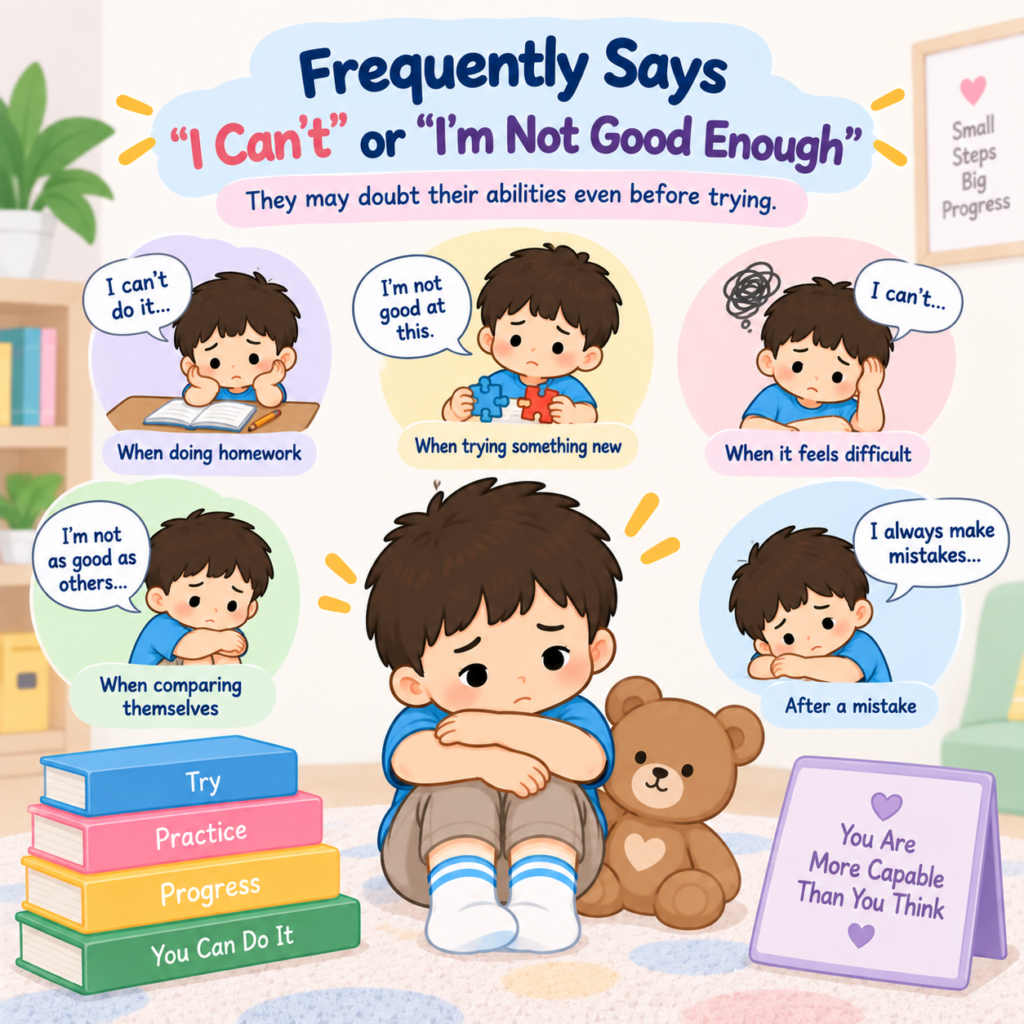
For example, they may say:
“I can’t do it.”
“I’m bad at this.”
“I’ll never be good at it.”
They may assume that they will fail without giving themselves an opportunity to try.
2. Avoids Trying New Things
A child who lacks confidence may avoid activities because they are worried about making mistakes or not being successful.
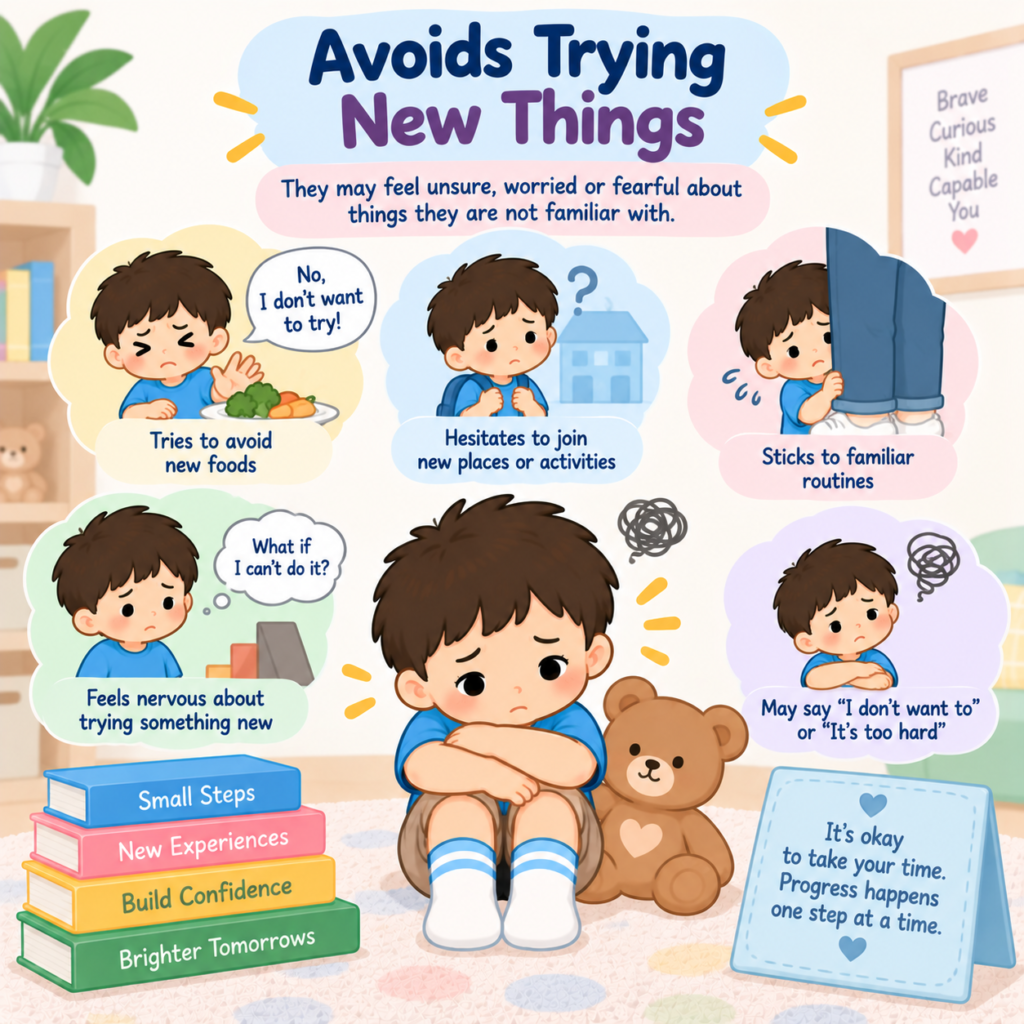
They may:
✿ Refuse to participate in unfamiliar activities
✿ Avoid answering questions in class
✿ Be reluctant to join games or group activities
✿ Give up before trying
✿ Say they do not want to participate because they think they will fail
Fear of making mistakes can sometimes prevent children from exploring their abilities and developing new skills.
3. Becomes Very Upset When They Make Mistakes
Some children may find mistakes particularly difficult to handle.
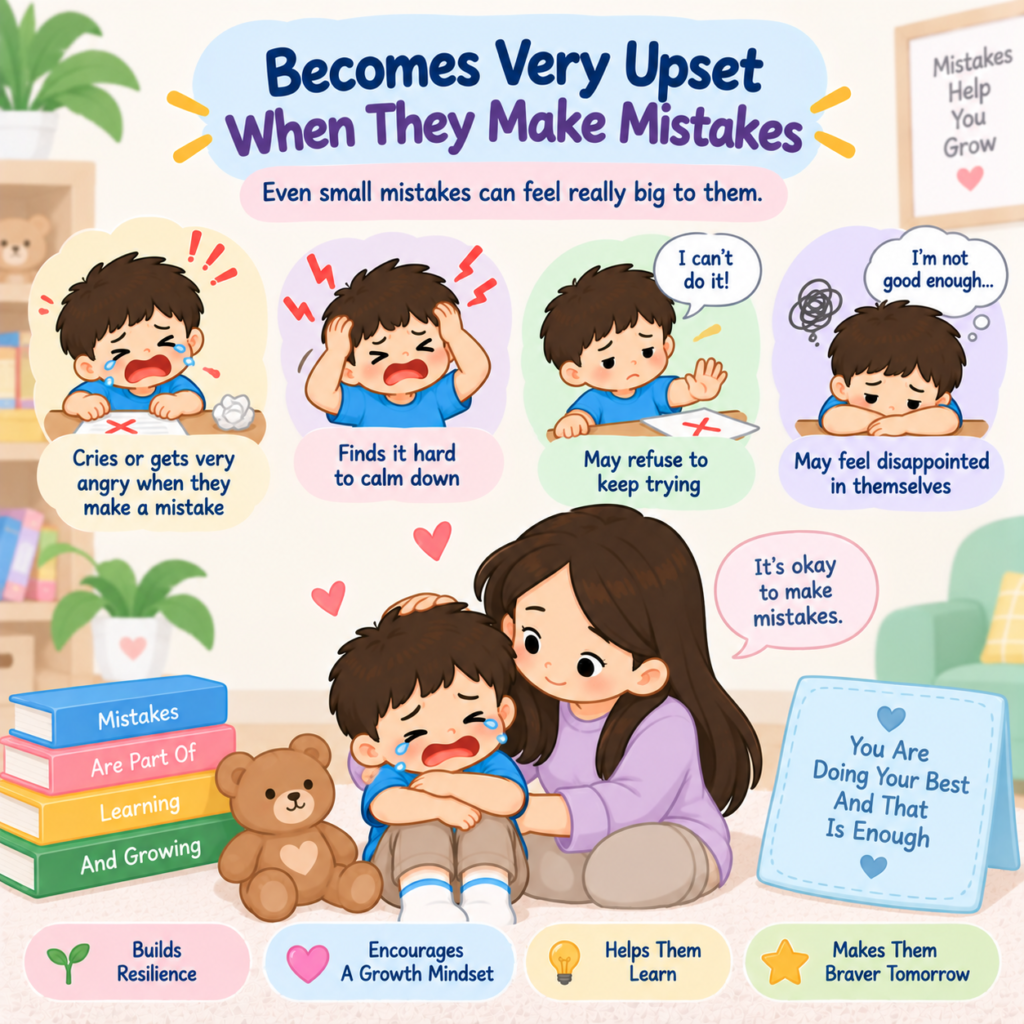
They may:
✿ Cry or become frustrated when they make an error
✿ Tear up their work
✿ Refuse to continue with a task
✿ Become angry with themselves
✿ Say things such as “I’m stupid” or “I always get everything wrong”
Making mistakes is a normal part of learning, but children with low self-confidence may see mistakes as evidence that they are not capable.
4. Frequently Compares Themselves With Others
Your child may often compare their abilities, appearance, schoolwork, or achievements with other children.
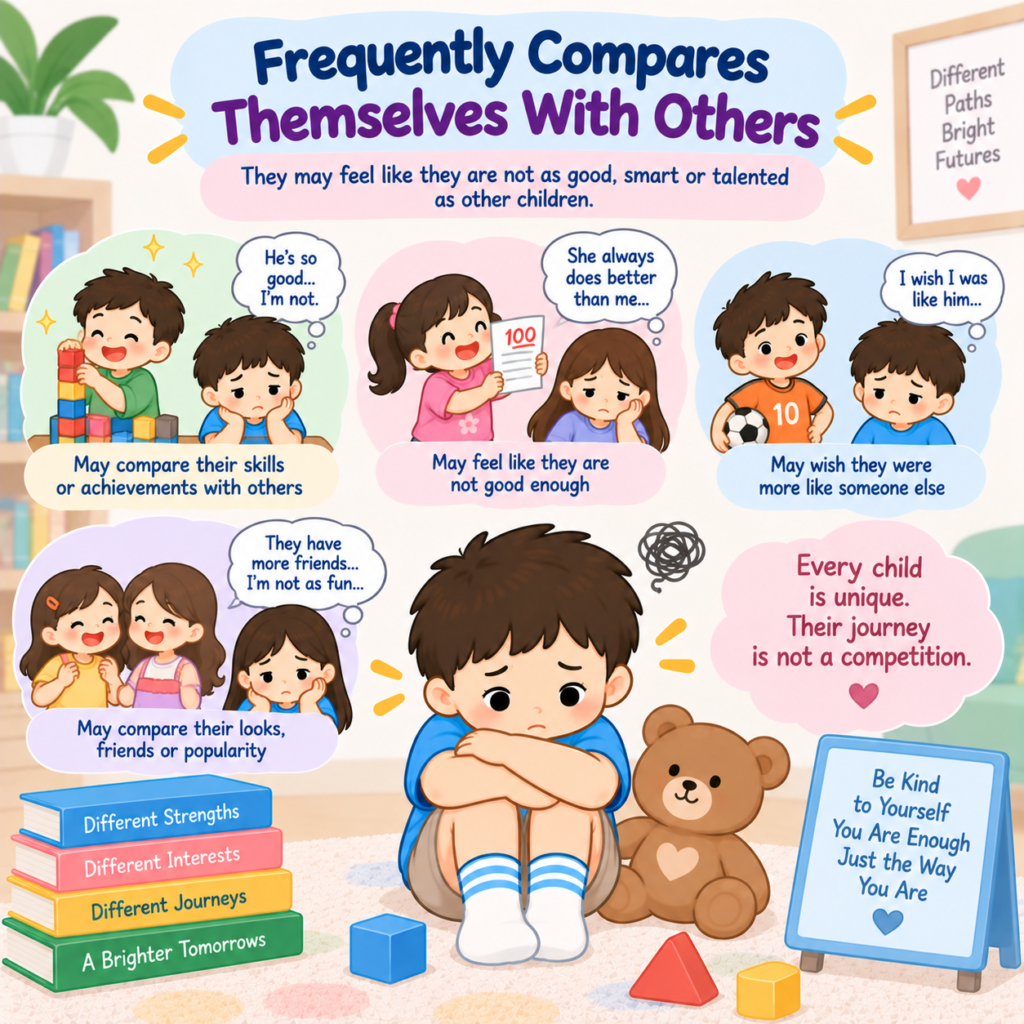
For example:
“She is smarter than me.”
“Everyone is better than me.”
“I can’t do it as well as him.”
Frequent comparison may cause children to focus more on what they believe they lack rather than recognising their own progress and strengths.
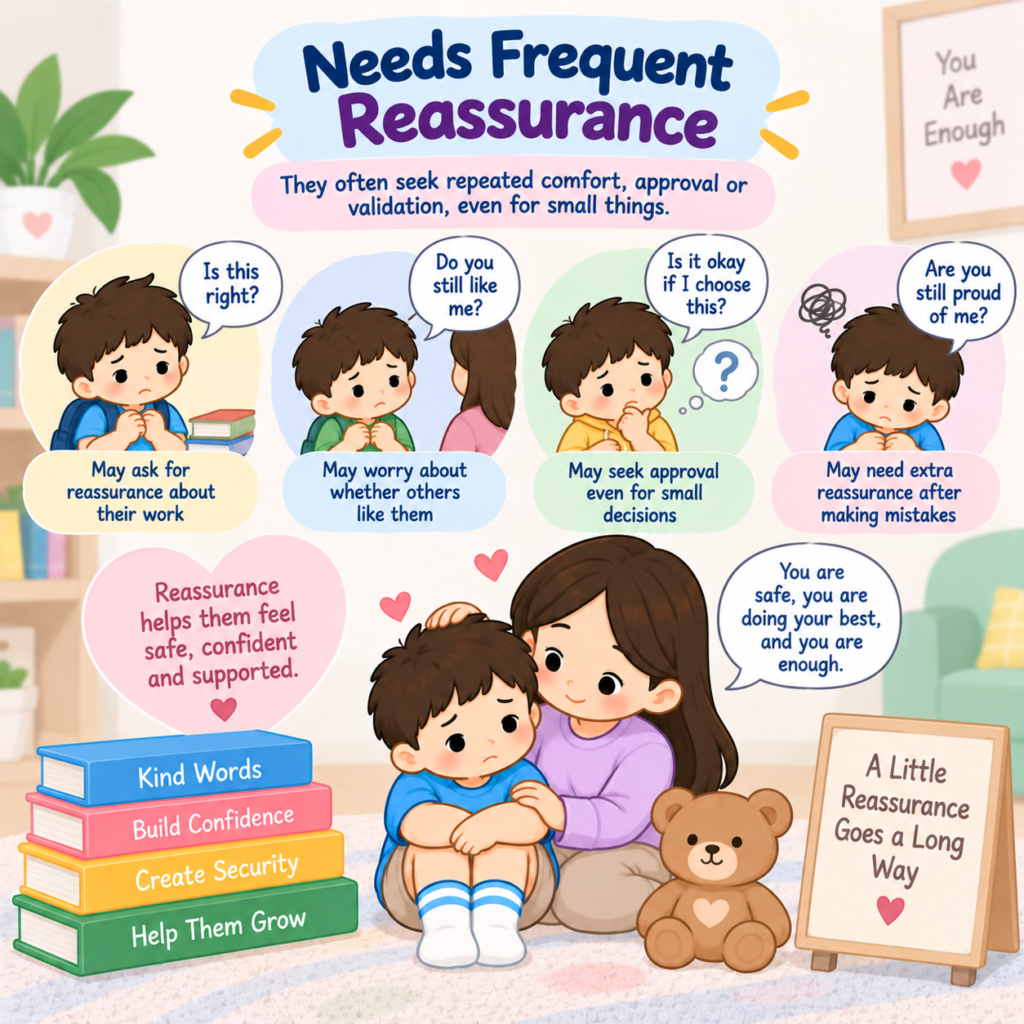
5. Needs Frequent Reassurance
Some children may repeatedly seek reassurance from parents, teachers, or other adults.
They may frequently ask:
✿ “Is this good?”
✿ “Did I do it correctly?”
✿ “Are you sure?”
✿ “Do you think I’m good at this?”
While seeking reassurance is normal sometimes, a child who constantly needs confirmation may have difficulty trusting their own abilities.
6. Gives Up Easily When Things Become Difficult
A child who lacks confidence may quickly decide that something is impossible when they encounter a challenge.
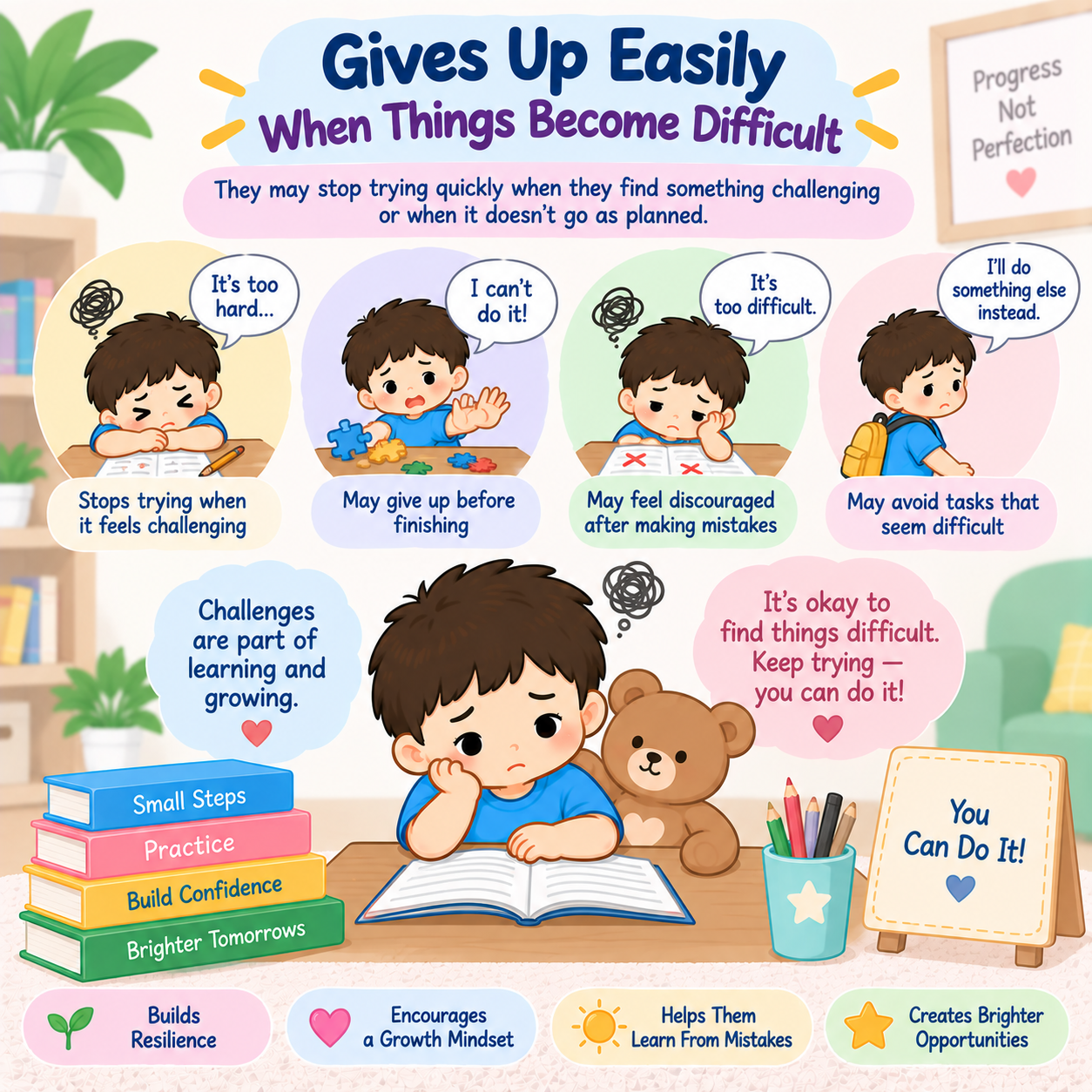
They may:
✿ Stop trying after making one mistake
✿ Become frustrated when they do not understand something immediately
✿ Avoid difficult homework
✿ Refuse to try again after failing
✿ Say “I can’t” before asking for help
This may become a cycle where fear of failure prevents the child from practising and experiencing success.
6 Ways Parents Can Help Build Their Child's Confidence
Parents can play an important role in helping children develop a healthier and more positive view of themselves.
1. Praise Effort, Not Just Results
✿ Focus on the effort, persistence, and strategies your child uses rather than only praising successful outcomes.
✿ For example:
“You kept trying even when the puzzle was difficult.”
✿ This helps children understand that effort and persistence are valuable parts of learning.
2. Avoid Comparing Your Child With Others
✿ Every child develops at their own pace.
✿ Instead of comparing your child with siblings, classmates, or friends, focus on their own progress.
✿ For example:
“Last month you found this difficult, but now you can do it with less help.”
✿ Recognising personal progress can help children develop a more realistic and positive view of their abilities.
3. Let Your Child Make Mistakes
✿ Mistakes are an important part of learning.
✿ Try to avoid immediately correcting every mistake or completing difficult tasks for your child.
✿ Instead, encourage them to try again and explore different ways of solving the problem.
✿ You can say:
“It’s okay to make mistakes. Let’s see what we can try next.”
4. Help Your Child Recognise Their Strengths
✿ Children may sometimes focus heavily on the things they find difficult.
✿ Help them notice their strengths and interests too.
✿ These may include:
1. Creativity
2. Kindness
3. Problem-solving
4. Communication
5. Persistence
6. Helping others
7. Sports or physical skills
8. Artistic abilities
✿ The goal is not to tell children that they are good at everything, but to help them recognise the different qualities and abilities they already have.
5. Encourage Small, Achievable Goals
✿ Large or difficult tasks can feel overwhelming to a child who already lacks confidence.
✿ Break tasks into smaller steps and celebrate progress along the way.
✿ For example, instead of expecting your child to complete an entire difficult homework task independently, work towards completing one small section at a time.
✿ Small successes can gradually help children develop confidence in their own abilities.
6. Listen and Take Their Feelings Seriously
✿ If your child says, “I’m not good at anything,” avoid immediately dismissing the statement with:
“Of course you are! Don’t say that.”
✿ Instead, try to understand what is behind the feeling.
✿ You might say:
“It sounds like you’re feeling disappointed with yourself. What happened?”
✿ This gives your child an opportunity to explain their experience and helps you understand where their self-doubt may be coming from.
When Should Parents Seek Professional Advice?
Consider seeking further advice if your child:
✿ Frequently puts themselves down
✿ Avoids school, activities, or social situations because they are worried about failure
✿ Has persistent fear of making mistakes
✿ Becomes extremely upset when they do not perform perfectly
✿ Frequently compares themselves negatively with others
✿ Has difficulty participating despite having the necessary skills
✿ Experiences ongoing sadness, anxiety, or withdrawal alongside low confidence
✿ Has difficulties with confidence that affect school, friendships, family life, or daily activities
It is also important to consider whether these difficulties are persistent and happening across different settings.
Low confidence can sometimes be linked with other difficulties, such as learning challenges, anxiety, social difficulties, or repeated experiences of struggling in school.
Professional support can help parents better understand what may be contributing to a child’s low confidence and identify strategies that may support their emotional wellbeing and development.
Key Takeaway
❀ Every child experiences moments of self-doubt, but confidence develops gradually through positive experiences, encouragement, and support.
❀ If your child frequently says negative things about themselves, avoids trying new things, or becomes extremely upset when they make mistakes, they may be struggling with confidence.
❀ Parents can support healthy self-esteem by focusing on effort, avoiding comparisons, allowing children to make mistakes, recognising their strengths, and encouraging small achievable goals.
❀ Building confidence does not mean telling children that they are perfect or good at everything. It means helping them develop a realistic understanding of their abilities and learn that mistakes and challenges are a normal part of growing and learning.
🌟 Stay Connected with Us! We love sharing tips, insights, and inspiring stories about children’s growth and mental wellbeing.
💙 Follow us on Instagram and Facebook for more updates and parenting advice.
Join our community and let’s grow together. One positive step at a time!

References
American Psychiatric Association. (2022). Diagnostic and statistical manual of mental disorders (DSM-5-TR).
Psychiatry.org; American Psychiatric Association. https://www.psychiatry.org/psychiatrists/practice/dsm
Working Hours
Tuesday to Saturday – 8.30am to 6pm
Monday & Sunday – Closed
Please also subscribe us at
Contact Us
Discover Our Team!
📞+60102502833
firststepdevelopmentcentre@gmail.com
B1-7, Plaza Damas 3, Jalan Sri Hartamas 1, 50480 Kuala Lumpur.
Copyright 2025. Firststep Child Development Sdn Bhd. All rights reserved.