



Learning Difficulties in Children:
7 Signs Parents Should Not Ignore
Many children experience some level of difficulty in school at different stages of development.
You may notice your child struggling with homework, taking longer to understand lessons, or becoming frustrated during study time.
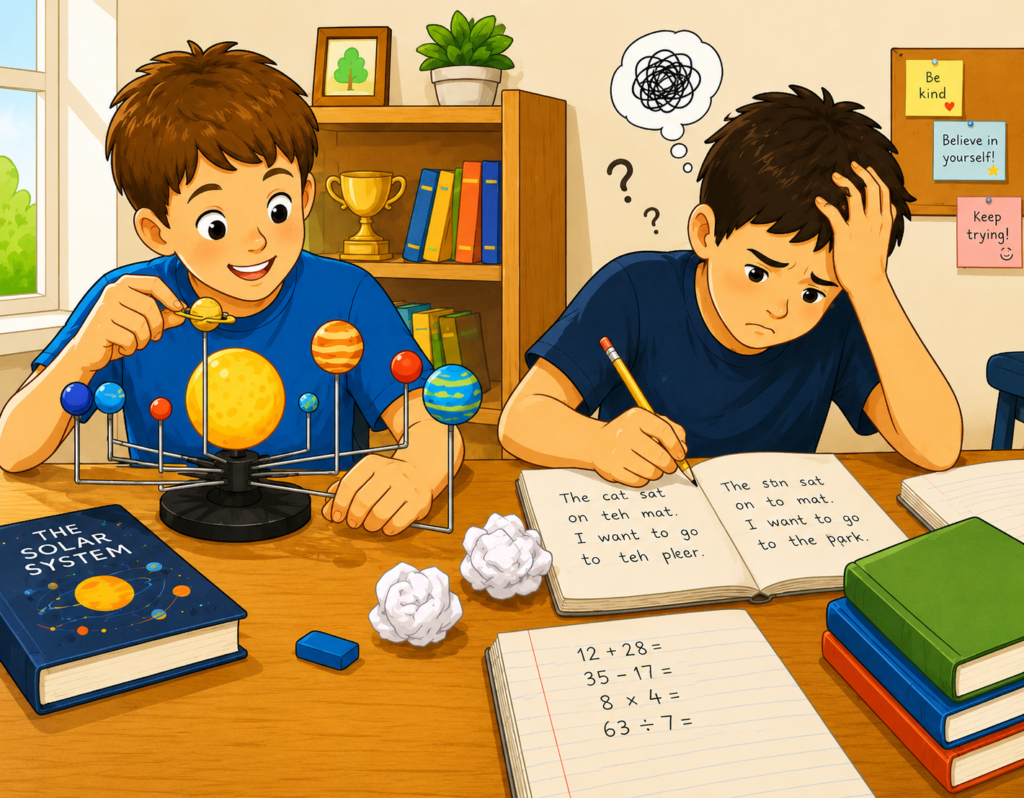
Sometimes, these challenges are dismissed as a temporary phase, a lack of attention or simply “not trying hard enough”.
However, for some children, learning difficulties go beyond effort or discipline.
They may reflect differences in how a child processes information, understands language, or expresses knowledge.
These children are often intelligent, curious, and capable, yet they still struggle significantly in academic tasks.
Over time, this can affect not only their academic performance but also their confidence, motivation, and emotional well-being.
The challenge is that learning difficulties are not always obvious . In many cases, they are misunderstood as laziness, distraction, or behavioural issues.
Understanding the early signs can help parents respond with clarity, support, and the right intervention at the right time.
What Are Learning Difficulties?
Learning difficulties refer to differences in how a child processes, understands, and uses information in academic areas such as reading, writing, spelling, and mathematics.
In clinical settings, these challenges are commonly referred to as Specific Learning Disorders (DSM-5-TR, American Psychiatric Association, 2022).
Learning difficulties can affect different areas of learning, and each child may experience them differently.
Understanding Common Types of Learning Difficulties
1. Dyslexia (Reading Difficulties)
Dyslexia refers to difficulties with reading accuracy, reading fluency, and language processing.

A child with dyslexia may:
- read slowly and with great effort
- struggle to recognise familiar words
- confuse similar-looking or similar-sounding words
- guess words when reading
- have difficulty with spelling
- avoid reading aloud due to discomfort or anxiety
Some children may understand stories well when listening, but struggle significantly when reading independently.
Importantly, dyslexia is NOT a sign of low intelligence. These children simply process written language differently, making reading more tiring and effortful.
2. Dysgraphia (Writing Difficulties)
Dysgraphia refers to difficulties with written expression, including handwriting, spelling, grammar, and the organisation of written ideas.

A child with dysgraphia may:
- have messy or inconsistent handwriting
- write very slowly compared to peers
- struggle to form letters or space words properly
- make frequent spelling or punctuation mistakes
- have difficulty organising thoughts clearly on paper
- become frustrated, tired, or avoid writing tasks
It is important to note that some children are able to explain ideas verbally but struggle to express the same ideas in written form.
3. Dyscalculia (Mathematics Difficulties)
Dyscalculia refers to difficulties with understanding numbers, patterns, and basic mathematical concepts.

A child with dyscalculia may:
- struggle with basic number sense or quantity
- have difficulty remembering basic math facts (e.g., times tables)
- find simple calculations confusing or overwhelming
- become confused with number sequences or steps in problem-solving
- struggle with mathematical reasoning and word problems
- have difficulty understanding time, money, or measurement concepts
This is not simply “being weak in math”, it reflects differences in how the brain processes and applies numerical information.
7 Signs Parents Should Not Ignore
Learning difficulties are not always immediately visible, especially in children who are trying very hard to keep up in school.
The following signs may suggest that a child is experiencing more than typical learning variation and may benefit from further understanding or support.
1. Persistent difficulty despite repeated teaching

If your child has been taught the same concept multiple times but still cannot understand or remember it, this may be more than a normal learning variation.
You may notice they:
- have difficulty retaining previously learned concepts
- need constant repetition to understand basic instructions
- forget steps or instructions quickly
This may indicate underlying challenges in information processing or memory related to learning.
2. Reading is slow, effortful, or avoided

Your child may:
- read significantly slower than peers
- guess words when reading
- struggle to recognise familiar words
- avoid reading aloud or independent reading
- become easily tired or frustrated during reading tasks
These difficulties may be consistent with reading-related learning challenges such as dyslexia.
3. Writing tasks are difficult or emotionally frustrating
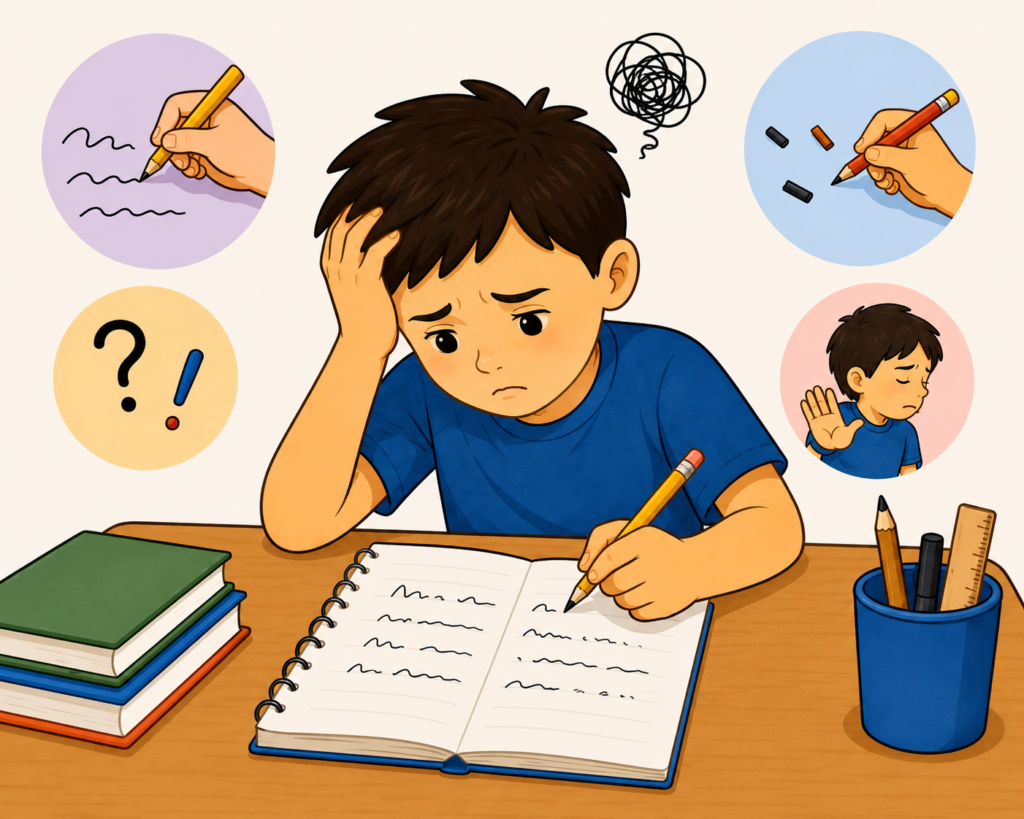
Your child may understand ideas verbally but struggle to express them in written form.
You may observe:
- slow or effortful handwriting
- difficulty forming letters or spacing words
- frequent spelling or punctuation errors
- avoidance of writing tasks
Writing may feel mentally and physically exhausting, which can lead to frustration or resistance.
4. Strong emotional reactions during homework or study time
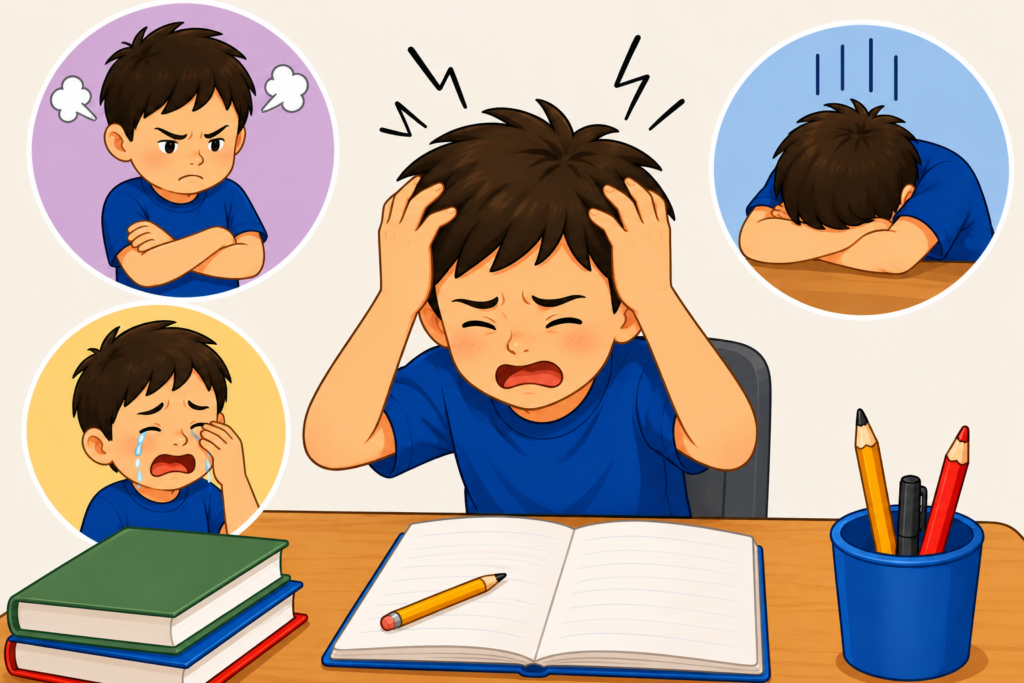
Learning difficulties are often accompanied by emotional stress.
Your child may:
- cry, shut down, or become angry during homework
- avoid schoolwork or delay starting tasks
- frequently say “I can’t do it” or “I don’t want to do this”
This is often not defiance, but emotional overload from repeated learning frustration.
5. Clear gap between effort and academic performance
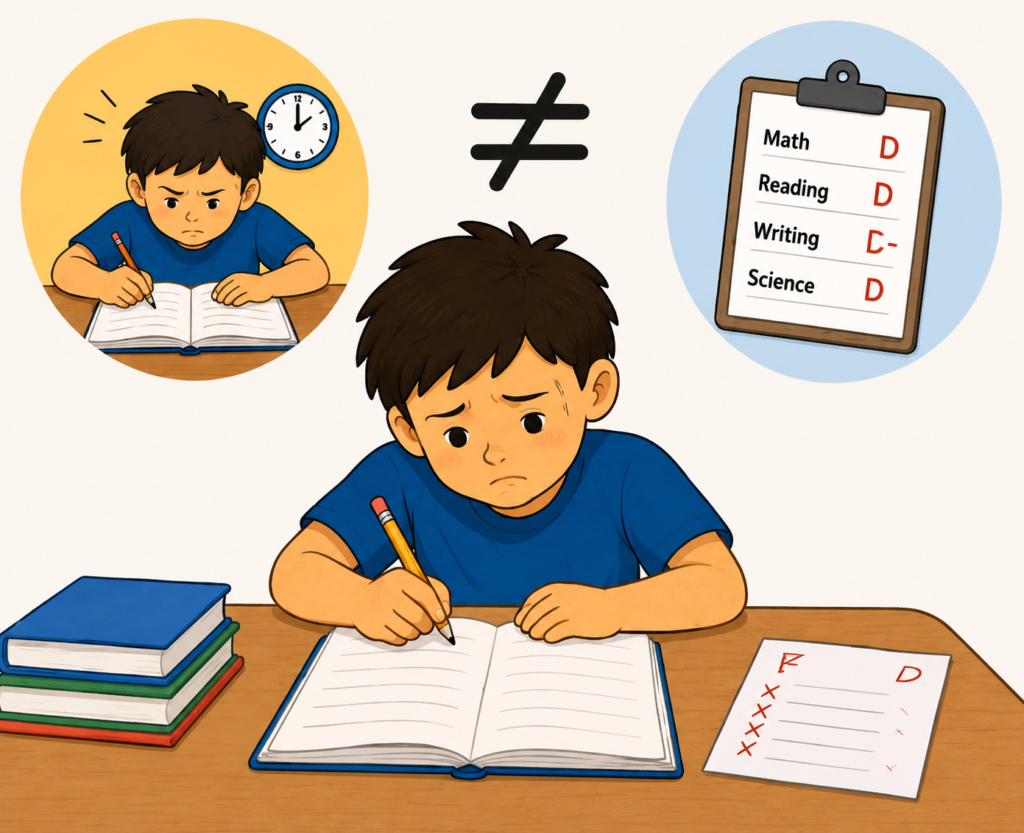
Some children put in significant effort but still struggle to achieve expected academic outcomes.
Although they tried hard, they may still continue to:
- perform below age expectations
- struggle to keep up with classroom learning
- require significantly more time than their peers
This pattern is often an important indicator of underlying learning difficulties.
6. Difficulty with numbers and mathematical thinking
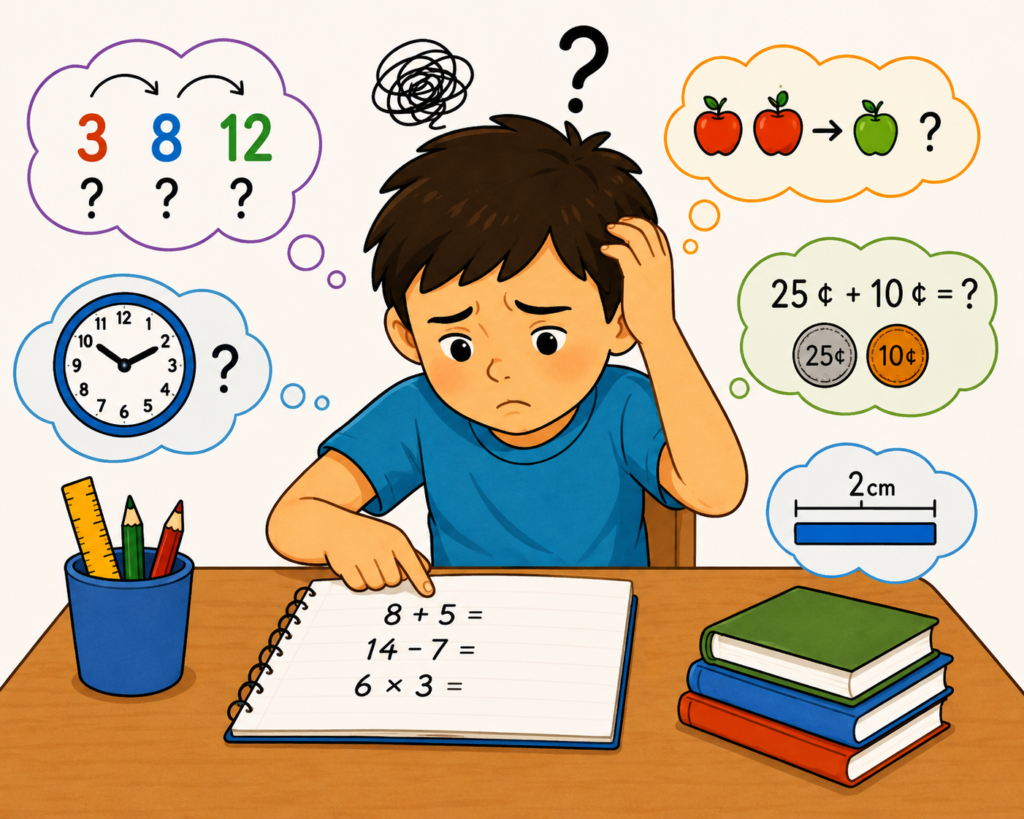
Your child may:
- struggle with basic calculations
- find it difficult to understand the meaning of quantity or number
- confuse numbers or sequencing
- have difficulty with word problems or multi-step tasks
- struggle with time, money, or measurement concepts
These challenges may suggest difficulties associated with mathematical learning processes, like dyscalculia.
7. Declining confidence, motivation, or fear of failure
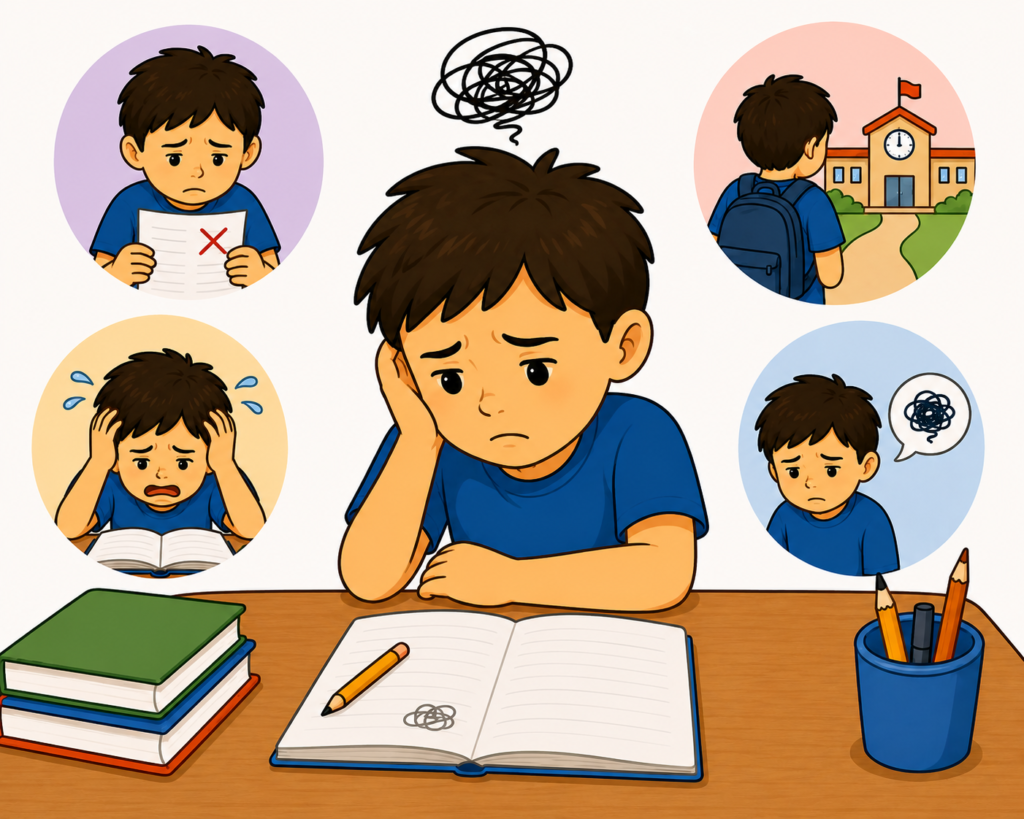
Over time, repeated learning struggles may affect how a child sees themselves.
You may notice:
- reduced confidence in schoolwork
- avoidance of academic challenges
- increased anxiety around learning tasks
- statements like “I’m not good at this” or “I always get it wrong”
This emotional impact is important, as learning difficulties affect not only academic performance but also a child’s self-esteem and well-being.
When Should Parents Seek Professional Support?
Not every child who struggles in school has a learning difficulty.
However, parents may consider seeking professional support if:
- Persistent difficulties in academic skills (reading, writing, or mathematics) despite intervention
- Academic struggles begin affecting the child’s confidence or emotional well-being
- Teachers repeatedly raise concerns about learning progress
- The child becomes increasingly frustrated, anxious, or avoidant around schoolwork
- There is a noticeable gap between effort and academic performance
- Learning difficulties begin interfering with daily functioning or classroom participation
Children with learning difficulties are not lazy, careless, or unintelligent.
More often, they are children who are putting in great effort while facing challenges that are not always visible to others.
Learning difficulties are not a reflection of a child’s intelligence or potential. They simply reflect differences in how a child learns and processes information.
With the right understanding, support, and early intervention, children with learning difficulties can continue to grow, learn, and thrive in their own unique way.
Recognising the signs early is not about labelling a child, but understanding their needs more accurately, and responding in a way that truly supports their development and wellbeing.
🌟 Stay Connected with Us! We love sharing tips, insights, and inspiring stories about children’s growth and mental wellbeing.
💙 Follow us on Instagram and Facebook for more updates and parenting advice.
Join our community and let’s grow together. One positive step at a time!

References
American Psychiatric Association. (2022). Diagnostic and statistical manual of mental disorders (DSM-5-TR).
Psychiatry.org; American Psychiatric Association. https://www.psychiatry.org/psychiatrists/practice/dsm
Working Hours
Tuesday to Saturday – 8.30am to 6pm
Monday & Sunday – Closed
Please also subscribe us at
Contact Us
Discover Our Team!
📞+60102502833
firststepdevelopmentcentre@gmail.com
B1-7, Plaza Damas 3, Jalan Sri Hartamas 1, 50480 Kuala Lumpur.
Copyright 2025. Firststep Child Development Sdn Bhd. All rights reserved.