



Is Your Child Easily Distracted? Understanding Attention Difficulties in Children
Does your child seem to forget instructions, lose focus halfway through a task, or need constant reminders to finish simple activities?
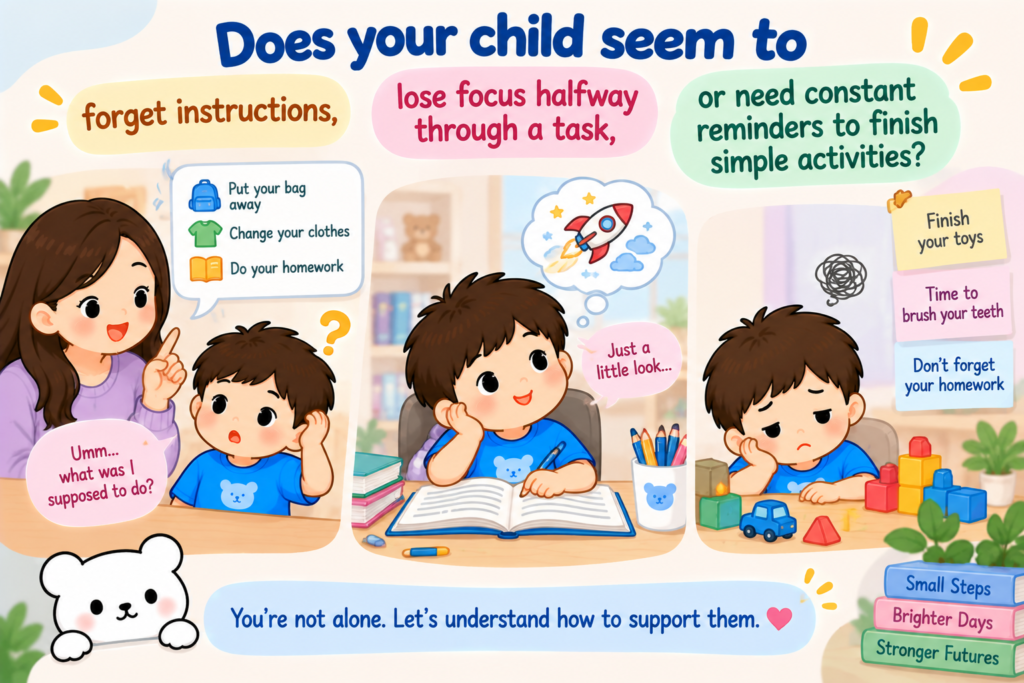
Many parents notice that their child seems easily distracted or has difficulty staying focused.
They may start their homework but quickly get up, forget what they were asked to do, or become interested in something happening around them.
Sometimes, these behaviours are part of normal childhood development.
Children can naturally have shorter attention spans, especially when they are tired, bored, or doing an activity they do not enjoy.
However, when difficulties with attention happen frequently and begin to affect learning, routines, relationships, or everyday activities, it may be helpful to look more closely at what is happening.
What Are Attention Difficulties?
Attention is the ability to focus on information or an activity, stay engaged long enough to complete a task, notice important details, and shift attention when needed.
Children may show attention difficulties in different ways.
Some may appear dreamy or easily distracted, while others may struggle to organise tasks, follow instructions, or finish activities that require sustained mental effort.
For example, a child may understand how to complete their homework but still take a very long time because they repeatedly lose focus, get distracted by toys, or forget what they were doing.
1. Has Difficulty Staying Focused
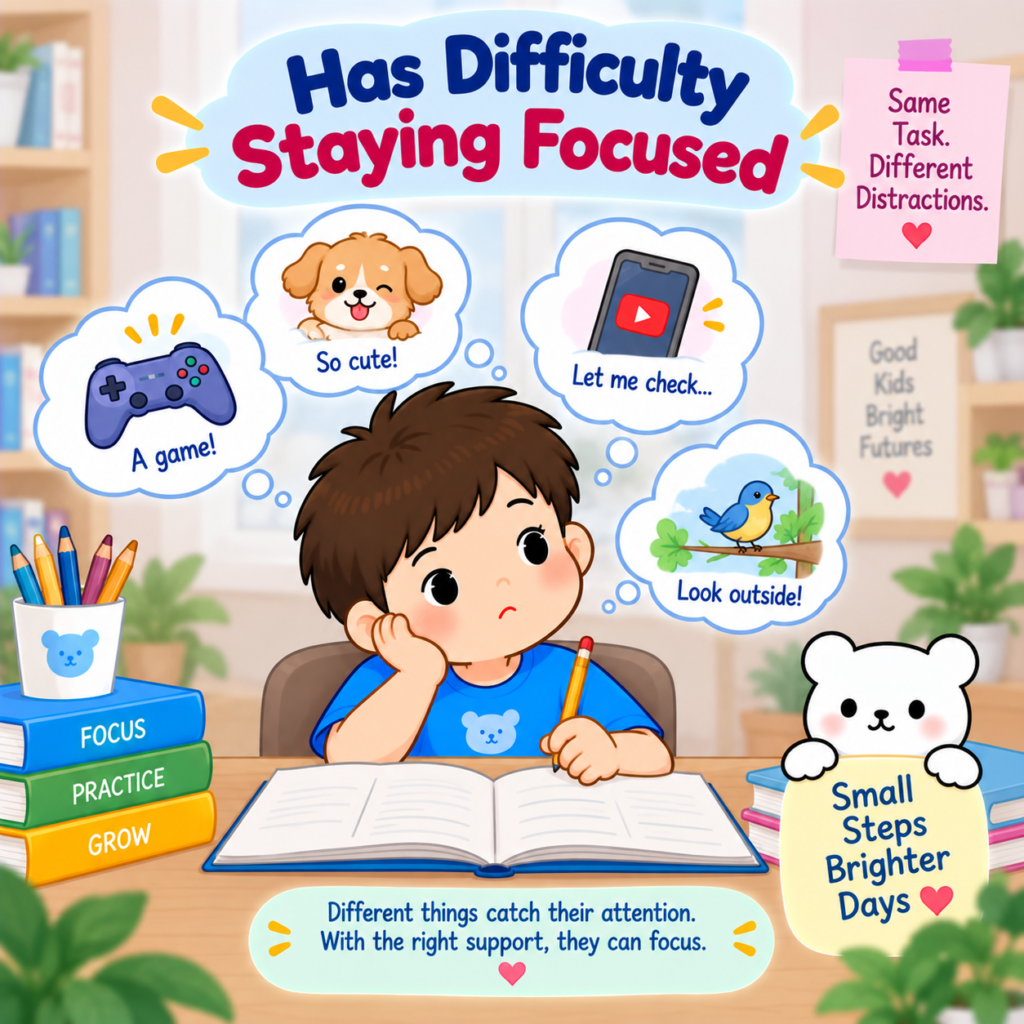
Your child may find it difficult to stay engaged with an activity, particularly when it takes a long time or requires sustained mental effort.
For example:
- Starts homework but begins playing with stationery after a few minutes
- Looks around the classroom instead of following the lesson
- Moves between different activities without finishing them
- Stops listening during longer conversations or explanations
You may find yourself saying, “Please focus” or “Come back to your work” many times throughout the day.
2. Is Easily Distracted
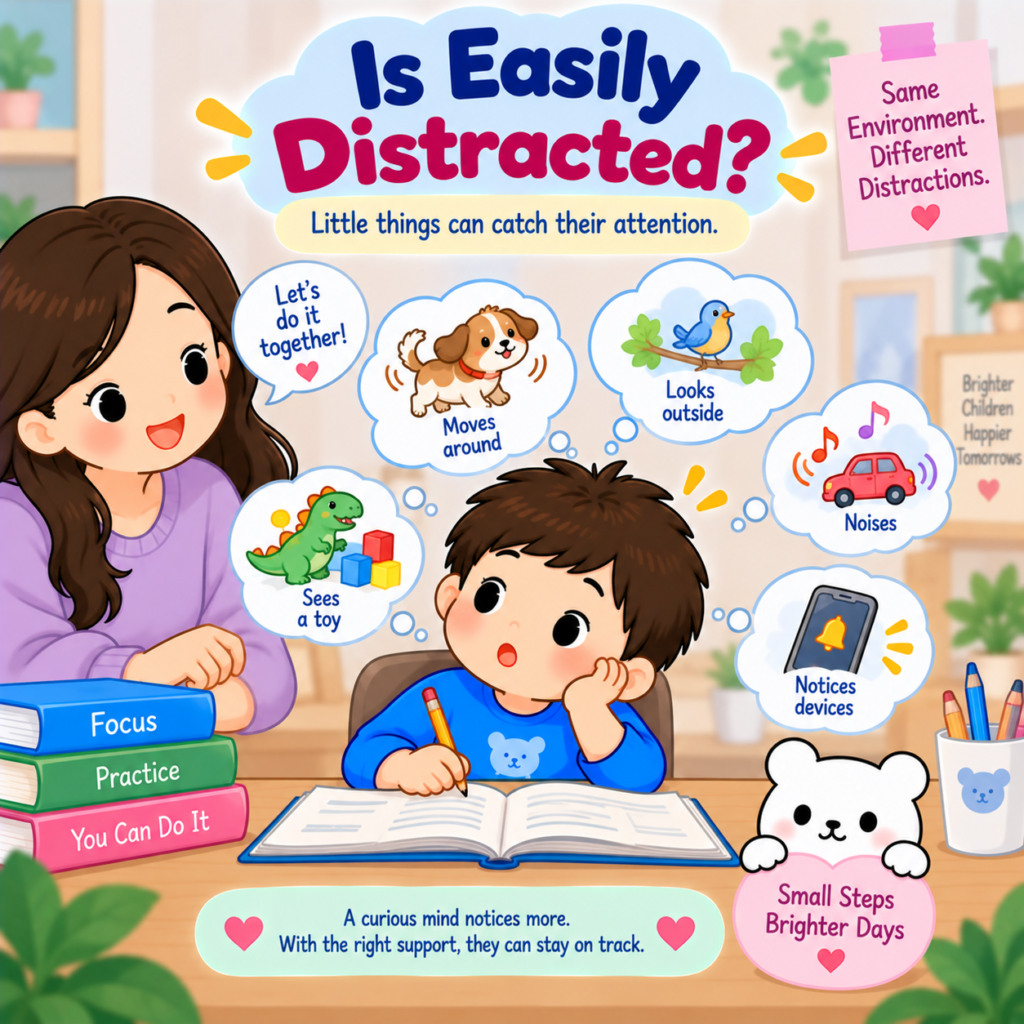
Some children are particularly sensitive to things happening around them.
A small noise, movement, conversation, or object may quickly take their attention away from what they are doing.
For example:
Your child is doing a worksheet at the dining table. Someone walks past the room, and they immediately stop working to see what is happening. After that, they notice a toy nearby and start playing with it.
They may know exactly what they are supposed to do but find it difficult to keep their attention on the task.
3. Needs Instructions Repeated
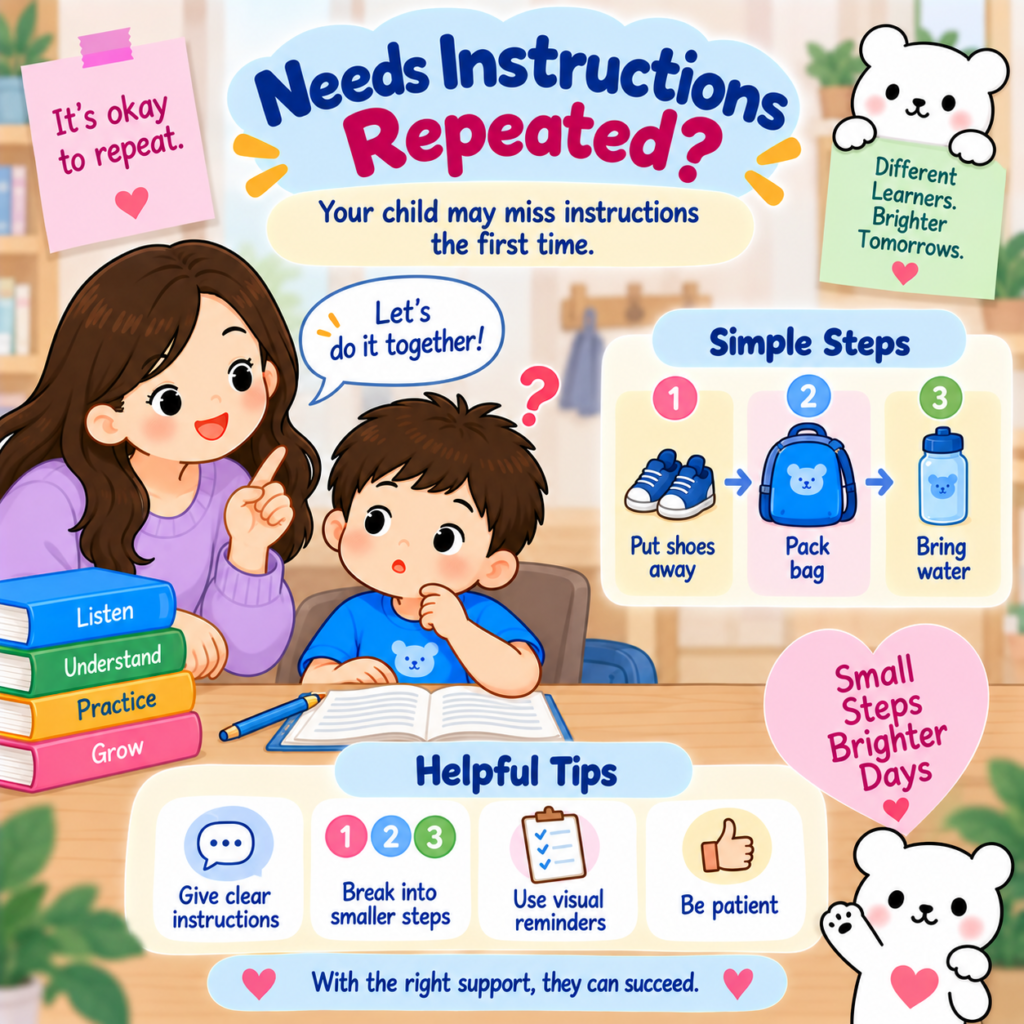
Children with attention difficulties may miss part of an instruction because their attention shifts before they have processed all the information.
For example:
You say:
“Please put your shoes away, pack your school bag, and bring your water bottle.”
Your child may only remember the first instruction and then forget what they were supposed to do next.
You may notice that they frequently ask:
“What do I need to do?”
“What did you say?”
“What am I supposed to get?”
This does not necessarily mean that your child is deliberately ignoring you. They may simply have difficulty holding their attention throughout a multi-step instruction.
4. Has Difficulty Finishing Tasks
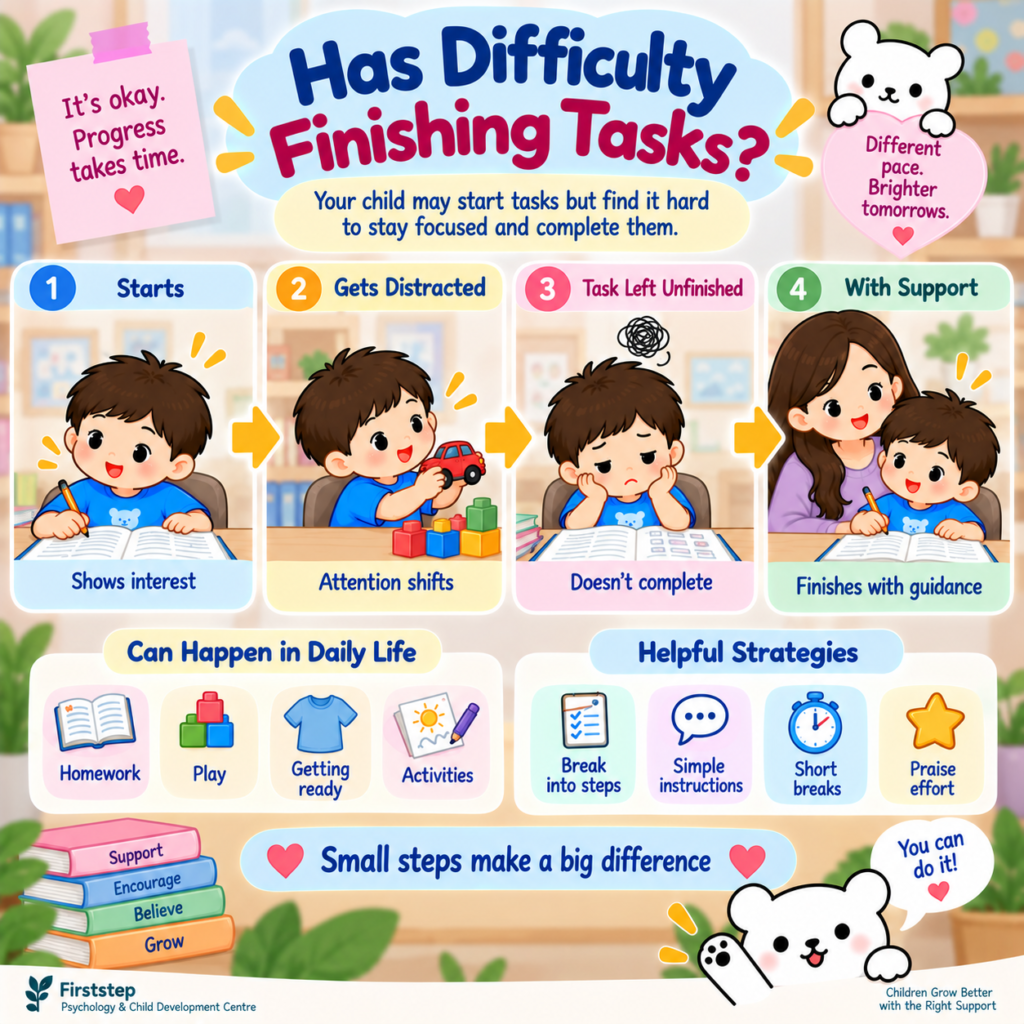
Your child may be able to start an activity but struggle to stay with it until the end.
For example:
- Starts colouring but leaves the picture unfinished
- Begins homework but takes a very long time to complete it
- Starts cleaning their room but becomes distracted by toys
- Begins getting ready for school but forgets what they were doing
Sometimes parents may describe this as:
“My child knows what to do, but I have to remind them over and over again.”
The difficulty may not be understanding the task. Instead, maintaining attention and following through can be challenging.
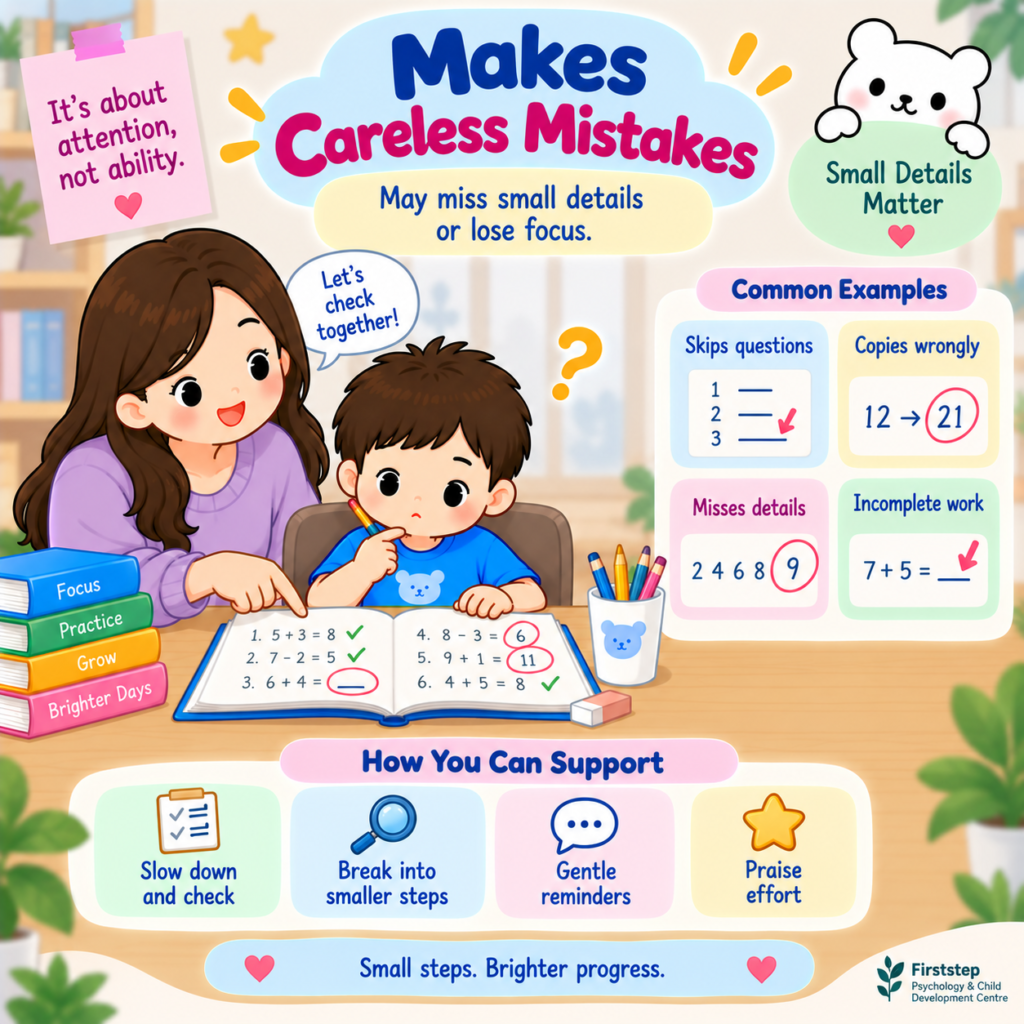
5. Makes Careless Mistakes
A child may understand the work but make mistakes because they overlook details or lose focus.
For example:
Your child knows how to solve simple addition problems, but they accidentally skip a question, copy a number incorrectly, or forget to write an answer.
You may hear:
“But you know how to do this!”
These mistakes can sometimes be frustrating for both the child and parent. It is important to consider whether the child is making errors because they do not understand the concept or because they are having difficulty maintaining attention.
6. Frequently Forgets or Loses Things
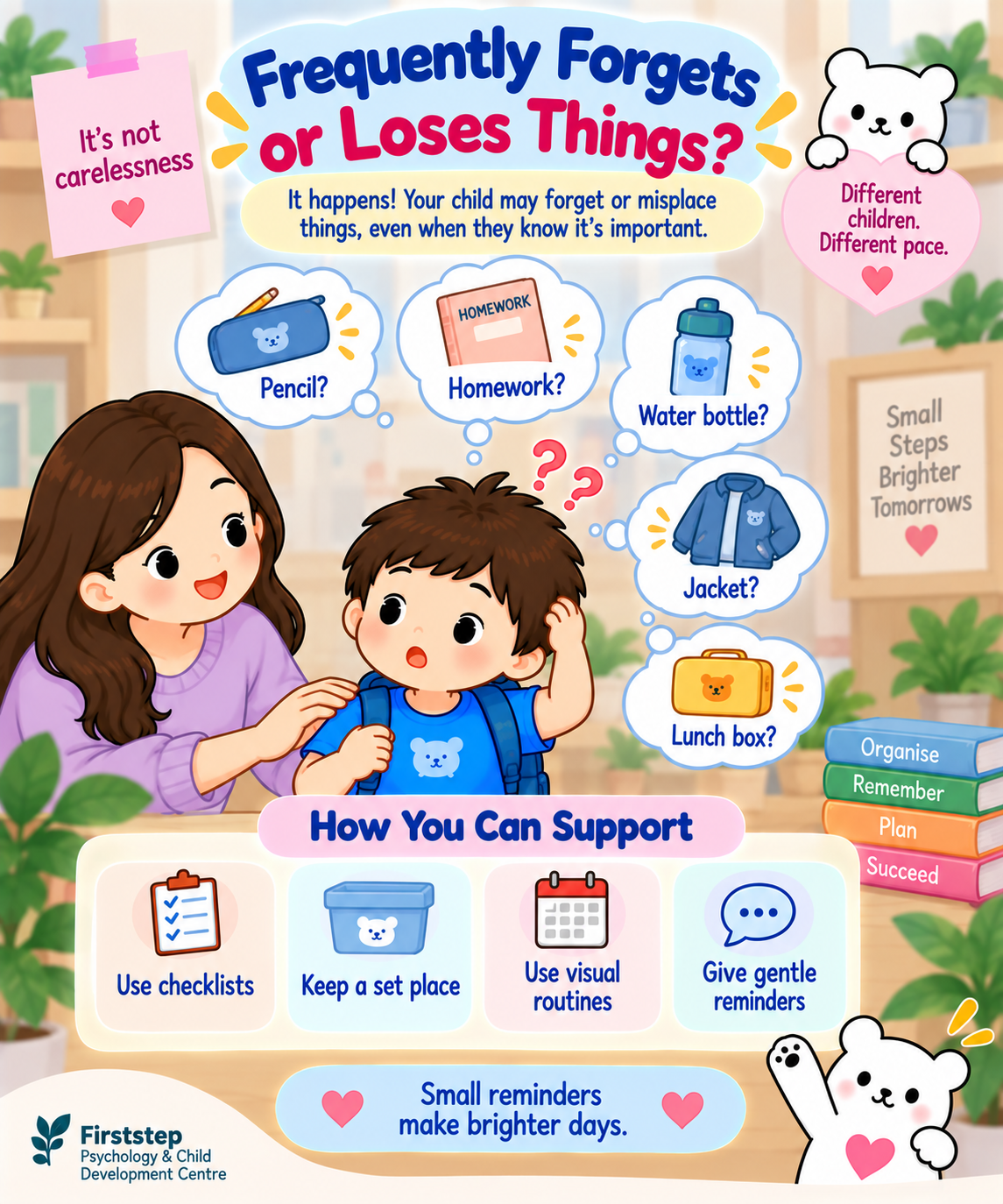
Attention difficulties can also affect everyday routines and organisation.
Your child may frequently:
- Forget homework or school materials
- Lose pencils, books, or water bottles
- Forget what they were asked to do
- Leave belongings in different places
- Need repeated reminders about daily routines
For example:
You remind your child to pack their school bag before bedtime. They start packing but become distracted by a toy. The next morning, they realise their homework is still on the table.
These situations can happen occasionally to any child. The concern is when they happen frequently and begin interfering with everyday life.
6 Ways Parents Support a Child With Attention Difficulties
1. Give Short and Clear Instructions
✿ Instead of giving several instructions at once, try breaking them into smaller steps.
✿ Instead of:
“Go upstairs, change your clothes, put your dirty clothes away, pack your bag, and come downstairs.”
✿ Try:
“First, go upstairs and change your clothes.”
✿ Once that is completed, give the next instruction.
✿ This reduces the amount of information your child needs to focus on at one time.
2. Reduce Distractions
✿ Think about what is happening around your child when they are expected to concentrate.
✿ For homework, you could:
1. Turn off the television
2. Put toys away
3. Keep only the necessary materials on the table
4. Choose a quieter area
5. Reduce unnecessary background noise
✿ A child who struggles with attention may benefit from having fewer things competing for their attention.
3. Break Longer Tasks Into Smaller Steps
✿ Large tasks can feel overwhelming, especially when they require sustained attention.
✿ For example, instead of saying:
“Finish your homework.”
✿ Try:
Step 1: Complete questions 1–5.
Step 2: Take a short break.
Step 3: Complete questions 6–10.
✿ This can make the task feel more manageable.
4. Use Visual Reminders
✿ Visual schedules, checklists, pictures, and written reminders can help children remember what they need to do.
✿ For example, a morning routine could include:
🪥 Brush teeth → 👕 Get dressed → 🎒 Pack bag → 👟 Put on shoes
✿ This can reduce the need for parents to repeat the same instructions throughout the morning.
5. Allow Short Breaks
✿ Long activities can become tiring when a child needs to maintain attention for an extended period.
✿ For example, during homework, you might allow a short movement break between activities.
✿ The goal is not to avoid difficult tasks, but to help your child return to them with better readiness and attention.
6. Praise Effort and Progress
✿ Try to notice moments when your child is able to focus, follow instructions, or complete a task independently.
✿ Instead of only saying:
“You finally finished!”
✿ Try:
“I noticed you stayed focused until you finished that page. Well done!”
✿ Specific praise helps your child understand which behaviours you are encouraging.
When Should Parents Seek Professional Advice?
❀ Children develop reading skills at different rates, and occasional difficulty understanding a story does not necessarily mean that a child has a reading difficulty.
❀ Consider seeking professional advice if your child’s attention difficulties are:
1. Happening frequently
2. Affecting schoolwork or learning
3. Making homework particularly difficult
4. Affecting daily routines
5. Causing frequent frustration or conflict at home
6. Affecting friendships or social activities
7. Happening both at home and in school
8. Becoming increasingly difficult to manage
❀ It can also be helpful to speak with your child’s teacher, as teachers may notice patterns of attention and behaviour that are different from what parents see at home.
❀ Information from more than one setting can be useful when understanding a child’s difficulties.
Key Takeaway
❀ Every child gets distracted sometimes.
❀ What matters is how often it happens, how strongly it affects the child, and whether it interferes with everyday life.
❀A child who struggles with attention is not necessarily lazy, careless, or unwilling to listen.
❀ They may need additional support to manage distractions, follow through with tasks, and organise their attention.
❀ With the right strategies and support, children can gradually develop better ways to manage attention and become more confident in their learning and daily routines.
❀ Understanding the difficulty is the first step towards finding the right support. 🌱
🌟 Stay Connected with Us! We love sharing tips, insights, and inspiring stories about children’s growth and mental wellbeing.
💙 Follow us on Instagram and Facebook for more updates and parenting advice.
Join our community and let’s grow together. One positive step at a time!

References
American Psychiatric Association. (2022). Diagnostic and statistical manual of mental disorders (DSM-5-TR).
Psychiatry.org; American Psychiatric Association. https://www.psychiatry.org/psychiatrists/practice/dsm
Working Hours
Tuesday to Saturday – 8.30am to 6pm
Monday & Sunday – Closed
Please also subscribe us at
Contact Us
Discover Our Team!
📞+60102502833
firststepdevelopmentcentre@gmail.com
B1-7, Plaza Damas 3, Jalan Sri Hartamas 1, 50480 Kuala Lumpur.
Copyright 2025. Firststep Child Development Sdn Bhd. All rights reserved.