



Imagine a quiet Sunday dinner in Petaling Jaya that suddenly dissolves into a shouting match because you asked your child to put away their tablet. You feel the silent judgment of your extended family, their eyes suggesting that a firmer hand is all that’s needed. Yet, you know that traditional discipline has already failed, leaving you exhausted and your child more defiant than ever. Many parents find that learning how to discipline a child with ODD in Malaysia feels like an uphill battle, especially when you’re trapped between cultural expectations of obedience and the reality of a child who seems hardwired to resist.
Replacing old-fashioned authority with a model based on connection and neurological understanding is the key to progress. This guide offers practical, culturally sensitive strategies to help you manage oppositional behaviour and restore a sense of calm to your household. We’ll explore how to navigate school complaints, improve your daily communication, and determine when a professional clinical assessment is the necessary next step for your family’s well-being.
Key Takeaways
- Understand the difference between clinical ODD and typical developmental defiance within the specific context of Malaysian family values.
- Discover effective strategies for how to discipline a child with ODD in Malaysia by prioritising emotional connection and collaborative problem-solving over traditional command-and-control methods.
- Navigate common local challenges such as school-related stress and judgment from extended family while maintaining a calm, supportive home environment.
- Recognise when to seek a professional clinical psychologist consultation to explore underlying causes like ADHD or autism that often coexist with oppositional behaviour.
Understanding ODD in the Malaysian Context
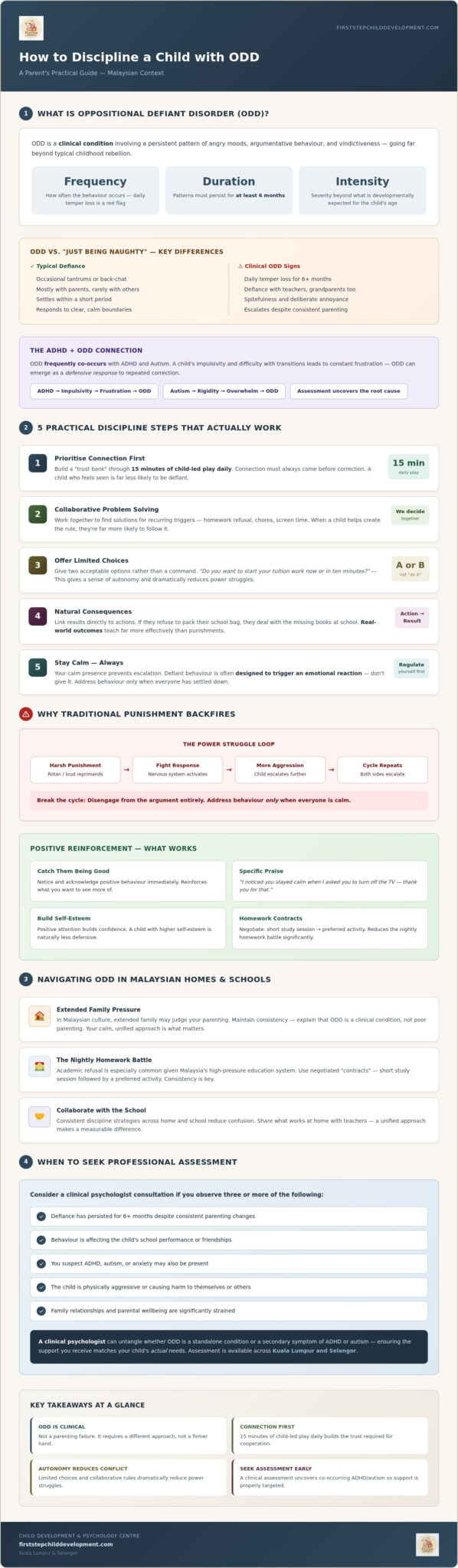
Oppositional Defiant Disorder (ODD) involves a persistent pattern of angry moods, argumentative behaviour, and vindictiveness that goes beyond typical childhood rebellion. In Malaysian households, where filial piety and respect for elders are central values, ODD can be particularly distressing for the whole family. Parents often find themselves stuck between traditional expectations of obedience and a child who seems physically unable to comply. Understanding how to discipline a child with ODD in Malaysia starts with recognising that this isn’t a simple lack of discipline; it’s a clinical condition that requires a different approach to parenting.
Is it ODD or Just “Naughty” Behaviour?
Distinguishing between a spirited child and a child with ODD depends on three factors: frequency, duration, and intensity. While most children experience occasional tantrums or rebellion, ODD involves specific red flags like losing one’s temper daily, actively defying rules, and being spiteful for at least six months. These behaviours must occur with at least one individual who isn’t a sibling, such as a teacher or a grandparent. It’s the persistent nature of the defiance that separates it from “normal” childhood testing of boundaries.
The ADHD and ODD Connection in Malaysia
It’s very common for ODD to appear alongside other neurodevelopmental conditions. Many children with ADHD are more prone to developing ODD because their impulsivity and difficulty with transitions lead to constant frustration. When a child is consistently corrected for ADHD-related behaviours, they may develop ODD as a defensive response. Seeking a clinical psychologist consultation is a vital step in untangling these layers. This professional guidance helps parents determine if the defiance is a standalone issue or a secondary symptom of ADHD or autism, ensuring the support provided matches the child’s specific needs.
How to Discipline a Child with ODD: 5 Practical Steps
Effective discipline for a child with Oppositional Defiant Disorder requires a shift from control to collaboration. When considering how to discipline a child with ODD in Malaysia, the goal is to lower the child’s defensive walls rather than trying to break them down. Following these five steps can transform your home environment:
- Prioritise Connection: Build a “trust bank” through 15 minutes of child-led play daily. Connection must always come before correction.
- Collaborative Problem Solving: Work together to find solutions for recurring triggers like homework or chores. This reduces the feeling of being “ordered” around.
- Offer Limited Choices: Give two acceptable options, such as “Do you want to start your tuition work now or in ten minutes?” This provides a sense of autonomy.
- Natural Consequences: Link results directly to actions. If they refuse to pack their bag, they deal with the missing books at school.
- Stay Calm: Your calm presence prevents the situation from escalating. Defiance is often designed to trigger an emotional reaction; don’t provide it.
Why Traditional Punishment Fails with ODD
In many Malaysian households, the “rotan” or loud reprimands are standard responses to defiance. For a child with ODD, these methods often backfire. Harsh punishment triggers a “fight” response in their nervous system, leading to more intense aggression. This creates a “Power Struggle Loop” where both parent and child become increasingly hostile. Breaking this cycle requires disengaging from the argument entirely and addressing the behaviour only when everyone is calm. If you find these cycles repeating, seeking professional consultation can provide personalised strategies to regain peace.
Positive Reinforcement Strategies
Focusing on what your child does right is more powerful than pointing out what they do wrong. “Catching them being good” reinforces the behaviours you want to see. Use specific praise like, “I noticed you stayed calm when I asked you to turn off the TV; thank you for that.” This builds their self-esteem and encourages cooperation without the need for conflict.
Managing ODD Challenges in Malaysian Homes and Schools
Academic refusal is a significant hurdle in Malaysia’s high-pressure education system. When exploring how to discipline a child with ODD in Malaysia, you’ll likely face the “Homework Battle” every evening. Instead of using threats, try negotiating “contracts” where a short study session is followed by a preferred activity. Collaboration with the school is equally important. Consistent discipline across home and school environments reduces the child’s confusion and limits opportunities for defiance.
In our local culture, extended family often plays a large role in child-rearing. It’s common to feel judged by relatives who believe a “firmer” hand is required. Explaining that your child’s brain processes authority differently can help manage these expectations. Additionally, a holistic approach helps; many parents find that nutritionist consultations offer valuable insights into how diet impacts mood stability and impulse control.
Navigating the Malaysian School System
Sharing a diagnosis with school counsellors or discipline teachers can be a daunting step, but it’s often necessary for the child’s success. Understanding how to discipline a child with ODD in Malaysia requires looking beyond the home and into the classroom. By providing clinical context, you move the conversation away from “punishment” toward “support.” Discussing specific triggers and requesting “cool-down” breaks during stressful school events can prevent the child from reaching a breaking point.
The “Face-Saving” Dilemma in Public
Handling an ODD outburst in a crowded mall or restaurant is one of the most stressful experiences for a Malaysian parent. The cultural pressure to maintain a “perfect” public image can lead to reactive discipline. Focus on your child’s immediate needs rather than public perception. Removing the child from the situation to a quiet area allows them to de-escalate without the added pressure of an audience. If you need more tailored support for these situations, you can learn more about our parent guidance services.
When to Seek Professional Assessment in KL & Selangor
While learning how to discipline a child with ODD in Malaysia can significantly improve daily life, there are times when home-based strategies aren’t enough. If your child’s behaviour poses safety risks to themselves or others, or if they’re facing potential expulsion from school, it’s time to consider a professional evaluation. Seeking help isn’t a sign of failure; it’s a proactive step toward understanding the unique way your child’s brain works. A multidisciplinary neurodevelopmental assessment provides a comprehensive view of their emotional and cognitive needs.
How an ADHD or Autism Assessment Helps
ODD rarely exists in a vacuum. Research suggests that when a co-occurring condition like ADHD is identified and managed, ODD symptoms can often decrease by 50% or more. This is because the child’s frustration levels drop when their underlying impulsivity or sensory needs are addressed. If you suspect your child struggles with focus alongside defiance, an ADHD assessment in Malaysia can provide the clarity needed to tailor your parenting approach effectively.
What Happens During a Consultation at Firststep?
At our centres in Kuala Lumpur and Selangor, we prioritise a gentle, child-centred environment. We use play-based methods to ensure your child feels safe and relaxed throughout the process. This approach helps our clinical psychologists observe natural behaviours rather than stress-induced reactions. Following the consultation, parents receive a detailed feedback report. This document translates clinical findings into actionable advice, giving you a clear roadmap for how to discipline a child with ODD in Malaysia while fostering a stronger, more positive bond with your child.
Moving Toward a Calmer Malaysian Home
Managing the daily challenges of oppositional behaviour requires immense patience and a deliberate shift in perspective. By prioritising connection over control and adopting collaborative problem-solving, you can effectively break the cycle of exhausting power struggles. It’s vital to remember that these behaviours often stem from underlying neurodevelopmental needs rather than simple naughtiness. When you understand how to discipline a child with ODD in Malaysia through a lens of empathy and consistency, you create a safe, supportive space for your child to thrive.
If your child’s defiance is impacting your family life, you don’t have to navigate this journey alone. Our multidisciplinary team of experts provides personalised early intervention plans in a reassuring, child-centred environment. You can book a clinical psychologist consultation at Firststep Psychology & Child Development Centre today to gain professional clarity. Learn more about our supportive approach at Firststep Child Development. Every small step toward understanding is a victory for your family. Peace at home is possible, and we’re here to help you achieve it.
Frequently Asked Questions
Is ODD a permanent condition, or will my child outgrow it?
ODD isn’t necessarily a permanent diagnosis, but it rarely resolves on its own without active intervention. While some children’s symptoms improve as they mature and develop better emotional regulation, others may continue to struggle into adulthood if the patterns aren’t addressed. Early support focuses on providing both you and your child with a toolkit to manage defiant episodes, significantly increasing the chances of a positive long-term outcome.
Can ODD be treated without medication in Malaysia?
Yes, the primary treatment for ODD involves behavioural therapies and parent guidance rather than medication. Effective strategies for how to discipline a child with ODD in Malaysia focus on modifying the home environment and improving parent-child interactions. While doctors may prescribe medication for co-occurring conditions like ADHD to reduce impulsivity, the defiant behaviours themselves are best managed through consistent routines, clear consequences, and specialised psychological support.
How do I explain my child’s ODD to teachers in a Malaysian government school?
Frame the conversation around “support needs” rather than “bad behaviour” to help teachers understand the clinical context. Explain that your child has a persistent pattern of defiance triggered by specific stressors, such as sudden transitions or public reprimands. Providing the teacher with a few successful home strategies, like using a calm tone or offering limited choices, encourages a collaborative approach that benefits your child’s classroom experience.
What is the difference between ADHD and ODD?
ADHD is a neurodevelopmental disorder involving inattention and impulsivity, whereas ODD is a behavioural pattern characterised by intentional defiance and anger. A child with ADHD might break a rule because they acted without thinking or forgot the instruction. Conversely, a child with ODD often challenges the rule itself to test authority. Understanding how to discipline a child with ODD in Malaysia requires recognising these different motivations to apply the right support.
Does Firststep offer ODD assessments for teenagers in Selangor?
Yes, Firststep provides comprehensive behavioural and emotional assessments for children and adolescents at our centres in KL and Selangor. Our multidisciplinary team evaluates teenagers to identify the root causes of defiant behaviour, including potential learning difficulties or social anxiety. These assessments result in personalised intervention plans that address the unique academic and social pressures faced by Malaysian teenagers during their critical secondary school years.

Article by
Firststep Child Development Team
Firststep Child Development Team provides evidence-informed educational resources to help parents better understand child development, behaviour and learning. Our multidisciplinary services include clinical psychology, occupational therapy, speech and language therapy, developmental assessments and other child development support in Kuala Lumpur and Selangor.
Disclaimer
This article is for general educational and informational purposes only and is not a substitute for professional medical, psychological or therapeutic advice, diagnosis or treatment. Every child develops differently. If you have concerns about your child's development, behaviour, learning or wellbeing, please consult an appropriately qualified healthcare or allied health professional.