


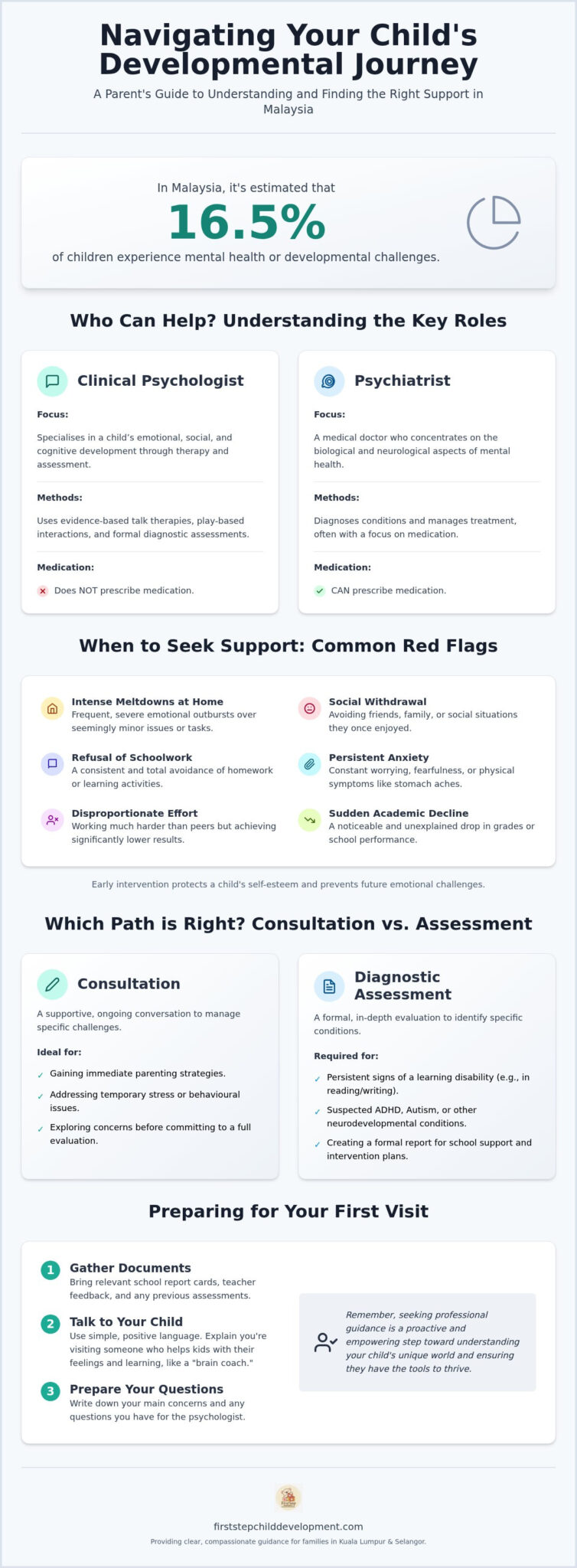
Did you know that approximately 16.5% of children in Malaysia now experience mental health or developmental challenges? It’s a statistic that reflects a growing reality for many families across Kuala Lumpur and Selangor. As a parent, you’ve likely spent quiet evenings wondering if your child’s struggles are just a phase or something that requires specialised attention. Perhaps you’ve been looking for the specific signs of learning disability in child Malaysia to better understand why schoolwork feels like an uphill battle; it’s a common starting point for many seeking clarity.
We understand the weight of these concerns and the confusion that often comes with choosing between different types of therapy. This guide provides a clear roadmap to help you identify the right professional support for your child’s unique developmental and emotional needs. You’ll gain a thorough understanding of the assessment process, the differences between clinical interventions, and practical strategies to foster growth and peace of mind at home.
Key Takeaways
- Understand the distinct roles of clinical psychologists and psychiatrists in Malaysia to ensure your child receives the appropriate therapeutic or medical support.
- Recognise early developmental red flags, including behavioural shifts and common signs of learning disability in child Malaysia, to empower your child with early intervention.
- Learn the difference between therapeutic consultations for emotional support and formal diagnostic assessments for conditions like ADHD or Autism.
- Prepare for your first appointment by gathering school records and using child-friendly language to lower your child’s anxiety about the visit.
The Role of a Clinical Child Psychologist in Malaysia
Clinical child psychologists are specialists dedicated to a child’s emotional, social, and cognitive development. In the Malaysian healthcare landscape, these professionals are regulated under the Allied Health Professions Act 2016. They act as expert guides for families who notice their child is struggling to keep up with peers. Often, the journey begins when parents search for What is a learning disability? and look for specific signs of learning disability in child Malaysia to understand their child’s unique academic or social challenges.
There’s often confusion between a psychologist and a psychiatrist. A psychiatrist is a medical doctor who focuses on the biological aspects of mental health and can prescribe medication. In contrast, a clinical psychologist uses evidence-based therapies and assessments to support growth without the use of medication. We advocate for a multidisciplinary approach. Our psychologists work closely with paediatricians and other therapists to ensure a holistic view of your child’s well-being. This collaboration is essential for navigating the Malaysian school system, as it allows for the creation of tailored strategies that help teachers support students who learn differently.
Why Seek Support Locally in Kuala Lumpur or Selangor?
Choosing a local centre in Kuala Lumpur or Selangor allows for in-person, play-based interactions that online sessions simply can’t replicate. Our specialists observe subtle behavioural cues and social nuances in a gentle, child-centred environment. This face-to-face connection is vital for building trust and providing accurate feedback. Local care also ensures that the support provided is culturally sensitive to Malaysian family dynamics and specific school expectations. If you are ready to explore how professional guidance can help your family, a Clinical Psychologist Consultation is an excellent first step toward clarity and empowerment.
When to Search for a Child Psychologist Near You
You are the expert on your child’s normal. While teachers and doctors provide valuable perspectives, your intuition as a parent is often the most reliable indicator that something needs attention. If you find yourself consistently worried about your child’s progress or emotional well-being, it’s time to listen to that inner voice. Seeking professional guidance isn’t a sign of failure. It’s a proactive step toward understanding your child’s unique world and ensuring they have the tools to thrive.
Identifying Behavioural and Emotional Red Flags
Red flags often manifest differently depending on the environment. At home, you might notice intense meltdowns over seemingly small tasks or a total refusal to engage with schoolwork. At school, teachers might report social withdrawal, persistent anxiety, or a sudden academic decline. Recognising the signs of learning disability in child Malaysia involves looking beyond the grades. It’s about noticing if a child is working twice as hard as their peers but seeing half the results. These challenges often lead to deep-seated fears about “not being smart enough,” which can be addressed through a professional Learning Difficulties Assessment.
The Importance of Early Intervention
Early support is about more than just academics. It’s about protecting your child’s self-esteem. When developmental delays or neurodevelopmental conditions are identified early, we can implement strategies that prevent secondary emotional challenges, such as chronic depression or school refusal, later in life. Identifying the signs of learning disability in child Malaysia at an early age allows for a smoother transition into primary school. Every child deserves the right to inclusive education, where their specific needs are met with compassion and expertise. If you’ve noticed persistent behavioural shifts, visiting a dedicated child development centre can provide the clarity you need to move forward with confidence.
Consultation vs. Assessment: Which Does Your Child Need?
Choosing the right path for your child begins with understanding the difference between a consultation and a formal assessment. A consultation is typically a supportive, ongoing conversation focused on managing specific emotional or behavioural challenges. It’s an ideal starting point if you need immediate strategies for parenting or if your child is experiencing temporary stress. However, if you’ve observed persistent signs of learning disability in child Malaysia, such as significant gaps in reading or writing despite extra help, a formal evaluation is often required.
Understanding Diagnostic Assessment Packages
A diagnostic assessment is a structured, multi-step process designed to identify specific neurodevelopmental conditions. While a single session provides a snapshot, a comprehensive package offers a complete clinical profile. Recognising the signs of learning disability in child Malaysia early allows us to recommend the most effective assessment package. These evaluations are essential for diagnosing ADHD or Autism. They typically incorporate IQ testing and learning difficulties evaluations to ensure no underlying challenge is missed. This thoroughness provides the evidence needed for school accommodations. You can learn more about how we structure these evaluations by exploring our Clinical Psychologist Assessment services.
What Happens During a Professional Consultation?
During a consultation, the focus shifts toward immediate guidance and emotional support. We work closely with you to understand your child’s daily environment and provide practical tools to navigate social or behavioural hurdles. If the psychologist identifies specific motor or sensory needs, they might recommend pediatric occupational therapy or speech therapy as part of a holistic care plan. This collaborative approach ensures that your child receives well-rounded support tailored to their unique strengths. If you’re unsure which path to take, we invite you to view how our assessment process works to find the best fit for your family.
Preparing for Your First Visit: A Guide for Parents
The first visit to a child psychologist is a gentle introduction rather than a clinical interrogation. It’s a time for building rapport and creating a safe haven where your child feels understood. We often utilise a play-based approach because children express themselves best through activity. To your child, the psychologist might simply be a “play teacher” or a new friend who wants to hear their story. This relaxed environment allows us to observe natural behaviours and any subtle signs of learning disability in child Malaysia that may not be apparent in a traditional classroom setting.
Please bring along relevant documents to help us form a complete picture. These include recent school reports, previous medical history, and your own written observations. Having these ready ensures we spend more time focusing on your child’s immediate needs and less on administrative details.
Practical Preparation Checklist
- Step 1: Record specific examples of your concerns over a two-week period to provide concrete context during the visit.
- Step 2: Ensure your child is well-rested and has had a light meal so they can engage comfortably with the psychologist.
- Step 3: Prepare a list of questions regarding the assessment process to ensure you leave the session feeling informed.
Post-Session: Understanding the Feedback Process
After the initial sessions, we provide clear, actionable feedback. We don’t just hand over a report; we sit down with you to discuss the findings in plain English. This collaborative process is about empowering you with a support plan that works for both home and school. By identifying signs of learning disability in child Malaysia early, we can work together to bridge the gap between your child’s current challenges and their future potential.
Empowering Your Child’s Developmental Journey
Identifying the right support is a transformative step that provides your child with the foundation they need to succeed. We’ve explored how distinguishing between emotional consultations and formal diagnostic assessments allows you to choose the most effective path forward. Recognising the early signs of learning disability in child Malaysia is often the first chapter in a story of growth and resilience. By trusting your intuition and seeking professional clarity, you ensure that developmental hurdles don’t become permanent barriers to your child’s potential.
At our centres in Kuala Lumpur and Selangor, we provide a gentle, play-based diagnostic approach led by a multidisciplinary team of experts. If you have concerns about your child’s development, learn more about our Clinical Psychologist Consultations or visit Firststep Psychology & Child Development Centre to explore our holistic support services. We are here to partner with you, providing the expertise and compassion your family deserves as you navigate this journey together.
Frequently Asked Questions
What is the difference between a child psychologist and a pediatrician in Malaysia?
A pediatrician is a medical doctor who manages physical health and biological milestones. In contrast, a clinical child psychologist focuses on emotional, behavioural, and cognitive development. In Malaysia, these professionals often work together. Our centre in Kuala Lumpur features a multidisciplinary team where psychologists and pediatricians collaborate. This ensures that any physical health concerns are addressed alongside the psychological support your child needs for their overall growth.
Do I need a doctor’s referral to see a child psychologist at Firststep?
You don’t need a formal doctor’s referral to visit Firststep Psychology & Child Development Centre. Parents in Selangor and KL often reach out to us directly after noticing signs of learning disability in child Malaysia or persistent emotional hurdles. While a referral isn’t mandatory, we’re happy to coordinate with your child’s school or family doctor. This collaborative approach helps us create a seamless support plan tailored to your child’s specific environment.
How long does a typical child psychology assessment take?
A standard diagnostic assessment usually requires several hours of direct interaction, typically split across two or three separate sessions. This paced approach prevents your child from becoming overwhelmed or tired. It includes standardised testing, play-based observations, and parent interviews to ensure a thorough understanding. After the sessions, our specialists take time to analyse the data carefully before meeting with you to provide a clear and actionable feedback report.
Will my child be labelled if they receive a diagnosis?
We view a diagnosis as a roadmap for support rather than a limiting label. Identifying specific signs of learning disability in child Malaysia allows us to unlock the right resources and school accommodations for your child. It helps teachers understand that certain behaviours are part of a learning profile, not a lack of effort. Our focus is always on your child’s individual strengths and empowering them with strategies to navigate their challenges.
Is child psychology support covered by insurance in Malaysia?
Insurance coverage for psychological services in Malaysia depends entirely on your specific policy and provider. Some corporate insurance plans include mental health or developmental support, but many personal medical cards exclude these services. It’s best to verify with your insurance agent whether clinical psychology consultations or diagnostic assessments are covered. We provide all necessary documentation and receipts to help you process any eligible claims with your insurance company.

Article by
Firststep Child Development Team
Firststep Child Development Team provides evidence-informed educational resources to help parents better understand child development, behaviour and learning. Our multidisciplinary services include clinical psychology, occupational therapy, speech and language therapy, developmental assessments and other child development support in Kuala Lumpur and Selangor.
Disclaimer
This article is for general educational and informational purposes only and is not a substitute for professional medical, psychological or therapeutic advice, diagnosis or treatment. Every child develops differently. If you have concerns about your child's development, behaviour, learning or wellbeing, please consult an appropriately qualified healthcare or allied health professional.