



Imagine sitting at your kitchen table in Kuala Lumpur, watching your toddler push away yet another meal while a familiar knot of anxiety tightens in your chest. You aren’t alone in feeling that mealtime has become a battlefield rather than a moment of connection. Many parents across Malaysia worry that their child’s refusal to eat is a sign of “bad behaviour” or, more frighteningly, a precursor to stunted growth. It’s exhausting to balance the daily stress of a picky eater with the fear that they aren’t getting the nutrients they need to thrive.
This guide explains how a feeding difficulties child nutritionist can help you look beyond the plate to identify the root causes of these struggles. You’ll discover how to distinguish between typical developmental phases and sensory based challenges that require expert intervention. We will outline the clear red flags that signal it’s time for professional support and provide a gentle, evidence-based path toward healthy growth and peaceful family mealtimes.
Key Takeaways
- Distinguish between typical fussy eating and clinical red flags that may impact your child’s long-term health and development.
- Discover how a feeding difficulties child nutritionist conducts a holistic assessment to address sensory needs and nutritional gaps.
- Implement the Division of Responsibility framework to foster a calmer and more predictable mealtime environment for your family.
- Learn what to expect during a professional nutritionist consultation in Kuala Lumpur or Selangor to support your child’s unique feeding journey.
Understanding Feeding Difficulties vs. Picky Eating
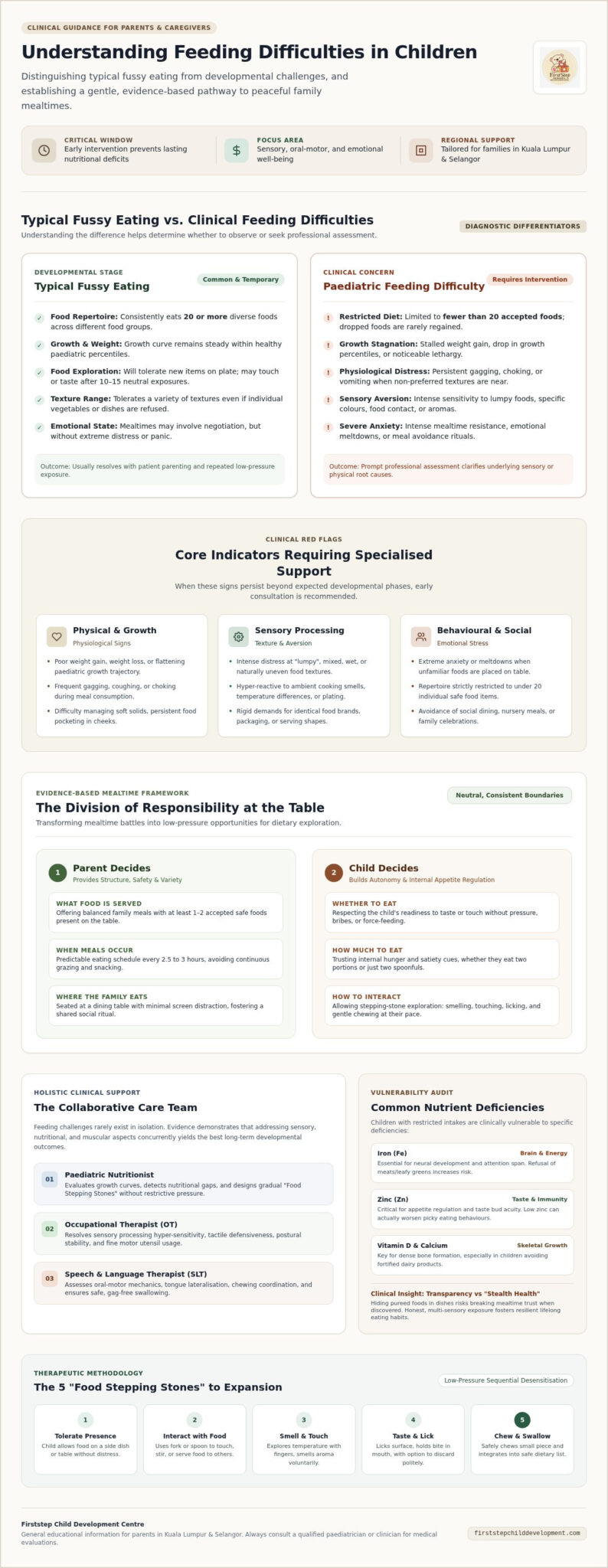
Feeding is a complex developmental skill that involves much more than just a healthy appetite. While many parents believe their child is simply being “fussy,” there’s a distinct line between typical developmental phases and clinical pediatric feeding disorders. Fussy eating usually involves a child who’s still willing to try new foods eventually and maintains a steady growth curve. In contrast, feeding difficulties encompass a broader range of physical, sensory, and behavioural challenges that can disrupt a child’s daily life and social development.
Waiting for a child to “grow out of it” can sometimes delay critical early intervention. If the struggle persists, consulting a feeding difficulties child nutritionist can help clarify whether the issue is a passing phase or something requiring specialised support. Addressing these concerns early helps prevent nutritional gaps and protects the child’s emotional relationship with food.
Common Signs Your Child Needs Professional Support
Identifying red flags early is key to ensuring healthy growth. You should consider a professional assessment if you notice these specific indicators:
- Physical indicators: Poor weight gain, persistent gagging, or choking during meals.
- Behavioural indicators: Extreme anxiety when new foods are presented or a limited repertoire of fewer than 20 accepted foods.
- Sensory indicators: Strong aversions to specific textures, such as “lumpy” foods, or high sensitivity to food smells and colours.
The Psychological Impact of Mealtime Stress
When mealtimes become a source of conflict, it creates a negative feedback loop for both the parent and the child. Parental anxiety is natural, but high-pressure tactics often reinforce a child’s resistance. This stress doesn’t just affect nutrition; it impacts the family’s emotional well-being and the child’s willingness to explore new environments. Creating a pressure-free environment is essential for long-term success. A specialist can guide you in shifting the focus from “how much” they eat to “how” they interact with food, fostering a safer, more predictable space for everyone at the table.
The Role of a Paediatric Nutritionist in Early Intervention
A paediatric nutritionist does far more than just count calories or prescribe vitamins. They assess the “whole child,” looking at growth patterns, energy levels, and the specific gaps in a child’s current diet. During an assessment, they use tools like detailed dietary recalls and growth tracking to identify where your child might be struggling. This is where a feeding difficulties child nutritionist acts as a vital guide. Instead of providing rigid, restrictive meal plans that often increase household stress, they focus on creating “Food Stepping Stones.” These are small, achievable goals designed to gently expand a child’s food repertoire at their own pace.
A Multidisciplinary Approach to Feeding
At Firststep, we believe that feeding challenges are rarely isolated. Our nutritionists work alongside paediatric occupational therapists to address underlying sensory processing issues or oral-motor delays. There’s also a crucial connection to speech therapy, which helps children master the complex mechanics of chewing and swallowing safely. By combining nutritional expertise with psychological support, we ensure that the path to better eating remains supportive and holistic.
Addressing Nutrient Deficiencies Safely
Children who struggle with feeding are often at higher risk for deficiencies in Iron, Zinc, and Vitamin D. While some parents rely on “stealth health” by hiding nutrients in familiar foods, we prioritise transparent food exploration to build long-term trust. We often look to CDC guidance on picky eating, which emphasises repeated, low-pressure exposure to new textures. If you’re concerned about your child’s nutritional intake, a professional nutritionist consultation can provide the clarity needed to support their healthy development. This proactive step helps replace mealtime anxiety with a clear, evidence-based plan for growth.
Practical Strategies for Managing Mealtimes at Home
Transforming your home environment is a powerful step toward resolving mealtime conflict. We often recommend the “Division of Responsibility” model. In this framework, parents decide what food is served, when it is served, and where the family eats. Your child then decides whether to eat and how much. This shift reduces power struggles by giving children a sense of autonomy. You can also find helpful American Academy of Pediatrics’ tips for picky eaters that support this low-pressure approach.
Small environmental adjustments also make a significant difference. Ensure your child has supportive seating where their feet can rest flat, as physical stability improves focus on eating. Try reducing distractions like tablets or loud televisions to help them tune into their hunger cues. Encouraging sensory exploration outside of meals, such as “painting” with yoghurt or sorting dried beans, helps desensitise them to new textures without the pressure to swallow.
Creating a Positive Mealtime Routine
Consistency is key for regulating a child’s appetite. Aim for regular meal and snack timings to ensure they arrive at the table hungry but not overly tired. We suggest using a “Learning Plate,” which is a small side dish where new foods can sit without touching their main meal. This allows them to look at, smell, or touch the food at their own pace. This technique is often discussed during a nutritionist consultation to help build a child’s confidence around unfamiliar textures.
Sensory-Friendly Food Transitions
Food chaining is a gentle method to move from accepted foods to similar textures. For example, if your child only eats plain white rice, you might transition to a slightly thicker congee, then to soft rice noodles, and eventually to rice with small vegetable flecks. This gradual approach respects their sensory needs while slowly expanding their palate. If you feel stuck, reaching out to a feeding difficulties child nutritionist can provide a tailored roadmap for these transitions, ensuring your child’s nutritional needs are met throughout the process.
Nutritionist Consultation in Kuala Lumpur and Selangor
Finding local, specialised support in Kuala Lumpur and Selangor is a vital step for families facing mealtime challenges. At Firststep, a nutritionist consultation is designed to be a collaborative and calm experience. We begin by understanding your child’s unique history, including their growth patterns and current food preferences. Our team recognises that feeding is not just about nutrition; it’s often linked to emotional and developmental factors. This is why we offer integrated care, where our nutritionists work alongside clinical psychologists to address both the physical and behavioural aspects of eating.
Why Choose Firststep for Feeding Support?
Our centre prioritises a gentle, child-led approach. We use play-based assessments to help children feel safe and comfortable in a clinic setting, which significantly lowers anxiety. Following the assessment, parents receive a personalised feedback report. This document is not a generic list of foods; it’s a clear, actionable roadmap tailored to your child’s sensory needs and your family’s lifestyle in Malaysia. This professional clarity provides the peace of mind needed to move forward with confidence.
Next Steps for Your Family
Taking the first step toward professional support is a proactive move toward helping your child reach their full potential. To prepare for your visit, it’s helpful to bring along recent growth charts from your paediatrician and a simple three-day food diary. These documents allow the feeding difficulties child nutritionist to gain a comprehensive view of your child’s intake. Early intervention is essential in preventing long-term food aversions and ensuring your child develops a positive relationship with eating. You can easily book an appointment through our website to begin this transformative journey with our multidisciplinary team.
Supporting Your Child with a Feeding Difficulties Child Nutritionist
Resolving mealtime challenges is a journey that requires patience, evidence-based strategies, and a compassionate understanding of your child’s unique needs. As we have explored, distinguishing between typical picky eating and more complex sensory or physical barriers allows you to provide the right support at the right time. Implementing consistent routines and low-pressure environments at home builds the foundation for long-term success. Partnering with a feeding difficulties child nutritionist ensures your child receives expert care tailored to their growth and developmental milestones.
Our multidisciplinary team at Firststep Psychology & Child Development Centre offers expert care in KL and Selangor, providing a safe haven for families to explore holistic, child-led solutions. If you are concerned about your child’s growth or mealtime struggles, book a Nutritionist Consultation at Firststep today to start your journey toward peaceful family mealtimes. You don’t have to navigate these challenges alone. We are here to guide you and your child toward their full potential at Firststep Child Development.
Frequently Asked Questions
How do I know if my child is a “picky eater” or has a feeding disorder?
Typical picky eating involves a child who eats at least 30 different foods and maintains a steady growth percentile. In contrast, a feeding disorder often involves a highly restricted diet of fewer than 20 items and significant mealtime distress. If your child gags at the sight of new textures or avoids entire food groups, a feeding difficulties child nutritionist can help identify if these red flags require clinical intervention.
Can a nutritionist help if my child has sensory processing issues?
Yes, our nutritionists specialise in supporting children with sensory sensitivities. We work closely with our occupational therapists in Selangor to understand how textures, smells, and temperatures affect your child’s willingness to eat. Instead of forcing intake, we use systematic desensitisation and “food chaining” to gently bridge the gap between their safe foods and new, nutritious options. This collaborative approach ensures that sensory needs are respected while nutritional goals are met.
What should I expect during a paediatric nutritionist consultation in Malaysia?
During your initial visit to our centre in Kuala Lumpur, the nutritionist will review your child’s medical history and growth charts. We conduct a thorough dietary recall to identify potential nutrient gaps, such as iron or zinc deficiencies. The assessment is play-based and child-led, ensuring your little one feels safe. You’ll receive a personalised feedback report that outlines practical, local mealtime strategies tailored to your family’s daily routine and cultural preferences.
Will the nutritionist force my child to eat foods they dislike?
Absolutely not. We prioritise building a trusting relationship between your child and food. Our methods are rooted in the “Division of Responsibility” model, which removes pressure from mealtimes. We focus on food exploration and sensory play rather than forced consumption. This gentle approach helps reduce anxiety for both parents and children, creating a more positive environment where your child feels empowered to try new things when they are ready.
How long does it take to see progress in a child’s feeding habits?
Progress varies for every child, as feeding is a complex skill that involves physical and emotional components. While some families notice small improvements in mealtime atmosphere within a few weeks, significant dietary expansion usually takes several months of consistent support. We focus on sustainable, long-term changes rather than quick fixes. Regular follow-up sessions help us fine-tune strategies and ensure your child continues to meet their developmental milestones in a healthy, steady manner.

Article by
Firststep Child Development Team
Firststep Child Development Team provides evidence-informed educational resources to help parents better understand child development, behaviour and learning. Our multidisciplinary services include clinical psychology, occupational therapy, speech and language therapy, developmental assessments and other child development support in Kuala Lumpur and Selangor.
Disclaimer
This article is for general educational and informational purposes only and is not a substitute for professional medical, psychological or therapeutic advice, diagnosis or treatment. Every child develops differently. If you have concerns about your child's development, behaviour, learning or wellbeing, please consult an appropriately qualified healthcare or allied health professional.