



Why Does My Child Struggle to Find the Right Words? Understanding Expressive Language in Children
Does your child know what they want to say but struggle to find the right words, put words together, or explain what happened?
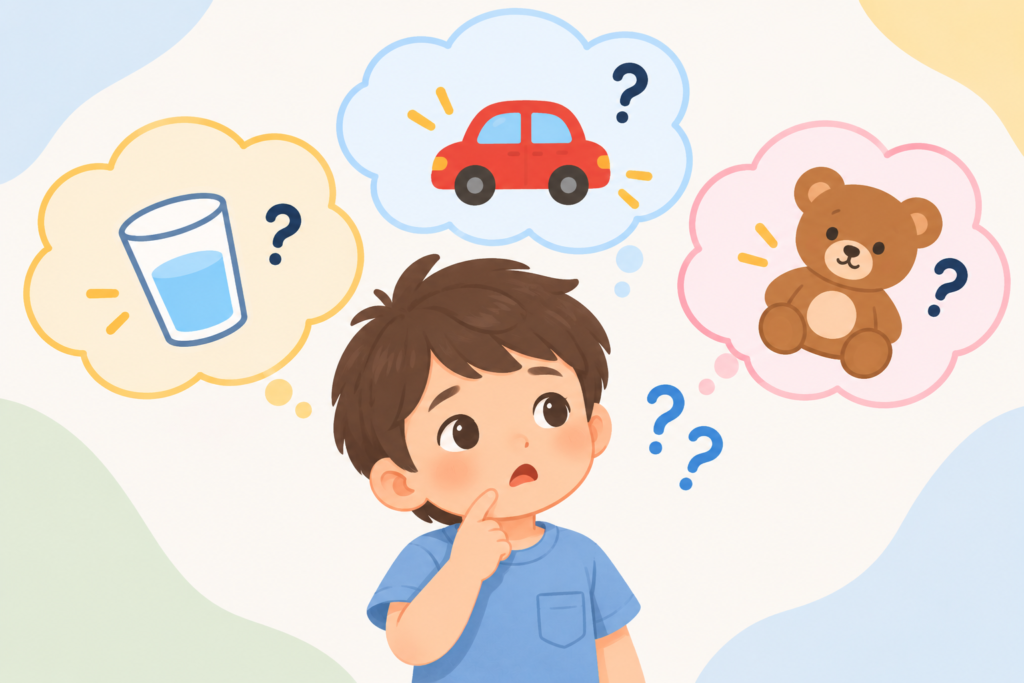
Children develop language at different rates, and it is common for younger children to need time to learn new words and express their ideas.
It is normal for younger children to need time to find the right words or put their thoughts into sentences, especially when they are learning new words and developing their communication skills.
However, when a child consistently has difficulty expressing their thoughts, needs, or experiences, it may be helpful to look more closely at their expressive language skills.
Understanding expressive language can help parents recognise when their child may benefit from additional support.
What Is Expressive Language?
Expressive language refers to a child’s ability to use words, sentences, and other forms of communication to express their thoughts, ideas, needs, and feelings.
It includes skills such as:
1. Learning and using new words
2. Putting words together into sentences
3. Describing people, objects, or events
4. Answering questions
5. Telling or retelling a story
6. Explaining thoughts and ideas
7. Using language to communicate needs and feelings
A child may understand what others say but still find it difficult to express themselves clearly.
Expressive language skills develop over time, and children may use simpler words and shorter sentences before they are able to express more complex thoughts and ideas.
1. Struggles to Find the Right Words
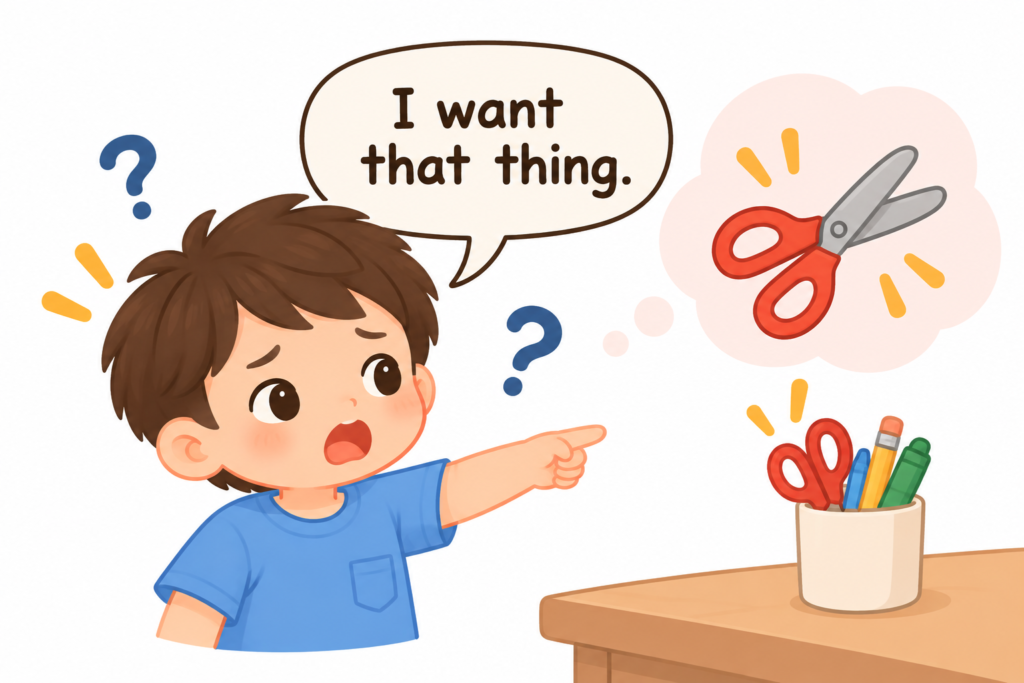
Your child may know what they want to say but have difficulty finding the specific word.
For example, instead of saying:
“I want the scissors.”
they may say:
“I want that thing.”
They may also point, use gestures, or pause while trying to think of the word they need.
2. Uses Short or Simple Sentences
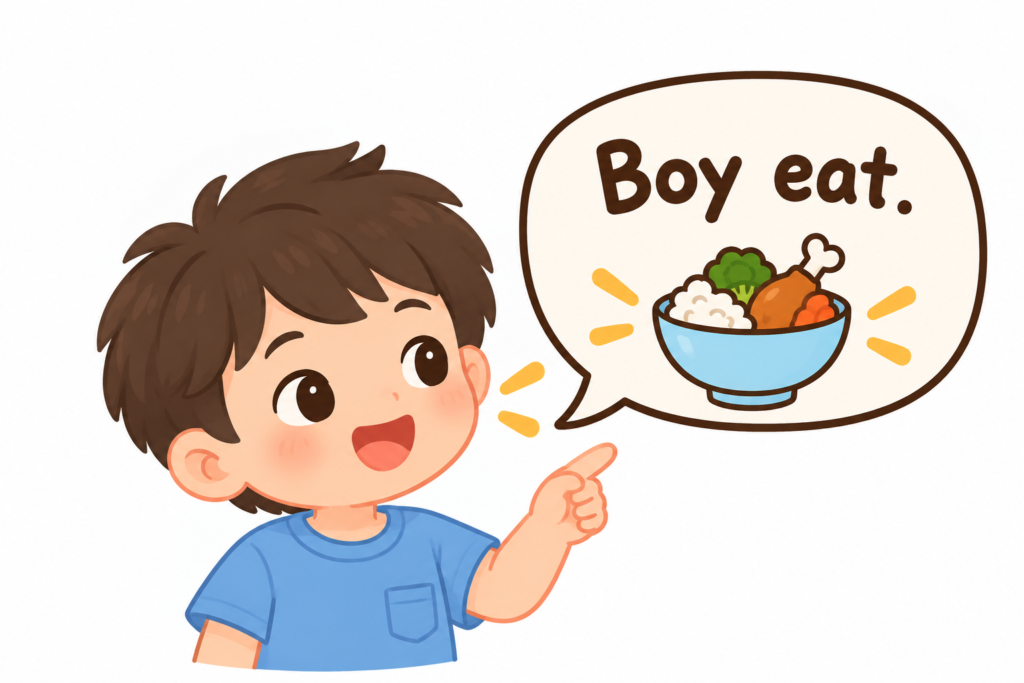
Your child may communicate using shorter sentences than expected for their age.
For example:
“Boy eat.”
instead of:
“The boy is eating his lunch.”
They may also leave out words that help make their sentences clearer.
3. Has Difficulty Describing What Happened
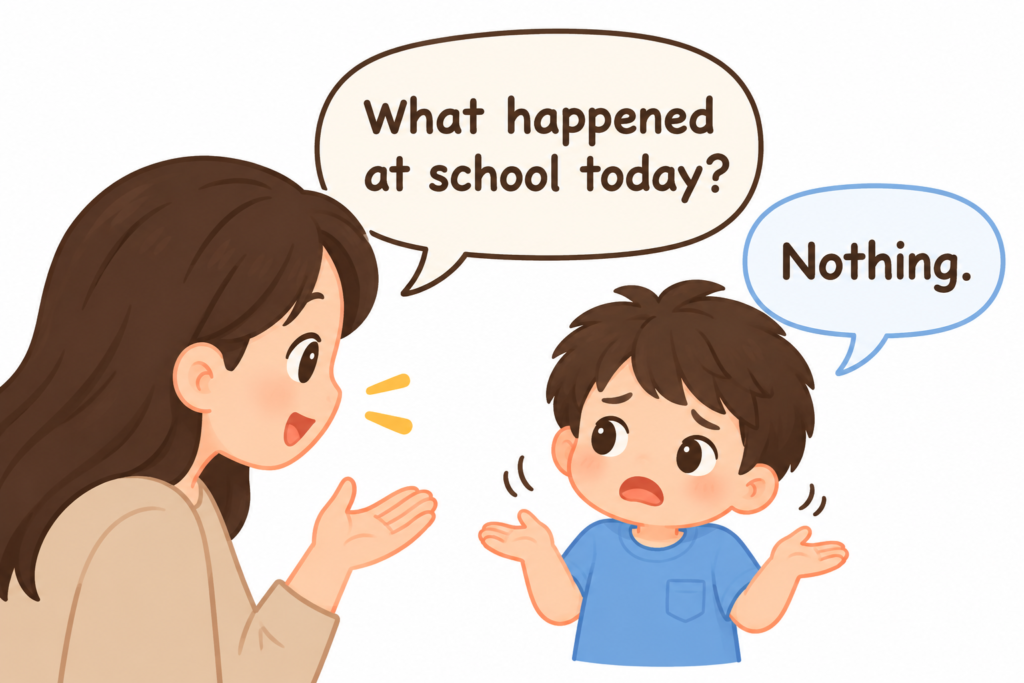
Your child may find it difficult to explain an event or tell you what happened during their day.
For example, when you ask:
“What happened at school today?”
they may respond with:
“Nothing.”
or provide only a few details, even when they have something they want to share.
4. Has Difficulty Answering Questions
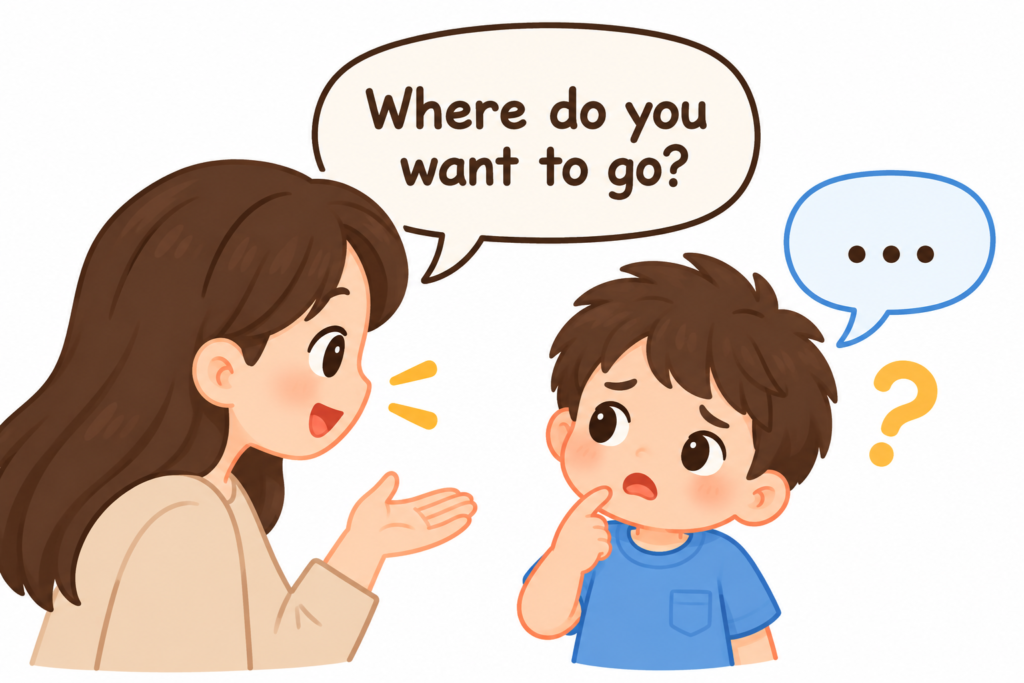
Your child may struggle to put their thoughts into words when answering questions.
You may notice difficulty answering questions such as:
- What happened?
- Who was there?
- Where did you go?
- Why did it happen?
- How did you do it?
They may give very short answers or respond with something unrelated to the question.
5. Has Difficulty Learning or Using New Words
Your child may use a limited range of vocabulary or find it difficult to learn and use new words.
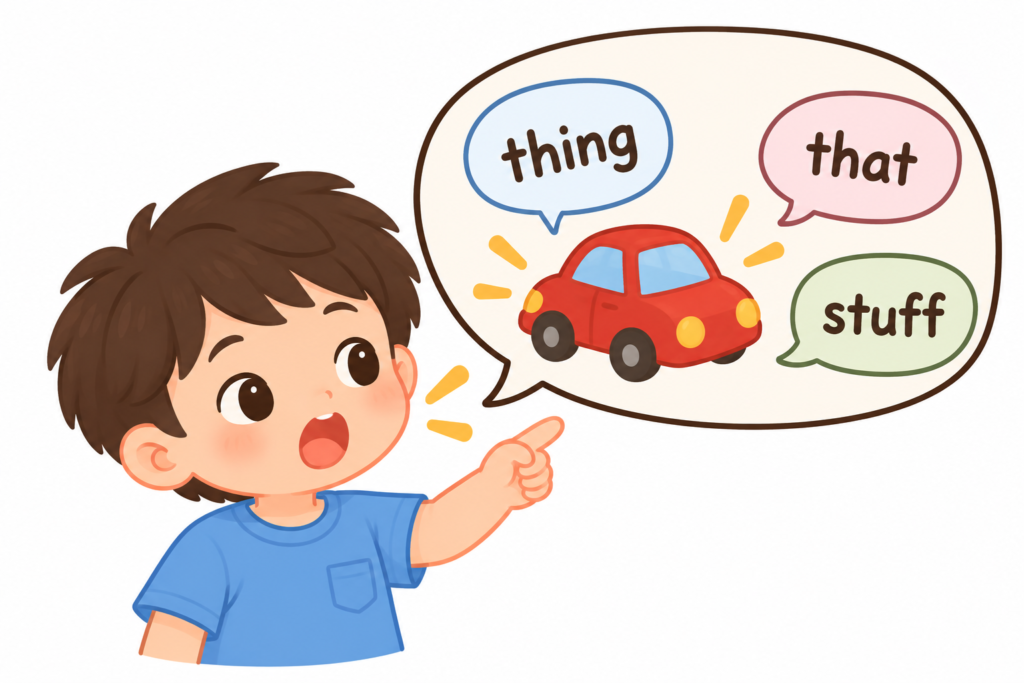
For example, they may frequently use general words such as:
“thing”, “that”, or “stuff”
instead of naming the specific object.
They may understand a new word when someone uses it but have difficulty using it themselves.
6. Has Difficulty Telling or Retelling a Story
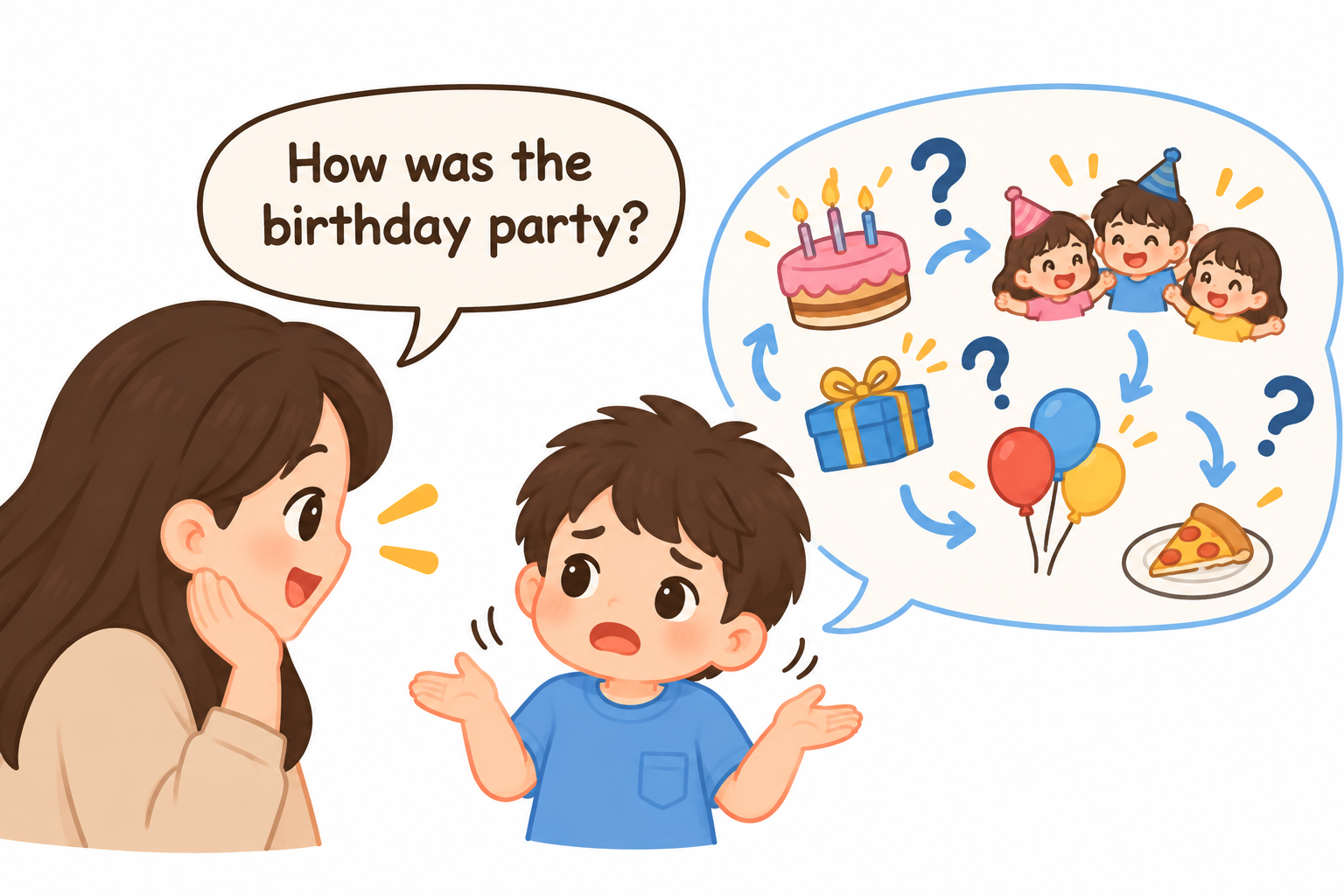
Your child may find it difficult to explain events in a clear order.
For example, when telling you about a birthday party, they may jump between different parts of the story or leave out important details.
They may know what happened but struggle to organise their thoughts into a clear sequence.
What Can Parents Do?
1. Give Your Child Time to Find Their Words
✿ Give your child enough time to think about what they want to say.
✿ Try not to immediately provide the word for them.
If they say:
“I want the… umm…”
you can give them a moment to continue.
✿ If needed, you can offer a gentle prompt:
“Are you looking for the scissors?”
2. Expand What Your Child Says
✿ When your child uses a short phrase, you can repeat it and add a little more information.
✿ For example:
Child:
“Dog run.”
Parent:
“Yes, the dog is running!”
✿ This gives your child a model of how their idea can be expressed using a longer sentence.
3. Talk About Everyday Activities
✿ Use everyday routines as opportunities to introduce and practise language.
✿ You can talk while:
1. Getting dressed
2. Preparing meals
3. Bathing
4. Shopping
5. Playing
6. Going outdoors
✿ For example:
“We’re cutting the apple.”
“The apple is red and crunchy.”
✿ Natural conversations can help children learn how words are used in different situations.
4. Ask Questions That Encourage More Than “Yes” or “No”
✿ Instead of asking questions that can be answered with one word, try using open-ended questions that encourage your child to explain their ideas.
✿ For example:
Instead of:
“Did you have fun?”
Try:
“What did you play today?”
or:
“What was your favourite part?”
✿ These questions help children practise expressing their thoughts, sharing details, and using longer sentences.
✿ Give your child enough time to respond.
5. Read and Talk About Stories Together
✿ Shared reading provides opportunities to build vocabulary and practise expressing ideas.
✿ Pause during the story and talk about:
1. What is happening?
2. What the characters are doing?
3. How they might feel?
4. What might happen next?
✿ For example:
“What do you think will happen next?”
“Why is the boy sad?”
✿ Keep the conversation enjoyable rather than turning it into a test.
6. Encourage Your Child to Describe and Explain
✿ During play or everyday activities, encourage your child to describe what they see, do, or think.
✿ For example, while building with blocks, you could ask:
“What are you building?”
“What should we put here?”
“Tell me about your tower.”
✿ You can also model descriptive words such as big, small, tall, heavy, beside, under, and next to.
When Should Parents Seek Professional Advice?
❀ Consider seeking professional advice if your child’s difficulties with expressing themselves are persistent or affecting their communication, learning, social interactions, or everyday activities.
❀ Parents can consider speaking with a Speech-Language Therapist, who can assess your child’s expressive language skills and look at how they use words, sentences, questions, descriptions, and stories to communicate.
❀ A Speech-Language Therapist can also help determine which areas of communication may need additional support.
Key Takeaway
❀ Expressive language is a child’s ability to use language to communicate their thoughts, ideas, needs, and feelings.
❀ Some children may have difficulty finding the right words, forming sentences, answering questions, describing events, learning new vocabulary, or telling stories.
❀ If difficulties persist or affect your child’s communication or everyday activities, parents can consider seeking an assessment from a Speech-Language Therapist to better understand their child’s expressive language skills and support needs.
❀ The goal is not simply to encourage children to talk more, but to help them express their thoughts, needs, and ideas more clearly and confidently.
🌟 Stay Connected with Us! We love sharing tips, insights, and inspiring stories about children’s growth and mental wellbeing.
💙 Follow us on Instagram and Facebook for more updates and parenting advice.
Join our community and let’s grow together. One positive step at a time!

References
American Speech-Language-Hearing Association. (n.d.). Spoken language disorders.
https://www.asha.org/practice-portal/clinical-topics/spoken-language-disorders/
National Institute on Deafness and Other Communication Disorders. (2023). Developmental language disorder.
https://www.nidcd.nih.gov/health/developmental-language-disorder
National Institute on Deafness and Other Communication Disorders. (n.d.). Speech and language developmental milestones.
Working Hours
Tuesday to Saturday – 8.30am to 6pm
Monday & Sunday – Closed
Please also subscribe us at
Contact Us
Discover Our Team!
📞+60102502833
firststepdevelopmentcentre@gmail.com
B1-7, Plaza Damas 3, Jalan Sri Hartamas 1, 50480 Kuala Lumpur.
Copyright 2025. Firststep Child Development Sdn Bhd. All rights reserved.