



Executive Functioning in Children: Skills That Help Kids Plan, Focus & Complete Tasks
Many parents wonder:
“Why does my child know what to do, but still struggle to get things done?”
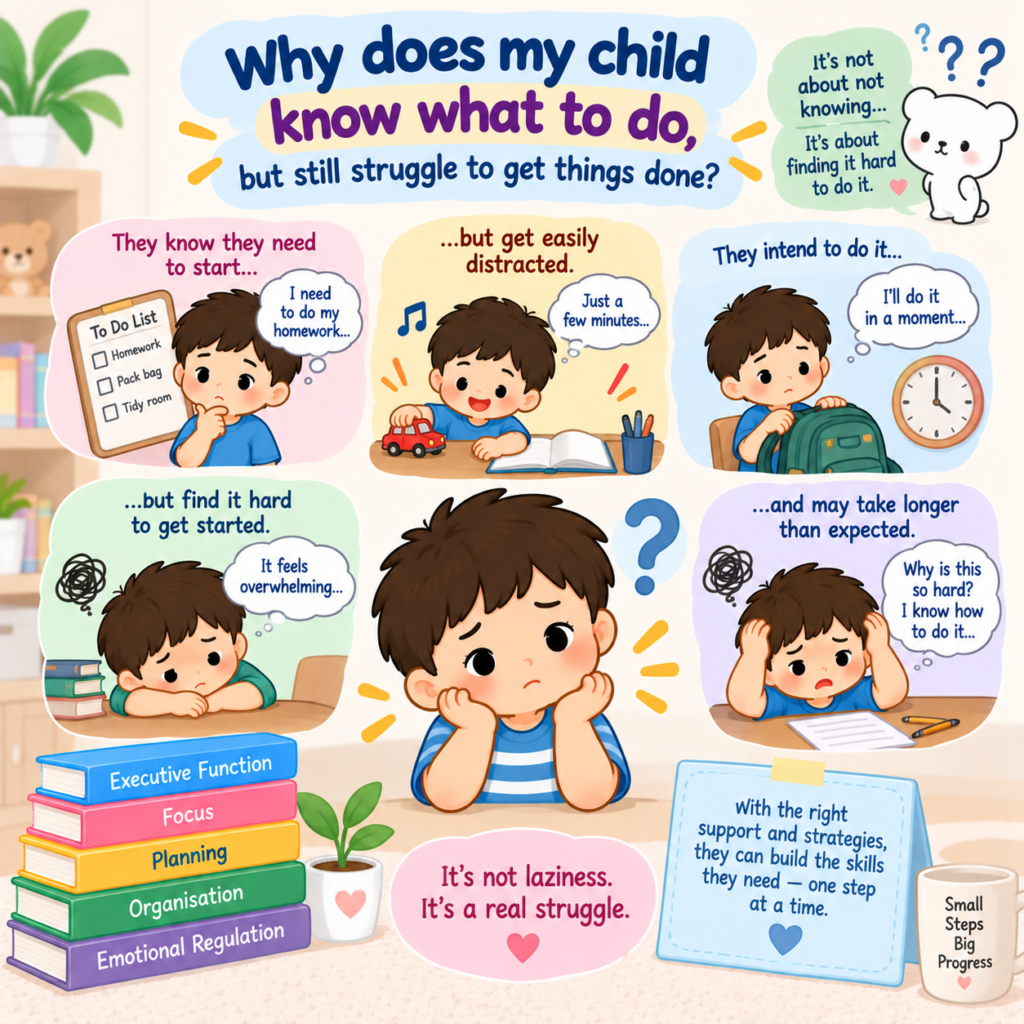
Your child may understand what is expected but still need frequent reminders to start their homework, pack their school bag, follow several instructions, or complete everyday tasks.
Sometimes, these difficulties are not simply about being lazy, careless, or not paying attention.
Children rely on a group of thinking skills called executive functions to help them plan, organise, remember information, manage their behaviour, and complete tasks.
Understanding executive functioning can help parents recognise why some everyday tasks may be more difficult for their child and learn practical ways to provide support.
What Is Executive Functioning?
Executive functioning refers to a group of mental skills that help children manage their thoughts, behaviour, emotions, and actions so they can work towards a goal.
These skills develop gradually throughout childhood and continue developing into adolescence and adulthood.
Children use executive function skills every day when they:
✿ Remember instructions
✿ Plan what they need to do
✿ Start and finish tasks
✿ Stay focused
✿ Manage their time
✿ Control impulses
✿ Adapt when plans change
✿ Organise their belongings
Executive functioning is therefore an important part of learning and everyday independence.
1. Planning and Organising
Planning helps children think about what needs to be done and decide what steps to take.
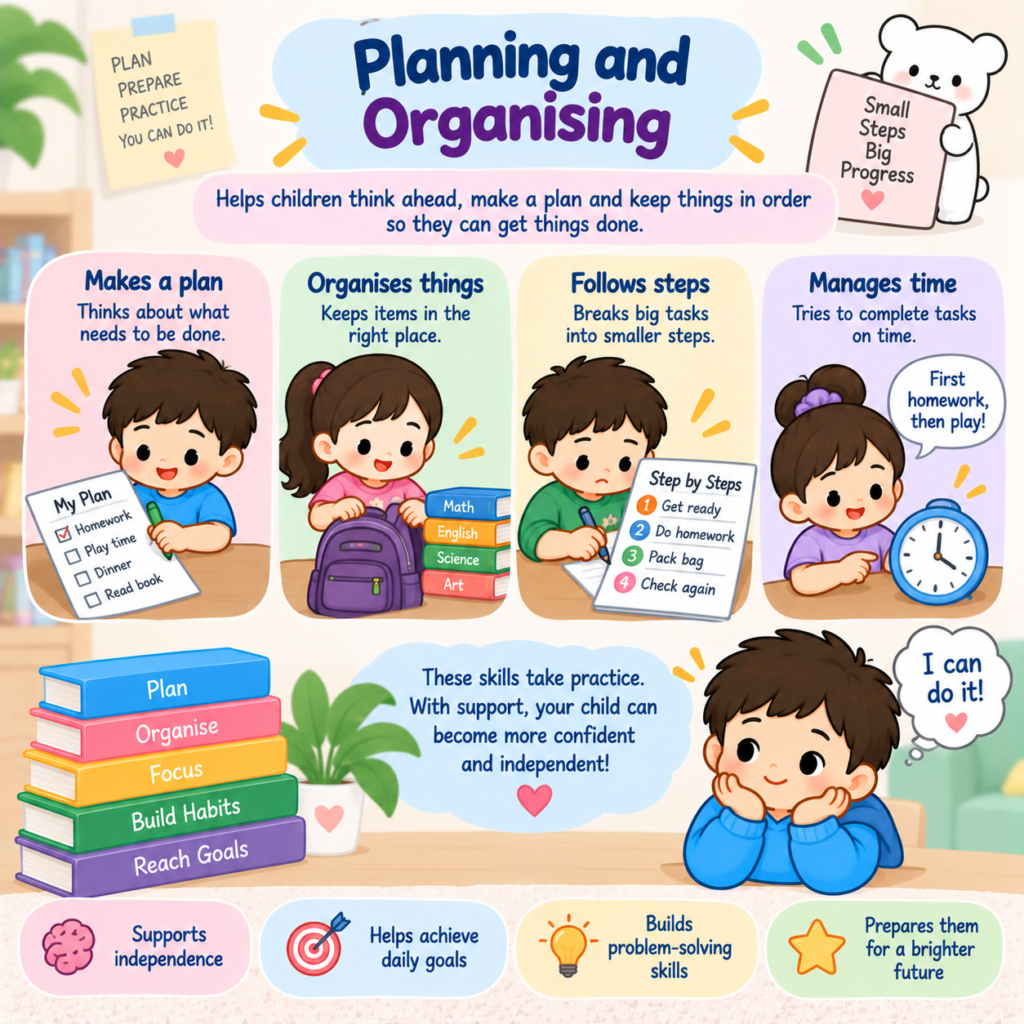
A child may understand that they need to complete homework but struggle to work out where to begin, what materials they need, or which task should be completed first.
You may notice that your child:
✿ Has difficulty organising school materials
✿ Often forgets what they need for an activity
✿ Struggles to break a large task into smaller steps
✿ Needs frequent reminders about what to do next
2. Working Memory
Working memory helps children hold information in their mind while using it.
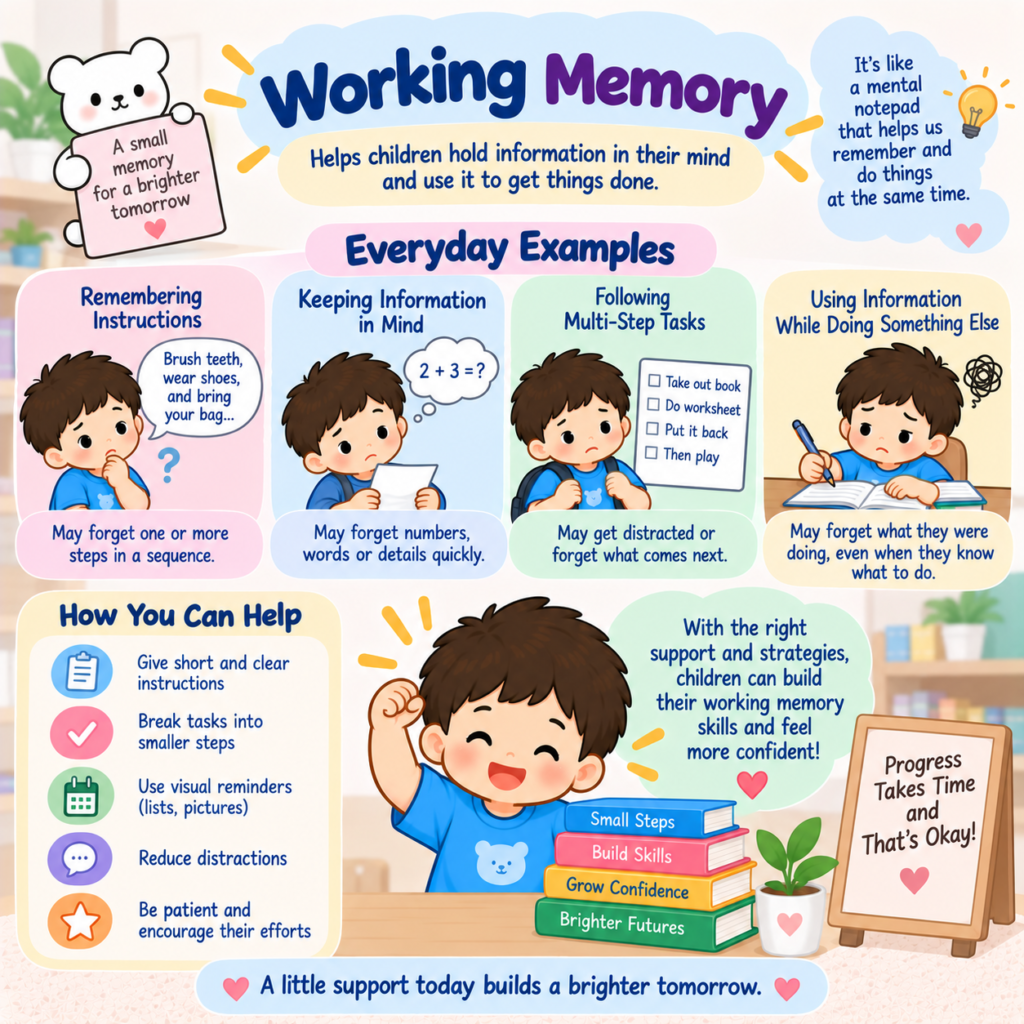
For example, a child may need to remember:
“Take out your book, turn to page 10, and complete questions 1 to 5.”
A child with difficulties in working memory may remember the first instruction but forget the rest.
They may frequently ask:
“What am I supposed to do again?”
This does not necessarily mean that the child was not listening. They may simply have difficulty holding several pieces of information in mind at the same time.
3. Inhibitory Control and Self-Control
Inhibitory control helps children pause before acting and resist distractions or impulses.
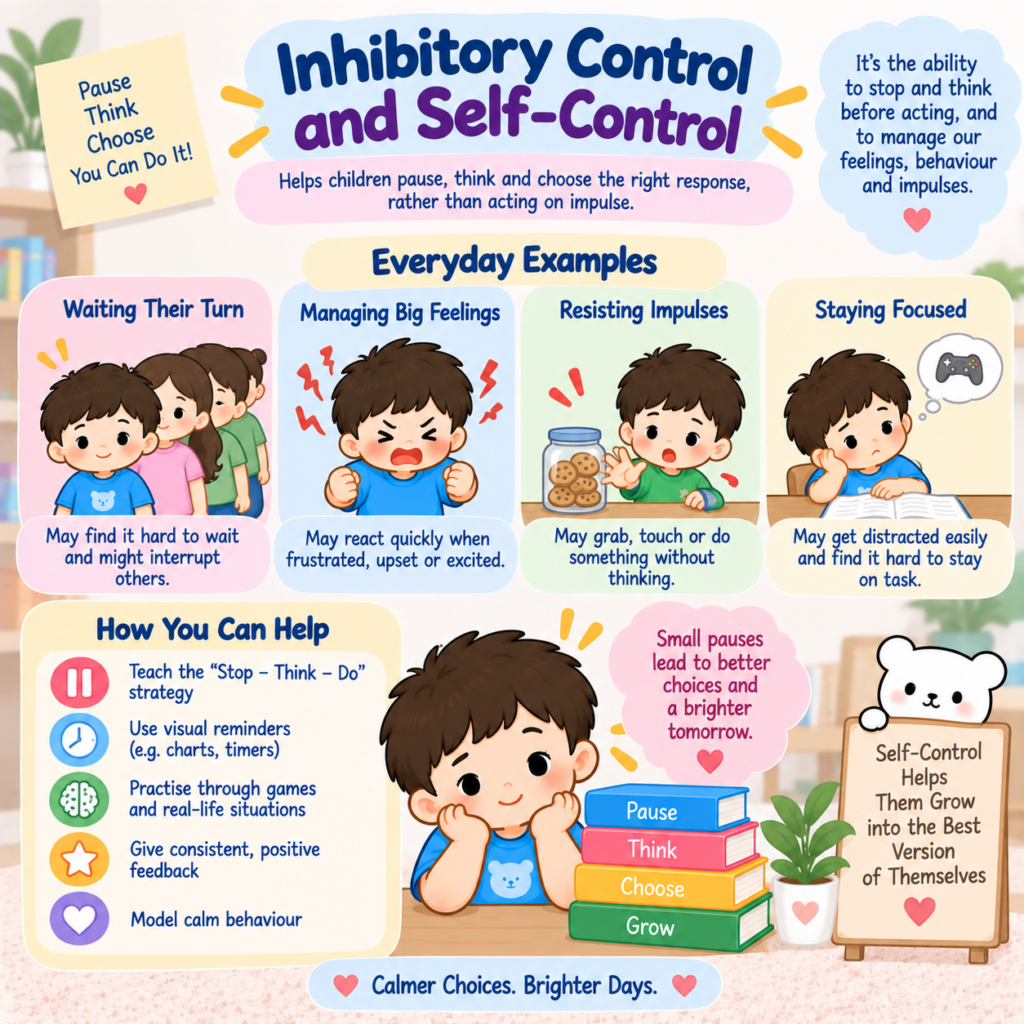
For example, children use this skill when they:
✿ Wait for their turn
✿ Stop themselves from interrupting
✿ Resist touching something they have been told not to touch
✿ Stay seated during a task
✿ Pause before reacting
Developing this skill can take time, particularly when children are excited, frustrated, or distracted.
4. Flexible Thinking
Flexible thinking helps children adjust when things do not go according to plan.
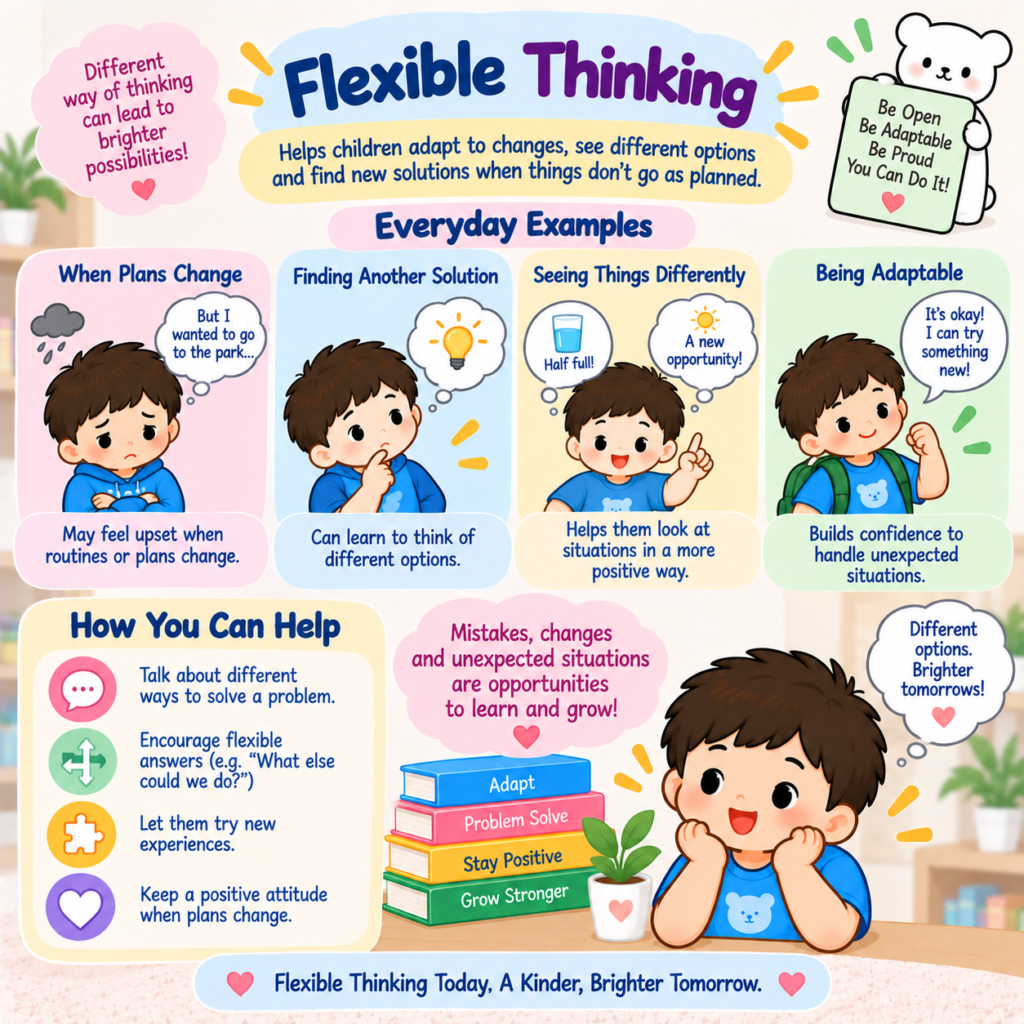
For example, a child may need to adapt when:
✿ A preferred activity is cancelled
✿ The classroom routine changes
✿ There is a different way to complete a task
✿ A familiar plan does not work
Children who find flexibility difficult may become stuck on one idea or have difficulty moving on when something changes.
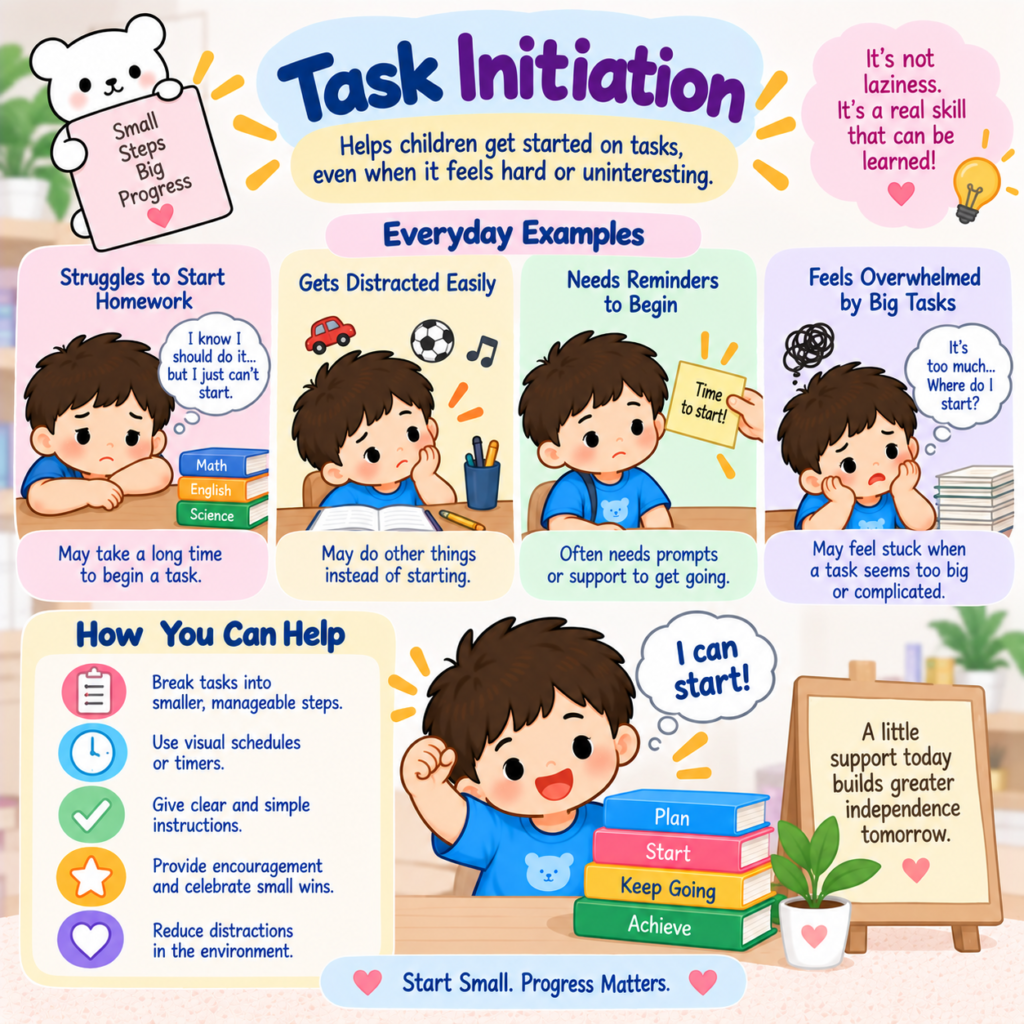
5. Task Initiation
Task initiation is the ability to begin a task without needing excessive prompting.
Some children may know exactly what they need to do but still struggle to get started.
For example, they may sit at their desk with their homework in front of them but spend a long time doing nothing, looking around, or finding other things to do.
Parents may hear themselves saying:
“Please start your homework.”
“Have you started yet?”
“Come on, you need to begin now.”
Frequent reminders to get started may sometimes indicate that a child needs support with task initiation rather than simply lacking motivation.
6. Time Management and Task Completion
Children gradually learn to understand how long tasks take and how to use their time effectively.
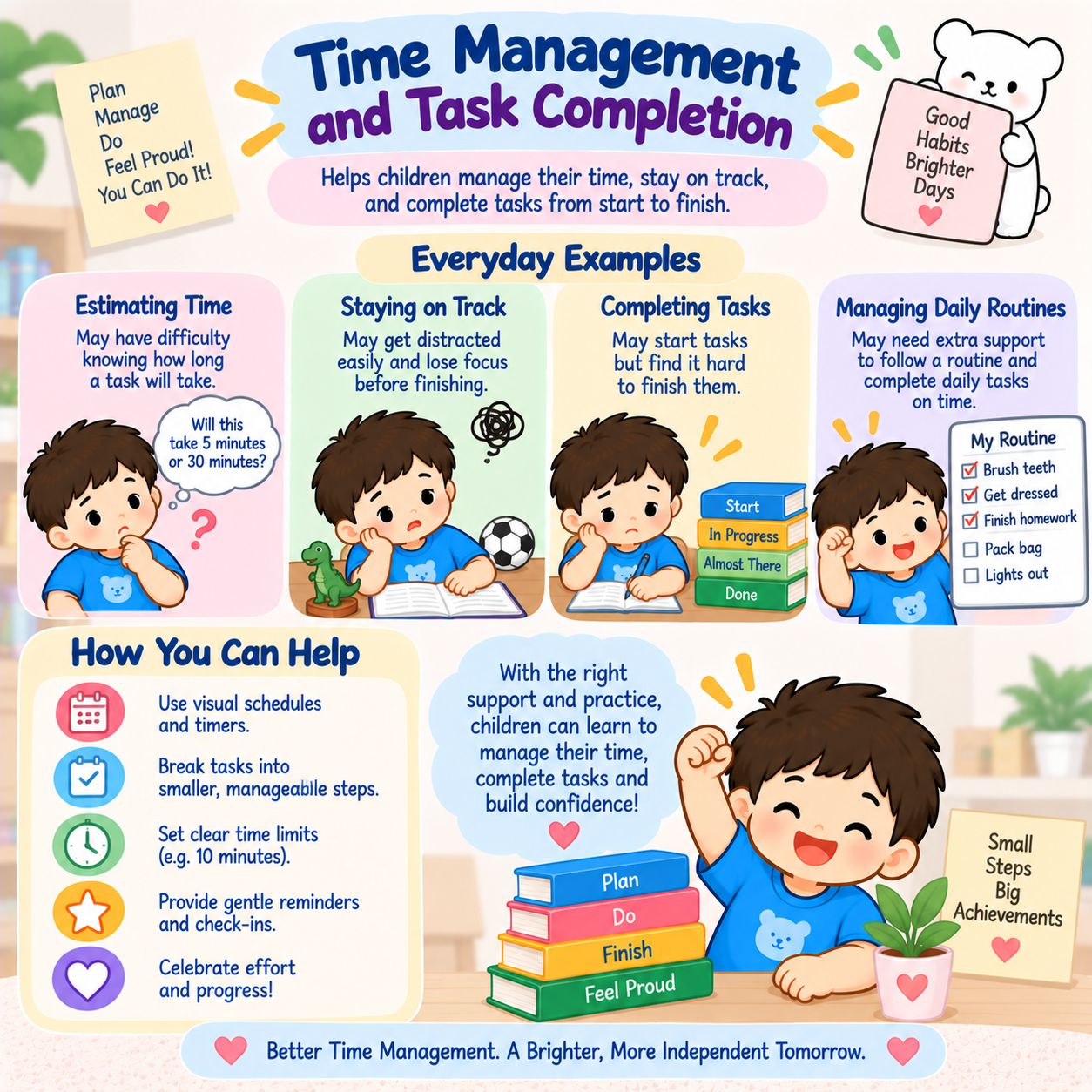
A child who struggles with time management may:
✿ Take much longer than expected to complete simple tasks
✿ Spend too much time on one part of an activity
✿ Forget how much time has passed
✿ Rush at the last minute
✿ Frequently run late
✿ Struggle to finish tasks within an expected timeframe
These difficulties can affect schoolwork, morning routines, homework, and other everyday responsibilities.
6 Signs Your Child May Be Struggling With Executive Functioning
1. They Need Frequent Reminders
✿ Your child may need repeated reminders to complete everyday tasks, even when they already know the routine.
✿ For example:
“Brush your teeth.”
“Pack your bag.”
“Put your shoes on.”
“Please start your homework.”
2. They Often Lose or Forget Things
✿ Your child may regularly forget homework, school materials, water bottles, stationery, or other belongings.
✿ They may know where something was placed but struggle to remember it when they need it.
3. They Struggle With Multi-Step Instructions
✿ Your child may successfully complete one instruction but forget what comes next when several steps are given at once.
✿ Breaking instructions into smaller parts may make tasks easier for them.
4. They Have Difficulty Starting Tasks
✿ Your child may take a long time to begin homework, chores, or other activities even when they understand what needs to be done.
✿ They may appear to be distracted or avoidant when the underlying difficulty may be getting started.
5. They Become Stuck When Plans Change
✿ Unexpected changes can be difficult for some children.
✿ They may become upset, confused, or unsure of what to do when their usual routine changes.
6. They Frequently Leave Tasks Unfinished
✿ Your child may start several activities but struggle to finish them.
✿ They may become distracted, move on to something else, or need an adult to repeatedly bring them back to the original task.
6 Ways Parents Can Support Executive Function Skills
1. Break Big Tasks Into Smaller Steps
✿ Instead of giving your child a long list of instructions at once, break the task into manageable steps.
✿ For example, instead of:
“Get ready for school.”
Try:
“First, put on your uniform.”
Then:
“Next, brush your teeth.”
✿ This can make the task feel clearer and easier to manage.
2. Use Visual Reminders
✿ Visual schedules, checklists, pictures, and written reminders can help children remember what they need to do.
For example, a morning checklist might include:
✿ Get dressed
✿ Brush teeth
✿ Eat breakfast
✿ Pack school bag
✿ Put on shoes
✿ Over time, children can gradually learn to use these reminders more independently.
3. Give One or Two Instructions at a Time
✿ If your child has difficulty remembering multiple instructions, try giving shorter instructions.
✿ You can also ask your child to repeat the instruction back to you to check that they understood what needs to be done.
4. Give Enough Time for Transitions
✿ Some children need additional time to shift from one activity to another.
✿ Giving advance warnings can help.
✿ For example:
“You have 10 more minutes to play, then we need to get ready.”
✿ Follow this with another reminder closer to the transition.
5. Teach Children to Check Their Own Work
✿ Instead of immediately checking everything for your child, encourage them to develop their own checking routine.
✿ For example:
“Let’s check your school bag together. What do you need for tomorrow?”
✿ Gradually, this can help children become more independent in planning and organising.
6. Praise Effort and Independence
✿ Notice when your child uses an executive function skill independently.
✿ For example:
“You remembered to pack your bag without me reminding you.”
“You broke your homework into smaller parts and finished it yourself.”
✿ Specific praise helps children recognise the skills they are developing.
When Should Parents Seek Professional Advice?
Executive function skills develop at different rates, and occasional difficulties are common in childhood.
However, parents may consider seeking professional advice if their child’s difficulties are:
✿ Frequent and persistent
✿ Affecting schoolwork or learning
✿ Making daily routines difficult
✿ Affecting friendships or family relationships
✿ Preventing the child from becoming more independent
✿ Present across different settings, such as home and school
✿ Causing significant frustration or distress for the child
✿ Becoming increasingly noticeable as demands become more complex
Executive functioning difficulties can occur for different reasons.
They may sometimes be associated with conditions such as ADHD or learning difficulties, but difficulties with executive functioning alone do not necessarily mean that a child has a particular diagnosis.
A Clinical Psychologist or other appropriate professional can help parents understand the child’s individual strengths and difficulties and determine whether further assessment or support may be helpful.
Key Takeaway
❀ Executive functioning helps children plan, organise, remember, focus, manage impulses, adapt to changes, and complete tasks.
❀ When a child struggles with these skills, it may sometimes look like they are being careless, lazy, forgetful, or uncooperative.
❀ However, they may actually need more support with the thinking skills required to manage the task.
❀ Every child develops executive function skills at their own pace. With appropriate support and opportunities to practise, children can gradually become more confident and independent in managing everyday tasks.
🌟 Stay Connected with Us! We love sharing tips, insights, and inspiring stories about children’s growth and mental wellbeing.
💙 Follow us on Instagram and Facebook for more updates and parenting advice.
Join our community and let’s grow together. One positive step at a time!

References
American Psychiatric Association. (2022). Diagnostic and statistical manual of mental disorders (DSM-5-TR).
Psychiatry.org; American Psychiatric Association. https://www.psychiatry.org/psychiatrists/practice/dsm
Working Hours
Tuesday to Saturday – 8.30am to 6pm
Monday & Sunday – Closed
Please also subscribe us at
Contact Us
Discover Our Team!
📞+60102502833
firststepdevelopmentcentre@gmail.com
B1-7, Plaza Damas 3, Jalan Sri Hartamas 1, 50480 Kuala Lumpur.
Copyright 2025. Firststep Child Development Sdn Bhd. All rights reserved.