



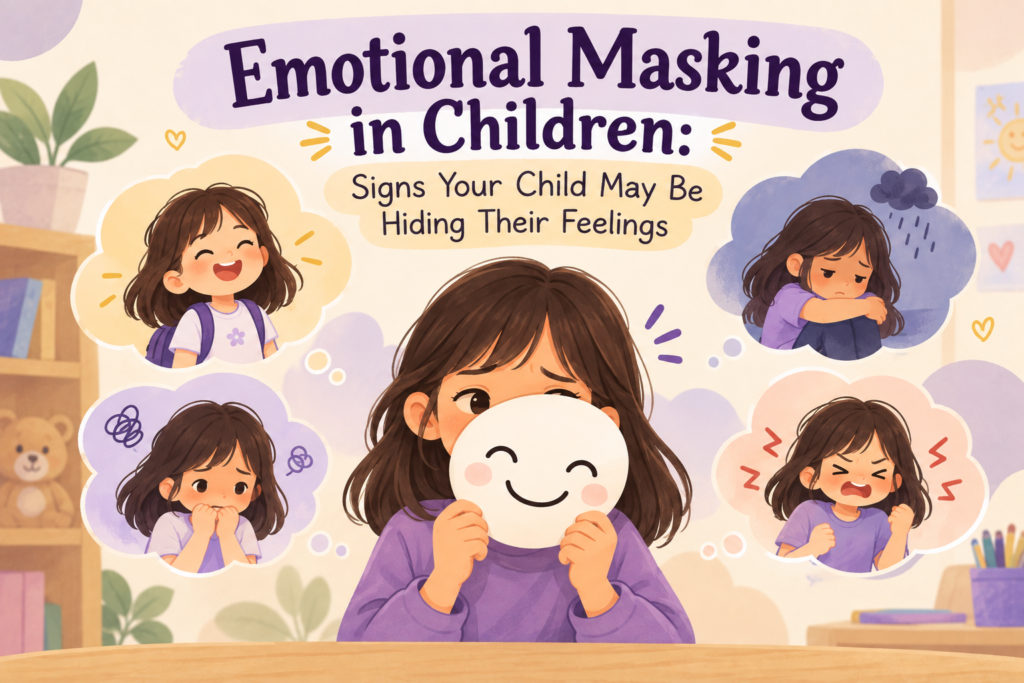
Emotional Masking in Children: Signs Your Child May Be Hiding Their Feelings
Does your child seem happy and well-behaved at school, but become upset, frustrated or emotionally overwhelmed once they get home?
Or perhaps your child often says “I’m fine” even when something appears to be bothering them?
Some children find it difficult to express their true feelings.
They may hide their sadness, worry or frustration because they want to fit in, avoid disappointing others or prevent people from worrying about them.
This may sometimes be described as emotional masking.
While children do not always need to share every feeling they experience, consistently hiding emotions may make it harder for parents to understand what they are going through.
Understanding why a child may hide their feelings can help parents provide the emotional safety and support they need.
What Is Emotional Masking in Children?
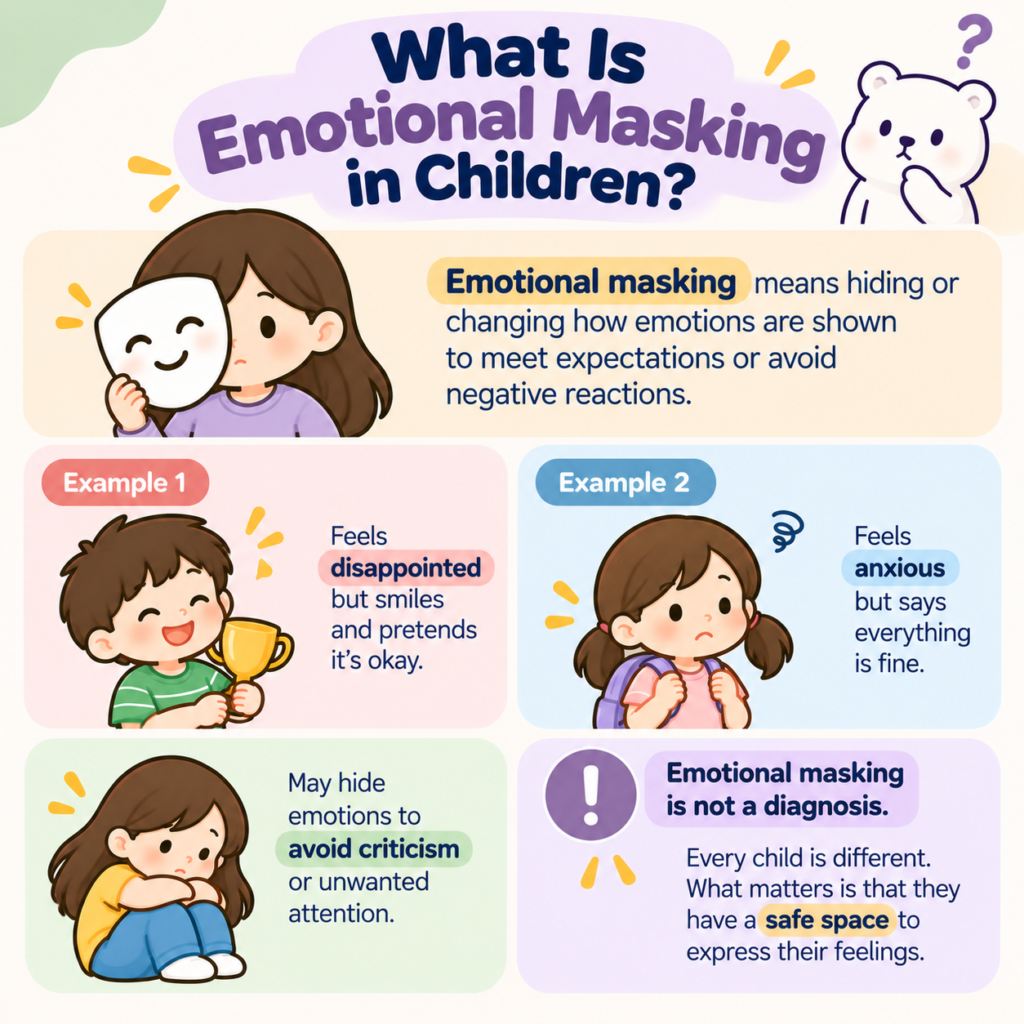
Emotional masking refers to hiding, suppressing or changing the way emotions are expressed in order to meet expectations, avoid negative reactions or appear a certain way around others.
For example, a child may feel disappointed after losing a game but smile and pretend they do not mind.
Another child may feel anxious about school but tell their parents everything is fine because they do not want to worry them.
Some children may also hide their emotions because they have learned that showing sadness, fear or frustration leads to criticism, embarrassment or unwanted attention.
Emotional masking is not a diagnosis, and not every child who keeps their feelings private is struggling emotionally.
Children express emotions differently depending on their personality, age, experiences and environment.
The important thing is to notice whether a child has opportunities to express their feelings safely and whether hiding those feelings appears to affect their well-being.
Signs of Emotional Masking in Children
Emotional masking can look different from child to child. Some children may hide their feelings in subtle ways, while others may show noticeable changes in their behaviour.
1. Frequently Saying “I’m Fine” When Something Seems Wrong
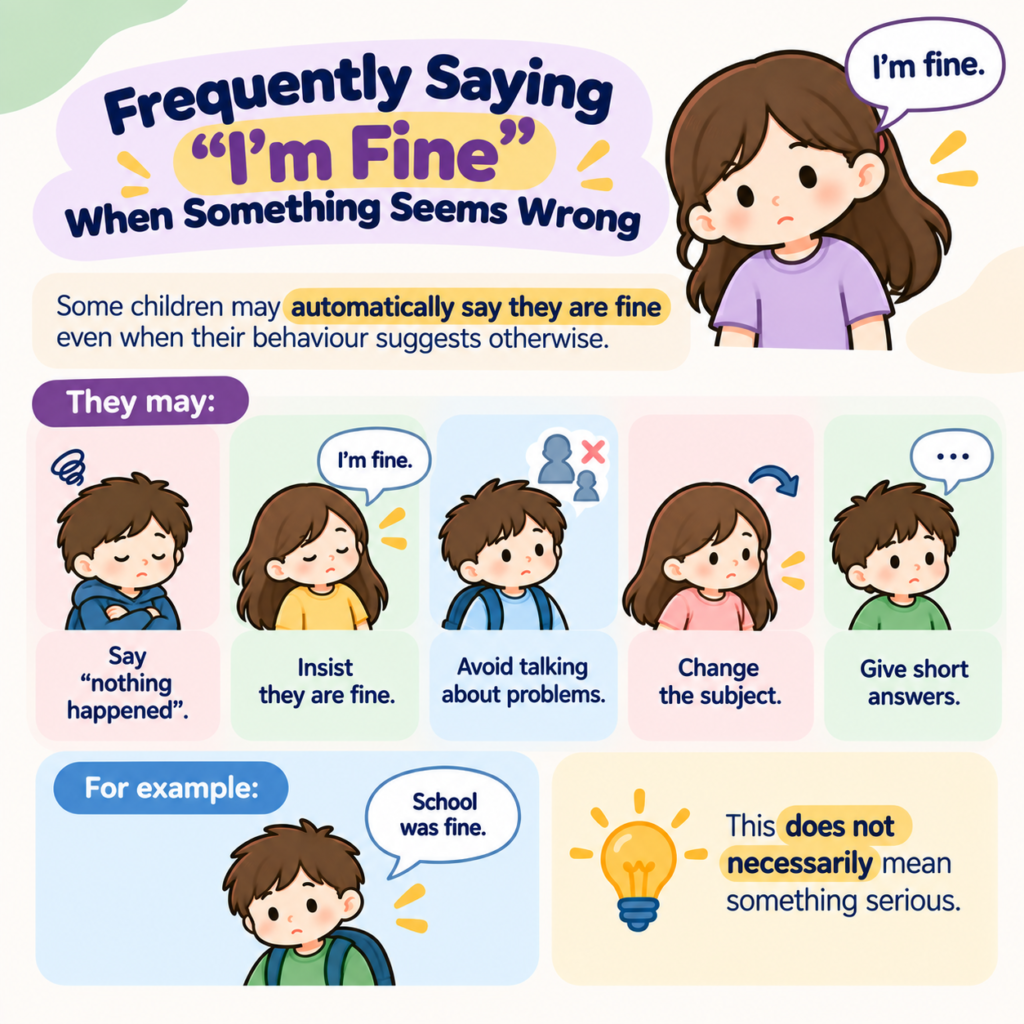
Some children may automatically say they are fine when parents ask how they feel, even when their behaviour suggests otherwise.
They may:
🌸Say “nothing happened” after a difficult day.
🌸Insist they are fine despite appearing upset.
🌸Avoid talking about problems with friends or teachers.
🌸Change the subject when asked about their feelings.
🌸Give very short answers when discussing something upsetting.
For example, a child may come home unusually quiet after a disagreement with a classmate but insist that school was fine.
This does not necessarily mean the child is hiding something serious.
They may need more time to understand their feelings or may not know how to explain what happened.
2. Appearing Happy Around Others but Becoming Upset at Home
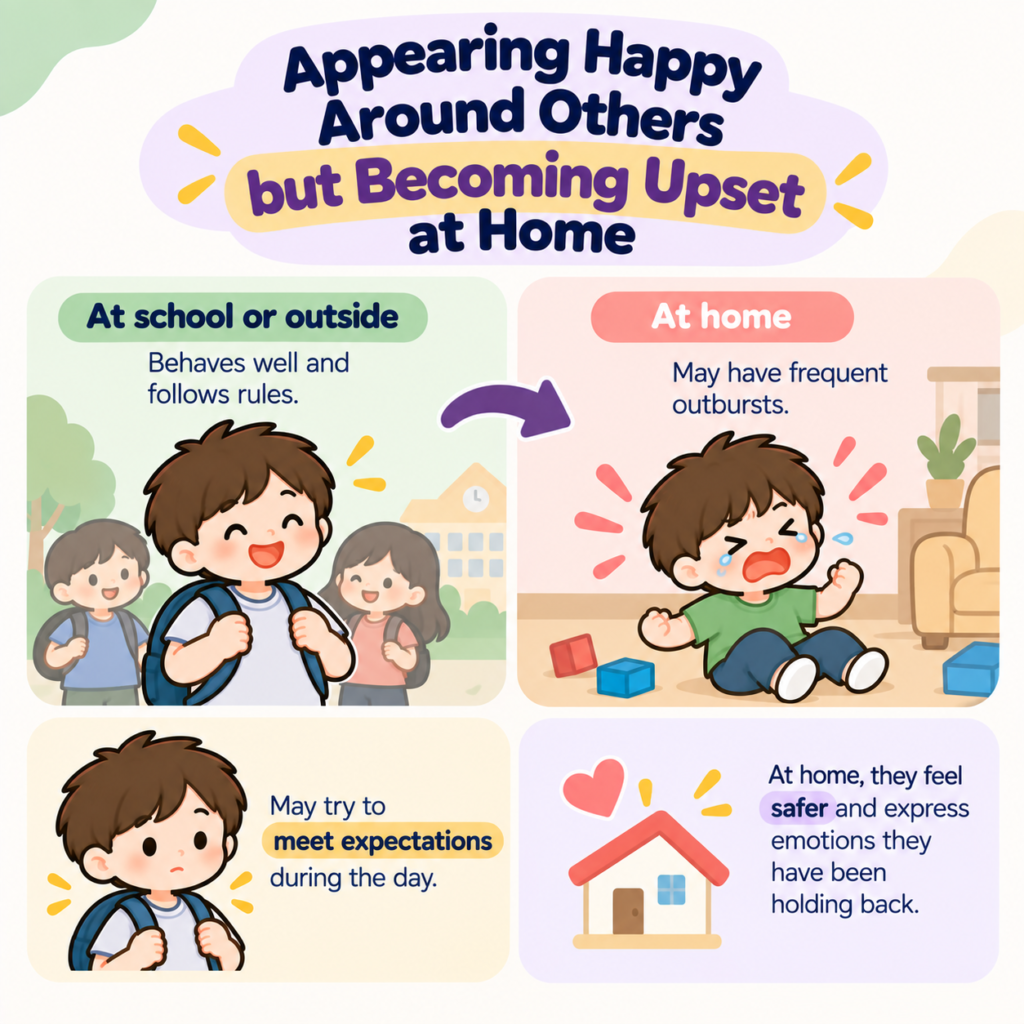
🌸Have you noticed that your child behaves well outside the home but experiences frequent emotional outbursts after returning home?
🌸 Some children put considerable effort into meeting expectations throughout the day. They may try to follow rules, get along with classmates and avoid showing frustration in front of others.
🌸Once they are in a familiar environment, they may feel more comfortable expressing emotions they have been holding back.
3. Trying Too Hard to Please Others
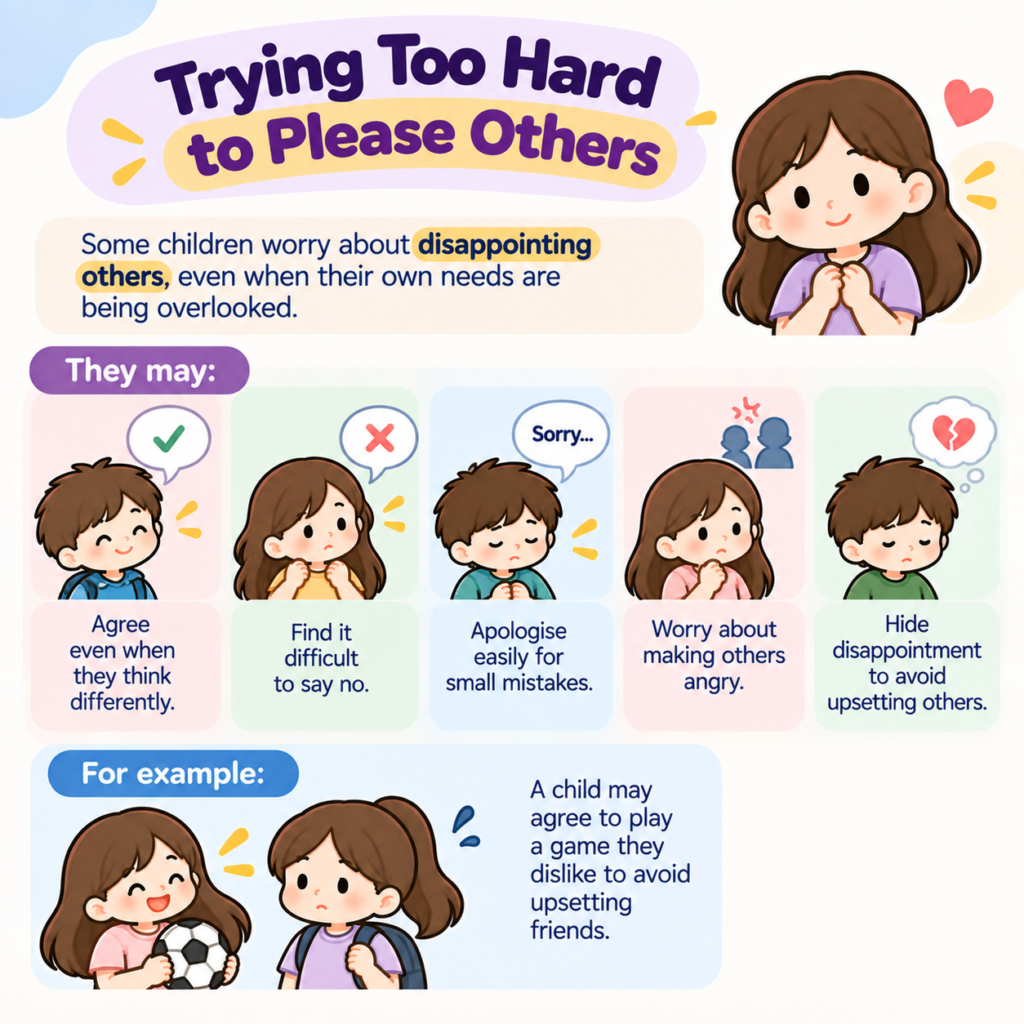
Some children become very concerned about keeping other people happy.
They may worry about disappointing parents, teachers or friends, even when their own needs are being overlooked.
They may:
🌸Agree with others despite having a different opinion.
🌸Find it difficult to say no.
🌸Apologise excessively for small mistakes.
🌸Worry about making other people angry.
🌸Hide disappointment to avoid upsetting someone.
For example, a child may agree to play a game they dislike because they are afraid their friends will stop including them if they disagree.
4. Hiding Sadness, Fear or Frustration
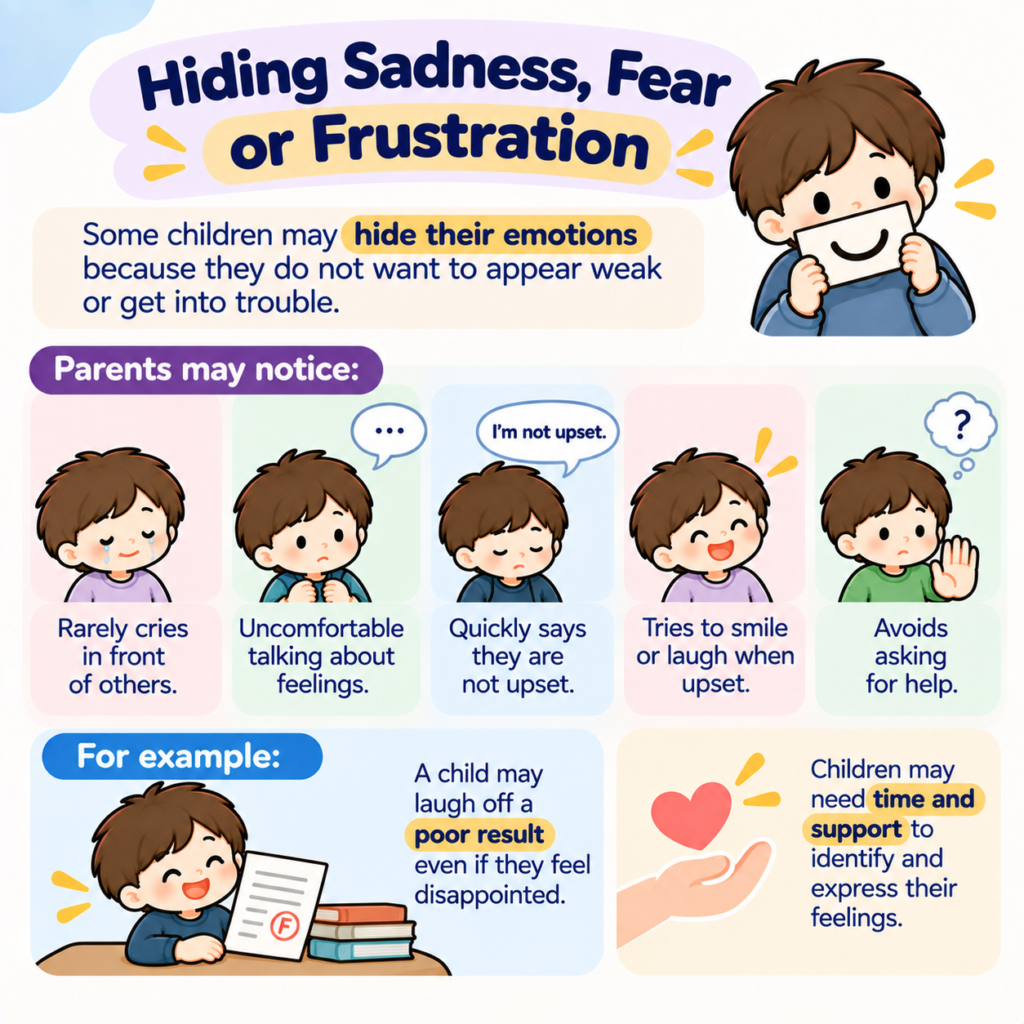
Some children may believe that certain emotions are unacceptable.
They may try to hide their sadness because they do not want to appear weak, or suppress their frustration because they fear getting into trouble.
Parents may notice that their child:
🌸Rarely cries in front of others but appears distressed in private.
🌸Becomes uncomfortable when discussing difficult feelings.
🌸Quickly says they are not upset after showing signs of distress.
🌸Tries to smile or laugh when discussing something painful.
🌸Avoids asking for help when facing a difficult situation.
For instance, a child who struggles with schoolwork may laugh off a poor result even though they feel disappointed or worried about what others will think.
Children may need time and support to identify what they are feeling before they can communicate it clearly.
5. Showing Signs of Stress Without Explaining Why
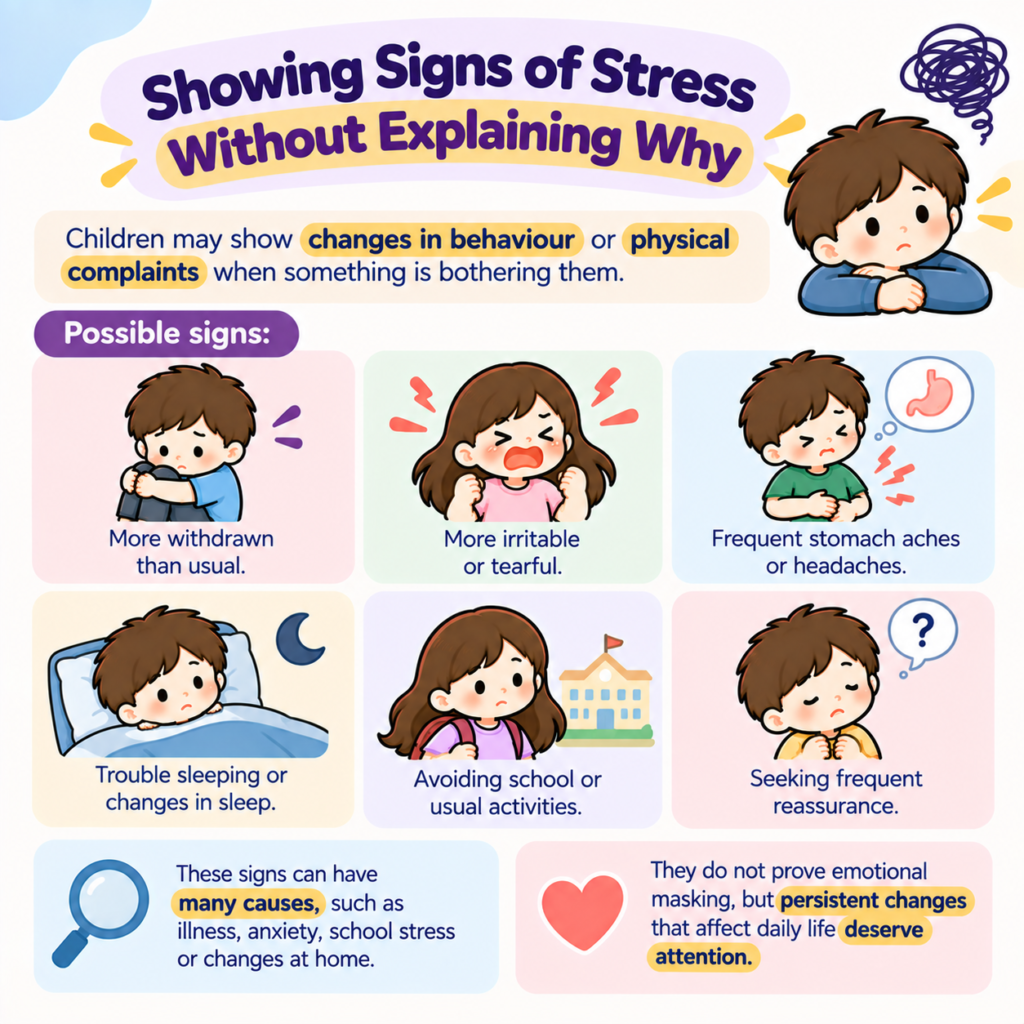
Children do not always have the words to explain emotional difficulties.
Sometimes, changes in behaviour or physical complaints may be the first indication that something is bothering them.
Possible signs include:
🌸Becoming more withdrawn than usual.
🌸Increased irritability or tearfulness.
🌸Frequent complaints of stomach aches or headaches.
🌸Difficulty sleeping or changes in sleep patterns.
🌸Avoiding school, social activities or previously enjoyed activities.
🌸Seeking frequent reassurance from adults.
These signs can have many different causes, including physical illness, anxiety, school-related stress or changes in a child’s environment.
They do not prove that a child is emotionally masking. However, persistent changes that affect daily life deserve attention.
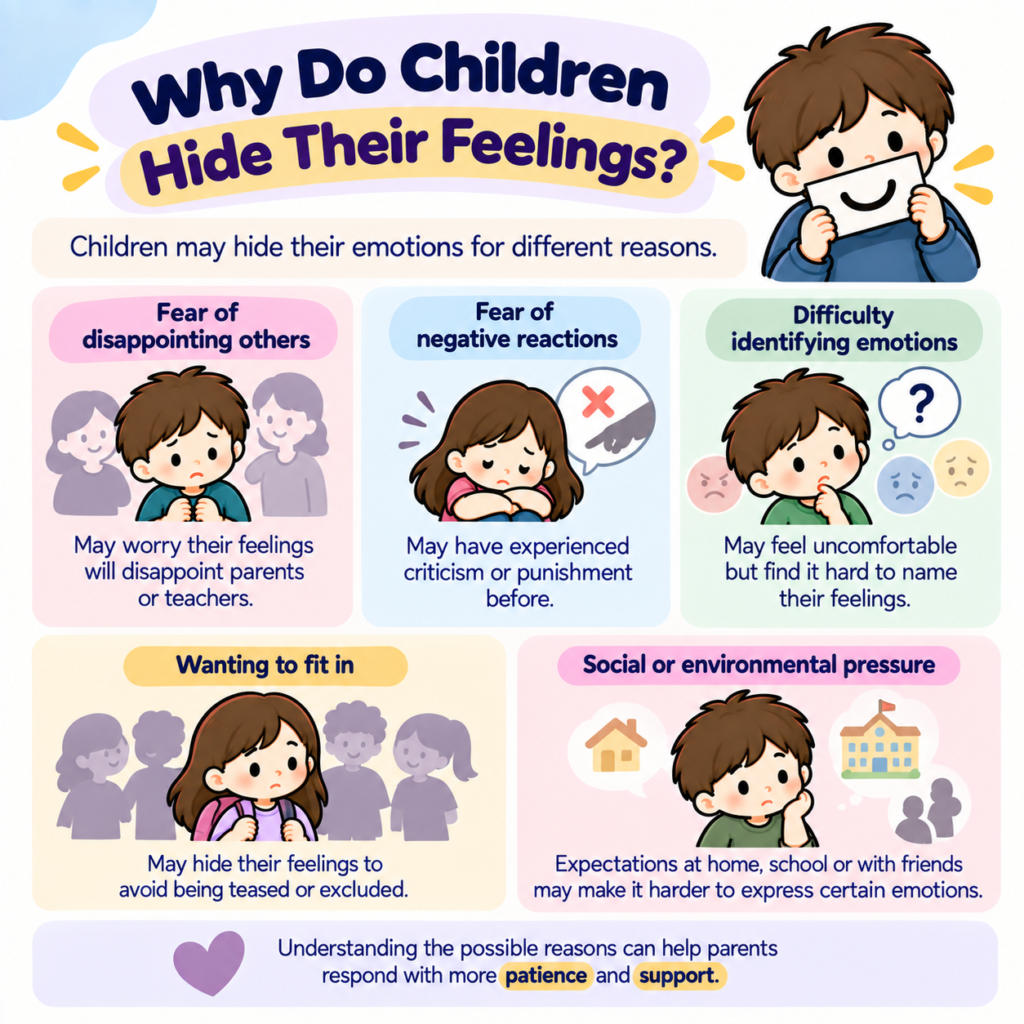
Why Do Children Hide Their Feelings?
There is no single reason why children may hide their emotions. Their behaviour can be influenced by several factors, including:
1. Fear of disappointing others
Children who place high expectations on themselves may worry that expressing difficult emotions will disappoint their parents or teachers.
2. Fear of negative reactions
If children have experienced criticism, punishment or dismissal when expressing their feelings, they may become reluctant to share them.
3. Difficulty identifying emotions
Some children know that they feel uncomfortable but cannot explain whether they are angry, embarrassed, anxious or disappointed.
4. Wanting to fit in
Children may hide their feelings to avoid being teased, excluded or perceived as different from their peers.
5. Social or environmental pressure
Expectations at home, school or among friends may influence how comfortable children feel expressing certain emotions.
Understanding the possible reasons behind a child’s behaviour can help parents respond with greater patience and compassion.
What Can Parents Do to Help a Child Express Their Feelings?
Parents do not need to force children to talk about every emotion. Instead, they can gradually create an environment where children feel safe expressing themselves.
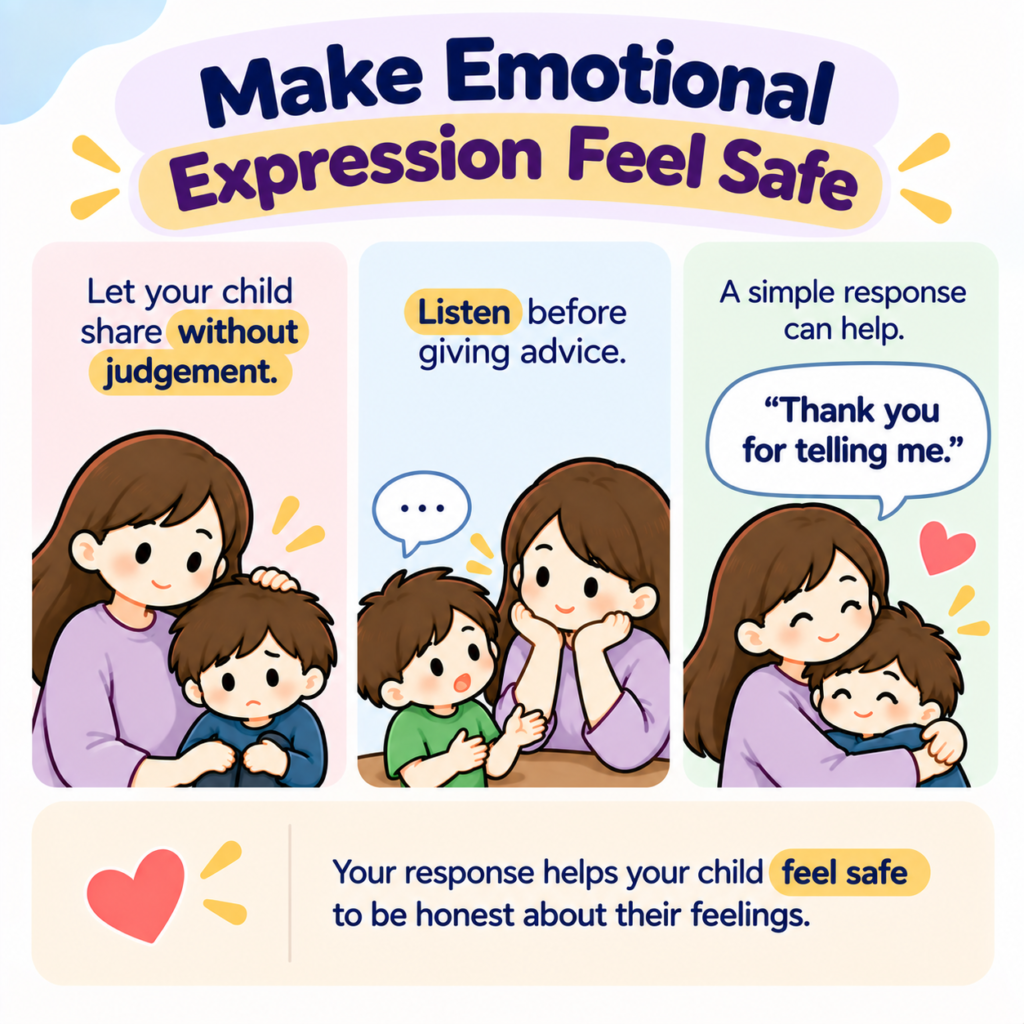
1. Make Emotional Expression Feel Safe
Let your child know that they can talk about difficult experiences without being judged or immediately criticised.
When your child shares something upsetting, listen before offering advice or solutions.
You can say, “Thank you for telling me. I’m glad you shared that with me.”
Your response can help your child learn that honesty and emotional expression are welcomed.
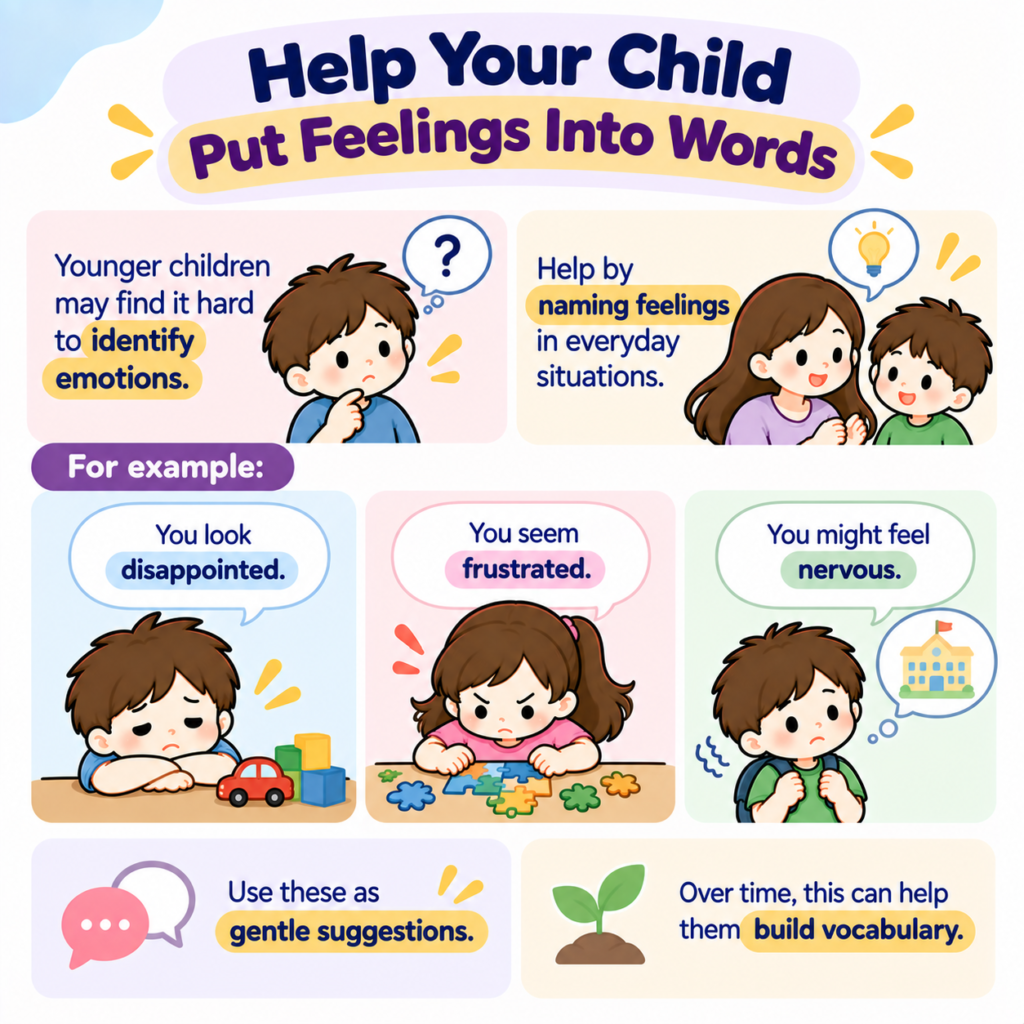
2. Help Your Child Put Feelings Into Words
Younger children may struggle to identify and describe their emotions.
You can help by naming feelings during everyday situations.
For example:
🌸“You look disappointed that playtime is over.”
🌸“You seem frustrated because the puzzle is difficult.”
🌸“You might feel nervous about meeting your new teacher.”
Use these statements as gentle possibilities rather than telling your child what they must be feeling.
Over time, this may help children build the vocabulary they need to communicate their experiences.
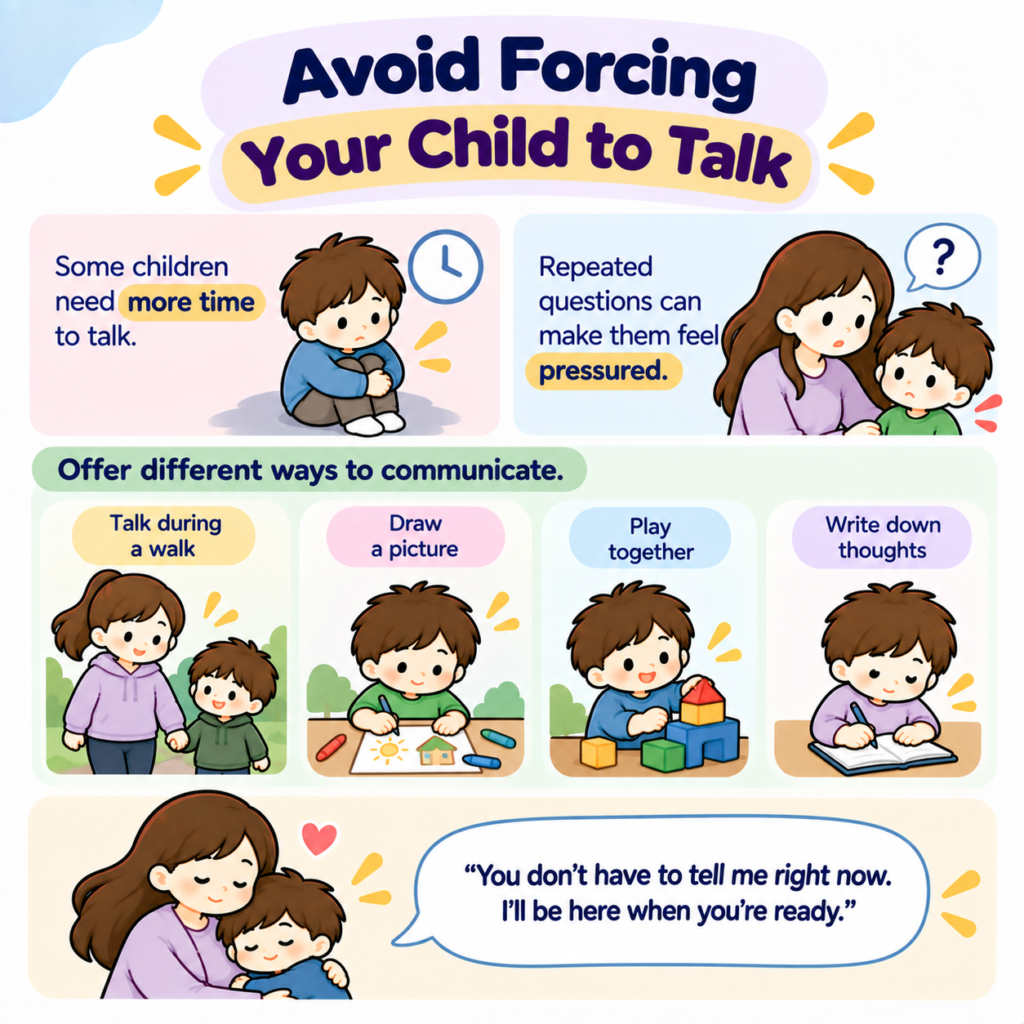
3. Avoid Forcing Your Child to Talk
Some children need more time before they feel comfortable discussing a difficult experience.
Repeated questioning may make them feel pressured, particularly when they do not yet understand their own emotions.
Instead, offer a choice of ways to communicate.
Your child might prefer talking during a walk, drawing a picture, playing together or writing down their thoughts.
You can say, “You don’t have to tell me right now. I’ll be here when you’re ready.”
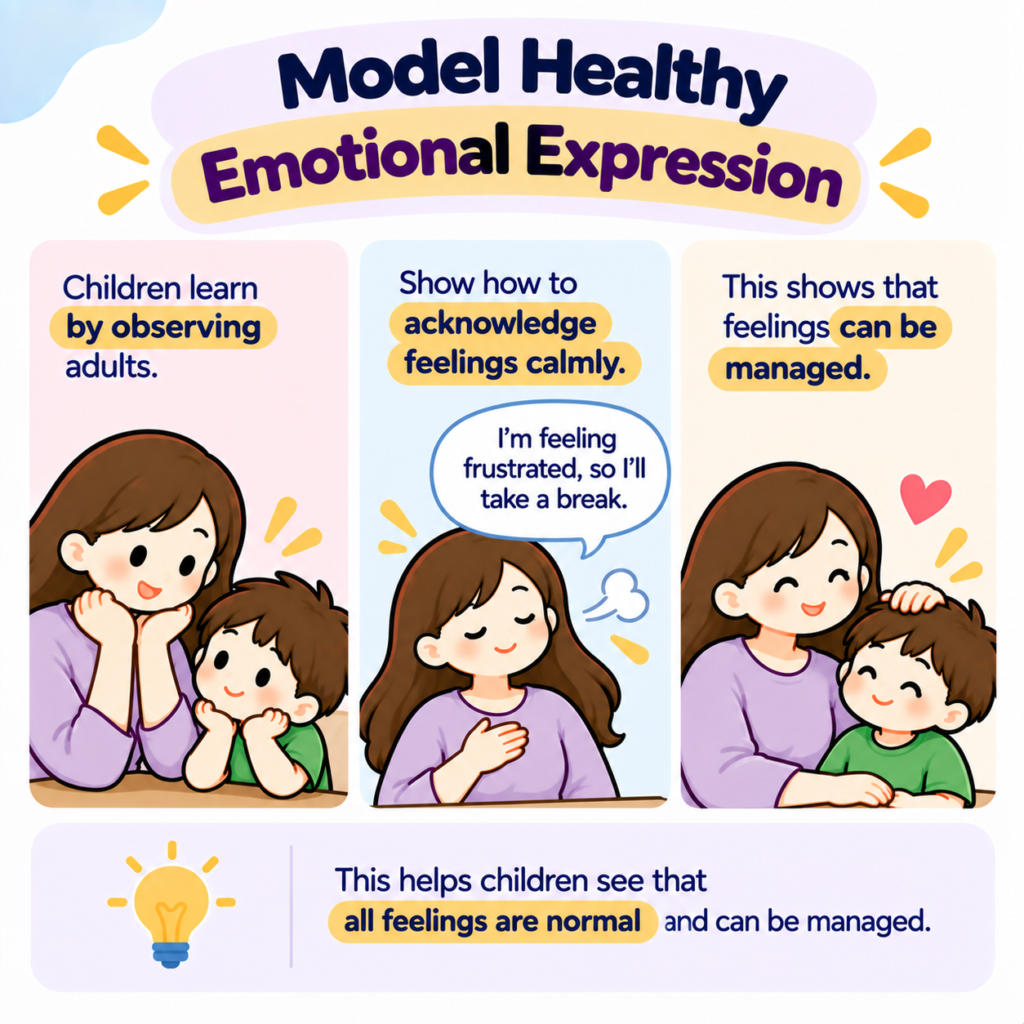
4. Model Healthy Emotional Expression
Children learn about emotions partly by observing how adults manage their own feelings.
When appropriate, demonstrate how to acknowledge emotions calmly.
For example, you might say, “I’m feeling frustrated because my plans changed, so I’m going to take a few minutes to calm down.”
This teaches children that experiencing difficult emotions is normal and that feelings can be managed without hiding them or acting aggressively.
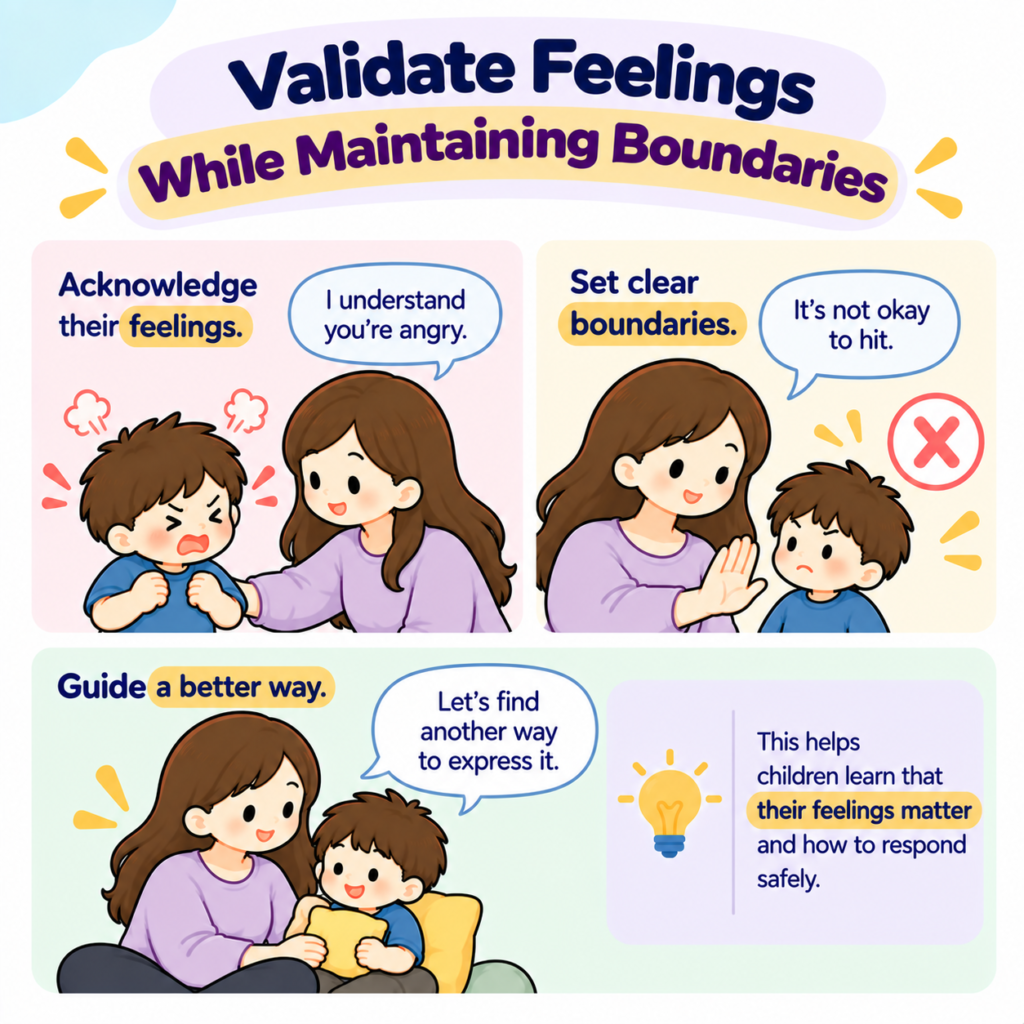
5. Validate Feelings While Maintaining Boundaries
Accepting your child’s feelings does not mean allowing every behaviour.
For example, you can acknowledge anger while making it clear that hitting is not acceptable.
Try saying, “I understand that you’re angry. It’s okay to feel angry, but I won’t let you hit anyone. Let’s find another way to express it.”
This helps children understand that their emotions matter while learning safe and appropriate ways to respond.
When Should Parents Seek Professional Help?
Not every child who keeps their feelings private needs professional intervention.
Some children are naturally more reserved or prefer to process emotions independently.
However, parents may wish to seek professional guidance if:
🌸Your child consistently appears distressed but finds it difficult to communicate their feelings.
🌸You notice persistent changes in mood, behaviour or social interaction.
🌸Your child frequently experiences anxiety or worries excessively about disappointing others.
🌸Your child avoids school, friendships or activities they previously enjoyed.
🌸Sleep, appetite, relationships or daily functioning are affected.
🌸Your child seems unable to ask for help even when they are struggling.
🌸You are concerned that your child does not feel safe expressing emotions at home or school.
A qualified clinical psychologist can help explore the factors contributing to a child’s emotional difficulties and identify appropriate strategies to support them.
Depending on the child’s needs, support may also involve parents, teachers or other relevant professionals.
Seeking help does not mean that parents have failed. It can be an important step towards understanding a child’s needs and helping them feel supported.
What Should Parents Remember?
Emotional masking is not always easy to recognise because a child may appear happy, cooperative or well-adjusted on the outside.
However, a child’s outward behaviour does not always tell the whole story.
Parents can support their child’s emotional well-being by remembering that:
🌸Children may express emotions differently depending on their age, personality and experiences.
🌸Saying “I’m fine” does not necessarily mean a child is hiding their feelings.
🌸Persistent changes in mood, behaviour or daily functioning deserve attention.
🌸Children need opportunities to express emotions without fear of criticism or rejection.
🌸Listening, validating feelings and modelling healthy emotional expression can help build trust.
🌸Professional support may be helpful when emotional difficulties persist or interfere with everyday life.
Your Child Does Not Have to Hide Their Feelings to Be Loved
Children do not need to be happy all the time to be doing well.
They need to know that they can experience sadness, anger, fear, disappointment and uncertainty without losing the love and support of the people around them.
By creating a safe space for emotional expression, parents can help children develop a better understanding of their feelings, communicate their needs and build healthier relationships.
If you are concerned about your child’s emotional well-being or behaviour, speaking with a qualified professional can help you better understand what your child may be experiencing and how to support them.
🌟 Stay Connected with Us! We love sharing tips, insights, and inspiring stories about children’s growth and mental wellbeing.
💙 Follow us on Instagram and Facebook for more updates and parenting advice.
Join our community and let’s grow together. One positive step at a time!

References
Child Mind Institute. (2026). When School Stress Is Too Much: Supporting Kids With Academic Anxiety.
Child Mind Institute. https://childmind.org/article/understanding-academic-anxiety/
Working Hours
Tuesday to Saturday – 8.30am to 6pm
Monday & Sunday – Closed
Please also subscribe us at
Contact Us
Discover Our Team!
📞+60102502833
firststepdevelopmentcentre@gmail.com
B1-7, Plaza Damas 3, Jalan Sri Hartamas 1, 50480 Kuala Lumpur.
Copyright 2025. Firststep Child Development Sdn Bhd. All rights reserved.