



Dyslexia in Children: 6 Signs Parents Should Know & How to Help
Many parents wonder:
“Why does my child struggle to read even though we practise regularly?”

Your child may read slowly, have difficulty recognising words, or become frustrated during reading and homework.
While children develop reading skills at different rates, some may experience persistent difficulties that require additional support.
One possible reason may be Dyslexia.
Understanding the early signs can help parents respond with clarity, support, and the right intervention at the right time.
What Is Dyslexia?
Dyslexia is a learning difficulty that mainly affects reading and spelling.
A child with dyslexia may find it harder to:
✿ Connect letters with sounds
✿ Read words accurately and fluently
✿ Read unfamiliar words
✿ Spell consistently
Dyslexia is not a sign of low intelligence or laziness.
A child may have strong ideas, understand lessons well, and communicate confidently but still experience significant difficulties when asked to read independently.
Dyslexia can look different from child to child. Some common signs parents and teachers may notice include:
1. Difficulty Learning Letter Sounds
Your child may struggle to remember which sounds different letters make or connect letters with the correct sounds.
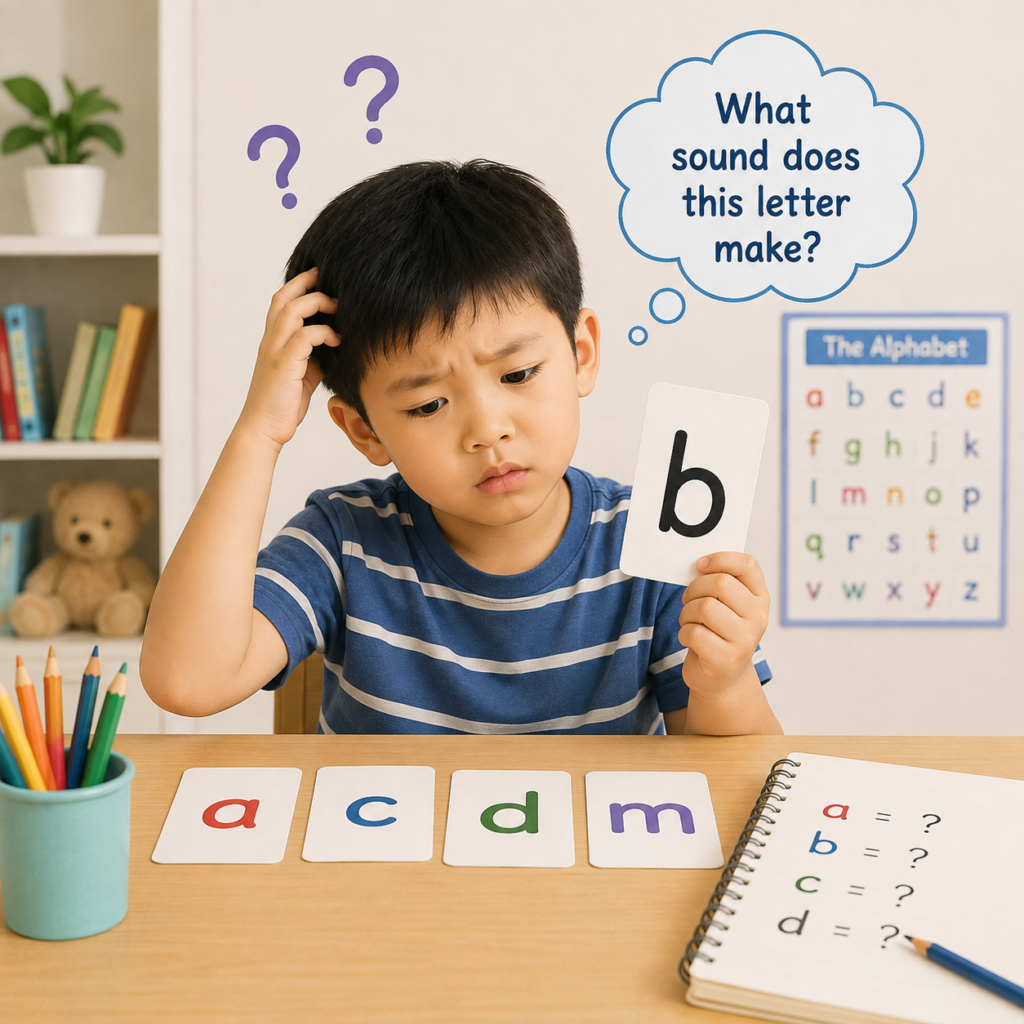
For example, even after practising, they may forget the sound a letter makes or have difficulty blending individual sounds together to form a word.
They may find reading words such as:
c-a-t → cat
more difficult than expected.
2. Reads Slowly or With Great Effort
Reading may take a lot of effort for some children.
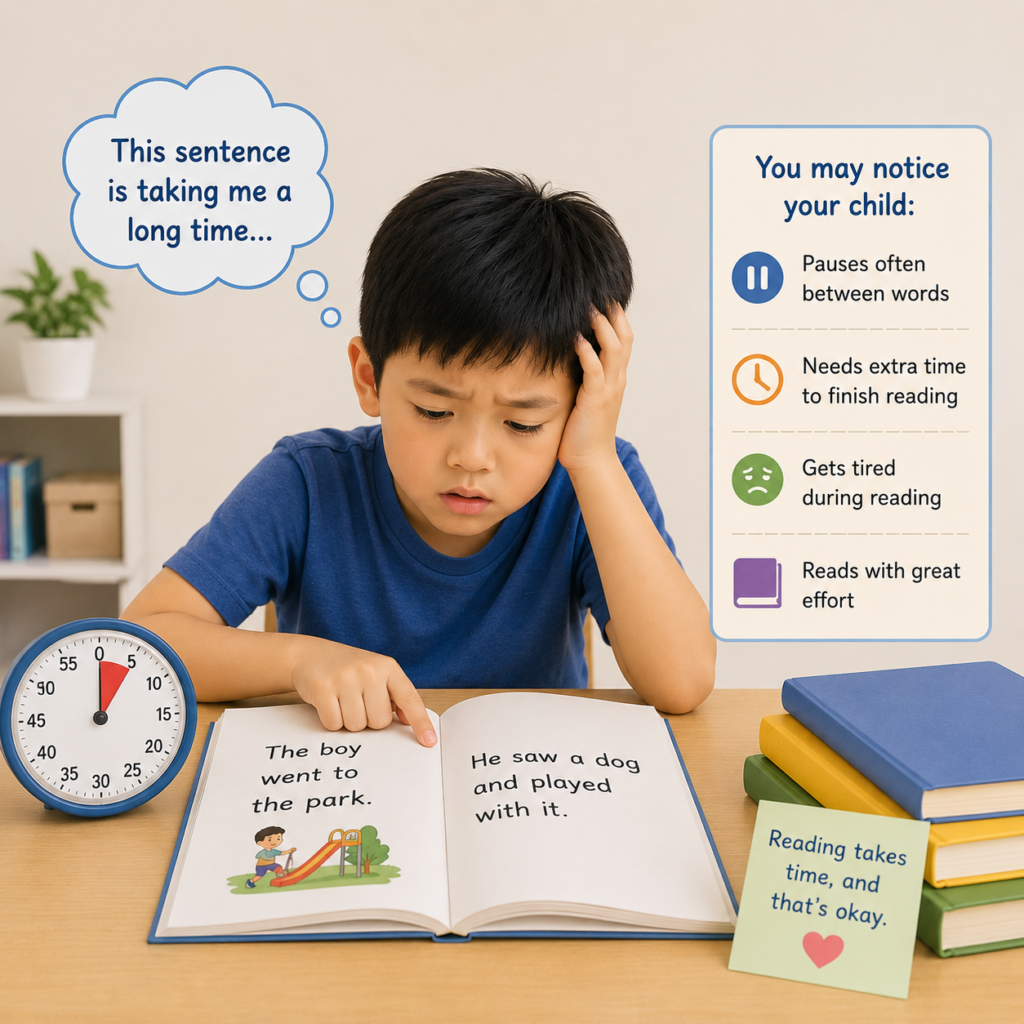
Your child may:
- Pause frequently between words
- Sound out many words individually
- Need extra time to finish a short passage
- Become tired during reading
For example, your child may take several minutes to read a short paragraph that other children can read more easily.
3. Has Difficulty Reading New or Unfamiliar Words
Your child may be able to recognise familiar words but struggle when they encounter a new word.
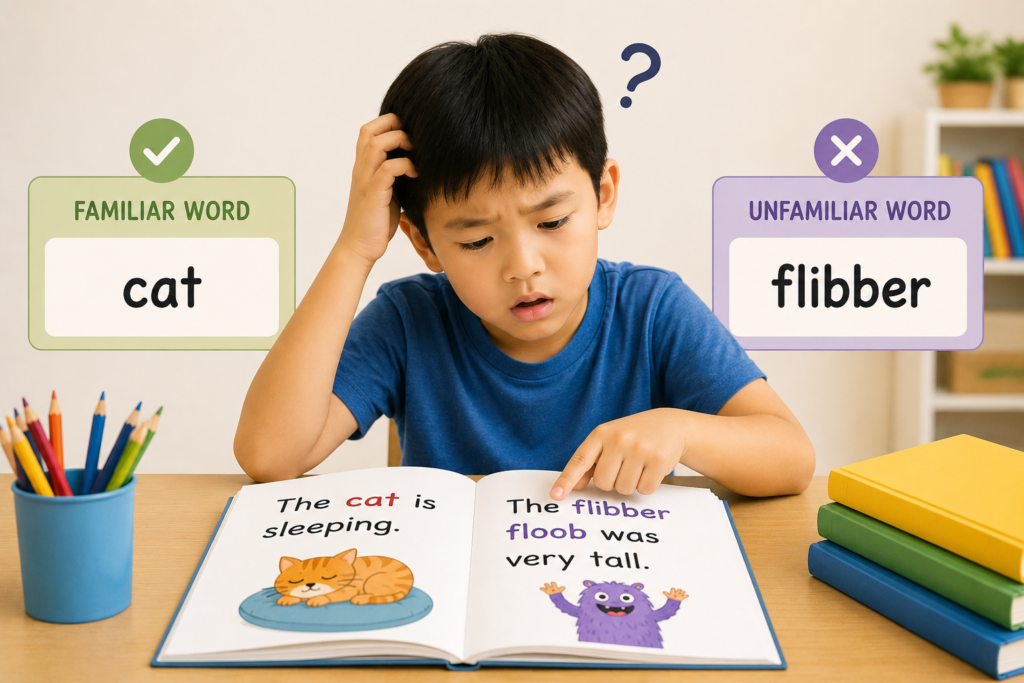
They may:
- Guess the word based on the first letter
- Skip difficult words
- Take a long time to sound out a word
- Replace the word with another familiar word
For example, they may read a familiar word such as “cat” easily but struggle to work out a new word they have not seen before.
4. Frequent Spelling Difficulties
Spelling may also be challenging because reading and spelling both involve understanding the relationship between letters and sounds.
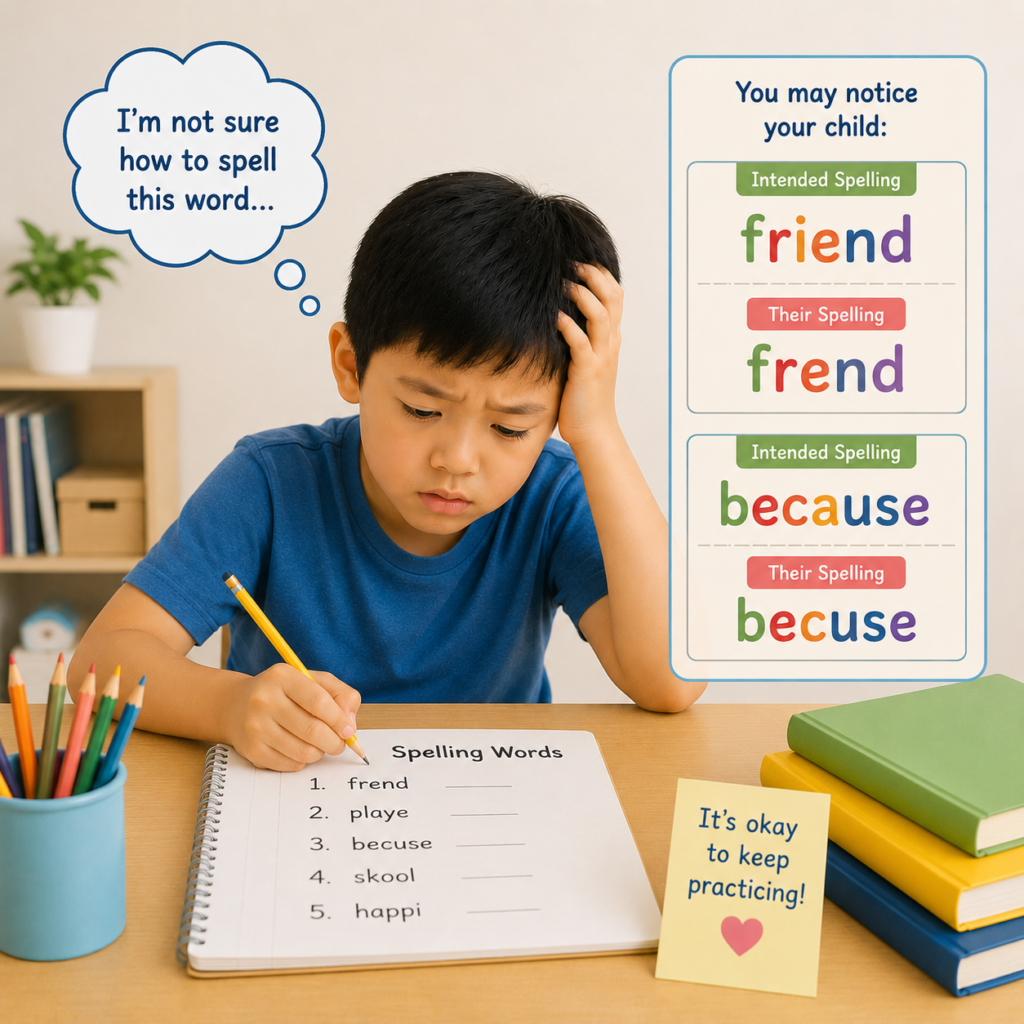
- Leave out letters
- Confuse similar sounds
- Add extra letters
- Spell the same word differently on different occasions
For example, a child may spell the same word correctly one day but struggle to spell it again the next day.
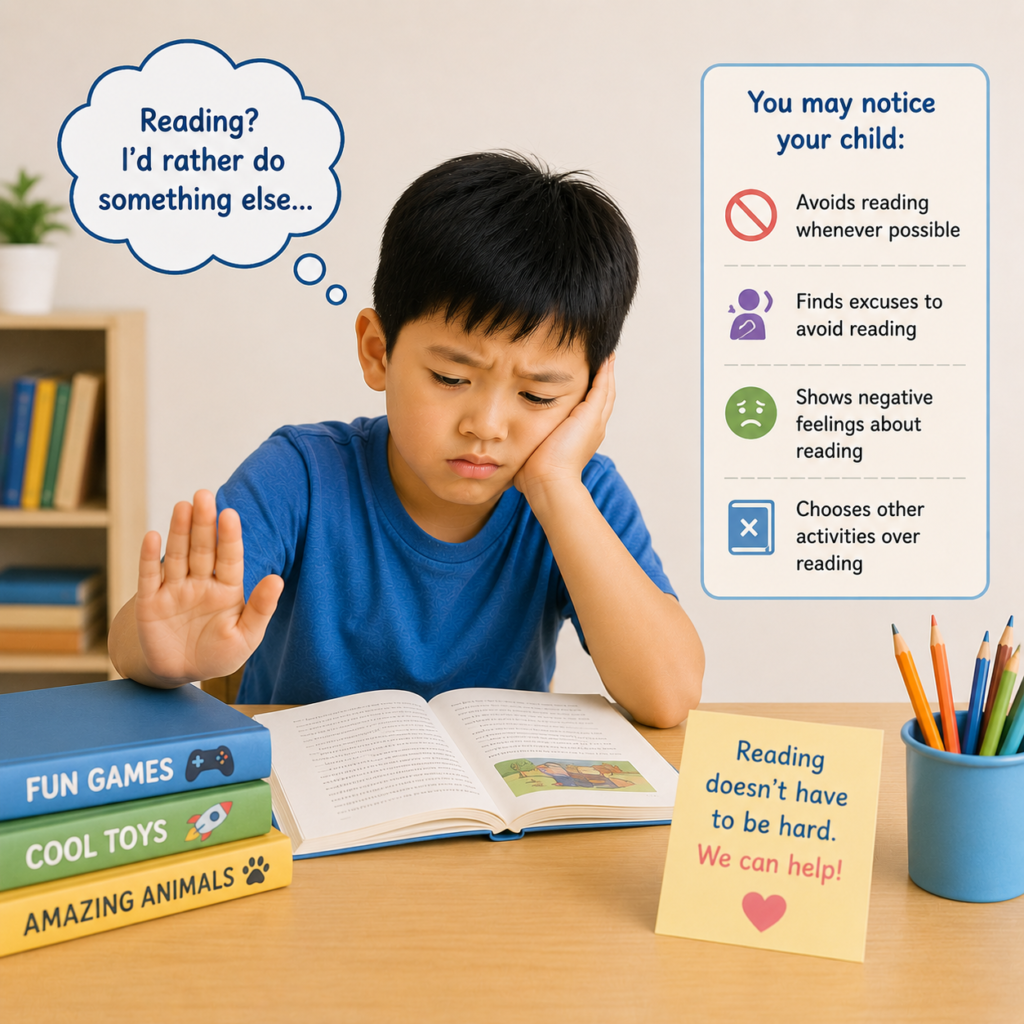
5. Avoids Reading Activities
When reading feels difficult, tiring, or frustrating, some children may begin to avoid it.
Your child may:
- Refuse to read aloud
- Complain when asked to do reading homework
- Say that reading is “too hard”
- Give up quickly when they see an unfamiliar word
This does not necessarily mean your child is lazy or uninterested. Reading may genuinely require much more effort for them.
6. Understands Better When Information Is Read Aloud
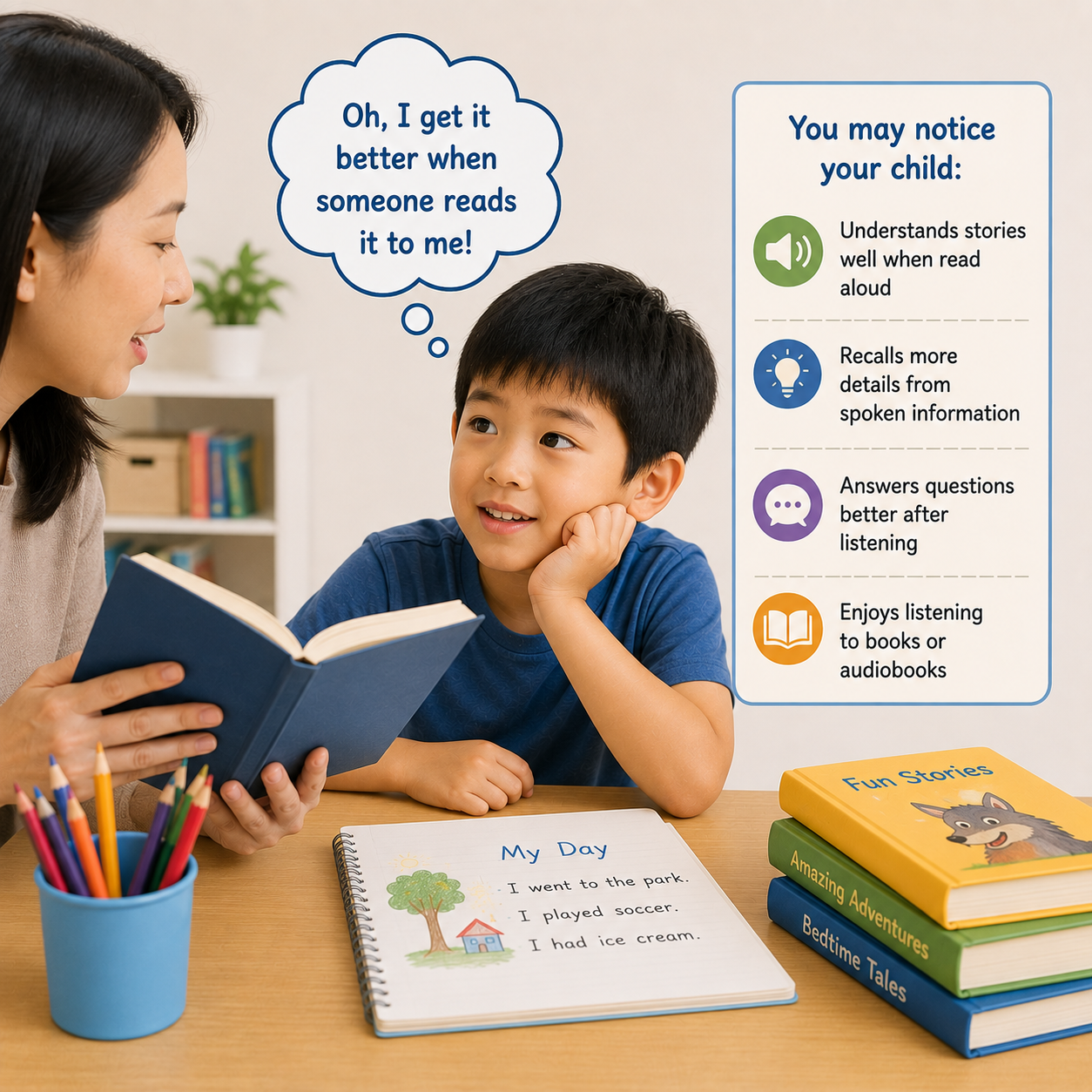
Some parents may notice:
“My child understands the story when I read it, but struggles when reading it alone.”
For example, your child may answer questions correctly after listening to a story but have difficulty understanding the same story when they need to read it independently.
They may understand lessons well when the teacher explains them verbally but struggle when asked to read instructions on their own.
6 Ways Parents Can Help
1. Keep Reading Sessions Short
✿ Long reading sessions can feel overwhelming when a child already finds reading difficult.
✿ Try shorter and more manageable sessions.
✿ For example:
10–15 minutes of focused reading with a short break may be more helpful than forcing your child to read for an hour.
✿ The goal is to practise regularly without making reading feel overwhelming.
2. Read Together
✿ Your child does not always have to read alone.
✿ Try taking turns:
Parent reads one paragraph → Child reads the next paragraph.
✿You can also help with difficult words instead of waiting until your child becomes extremely frustrated.
✿ Reading together can make the activity feel less stressful and help your child continue enjoying stories.
3. Choose Books They Enjoy
✿ Children may be more willing to practise reading when the topic interests them.
For example, choose books about:
✿ Animals
✿ Dinosaurs
✿ Space
✿ Vehicles
✿ Sports
✿ Favourite characters
✿ Start with books that match your child’s current reading ability so that the text does not feel too difficult.
4. Give Them Time
✿ Try not to rush your child or immediately give them the answer.
✿ When they come across a difficult word, give them a moment to:
- Look at the letters
- Think about the sounds
- Try to sound out the word
✿ For example, instead of immediately saying the word, you can gently ask:
“Let’s look at the first sound together.”
✿ However, if your child is becoming very frustrated, it is okay to provide support and move on.
5. Praise Their Effort and Progress
✿ Focus on effort and improvement, not only on whether every word is read correctly.
✿ For example, you could say:
“I can see you worked hard to sound out that word.”
“You didn’t give up even though that word was difficult.”
“You read that sentence more smoothly today.”
✿ Specific encouragement can help children feel more confident and motivated to keep trying.
6. Seek Support When Needed
✿ If reading difficulties continue and affect your child’s learning or confidence, seeking further guidance may be helpful.
✿ A professional can help identify:
- Which aspects of reading are difficult
- Your child’s learning strengths
- Areas where additional support may be needed
- Appropriate next steps
✿ Understanding why your child is struggling is often the first step towards finding the right support.
When Should Parents Seek Professional Advice?
Consider seeking further advice if your child:
✿ Continues to struggle despite regular practice and support
✿ Avoids reading because it causes significant frustration
✿ Has persistent difficulties with spelling
✿ Takes significantly longer to complete reading tasks
✿ Finds unfamiliar words particularly difficult
✿ Is losing confidence in school or beginning to believe they are “not good at learning”
Having one or two of these signs does not necessarily mean a child has dyslexia. However, persistent difficulties that affect learning and everyday school activities may be worth exploring further.
Key Takeaway
❀ Every child learns at their own pace, but persistent reading difficulties should not simply be dismissed as laziness or a lack of effort.
❀ A child may be bright, creative, and able to understand lessons well, yet still find reading and spelling particularly challenging.
❀ If your child continues to struggle, understanding why can help you find the right support.
🌟 Stay Connected with Us! We love sharing tips, insights, and inspiring stories about children’s growth and mental wellbeing.
💙 Follow us on Instagram and Facebook for more updates and parenting advice.
Join our community and let’s grow together. One positive step at a time!

References
American Psychiatric Association. (2022). Diagnostic and statistical manual of mental disorders (DSM-5-TR).
Psychiatry.org; American Psychiatric Association. https://www.psychiatry.org/psychiatrists/practice/dsm
Working Hours
Tuesday to Saturday – 8.30am to 6pm
Monday & Sunday – Closed
Please also subscribe us at
Contact Us
Discover Our Team!
📞+60102502833
firststepdevelopmentcentre@gmail.com
B1-7, Plaza Damas 3, Jalan Sri Hartamas 1, 50480 Kuala Lumpur.
Copyright 2025. Firststep Child Development Sdn Bhd. All rights reserved.