



Dysgraphia in Children: Signs, Causes & Support for Writing Difficulties (2026)
“Is my child simply still developing their writing skills, or could their difficulties be related to dysgraphia?”
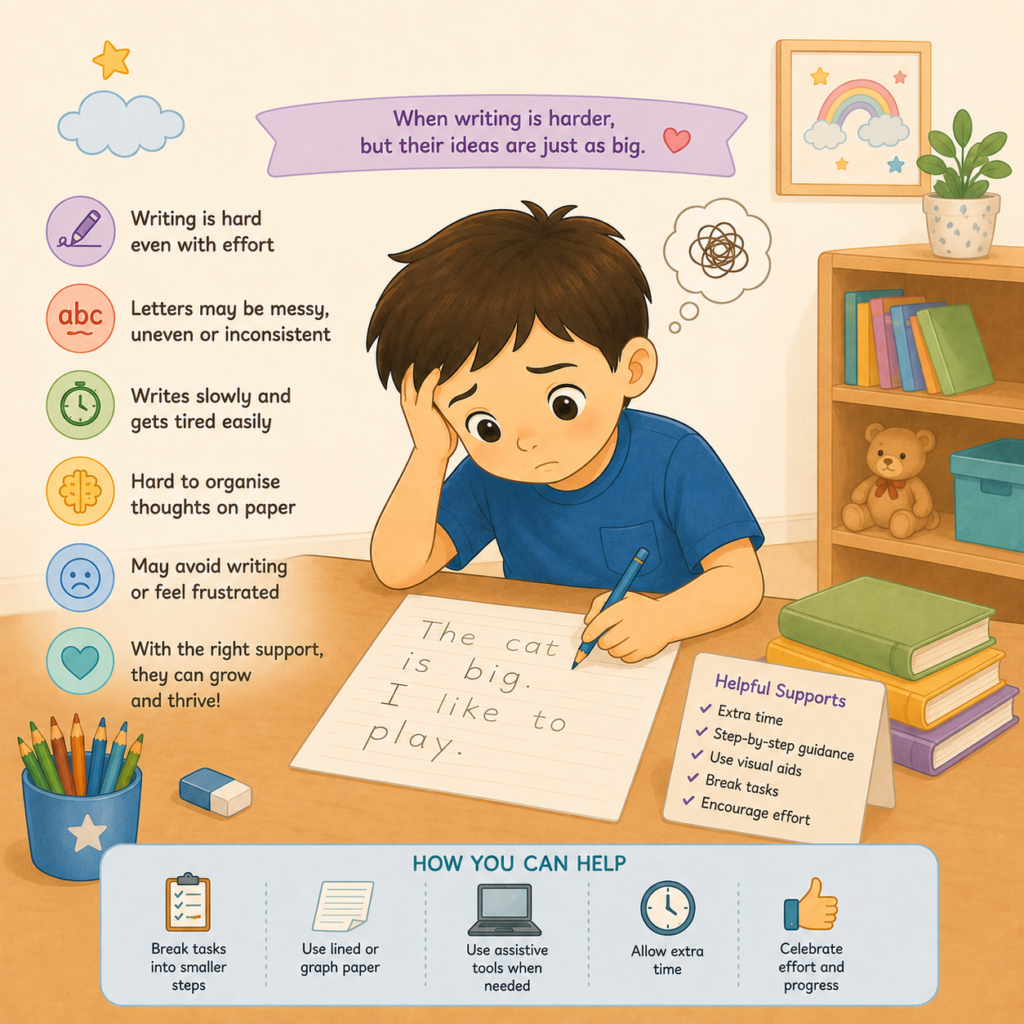
Every child develops writing skills differently. Some children may take longer to develop neat handwriting, while others may need more time and practice to organise their thoughts on paper.
However, when writing difficulties persist over time and significantly affect a child’s schoolwork or daily activities, they may be signs of an underlying writing difficulty such as Dysgraphia.
Recognising these signs early can help children receive the right support as soon as possible. Early support can help strengthen handwriting, written expression, learning skills, confidence, and participation in school activities.
Understanding the early signs can help parents respond with clarity, support, and the right intervention at the right time.
What Is Dysgraphia?
Dysgraphia is a learning difficulty that can affect a child’s ability to write clearly, efficiently, and comfortably.
Writing is much more than putting letters on paper. It requires children to coordinate several skills at the same time, including:
- Fine motor coordination
- Handwriting and letter formation
- Spelling
- Language skills
- Visual-motor coordination
- Working memory
- Planning and organisation
A child with dysgraphia may know exactly what they want to say but struggle to express those ideas through writing.
Importantly, dysgraphia is not a sign of laziness or low intelligence. A child may have strong ideas, understand lessons well, and communicate confidently but still experience significant difficulties when asked to write.
Dysgraphia can look different from child to child. Some common signs parents and teachers may notice include:
1. Difficult-to-Read Handwriting
The child’s handwriting may appear messy, uneven, or difficult to read, even when they have had sufficient practice.
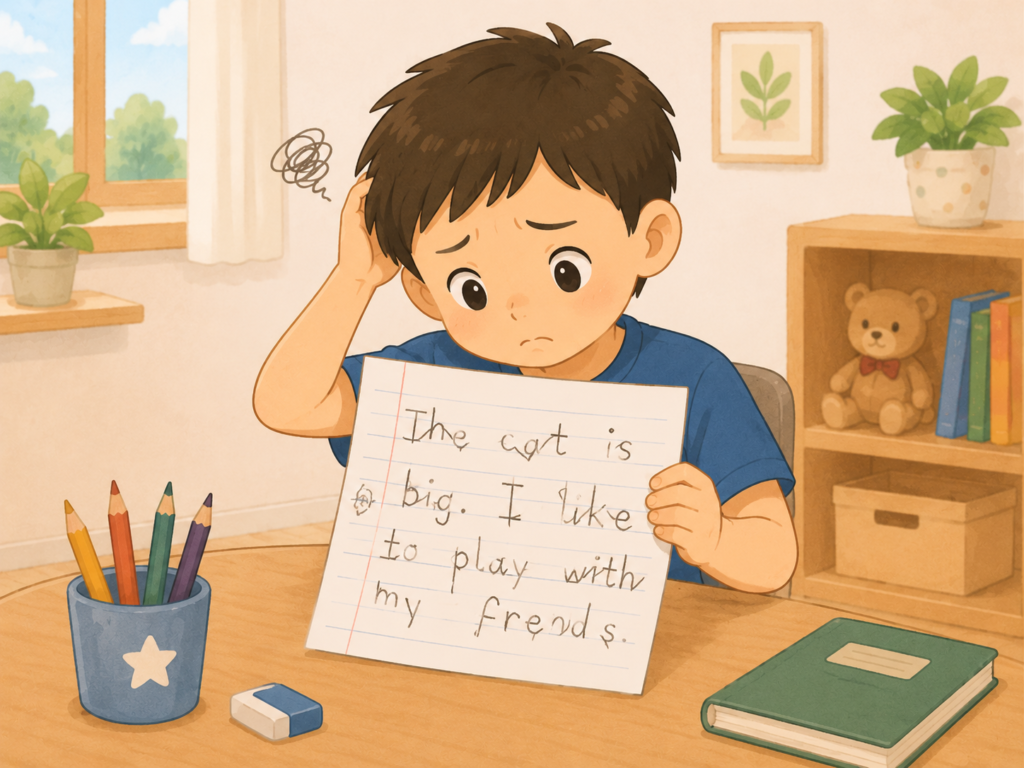
Children with dysgraphia may:
- Have messy or difficult-to-read handwriting
- Write letters unevenly or inconsistently
- Have difficulty keeping words aligned on the page
- Produce handwriting that remains difficult to read despite practice
2. Inconsistent Letter Size and Spacing
Letters may vary significantly in size, spacing between words may be inconsistent, or words may appear crowded together.
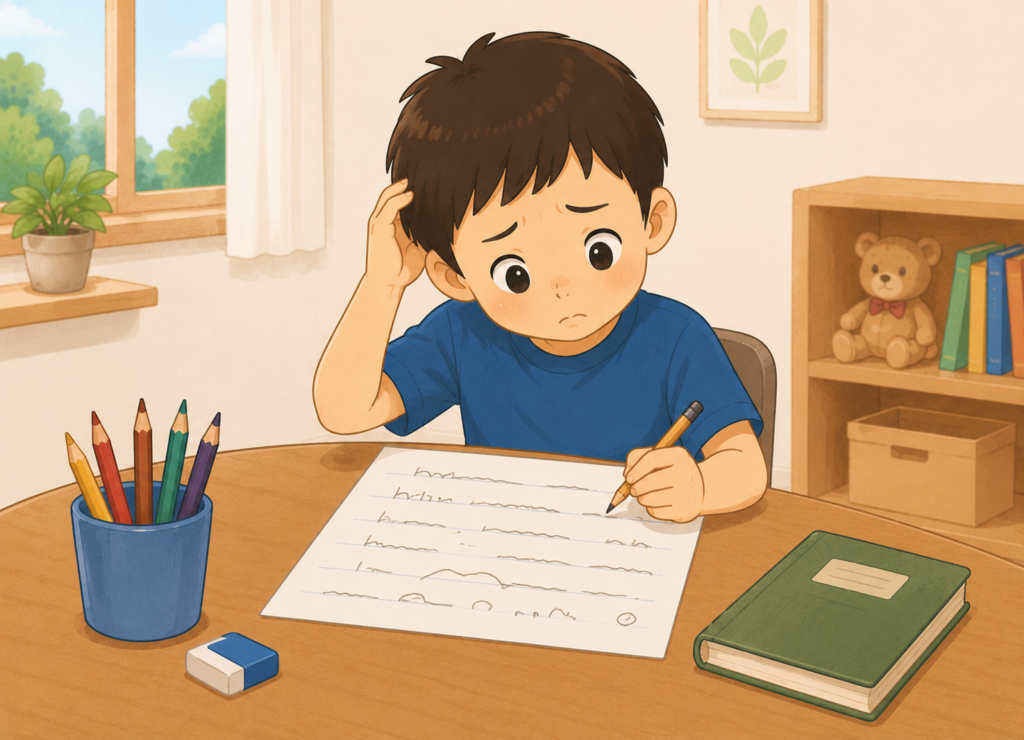
A child with dysgraphia may:
- Write letters that vary noticeably in size
- Leave uneven or inconsistent spaces between words
- Crowd words together or leave unusually large gaps
- Have difficulty keeping letters aligned on the writing line
Parents may notice that their child’s handwriting looks inconsistent or untidy, even when they understand the work and have had plenty of writing practice.
3. Difficulty Forming Letters
A child may struggle to remember how certain letters are formed or may frequently reverse, rewrite, or erase letters.
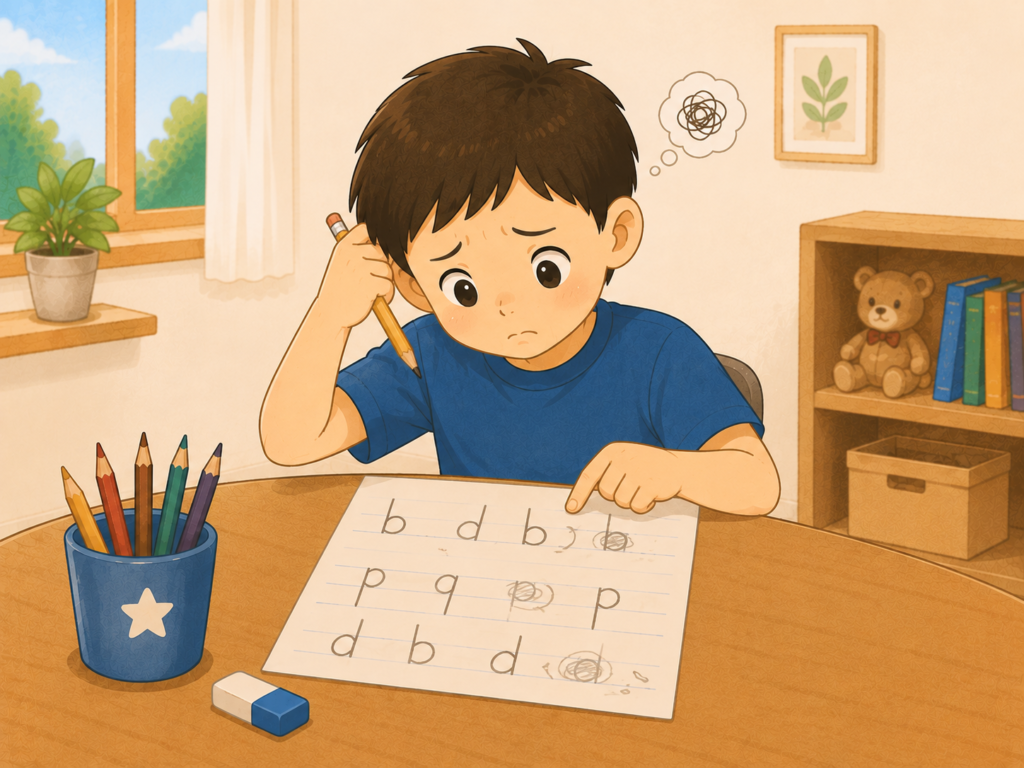
Some children with dysgraphia may:
- Have difficulty remembering how certain letters are formed
- Frequently reverse letters such as b/d or p/q
- Erase and rewrite letters repeatedly
- Need extra time and practice to form letters correctly
4. Slow Writing Speed
A child may struggle to remember how certain letters are formed or may frequently reverse, rewrite, or erase letters.
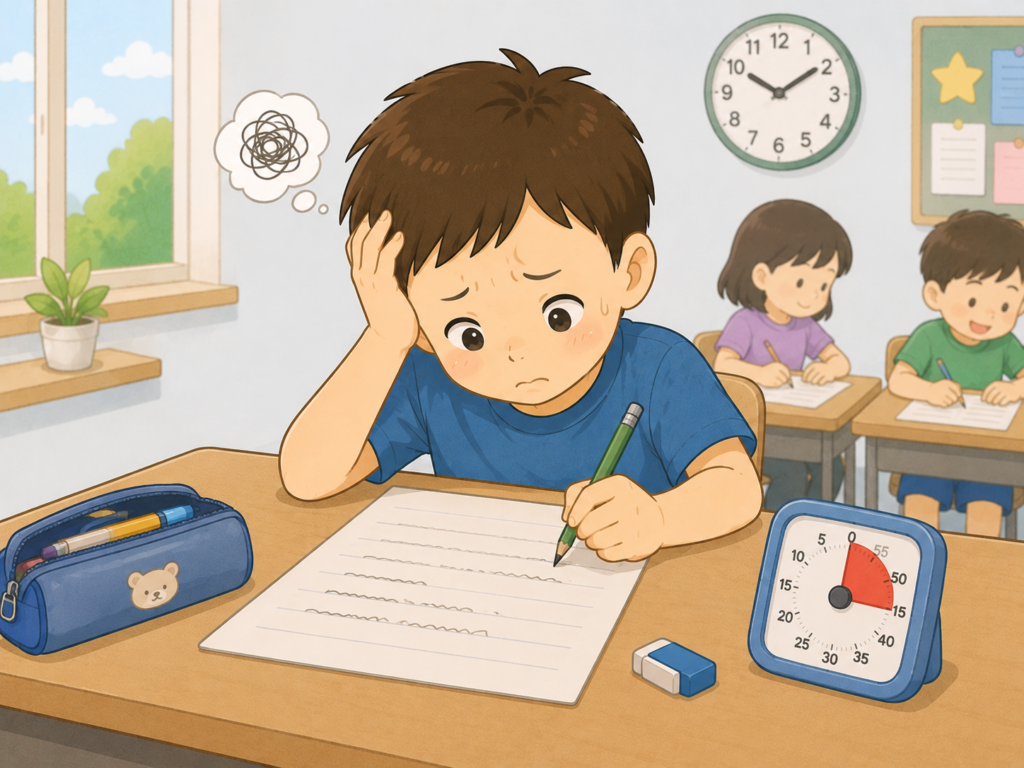
Writing speed can vary from child to child. Some children may simply take a little longer to complete written tasks. However, children with dysgraphia may experience more noticeable difficulties, such as:
- Taking much longer to finish writing tasks
- Struggling to keep up when copying from the board
- Taking longer to complete worksheets or written assignments
- Becoming tired or frustrated during extended writing
A child may understand the lesson but still struggle to show what they know because writing takes them significantly longer than expected.
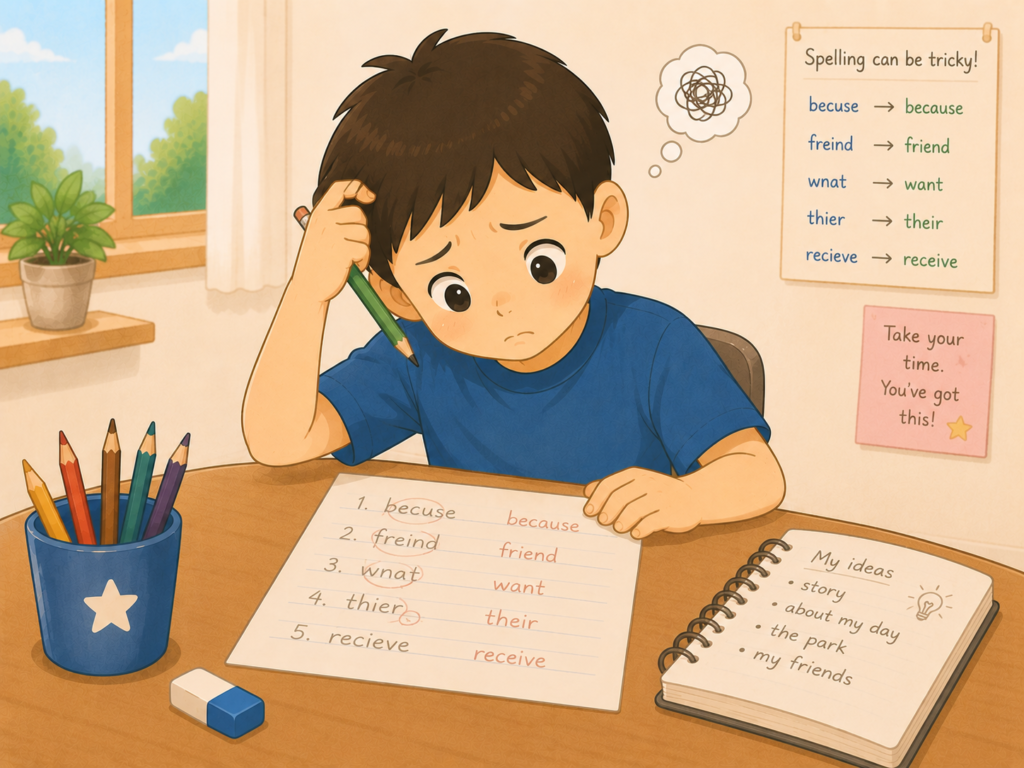
5. Frequent Spelling Difficulties
Some children may have difficulty spelling words consistently, particularly when they are focused on handwriting and getting their ideas onto paper at the same time.
However, children with dysgraphia may:
- Spell the same word differently from one attempt to another
- Make frequent spelling errors even with familiar words
- Leave out, add, or rearrange letters in words
- Focus so much on spelling and handwriting that it becomes difficult to express their ideas clearly
6. Difficulty Copying
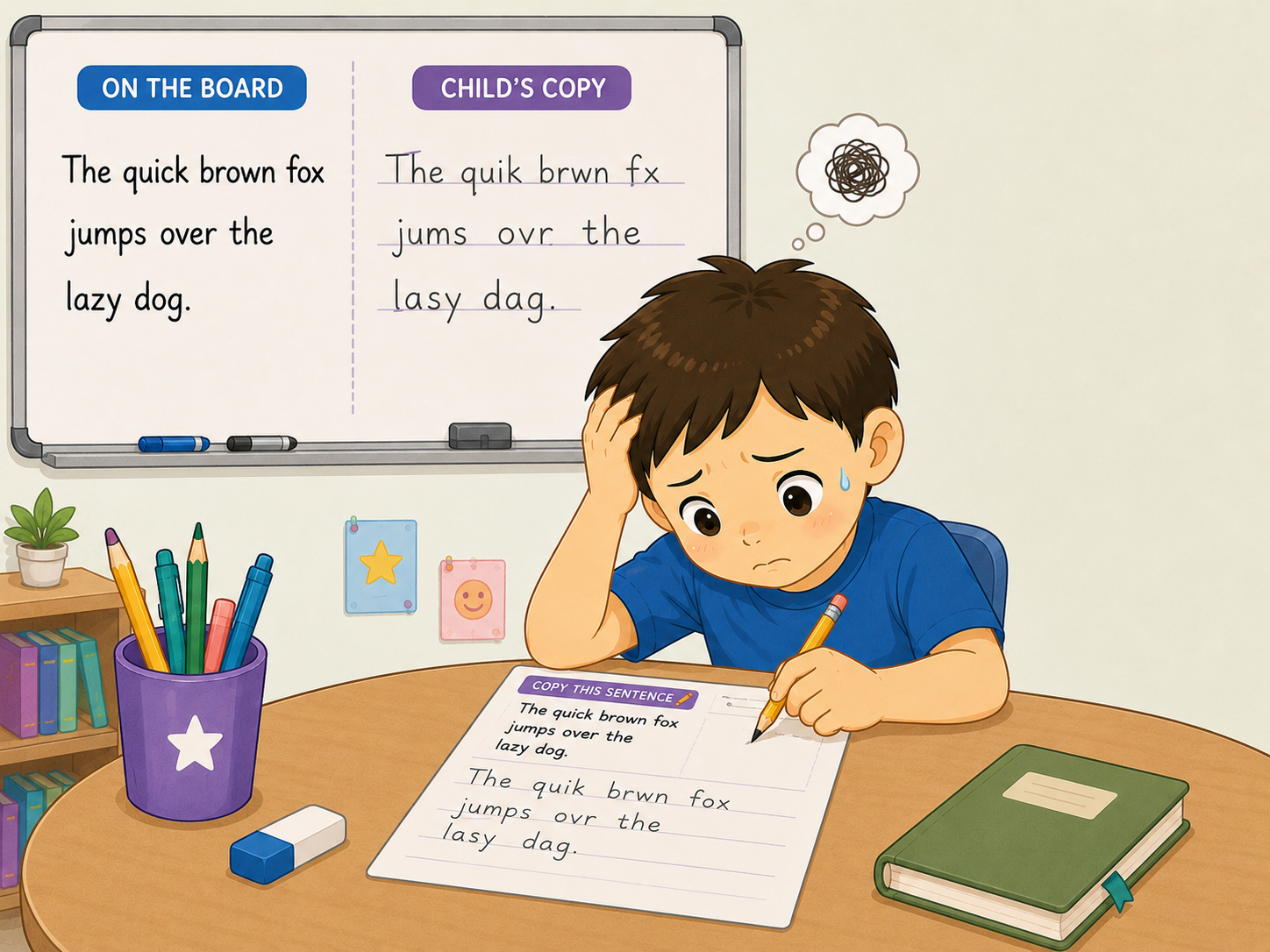
Common difficulties with copying include:
- Losing their place when copying from the board
- Missing or skipping words
- Copying letters or words incorrectly
- Taking much longer to copy sentences
- Struggling to copy accurately from books or worksheets
- Becoming tired or frustrated during copying tasks
These difficulties can make it harder for children to keep up with classroom work, even when they understand what they are learning.
7. Unusual Pencil Grip or Writing Posture
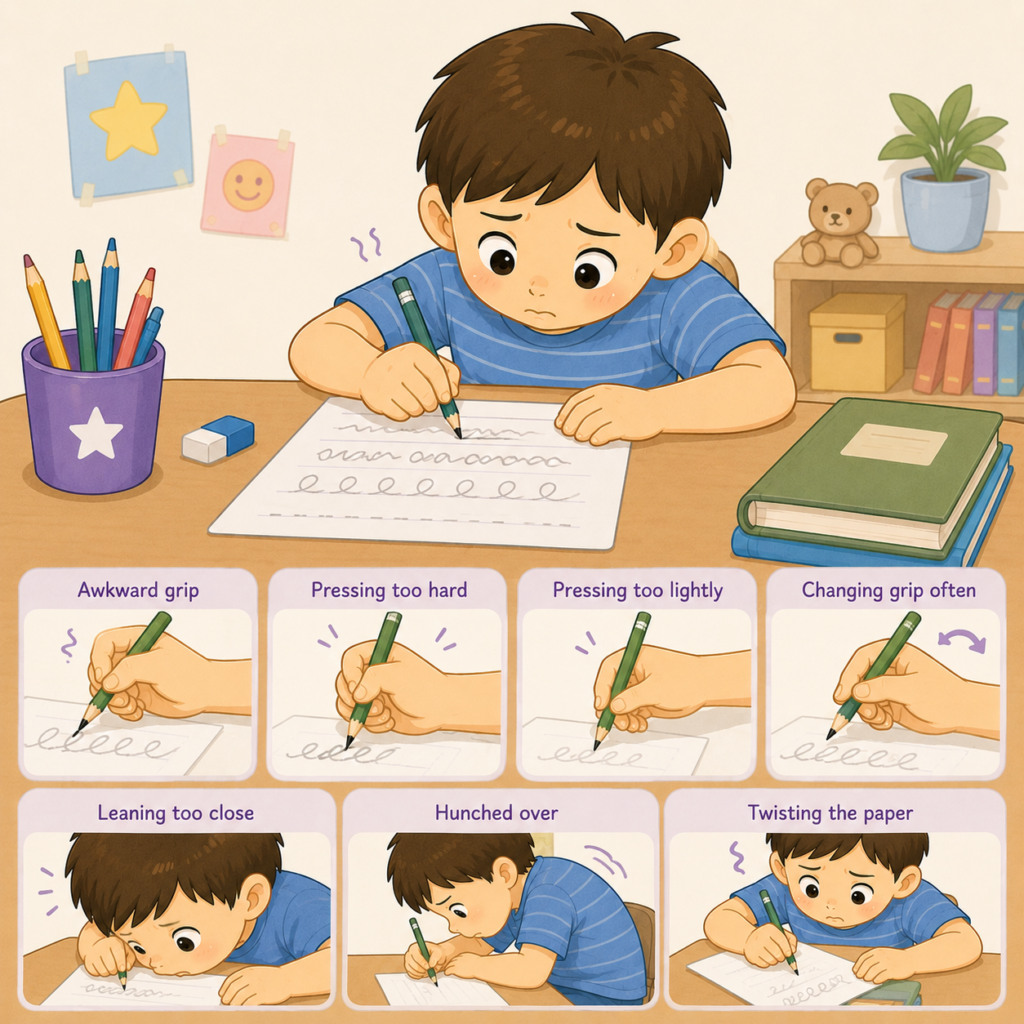
Children with dysgraphia may experience discomfort or frustration during writing activities. Examples include:
- Holding the pencil too tightly
- Pressing too hard or too lightly on the paper
- Frequently changing their pencil grip
- Leaning too close or hunching over while writing
Using a comfortable writing position and suitable pencil grip can help reduce strain and make writing more manageable.
8. Difficulty Organising Ideas on Paper
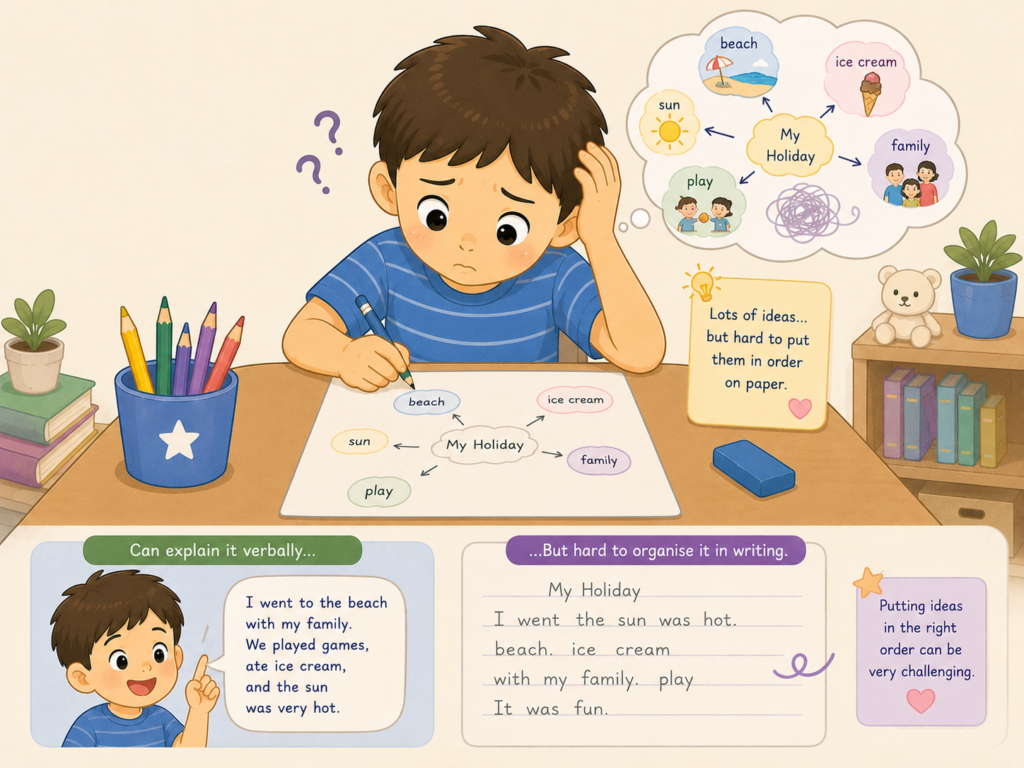
Some children with dysgraphia may have difficulty organising their ideas when writing, such as:
- Knowing what they want to say but not where to start
- Having many ideas but struggling to put them in the right order
- Finding it difficult to turn thoughts into complete sentences
- Struggling to organise sentences into clear paragraphs
- Writing ideas that may seem disconnected or out of sequence
A child may be able to explain their ideas clearly when speaking, but find it much harder to organise and express those same ideas on paper.
Why Does Dysgraphia Happen?
There is no single cause that explains every child’s writing difficulties.
Writing is a complex process that requires several skills to work together.
Difficulties may be related to challenges involving:
Fine Motor Skills
❀ Writing requires controlled movements of the hands and fingers.
❀ Some children may find it difficult to control the pencil or maintain comfortable writing movements for extended periods.
Language Skills
Writing involves more than handwriting.
Children also need to:
❀ Think of ideas
❀ Find the right words
❀ Build sentences
❀ Use grammar
❀ Organise information
Difficulties with language may therefore affect written expression.
Attention and Executive Function Skills
❀ Children need to stay focused, plan what they want to write, remember their ideas, and monitor their work.
❀ Difficulties with attention, planning, or organisation may make writing more challenging.
Other Learning or Developmental Difficulties
Writing difficulties can occur alongside other developmental or learning concerns.
For example, some children may also have difficulties involving:
❀ Reading
❀ Language
❀ Attention
❀ Motor coordination
A professional assessment can help clarify the child’s specific pattern of strengths and difficulties.
Dysgraphia Is Not a Sign of Laziness
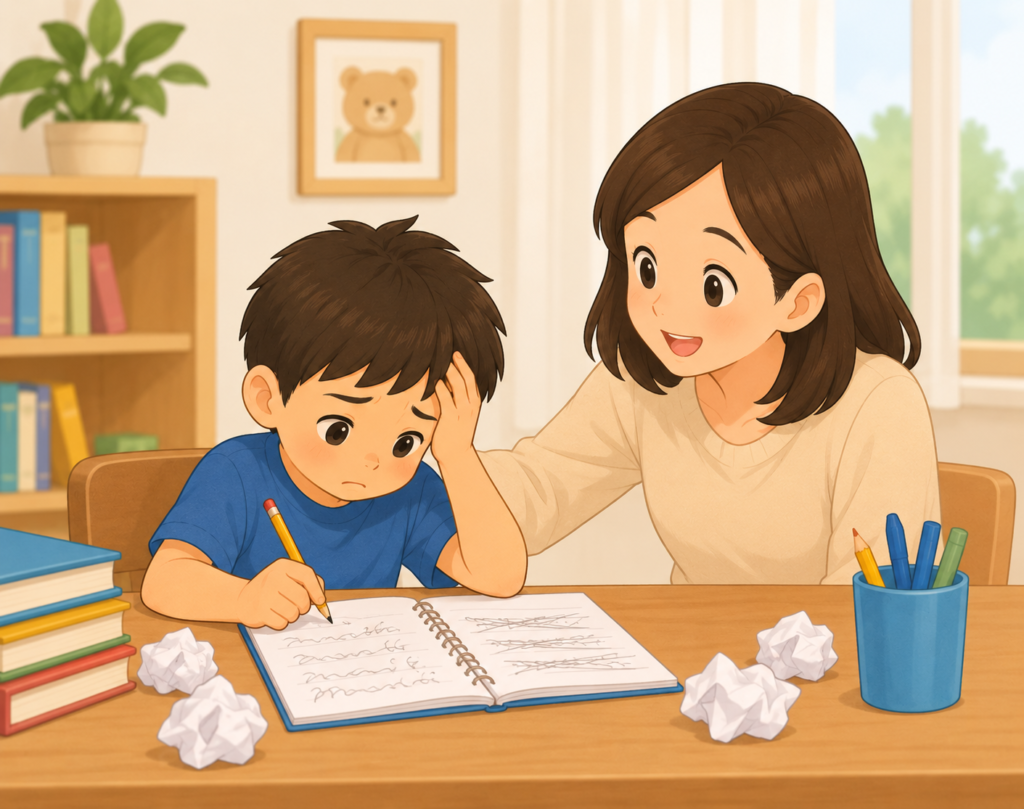
This is important for parents and teachers to remember.
A child who avoids writing may sometimes be seen as:
“Lazy.”
“Not trying hard enough.”
“Careless.”
However, when writing requires significantly more effort for a child, they may become tired, frustrated, or avoid the task altogether.
Imagine knowing exactly what you want to say but struggling to get your thoughts onto paper.
How Can Parents Support a Child With Writing Difficulties?
Imagine knowing exactly what you want to say but struggling to get your thoughts onto paper.
Break Writing Tasks Into Smaller Steps
Instead of saying:
“Write a whole essay.”
Try breaking the task into smaller parts:
❀ Think of one idea
❀ Write a short sentence
❀ Take a short break if needed
❀ Continue with the next idea
Smaller steps can make writing feel more manageable.
Allow Extra Time When Appropriate
❀ Some children need more time to organise their thoughts and complete written tasks.
❀ Rushing may increase frustration and reduce the quality of their work.
❀ Where appropriate, allowing additional time can help the child demonstrate what they know.
Encourage Different Ways to Express Ideas
Writing is important, but it should not always be the only way a child demonstrates knowledge.
Depending on the child’s needs, they may benefit from:
❀ Explaining answers verbally
❀ Using visual organisers
❀ Using typing
❀ Using speech-to-text tools when appropriate
The most suitable support depends on the child’s individual difficulties and learning environment.
Focus on Progress, Not Just Neatness
❀ Try to notice effort and improvement.
For example:
“I can see you worked hard to finish that sentence.”
“Your spacing looks more consistent today.”
❀ Specific encouragement can help children build confidence.
Avoid Comparing Your Child With Others
Every child develops at a different pace.
Comparing a child constantly with classmates or siblings may increase anxiety around writing.
Instead, focus on:
❀ The child’s individual progress
❀ Their specific strengths
❀ Areas where they need support
When Should Parents Seek Professional Advice?
Consider seeking further guidance if your child’s writing difficulties are:
❀ Persistent over time
❀ Affecting school performance
❀ Causing significant frustration
❀ Leading to avoidance of writing
❀ Affecting confidence or self-esteem
❀ Occurring alongside other learning or developmental difficulties
It is important to remember that a child should not be labelled based on handwriting alone. Other possible factors should be considered before a diagnosis or specific learning difficulty is confirmed.
Key Takeaway
❀ Writing difficulties can affect more than just handwriting — they may also make it harder for a child to organise ideas, spell, and express their thoughts on paper.
❀ If writing difficulties are persistent and affect your child’s learning or confidence, seeking professional guidance can help identify their individual strengths and support needs.
❀ Early support is not about labelling a child — it is about understanding their difficulties and helping them find strategies to learn and express themselves with greater confidence.
🌟 Stay Connected with Us! We love sharing tips, insights, and inspiring stories about children’s growth and mental wellbeing.
💙 Follow us on Instagram and Facebook for more updates and parenting advice.
Join our community and let’s grow together. One positive step at a time!

References
Child Mind Institute. (2025). What is dysgraphia?
Child Mind Institute. https://childmind.org/wp-content/uploads/2025/06/What-Is-Dysgraphia.pdf
Working Hours
Tuesday to Saturday – 8.30am to 6pm
Monday & Sunday – Closed
Please also subscribe us at
Contact Us
Discover Our Team!
📞+60102502833
firststepdevelopmentcentre@gmail.com
B1-7, Plaza Damas 3, Jalan Sri Hartamas 1, 50480 Kuala Lumpur.
Copyright 2025. Firststep Child Development Sdn Bhd. All rights reserved.