



Does Your Child Avoid Eye Contact? What Parents Should Know
Does your child rarely look at you when you talk, look away during conversations, or seem more interested in objects than faces?
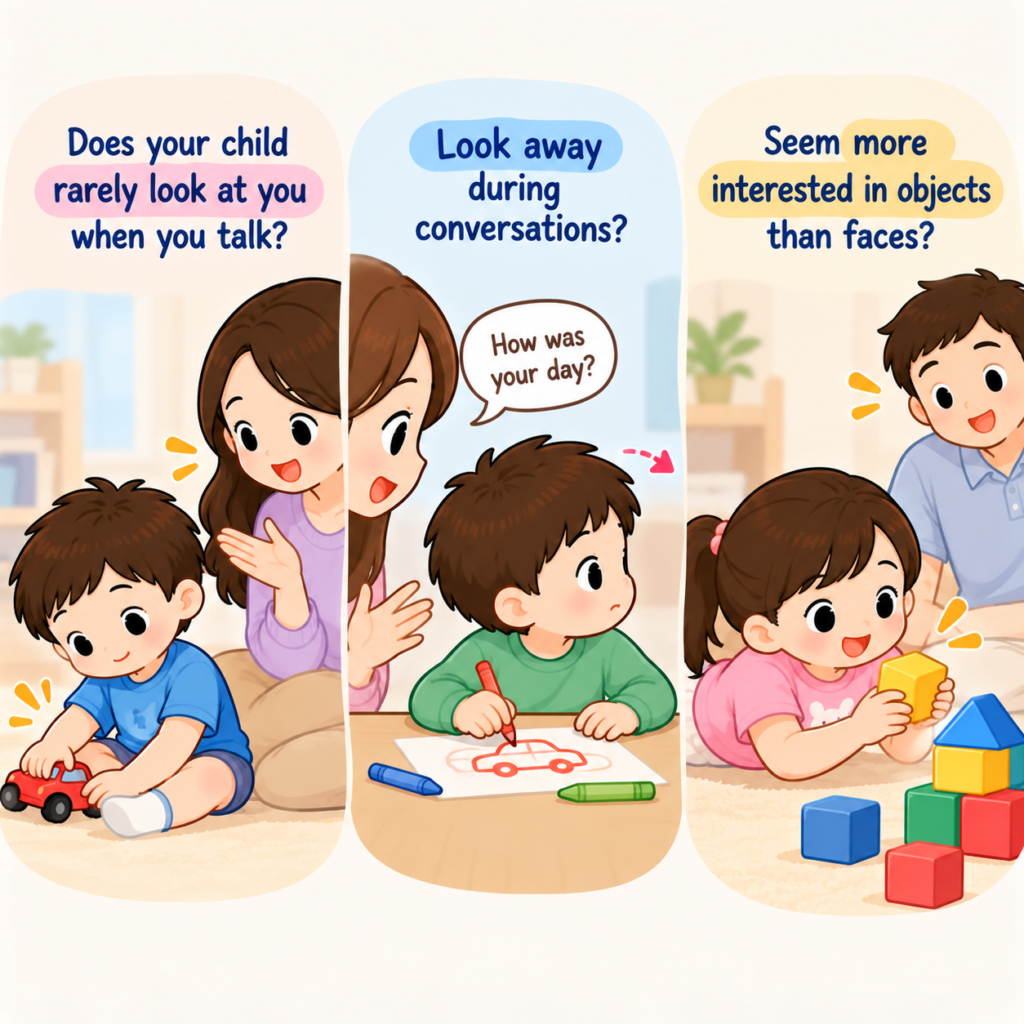
Eye contact is one way children can connect and communicate with others.
However, children differ in how much eye contact they naturally use.
Some children may look briefly, look away while listening, or prefer to communicate in other ways.
Occasional or limited eye contact on its own does not mean that a child has autism.
What matters is the overall pattern of communication and social interaction, including how a child responds to people, shares interests, uses gestures, and engages in back-and-forth interactions.
What Does Eye Contact Tell Us?
Eye contact can be part of social communication.
Children may use it to:
1. Show that they are listening
2. Share attention with another person
3. Check a parent’s reaction
4. Show interest or enjoyment
5. Support back-and-forth interaction
For example, a child may look at their parent, point to a plane in the sky, and then look back at the parent. This combines eye gaze, pointing, and shared attention.
However, eye contact is not the only way children communicate.
1. Rarely Looks at People During Interaction
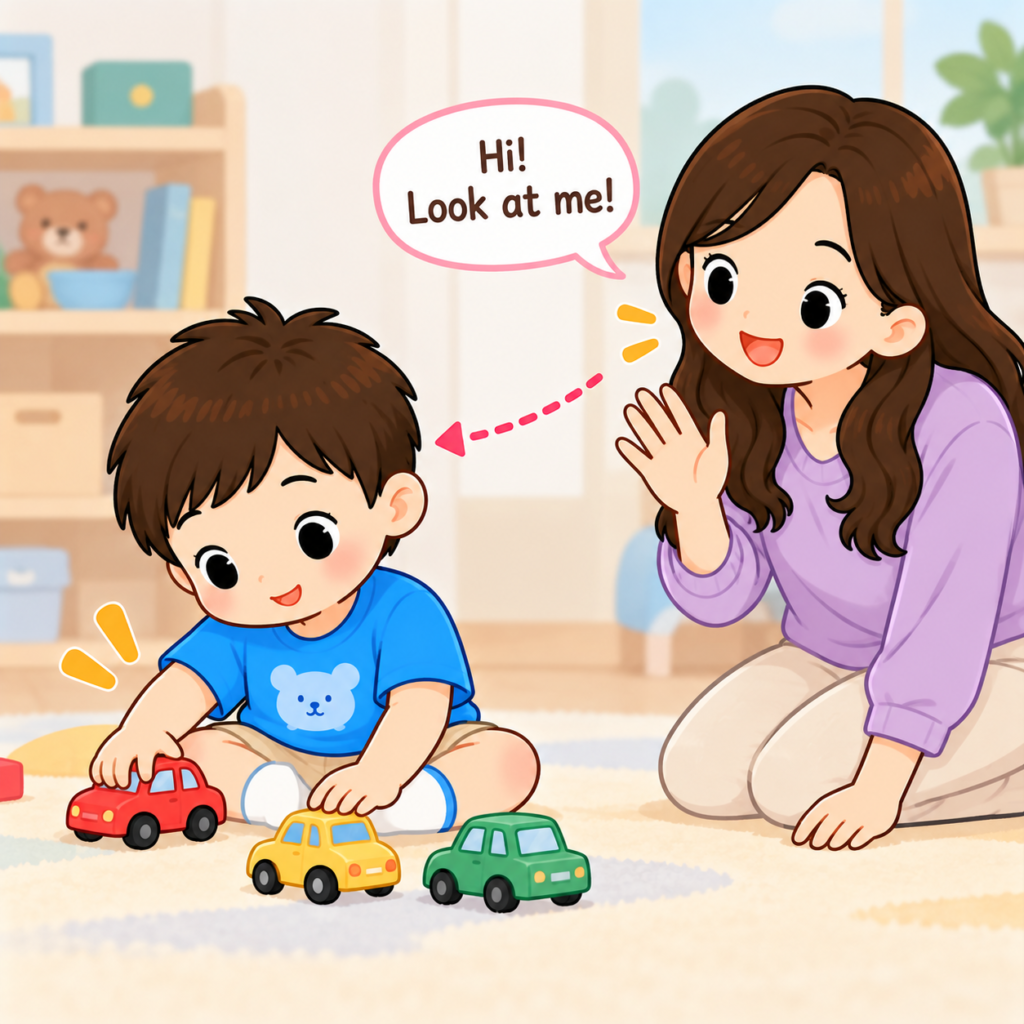
Your child may rarely look toward you when you speak, play, or interact with them.
For example:
You call your child’s name and try to talk to them, but they continue playing without looking toward you.
Occasionally being focused on an activity is normal. The concern is when this happens frequently across different situations.
2. Looks Away During Conversations
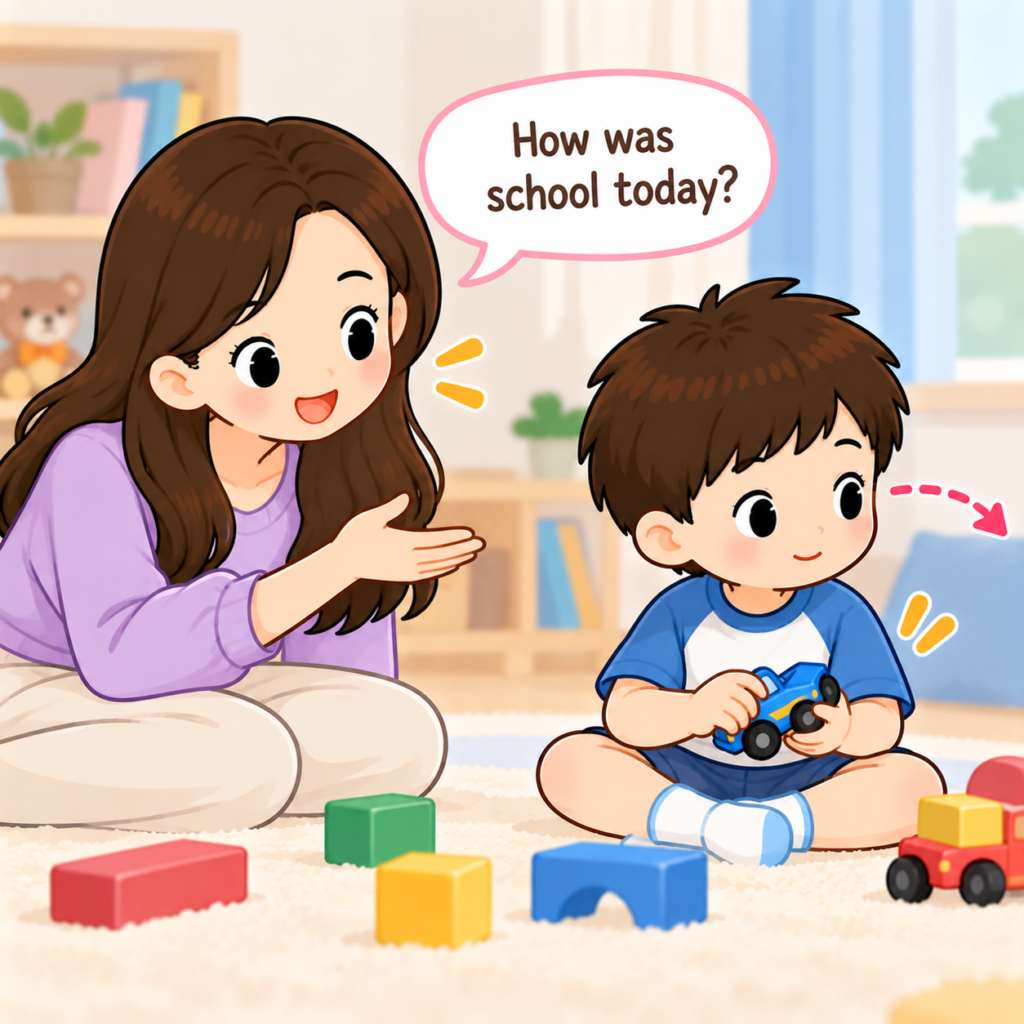
Some children may frequently look away when someone is talking to them.
For example:
You ask:
“How was school today?”
Your child answers but continues looking at their toy instead of looking toward you.
Looking away does not necessarily mean your child is not listening. Some children may find it easier to concentrate when they are not looking directly at someone’s face.
3. Does Not Look Back to Share Interest
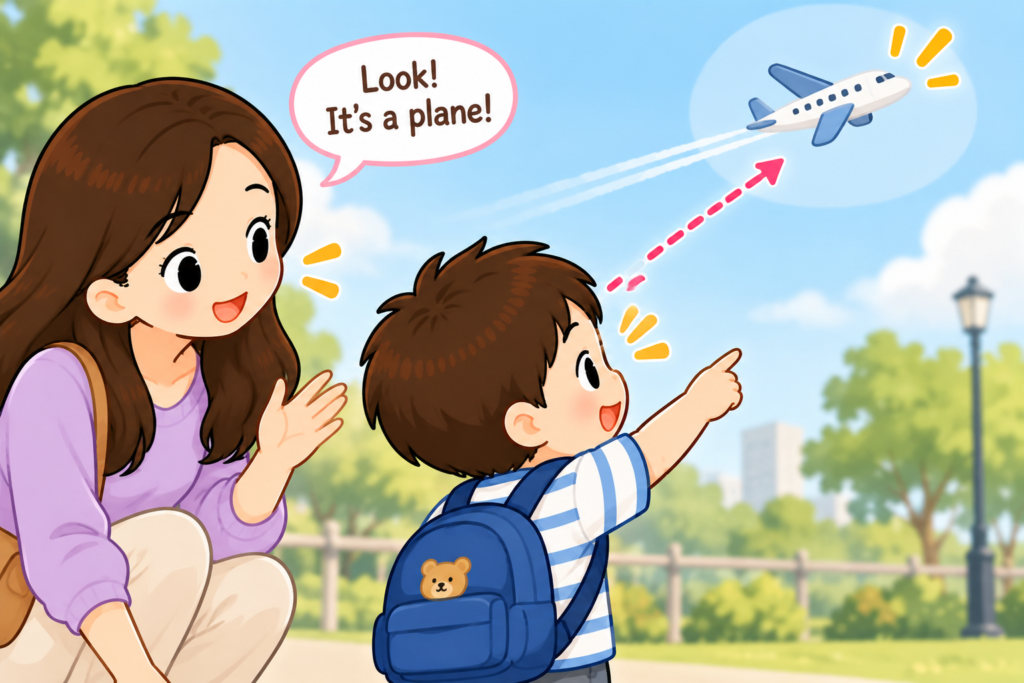
Eye gaze can be part of joint attention, where a child shares attention about something with another person.
For example:
Your child sees a bird outside.
They may:
Look at the bird → Look at you → Point → Look back at the bird
This helps communicate:
“Look at that! I want to share this with you.”
A child who rarely tries to share interests or experiences with others may benefit from closer developmental observation.
4. Has Difficulty Combining Eye Gaze With Gestures
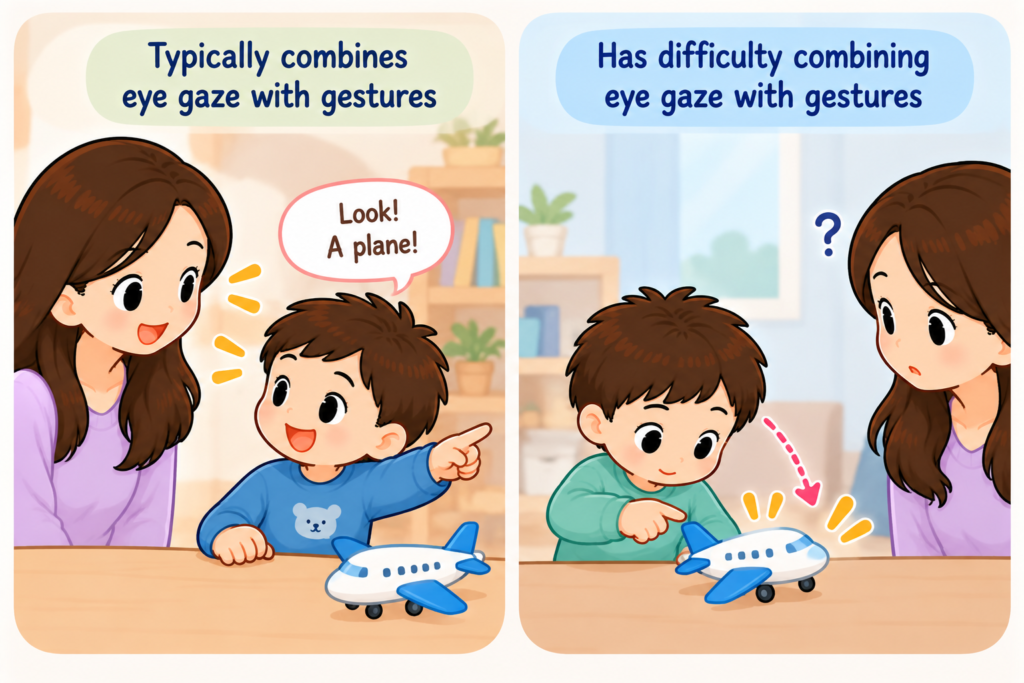
Communication often involves several skills working together.
A child may point, gesture, use facial expressions, and look toward another person to communicate.
For example:
Instead of pointing to a toy and looking toward you to share interest, your child may simply take your hand and lead you toward the toy.
This can be one of several behaviours worth discussing if you notice a broader pattern of social communication differences.
5. Does Not Respond Consistently to Social Interaction
Your child may not consistently respond when someone tries to engage with them.
For example:
You:
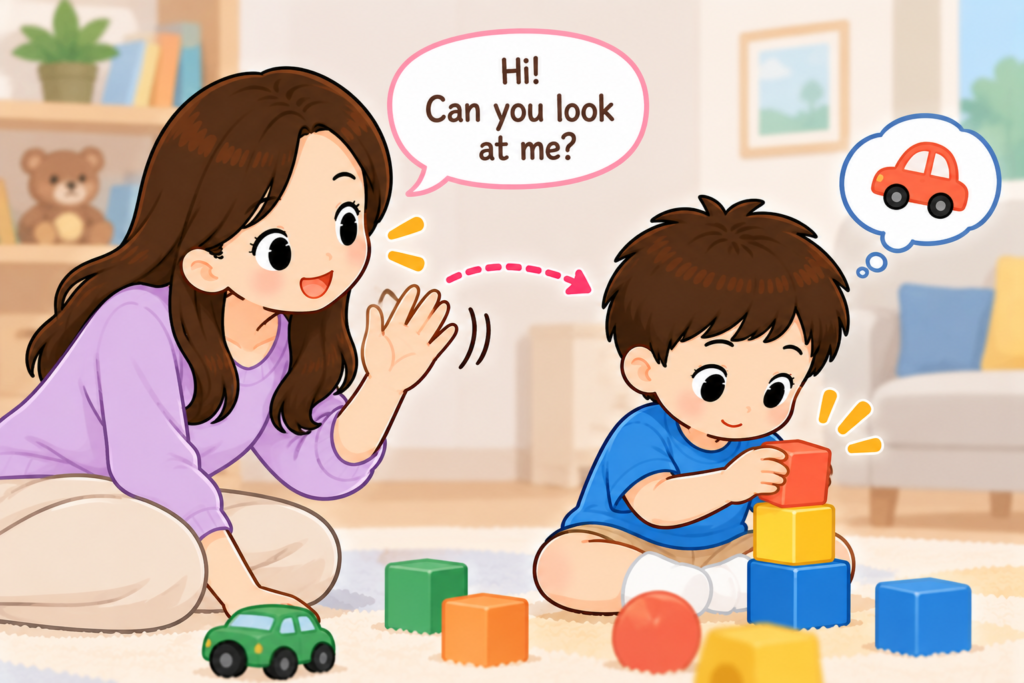
“Can you look at me?”
Your child continues playing and does not look toward you.
However, it is important to consider the situation.
A child may not respond when they are deeply engaged in an activity, tired, or distracted.
Look for patterns across different situations rather than one isolated moment.
6. Uses Limited Eye Contact Alongside Other Social Communication Differences
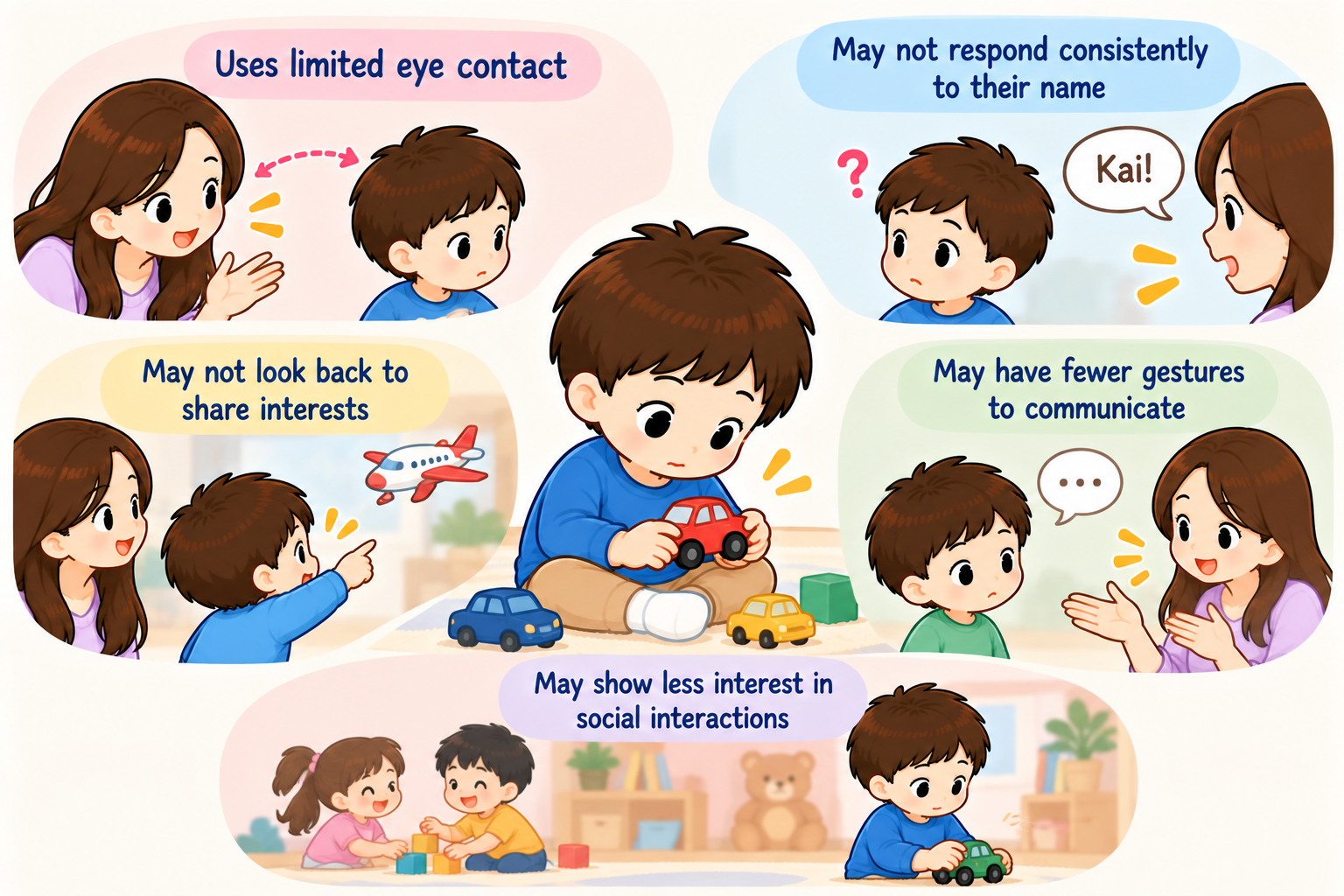
Limited eye contact becomes more meaningful when it occurs together with other developmental differences.
You may also notice:
- Limited gestures
- Difficulty sharing interests
- Difficulty with back-and-forth interaction
- Limited response to their name
- Difficulty joining other children in play
- Differences in pretend play
- Delayed or different language development
These characteristics can occur in autism, but having one or more of these signs does not automatically mean a child is autistic.
How Can Parents Encourage Natural Communication?
1. Get Down to Your Child’s Level
✿ When talking or playing with your child, try getting physically closer to their level.
✿ Instead of repeatedly saying:
“Look at me.”
✿ Try joining their activity and following what interests them.
2. Follow Their Interests
✿ If your child loves cars, sit beside them and play with cars.
✿ You might say:
“The red car is fast!”
“Ready, set… go!”
✿ Following a child’s interests can create natural opportunities for interaction and communication.
3. Use Play to Encourage Interaction
✿ Simple games such as:
1. Peek-a-boo
2. Rolling a ball
3. Bubbles
4. Building blocks
5. Taking turns with toys
can create natural opportunities for back-and-forth interaction.
4. Use Gestures Alongside Words
✿ Combine your words with natural gestures.
✿ For example:
“Look!” → Point toward the object.
“Bye-bye!” → Wave.
“Give me.” → Hold out your hand.
✿ This gives your child different ways to understand and participate in communication.
5. Give Your Child Time to Respond
✿ After speaking to your child, pause and allow them time to respond.
✿ For example:
Parent: “Where’s the ball?”
Pause.
Child: “There!”
Parent: “Yes! You found the ball!”
✿ This creates opportunities for back-and-forth communication.
6. Avoid Forcing Eye Contact
✿ Rather than repeatedly telling your child:
“Look at me.”
focus on whether they are engaging and communicating in meaningful ways.
✿ Some children may find prolonged eye contact uncomfortable or distracting.
✿ Communication can still happen through gestures, facial expressions, body orientation, sounds, words, or shared activities.
✿ The goal is connection and communication, not simply making a child stare at someone’s eyes.
When Should Parents Seek Professional Advice?
❀ If you notice that your child rarely makes eye contact and you have other concerns about their communication or development, it may be helpful to speak with a paediatrician or child-development professional.
❀ You may want to seek advice if your child also:
1. Rarely responds to their name
2. Uses few gestures, such as pointing or waving
3. Has difficulty sharing interests with others
4. Has speech or language difficulties
5. Finds it difficult to interact with other children
6. Has limited back-and-forth communication
7. Shows repetitive behaviours or strong, focused interests
8. Is experiencing other developmental concerns
❀ Every child develops differently, and limited eye contact by itself does not mean that a child has autism.
❀ If you have concerns about how your child plays, communicates, learns, or interacts with others, discussing them early with a healthcare or child-development professional can help you better understand your child’s needs.
Key Takeaway
❀Eye contact is only one part of communication.
❀ Some children naturally make less eye contact, and this alone does not mean something is wrong.
❀ Instead of focusing only on whether your child looks at you, consider the bigger picture:
1. Do they respond when you speak to them?
2. Do they use gestures to communicate?
3. Do they share their interests with you?
4. Do they engage in back-and-forth interaction?
5. Do they communicate their needs and feelings?
❀ If you notice several ongoing communication or developmental concerns, seeking professional advice can help you understand your child’s individual needs.
❀ The goal is not to force eye contact, but to support meaningful connection and communication. 🌱
🌟 Stay Connected with Us! We love sharing tips, insights, and inspiring stories about children’s growth and mental wellbeing.
💙 Follow us on Instagram and Facebook for more updates and parenting advice.
Join our community and let’s grow together. One positive step at a time!

References
American Psychiatric Association. (2022). Diagnostic and statistical manual of mental disorders (DSM-5-TR).
Psychiatry.org; American Psychiatric Association. https://www.psychiatry.org/psychiatrists/practice/dsm
American Speech-Language-Hearing Association. (n.d.). Social communication benchmarks.
Working Hours
Tuesday to Saturday – 8.30am to 6pm
Monday & Sunday – Closed
Please also subscribe us at
Contact Us
Discover Our Team!
📞+60102502833
firststepdevelopmentcentre@gmail.com
B1-7, Plaza Damas 3, Jalan Sri Hartamas 1, 50480 Kuala Lumpur.
Copyright 2025. Firststep Child Development Sdn Bhd. All rights reserved.