



Discipline Problem or Emotional Need? 5 Things Your Child’s Behaviour May Be Trying to Tell You
Understanding child behaviour can help parents recognise when challenging behaviours may reflect emotional overwhelm, stress, or unmet emotional needs.
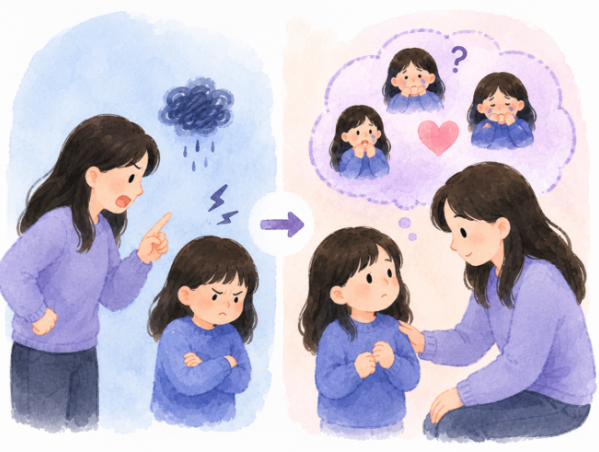
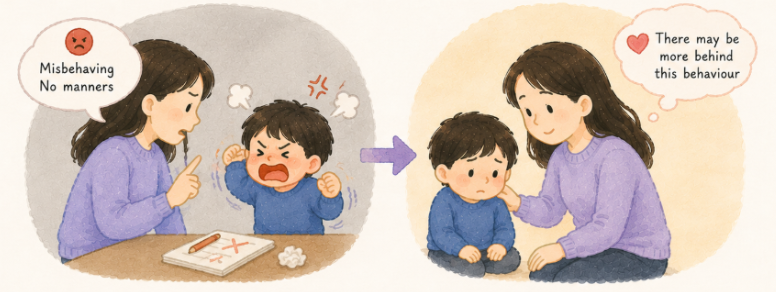
When children show challenging behaviours, many adults naturally think of discipline first.
Tantrums, defiance, aggression, frequent crying, clinginess, or suddenly shutting down are often labelled as “bad behaviour”, “attention-seeking”, or “being difficult”.
But sometimes, behaviour is not just about discipline.
Sometimes, it is a child’s way of expressing emotions such as stress, confusion, fear, or unmet emotional needs.
As adults, it is important for us to look beyond the behaviour itself and ask:
“What might this child be trying to communicate?”
Understanding Child Behaviour as Communication
Children are still learning how to:
- regulate their emotions
- manage frustration
- express their needs appropriately
- cope with stress and disappointment
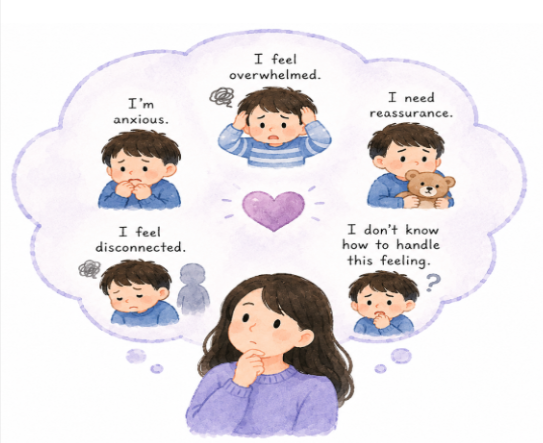
Unlike adults, children often lack the emotional vocabulary or coping skills to express what they are feeling clearly.
Instead, these emotions are often expressed through behaviour.
This is why children’s behaviour sometimes reflects emotional overwhelm rather than intentional misbehaviour.
Of course, this does not mean that boundaries and discipline are unimportant.
Children still need structure, guidance, and consistency.
However, when parents understand the emotional meaning behind a child’s behaviour, they are often able to respond in a way that is more effective, compassionate and supportive.
1. Tantrums May Be Emotional Overload, Not Manipulation
Tantrums are often misunderstood as children “trying to get their way”.
While some behaviours can involve testing limits, many tantrums happen because a child becomes emotionally overwhelmed and cannot regulate their feelings.
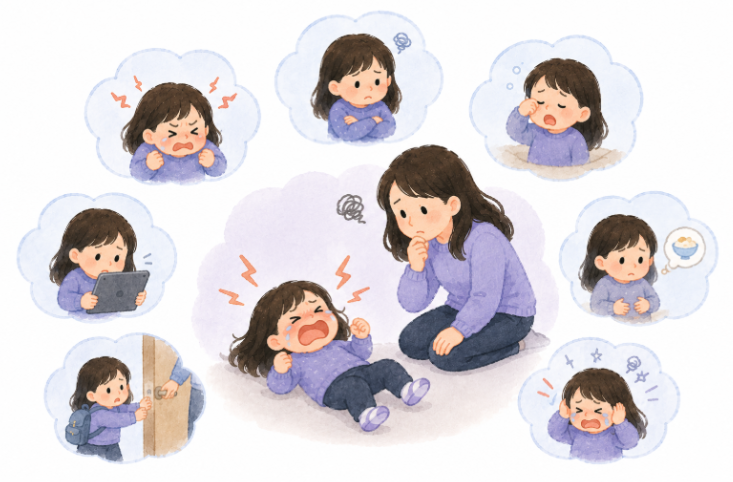
Young children may struggle to manage:
- frustration
- disappointment
- tiredness
- hunger
- overstimulation
- sudden changes in routine
For example, a child may have a meltdown after school, during grocery shopping, or when asked to stop using a device.
These are not necessarily because they are “spoiled”, but because they are already emotionally overloaded.
When emotions become too intense, a child’s behaviour can become explosive.
Research has shown that emotional dysregulation is strongly associated with behavioural difficulties in children
(Mitchison et al., 2019)
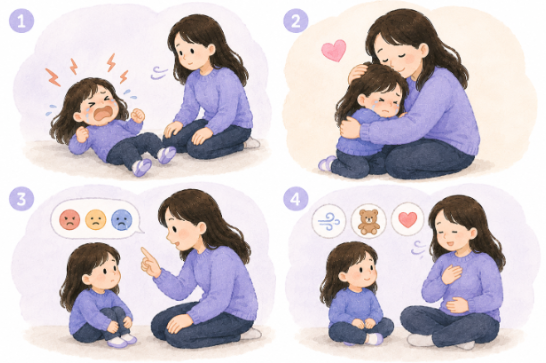
What may help:
- Staying calm during the meltdown
- Helping the child feel safe and supported
- Using simple language to label emotions (e.g. You’re feeling very upset right now”)
- Teaching calming strategies after the child has settled
Children learn emotional regulation best through co-regulation with calm and supportive adults.
Before children can calm themselves independently, they often need a calm adult to help them feel safe, understood, and emotionally settled first.
For example, instead of immediately yelling or punishing a child during a meltdown, a parent may calmly say:
“I know you’re upset right now. I’m here with you. You can talk to me when you’re ready.”
Over time, these repeated experiences help children gradually develop the ability to regulate their own emotions more effectively.
2. “Attention-Seeking” May Actually Be Connection-Seeking
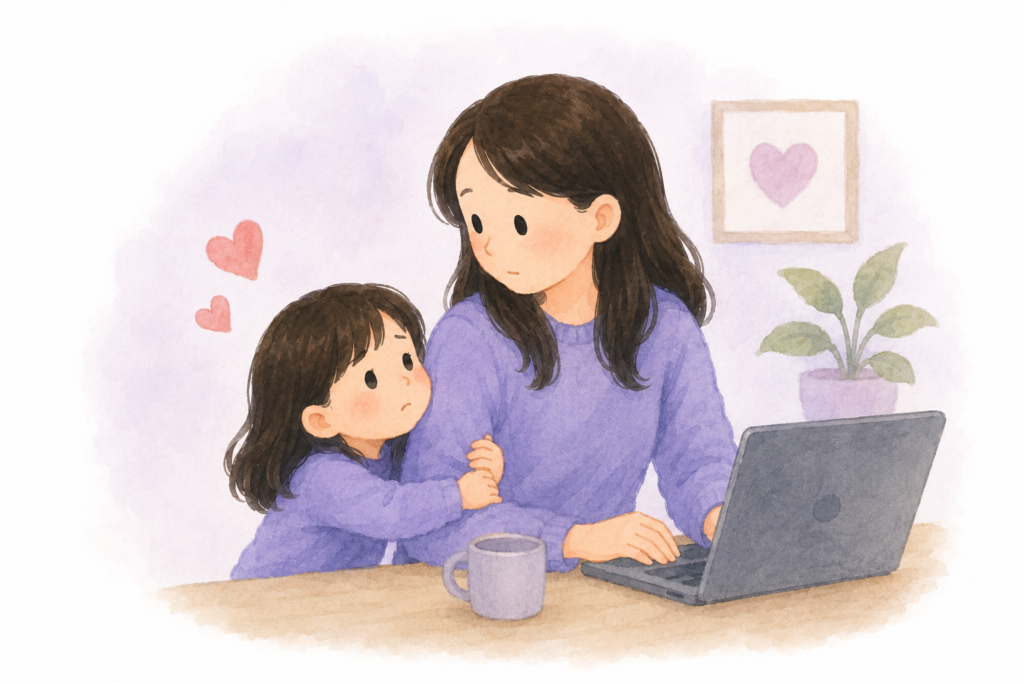
Children who constantly interrupt, cling to parents, act out, or demand attention are often described as “attention-seeking”.
But attention is not always a bad thing.
Sometimes, these behaviours reflect a deeper emotional need for:
- connection
- reassurance
- emotional safety
- feeling noticed, valued and emotionally close to others
Children may seek attention more intensely when they:
- feel emotionally disconnected
- experience stress or insecurity
- struggle with changes at home or school
- feel overlooked compared to siblings or peers
For example, a child may repeatedly interrupt while a parent is working, become extra clingy after starting school, or act out more after the arrival of a new sibling.
In some cases, the behaviour may not be about “misbehaving”, but about seeking comfort, closeness, or reassurance.
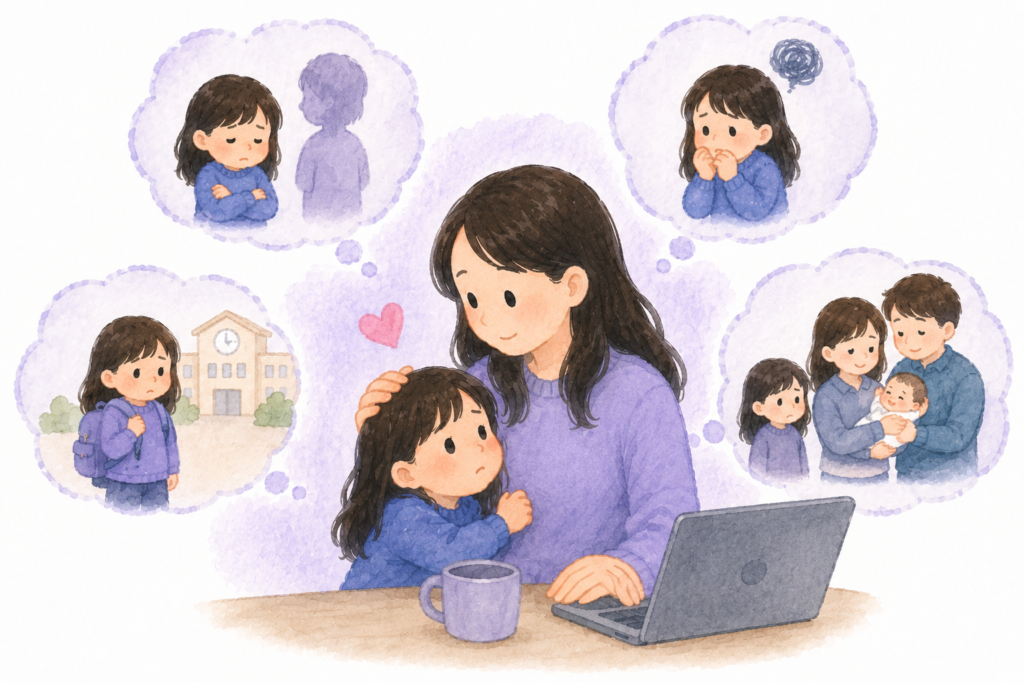
Instead of asking:
“Why is my child demanding so much attention?”
It may help to ask:
“What emotional need might my child be trying to express?”
3. Aggressive Behaviour May Hide Difficult Emotions
Some children express emotional distress outwardly through: hitting, shouting, arguing, irritability, and throwing objects.
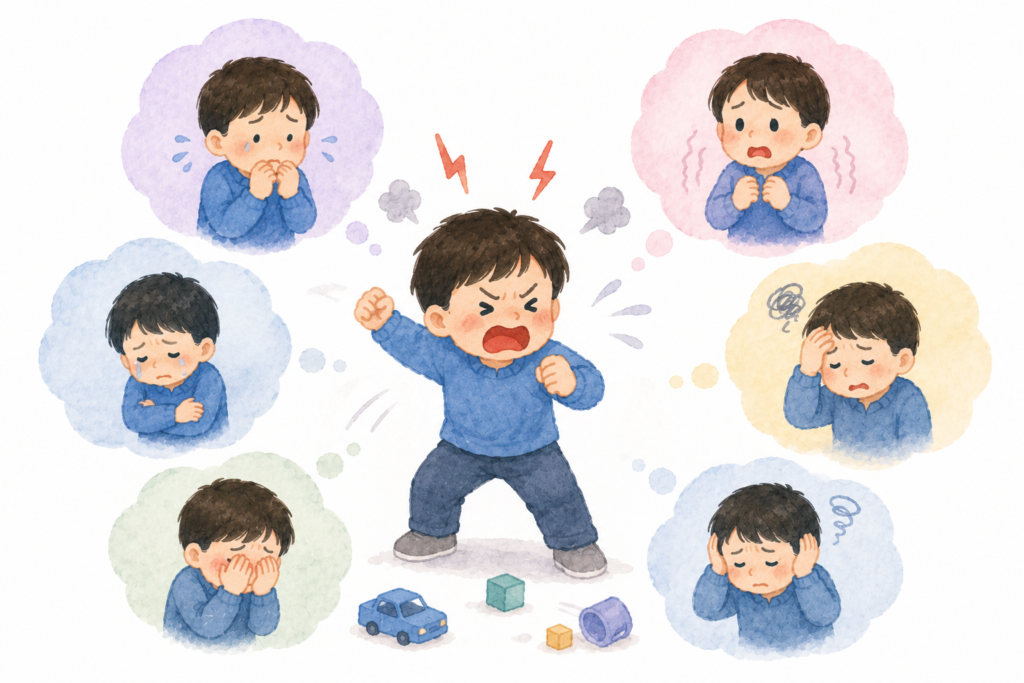
Sometimes, anger may be masking:
- anxiety
- sadness
- frustration
- embarrassment
- fear
- difficulty coping with overwhelming emotions
For example, a child who becomes angry after making a mistake, losing a game, or being corrected may not simply be “misbehaving”.
In some cases, the child may be struggling with feelings of embarrassment, failure, or emotional overwhelm that they do not yet know how to express appropriately.
Children often express vulnerable emotions through anger because anger can feel easier to express than sadness, fear, or insecurity.
This does not mean aggressive behaviour should be ignored. Children still need clear boundaries and guidance.
However, punishment alone will not teach the emotional skills the child truly needs.
4. Withdrawal and Silence Can Also Be Signs of Struggle
Not all struggling children become loud or disruptive.
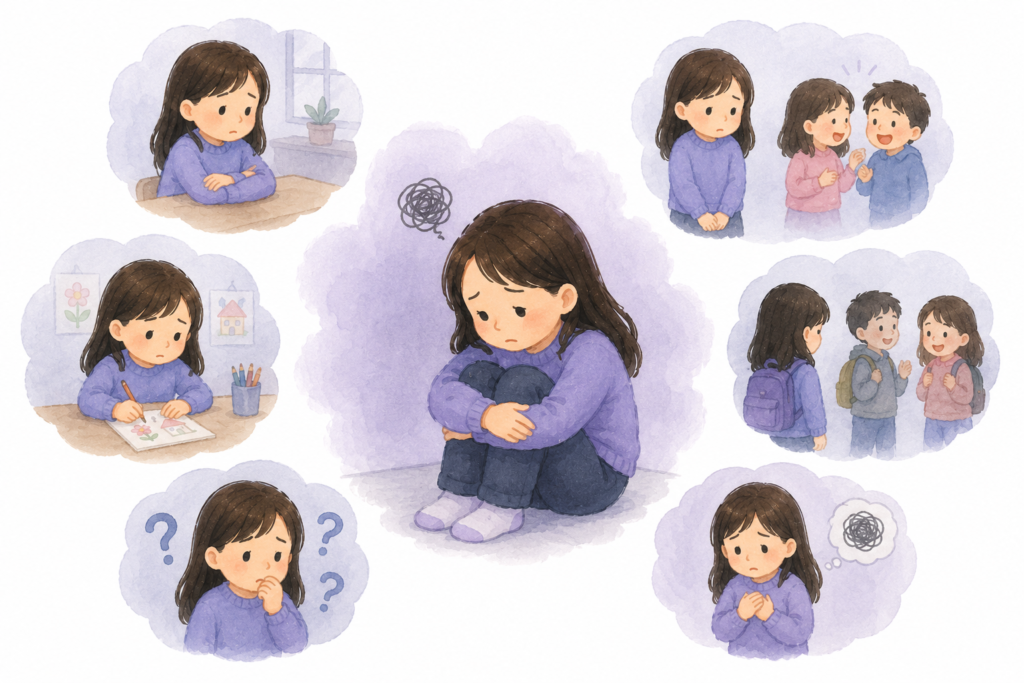
Some children cope by becoming:
- unusually quiet
- emotionally withdrawn
- overly compliant
- socially isolated
- reluctant to express feelings
But silence does not always mean everything is okay.
Some children learn to hide emotions because they:
- fear disappointing others
- worry about being judged
- do not feel emotionally safe expressing themselves
- struggle to put their feelings into words
Research shows that withdrawn children often have lower emotional knowledge (find it harder to understand their own feelings and other’s feelings) and poorer social functioning, which can increase the risk of emotional and social difficulties (Clark, Locke, Baxendale, & Seifer, 2022).
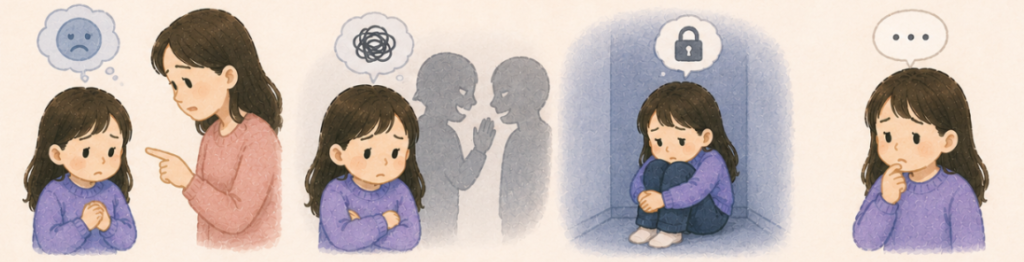
For example, a child may stop talking about school, spend more time alone, or consistently respond with “I’m fine” even when their behaviour or mood has clearly changed.
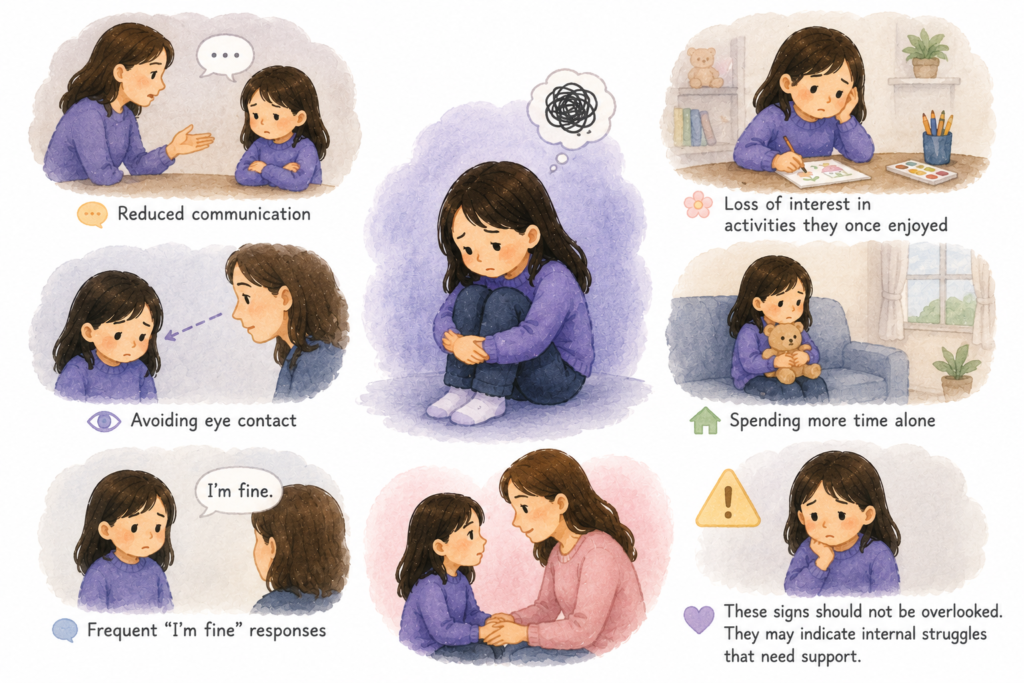
Parents may notice:
- reduced communication
- loss of interest in activities they once enjoyed
- avoiding eye contact
- spending more time alone
- frequent “I’m fine” responses
These signs should not be overlooked.
A child’s quietness is not always a sign of maturity. Sometimes, it may be an indication that they are struggling internally and need support.
5. Behaviour Often Improves When Emotional Needs Are Understood
Children are more likely to cooperate and regulate their emotions when they feel:
- emotionally safe
- understood
- connected
- supported
This does not mean allowing all behaviours without limits.
Healthy parenting involves both emotional understanding and appropriate boundaries.
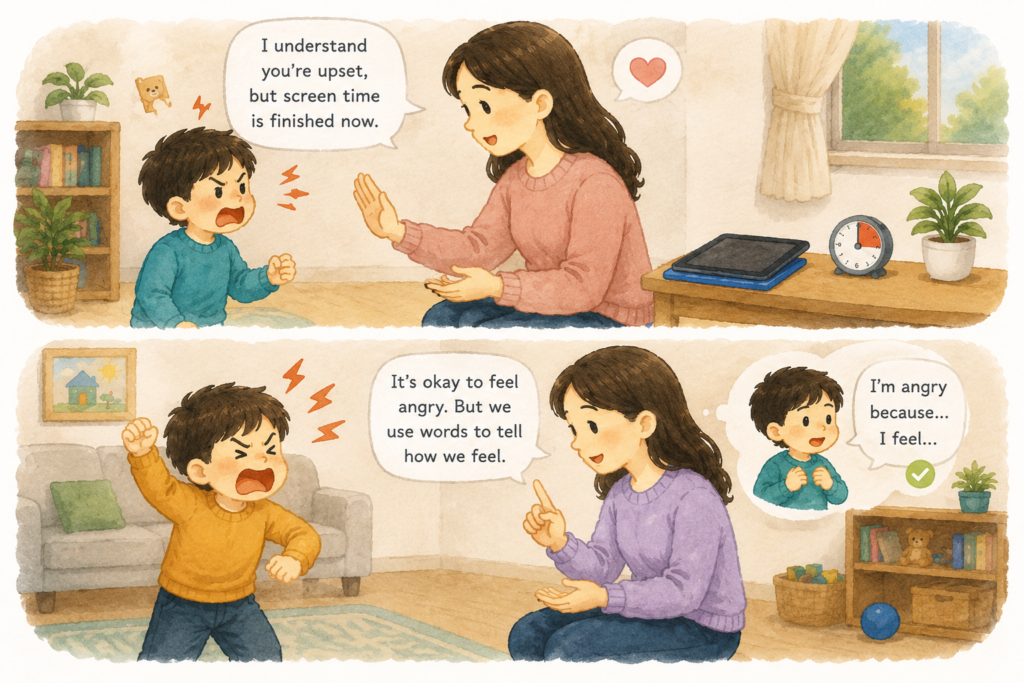
For example, a parent may validate a child’s feeling while still setting a limit:
“I understand you’re upset, but screen time is finished now.”
Parents can also correct behaviour without shaming the child, such as guiding them to use words instead of yelling, while still addressing the behaviour itself.
The goal is not only to stop the behaviour, but also to teach emotional skills and healthier ways of coping.
Children need guidance, but they also need empathy.
What Parents Can Do
Here are some ways parents can support children emotionally while also managing behaviour effectively:
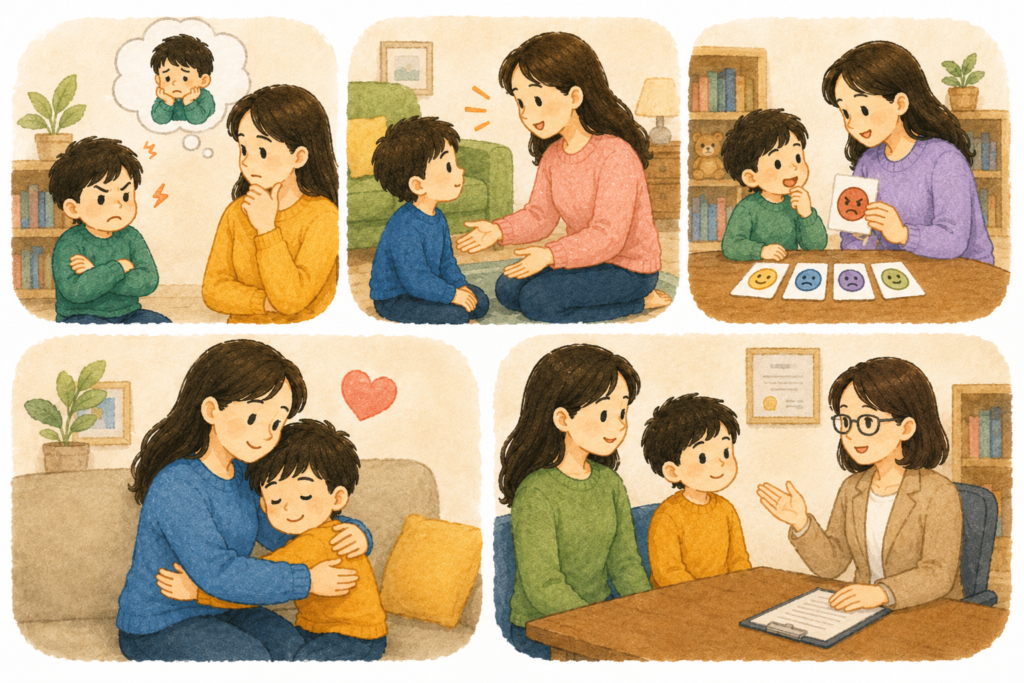
1. Stay curious about the emotion behind the behaviour
Instead of focusing only on what the child is doing, you can ask yourself: “What might my child be feeling right now?”
2. Listen before reacting immediately
Sometimes children need understanding and emotional connection before problem-solving or correction.
Understanding child behaviour becomes easier when parents pause to consider the emotions, stress, or unmet needs that may be influencing a child’s reactions.
3. Teach emotional vocabulary
Help children learn to name their feelings, such as:
- Angry
- Disappointed
- Nervous
- Lonely
- Frustrated
Children are able to express themselves better when they have the words for their emotions.
4. Create emotional safety
Children are more likely to open up when they feel accepted, rather than frequently being criticised or misunderstood.
5. Seek professional support when needed
If your child’s behaviours become persistent, intense, or begin to affect daily functioning at home, school, or in relationships, it may be helpful to seek professional guidance.
Behind every behaviour, there is often a feeling, need, or struggle that a child may not know how to express.
Sometimes, it is not only because children lack the words, but also because they may not feel emotionally safe to express themselves.
If a child has experienced being misunderstood, dismissed, or met with anger, they may gradually learn to stay silent instead of speaking up.
When adults focus only on correcting behaviour without understanding the emotions behind it, important emotional needs can sometimes be overlooked.
Discipline is important, but so is emotional connection. Because sometimes, what looks like “bad behaviour” may actually be a child’s way of asking for help in the only way they know how.
Understanding child behaviour involves looking beyond discipline and recognising the emotional needs behind children’s actions. When children feel emotionally safe, understood, and supported, they are often better able to regulate emotions, communicate their needs, and cope with challenges in healthier ways.
At FirstStep Psychology and Child Development Centre, we help parents better understand the emotions and behaviours behind their child’s difficulties while supporting emotional regulation, communication, and coping skills in children.
Seeking professional help does not always mean something is “seriously wrong”.
Sometimes, parents simply need guidance, reassurance, or a clearer understanding of their child’s emotional and behavioural needs.
Early support can help identify concerns sooner and provide children with the right support before difficulties become more overwhelming.
You are welcome to reach out to us for a consultation if you would like support in understanding your child’s emotions, behaviour, or development.
🌟 Stay Connected with Us! We love sharing tips, insights, and inspiring stories about children’s growth and mental wellbeing.
💙 Follow us on Instagram and Facebook for more updates and parenting advice.
Join our community and let’s grow together. One positive step at a time!

References
Clark, S., Locke, R. L., Baxendale, S. L., & Seifer, R. (2022). Withdrawn Behavior in Preschool: Implications for Emotion Knowledge and Broader Emotional Competence. Frontiers in Psychology, 13. https://doi.org/10.3389/fpsyg.2022.895557
Mitchison, G. M., Liber, J. M., Hannesdottir, D. Kr., & Njardvik, U. (2019). Emotion Dysregulation, ODD and Conduct Problems in a Sample of Five and Six-Year-Old Children. Child Psychiatry & Human Development, 51(1), 71–79. https://doi.org/10.1007/s10578-019-00911-7
Working Hours
Tuesday to Saturday – 8.30am to 6pm
Monday & Sunday – Closed
Please also subscribe us at
Contact Us
Discover Our Team!
📞+60102502833
firststepdevelopmentcentre@gmail.com
B1-7, Plaza Damas 3, Jalan Sri Hartamas 1, 50480 Kuala Lumpur.
Copyright 2025. Firststep Child Development Sdn Bhd. All rights reserved.