



Food can support a child’s wellbeing, but diet alone does not cure autism. A diet for a non-verbal autistic child can focus on familiar, nourishing foods while introducing new flavours and textures gradually. Small, patient changes can make food exploration feel more manageable.
If mealtimes feel difficult, you’re not alone. A child may communicate food preferences through their behaviour or responses, and learning to recognise these cues can take time. There’s no need to force a sudden change in what they eat.
This article shares practical ways to build on foods your child already accepts, adapt textures and include sources of omega-3, such as fatty fish, chia seeds and walnuts. It also explains how dietary support can contribute to a balanced routine without treating food as a cure or a substitute for personalised care.
Key Takeaways
- Build on foods your child already accepts, then introduce small, manageable changes at their pace.
- Explore omega-3 sources such as fatty fish, chia seeds and walnuts in forms that suit your child.
- Adjust food textures or blend ingredients into familiar dishes to make meals more approachable.
- Use dietary support to encourage balanced eating, not as a cure for autism, and consider professional guidance when food concerns persist.
1. Introducing new foods gradually
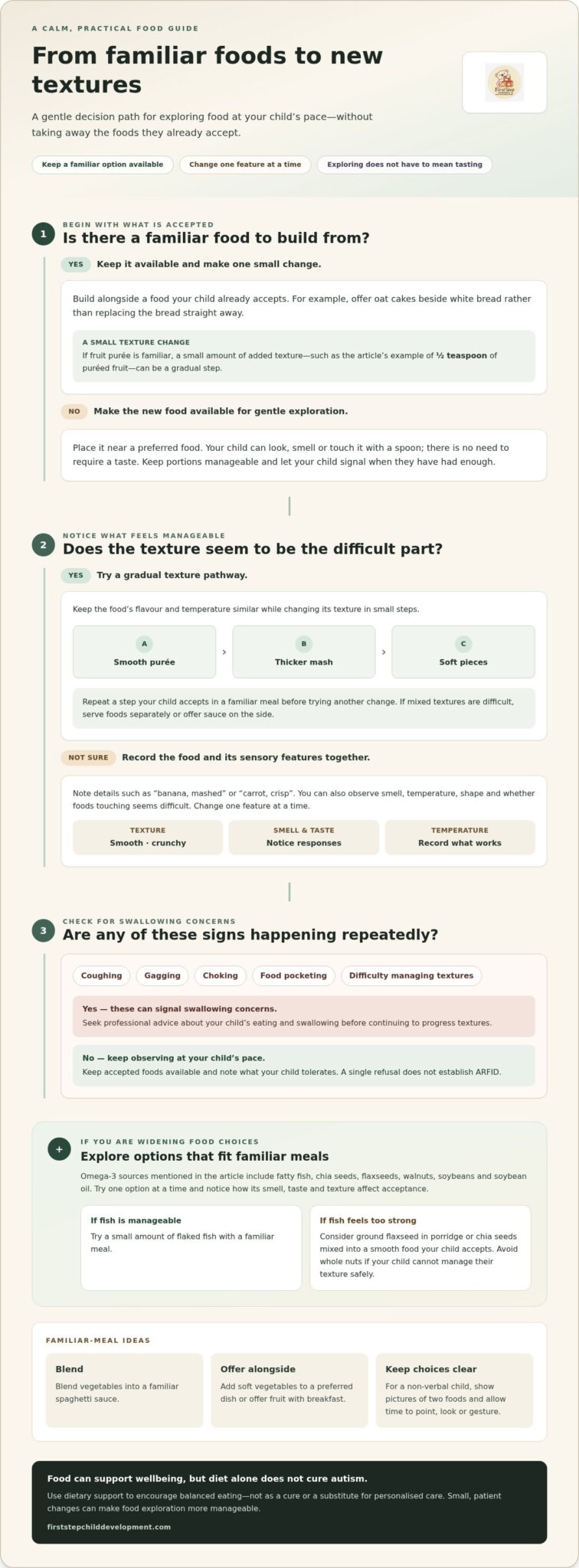
Start with a food your child already accepts, then make one small change. A familiar taste, shape or brand can make a new option feel less unfamiliar. If your child eats white bread, for example, offer oat cakes alongside it rather than replacing the bread straight away.
Jack, aged 8, gradually expanded his accepted foods from white bread to oat cakes. Amy, aged 5, already ate fruit purée; her mother added ½ teaspoon of puréed fruit to it while introducing more texture. These examples show two ways to build from a familiar starting point: change the food itself gradually, or adjust its texture in a small step.
Try a simple sequence: place a new food near a preferred food, let your child explore it, then offer a small taste when they seem ready. For example, serve a familiar cracker beside a new whole-grain cracker. Keep the accepted option available and note which flavours, brands or textures your child tolerates.
For fibre, offer suitable forms of foods such as beans, lentils, whole grains, fruit, vegetables, nuts and seeds. Fibre supports healthy gut bacteria, bowel movements and stable blood sugar. Choose foods your child can safely manage, such as soft-cooked lentils or mashed beans.
In Malaysia, familiar meals can provide a starting point: add soft vegetables to a preferred dish or offer fruit alongside breakfast. Choose cereal, crackers, bread or pasta labelled 100% whole-grain; products that are not 100% whole-grain are refined carbohydrates. To reduce added sugar, compare packaged options and offer fruit for sweetness instead of relying on sweetened drinks or snacks.
Yogurt, kefir, pickles, sauerkraut and kimchi are examples of probiotic foods. Look for fermented foods in the refrigerated section, since shelf-stable foods are not necessarily fermented. Introduce one option at a time and observe how your child responds.
2. Omega-3 food sources
Omega-3 fats occur in fatty fish, flaxseeds, chia seeds, walnuts, soybeans and soybean oil. For example, offer a familiar meal with a small amount of flaked fish, or try chia seeds mixed into a smooth food your child already accepts. Choose one option at a time and notice how its smell, taste and texture affect acceptance.
Some autistic children may have lower blood levels of omega-3 fats, but this does not make a particular food acceptable to every child. If fish feels too strong, consider another source, such as ground flaxseed stirred into porridge or a thin layer of smooth nut butter. Avoid whole nuts for children who cannot manage their texture safely.
Repeated coughing, gagging, choking, food pocketing or difficulty managing textures can signal swallowing concerns. Avoidant/restrictive food intake disorder (ARFID) involves persistent restriction that affects nutrition, growth or daily life; a single refusal does not establish it.
For a non-verbal child, use a simple choice board with pictures of two foods, such as fish and tofu, and allow time to point, look or gesture. Record responses to each food, including preferred temperature, smell and texture. These observations can help caregivers communicate needs consistently.
Food aversions may relate to sensory features, not just flavour. Let your child explore a new food with a spoon or touch it without requiring a taste. For example, place soft-cooked vegetables beside a preferred meal, then offer a small serving separately. Keep portions manageable and let your child signal when they have had enough.
Beans, lentils, soybeans, nuts and seeds can contribute variety alongside omega-3 sources, while fruits and vegetables offer additional nutrient-rich choices. If a narrow range of accepted foods makes balanced eating difficult, a child developmental assessment can help families discuss broader developmental needs.
Possible signs of food sensitivity in a child include eczema or hives, digestive issues and behaviour challenges. Commonly reported food sensitivities include gluten, dairy, corn and soy. Gradually expand fruit and vegetable choices, starting with foods your child likes. If textures are difficult, puree vegetables into spaghetti sauce or blend fruit into a smoothie.
In the leaflet’s example, Paul’s mother increased his chicken-dipper portions from 4 to 10 before reducing them to 5. The leaflet advises giving children Healthy Start vitamin drops until they are 4 years old.
3. Adapting meals for texture preferences
A child may accept a flavour in one texture but reject it in another. Notice whether smooth, crunchy, soft or mixed foods seem easier to manage. For example, a child who eats plain rice may avoid porridge because its consistency feels unfamiliar. Record the food and texture together, such as “banana, mashed” or “carrot, crisp”. This gives you a clearer starting point for changes.
For fruit and vegetables, adapt familiar dishes rather than changing the whole meal. Blend vegetables into spaghetti sauce or fruit into a smoothie. If mixed textures are difficult, serve the sauce separately at first. You can also offer a small taste beside a familiar food, so your child can explore without losing access to a preferred meal.
Try a gradual texture pathway using one food. For example, offer smooth pumpkin purée, then a thicker mash, then soft pieces. Keep its flavour and temperature similar while changing the texture. If your child accepts one step, repeat it in a familiar meal before trying another change. This makes it easier to notice which adjustment your child tolerates.
Exploration can happen without eating. Place a slice of pear on a plate and let your child look at it, touch it with a spoon or smell it. A simple choice between two textures, such as smooth yoghurt and soft fruit pieces, can also help you observe preferences. Keep the options separate if foods touching causes distress.
At Malaysian family meals, you might blend pumpkin into a familiar sauce or offer soft banana in a smoothie. Keep a preferred food available and change one feature at a time: texture, shape or temperature. A short note after meals can record what was offered and how your child responded. Share the pattern with the people who prepare meals, so they can use familiar textures consistently.
4. Dietary support and autism
A balanced diet for a non-verbal autistic child includes a variety of foods from familiar choices, with attention to nutrition and safe eating. Across the day, offer protein, fruit or vegetables, and grain foods in forms your child can manage.
Gluten-free or casein-free diets aren’t a general cure for autism. Removing wheat or dairy can narrow an already limited menu, so plan suitable replacements with a qualified nutrition professional rather than making broad exclusions on your own.
Seek paediatric dietetic or feeding support if your child accepts very few foods, mealtimes cause ongoing distress, or growth and weight are concerning. Coughing, choking or difficulty swallowing also calls for prompt professional attention, as these concerns need more than menu changes.
Malaysian meals can offer varied options: rice with egg or tofu, ikan kembung with soft vegetables, or fruit such as papaya. Adapt texture and presentation to your child’s preferences, and keep a record of foods accepted, refused or associated with discomfort. That record can help a professional understand the pattern.
Diet supports wellbeing, but it doesn’t cure autism. A practical routine can include 3 meals and 3 snacks daily, with protein offered 2-3 times per day. Choose water and, if your family uses it, milk as regular drinks; limit sweetened drinks and foods with added sugar. Beans, lentils, eggs, fish and tofu can add protein options. The best starting point is a routine your child can manage, with gradual changes that preserve familiar foods.
If feeding concerns occur alongside developmental questions, a child developmental assessment can help clarify what support may be useful for your child.
Some autistic individuals may have food sensitivities that limit dietary magnesium intake and may make supplementation necessary. Reduce sugar intake, choosing natural sugars from fruits, vegetables and whole grains instead. If a child does not eat whole nuts and seeds, nut butter is an option.
The leaflet advises avoiding the same meal on 2 consecutive days for children with autism. It also advises limiting main meals to 20-30 minutes and not letting the first course last longer than 20 minutes.
Firststep Psychology & Child Development Centre: Clinical Psychologist Consultation
Firststep Psychology & Child Development Centre offers Clinical Psychologist Consultation for parents seeking support with a child’s developmental or emotional needs. If mealtimes are difficult alongside communication, behaviour or learning concerns, a consultation can help you discuss these patterns and consider suitable next steps. It doesn’t replace nutrition advice, but it can help you understand broader developmental concerns affecting daily routines.
An Autism Assessment may be relevant if you’re seeking a clearer understanding of your child’s developmental profile. Bring practical examples, such as foods your child accepts, mealtime communication cues and situations that cause distress. These details can help guide the discussion.
If you’d like to explore support, visit Firststep Psychology & Child Development Centre at your own pace.
Take the next step at your family’s pace
Food progress doesn’t need to look the same for every child. Noticing what helps your child feel comfortable at meals can guide thoughtful decisions over time, without aiming for a perfect diet for a non-verbal autistic child.
If you’d value support with food choices, a Nutritionist Consultation may help you consider your child’s nutritional needs alongside their preferences. A professional discussion can also help you decide what questions to explore next.
For a gentle next step, contact Firststep Psychology & Child Development Centre to discuss support for your family. Each small, considered step can help you move forward with greater clarity.
Frequently Asked Questions
How can sensory sensitivities affect food choices in autistic children?
Sensory sensitivities can make a food’s smell, temperature, colour or mouthfeel difficult to tolerate. A child might accept cold, smooth yoghurt but reject the same food at room temperature. Notice whether packaging, presentation or mixed textures affect acceptance, and record these observations alongside the food. This can help caregivers identify patterns and choose adjustments without assuming refusal means the child dislikes the flavour.
How can parents introduce new foods to an autistic child safely?
Offer a small amount of a new food alongside a familiar meal, and change one feature at a time. Keep your child seated and attentive during eating, and use a texture they can manage comfortably. Avoid pressure or hiding ingredients, which can make it harder to notice preferences or reactions. If coughing, choking or difficulty swallowing occurs, pause the food and seek appropriate professional advice.
What nutritional deficiencies are common in autistic children with restricted diets?
There isn’t one deficiency that applies to every autistic child; risk depends on which food groups are missing and for how long. A narrow range of accepted foods may limit nutrients such as magnesium, particularly if few magnesium-containing foods are included. Keep a record of usual foods and drinks to share with a qualified nutrition professional. They can assess the overall pattern and whether dietary changes or supplements are appropriate.

Article by
Firststep Child Development Team
Firststep Child Development Team provides evidence-informed educational resources to help parents better understand child development, behaviour and learning. Our multidisciplinary services include clinical psychology, occupational therapy, speech and language therapy, developmental assessments and other child development support in Kuala Lumpur and Selangor.
Disclaimer
This article is for general educational and informational purposes only and is not a substitute for professional medical, psychological or therapeutic advice, diagnosis or treatment. Every child develops differently. If you have concerns about your child's development, behaviour, learning or wellbeing, please consult an appropriately qualified healthcare or allied health professional.