



Childhood Apraxia of Speech: Signs Parents Should Know
Does your child know what they want to say but struggle to get the sounds out clearly, say the same word differently each time, or find longer words especially difficult?
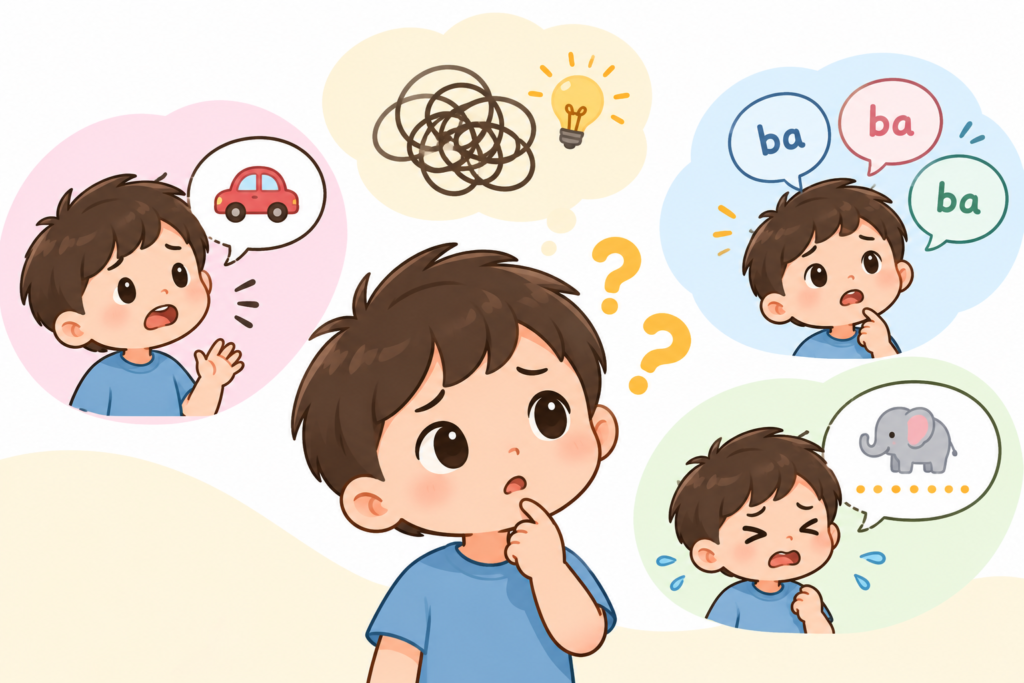
Children develop speech at different rates, and some pronunciation mistakes are expected as speech develops.
However, some children have difficulty planning and coordinating the movements needed for speech, which may be associated with Childhood Apraxia of Speech (CAS).
Recognising possible signs can help parents understand when it may be helpful to seek a professional assessment.
What Is Childhood Apraxia of Speech?
Childhood Apraxia of Speech (CAS) is a neurological speech sound disorder in which a child has difficulty planning and programming the movements needed to produce speech.
This means the child may know what they want to say, but have difficulty coordinating the movements of the lips, tongue, jaw, and other structures involved in speech.
CAS is different from simply developing speech more slowly, and it is also different from speech difficulties caused primarily by muscle weakness.
It is important to remember that not every child who has difficulty pronouncing sounds has CAS.
1. Says the Same Word Differently
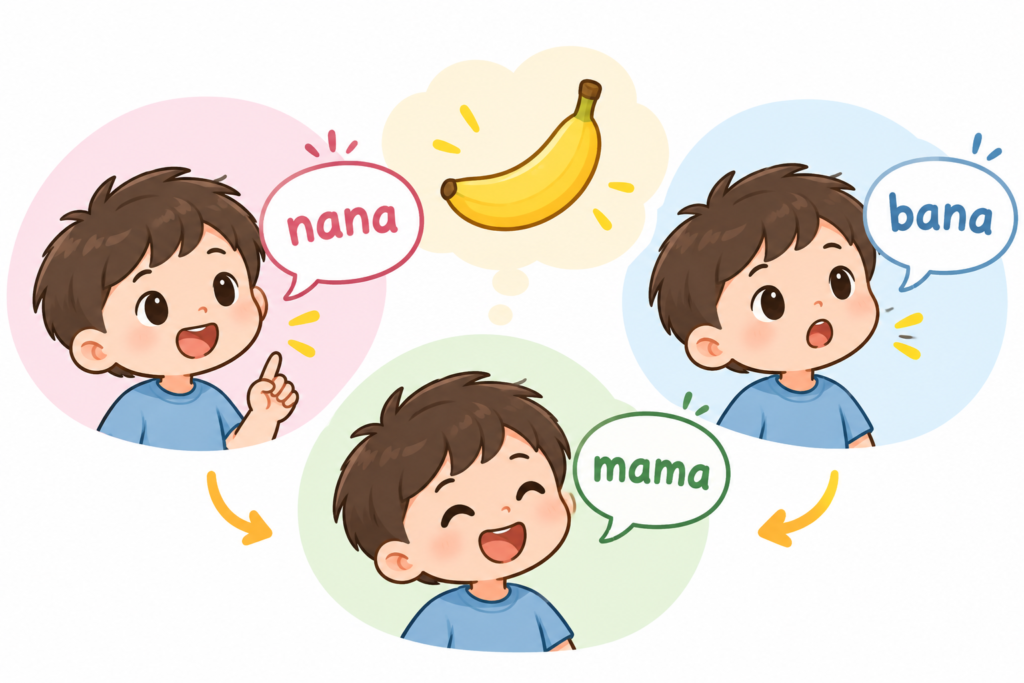
Your child may pronounce the same word differently each time they try to say it.
For example, they may say a word correctly once but produce it differently when they repeat it.
Inconsistent speech errors are one of the features that may be seen in CAS.
2. Has Difficulty With Longer Words
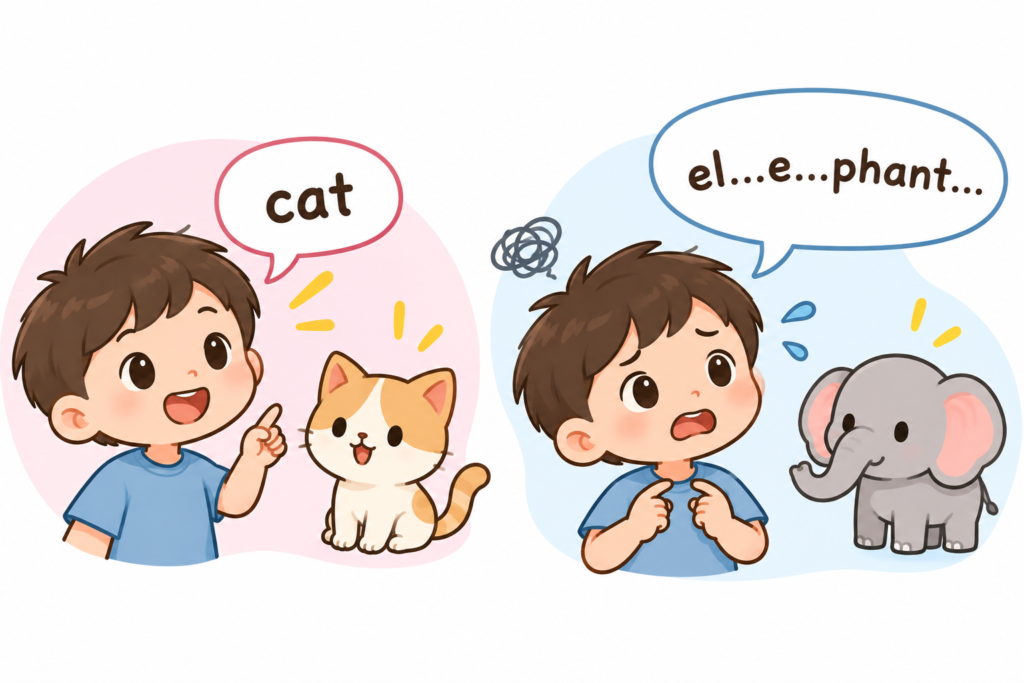
Your child may find longer or more complicated words harder to say than shorter words.
For example, they may manage a simple word but struggle when a word contains several syllables or more complicated sound combinations.
You may notice that their speech becomes less clear as words become longer or more complex.
3. Struggles to Move Smoothly Between Sounds
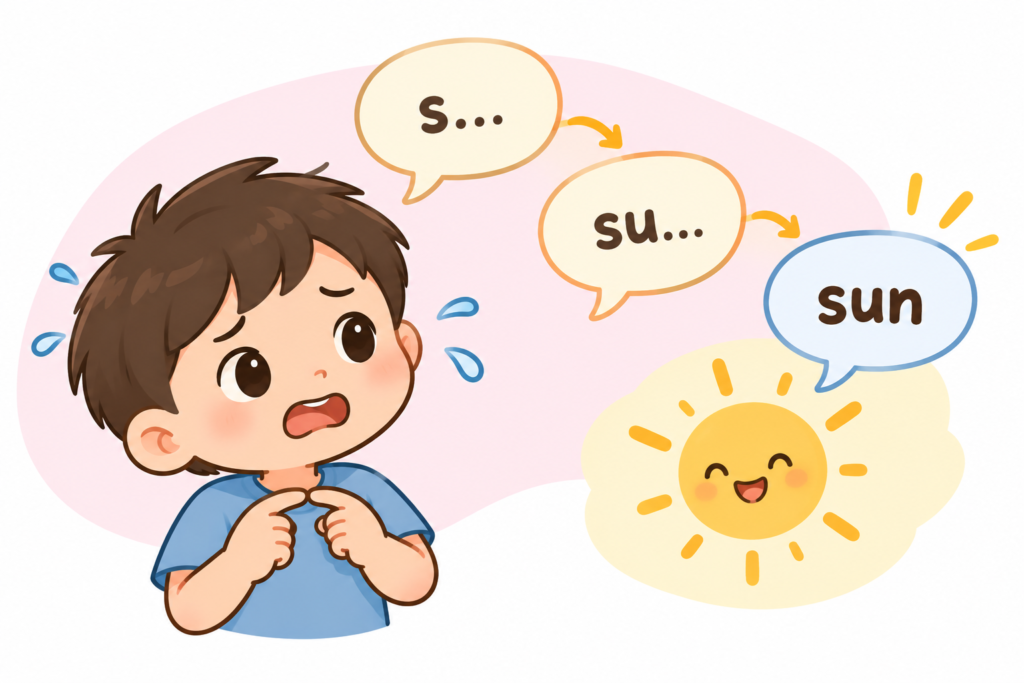
Your child may have difficulty moving smoothly from one sound or syllable to the next.
You may notice:
- Pauses between sounds
- Syllables that sound separated
- Speech that sounds slow or effortful
- Difficulty putting sounds together smoothly
These disrupted transitions can be one of the speech characteristics associated with CAS.
4. Seems to Search for the Right Sound
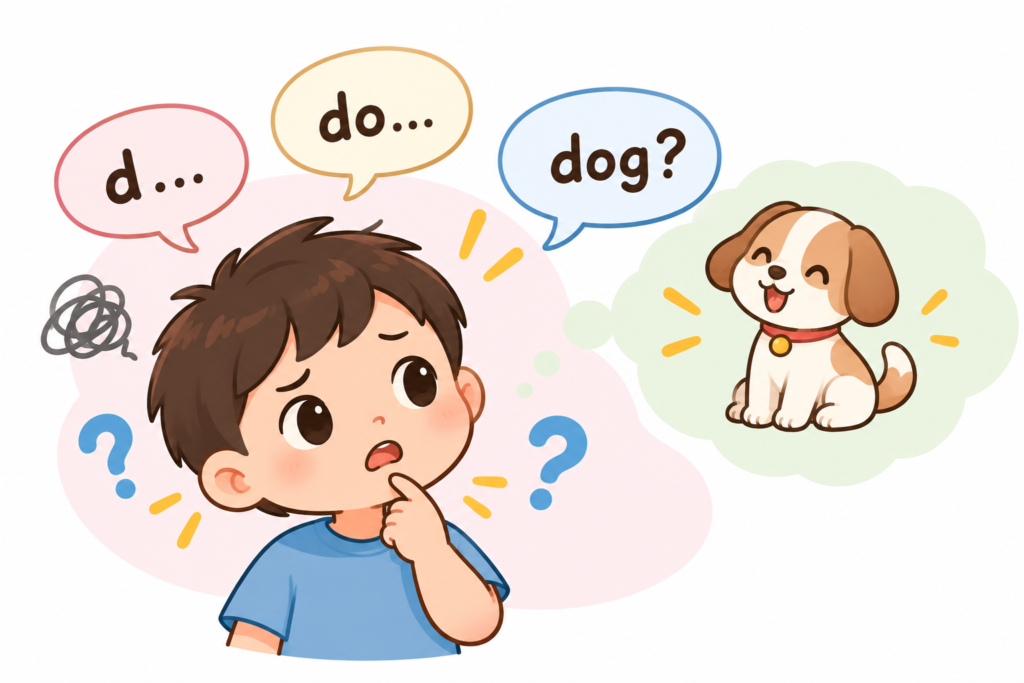
Your child may appear to struggle or “grope” for the right sound before producing a word.
For example, they may move their mouth several times, restart a word, or try saying the word repeatedly before producing it.
This can happen because the child is having difficulty planning the movements needed for the word.
5. Has Unusual Stress or Rhythm
Your child’s speech may sound different in its rhythm, stress, or intonation.
For example, they may:
- Put equal stress on different syllables
- Pause in unusual places
- Separate syllables within a word
- Sound less natural when saying longer words
Differences in prosody, particularly word or phrase stress, are among the features researchers have associated with CAS.
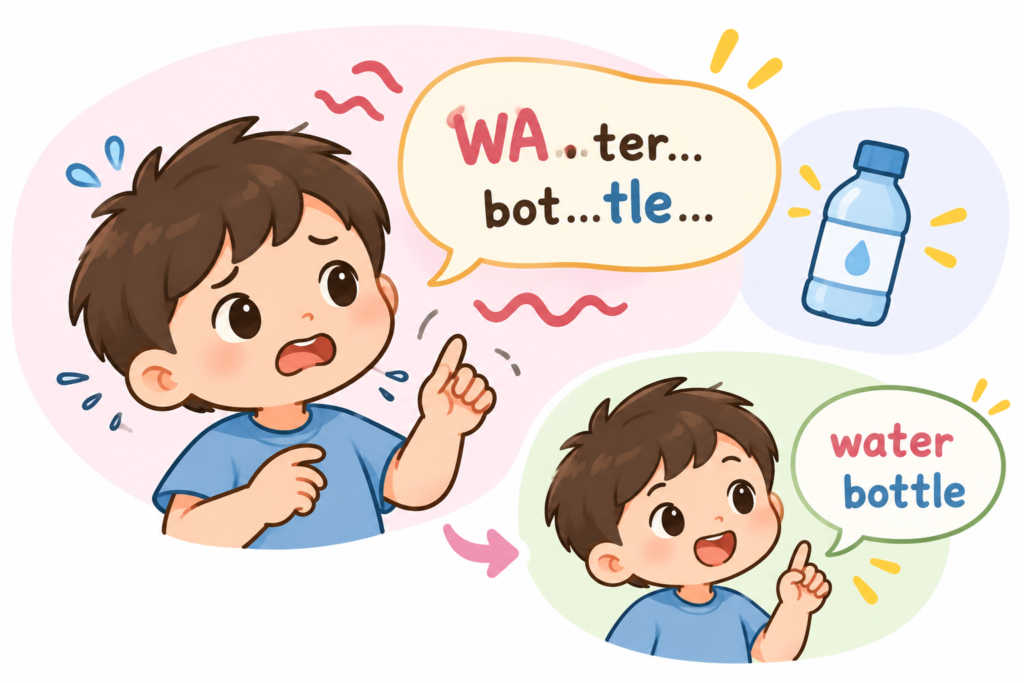
6. Becomes Frustrated When Trying to Speak
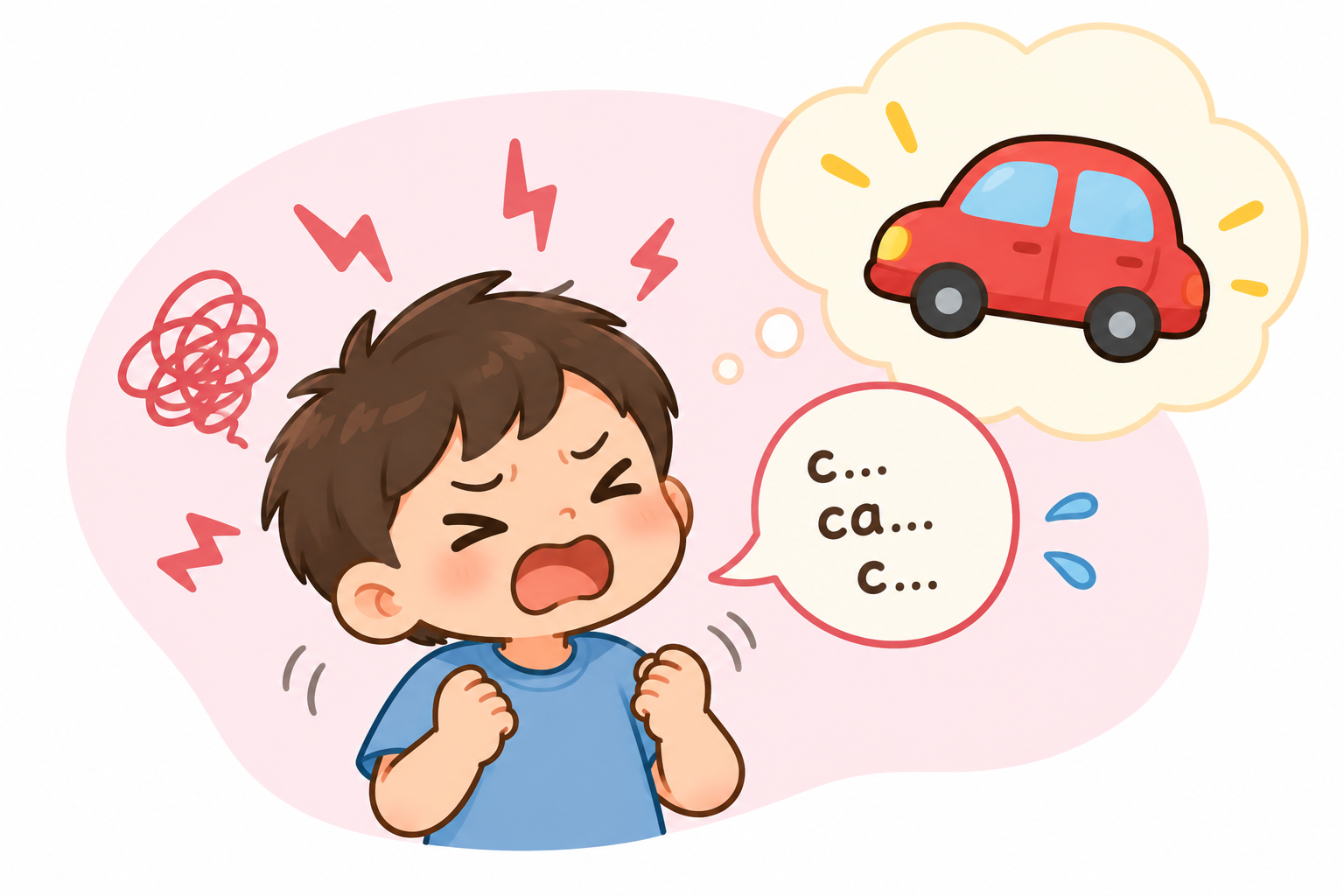
Your child may become frustrated when they know what they want to say but have difficulty producing the word clearly.
You may notice that they:
- Try saying a word several times
- Give up when they cannot produce it
- Become upset when others do not understand
- Use gestures instead of words
- Avoid speaking in certain situations
Communication difficulties can be frustrating, particularly when a child’s understanding or ideas are stronger than what they are able to express through speech.
What Can Parents Do?
1. Give Your Child Time to Respond
✿ Allow your child enough time to plan and produce their response.
✿ Try not to rush them or finish their words for them.
2. Focus on Communication, Not Perfect Speech
✿ Respond to what your child is trying to communicate rather than correcting every sound they produce.
✿ This can help keep communication positive and comfortable.
3. Practise Through Everyday Activities
✿ Use natural opportunities such as:
1. Books – Talk about pictures and allow your child time to name or describe them.
2. Pretend play – Model simple words related to the activity.
3. Songs – Sing together and give your child opportunities to join in.
4. Toys – Encourage your child to name actions, objects, or characters.
5. Daily routines – Talk about what you are doing and encourage your child to participate.
4. Avoid Repeatedly Asking Them to “Say It Again”
✿ If your child is struggling to produce a word, repeatedly asking them to repeat it may become frustrating.
✿ Instead, acknowledge what they are trying to communicate and model the word naturally when appropriate.
5. Notice Speech Patterns
✿ Pay attention to when and how your child’s speech difficulties happen.
✿ You can note whether:
1. The same word sounds different each time
2. Longer words are more difficult
3. Your child pauses between sounds or syllables
4. Certain words are consistently difficult
5. Your child becomes frustrated when speaking
✿ This information can be helpful when discussing your concerns with a professional.
6. Keep Communication Positive
✿ Encourage your child when they attempt to communicate, even when their speech is difficult to understand.
✿ Give them time to try, listen patiently, and focus on what they are trying to say rather than how perfectly they say it.
When Should Parents Seek Professional Advice?
❀ Consider seeking an assessment if your child’s speech difficulties are persistent, inconsistent, difficult to understand, or affecting their ability to communicate.
❀ You can seek an assessment from a Speech-Language Therapist, particularly one with experience in paediatric motor speech disorders.
❀ A Speech-Language Therapist can look at your child’s speech across different tasks and contexts and consider whether the pattern is consistent with CAS or another speech sound difficulty.
❀ There is no single symptom or test that confirms CAS, so a comprehensive assessment is important.
Key Takeaway
❀ Childhood Apraxia of Speech can affect how a child plans and coordinates the movements needed for speech.
❀ Some possible signs include inconsistent speech errors, difficulty with longer words, disrupted transitions between sounds, unusual stress or rhythm, and difficulty producing words smoothly.
❀ However, Childhood Apraxia of Speech is not the same as general speech delay or other speech sound difficulties.
❀ Similar difficulties can occur with other speech sound disorders, so it is important to look at the child’s overall speech and communication profile.
❀ If your child’s speech difficulties persist or affect their communication, you can seek an assessment from a Speech-Language Therapist to better understand your child’s speech needs and identify appropriate support.
❀ The goal is not to label the difficulty, but to understand how your child communicates and provide the right support to help them communicate more clearly and confidently.
🌟 Stay Connected with Us! We love sharing tips, insights, and inspiring stories about children’s growth and mental wellbeing.
💙 Follow us on Instagram and Facebook for more updates and parenting advice.
Join our community and let’s grow together. One positive step at a time!

References
American Speech-Language-Hearing Association. (n.d.). Childhood apraxia of speech.
https://www.asha.org/practice-portal/clinical-topics/childhood-apraxia-of-speech/
National Institute on Deafness and Other Communication Disorders. (n.d.). Apraxia of speech.
https://www.nidcd.nih.gov/health/apraxia-speech
National Institute on Deafness and Other Communication Disorders. (n.d.). Speech and language developmental
milestones. https://www.nidcd.nih.gov/health/speech-and-language
Working Hours
Tuesday to Saturday – 8.30am to 6pm
Monday & Sunday – Closed
Please also subscribe us at
Contact Us
Discover Our Team!
📞+60102502833
firststepdevelopmentcentre@gmail.com
B1-7, Plaza Damas 3, Jalan Sri Hartamas 1, 50480 Kuala Lumpur.
Copyright 2025. Firststep Child Development Sdn Bhd. All rights reserved.