



You’re sitting in the car, the diagnostic report on the passenger seat, and for the first time in months, everything feels quiet. While the diagnosis provides an answer, it often brings a new wave of questions about what to do after autism diagnosis Malaysia. You might feel a heavy sense of exhaustion from the journey so far, coupled with a sudden confusion about where to turn next. It’s a moment many parents in Kuala Lumpur and Selangor face, where the relief of finally knowing is quickly replaced by the weight of planning for the future.
We understand that this transition feels overwhelming, especially when you’re trying to distinguish between government support and private therapy. You aren’t alone in feeling lost or worrying about long term costs and school placements. This guide is designed to replace that uncertainty with a clear, actionable roadmap. We’ll help you manage these first steps with confidence, ensuring your child receives the specialised support they need to thrive.
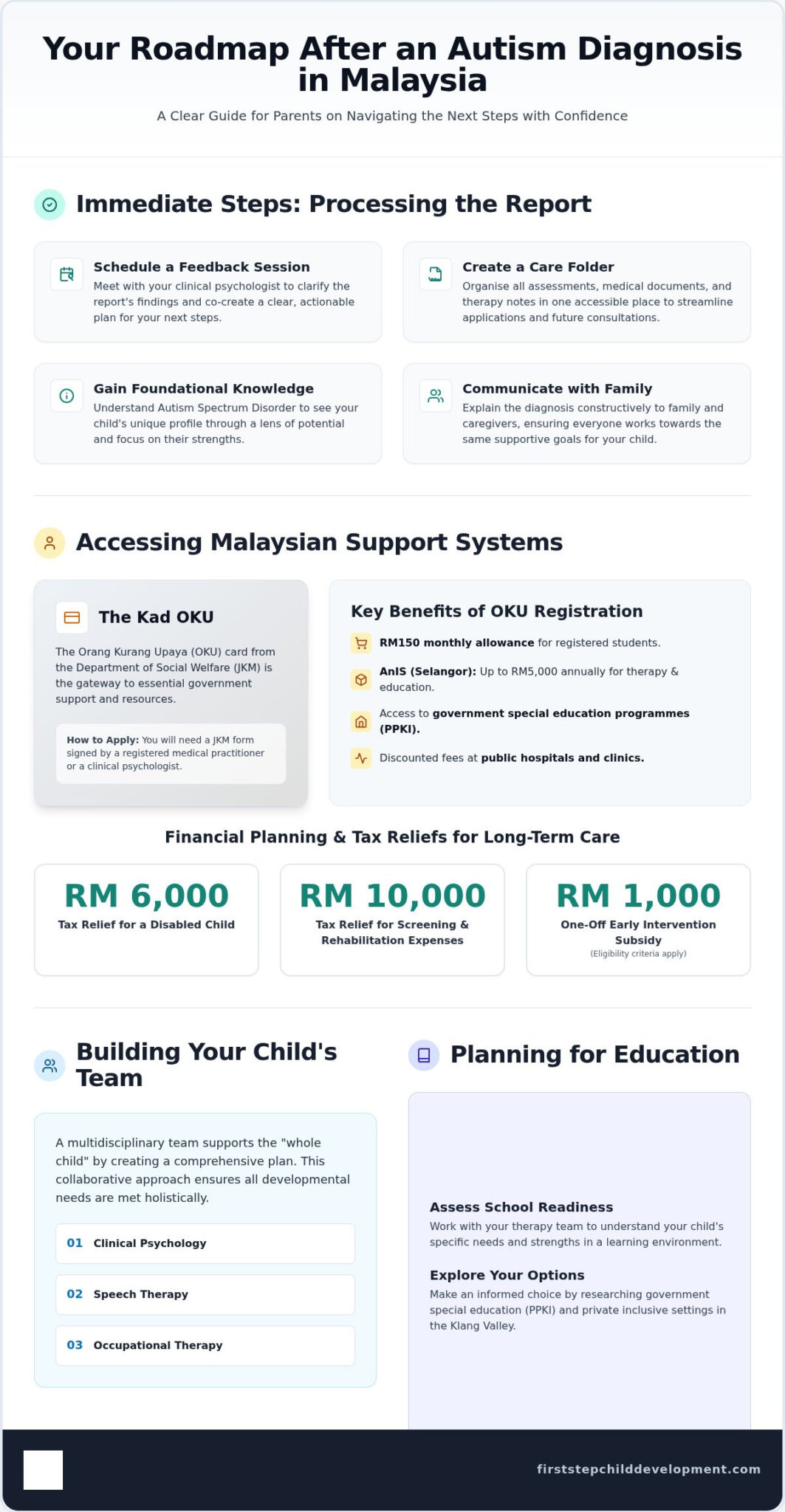
We will explain how to access Malaysian government benefits like the Kad OKU and the RM1,000 early intervention subsidy. We also explore choosing multidisciplinary therapies in the Klang Valley and maximising tax reliefs for your family’s journey ahead.
Key Takeaways
- Schedule a personalised feedback session with your clinical psychologist to clarify the diagnostic report’s findings and validate your next steps.
- Learn how to navigate government support systems, including JKM registration for an OKU card and LHDN tax reliefs, as you decide what to do after autism diagnosis Malaysia.
- Build a multidisciplinary team that includes speech and occupational therapy to ensure all aspects of your child’s communication and development are supported holistically.
- Assess your child’s school readiness to make an informed choice between government special education programmes and private inclusive settings in the Klang Valley.
Immediate Steps: Processing Your Child’s Diagnostic Report
Receiving the report is often a moment of heavy emotional processing. It’s okay to step back and breathe before diving into a frantic schedule. Validating your feelings is the first essential step in determining what to do after autism diagnosis Malaysia. Once the initial shock subsides, start by organising a dedicated care folder. This should house every assessment, medical document, and therapy note in one accessible place. Having a structured system reduces the administrative burden and ensures you’re prepared for upcoming school or government applications.
A vital part of this early stage is gaining foundational knowledge. Understanding Autism Spectrum Disorder helps you view your child’s unique profile through a lens of potential rather than just deficits. Focus on the report’s immediate priorities, such as safety or functional communication, to avoid feeling overwhelmed by the entire list of recommendations. Taking a methodical approach now prevents decision fatigue later.
Understanding the Recommendations
A thorough clinical psychologist consultation is the most effective way to translate a dense report into a clear plan. During this session, you can distinguish between immediate goals, like addressing feeding issues, and long term developmental milestones. This clarity allows you to prioritise interventions that offer the most significant impact on your child’s daily quality of life while avoiding therapy burnout for your family.
Communicating with Family and Caregivers
Sharing the news requires a gentle, constructive approach. Explain the diagnosis to siblings using age appropriate language that focuses on how your child learns and experiences the world differently. For domestic helpers or grandparents, provide specific instructions regarding sensory triggers or communication needs. This ensures everyone in the home environment is working toward the same supportive goals, creating a stable and predictable atmosphere for your child to grow.
Navigating Malaysian Support Systems: OKU Cards and Financial Aid
Determining what to do after autism diagnosis Malaysia involves moving from clinical understanding to administrative action. The primary gateway for government support is the Kad OKU (Orang Kurang Upaya), issued by the Department of Social Welfare (JKM). While some parents hesitate due to concerns about labelling, this card unlocks essential resources. For instance, registered students receive a monthly allowance of RM150, and families in Selangor can access the Bantuan Khas Anak Istimewa Selangor (AnIS), providing up to RM5,000 annually for therapy and education.
The Pros and Cons of OKU Registration
Registering your child is a personal decision. The benefits include access to government special education programmes (PPKI), discounted healthcare at public hospitals, and significant financial aid. To apply, you’ll need a JKM form signed by a registered medical practitioner or a clinical psychologist. Many families find that the practical support far outweighs any perceived stigma, especially when navigating the costs of early intervention. Consulting with a specialist can help you understand which financial pathways best suit your family’s circumstances.
Financial Planning for Long-Term Therapy
Therapy is an investment in your child’s future. You can maximise Malaysian tax reliefs to manage these costs effectively. As of 2026, parents can claim up to RM6,000 for a disabled child and an additional relief of up to RM10,000 for expenses related to screening and rehabilitation. This includes the initial autism assessment and subsequent multidisciplinary care. For community support, the National Autism Society of Malaysia (NASOM) offers various programmes that complement private therapy. Eligible children may also receive a one-off RM1,000 subsidy to help cover intervention fees, provided they meet the current eligibility criteria.
Building Your Child’s Multidisciplinary Therapy Team
A central part of what to do after autism diagnosis Malaysia is assembling a specialised multidisciplinary team. Supporting the ‘whole child’ rather than just treating isolated symptoms ensures that every developmental need is met. This collaborative approach combines different expertise to create a comprehensive support system tailored to your child’s unique profile, promoting growth across communication, motor, and social domains.
Speech Therapy is often a priority for many families, focusing on functional communication and the social nuances of interaction. Parallel to this, Pediatric Occupational Therapy addresses sensory processing and the fine motor skills required for daily living. By integrating these disciplines with play-based methods, therapy becomes a natural extension of a child’s world, fostering emotional regulation and genuine social engagement in a way that feels safe and supportive.
Prioritising Interventions
Determining whether to start with speech, OT, or a combined Early Intervention Programme (EIP) depends on your child’s most pressing challenges. If communication barriers lead to significant frustration, speech therapy is a logical starting point; however, if sensory overload prevents focus, OT provides the necessary foundation for learning. At Firststep, our therapists collaborate through integrated case reviews to ensure consistent progress and a unified developmental strategy for your child. To begin building your team, you can schedule a parent consultation to discuss a personalised intervention plan.
The Role of Nutrition and Play
Many children face sensory-based feeding issues, often described as ‘picky eating.’ A nutritionist consultation provides practical strategies to expand a child’s diet without causing distress. Using therapeutic play further bridges the gap between clinical goals and the home environment. It allows children to practice new skills in a safe, child-centred space where they feel empowered to explore and learn at their own pace, ensuring therapy remains a positive experience.
Planning for Schooling and Future Milestones in Malaysia
Choosing an educational path is often the most significant decision when deciding what to do after autism diagnosis Malaysia. In Kuala Lumpur and Selangor, parents can choose between Government Special Education (PPKI), private inclusive schools, or specialised autism centres. Each setting offers different levels of support, and the right choice depends on your child’s current social and academic skills. Before transitioning to a formal classroom, a School Readiness Assessment is vital. This evaluation helps determine if your child is prepared for the sensory and social demands of school or if further early intervention is required.
Inclusive Education in KL and Selangor
When evaluating schools in the Klang Valley, look for environments that prioritise Individual Education Plans (IEPs). These plans ensure that teaching methods are adapted to your child’s specific learning style. Many inclusive schools also allow shadow aides, who provide one-on-one support within the classroom. An autism-friendly school should offer structured routines and quiet spaces for sensory breaks, helping your child feel secure while they learn.
Long-Term Advocacy and Support
Your journey involves setting realistic milestones and celebrating small wins, such as a new word or a successful social interaction. These moments are the true indicators of progress. Joining local parent support groups can provide invaluable emotional strength and shared resources. As your child moves from early intervention to primary school and beyond, remember that your well-being is essential. Prioritising self-care isn’t selfish; it ensures you remain a resilient and effective advocate for your child’s future. Building a community of supportive professionals and fellow parents creates a sustainable foundation for long term growth.
Moving Forward with Confidence and Clarity
Navigating the next steps involves balancing clinical intervention with practical administrative support. By understanding how to access government aid and tax reliefs, you create a sustainable financial foundation for your family. Building a multidisciplinary team that incorporates speech and occupational therapy ensures your child’s developmental needs are met through a holistic, professional lens. When you are deciding what to do after autism diagnosis Malaysia, remember that clarity comes from taking one intentional step at a time.
At Firststep, we provide a gentle, play-based environment where our multidisciplinary team in KL and Selangor supports your child’s growth. We offer personalised feedback sessions for every parent to ensure you feel empowered and informed. Ready to take the first step? Learn more about our Autism Support Services and Assessments or visit our homepage to connect with our specialists. You are your child’s most important partner in this journey, and with the right guidance, their future is bright and full of potential.
Frequently Asked Questions
Is the OKU card mandatory after an autism diagnosis in Malaysia?
No, registering for an OKU card is entirely voluntary. It is a personal choice made by parents based on their family’s needs and long term goals. While the card provides access to government allowances and inclusive education programmes, not having one doesn’t prevent you from accessing private healthcare. It’s simply a supportive tool to help you manage what to do after autism diagnosis Malaysia by unlocking specific state and federal resources.
How do I choose between a government hospital and a private centre for therapy?
The choice usually depends on your family’s budget and the required frequency of sessions. Government hospitals provide high quality, affordable care but often have longer waiting lists and less frequent appointments. Private centres in Kuala Lumpur and Selangor offer immediate access to multidisciplinary teams and more intensive therapy schedules. Many parents choose a hybrid model, attending government follow ups while using private clinics for consistent, weekly speech or occupational therapy.
Can my child attend a ‘normal’ school after being diagnosed with autism?
Yes, many children with autism successfully attend mainstream schools. Success depends on the child’s individual needs and the school’s ability to provide reasonable accommodations. Some families choose private inclusive schools that offer dedicated learning support, while others utilise the government’s Special Education Integration Programme (PPKI). A school readiness assessment is often the best way to determine if your child can thrive in a standard classroom or requires a shadow aide.
What financial assistance does the Malaysian government provide for autistic children?
Registered OKU students in government schools receive the RM150 monthly Special Needs Student Allowance (EMBPK). Additionally, a one-off RM1,000 subsidy is available for eligible children to help cover early intervention fees. Parents can also claim significant LHDN tax reliefs for therapy and equipment. These financial supports are essential for families planning what to do after autism diagnosis Malaysia, helping to offset the costs of specialised care and multidisciplinary therapy.
How many hours of therapy does my child need per week?
Recommended therapy hours vary significantly based on your child’s specific developmental profile. Most specialists suggest between two and five hours of structured intervention per week, often combining speech and occupational therapy. The focus isn’t just on the time spent in the clinic, but on the consistency of implementing strategies at home. Your clinical psychologist will provide a personalised recommendation based on your child’s communication, sensory, and social needs after their assessment.

Article by
Firststep Child Development Team
Firststep Child Development Team provides evidence-informed educational resources to help parents better understand child development, behaviour and learning. Our multidisciplinary services include clinical psychology, occupational therapy, speech and language therapy, developmental assessments and other child development support in Kuala Lumpur and Selangor.
Disclaimer
This article is for general educational and informational purposes only and is not a substitute for professional medical, psychological or therapeutic advice, diagnosis or treatment. Every child develops differently. If you have concerns about your child's development, behaviour, learning or wellbeing, please consult an appropriately qualified healthcare or allied health professional.