10 Signs Your Child May Have ADHD : Early Symptoms Parents Should Know

Every child can be active, distracted, or forgetful sometimes. But what happens when these behaviours start affecting your child’s learning, friendships, or daily life?

Many parents wonder whether their child is simply energetic or if something more may be going on. One possible explanation could be Attention-Deficit/Hyperactivity Disorder (ADHD)

– a neurodevelopmental condition that affects how children focus, control impulses, and manage their energy

The good news is that early recognition can make a meaningful difference. With the right support, children with ADHD can thrive in school, learn techniques to manage their challenges, and grow into confident adults.

The challenge for many parents is knowing when behavior is simply part of growing up and when it may be a sign of ADHD. Understanding the early symptoms can help parents seek the right support and guidance for their child.

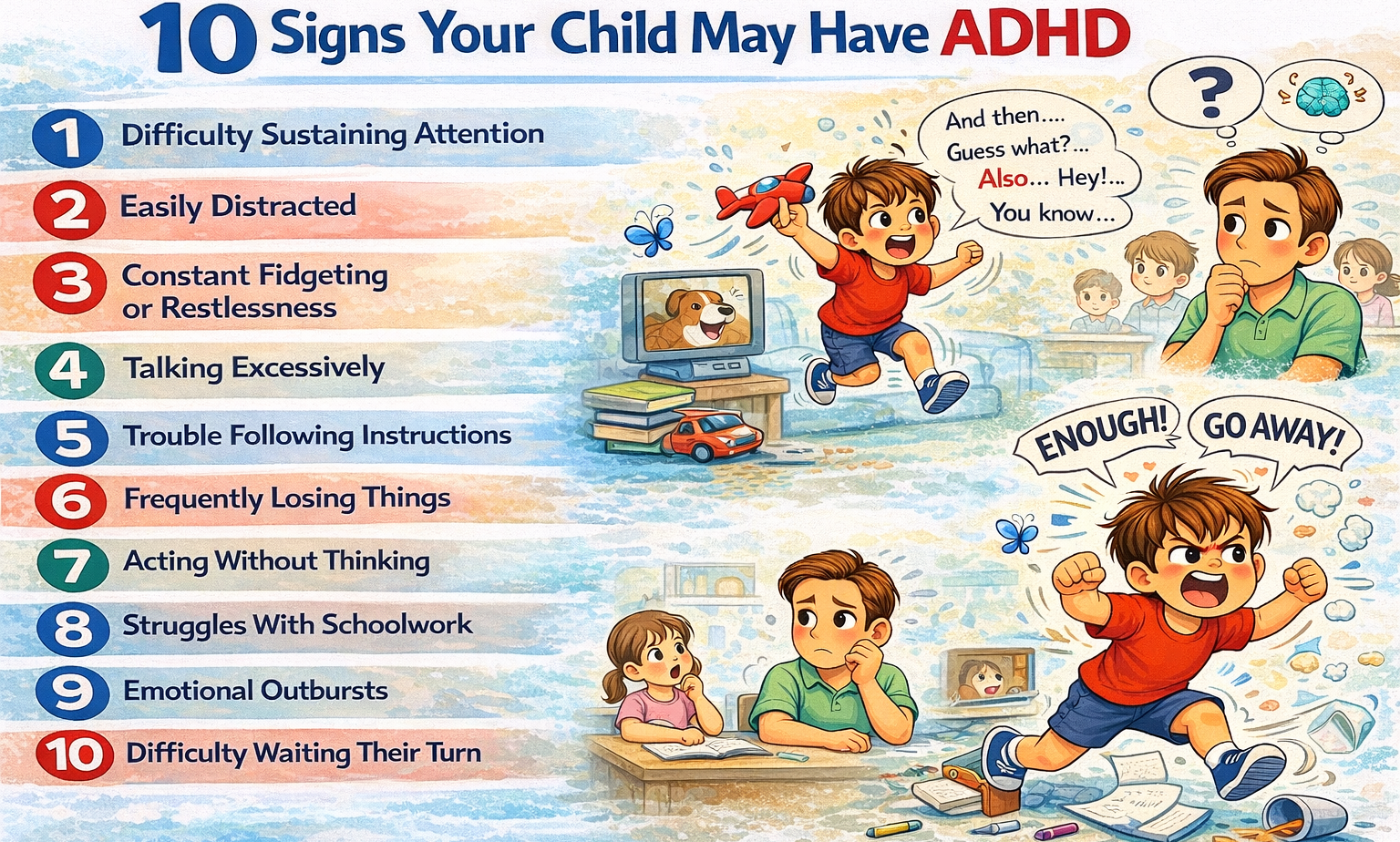
Below are 10 common signs your child may have ADHD that parents should pay attention to. (National Institute of Mental Health, 2024)

[:en]child ADHD symptoms infographic[:]

1. Difficulty Sustaining Attention

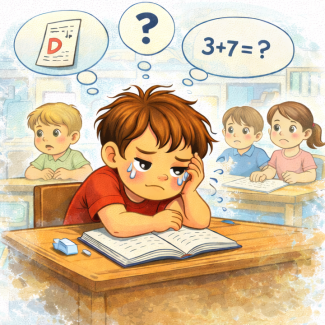
One of the most common signs of ADHD is difficulty sustaining attention.

Your child may:

  • Start homework but struggle to finish it
  • Make careless mistakes in schoolwork
  • Appear to be daydreaming frequently
  • Seem like they are not listening when spoken to

Teachers often notice this behavior when a child loses focus during lessons or instructions.

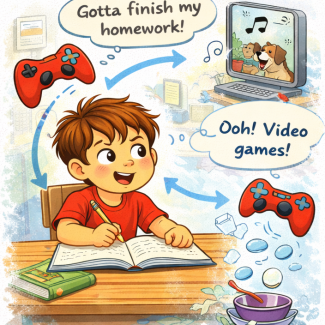
[:en]Difficulty Sustaining Attention illustration[:]
[:en]Easily Distracted Illustration[:]

2. Easily Distracted

Children with ADHD are often highly sensitive to distractions.

Even small things like sounds, movements, or background activity can cause them to lose focus. For example:

  • Homework stops when the TV turns on
  • Studying pauses because someone is talking nearby
  • Attention shifts quickly between tasks

This can make schoolwork and studying more difficult than usual.

3. Constant Fidgeting or Restlessness

Some children with ADHD appear to have endless energy.

They may:

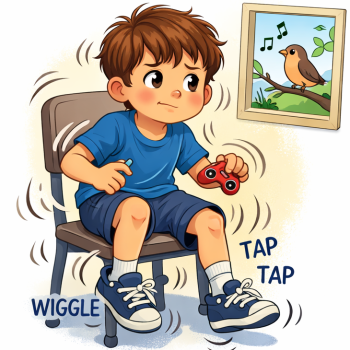
  • Fidget constantly
  • Tap their hands or feet
  • Squirm in their seat
  • Struggle to stay seated during class or meals

Parents often describe it as their child having a motor that never stops running.

[:en]Constant Fidgeting or Restlessness Illustration[:]
[:en]Talking Excessively[:]

4. Talking Excessively

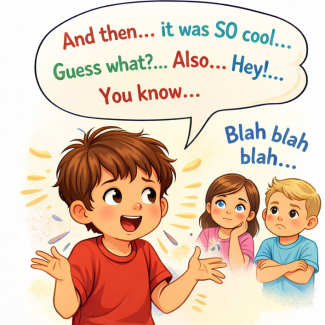
Children with ADHD sometimes struggle to control how much they talk.

They may:

  • Interrupt conversations
  • Answer questions before they are finished
  • Speak out of turn in class

This behavior is usually linked to impulse control difficulties rather than intentional misbehavior.

5. Difficulty Following Instructions

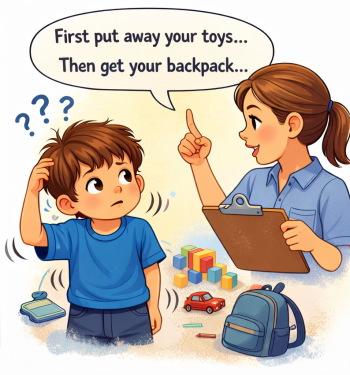
Parents may find themselves repeating instructions multiple times.

Children with ADHD might:

  • Forget what they were asked to do
  • Miss important steps in tasks
  • Start a task but become distracted halfway through

Even simple instructions like packing a school bag may become challenging.

[:en]Difficulty Following Instructions[:]
[:en]Frequently Losing Things[:]

6. Frequently Losing Things

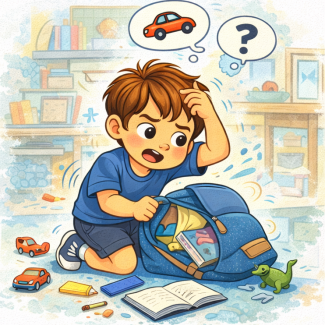
Children with ADHD often struggle with organization and memory.


They may frequently lose items such as:

  • Books
  • Pencil cases
  • Homework
  • Water bottles


This happens because ADHD can affect working memory and attention to detail.

7. Acting Without Thinking

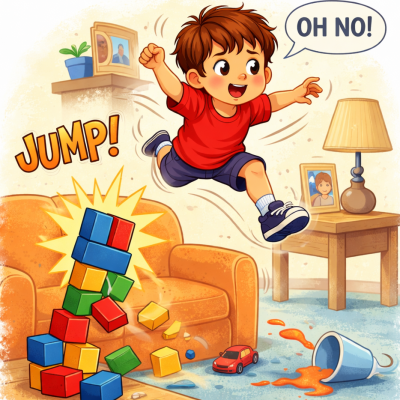
Impulsivity is another key sign of ADHD.

The child may:

  • Interrupt others frequently
  • Grab things without asking
  • Speak before thinking
  • Make quick decisions without considering consequences

This can sometimes lead to conflicts with friends or siblings.

[:en]Acting Without Thinking[:]
[:en]Struggles With Schoolwork[:]

8. Struggles With Schoolwork

Some children with ADHD may find certain classroom tasks more challenging due to difficulties with attention and organization.

You may notice behaviours such as:

  • Leaving assignments unfinished
  • Forgetting to bring homework or school materials
  • Losing focus during lessons
  • Rushing through work and making careless mistakes

These challenges can make it harder for children to keep up with classroom routines and complete tasks independently.

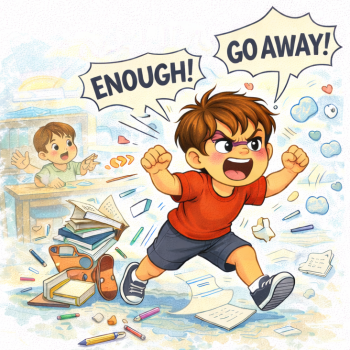
9. Emotional Outbursts

Children with ADHD may experience strong emotional reactions.


You might notice:

  • Sudden frustration
  • Frequent temper outbursts
  • Difficulty calming down after being upset


This is often related to challenges with emotional regulation.

[:en]Emotional Outbursts[:]
[:en]Difficulty Waiting Their Turn[:]

10. Difficulty Waiting Their Turn

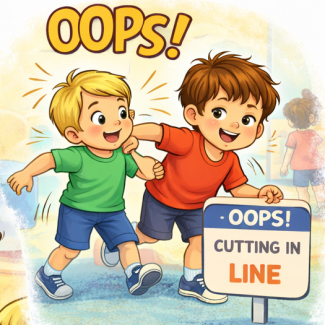
Patience can be difficult for children with ADHD.

They may:

  • Interrupt games
  • Cut in line
  • Become frustrated while waiting

These behaviors are often linked to difficulty controlling impulses.

When Should Parents Seek Help?

Seeing one or two of these behaviors occasionally is normal.


However, parents may consider seeking professional advice if:

  • Several symptoms appear consistently for more than six months
  • Behaviour affects daily functioning at home, school, or in social situations (e.g., trouble keeping up with classroom activities or frequent conflicts with siblings or friends)
  • Symptoms or behaviours are present in two or more settings (e.g., home, school, or other activities)

       (National Institute of Mental Health, 2024)

Consulting a Clinical Psychologist can help determine whether ADHD may be present.

Early identification allows children to receive the support and strategies they need to thrive.

With the right guidance, support, and understanding, children with ADHD can grow into
confident, creative, and successful individuals.
Recognizing the signs of ADHD early can make a meaningful difference in a child’s development.
If you suspect your child may have ADHD, seeking professional advice is the first step toward helping them reach their full potential.

🌟 Stay Connected with Us! We love sharing tips, insights, and inspiring stories about children’s growth and mental wellbeing. 💙 Follow us on Instagram and Facebook for more updates and parenting advice.

Join our community and let’s grow together. One positive step at a time!

[:en]Informational graphic about child psychology services at Firststep.[:]

REFERENCES

National Institute of Mental Health. (2024). Attention-Deficit/Hyperactivity disorder: What you need to know. National Institute of Mental Health; U.S.
        Department of Health and Human Services.
       
https://www.nimh.nih.gov/health/publications/attention-deficit-hyperactivity-disorder-what-you-need-to-know

Working Hours

Tuesday to Saturday – 8.30am to 6pm

Monday & Sunday – Closed

Please also subscribe us at

Contact Us

Discover Our Team!

📞+60102502833

firststepdevelopmentcentre@gmail.com

 B1-7, Plaza Damas 3, Jalan Sri Hartamas 1, 50480 Kuala Lumpur.

📍Find our Hartamas Clinic

📍Find our Ara Damansara Clinic

Copyright 2025. Firststep Child Development Sdn Bhd. All rights reserved.