



Active Listening in Children: 6 Signs Your Child May Struggle
Does your child often seem not to hear you when you speak, miss important details in conversations, or respond without understanding what someone has said?
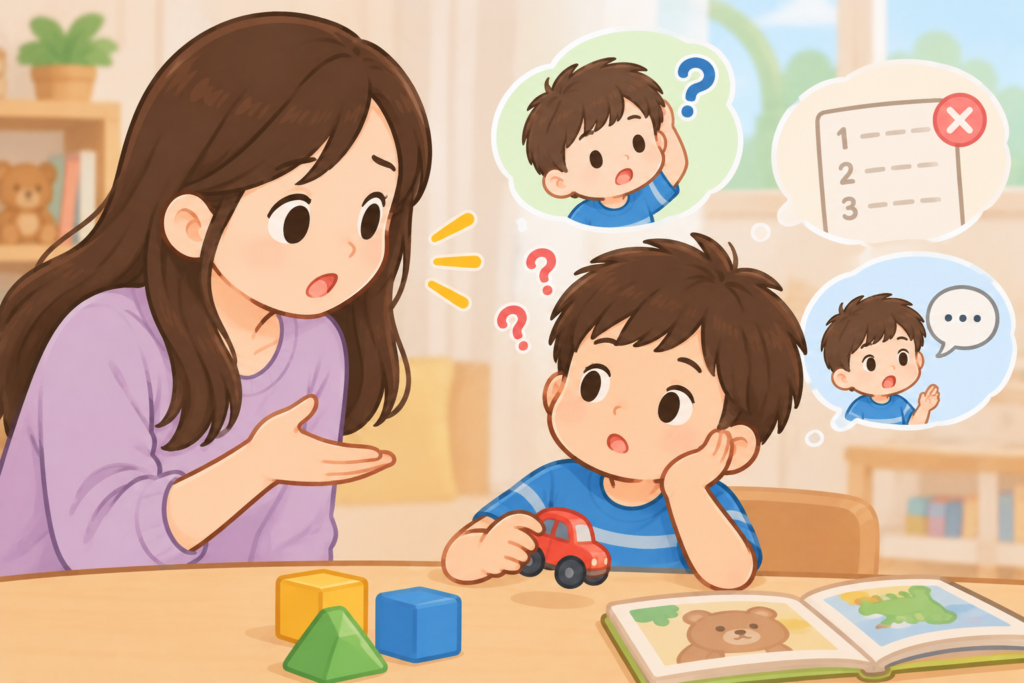
Listening is an important part of children’s communication and social development.
It helps children understand instructions, follow conversations, learn from others, and participate in everyday activities at home and school.
However, hearing and listening are not the same thing.
A child may hear the words being spoken but find it difficult to pay attention to the message, process the information, or respond appropriately.
Active listening involves paying attention to what another person says, trying to understand the message, and responding in a relevant way.
Children develop these skills gradually, and some may need extra support to practise them.
What Is Active Listening?
Active listening is the ability to pay attention to a speaker, understand what they are communicating, and respond in a way that shows they have followed the conversation.
For children, this can include listening to a teacher’s instructions, waiting for a friend to finish speaking, remembering important details, and asking questions when something is unclear.
Active listening does not mean a child must always maintain eye contact or remain completely still.
Children may show that they are listening in different ways, depending on their age, attention, and individual communication style.
1. Often Needs Instructions Repeated
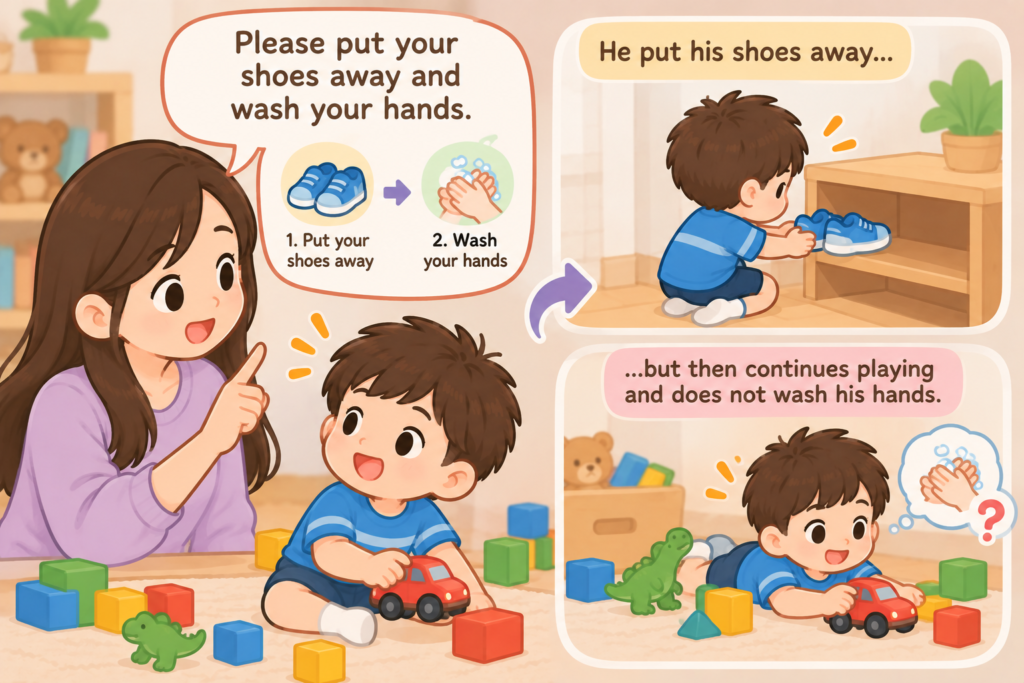
Your child may seem not to hear or understand instructions the first time, even during familiar daily routines.
For example, when you say, “Please put your shoes away and wash your hands,” your child may only complete one step or continue playing until you repeat the instruction.
2. Gets Distracted While Someone Is Speaking
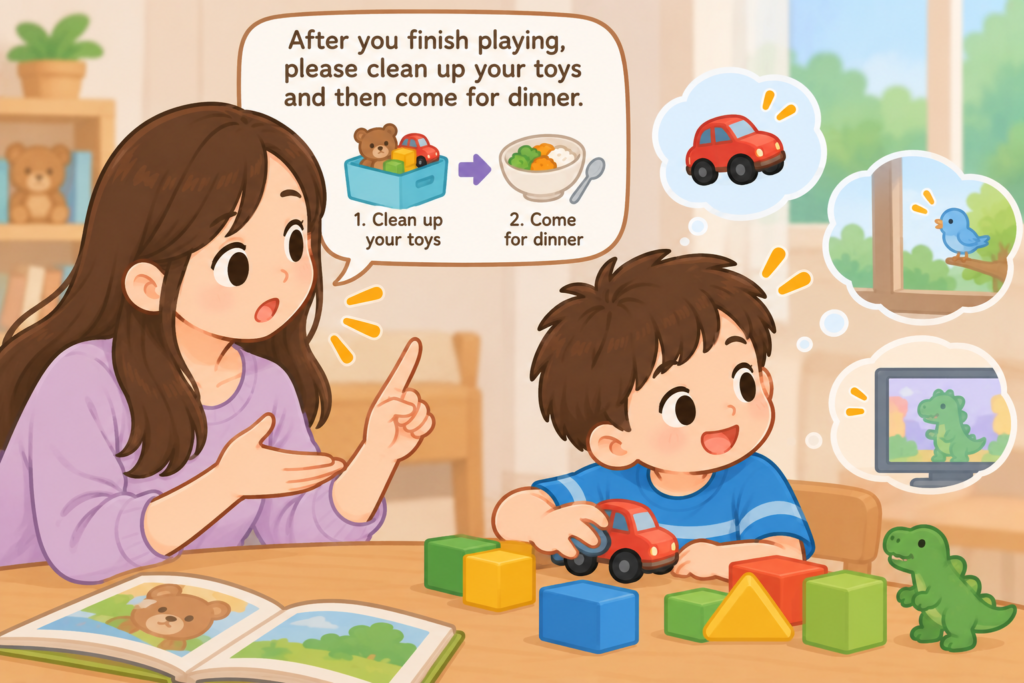
Your child may find it difficult to maintain attention during conversations, especially when there are distractions around them.
For example, when you are explaining something, your child may start playing with nearby toys, look around the room, or become focused on something else before you have finished speaking.
3. Interrupts Before Others Finish Speaking
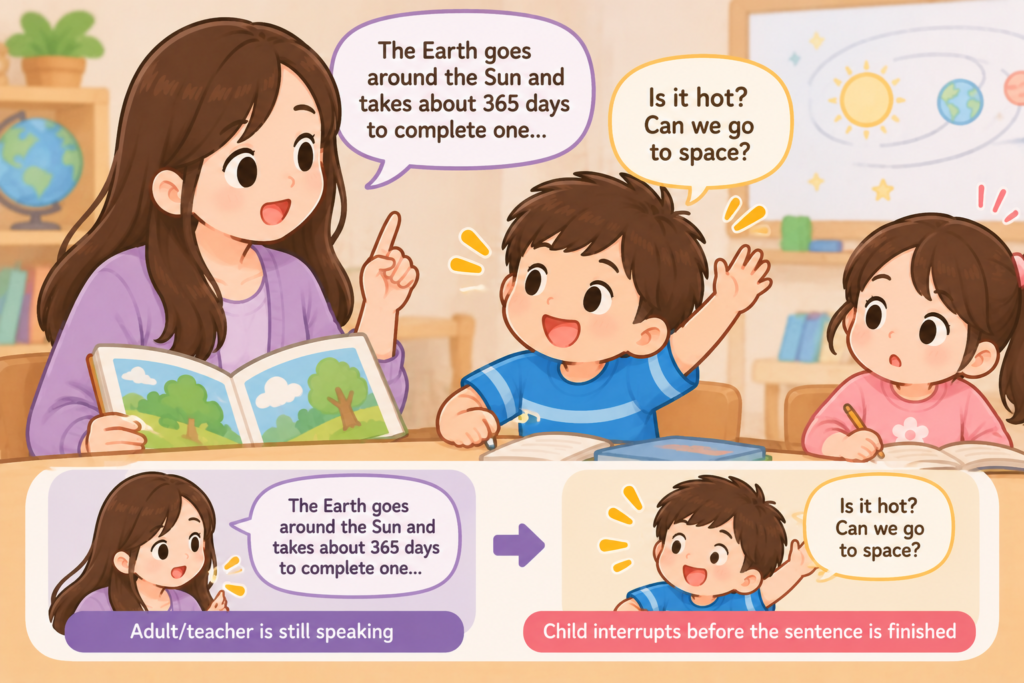
Your child may find it difficult to wait until someone has finished talking before responding or sharing their own thoughts.
For example, they may interrupt a conversation with a question or begin answering before their teacher has finished asking it.
4. Misses Important Details in Conversations
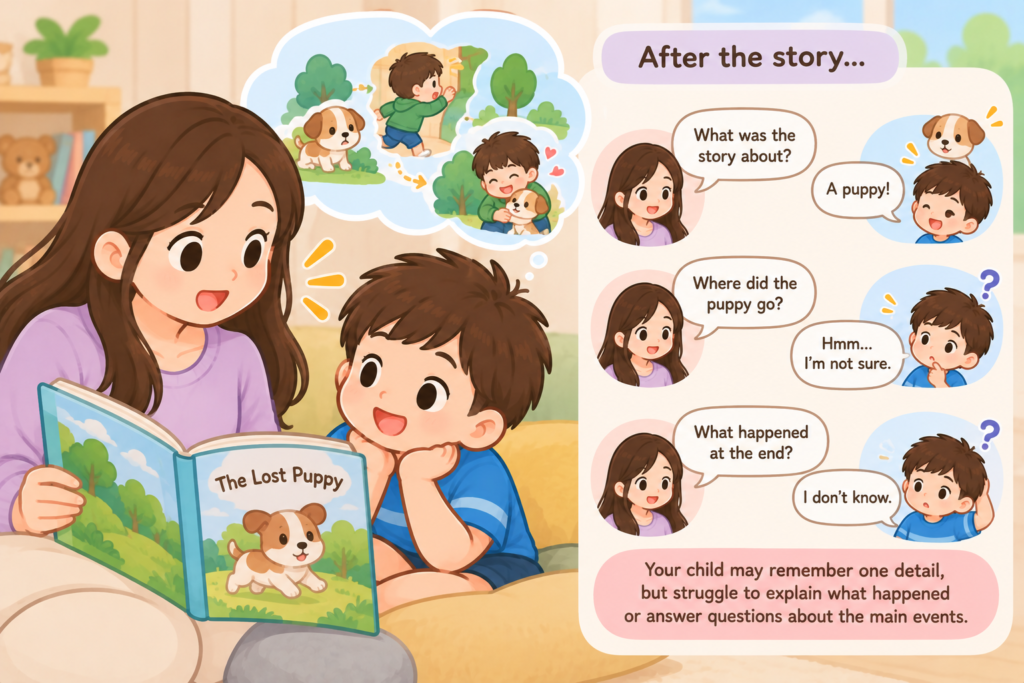
Your child may hear what someone says but miss key information or misunderstand parts of the message.
For example, after listening to a story, your child may remember one detail but struggle to explain what happened or answer questions about the main events.
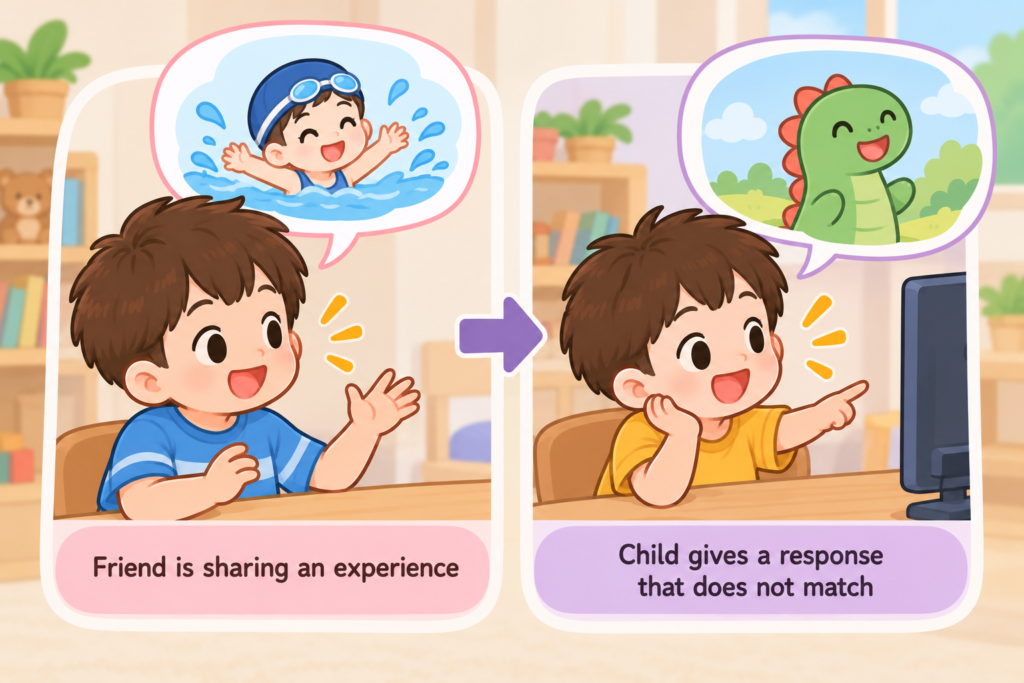
5. Gives Responses That Do Not Match the Conversation
Your child may respond with something unrelated or appear unsure how to answer because they have not fully understood what the other person said.
For example, when a friend says, “I went swimming yesterday,” your child may suddenly start talking about their favourite cartoon without responding to their friend’s experience.
6. Finds It Difficult to Remember or Follow What Was Said
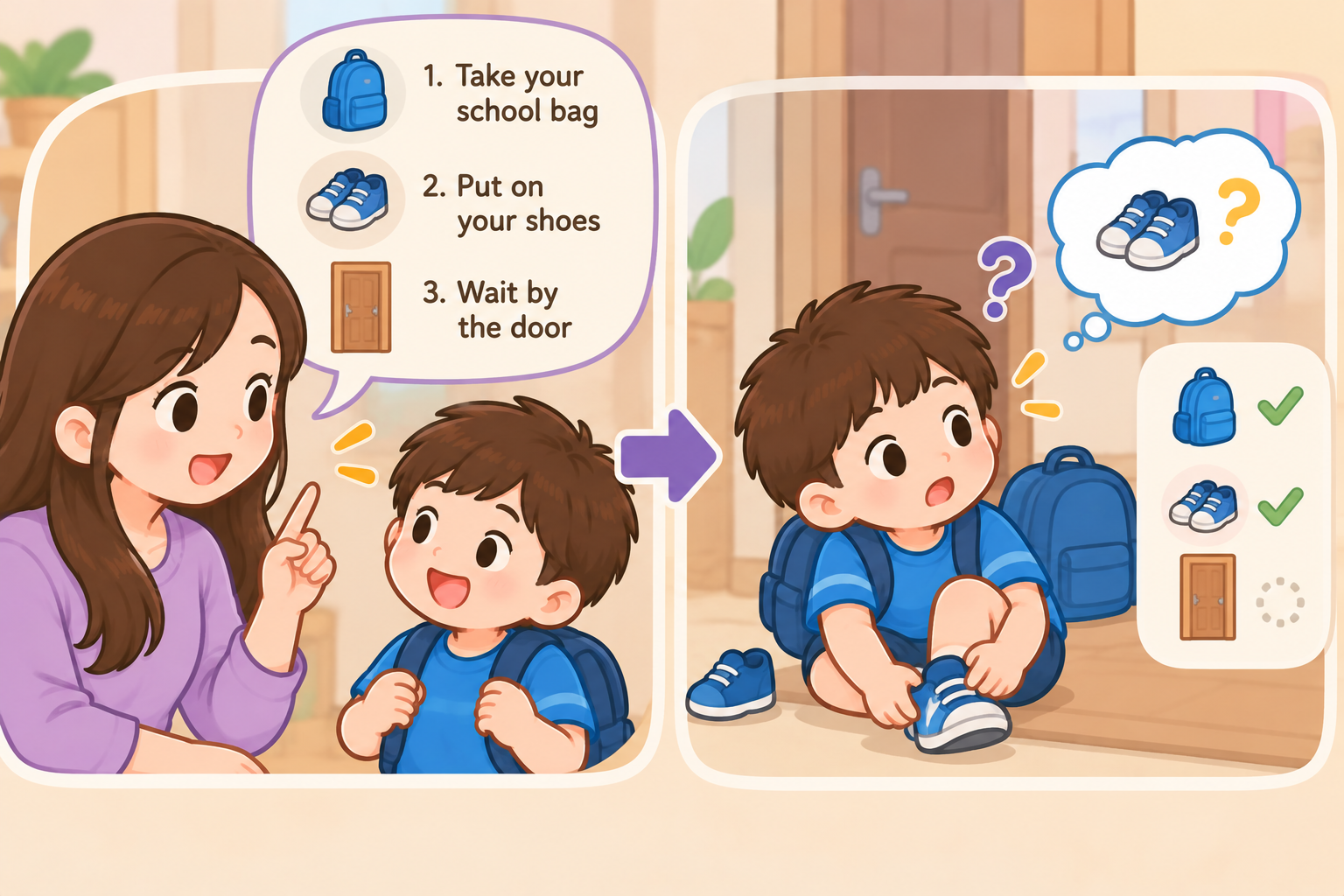
Your child may struggle to remember verbal information long enough to act on it, particularly when instructions contain several steps.
For example, after being told to take their school bag, put on their shoes, and wait by the door, your child may forget some of the steps and need reminders.
What Can Parents Do?
1. Get Your Child’s Attention Before Speaking
✿ Before giving instructions, gently say your child’s name and make sure they are ready to listen.
✿ Reduce distractions where possible, such as turning off the television.
✿ For example, you could say, “Let’s pause the game for a moment. I have something to tell you.”
✿ Remember that children do not always need to make eye contact to listen.
2. Give Short and Clear Instructions
✿ Use simple, age-appropriate language and break longer instructions into smaller steps.
✿ Instead of saying, “Put away all your toys, get your bag, and prepare for school,”
start with, “Let’s put the toys away first.” Then give the next instruction.
3. Give Your Child Time to Process Information
✿ Some children need extra time to understand what they have heard and decide how to respond.
✿ Pause after speaking instead of immediately repeating the instruction or asking another question.
✿ Give your child time to think before offering additional help.
4. Encourage Your Child to Explain What They Heard
✿ Invite your child to tell you what they understood in their own words.
✿ This can help you identify whether they have understood the message.
✿ For example, after explaining a simple activity, you could ask, “What are we going to do first?”
✿ Keep the interaction relaxed rather than making it feel like a test.
5. Practise Listening Through Games and Stories
✿ Make listening enjoyable through activities such as Simon Says, simple treasure hunts, turn-taking games, and shared storybook reading.
✿ You can also pause during a story and ask, “What happened just now?” or “What do you think the character will do next?”
✿ These activities give children opportunities to practise paying attention, remembering information, and responding.
6. Model Active Listening in Everyday Conversations
✿ Show your child what good listening looks like by giving them your attention, allowing them to finish speaking, and responding to what they have shared.
✿ You might say, “So you felt happy when your friend played with you?” This demonstrates how to listen carefully and respond meaningfully.
✿ Children can learn these skills through repeated, supportive interactions at home.
When Should Parents Seek Professional Advice?
❀ Consider seeking professional guidance if your child’s listening difficulties persist over time or begin to affect their learning, communication, relationships, or everyday activities.
❀ It may be helpful to seek support if your child:
1. Frequently struggles to understand or follow age-appropriate instructions.
2. Often misses important information during conversations or classroom activities.
3. Has persistent difficulty understanding questions or responding appropriately.
4. Needs frequent repetition or reminders to complete familiar tasks.
5. Experiences difficulties with listening that affect friendships or participation in group activities.
6. Continues to struggle despite consistent support and opportunities to practise.
❀ A Speech-Language Therapist can assess your child’s listening comprehension and receptive language skills to determine whether difficulties understanding spoken information may be contributing to the challenges.
❀ A clinical psychologist may also help assess attention, learning, or other developmental factors when appropriate.
❀ If you suspect your child has difficulty hearing, consult a paediatrician or hearing professional for further assessment.
❀ Early support can help identify your child’s needs and guide appropriate strategies at home and school.
Key Takeaway
❀ Active listening helps children understand spoken information, follow instructions, participate in conversations, and build positive relationships.
❀ Some children may need additional support to pay attention, process information, remember what they hear, or respond appropriately.
❀ If listening difficulties persist or interfere with your child’s daily life, professional guidance can help identify the underlying challenges and determine suitable support.
🌟 Stay Connected with Us! We love sharing tips, insights, and inspiring stories about children’s growth and mental wellbeing.
💙 Follow us on Instagram and Facebook for more updates and parenting advice.
Join our community and let’s grow together. One positive step at a time!

References
American Academy of Pediatrics – Communication Skills Start at Home
HealthyChildren.org – Social Development in Preschoolers
American Academy of Pediatrics – Improving Family Communications
American Academy of Pediatrics – Improving Family Communications
Centers for Disease Control and Prevention (CDC) – Developmental Milestones
Centers for Disease Control and Prevention (CDC) – Developmental Milestones
Working Hours
Tuesday to Saturday – 8.30am to 6pm
Monday & Sunday – Closed
Please also subscribe us at
Contact Us
Discover Our Team!
📞+60102502833
firststepdevelopmentcentre@gmail.com
B1-7, Plaza Damas 3, Jalan Sri Hartamas 1, 50480 Kuala Lumpur.
Copyright 2025. Firststep Child Development Sdn Bhd. All rights reserved.